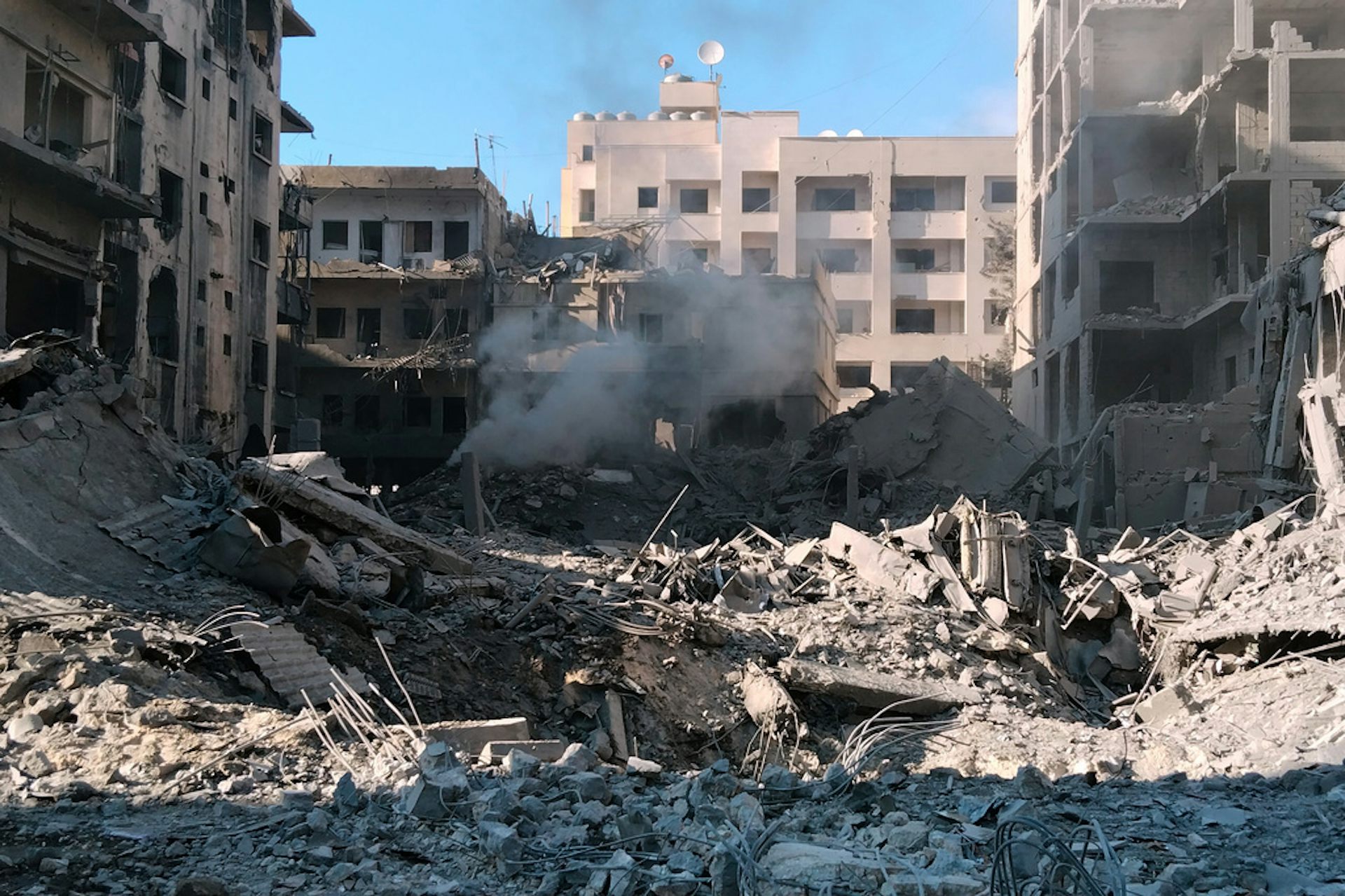
Sous l’ombre de la guerre en Iran, la nouvelle campagne israélienne au Liban risque de répéter les leçons manquées – et les occupations – du passé.
In Iran war’s shadow, Israel’s renewed Lebanon campaign risks repeating failed lessons – and occupations – of the past
Unable to defeat Iran, Israel shifts its focus to Lebanon, fearing U.S. negotiations with Tehran could limit operations against Hezbollah.
Incapable de vaincre l’Iran, Israël déplace son attention vers le Liban, craignant que les négociations américaines avec Téhéran ne limitent les opérations contre le Hezbollah.
Going into the war in Iran, the Israeli government seemingly had two intertwined goals: to bring down the Islamic Republic and rid Israel of its Hezbollah problem.
En entrant dans la guerre en Iran, le gouvernement israélien semblait avoir deux objectifs entrelacés: faire tomber la République islamique et dégager Israël de son problème Hezbollah.
The logic went that the Lebanese Shiite group – which has posed a persistent threat to Israel for 44 years – would finally succumb if stripped of its Iranian benefactor. After all, Israeli attempts to destroy Hezbollah through direct military action had not been effective, nor had internationally supported disarmament efforts.
La logique était que le groupe chiite libanais – qui pose une menace persistante à Israël depuis 44 ans – succomberait finalement s’il était privé de son bienfaiteur iranien. Après tout, les tentatives israéliennes pour détruire le Hezbollah par des actions militaires directes n’avaient pas été efficaces, tout comme les efforts de désarmement soutenus internationalement.
But as the United States and Iran continue to negotiate over an agreement that might put an end to their war, the Israeli-Lebanese front remains as active as ever. Israel has increased strikes and incursions deeper into Lebanon, while Hezbollah is targeting the Israeli military deployed in southern Lebanon and the civilian population in northern Israel.
Mais alors que les États-Unis et l’Iran continuent de négocier un accord qui pourrait mettre fin à leur guerre, le front israélo-libanais reste aussi actif que jamais. Israël a augmenté les frappes et les incursions plus profondément au Liban, tandis que le Hezbollah cible l’armée israélienne déployée dans le sud du Liban et la population civile dans le nord d’Israël.
Worse, from the Israeli government’s perspective, is that Iran has found a way of turning its survival and newfound leverage over the Strait of Hormuz into protecting Hezbollah. Tehran is currently conditioning a potential deal with Washington on a complete halt of Israeli hostilities in Lebanon – a move clearly designed to safeguard the political and military standing of Hezbollah, its primary proxy.
Pire encore, du point de vue du gouvernement israélien, c’est que l’Iran a trouvé un moyen de transformer sa survie et son nouveau levier sur le détroit d’Ormuz en protection du Hezbollah. Téhéran conditionne actuellement un accord potentiel avec Washington à un arrêt total des hostilités israéliennes au Liban – une manœuvre clairement conçue pour sauvegarder le statut politique et militaire du Hezbollah, son principal mandataire.
Since full-scale war returned to Lebanon on March 2, 2026, it has had a massive humanitarian cost. As of June 1, over a million Lebanese have been displaced and more than 3,300 killed since the beginning of March. On the Israeli side, 24 soldiers and 4 civilians have been killed in the same time period.
Depuis que la guerre à grande échelle a repris au Liban le 2 mars 2026, elle a eu un coût humanitaire massif. Au 1er juin, plus d’un million de Libanais ont été déplacés et plus de 3 300 personnes tuées depuis début mars. Du côté israélien, 24 soldats et 4 civils ont été tués durant la même période.
Israel seeks to decouple its Lebanon front from the wider regional conflict, aiming to maintain its military campaign against the Shiite organization independently of broader U.S. negotiations with Iran. But whether it will able to do this is uncertain. The Trump administration has largely excluded Israel from the specifics of its Iranian dialogue while attempting to restrict Israeli operations in Lebanon to strikes in the country’s south and the Bekaa Valley and prohibiting attacks on state infrastructure. The ordering of attacks on Lebanon’s capital, Beirut, by Israeli Prime Minister Benjamin Netanyahu on June 1 lays bare the limits to U.S. pressure.
Israël cherche à découpler son front libanais du conflit régional plus large, visant à maintenir sa campagne militaire contre l’organisation chiite indépendamment des négociations américaines plus larges avec l’Iran. Mais s’il sera capable de le faire est incertain. L’administration Trump a largement exclu Israël des détails de son dialogue avec l’Iran tout en tentant de restreindre les opérations israéliennes au Liban aux frappes dans le sud du pays et la vallée de la Bekaa, et en interdisant les attaques contre les infrastructures étatiques. L’ordre d’attaquer la capitale libanaise, Beyrouth, donné par le Premier ministre israélien Benjamin Netanyahu le 1er juin, révèle les limites de la pression américaine.
And ultimately, the resolution of this conflict rests upon how President Donald Trump chooses to navigate Iranian demands concerning the future of Lebanon.
Et en fin de compte, la résolution de ce conflit dépend de la manière dont le président Donald Trump choisira de gérer les exigences iraniennes concernant l’avenir du Liban.
As a historian of Israel and Lebanon, I have studied cycles of violence between these parties since 1982, and have noted recurring patterns in which Hezbollah has emerged emboldened, maintaining its dominance over Lebanese society as an Iranian proxy. Contrary to Israeli hopes, Iran’s patronage of Hezbollah has not been ended by the Iran war. And to confound issues, continued Israeli occupation of Lebanese land could grant Hezbollah the necessary justification to sustain its narrative of resistance at the cost of the broader Lebanese population.
En tant qu’historien d’Israël et du Liban, j’ai étudié les cycles de violence entre ces parties depuis 1982, et j’ai constaté des schémas récurrents selon lesquels le Hezbollah est apparu revigoré, maintenant sa domination sur la société libanaise en tant que mandataire iranien. Contrairement aux espoirs israéliens, le mécénat de l’Iran envers le Hezbollah n’a pas pris fin avec la guerre en Iran. Et pour compliquer les choses, l’occupation continue de terres libanaises par Israël pourrait accorder au Hezbollah la justification nécessaire pour maintenir son récit de résistance au détriment de la population libanaise au sens large.
A wounded but not dead Hezbollah
Un Hezbollah blessé mais pas mort
While significantly weakened as a result of more than two and a half years of war with Israel, Hezbollah continues to wield considerable power in Lebanon.
Bien que considérablement affaibli à la suite de plus de deux ans et demi de guerre avec Israël, le Hezbollah continue de détenir un pouvoir considérable au Liban.
After a ceasefire in November 2024 – following the full-scale war in September-October of that year – ostensibly stopped fighting, a new Lebanese president was elected and a new government was established in February 2025.
Après un cessez-le-feu en novembre 2024 – suite à la guerre totale en septembre-octobre de cette année – et ayant apparemment arrêté les combats, un nouveau président libanais a été élu et un nouveau gouvernement établi en février 2025.
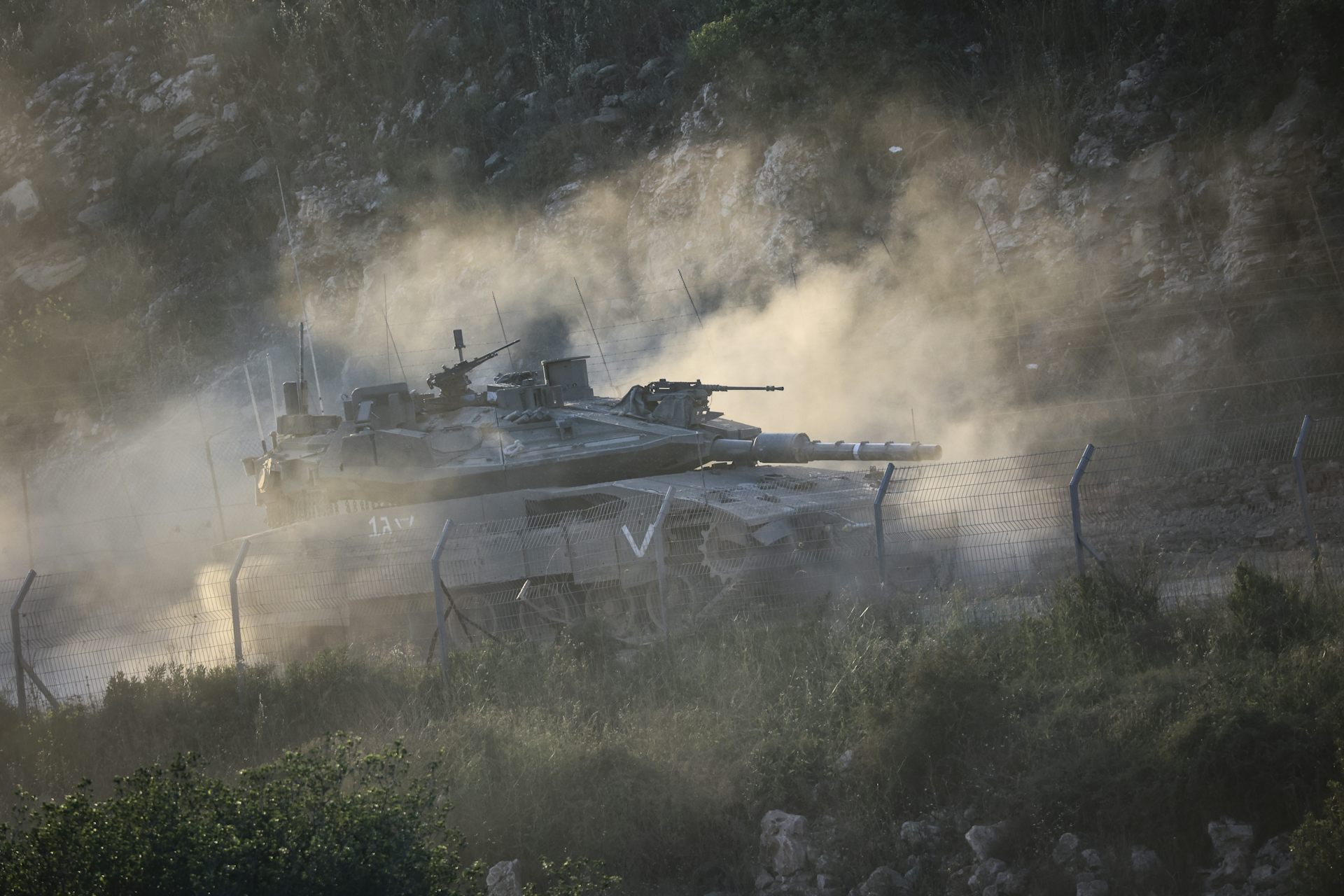
That ended a three-year political deadlock generated by Hezbollah’s effective veto power over successive Lebanese governments since 2008. Even since the formation of a government in 2025, however, the Lebanese state has been unable to effectively make progress in disarming Hezbollah as stipulated in the November 2024, armistice agreement that ended that previous round of fighting.
Cela a mis fin à une impasse politique de trois ans générée par le pouvoir de veto effectif du Hezbollah sur les gouvernements libanais successifs depuis 2008. Depuis la formation d’un gouvernement en 2025, cependant, l’État libanais n’a pas été en mesure de progresser efficacement dans le désarmement du Hezbollah, comme stipulé dans l’accord d’armistice de novembre 2024 qui a mis fin à cette précédente série de combats.
Instead, Iran invested significant efforts to prop up its Lebanese proxy. Tehran even sent senior officers of its Revolutionary Guard soon after the November 2024 ceasefire to assume the command of the Shiite organization, which lost many of its leaders at the hands of Israeli assassinations and targeted strikes.
Au lieu de cela, l’Iran a déployé d’importants efforts pour soutenir son mandataire libanais. Téhéran a même envoyé peu après le cessez-le-feu de novembre 2024 des officiers supérieurs de sa Garde révolutionnaire pour prendre le commandement de l’organisation chiite, qui a perdu de nombreux dirigeants aux mains des assassinats et des frappes ciblées israéliennes.
These efforts are paying off for Tehran now, as seen through Hezbollah’s ability to challenge Israel militarily.
Ces efforts portent leurs fruits pour Téhéran aujourd’hui, comme en témoigne la capacité du Hezbollah à défier Israël militairement.
With the beginning of this most recent war in March, the Lebanese prime minister banned Hezbollah’s operations, while the president condemned the group for dragging Lebanon into a conflict that most Lebanese rejected.
Avec le début de cette guerre la plus récente en mars, le Premier ministre libanais a interdit les opérations du Hezbollah, tandis que le président a condamné le groupe pour avoir entraîné le Liban dans un conflit que la plupart des Libanais ont rejeté.
But, as in the past, the government has been unable to effectively rein in Hezbollah. A telling case came on March 24, 2026, when Lebanon’s Foreign Ministry declared the Iranian ambassador a persona non grata, ordering him to leave the country.
Mais, comme par le passé, le gouvernement n’a pas été en mesure de maîtriser efficacement le Hezbollah. Un cas éloquent est survenu le 24 mars 2026, lorsque le ministère des Affaires étrangères libanais a déclaré l’ambassadeur iranien persona non grata, l’ordonnant de quitter le pays.
Iran and Hezbollah defied the order and the ambassador refused to leave the embassy in Beirut.
L’Iran et le Hezbollah ont désobéi à l’ordre et l’ambassadeur a refusé de quitter l’ambassade à Beyrouth.
This example also suggests that the hopes for revitalized state capacities after the current Lebanese government came to power in February 2025 – the first government since 2008 not controlled by Hezbollah – may have been premature.
Cet exemple suggère également que les espoirs de revitalisation des capacités étatiques après l’arrivée au pouvoir du gouvernement libanais actuel en février 2025 – le premier gouvernement depuis 2008 non contrôlé par le Hezbollah – ont pu être prématurés.
Gaza via Lebanon
Gaza via le Liban
Employing what some have called a “Gaza model” in Lebanon, Israel has effectively created a new security zone in south Lebanon by occupying Lebanese territory, razing to the ground whole villages that Hezbollah had used for military purposes and clearing out most of the population from the area.
En utilisant ce que certains ont appelé un « modèle de Gaza » au Liban, Israël a effectivement créé une nouvelle zone de sécurité au sud du Liban en occupant du territoire libanais, en rasant au sol des villages entiers que le Hezbollah utilisait à des fins militaires et en déplaçant la majeure partie de la population de la zone.
But Israel has occupied south Lebanon in the past: first in March 1978, during the Litani operation, and then again from 1982 to 2000. The failure of these occupations should raise alarms in Israel. Neither resulted in lasting security improvements and instead left indelible, traumatic scars on Israel’s collective consciousness, creating the image of Lebanon as a quagmire into which Israel has been repeatedly drawn.
Mais Israël a déjà occupé le sud du Liban par le passé: d’abord en mars 1978, lors de l’opération Litani, puis de nouveau de 1982 à 2000. L’échec de ces occupations devrait sonner l’alarme en Israël. Aucune n’a entraîné d’améliorations sécuritaires durables et a plutôt laissé des cicatrices indélébiles et traumatisantes sur la conscience collective d’Israël, créant l’image du Liban comme un bourbier dans lequel Israël a été tiré à plusieurs reprises.
The government of Netanyahu is now leading the country into another potential quagmire in Lebanon.
Le gouvernement de Netanyahou mène maintenant le pays vers un autre bourbier potentiel au Liban.
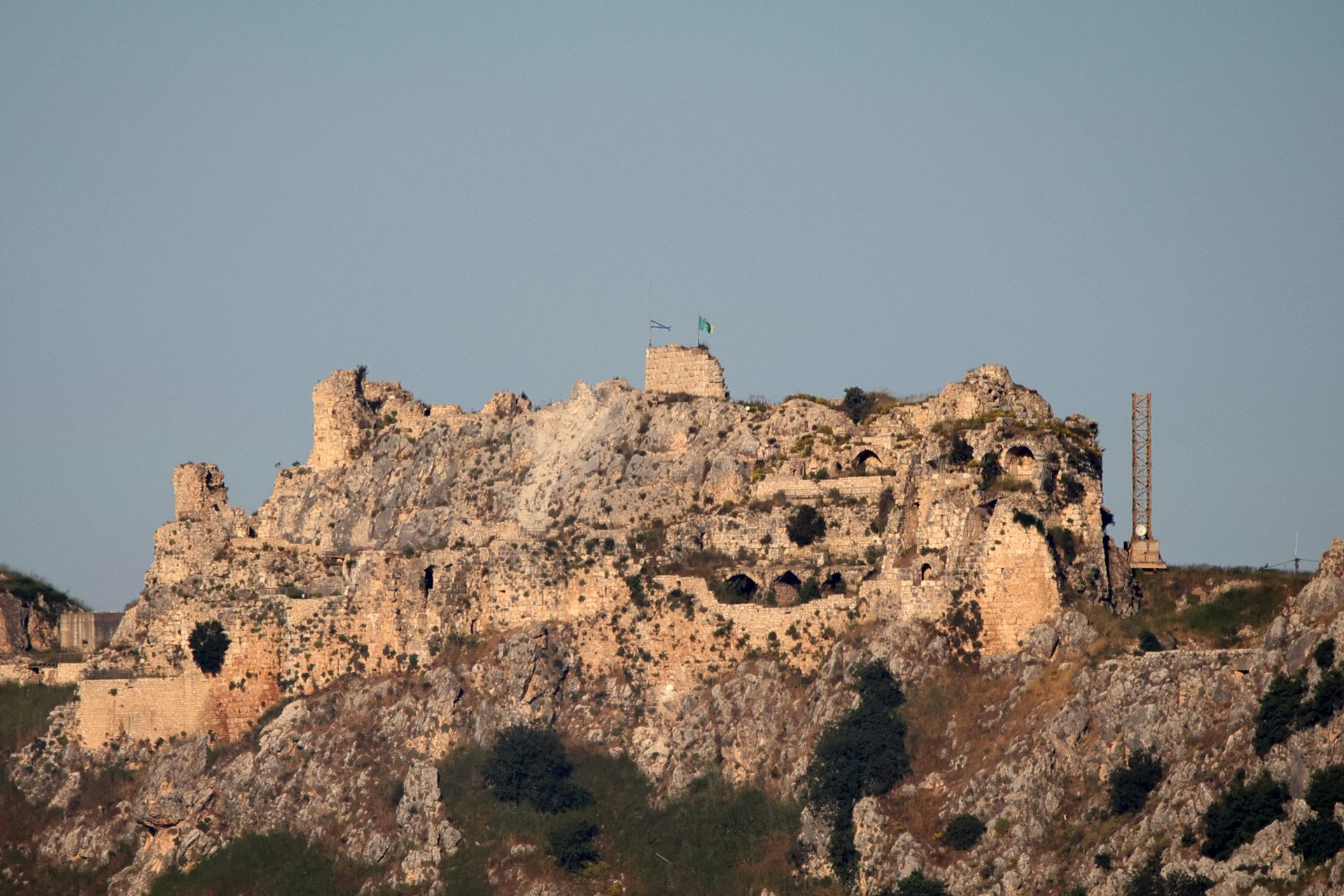
The news about the Israel Defense Forces’ occupation of the Beaufort castle in south Lebanon on May 31 should bring grim memories for Israelis. That castle remains entrenched in the collective memory of Israel’s occupation of south Lebanon in 1982-2000 as a symbol of its failure. Netanyahu, however, packaged Israel’s occupation as a sign of strength, stating that “we have returned stronger than ever.” History suggests otherwise.
La nouvelle de l’occupation par les Forces de défense israéliennes du château de Beaufort au sud du Liban le 31 mai devrait rappeler de sombres souvenirs aux Israéliens. Ce château reste ancré dans la mémoire collective de l’occupation israélienne du sud du Liban en 1982-2000 comme un symbole de son échec. Netanyahou, cependant, a présenté l’occupation israélienne comme un signe de force, déclarant que « nous sommes revenus plus forts que jamais ». L’histoire suggère le contraire.
History repeats itself
L’histoire se répète
Netanyahu is driven in large part by Israeli domestic affairs.
Netanyahu est largement guidé par les affaires intérieures israéliennes.
A majority of Israelis support the continuation of the war against Hezbollah. Moreover, with national elections scheduled for October 2026, Netanyahu needs to show some success in at least one of the multiple military fronts he has intentionally kept open since the Hamas attack on Oct. 7, 2023.
Une majorité d’Israéliens soutiennent la continuation de la guerre contre le Hezbollah. De plus, avec des élections nationales prévues en octobre 2026, Netanyahu doit montrer un certain succès sur au moins un des multiples fronts militaires qu’il a intentionnellement maintenus ouverts depuis l’attaque du Hamas le 7 octobre 2023.
With Netanyahu seemingly failing to achieve his aims in Iran, Lebanon and Hezbollah provide him with an opportunity to keep a state of emergency in Israel, which he needs for his own political survival.
Alors que Netanyahu semble échouer à atteindre ses objectifs en Iran, le Liban et le Hezbollah lui offrent l’opportunité de maintenir un état d’urgence en Israël, ce dont il a besoin pour sa propre survie politique.
But failure in Iran makes achieving Netanyahu’s goal in Lebanon that much harder. The government in Tehran seems to have found significant leverage over the U.S. and Israel. And under these conditions, Tehran would not give up on Hezbollah, which remains its most important regional asset.
Mais l’échec en Iran rend l’atteinte de l’objectif de Netanyahu au Liban beaucoup plus difficile. Le gouvernement de Téhéran semble avoir trouvé un levier important sur les États-Unis et Israël. Et dans ces conditions, Téhéran ne renoncerait pas au Hezbollah, qui reste son atout régional le plus important.
Diplomacy is the only way out of this imbroglio. And while it would not likely lead to the disarming of Hezbollah and to the Israel’s full withdrawal from south Lebanon, it remains the only constructive way forward.
La diplomatie est la seule issue à cet imbroglio. Et bien qu’elle ne conduise probablement pas au désarmement du Hezbollah ni au retrait total d’Israël du sud du Liban, elle reste la seule voie constructive à suivre.
At the behest of the Trump administration, Israeli and Lebanese ambassadors met to discuss a diplomatic understanding between two countries that have never had official relations. And on May 30, military representatives of the two countries met in Washington, D.C.
Sur mandat de l’administration Trump, les ambassadeurs israélien et libanais se sont réunis pour discuter d’un accord diplomatique entre deux pays qui n’ont jamais eu de relations officielles. Et le 30 mai, des représentants militaires des deux pays se sont rencontrés à Washington, D.C.
For the first time since 1983, the Lebanese government has agreed to negotiate directly with Israel over a long-term political agreement, including the possibility of finally demarcating their shared borders. Hezbollah, as expected, has vehemently opposed these negotiations.
Pour la première fois depuis 1983, le gouvernement libanais a accepté de négocier directement avec Israël un accord politique à long terme, y compris la possibilité de délimiter enfin leurs frontières communes. Le Hezbollah, comme prévu, s’est vivement opposé à ces négociations.
What we are seeing currently unfolding in Lebanon is another testament to the failure of the Israeli-U.S. war against Iran. Yet a war that began with lofty promises of a new Middle East may end up with a worse version of the old Middle East – an emboldened Islamic Republic, a new Israeli occupation of south Lebanon and a Hezbollah, while weaker than before, still entrenched as an armed militia outside of Lebanese state control and working in concert with Iran.
Ce que nous voyons actuellement se dérouler au Liban est un autre témoignage de l’échec de la guerre israélo-américaine contre l’Iran. Pourtant, une guerre qui a commencé avec de hautes promesses d’un Moyen-Orient nouveau pourrait se terminer par une version pire de l’ancien Moyen-Orient – une République islamique enhardie, une nouvelle occupation israélienne du sud du Liban et un Hezbollah, bien que plus faible qu’auparavant, toujours enraciné en tant que milice armée en dehors du contrôle de l’État libanais et travaillant en concert avec l’Iran.
Asher Kaufman does not work for, consult, own shares in or receive funding from any company or organization that would benefit from this article, and has disclosed no relevant affiliations beyond their academic appointment.
Asher Kaufman ne travaille pour, ne consulte pas, ne détient pas d’actions ni ne reçoit de financement de la part d’aucune entreprise ou organisation qui bénéficierait de cet article, et n’a divulgué aucune affiliation pertinente au-delà de sa nomination universitaire.
Read more
-

Du préjugé au préjudice – les politiques actuelles visant les personnes trans suivent un schéma d’escalade manifeste
From prejudice to harm – current policies targeting trans people follow a clear pattern of escalation
-
Ce que les tatouages des joueurs de Coupe du Monde révèlent sur leur amour, leur vie et leurs croyances religieuses
What the tattoos of World Cup players say about their love, life and religious beliefs