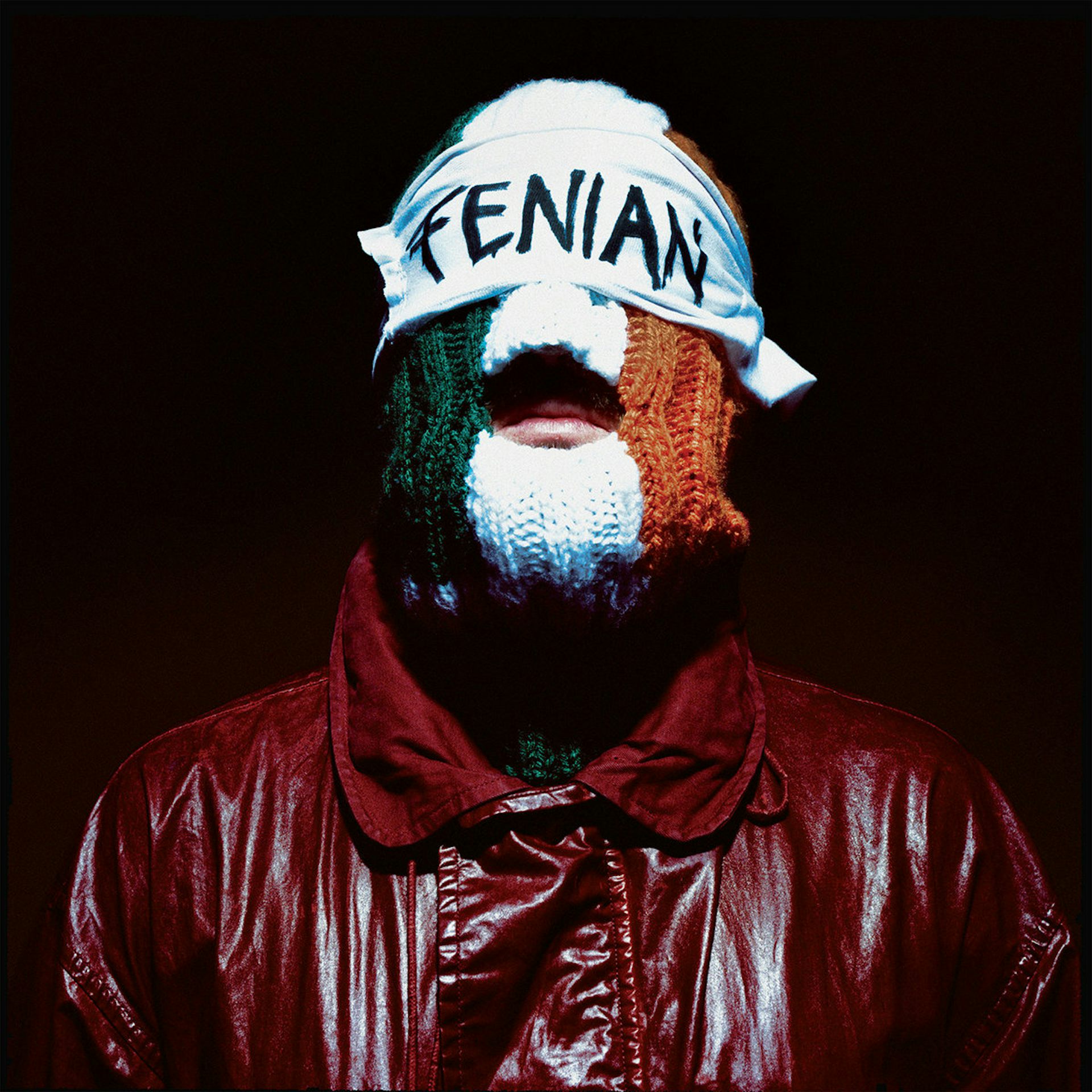
Fenian : l’histoire anti-irlandaise derrière le nouveau titre d’album provocateur de Kneecap.
Fenian: the anti-Irish history behind Kneecap’s defiant new album title
The term Fenian can’t be untangled from a dark history of anti-Irish racism. That’s why Kneecap chose it.
Le terme Fenian ne peut être dissocié d’une sombre histoire de racisme anti-irlandais. C’est pourquoi Kneecap l’a choisi.
Irish hip-hop group Kneecap recently released their latest album, called “Fenian”.
Le groupe de hip-hop irlandais Kneecap a récemment sorti son dernier album, intitulé « Fenian ».
A proud reclamation of a painful derogatory slur, Fenian is a word that connects Irish people to a history in which they were sometimes seen as less than human.
Réappropriation fière d’une insulte désobligeante et douloureuse, Fenian est un mot qui relie le peuple irlandais à une histoire dans laquelle il a parfois été considéré comme inférieur à l’humain.
A title packed with meaning
Un titre chargé de sens
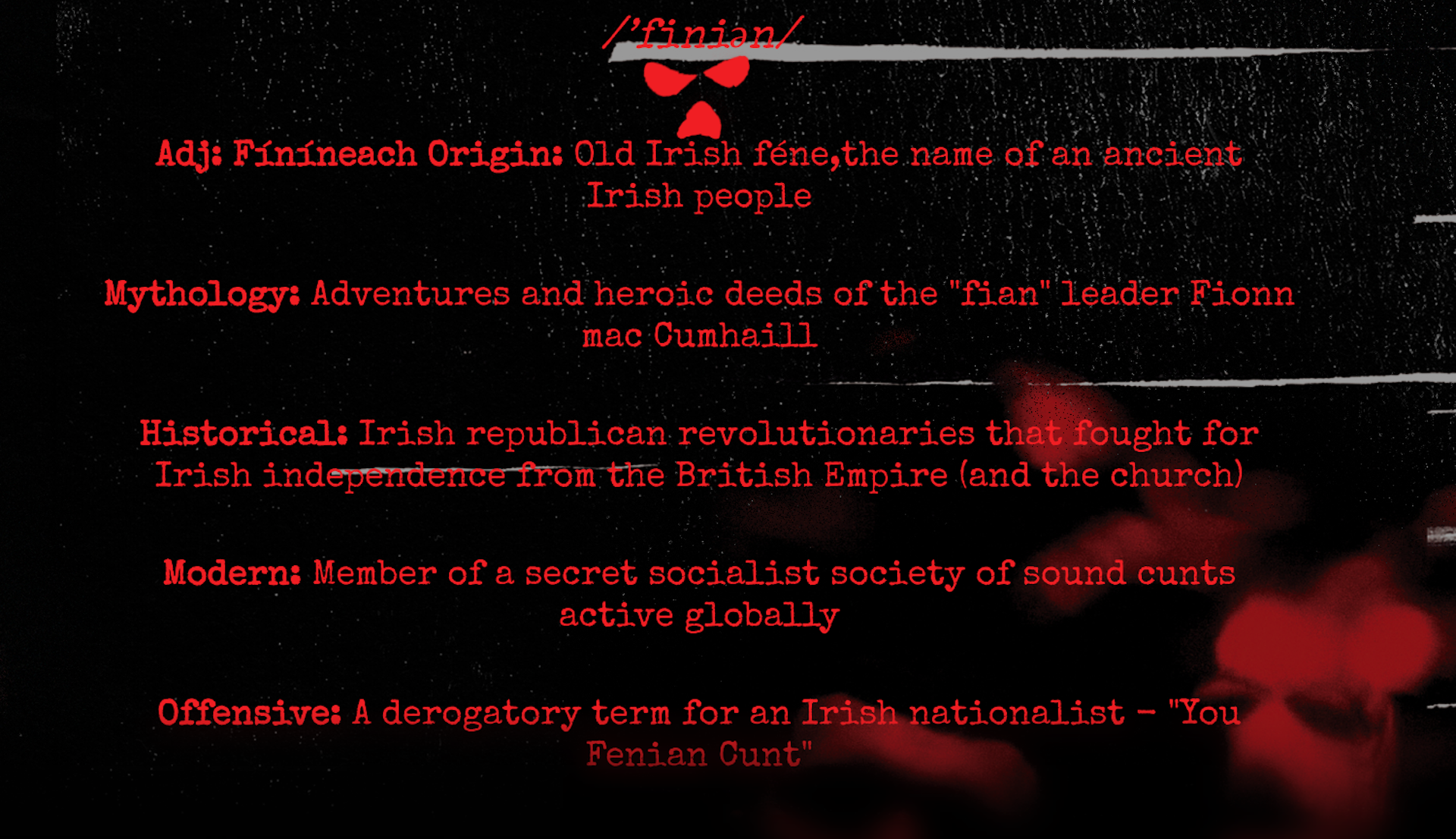
The word originally comes from “Fianna”, which is linked to an ancient Irish mythology. The Fianna were small groups of male Irish warriors led by the legendary hero, Fionn mac Cumhaill.
Le mot provient à l’origine de « Fianna », qui est lié à une ancienne mythologie irlandaise. Les Fianna étaient de petits groupes de guerriers irlandais masculins menés par le héros légendaire, Fionn mac Cumhaill.
Today, however, the term is more commonly known for its association with Irish nationalism.
Aujourd’hui, cependant, le terme est plus couramment connu pour son association avec le nationalisme irlandais.
Since at least the 17th century, Irish people have endured religious and cultural oppression under British rule – which largely targeted the Irish Catholic population.
Depuis au moins le XVIIe siècle, le peuple irlandais a enduré une oppression religieuse et culturelle sous le régime britannique – qui visait largement la population catholique irlandaise.
In the 19th century, various nationalist groups fought for Irish independence, sometimes violently. This included the Irish Republican Brotherhood, whose members were called Fenians.
Au XIXe siècle, divers groupes nationalistes se sont battus pour l’indépendance irlandaise, parfois violemment. Cela incluait la Fraternité républicaine irlandaise, dont les membres étaient appelés Fenians.
The word’s meaning eventually expanded to become a derogatory term for supporters of Irish independence.
Le sens du mot s’est finalement élargi pour devenir un terme péjoratif pour les partisans de l’indépendance irlandaise.
Anti-Irish stereotyping
Stéréotypisation anti-irlandaise
But there’s more to this word than just its political significance. It is also entwined with a history of anti-Irish racism, also known as “hibernophobia”.
Mais ce mot ne se limite pas à sa seule signification politique. Il est également lié à une histoire de racisme anti-irlandais, également connu sous le nom d’« hibernophobie ».
In the 19th century, interest in human evolution led to a pseudo-scientific theory called social Darwinism.
Au XIXe siècle, l’intérêt pour l’évolution humaine a conduit à une théorie pseudo-scientifique appelée darwinisme social.
This discredited theory claimed all human “types” could be placed along a hierarchy of evolution. White Europeans were at the top, as the most “evolved”. This twisted logic was used to justify the subjugation of people in colonised territories worldwide, including Australia.
Cette théorie discréditée affirmait que tous les « types » humains pouvaient être placés le long d’une hiérarchie évolutive. Les Européens blancs étaient au sommet, en tant que plus « évolués ». Cette logique tordue a été utilisée pour justifier la subjugation des populations dans les territoires colonisés du monde entier, y compris l’Australie.
Irish Catholic people were given a position in this hierarchy – towards the bottom. Historians argue the designation of Irish Catholic people as a backwards “race” was used to rationalise their oppression. If they were an inherently “savage” people, then they were unfit to run their own government.
Les personnes catholiques irlandaises se voyaient attribuer une position dans cette hiérarchie – vers le bas. Les historiens soutiennent que la désignation des personnes catholiques irlandaises comme une « race » arriérée a été utilisée pour rationaliser leur oppression. Si elles étaient un peuple intrinsèquement « sauvage », alors elles n’étaient pas aptes à diriger leur propre gouvernement.
Fenians supposedly embodied the worst elements of the Irish character: stupidity, violence and brutishness. From this viewpoint, Fenian violence became seen as an expression of a supposedly inherent Irish character – not as a response to the British rule in Ireland.
Les Fenians étaient censés incarner les pires éléments du caractère irlandais: la stupidité, la violence et la brutalité. De ce point de vue, la violence des Fenians fut perçue comme une expression d’un caractère irlandais supposément inhérent – et non comme une réponse au régime britannique en Irlande.
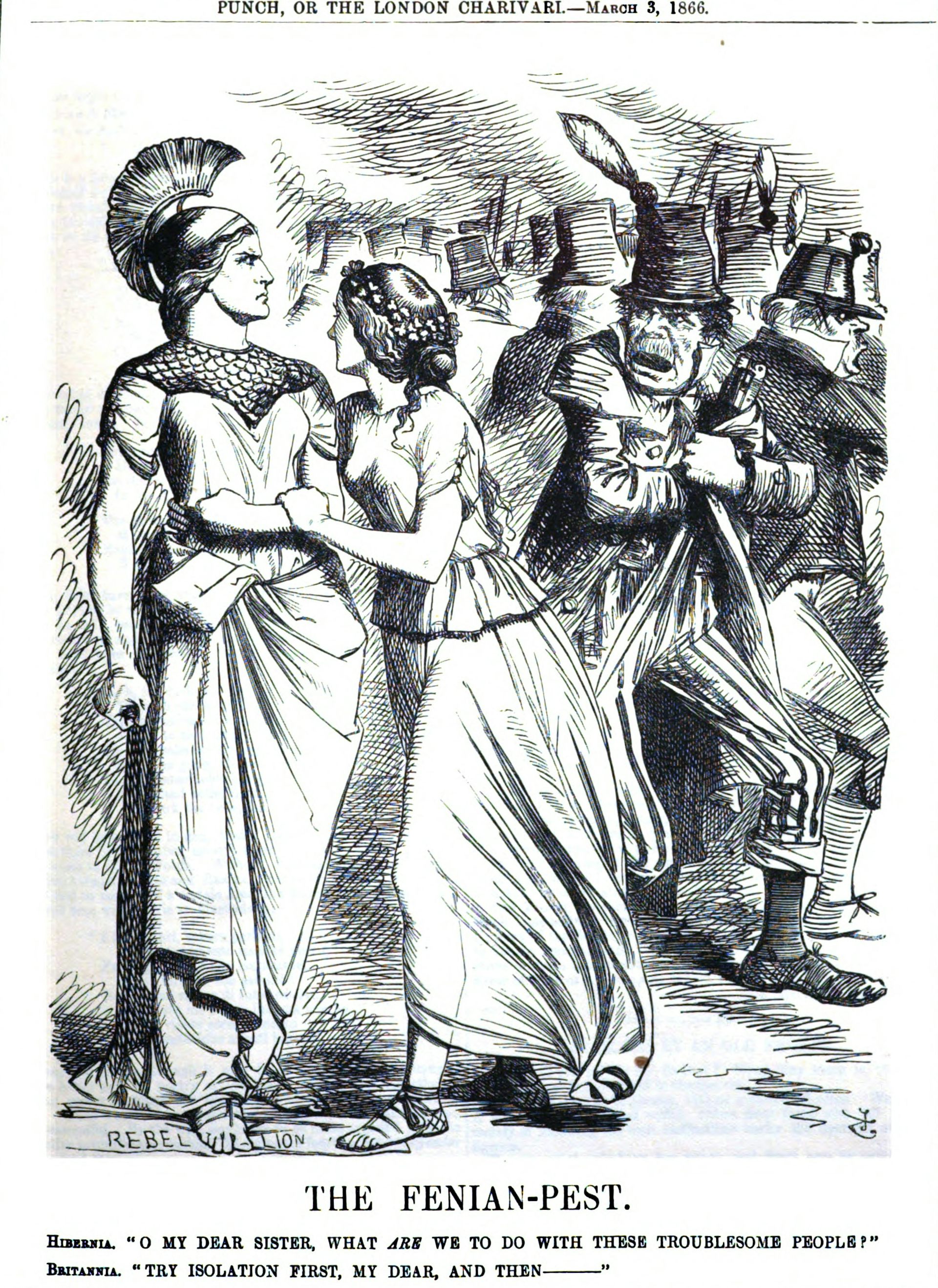
Cartoons were published that dehumanised Fenians and drew on centuries of anti-Irish stereotyping. Fenians were drawn as “terrorists” with exaggerated facial features, making them look like chimpanzees.
Des dessins animés ont été publiés qui déshumanisaient les Fenians et s’appuyaient sur des siècles de stéréotypisation anti-irlandaise. Les Fenians étaient représentés comme des « terroristes » avec des traits faciaux exagérés, leur faisant ressembler à des chimpanzés.
In one typical example from 1866, a thuggish, simianised Fenian man menaces a beautiful feminised version of “Britannia”. Anti-Irish cartoons were even published in Australia.
Dans un exemple typique de 1866, un homme Fenian, brutal et simianisé, menace une belle version féminisée de « Britannia ». Des dessins animés anti-irlandais ont même été publiés en Australie.
This history of anti-Irish racism still normalises anti-Irish jokes today.
Cette histoire de racisme anti-irlandais normalise encore aujourd’hui les blagues anti-irlandaises.
Who are Kneecap?
Qui sont Kneecap?
Kneecap is a rap and hip-hop trio from Northern Ireland.
Kneecap est un trio de rap et de hip-hop originaire d’Irlande du Nord.
The group shot to fame following the release of their 2024 semi-autobiographical film. Their music is gritty, rude and defiantly anti-colonial – belonging to a long line of Irish activists fighting to get “Brits out” of Ireland.
Le groupe a connu la célébrité après la sortie de leur film semi-autobiographique de 2024. Leur musique est brute, crue et résolument anti-coloniale – elle appartient à une longue lignée d’activistes irlandais qui se battent pour chasser les « Britanniques » d’Irlande.
Kneecap want to bring Irish people together, regardless of religion, and reunite Northern Ireland with the Republic of Ireland. The six counties of Northern Ireland were separated from the rest of Ireland in the 1921 Partition. They remain part of the United Kingdom.
Kneecap veut rassembler les Irlandais, quelle que soit leur religion, et réunifier l’Irlande du Nord avec la République d’Irlande. Les six comtés de l’Irlande du Nord ont été séparés du reste de l’Irlande lors de la Partition de 1921. Ils font toujours partie du Royaume-Uni.
Kneecap rap in English and Irish, and have been credited for revitalising the Irish language. Irish only achieved official language status in Northern Ireland in 2022, after being suppressed for much of the 20th century.
Kneecap rappe en anglais et en irlandais, et est crédité d’avoir revitalisé la langue irlandaise. L’irlandais n’a obtenu le statut de langue officielle en Irlande du Nord qu’en 2022, après avoir été réprimé pendant une grande partie du XXe siècle.
The chorus in Kneecap’s latest title song, also called Fenian, features a crowd jubilantly chanting “F-E-N-I-A-N”. The messaging is clear: they accept the label. In fact, they celebrate it.
Le refrain du dernier titre de Kneecap, également appelé Fenian, présente une foule scandant avec jubilation « F-E-N-I-A-N ». Le message est clair: ils acceptent l’étiquette. En fait, ils la célèbrent.
The track was written as one of the band members, Mo Chara, faced charges of terrorism brought against him by the British government. In November 2024, Mo Chara allegedly committed a terrorist act by waving a Hezbollah flag at a London concert.
Le morceau a été écrit alors qu’un des membres du groupe, Mo Chara, faisait face à des accusations de terrorisme portées contre lui par le gouvernement britannique. En novembre 2024, Mo Chara aurait commis un acte terroriste en brandissant un drapeau du Hezbollah lors d’un concert à Londres.
Kneecap is outspoken in its support for the Palestinian people, connecting the group to a longer history of Irish nationalists advocating for other colonised peoples.
Kneecap est très ouvert dans son soutien au peuple palestinien, reliant le groupe à une histoire plus longue de nationalistes irlandais plaidant pour d’autres peuples colonisés.
The charges were dismissed. As Mo Chara observed in a recent interview, he’s not “the first Irish person to be called a terrorist”.
Les accusations ont été rejetées. Comme l’a observé Mo Chara lors d’une récente interview, il n’est pas « le premier Irlandais à être qualifié de terroriste ».
Who can use ‘Fenian’?
Qui peut utiliser « Fenian »?
Although Kneecap celebrate being called “Fenians”, this word can still be understood as a cultural slur.
Bien que Kneecap célèbre d’être appelé « Fenians », ce mot peut toujours être compris comme une insulte culturelle.
Recently, the band claimed it was forced to “censor” its album posters by blanking out the word Fenian. London transport authorities allegedly refused to publish the uncensored version.
Récemment, le groupe a affirmé avoir été forcé de « censurer » ses affiches d’album en masquant le mot Fenian. Les autorités des transports de Londres auraient refusé de publier la version non censurée.
Kneecap knows the power and the pain of this label, and they use it with intention. With a sense of tongue in cheek, they explain their use of the term refers to members of “a secret socialist society of sound cunts”. But they also acknowledge it can be weaponised as a derogatory slur. Context is everything.
Kneecap connaît le pouvoir et la douleur de cette étiquette, et ils l’utilisent avec intention. Avec un sens de l’humour décalé, ils expliquent que leur utilisation du terme fait référence aux membres d’« une société socialiste secrète de connes sonores ». Mais ils reconnaissent également qu’il peut être utilisé comme une insulte désobligeante. Le contexte est primordial.
“Fenian” can’t be untangled from a painful history of anti-Irish racism, which arguably lingers today.
« Fenian » ne peut être dissocié d’une histoire douloureuse de racisme anti-irlandais, qui persiste sans aucun doute aujourd’hui.
It is appropriate for Kneecap to reclaim the word as a statement of cultural defiance. They use it as an empowering rejection of stigma. But it is problematic for others to use it without thinking of its deeper meaning.
Il est approprié que Kneecap récupère le mot comme une déclaration de défi culturel. Ils l’utilisent comme un rejet émancipateur de la stigmatisation. Mais il est problématique que d’autres l’utilisent sans réfléchir à sa signification plus profonde.
Ciara Smart does not work for, consult, own shares in or receive funding from any company or organisation that would benefit from this article, and has disclosed no relevant affiliations beyond their academic appointment.
Ciara Smart ne travaille pour, ne consulte pas, ne détient pas d’actions ni ne reçoit de financement de la part d’aucune entreprise ou organisation qui bénéficierait de cet article, et n’a divulgué aucune affiliation pertinente au-delà de sa nomination universitaire.
Read more
-
Les niveaux de « produits chimiques éternels » chez les dauphins et les baleines augmentent à l’échelle mondiale
Levels of ‘forever chemicals’ in dolphins and whales are rising globally
-
Comment la musique « accrocheuse » est guidée par des motifs rythmiques
How ‘catchy’ music is driven by rhythmic patterns