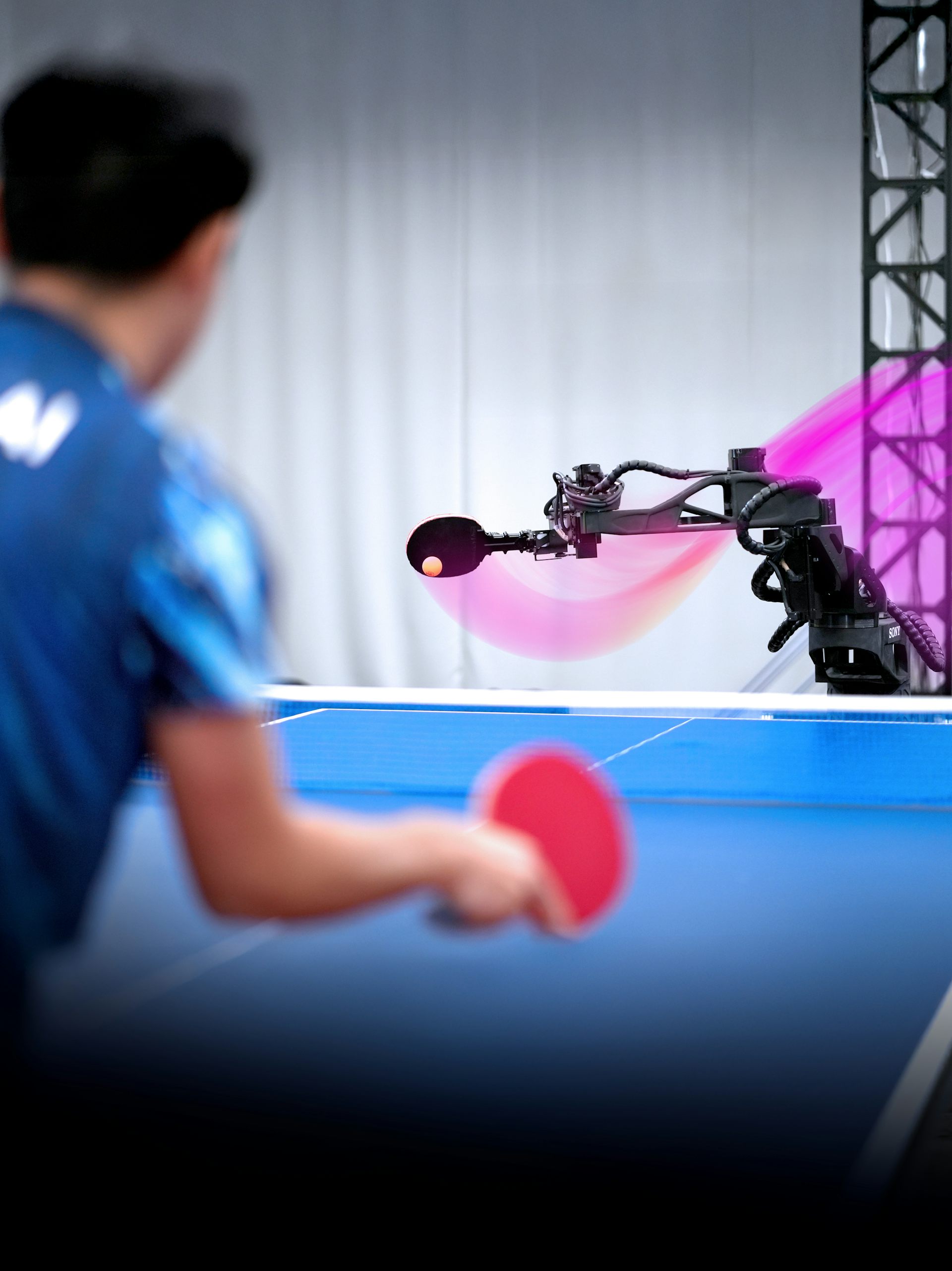
يمكن للروبوتات أن تجري ماراثوناً وتلعب كرة الطاولة. ولكن، هل سيحققون يوماً عظمة رياضية حقيقية؟
Robots can run a marathon and play ping pong. But will they ever achieve true sporting greatness?
The real opportunity is not to build robot champions, but to better understand human performance.
الفرصة الحقيقية ليست في بناء أبطال آليين، بل في فهم الأداء البشري بشكل أفضل.
A humanoid robot recently made headlines around the world for running a half-marathon and beating the human world record. Around the same time, an AI-powered robot defeated an elite human player in table tennis. What the robot lacked in experience, it made up for by reacting faster and more consistently than any person could.
جذب روبوت شبيه بالإنسان عناوين الأخبار مؤخراً حول العالم بعد أن شارك في سباق نصف ماراثون وتجاوز به الرقم القياسي البشري. وفي الوقت نفسه تقريباً، هزم روبوت يعمل بالذكاء الاصطناعي لاعباً بشرياً نخبوياً في لعبة تنس الطاولة. فما افتقده الروبوت من الخبرة، عوضه بتفاعله بشكل أسرع وأكثر اتساقاً مما يمكن لأي إنسان تحقيقه.
These moments feel like milestones. Finally, it seems machines are stepping into one of the most human arenas – sports.
تبدو هذه اللحظات وكأنها محطات فارقة. يبدو أخيراً أن الآلات بدأت تخطو إلى واحدة من أكثر الساحات إنسانية – وهي الرياضة.
But while it is tempting to frame this as robots versus humans, sport robotics isn’t really about competition. It’s about how machines can learn to move, react and interact in dynamic, unpredictable environments – and what that means for human performance.
ولكن بينما يغرينا تأطير هذا الأمر على أنه صراع بين الروبوتات والبشر، فإن الروبوتات الرياضية لا تتعلق حقاً بالمنافسة. بل تتعلق بكيفية تعلم الآلات الحركة والتفاعل في بيئات ديناميكية وغير متوقعة – وما يعنيه ذلك للأداء البشري.
How do you train a robot to play sport?
كيف تدرب الروبوت على ممارسة الرياضة؟
Training a robot to play sport is fundamentally different from training a human athlete.
تدريب الروبوت على ممارسة الرياضة يختلف جوهريًا عن تدريب الرياضي البشري.
People learn through practice, coaching and experience, constantly adjusting to changing conditions. In sport science, this is often described as a tight coupling between perception and action. That is, seeing, deciding, and moving in one continuous loop.
يتعلم البشر من خلال الممارسة والتدريب والخبرة، ويقومون بالتكيف المستمر مع الظروف المتغيرة. وفي علم الرياضة، غالبًا ما يوصف هذا بأنه اقتران وثيق بين الإدراك والفعل. أي، الرؤية واتخاذ القرار والحركة في حلقة مستمرة واحدة.
Robots, by contrast, are trained using a combination of simulation, data and control algorithms. Engineers build detailed virtual environments where robots can “practice” millions of times. They learn how to track objects, predict motion and coordinate their bodies. Sometimes, motion analysis techniques are used to track athletes doing the specific movements the robot needs to emulate.
أما الروبوتات، فبالمقابل، يتم تدريبها باستخدام مزيج من المحاكاة والبيانات وخوارزميات التحكم. يبني المهندسون بيئات افتراضية مفصلة حيث يمكن للروبوتات “التدرب” ملايين المرات. تتعلم كيفية تتبع الأجسام، والتنبؤ بالحركة، وتنسيق أجسادها. وفي بعض الأحيان، تُستخدم تقنيات تحليل الحركة لتتبع الرياضيين الذين يؤدون الحركات المحددة التي يحتاج الروبوت إلى محاكاتها.
For fast-paced sports such as table tennis, the challenge is extreme. A robot must detect the ball, predict its trajectory and execute a precise movement within fractions of a second. This requires close integration between computer vision, machine learning and real-time control.
بالنسبة للرياضات سريعة الوتيرة مثل كرة الطاولة، فإن التحدي بالغ الصعوبة. يجب على الروبوت اكتشاف الكرة، والتنبؤ بمسارها، وتنفيذ حركة دقيقة في غضون أجزاء من الثانية. يتطلب هذا تكاملاً وثيقًا بين الرؤية الحاسوبية، والتعلم الآلي، والتحكم في الوقت الفعلي.
One of the biggest advances in recent years has been the ability to train robots in simulation and then transfer those skills into the real world – a process known as “sim-to-real”. Combined with rapid improvements in sensors and computing, this has dramatically accelerated progress.
كان أحد أكبر التطورات في السنوات الأخيرة هو القدرة على تدريب الروبوتات في المحاكاة ثم نقل تلك المهارات إلى العالم الحقيقي – وهي عملية تُعرف باسم “المحاكاة إلى الواقع” (sim-to-real) . ومع دمجها مع التحسينات السريعة في أجهزة الاستشعار والحوسبة، فقد سرّع هذا التقدم بشكل كبير.
We’ve seen similar developments in robot basketball and robot soccer, where systems have evolved from simply locating the ball to coordinating as teams, making tactical decisions and adapting to opponents.
لقد شهدنا تطورات مماثلة في كرة السلة الآلية وكرة القدم الآلية، حيث تطورت الأنظمة من مجرد تحديد موقع الكرة إلى التنسيق كفرق، واتخاذ القرارات التكتيكية، والتكيف مع الخصوم.
Beyond entertainment
ما وراء الترفيه
While robot athletes make for compelling demonstrations, their greatest impact will likely be behind the scenes where they can be used to train human athletes.
في حين أن الرياضيين الروبوتيين يقدمون عروضاً مقنعة، فمن المرجح أن يكون تأثيرهم الأكبر خلف الكواليس، حيث يمكن استخدامهم لتدريب الرياضيين البشريين.
One of the central challenges in sport is designing effective practice. Athletes need repetition to build skill. But they also need variability to reflect real competition. Too much repetition becomes predictable; too much variability becomes chaotic.
أحد التحديات المركزية في الرياضة هو تصميم التدريب الفعّال. يحتاج الرياضيون إلى التكرار لبناء المهارة. لكنهم يحتاجون أيضاً إلى التنوع ليعكس المنافسة الحقيقية. فالإفراط في التكرار يصبح متوقعاً؛ والإفراط في التنوع يصبح فوضوياً.
Robotics offers a potential way to balance both.
يقدم علم الروبوتات طريقة محتملة لتحقيق التوازن بين الأمرين.
A robotic training partner can deliver highly repeatable actions at elite intensity, while also introducing carefully controlled variation. For example, a robotic tennis server could replicate the motion of a world-class player while systematically varying ball speed, flight and placement.
يمكن لشريك تدريب آلي أن يقدم حركات قابلة للتكرار بدرجة عالية وبشدة نخبوية، مع إدخال تنوع مُتحكَّم فيه بعناية. على سبيل المثال، يمكن لآلة خادم التنس أن تحاكي حركة لاعب عالمي المستوى مع تغيير منهجي لسرعة الكرة ومسارها وموقعها.
From a sport science perspective, this creates what is known as a “representative learning environment”. The key benefit is it replicates the key perceptual and decision-making demands of elite competition, which is difficult for coaches to recreate in the training environment.
من منظور علوم الرياضة، يخلق هذا ما يُعرف باسم “بيئة التعلم التمثيلية.” الفائدة الرئيسية هي أنه يكرر المتطلبات الإدراكية واتخاذ القرار الأساسية للمنافسة النخبوية، وهو أمر يصعب على المدربين إعادة إنشائه في بيئة التدريب.
In our work, we’ve been exploring how robotics could support sports such as tennis, cricket and the football codes. The goal is to combine realism, repeatability, variability, and data to enhance skill development and link technique to outcomes.
في عملنا، كنا نستكشف كيف يمكن للروبوتات أن تدعم رياضات مثل التنس والكريكيت وألعاب كرة القدم. الهدف هو الجمع بين الواقعية، وقابلية التكرار، والتنوع، والبيانات لتعزيز تطوير المهارات وربط التقنية بالنتائج.
Robots may also help manage training load. They can reduce the physical demands on coaches and training partners while still exposing athletes to high-quality game-like scenarios.
قد تساعد الروبوتات أيضاً في إدارة عبء التدريب. يمكنها تقليل المتطلبات البدنية على المدربين وشركاء التدريب، مع تعريض الرياضيين في الوقت نفسه لسيناريوهات شبيهة بالمباريات وذات جودة عالية.
Beyond performance, there are opportunities for fan engagement. Interactive robots at live events or demonstrations of elite skills could offer new ways for audiences to experience sport.
بالإضافة إلى الأداء، هناك فرص لمشاركة الجماهير. يمكن للروبوتات التفاعلية في الأحداث المباشرة أو عروض المهارات النخبوية أن تقدم طرقاً جديدة للجمهور لتجربة الرياضة.
Will robots ever be ‘great’?
هل يمكن للروبوتات أن تكون “عظيمة” يوماً ما؟
Over the next decade, robots will likely become more agile, more robust and better able to operate in complex environments. Tasks that robots currently find difficult, such as running on uneven terrain and catching or throwing balls, will become increasingly achievable.
خلال العقد القادم، من المرجح أن تصبح الروبوتات أكثر رشاقة وأكثر متانة وأقدر على العمل في البيئات المعقدة. وستصبح المهام التي تجدها الروبوتات صعبة حالياً، مثل الركض على التضاريس غير المستوية أو التقاط أو رمي الكرات، قابلة للتحقيق بشكل متزايد.
But even as robots improve, there are important limits.
ولكن حتى مع تحسن الروبوتات، هناك حدود مهمة.
Sporting greatness is not just about executing movements perfectly. It involves creativity, decision-making under pressure, and the ability to adapt in ways shaped by experience, emotion and context.
العظمة الرياضية لا تتعلق فقط بتنفيذ الحركات بشكل مثالي. بل تتضمن الإبداع، واتخاذ القرار تحت الضغط، والقدرة على التكيف بطرق تتشكل بواسطة الخبرة والعاطفة والسياق.
From a sport science perspective, elite performance emerges from the interaction between the athlete, the task and the environment. Robots can be engineered to perform specific tasks extremely well, but they do not experience this interaction in the same embodied, meaningful way.
من منظور علم الرياضة، ينبع الأداء النخبوي من التفاعل بين الرياضي والمهمة والبيئة. يمكن هندسة الروبوتات لأداء مهام محددة بشكل ممتاز للغاية، لكنها لا تختبر هذا التفاعل بالطريقة المتجسدة والهادفة نفسها.
This means robots may surpass humans in tightly defined challenges – such as bowling a cricket ball with perfect consistency – but they are unlikely to achieve greatness in the holistic human sense.
هذا يعني أن الروبوتات قد تتفوق على البشر في التحديات المحددة بدقة – مثل رمي كرة الكريكيت باتساق مثالي – لكنها من غير المرجح أن تحقق العظمة بالمعنى البشري الشامل.
A new role for robots in sport
دور جديد للروبوتات في الرياضة
Rather than replacing athletes, robots are more likely to become part of the sporting ecosystem.
بدلاً من أن تحل محل الرياضيين، من المرجح أن تصبح الروبوتات جزءاً من النظام البيئي الرياضي.
In the same way that video analysis and wearable sensors have transformed training, robotics offers a new tool for coaches and sport scientists. It enables practice environments that can be precisely controlled, repeated, and adapted to individual needs.
بالطريقة التي أحدث بها تحليل الفيديو وأجهزة الاستشعار القابلة للارتداء تحولاً في التدريب، تقدم الروبوتات أداة جديدة للمدربين وعلماء الرياضة. فهي تتيح بيئات تدريب يمكن التحكم فيها وتكرارها وتكييفها بدقة لتلبية الاحتياجات الفردية.
The real opportunity is not to build robot champions, but to better understand human performance, and help athletes reach higher levels.
الفرصة الحقيقية ليست بناء أبطال آليين، بل فهم الأداء البشري بشكل أفضل، ومساعدة الرياضيين على بلوغ مستويات أعلى.
Jonathan Roberts receives funding from the Australian Research Council.
يتلقى جوناثان روبرتس تمويلاً من المجلس الأسترالي للبحوث.
Marc Portus does not work for, consult, own shares in or receive funding from any company or organisation that would benefit from this article, and has disclosed no relevant affiliations beyond their academic appointment.
لم يقم مارك بورتوس بالعمل لدى أو استشارة أو امتلاك أسهم في أو تلقي تمويل من أي شركة أو منظمة يمكن أن تستفيد من هذه المقالة، ولم يفصح عن أي ارتباطات ذات صلة تتجاوز تعيينه الأكاديمي.
Read more
-
زبدة أم مارجرين؟ عالم أغذية يصف انحرافاتها الكيميائية الدقيقة وكيف يمكن أن تؤثر على مخبوزاتك
Butter or margarine? A food scientist describes their subtle chemical deviations and how they can affect your baked goods
-
٦ طرق تكذب بها ساعتك الذكية عليك، وفقاً للعلم
6 ways your smartwatch is lying to you, according to science