ثلاث طرق لتجنب الوقوع ضحية لمحتوى الذكاء الاصطناعي الرديء
Three ways to avoid being fooled by AI slop
Fact-checking can take hours or days while fakes can be created in seconds. So, what do we do?
قد يستغرق التحقق من الحقائق ساعات أو أيامًا، بينما يمكن إنشاء المحتوى المزيف في ثوانٍ. فماذا نفعل إذن؟
Global society makes billions of images and uploads hundreds of thousands of hours of video on the internet every day.
يُنشئ المجتمع العالمي مليارات الصور ويحمّل مئات الآلاف من الساعات من الفيديو على الإنترنت كل يوم.
The problem is, some of this content is misleading or downright wrong. And when it’s in visual form, it can be particularly convincing.
المشكلة هي أن جزءًا من هذا المحتوى مضلل أو خاطئ تمامًا. وعندما يكون في شكل بصري، يمكن أن يكون مقنعًا بشكل خاص.
Take the Met Gala that happened earlier this month in New York. While photographers snapped photos of Rhianna, Beyoncé and Nicole Kidman as they strutted their stuff, others saw “photos” of celebrities, such as Rosalía, Lady Gaga and Jacob Elordi, who were actually elsewhere (the images in the below Instagram carousel are AI generated) .
خذوا مثال حفل “الميت غالا” الذي أُقيم في نيويورك في وقت سابق من هذا الشهر. فبينما التقط المصورون صورًا لـ “ريانا” و”بيونسيه” و”نيكول كيدمان” وهن يتأنقن، رأى آخرون “صورًا” لمشاهير، مثل “روساليا” و”ليدي غاغا” و”جاكوب إلوردي”، وهم في أماكن أخرى بالفعل (الصور في معرض إنستغرام أدناه تم إنشاؤها بواسطة الذكاء الاصطناعي) .
While this type of AI slop might seem harmless and can be easily verified, other “media fakery” is becoming far more problematic and demands more robust techniques to verify.
في حين أن هذا النوع من المحتوى التوليدي بالذكاء الاصطناعي قد يبدو غير ضار ويمكن التحقق منه بسهولة، فإن “التزييف الإعلامي” الآخر أصبح أكثر إشكالية ويتطلب تقنيات أكثر قوة للتحقق.
Traditional verification techniques are falling short as AI becomes increasingly convincing and the line between authentic and synthetic blurs. This is true across all content, from still images to moving ones and audio deepfakes.
تفشل تقنيات التحقق التقليدية مع تزايد إقناع الذكاء الاصطناعي وتلاشي الخط الفاصل بين الأصيل والمُصطنع. وهذا صحيح عبر جميع أنواع المحتوى، من الصور الثابتة إلى المتحركة والتزييف العميق الصوتي.
The volume of content and the speed at which it travels doesn’t help. It also doesn’t help that fact-checking can take hours or days while fakes can be created in seconds.
إن حجم المحتوى والسرعة التي ينتقل بها لا يساعدان. كما أن حقيقة أن التحقق من الحقائق قد يستغرق ساعات أو أيامًا بينما يمكن إنشاء التزييف في ثوانٍ لا تساعد أيضًا.
First, equip yourself
أولاً، جهّز نفسك
Guides on detecting AI-generated content suggest multiple strategies and acknowledge there are no perfect solutions. But there are helpful things you can do.
تقترح الأدلة المتعلقة باكتشاف المحتوى المُولَّد بالذكاء الاصطناعي استراتيجيات متعددة وتُقر بأنه لا توجد حلول مثالية. ولكن هناك أشياء مفيدة يمكنك القيام بها.
Familiarise yourself with examples of fakes and study how they were fact-checked. This helps you understand what is possible and learn how fact-checkers sort real from fake.
تعرّف على أمثلة مزيفة وادرس كيفية التحقق من صحتها. يساعدك هذا على فهم ما هو ممكن وتعلم كيفية قيام مدققي الحقائق بتمييز الحقيقي من المزيف.
Look deeply. Zoom in. Pause the content or watch it frame-by-frame. Inspect the small details. Look out for inconsistencies, textures that are flat when they shouldn’t be, or patterns that are too perfect or are inexplicably off. Does the location shown match with where the scene is purported to be? Do shadows fall naturally and do lines follow the rules of perspective?
انظر بعمق. قم بالتكبير. أوقف المحتوى مؤقتًا أو شاهدِه إطارًا بإطار. افحص التفاصيل الصغيرة. ابحث عن التناقضات، أو الخامات المسطحة حيث لا ينبغي أن تكون، أو الأنماط المثالية بشكل مفرط أو المنحرفة بشكل غير مفهوم. هل يتطابق الموقع الموضح مع المكان الذي يُزعم أن المشهد فيه؟ وهل تسقط الظلال بشكل طبيعي وهل تتبع الخطوط قواعد المنظور؟
Look widely. Are you familiar with the source? What else does it publish and how long has it been around? What do other trusted sources say? How does this depiction compare to others that are available? Or if there aren’t others available, should that give you pause?
انظر باتساع. هل أنت مطلع على المصدر؟ ما الذي ينشره أيضاً وكم مضى عليه وجوده؟ ماذا تقول المصادر الموثوقة الأخرى؟ كيف يقارن هذا التصوير بالآخر المتاح؟ أو إذا لم يكن هناك مصادر أخرى متاحة، فهل يجب أن يجعلك ذلك تتوقف؟
Then, apply your learnings
ثم، طبّق ما تعلمته.
Let’s take an example and work through it together.
دعونا نأخذ مثالاً ونعمل عليه معاً.
This Facebook reel, posted by an account called “Real Talk Hub”, purports to show migrants being stopped and returned by Australian police at an airport.
يزعم هذا المقطع (ريل) على فيسبوك، الذي نشره حساب باسم “Real Talk Hub”، أنه يظهر مهاجرين يتم إيقافهم وإعادتهم من قبل شرطة أستراليا في مطار.
Before getting too granular, let’s take stock of the opening image.
قبل التعمق في التفاصيل، دعونا نلقي نظرة على الصورة الافتتاحية.
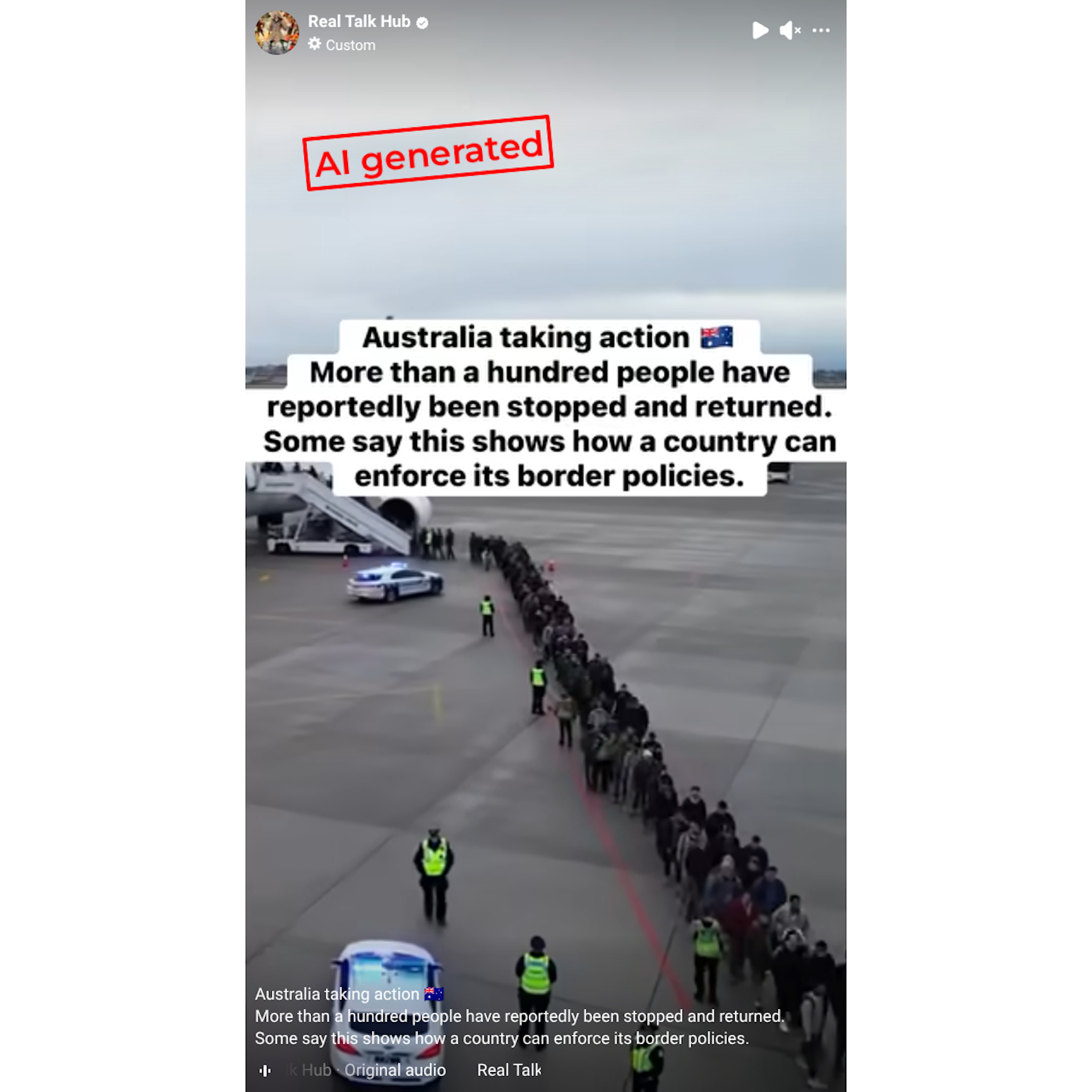
The video uses scale to show what appears to be a long stream of passengers. Some are moving toward and some are moving away from a plane. It is difficult to identify specifics in the video. The superimposed text blocks almost all of the horizon line. Shallow depth of field makes aspects in the distance blurry and hard to discern.
يستخدم الفيديو المنظور لإظهار ما يبدو أنه تيار طويل من الركاب. يتحرك البعض باتجاه الطائرة والبعض الآخر بعيداً عنها. من الصعب تحديد تفاصيل معينة في الفيديو. تغطي كتل النصوص المتراكبة تقريباً خط الأفق بالكامل. يسبب ضحالة عمق المجال تشويشاً في العناصر البعيدة ويجعلها يصعب تمييزها.
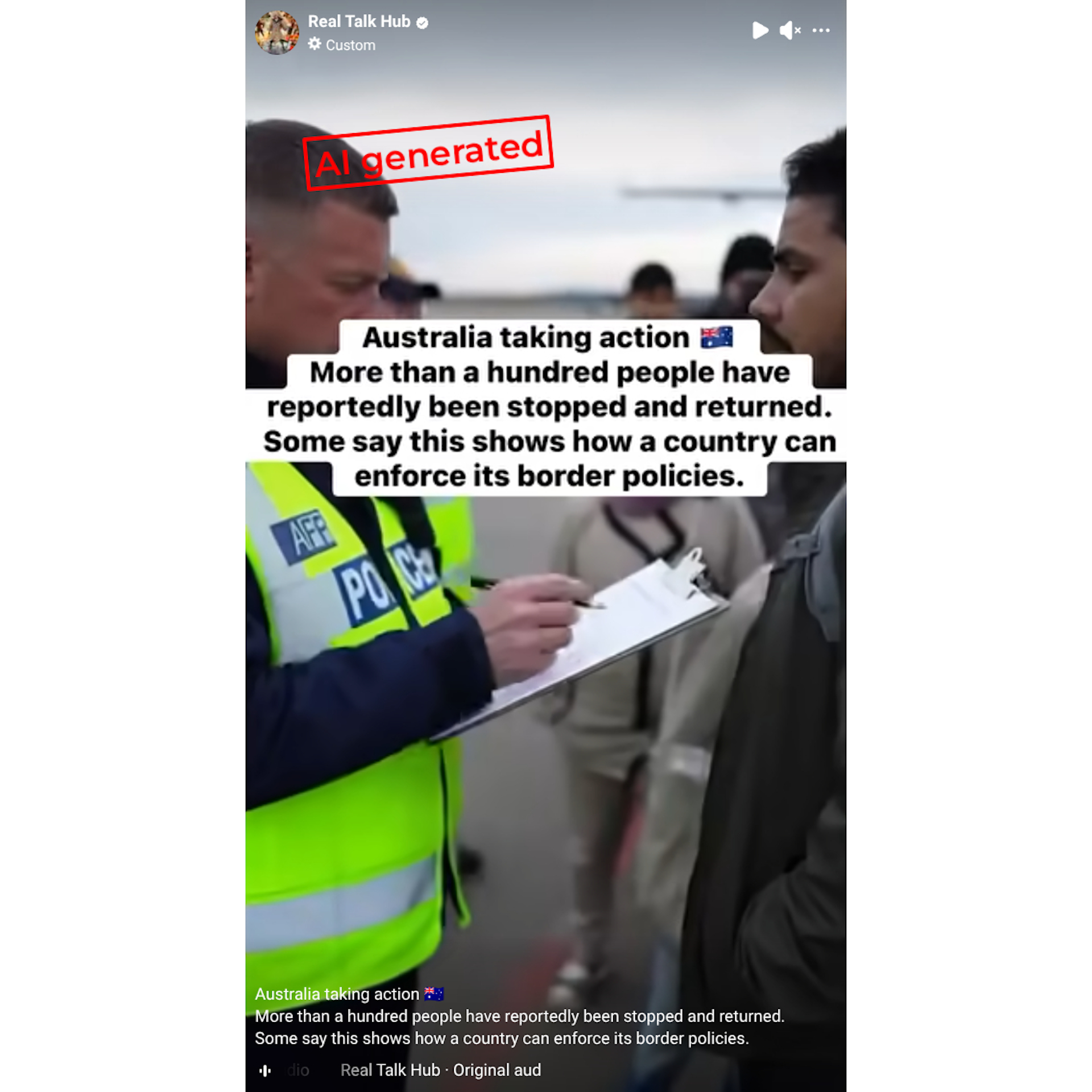
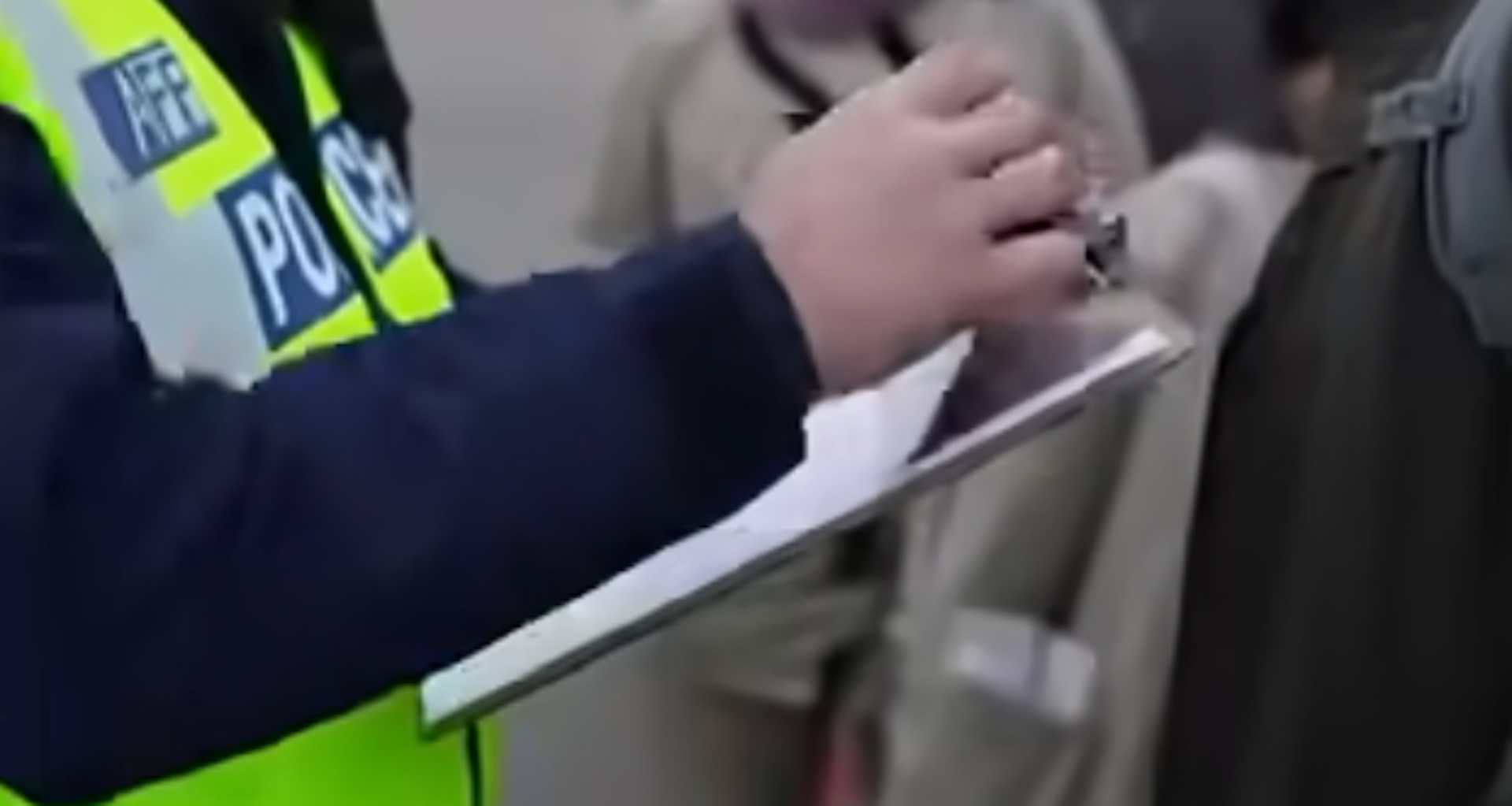
Many of the passengers have darker skin and are visually coded as “other”. They interact with a light-skinned police officer who takes notes on a clipboard.
العديد من الركاب لديهم بشرة داكنة ويتم تصنيفهم بصرياً على أنهم “آخرون.” يتفاعلون مع ضابط شرطة ذي بشرة فاتحة يسجل الملاحظات على لوح (كليبورد) .
The vertical video is framed carefully to not reveal identifiers like the name of the airline that seems to start with the letter “P”. This makes it difficult to search the airline’s name and whether credible sources corroborate the story that’s told.
تم تأطير الفيديو العمودي بعناية لعدم الكشف عن معرّفات مثل اسم شركة الطيران الذي يبدو أنه يبدأ بحرف “P.” وهذا يجعل من الصعب البحث عن اسم شركة الطيران وما إذا كانت المصادر الموثوقة تؤكد القصة التي تُروى.
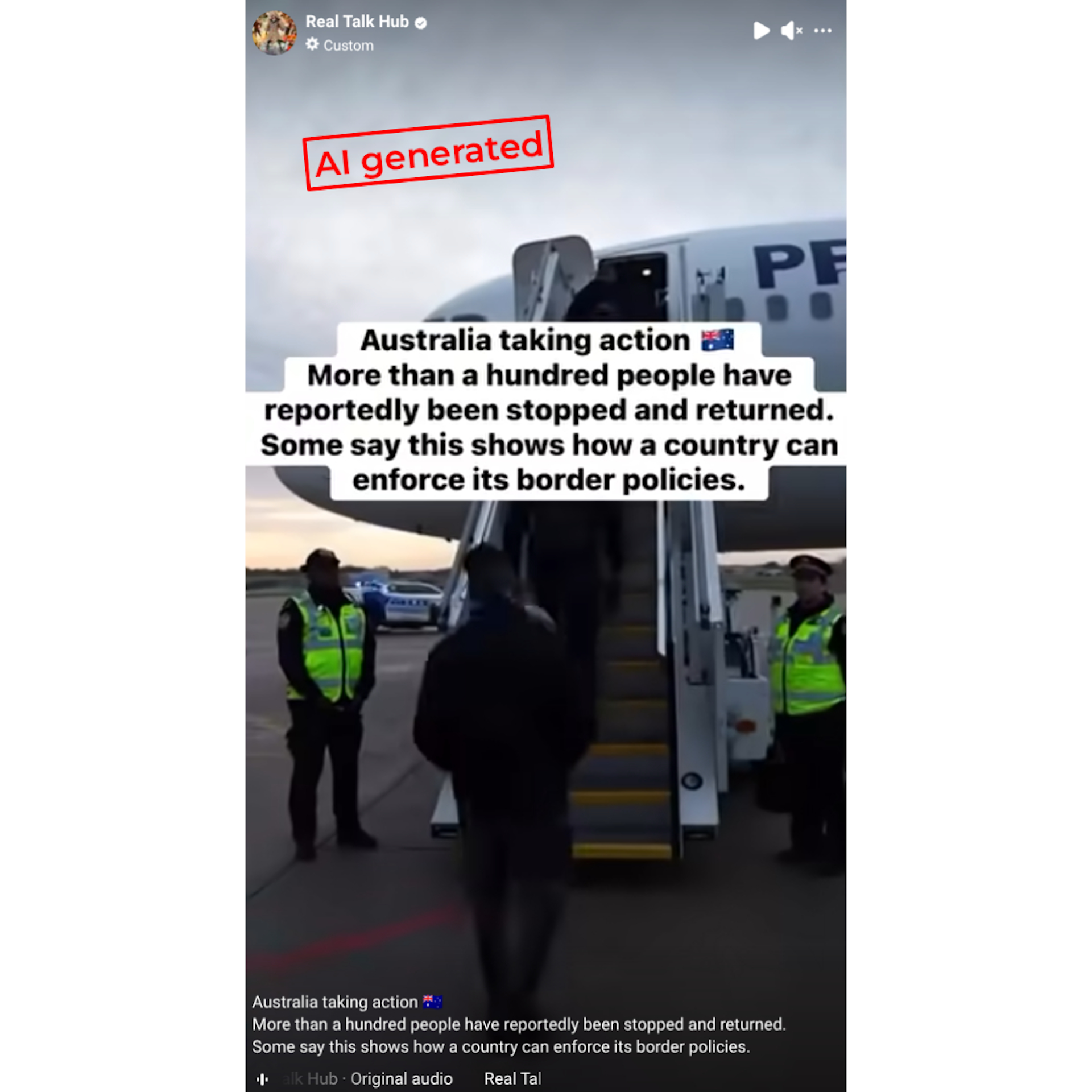
Even though the people and scenes look realistic at first glance, the video’s integrity unravels when we slow down and look closer. People in the passenger line morph and transform.
على الرغم من أن الأشخاص والمشاهد تبدو واقعية للوهلة الأولى، إلا أن سلامة الفيديو تتفكك عندما نبطئ وننظر عن كثب. يتغير الناس في صف الركاب ويتحولون.
The officer is able to single-handedly remove the paper from the clipboard and it appears to inexplicably leave white strips behind. The police vests look different to images you can find in verified media photos of the Australian Federal Police.
يتمكن الضابط من إزالة الورقة من اللوح بمفرده، ويبدو أنه يترك وراءه شرائط بيضاء بشكل غير مبرر. وتبدو سترات الشرطة مختلفة عن الصور التي يمكن العثور عليها في وسائل الإعلام الموثقة لشرطة فيدرالية أستراليا.
Taken together, all these clues suggest the video is AI-generated.
مجتمعة، تشير كل هذه الأدلة إلى أن الفيديو مُولَّد بواسطة الذكاء الاصطناعي.
Think like a fact-checker
فكّر كمدقق حقائق
Many AI-generated videos can trick you and create a very compelling narrative. So, fact-checkers have developed triangulated methodologies that examine elements beyond just what you see in the video.
يمكن للعديد من مقاطع الفيديو التي تم إنشاؤها بواسطة الذكاء الاصطناعي أن تخدعك وتصنع سردًا مقنعًا للغاية. لذلك، طور مدققو الحقائق منهجيات ثلاثية الأبعاد تفحص عناصر تتجاوز ما تراه في الفيديو فحسب.
One way to do this is to systematically check contextual factors – the other things surrounding the content. Our team’s research has found professional fact-checkers usually pay attention to the type of social media accounts or websites distributing suspicious media.
إحدى الطرق للقيام بذلك هي التحقق بشكل منهجي من العوامل السياقية – أي الأشياء الأخرى المحيطة بالمحتوى. وقد وجد بحث فريقنا أن مدققي الحقائق المحترفين عادة ما ينتبهون إلى نوع حسابات وسائل التواصل الاجتماعي أو المواقع الإلكترونية التي تنشر الوسائط المشبوهة.
For this AAP verification on a video about banning dogs on the beach, it was crucial to inspect the user’s activity and posting patterns.
بالنسبة لعملية التحقق هذه (AAP) حول مقطع فيديو يتعلق بحظر الكلاب على الشاطئ، كان من الضروري فحص نشاط المستخدم وأنماط نشره.
In addition to visual anomalies, the fact-checkers also found an invisible watermark that helped them determine the content was AI-generated.
بالإضافة إلى الشذوذات البصرية، عثر مدققو الحقائق أيضًا على علامة مائية غير مرئية ساعدتهم في تحديد أن المحتوى تم إنشاؤه بواسطة الذكاء الاصطناعي.
Other things to check are how long a social media account has been operating, how often the social media account posts, and whether the account is transparent about its use of AI.
أشياء أخرى يجب التحقق منها هي المدة التي عمل فيها حساب وسائل التواصل الاجتماعي، وكم مرة ينشر الحساب، وما إذا كان الحساب شفافًا بشأن استخدامه للذكاء الاصطناعي.
These aren’t fool-proof indicators of authenticity, though. The migrant example above comes from an account that is about five years old. It also comes from a “verified” account, which might make it feel more credible. But both Facebook and X now let users pay for this verification.
ومع ذلك، فهذه ليست مؤشرات مضمونة للمصداقية. فمثال المهاجر المذكور أعلاه يأتي من حساب عمره حوالي خمس سنوات. ويأتي أيضًا من حساب “مُوثَّق”، مما قد يجعله يبدو أكثر مصداقية. لكن كلًا من فيسبوك وإكس يسمحان الآن للمستخدمين بالدفع مقابل هذا التحقق.
Overall, when it comes to suspect images or video, don’t just look deeply. Also look widely.
بشكل عام، عندما يتعلق الأمر بالصور أو مقاطع الفيديو المشبوهة، لا تنظر بعمق فحسب. بل انظر أيضًا باتساع.
AI-generated content can increasingly fool our eyes, so you also have to look beyond what’s in the video. Taking a mixed-methods approach that considers visual and contextual clues can help. By training your ability to think like a fact-checker, you can stay safer online.
يمكن للمحتوى الذي تم إنشاؤه بواسطة الذكاء الاصطناعي أن يخدع أعيننا بشكل متزايد، لذلك يجب عليك أيضًا النظر إلى ما وراء ما هو موجود في الفيديو. يمكن أن يساعد اتباع نهج متعدد الأساليب يأخذ في الاعتبار الأدلة البصرية والسياقية. ومن خلال تدريب قدرتك على التفكير كمدقق حقائق، يمكنك البقاء أكثر أمانًا عبر الإنترنت.
Silvia Montaña-Niño is also associate investigator of the ARC Centre of Excellence for Automated Decision-Making & Society and the Fact Check Research Team at this centre.
سيلفيا مونتانا-نيньо هي أيضًا محققة مشاركة في مركز التميز التابع للمجلس الأسترالي للقرارات الآلية والمجتمع وفريق أبحاث تدقيق الحقائق في هذا المركز.
T.J. Thomson receives funding from the Australian Research Council. He is an affiliate with the ARC Centre of Excellence for Automated Decision Making & Society.
يتلقى تي. جيه. طومسون التمويل من المجلس الأسترالي للبحوث. وهو منتسب إلى مركز التميز التابع للمجلس الأسترالي للقرارات الآلية والمجتمع.
Read more
-
قرن وحيد القرن: لماذا تريد جنوب أفريقيا إحياء التجارة الدولية، ولماذا يخشى النقاد العواقب
Rhino horn: why South Africa wants to revive the international trade, and why critics fear the consequences
-
وجدنا مئات من المقابر الجماعية الضخمة القديمة المخفية في صحراء الصحراء
We found hundreds of huge ancient mass graves hidden in the Sahara desert