لماذا يستحضر رئيس بولندا تاريخ فترة الحرب في خلافه مع فولوديمير زيلينسكي
Why Poland’s president is invoking wartime history in a dispute with Volodymyr Zelensky
This row is more about domestic Polish politics than any diplomatic incident.
يتعلق هذا الجدل بالسياسة البولندية الداخلية أكثر من كونه حادثاً دبلوماسياً.
There have long been tensions, political, economic and cultural, between Poland and Ukraine. But that hasn’t prevented Poland from being the biggest supporter of its neighbour, taking in millions of Ukrainians fleeing the war, about 1 million of whom have remained.
لطالما كانت هناك توترات، سياسية واقتصادية وثقافية، بين بولندا وأوكرانيا. لكن هذا لم يمنع بولندا من أن تكون أكبر داعم لجارتها، حيث استقبلت ملايين الأوكرانيين الفارين من الحرب، ويُقدر منهم مليون شخص ما زالوا مقيمين.
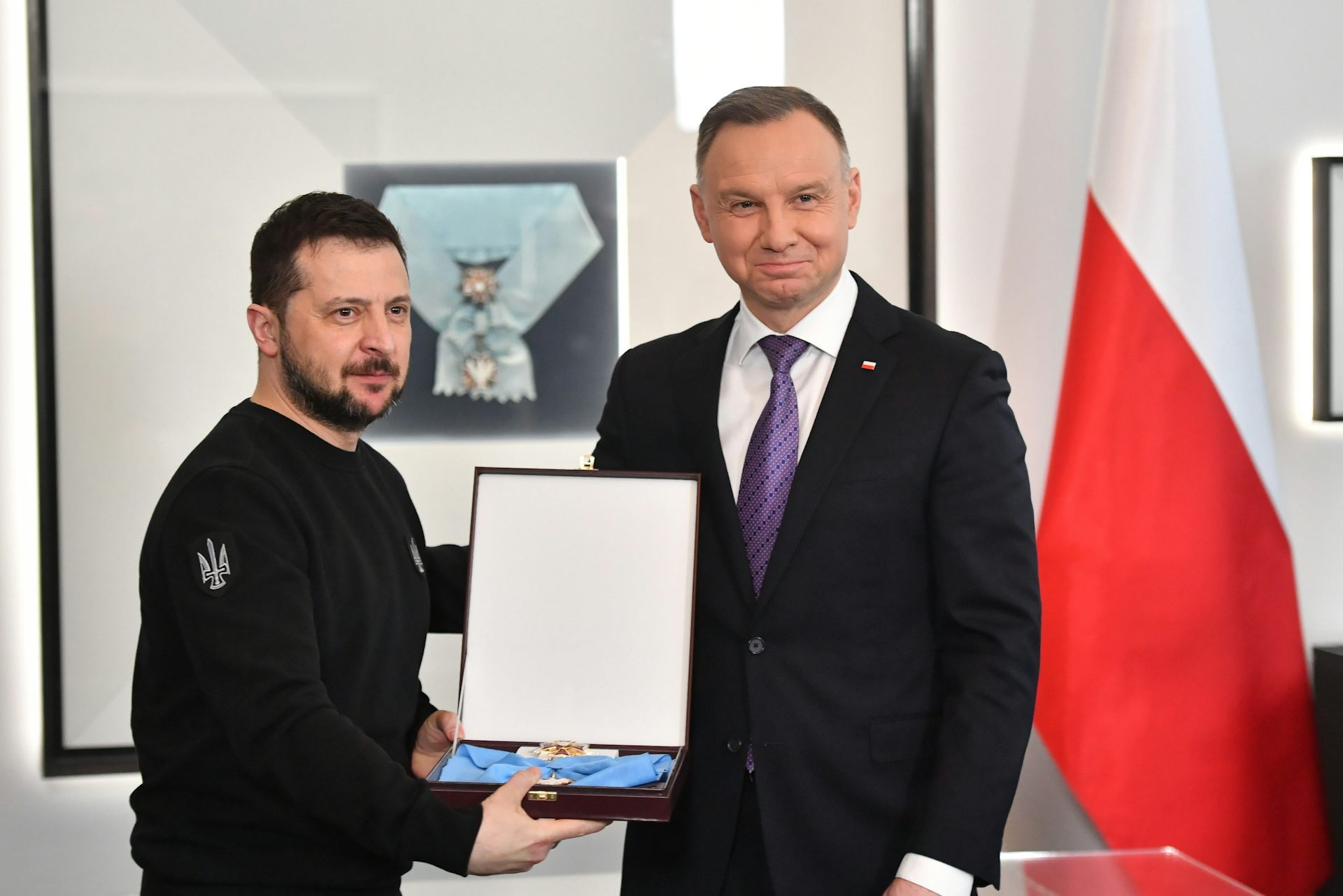
And in 2023, Poland conferred its highest honour, the Order of the White Eagle, on Ukraine’s president Volodymyr Zelensky. At the time, then-president Andrzej Duda told the Ukrainian president: “It is difficult to hide the tears of emotion watching your service to your homeland.”
وفي عام 2023، منحت بولندا أعلى وسام لها، وهو “نظام النسر الأبيض”، للرئيس الأوكراني فولوديمير زيلينسكي. وفي ذلك الوقت، قال الرئيس آنذاك أندرياج دودا للرئيس الأوكراني: “من الصعب إخفاء دموع العاطفة عند مشاهدة خدمتك لوطنك.”
But on June 19, the current president, Karol Nawrocki, announced he was rescinding the order and stripping Zelensky of the honour. He did so after Zelensky awarded the honorary title “Heroes of the UPA” to an elite unit of Ukraine’s special forces. Zelensky said he had awarded the honour at the unit’s request. He said it was his duty as commander-in-chief, who “must provide them with everything they need to protect our people and our land”. He added: “And if they are motivated by our heroes … and if this is very important to them, I must do whatever they tell me.”
ولكن في 19 يونيو، أعلن الرئيس الحالي، كارول نافروتشكي، أنه يلغي الأمر ويجرّد زيلينسكي من هذا التكريم. وقد فعل ذلك بعد أن منح زيلينسكي اللقب الشرفي “أبطال اليو بي إيه” لوحدة نخبة من القوات الخاصة الأوكرانية. وقال زيلينسكي إنه قد منح هذا التكريم بناءً على طلب الوحدة. وذكر أنه واجبه كقائد أعلى، الذي “يجب أن يزودهم بكل ما يحتاجونه لحماية شعبنا وأرضنا”. وأضاف: “وإذا كان أبطالنا يحفزونهم… وإذا كان هذا مهمًا جدًا بالنسبة لهم، فيجب أن أفعل ما يطلبونه مني”.
Political spats between the two countries over historical memory are nothing new. But this is the first since Russia’s full-scale invasion of Ukraine to escalate to this degree. And the fact is that it has more to do with domestic Polish politics than any long-term rift between Poland and Ukraine.
إن الخلافات السياسية بين البلدين حول الذاكرة التاريخية ليست شيئًا جديدًا. لكن هذه هي المرة الأولى منذ الغزو الروسي الشامل لأوكرانيا التي تتصاعد إلى هذا الحد. والحقيقة هي أنها تتعلق بالسياسة البولندية الداخلية أكثر من أي خلاف طويل الأمد بين بولندا وأوكرانيا.
First, some background. The Ukrainian Insurgent Army (UPA) was a Ukrainian nationalist formation that fought against the Soviets during the second world war. After harsh Soviet rule in Ukraine many in the UPA saw the German military invasion as liberating them from Soviet repression.
أولاً، بعض الخلفية. كانت “الجيش الثوري الأوكراني” (UPA) تشكيلاً قوميًا أوكرانيًا حارب السوفييت خلال الحرب العالمية الثانية. وبعد الحكم السوفيتي القاسي في أوكرانيا، رأى الكثيرون في الـ UPA الغزو العسكري الألماني بمثابة تحرير لهم من القمع السوفيتي.
But it turned out that the Nazis were even worse than the Soviets. For the Poles, though, memories of the massacre of ethnic Poles in Volhynia, now Volyn, in Ukraine, by members of the UPA, remain raw.
لكن اتضح أن النازيين كانوا أسوأ حتى من السوفييت. أما بالنسبة للبولنديين، فتبقى ذكريات مذبحة البولنديين من الأكراد في فولينيا، التي أصبحت الآن “فولين”، في أوكرانيا، على يد أعضاء الـ UPA، قاسية.
As American historian Timothy Snyder has written: “Ukrainians think about the UPA mainly through … the struggle against the Red Army after 1945. Poles remember … 1943, when the UPA killed tens of thousands of Poles in Volhynia.”
كما كتب المؤرخ الأمريكي تيموثي سنايدر: “يفكر الأوكرانيون في الـ UPA بشكل رئيسي من خلال… النضال ضد الجيش الأحمر بعد عام 1945. أما البولنديون فيتذكرون… عام 1943، عندما قتل الـ UPA عشرات الآلاف من البولنديين في فولينيا”.
These memories lead to different interpretations which are used to serve often divergent domestic political purposes in the two countries. Despite the UPA’s history, Ukraine continues to award UPA-related honours because the nationalist movement has become a symbol of resistance to Soviet and Russian rule, which fits with the broader post-2014 campaign to rid Ukraine of vestiges of its communist past.
تقود هذه الذكريات إلى تفسيرات مختلفة تُستخدم لخدمة أغراض سياسية داخلية متباينة غالبًا في البلدين. وعلى الرغم من تاريخ الـ UPA، تواصل أوكرانيا منح التكريمات المتعلقة بالـ UPA لأن الحركة القومية أصبحت رمزاً للمقاومة ضد الحكم السوفيتي والروسي، وهو ما يتناسب مع الحملة الأوسع بعد عام 2014 لتجريد أوكرانيا من بقايا ماضيها الشيوعي.
Russia’s invasion of Ukraine has reinforced this trend, making such honours less about revisiting the past than about mobilising contemporary symbols of national resistance in Ukraine – even if they remain deeply controversial in Poland.
وقد عزز غزو روسيا لأوكرانيا هذا الاتجاه، مما جعل مثل هذه التكريمات أقل ارتباطًا بإعادة زيارة الماضي وأكثر ارتباطًا بتعبئة رموز المقاومة الوطنية المعاصرة في أوكرانيا – حتى لو ظلت مثيرة للجدل بعمق في بولندا.
Nawrocki claims he revoked Zelensky’s award because “his countrymen’s pain threshold has been crossed”. It’s a strong reaction, which drastically contrasts with Nawrocki’s own previous position as head of the Institute of National Remembrance in 2023, when he stated that Ukraine was free to honour its own historical figures, including the UPA’s leaders.
يزعم نافروتشكي أنه ألغى جائزة زيلينسكي لأن “عتبة الألم لدى أبناء وطنه قد تم تجاوزها.” وهو رد فعل قوي، يتناقض بشكل كبير مع موقف نافروتشكي السابق كرئيس لمعهد الذاكرة الوطنية في عام 2023، عندما صرح بأن أوكرانيا حرة بتكريم شخصياتها التاريخية الخاصة، بما في ذلك قادة UPA.
The Polish prime minister, Donald Tusk, was more restrained, urging both countries to stop quarrelling about the past for the sake of the future. His deputy Radosław Sikorski, who is also Poland’s minister of foreign affairs, pointed out that while Zelensky’s decree was inappropriate, that Nawrocki’s reaction was disproportionate and had been welcomed in Moscow.
وكان رئيس الوزراء البولندي، دونالد توسك، أكثر تحفظًا، حيث حث البلدين على التوقف عن الخصام حول الماضي من أجل المستقبل. وأشار نائبه رادوسلاف سيكورسكي، الذي هو أيضًا وزير الخارجية البولندي، إلى أنه بينما كان مرسوم زيلينسكي غير مناسب، فإن رد فعل نافروتشكي كان مبالغًا فيه وقد رحب به في موسكو.
Jockeying for political advantage
الترجمة إلى اللغة العربية الفصحى الحديثة:
This contrast between the responses of Nawrocki, a rightwing populist, and the centre-left government suggests that the dispute cannot be explained by history alone. It illustrates the friction between the right-leaning president and the left-leaning government. Nawrocki has unofficially started a campaign for next year’s parliamentary election and is rallying for his Law and Justice party (PiS) by playing up anti-Ukrainian sentiment.
هذا التباين بين ردود أفعال نافروتشي، وهو شخصية شعبوية يمينية، والحكومة الوسطية اليسارية يشير إلى أن النزاع لا يمكن تفسيره بالتاريخ وحده. إنه يوضح الاحتكاك بين الرئيس المائل لليمين والحكومة المائلة لليسار. وقد بدأ نافروتشي بشكل غير رسمي حملة للانتخابات البرلمانية العام المقبل، ويحشد مؤيديه لحزب القانون والعدالة (PiS) من خلال تضخيم المشاعر المعادية لأوكرانيا.
Before being elected, Nawrocki promised to block Ukraine’s accession to Nato. He has also been against Ukraine’s membership of the EU. Zelensky has given him an opportunity to capitalise on anti-Ukrainian narratives that play well to Poles disaffected by the war.
قبل انتخابه، وعد نافروتشي بمنع انضمام أوكرانيا إلى الناتو. كما عارض عضويتها في الاتحاد الأوروبي. وقد أتاح له زيلينسكي فرصة الاستفادة من السرديات المناهضة لأوكرانيا التي تلقى رواجاً لدى البولنديين المستائين من الحرب.
Additionally, by revoking Zelensky’s honour, Nawrocki has laid down a challenge to Tusk. The prime minister’s countersignature is required to validate the decision – and this would put him in a difficult political situation domestically.
بالإضافة إلى ذلك، ومن خلال إلغاء وسام زيلينسكي، وضع نافروتشي تحدياً أمام توسك. يتطلب تصديق رئيس الوزراء التوقيع المضاد لإضفاء الشرعية على القرار – وهذا سيضعه في موقف سياسي صعب محلياً.
Following the dispute, Nawrocki’s approval ranking is at a historic high of 54.8% – up by 8.4 percentage points from a month before.
في أعقاب النزاع، وصل تصنيف موافقة نافروتشي إلى مستوى تاريخي بلغ 54.8% – بزيادة قدرها 8.4 نقطة مئوية عن الشهر الذي سبقه.
While anti-Ukrainian rhetoric falls on fertile soil in Poland due to popular fatigue at supporting so many refugees, there is still strong support for Ukraine.
بينما تقع الخطابات المعادية لأوكرانيا على أرض خصبة في بولندا بسبب الإرهاق الشعبي من دعم هذا العدد الكبير من اللاجئين، لا يزال هناك دعم قوي لأوكرانيا.
Jerzy Wójcik, a prominent Polish journalist and media executive, who has led major humanitarian campaigns like Warmth from Poland for Kyiv, initiated a petition to present Zelenskyy with Citizen’s Order of the Future award. He said that “the Polish right wing has launched a campaign ahead of the parliamentary elections and is ruthlessly exploiting the Volhynia tragedy for political gain”.
أطلق ييرزي فويتشيك، الصحفي البولندي البارز والمدير الإعلامي، الذي قاد حملات إنسانية كبرى مثل “دفء بولندا لكيف” (Warmth from Poland for Kyiv) ، عريضة لتقديم وسام مواطن المستقبل إلى زيلينسكي. وقال إن “اليمين البولندي أطلق حملة قبل الانتخابات البرلمانية ويستغل مذبحة فولينيا بوحشية لتحقيق مكاسب سياسية.”
UPA’s past links to genocide are felt by most Poles. But there is still a strong tension when it comes to Nawrocki’s revocation of Zelensky’s order. This, along with Polish public support for Ukraine, suggests that the dispute is more complex than the political rhetoric implies.
يشعر معظم البولنديين بالروابط التاريخية السابقة لحزب UPA بالجريمة ضد الإنسانية. ولكن لا يزال هناك توتر كبير عندما يتعلق الأمر بإلغاء نافروتشي لوسام زيلينسكي. ويشير هذا، إلى جانب الدعم الشعبي البولندي لأوكرانيا، إلى أن النزاع أكثر تعقيداً مما تشير إليه الخطابات السياسية.
The dispute is not primarily about the UPA – nor is it evidence of a fundamental shift in Polish foreign policy. While it has the potential to become a bigger diplomatic challenge for the two countries, it illustrates a broader phenomenon: political leaders mobilising contested history to solve present-day domestic political problems.
لا يتعلق النزاع بشكل أساسي بحزب UPA – ولا هو دليل على تحول جوهري في السياسة الخارجية البولندية. وفي حين أن له القدرة على أن يصبح تحدياً دبلوماسياً أكبر للبلدين، فإنه يوضح ظاهرة أوسع: قيام القادة السياسيين بتعبئة التاريخ المتنازع عليه لحل المشاكل السياسية المحلية المعاصرة.
Similar dynamics can be seen in relations between Serbia and Kosovo. Their political leaders regularly invoke competing historical narratives surrounding the 14th-century Battle of Kosovo to strengthen their domestic political standing, often at the expense of dialogue between the two sides.
يمكن رؤية ديناميكيات مماثلة في العلاقات بين صربيا وكوسوفو. ويستحضر قادتهما السياسيون بانتظام روايات تاريخية متنافسة حول معركة كوسوفو في القرن الرابع عشر لتعزيز مكانتهما السياسية المحلية، وغالباً ما يكون ذلك على حساب الحوار بين الجانبين.
These strategies may generate short-term domestic political gains. But they risk undermining strategically important relationships.
قد تولد هذه الاستراتيجيات مكاسب سياسية محلية قصيرة الأجل. لكنها تخاطر بتقويض العلاقات ذات الأهمية الاستراتيجية.
Artur Nadiiev does not work for, consult, own shares in or receive funding from any company or organisation that would benefit from this article, and has disclosed no relevant affiliations beyond their academic appointment.
أرتور ناديف لا يعمل لدى أو يشارك في ملكية أسهم أو يتلقى تمويلاً من أي شركة أو منظمة يمكن أن تستفيد من هذه المقالة، ولم يفصح عن أي انتماءات ذات صلة تتجاوز تعيينه الأكاديمي.
Read more
-
الفواكه المجمدة والخضروات المعلبة رخيصة، ولكن هل هي صحية مثل الأطعمة الطازجة؟
Frozen fruit and canned veg are cheap, but are they as healthy as fresh food?
-
‘Park the bus’، و’التساعية الوهمية’، و’كرة القدم الشاملة’: ماذا تعني عبارات كرة القدم الغريبة؟
‘Park the bus’, ‘the false nine’ and ‘total football’: what do soccer’s strange phrases mean?