央行黄金储备处于五十年高位。支撑储备金激增的原因是什么?
Central bank gold holdings are at a 50-year high. What’…
For some central banks, stores of gold can offer a shield against financial sanctions.
对于一些中央银行来说,黄金储备可以提供抵御金融制裁的屏障。
Over the past few years, central banks have been quietly buying up significant quantities of gold.
过去几年,各国央行一直在悄悄购买大量的黄金。
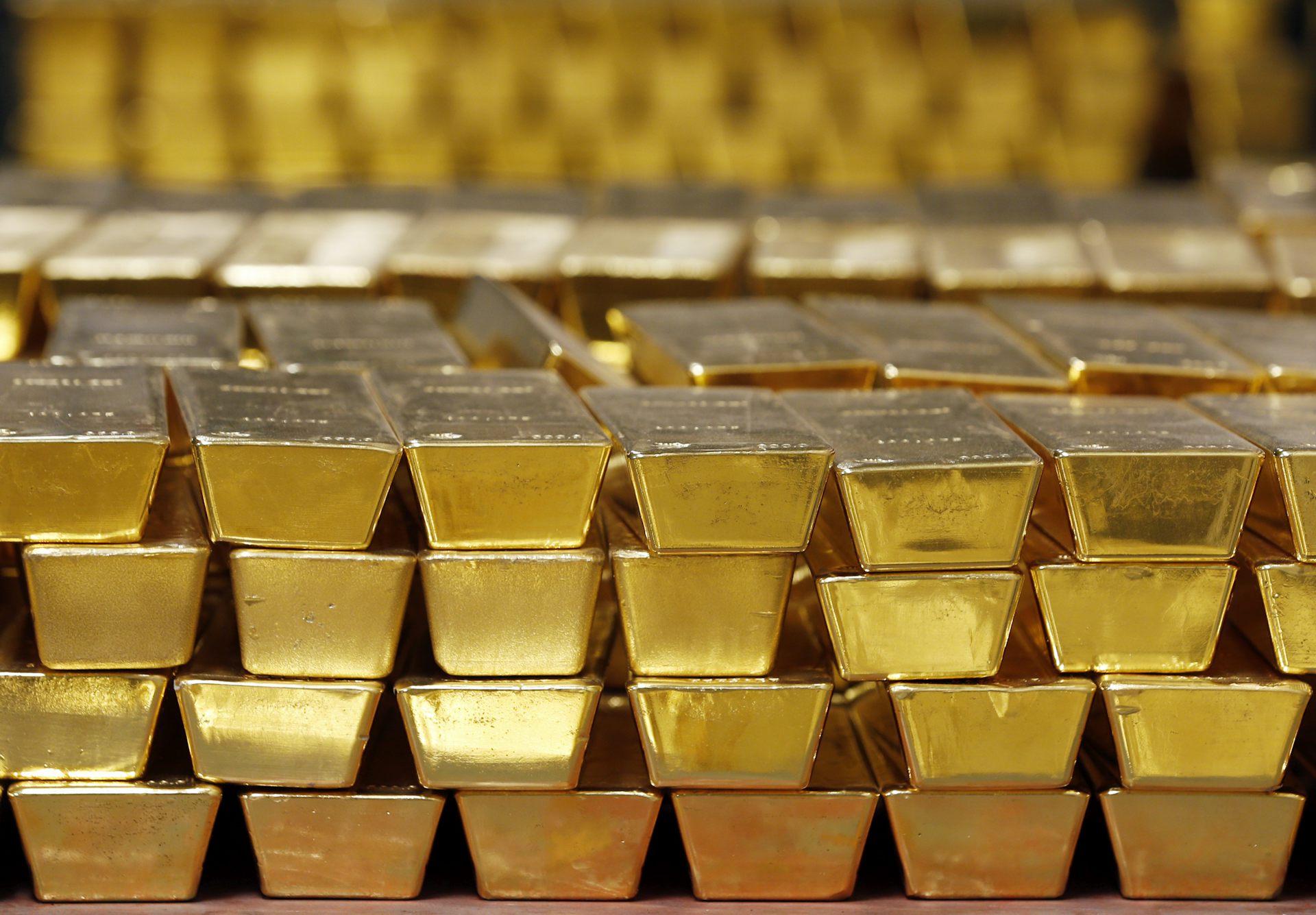
As the trend has accelerated, official agencies now hold the highest quantity of gold since 1975 – more than 36,000 tonnes of the precious metal.
随着这一趋势加速,官方机构目前持有的黄金量是自1975年以来的最高水平——超过36,000吨的贵金属。
Central bank buying of gold picked up after Russia’s invasion of Ukraine in 2022. The World Gold Council says central banks have bought an average of 1,000 tonnes a year over the past four years – double the average of the previous decade. It’s one factor behind the surge in the gold price last year.
自2022年俄罗斯入侵乌克兰后,央行购买黄金的力度有所增加。世界黄金协会表示,过去四年间,各国央行平均每年购买1,000吨——是前十年平均水平的两倍。这是去年黄金价格飙升的一个因素。
The council also noted a record 45% of central banks surveyed expect to increase their holdings over the next year.
该协会还指出,高达45%的受访央行预计将在未来一年内增加其黄金储备。
So, what’s behind this increased desire to hold physical bullion?
那么,这种增加持有实物黄金的欲望背后是什么原因呢?
Why do central banks hold reserve assets?
中央银行为什么要持有准备资产?
Central banks hold a variety of assets as “reserves” or savings. They can use these assets to help intervene in financial markets to support their currency, or in times of market stress.
中央银行持有各种资产作为“准备金”或储备。它们可以使用这些资产帮助干预金融市场以支持本国货币,或者在市场压力时期使用。
Reserves can help absorb pressures during currency crises (such as when the Australian dollar plunged to a record low of 47.75 US cents in April 2001) or when borrowing from overseas is difficult or too expensive.
在货币危机期间(例如,2001年4月澳元暴跌至历史低点47.75美分)或从海外借贷困难或成本过高时,准备金可以帮助吸收压力。
These reserve assets are held in foreign currencies and typically include government debt such as US Treasuries, deposits, banknotes and precious metals such as gold.
这些准备资产以外币形式持有,通常包括美国国债等政府债务、存款、纸币以及黄金等贵金属。
What’s behind the recent rise in gold holdings?
近期黄金持有量增加背后的原因是什么?
The strong central bank demand for gold has not been broad-based. Since 2009 it has largely come from emerging markets and developing economies, led by Russia, China, Turkey, India and Kazakhstan.
中央银行对黄金的强劲需求并非广泛分布。自2009年以来,它主要来自新兴市场和发展中经济体,其中以俄罗斯、中国、土耳其、印度和哈萨克斯坦为首。
There are several reasons for this. The World Gold Council’s annual survey of central banks found 90% cited the performance of gold during times of crisis.
有几个原因。世界黄金协会对中央银行的年度调查发现,有90%的参与者提到了黄金在危机时期(或:动荡时期)的表现。
Other top reasons were that gold is a long-term store of value, particularly during periods of high inflation; and portfolio diversification, meaning investing in a range of assets and places to reduce risk.
其他主要原因包括黄金作为长期价值储存手段,尤其是在高通胀时期;以及投资组合多元化,即投资于一系列资产和地点以降低风险。
A shield against sanctions
制裁的盾牌
However, another important explanation has emerged. Gold also provides protection against financial sanctions that can be imposed by foreign governments.
然而,另一个重要的解释也出现了。黄金还可抵御外国政府可能实施的金融制裁。
Financial sanctions are punitive measures designed to restrict or limit a country’s access to money, financial services or global markets. Governments use sanctions to put pressure on a country and influence its behaviour.
金融制裁是旨在限制或限制一国获取资金、金融服务或全球市场的惩罚性措施。各国政府利用制裁来对国家施加压力并影响其行为。
Research suggests the increasing use of financial sanctions by the United States, the European Union and other governments is behind the accelerated move into gold by emerging market economies.
研究表明,美国、欧盟和其他政府日益使用金融制裁,是新兴市场经济体加速转向黄金背后的原因。
Following financial sanctions imposed on Russia after it annexed Crimea in 2014, the Russian central bank accelerated gold purchases and since 2014 has bought more gold than any other nation.
在俄罗斯于2014年吞并克里米亚后,对其实施金融制裁。俄罗斯中央银行加速了黄金购买,并且自2014年以来购买的黄金量超过了任何其他国家。
Russia’s exclusion from the international payments system SWIFT in 2022 and the freezing of around US$300 billion of its central bank’s foreign assets led to a further rise in gold purchases by several emerging market and developing economies, especially in China, Turkey and India.
俄罗斯于2022年被排除在国际支付系统SWIFT之外,以及其中央银行约3000亿美元外汇资产的冻结,导致了多个新兴市场和发展中经济体(尤其是在中国、土耳其和印度)黄金购买进一步增加。
The recent survey of central banks by the World Gold Council also highlighted concerns about sanctions. Around 37% of emerging market and developing economies central banks reported “concerns about sanctions” or the “anticipation of changes in the international monetary system” as factors behind their decision to hold gold.
世界黄金协会最近对各国央行的调查也强调了对制裁的担忧。约37%的新兴市场和发展中经济体中央银行报告称,“对制裁的担忧”或“国际货币体系变化预期”是其持有黄金决定的原因之一。
The increased focus on gold by central banks comes as the mix of official reserves is also changing. European Central Bank research shows central bank gold reserves (27%) are now larger than holdings of US Treasuries (22%) – that is, US-government issued debt that has traditionally been seen as one of the safest assets to hold. Part of this shift is also due to the surge in the gold price.
中央银行对黄金的关注增加,正值官方储备结构也在变化。欧洲中央银行的研究显示,央行黄金储备(27%)现在大于美国国债持有量(22%)——即传统上被认为是最安全的资产之一的美国政府发行的债务。这种转变的一部分也是由于金价飙升所致。
It is useful to put this demand for gold into perspective. While it is part of a deliberate move away from dependence on the globally dominant US dollar, gold is still only a small part of total official reserves. This is especially the case for emerging and developing economies.
将这种对黄金的需求置于背景下进行考量是很有用的。虽然它部分源于摆脱对全球主导美元依赖的刻意举动,但黄金在总官方储备中仍然只占很小一部分。这对新兴和发展中经济体尤其如此。
Does gold still have a place in official reserves?
金仍然在官方储备中占有地位吗?
Gold holdings by central banks are now close to the levels held towards the end of the Bretton Woods system of fixed exchange rates in 1971, when the value of the US dollar was pegged to the price of gold.
目前,各国央行的黄金持有量接近1971年布雷顿森林固定汇率制度末期的情况,当时美元的价值与金价挂钩。
By the 1990s, many central banks had begun selling off significant portions of their physical gold holdings. Indeed, in 1997 the then Treasurer of Australia, Peter Costello, remarked:
到20世纪90年代,许多中央银行开始出售大量实物黄金储备。事实上,1997年时任澳大利亚财政部长彼得·科斯特罗(Peter Costello)曾评论道:
gold no longer plays a significant role in the international financial system.
黄金在国际金融体系中不再发挥重要作用。
So the Reserve Bank of Australia went ahead and sold 247 tonnes of its gold. This was during a period when the gold price had fallen below $US400 per ounce. The sale, worth around A$4 billion (US$2.8 billion) at the time, would be worth around A$49 billion now.
因此,澳大利亚储备银行出售了247吨黄金。当时金价已跌至每盎司400美元以下。这次出售在当时价值约40亿澳元(合28亿美元),现在估计价值约为490亿澳元。
With hindsight, this looks like a bad decision. But it’s not as bad as what became known as “Brown’s bottom”. Between 1999 and 2002, Gordon Brown, the UK’s Chancellor of the Exchequer, authorised the sale of 395 tonnes of the UK’s gold reserve for an average price of US$275 per ounce. At the time, this was a 20-year low in the price of gold.
回顾来看,这似乎是一个糟糕的决定。但这还不如被称为“布朗底部”的事件。在1999年至2002年间,英国财政大臣戈登·布朗(Gordon Brown)授权出售了395吨英国黄金储备,平均价格为每盎司275美元。当时,这是黄金价格20年来的低点。
As long as economic uncertainty and geopolitical risks remain high, there will always be a desire by central banks to hold gold. But it is unlikely to return to its former glory days when major currencies were linked to the gold standard.
只要经济不确定性和地缘政治风险保持高位,各国央行就将始终有持有黄金的意愿。但它不太可能重现主要货币与金本位挂钩的昔日辉煌。
Luke Hartigan receives funding from the Australian Research Council (DP230100959) and previously worked at the Reserve Bank of Australia.
卢克·哈蒂根(Luke Hartigan)获得澳大利亚研究理事会(Australian Research Council)(DP230100959)的资助,此前曾在澳大利亚储备银行工作。