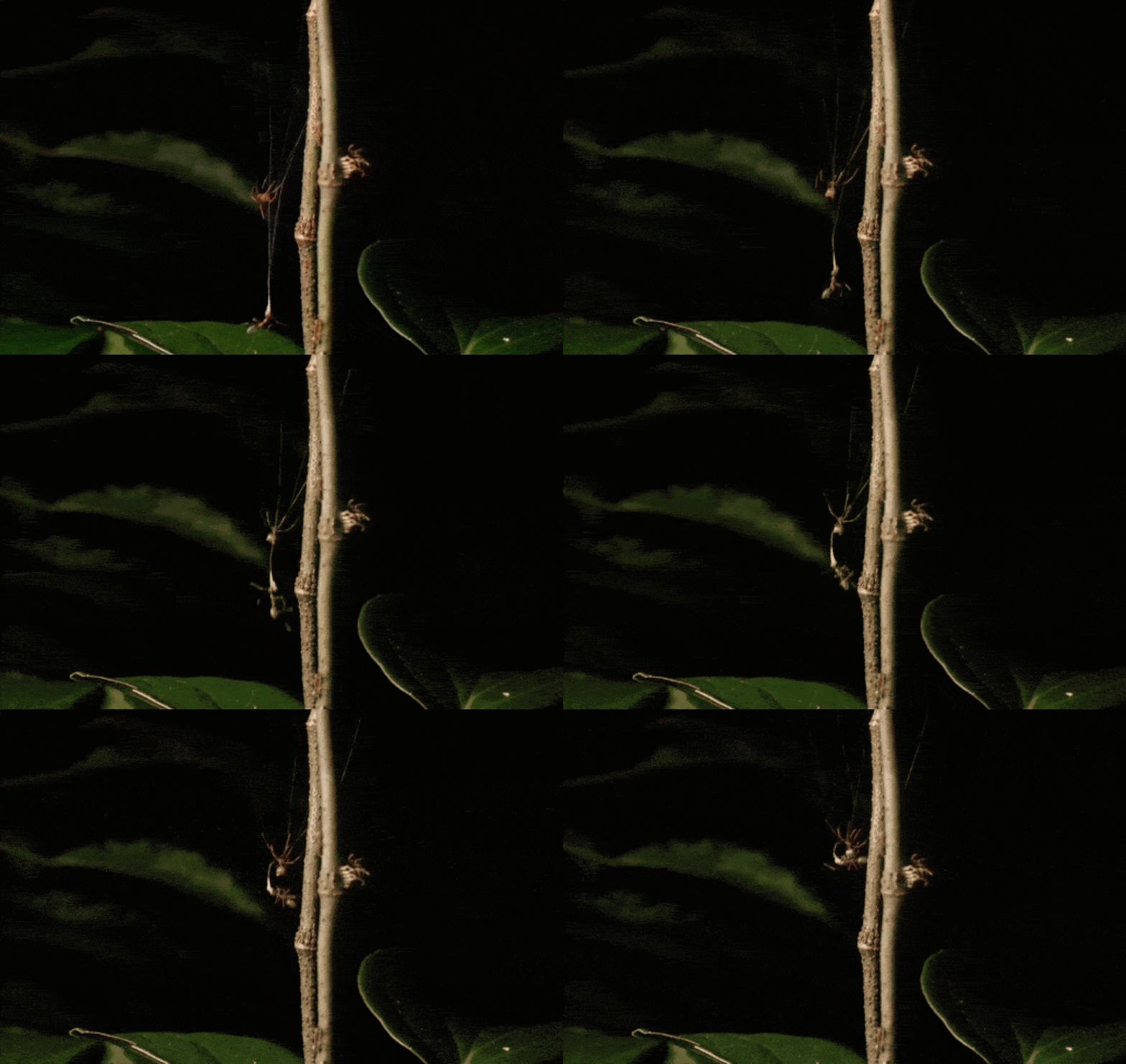
यह छोटा ऑस्ट्रेलियाई मकड़ा आक्रामक चींटियों को फँसाने और खाने के लिए एक शक्तिशाली जाला कैटापल्ट का उपयोग करता है।
This tiny Australian spider uses a high-powered web catapult to trap and eat aggressive ants
The ballista spider only feeds on extremely fierce green tree ants – so it has evolved sophisticated tools to safely catch its prey.
बैलिस्ता मकड़ा केवल अत्यधिक आक्रामक हरी पेड़ की चींटियों पर ही भोजन करता है – इसलिए इसने अपने शिकार को सुरक्षित रूप से पकड़ने के लिए जटिल उपकरण विकसित किए हैं।
There’s more than one way a spider can spin its web. Some construct large vertical orb webs, while others build horizontal sheet webs or tangled cobwebs that ensnare crawling insects.
एक मकड़ी अपने जाला बुनने के कई तरीके अपना सकती है। कुछ बड़े ऊर्ध्वाधर गोलाकार जाले बनाते हैं, जबकि अन्य क्षैतिज चादरनुमा या उलझे हुए मकड़ी के जाले बनाते हैं जो रेंगने वाले कीड़ों को फँसाते हैं।
There’s also more than one way a spider can catch its dinner. Net-casting spiders throw small silk nets over unsuspecting prey, while slingshot spiders use their conical webs like catapults, launching both themselves and the web toward nearby prey.
एक मकड़ी अपने भोजन पकड़ने के भी कई तरीके हो सकते हैं। नेट-कास्टिंग मकड़ियाँ अनजान शिकार पर छोटे रेशमी जाले फेंकती हैं, जबकि स्लिंगशॉट मकड़ियाँ अपने शंक्वाकार जालों का उपयोग गामा की तरह करती हैं, जिससे वे खुद और जाले दोनों को पास के शिकार की ओर प्रक्षेपित करती हैं।
In the tropical rainforests of the Cape York Peninsula in Queensland, we discovered a spider with a new hunting strategy: a small nocturnal animal of the genus Propostira which we call the ballista spider.
क्वींसलैंड के केप यॉर्क प्रायद्वीप के उष्णकटिबंधीय वर्षावनों में, हमने एक मकड़ी की खोज की जिसमें एक नई शिकार रणनीति है: यह जीनस प्रोपोस्टिरा का एक छोटा निशाचर जानवर है जिसे हम बैलिस्टा स्पाइडर कहते हैं।
As we describe in a paper published today in Current Biology, it constructs a unique spring-loaded snare triggered only by a single kind of prey: the highly territorial and aggressive green tree ant (Oecophylla smaragdina) .
जैसा कि हमने आज करंट बायोलॉजी में प्रकाशित एक पेपर में वर्णित किया है, यह केवल एक ही प्रकार के शिकार से सक्रिय होने वाला एक अद्वितीय स्प्रिंग-लोडेड जाल बनाता है: अत्यधिक क्षेत्रीय और आक्रामक हरी पेड़ चींटी (Oecophylla smaragdina) ।
How the ballista spider catches ants
बॉलिस्ता मकड़ी चींटियों को कैसे पकड़ती है
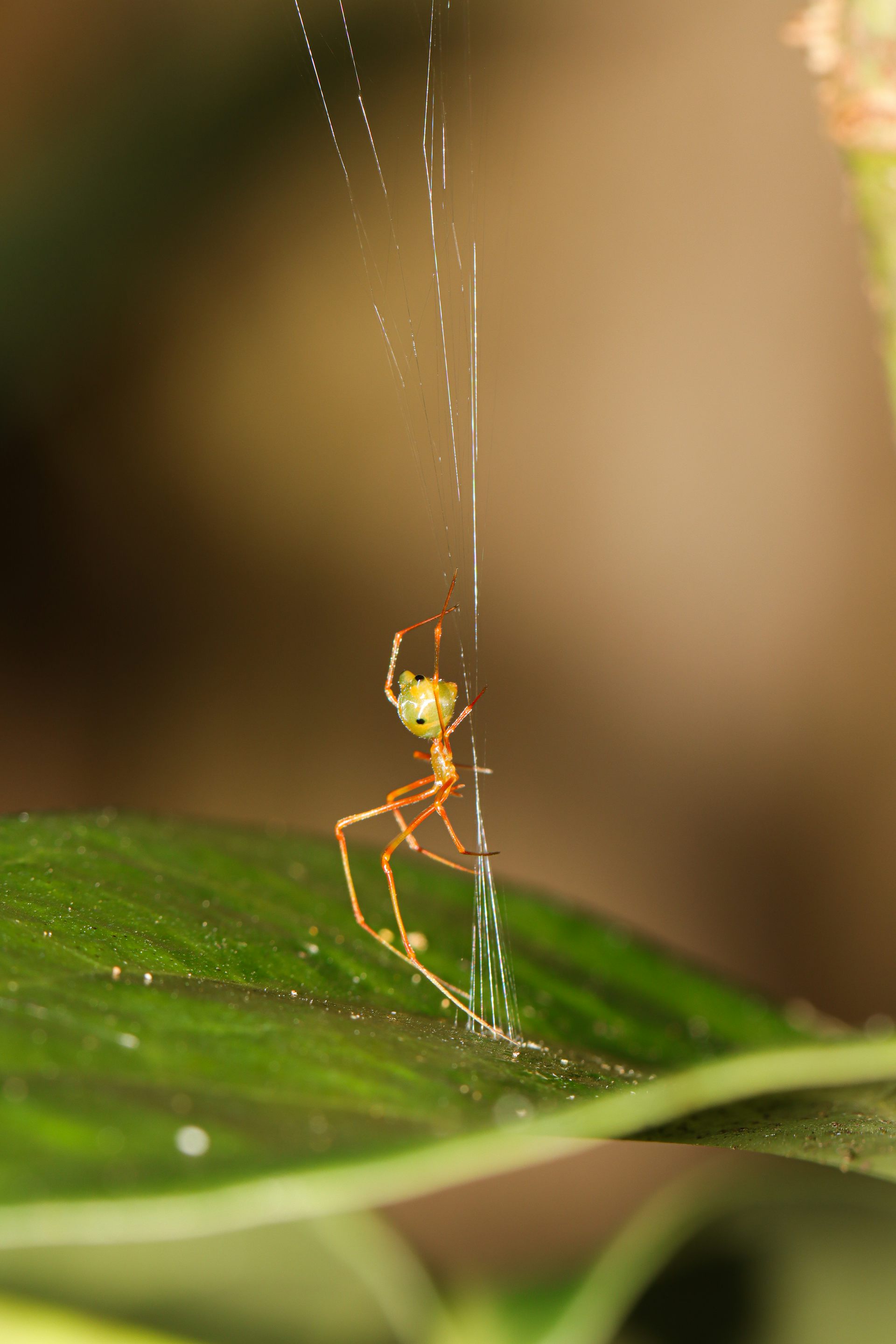
During the day, this spider rests within a silken retreat on the underside of leaves. As the night unfolds, the spider slowly descends on a silk line until it finds a suitable structure on which to lay an anchor point.
दिन के दौरान, यह मकड़ी पत्तियों की निचली सतह पर रेशमी आश्रय में आराम करती है। जैसे ही रात होती है, मकड़ी एक रेशम की रेखा पर धीरे-धीरे नीचे उतरती है जब तक कि उसे एक उपयुक्त संरचना नहीं मिल जाती जिस पर वह एक लंगर बिंदु बिछा सके।
Next it returns to the core web, leaving a “tension line” behind it, and repeats the process with incredible precision to build a fan-shaped web of silk tension lines. This gradually leads to the formation of a small conical scaffold which the spider then wraps in a thinner kind of silk before retreating to the core web.
इसके बाद यह मुख्य जाले पर लौट आती है, और पीछे एक “तनाव रेखा” छोड़ जाती है, और रेशम की तनाव रेखाओं का पंखे के आकार का जाल बनाने के लिए अविश्वसनीय सटीकता के साथ इस प्रक्रिया को दोहराती है। इससे धीरे-धीरे एक छोटा शंक्वाकार ढांचा बनता है जिसे मकड़ी फिर एक पतले प्रकार के रेशम में लपेट देती है और मुख्य जाले पर वापस चली जाती है।
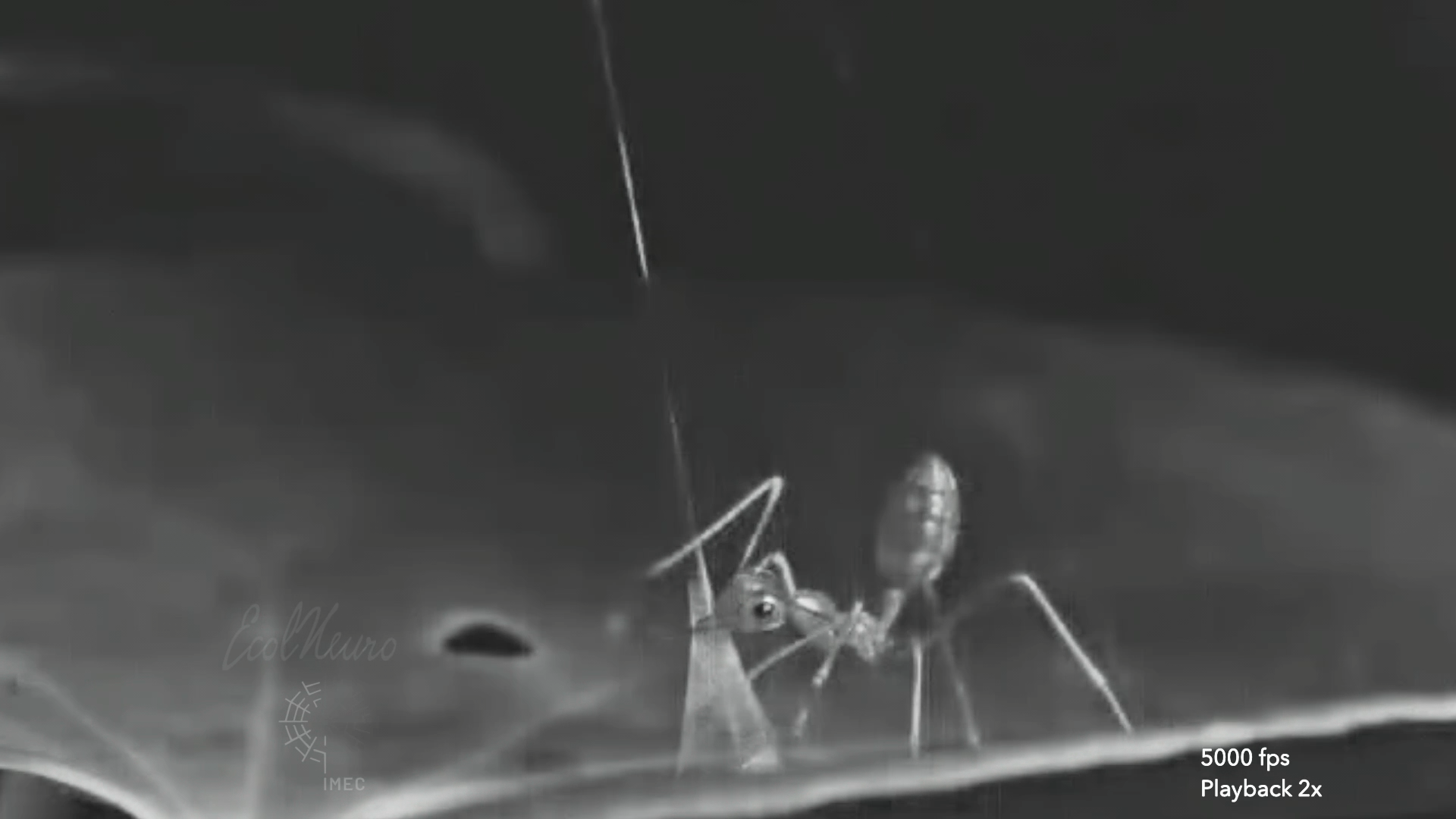
The thinner silk seems to attract ants and provoke an attack response, possibly by means of pheromones. After the thinner silk is laid, worker green tree ants appear in moments. The ants react aggressively, biting the cone.
पतला रेशम चींटियों को आकर्षित करता हुआ प्रतीत होता है और संभवतः फेरोमोन की मदद से हमले की प्रतिक्रिया उकसाता है। पतला रेशम बिछाने के बाद, कामगार हरे पेड़ की चींटियाँ पल भर में दिखाई देती हैं। चींटियाँ आक्रामक रूप से प्रतिक्रिया करती हैं, शंकु पर काटती हैं।
The bite detaches the cone from the surface, and the ant is pulled up and propelled into the core web in a fraction of a second. The ant is hauled off at accelerations of up to 1,367 metres per second squared – that’s roughly 140 times the acceleration due to gravity, or 15 times the most extreme g-forces experienced by jet pilots.
काटने से शंकु सतह से अलग हो जाता है, और चींटी को ऊपर खींच लिया जाता है और एक सेकंड के अंश में मुख्य जाले में धकेल दिया जाता है। चींटी को 1,367 मीटर प्रति सेकंड वर्ग तक के त्वरणों पर खींचा जाता है – यह गुरुत्वाकर्षण के कारण त्वरण का लगभग 140 गुना है, या जेट पायलटों द्वारा अनुभव किए गए सबसे चरम जी-बल का 15 गुना है।
The spider waits for the ant to be fully entangled in its web. When it’s safe to approach, the spider wraps the ant in silk until it is ready to eat.
मकड़ी तब तक इंतजार करती है जब तक कि चींटी उसके जाले में पूरी तरह से उलझ न जाए। जब पास आना सुरक्षित होता है, तो मकड़ी चींटी को रेशम में लपेटती है जब तक कि वह खाने के लिए तैयार नहीं हो जाती।
A superior system
एक श्रेष्ठ प्रणाली
The ballista spider’s snare exhibits superior energy performance compared with other silk-based catapult systems.
बैलिस्टा मकड़ी का जाल अन्य रेशम-आधारित कैटापल्ट प्रणालियों की तुलना में श्रेष्ठ ऊर्जा प्रदर्शन प्रदर्शित करता है।
Gram for gram, the webs store more energy and exert more power than any known biological catapult. A kilogram of the web would store 78.17 kilojoules of kinetic energy and very briefly exert 11.73 megawatts of power.
ग्राम के हिसाब से, ये जाले किसी भी ज्ञात जैविक कैटापल्ट की तुलना में अधिक ऊर्जा संग्रहीत करते हैं और अधिक शक्ति लगाते हैं। जाल का एक किलोग्राम 78.17 किलोजूल गतिज ऊर्जा संग्रहीत करेगा और बहुत कम समय के लिए 11.73 मेगावाट की शक्ति लगाएगा।
The exceptionally high power of the ballista spider’s snare has likely evolved to rapidly yank ants away from the vicinity of their nests and trail, where fellow ants might come to their defence.
बैलिस्टा मकड़ी के जाल की असाधारण रूप से उच्च शक्ति संभवतः विकसित हुई है ताकि यह चींटियों को उनके घोंसले और रास्ते के आस-पास के क्षेत्र से तेज़ी से दूर खींच सके, जहाँ साथी चींटियाँ बचाव के लिए आ सकती हैं।
Extreme specialisation
अत्यधिक विशिष्टीकरण
There are two more unusual things about the ballista spider.
बॉलिस्ता मकड़ी के बारे में दो और असामान्य बातें हैं।
First is its extreme specialisation to a single prey species. This suggests the spiders may add specific pheromones to the thin wrapping silk on their snares to attract green tree ants.
पहली बात यह है कि इसका एक ही शिकार प्रजाति के प्रति अत्यधिक विशिष्टीकरण है। इससे पता चलता है कि मकड़ियाँ हरे पेड़ चींटियों को आकर्षित करने के लिए अपने जाल पर पतले लपेटने वाले रेशम में विशिष्ट फेरोमोन जोड़ सकती हैं।
Second is that the snare is triggered by the prey itself, rather than the more common situation in which the predator senses the prey and triggers the snare.
दूसरी बात यह है कि जाल शिकार द्वारा स्वयं सक्रिय होता है, न कि उस अधिक सामान्य स्थिति में जिसमें शिकारी शिकार को महसूस करता है और जाल को ट्रिगर करता है।
The ballista spider demonstrates how extreme prey specialisation can drive the evolution of exceptional biomechanical performance.
बॉलिस्ता मकड़ी यह दर्शाती है कि अत्यधिक शिकार विशिष्टीकरण किस प्रकार असाधारण बायोमैकेनिकल प्रदर्शन के विकास को प्रेरित कर सकता है।
Ajay Narendra receives funding from Australian Research Council and Herman Slade Foundation.
अजय नरेंद्र को ऑस्ट्रेलियन रिसर्च काउंसिल और हर्मन स्लेड फाउंडेशन से फंडिंग मिलती है।
Read more
-

सिंथेटिक बायोलॉजी ने जीवन को फिर से लिखने का वादा किया था – इसके अग्रणी, जे. क्रेग वेंटर की मृत्यु के साथ, वैज्ञानिक कितने करीब हैं?
Synthetic biology promised to rewrite life – with the death of its pioneer, J. Craig Venter, how close are scientists?
-

लेबनान के खिलाफ इज़राइल का हमला हिज़्बुल्लाह को मजबूत कर सकता है – ठीक तब जब यह सबसे कमज़ोर है
Israel’s onslaught against Lebanon may strengthen Hezbollah – just when it’s at its weakest