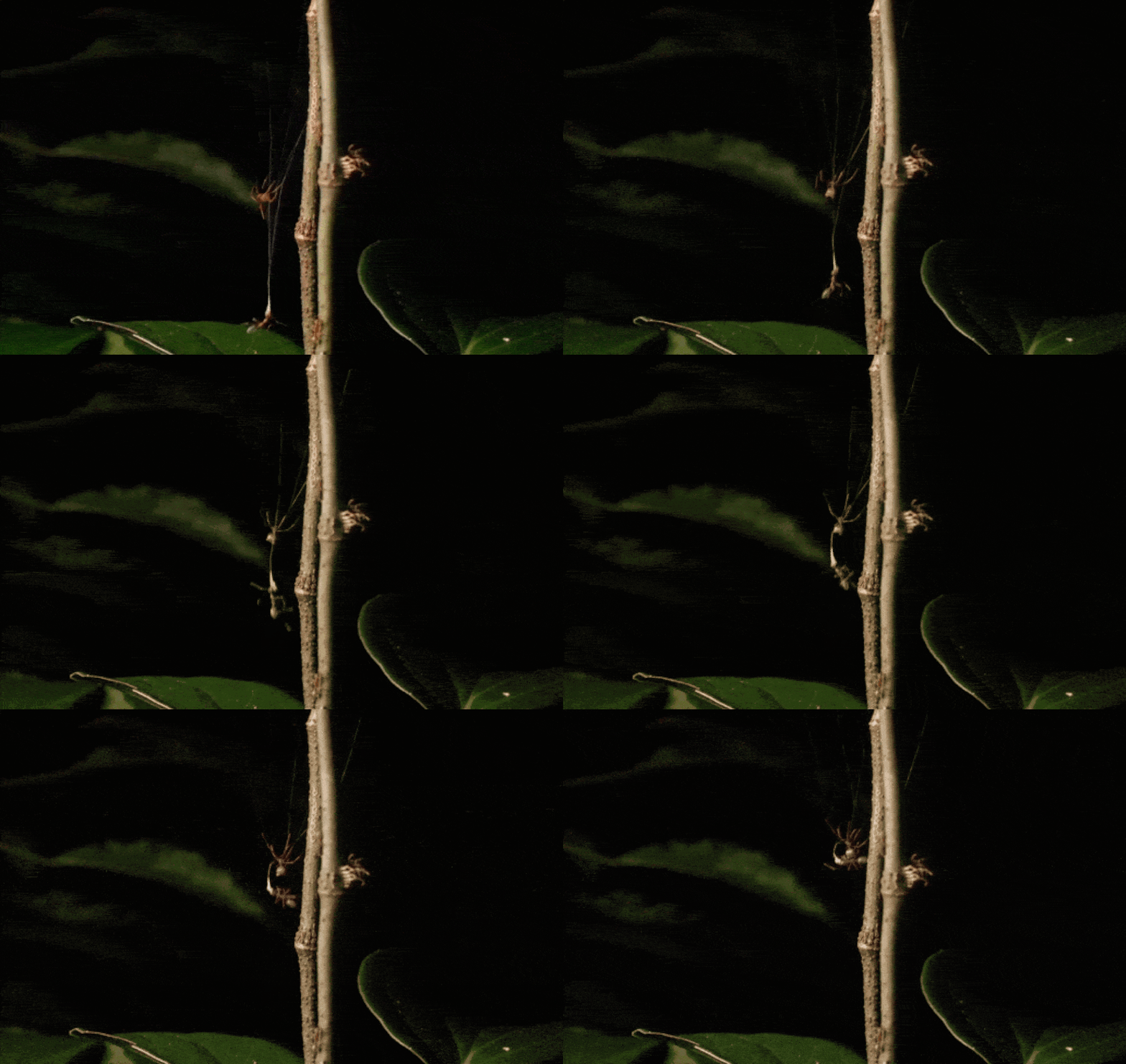
Esta pequena aranha australiana usa uma catapulta de teia potente para prender e comer formigas agressivas
This tiny Australian spider uses a high-powered web catapult to trap and eat aggressive ants
The ballista spider only feeds on extremely fierce green tree ants – so it has evolved sophisticated tools to safely catch its prey.
A aranha balista se alimenta apenas de formigas-de-jardim verdes extremamente ferozes – por isso, ela evoluiu ferramentas sofisticadas para capturar sua presa com segurança.
There’s more than one way a spider can spin its web. Some construct large vertical orb webs, while others build horizontal sheet webs or tangled cobwebs that ensnare crawling insects.
Há mais de uma maneira de uma aranha tecer sua teia. Algumas constroem grandes teias em forma de orbe verticais, enquanto outras constroem teias folha horizontais ou teias de aranha emaranhadas que aprisionam insetos rastejantes.
There’s also more than one way a spider can catch its dinner. Net-casting spiders throw small silk nets over unsuspecting prey, while slingshot spiders use their conical webs like catapults, launching both themselves and the web toward nearby prey.
Há também mais de uma maneira de uma aranha capturar seu jantar. Aranhas lançadoras de rede jogam pequenas redes de seda sobre presas desprevenidas, enquanto aranhas tipo estilingue usam suas teias cônicas como catapultas, lançando tanto elas mesmas quanto a teia em direção a presas próximas.
In the tropical rainforests of the Cape York Peninsula in Queensland, we discovered a spider with a new hunting strategy: a small nocturnal animal of the genus Propostira which we call the ballista spider.
Nas florestas tropicais da Península de Cape York, em Queensland, descobrimos uma aranha com uma nova estratégia de caça: um pequeno animal noturno do gênero Propostira, que chamamos de aranha ballista.
As we describe in a paper published today in Current Biology, it constructs a unique spring-loaded snare triggered only by a single kind of prey: the highly territorial and aggressive green tree ant (Oecophylla smaragdina) .
Como descrevemos em um artigo publicado hoje na Current Biology, ela constrói uma armadilha única acionada por mola, disparada apenas por um único tipo de presa: a formiga verde arbórea (Oecophylla smaragdina) , altamente territorial e agressiva.
How the ballista spider catches ants
Como a aranha ballista captura formigas
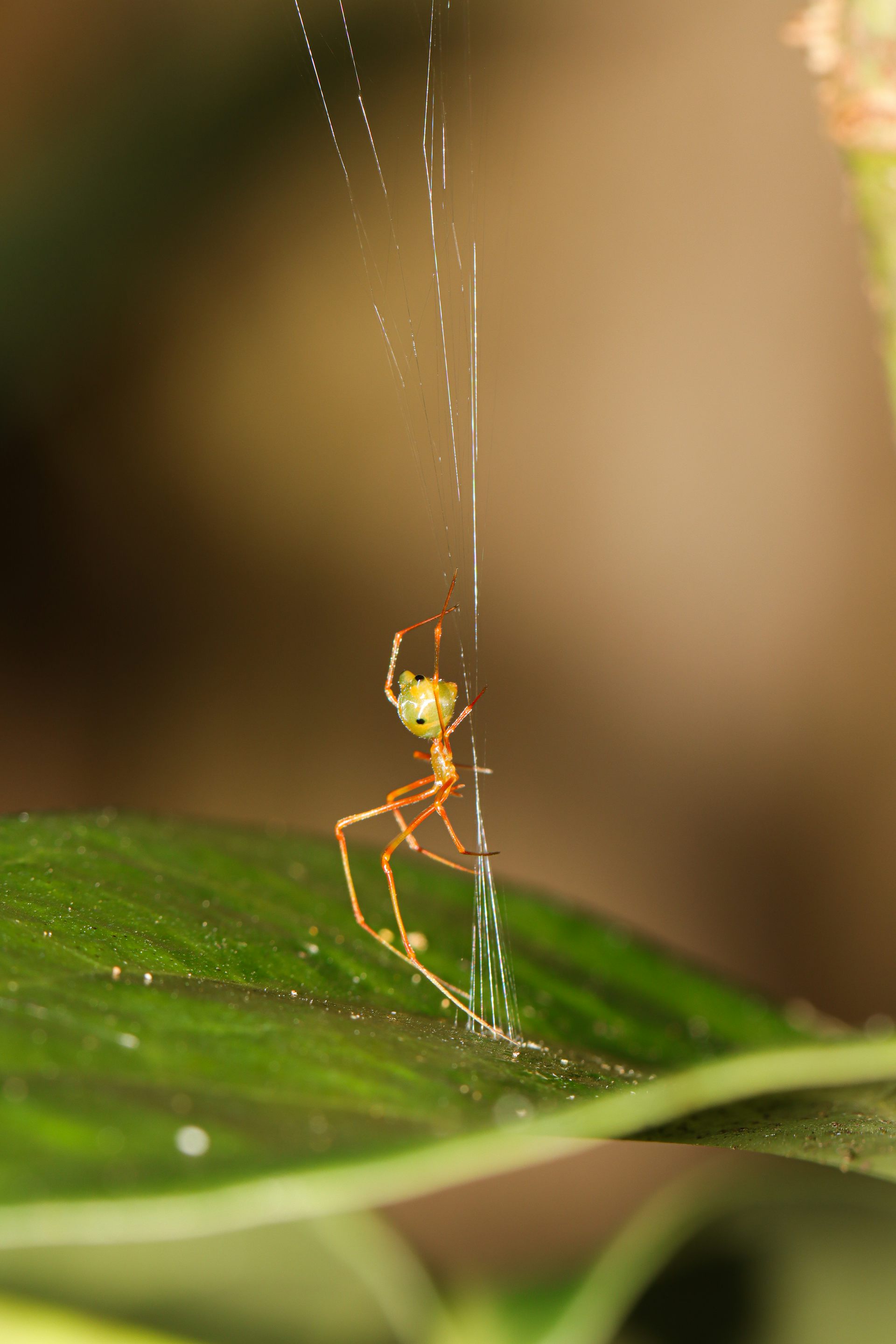
During the day, this spider rests within a silken retreat on the underside of leaves. As the night unfolds, the spider slowly descends on a silk line until it finds a suitable structure on which to lay an anchor point.
Durante o dia, esta aranha descansa em um refúgio de seda na parte inferior das folhas. À medida que a noite chega, a aranha desce lentamente por uma linha de seda até encontrar uma estrutura adequada onde depositar um ponto de ancoragem.
Next it returns to the core web, leaving a “tension line” behind it, and repeats the process with incredible precision to build a fan-shaped web of silk tension lines. This gradually leads to the formation of a small conical scaffold which the spider then wraps in a thinner kind of silk before retreating to the core web.
Em seguida, ela retorna à teia principal, deixando para trás uma “linha de tensão”, e repete o processo com incrível precisão para construir uma teia em forma de leque de linhas de tensão de seda. Isso leva gradualmente à formação de um pequeno andaime cônico que a aranha então envolve com um tipo mais fino de seda antes de retornar à teia principal.
The thinner silk seems to attract ants and provoke an attack response, possibly by means of pheromones. After the thinner silk is laid, worker green tree ants appear in moments. The ants react aggressively, biting the cone.
A seda mais fina parece atrair formigas e provocar uma resposta de ataque, possivelmente por meio de feromônios. Depois que a seda mais fina é depositada, formigas operárias verdes das árvores aparecem em momentos. As formigas reagem agressivamente, mordendo o cone.
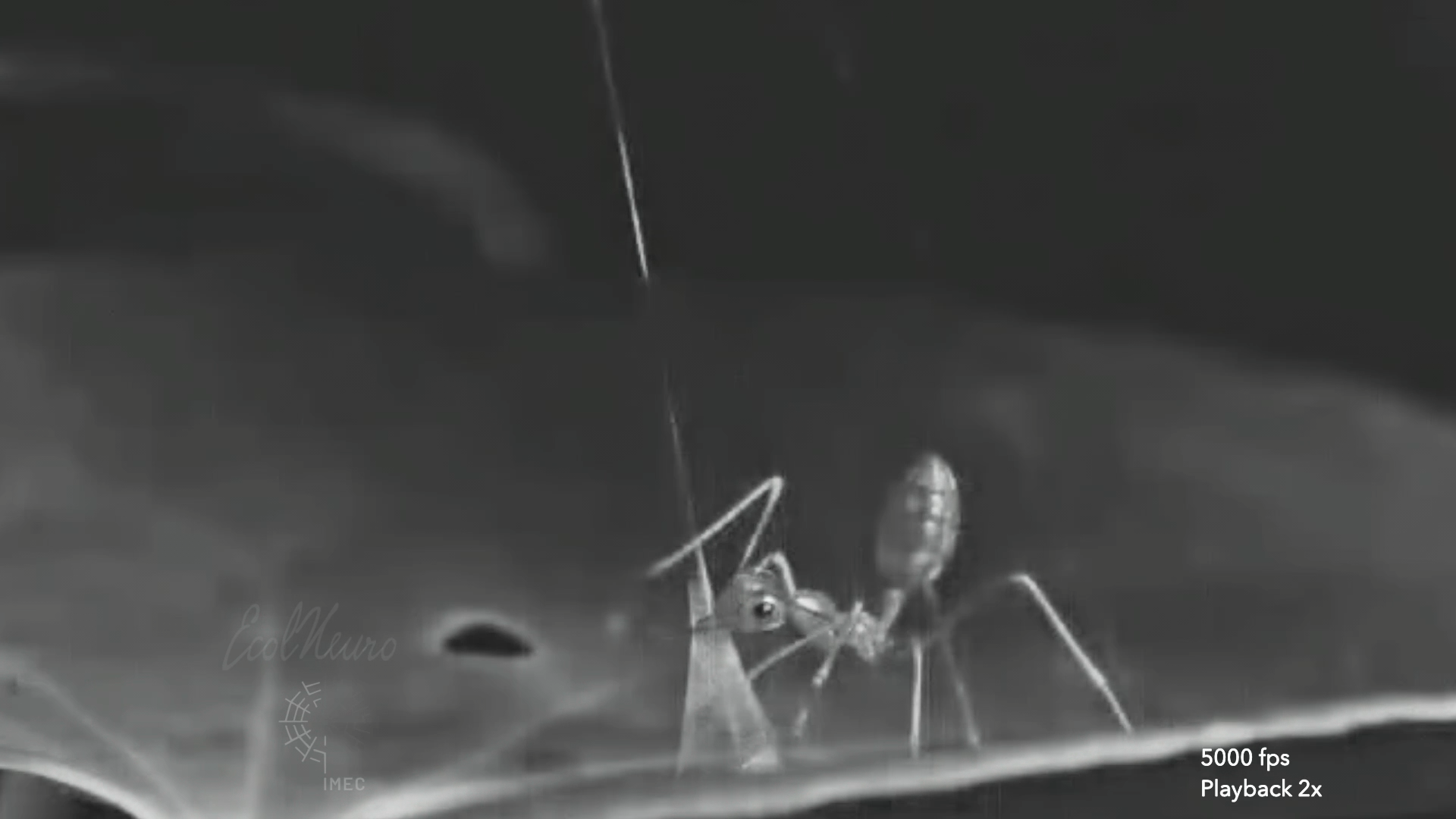
The bite detaches the cone from the surface, and the ant is pulled up and propelled into the core web in a fraction of a second. The ant is hauled off at accelerations of up to 1,367 metres per second squared – that’s roughly 140 times the acceleration due to gravity, or 15 times the most extreme g-forces experienced by jet pilots.
A mordida descola o cone da superfície, e a formiga é puxada e impelida para a teia principal em uma fração de segundo. A formiga é arremessada com acelerações de até 1.367 metros por segundo ao quadrado – isso equivale a cerca de 140 vezes a aceleração devido à gravidade, ou 15 vezes as forças g mais extremas vivenciadas por pilotos de caça.
The spider waits for the ant to be fully entangled in its web. When it’s safe to approach, the spider wraps the ant in silk until it is ready to eat.
A aranha espera que a formiga fique totalmente enredada em sua teia. Quando é seguro se aproximar, a aranha envolve a formiga em seda até que esteja pronta para comer.
A superior system
Um sistema superior
The ballista spider’s snare exhibits superior energy performance compared with other silk-based catapult systems.
A armadilha da aranha balista exibe desempenho energético superior em comparação com outros sistemas de catapulta à base de seda.
Gram for gram, the webs store more energy and exert more power than any known biological catapult. A kilogram of the web would store 78.17 kilojoules of kinetic energy and very briefly exert 11.73 megawatts of power.
Gramo por gramo, as teias armazenam mais energia e exercem mais potência do que qualquer catapulta biológica conhecida. Um quilograma da teia armazenaria 78,17 kilojoules de energia cinética e exerceria por um período muito breve 11,73 megawatts de potência.
The exceptionally high power of the ballista spider’s snare has likely evolved to rapidly yank ants away from the vicinity of their nests and trail, where fellow ants might come to their defence.
A potência excepcionalmente alta da armadilha da aranha balista provavelmente evoluiu para arrancar rapidamente formigas da vizinhança de seus ninhos e trilha, onde outras formigas podem vir em sua defesa.
Extreme specialisation
Especialização extrema
There are two more unusual things about the ballista spider.
Há mais duas coisas incomuns sobre a aranha balista.
First is its extreme specialisation to a single prey species. This suggests the spiders may add specific pheromones to the thin wrapping silk on their snares to attract green tree ants.
A primeira é sua especialização extrema em uma única espécie de presa. Isso sugere que as aranhas podem adicionar feromônios específicos à seda fina de embrulho de suas armadilhas para atrair formigas-de-árvore verdes.
Second is that the snare is triggered by the prey itself, rather than the more common situation in which the predator senses the prey and triggers the snare.
A segunda é que a armadilha é acionada pela própria presa, e não na situação mais comum em que o predador sente a presa e aciona a armadilha.
The ballista spider demonstrates how extreme prey specialisation can drive the evolution of exceptional biomechanical performance.
A aranha balista demonstra como a especialização extrema de presas pode impulsionar a evolução de um desempenho biomecânico excepcional.
Ajay Narendra receives funding from Australian Research Council and Herman Slade Foundation.
Ajay Narendra recebe financiamento do Australian Research Council e da Fundação Herman Slade.
Read more
-

Expulsar Keir Starmer é mais difícil do que parece – as regras do partido significam que ele pode escolher continuar lutando
Ousting Keir Starmer is harder than it looks – party rules mean he can choose to keep fighting
-
A economia de Moçambique está em colapso: as difíceis escolhas políticas que precisam ser feitas com urgência
Mozambique’s economy is failing: the tough policy choices that need to be made urgently