
من التحيز إلى الأذى – تتبع السياسات الحالية التي تستهدف الأشخاص المتحولين جنسياً نمطاً واضحاً من التصعيد.
From prejudice to harm – current policies targeting trans people follow a clear pattern of escalation
Anti-trans policies are often described as protective, but they follow a documented pattern that creates conditions to make exclusion and harm easier to justify.
غالباً ما توصف السياسات المعادية للمتحولين جنسياً بأنها وقائية، لكنها تتبع نمطاً موثقاً يخلق ظروفاً لتسهيل تبرير الإقصاء والأذى.
Public debates about transgender issues are often framed as disagreements over evidence or safety.
غالبًا ما تُصاغ النقاشات العامة حول قضايا المتحولين جنسيًا على أنها خلافات تتعلق بالأدلة أو السلامة.
In my new article published in the International Journal of Transgender Health, I argue current policy shifts are better understood as part of a recognisable escalation pattern.
في مقالتي الجديدة المنشورة في “المجلة الدولية لصحة المتحولين جنسيًا”، أجادل بأن التحولات السياسية الحالية يُفهم بشكل أفضل كجزء من نمط تصاعدي يمكن التعرف عليه.
I call this “trans eliminationism” – efforts to remove trans people from social, legal or physical existence.
أسمي هذا “الإقصائية المتعلقة بالمتحولين” – وهي جهود لإزالة الأشخاص المتحولين جنسيًا من الوجود الاجتماعي أو القانوني أو الجسدي.
The concept of eliminationism was developed by political scientist Daniel Goldhagen to describe ideologies that frame a targeted group as incompatible with society and therefore as requiring removal.
تم تطوير مفهوم الإقصائية على يد عالم السياسة دانيال غولدهاغن لوصف الأيديولوجيات التي تصوّر مجموعة مستهدفة بأنها غير متوافقة مع المجتمع، وبالتالي تتطلب الإزالة.
Trans eliminationism exists on a continuum.
توجد الإقصائية المتعلقة بالمتحولين جنسيًا على طيف واسع.
At the less severe end, though still deeply harmful, is social and legal erasure such as restricting healthcare access, prohibiting changes to identity documents, removing gender as a protected category, banning trans content from schools and libraries, and pushing trans youth into conversion practices.
في الطرف الأقل حدة، وإن كان ضارًا بعمق، يكمن المحو الاجتماعي والقانوني مثل تقييد الوصول إلى الرعاية الصحية، وحظر التغييرات في وثائق الهوية، وإزالة النوع الاجتماعي كفئة محمية، وحظر المحتوى المتعلق بالمتحولين جنسيًا من المدارس والمكتبات، ودفع الشباب المتحولين جنسيًا نحو ممارسات التحويل.
Some of these measures are now occurring in many jurisdictions. For example, across the United States, anti-trans bills continue to be introduced in various states and in New Zealand, the Legislation (Definitions of Woman and Man) Amendment Bill is currently open for submissions.
تحدث بعض هذه الإجراءات الآن في العديد من الولايات القضائية. على سبيل المثال، في جميع أنحاء الولايات المتحدة، لا تزال تُقدم مشاريع قوانين مناهضة للمتحولين جنسيًا في ولايات مختلفة، وفي نيوزيلندا، مشروع قانون تعديل (تعاريف المرأة والرجل) مفتوح حاليًا لتقديم المذكرات.
Social and legal eliminationism can create conditions in which more severe forms of harm, including incarceration and physical violence, become easier to justify by weakening legal protections, normalising exclusion, and reducing the social and political costs of further restrictions.
يمكن للإقصائية الاجتماعية والقانونية أن تخلق ظروفًا يصبح فيها من الأسهل تبرير أشكال أكثر خطورة من الضرر، بما في ذلك الحبس والعنف الجسدي، وذلك عن طريق إضعاف الحمايات القانونية، وتطبيع الإقصاء، وتقليل التكاليف الاجتماعية والسياسية لمزيد من القيود.
For some of the most marginalised trans people, incarceration and violence are already a lived reality.
بالنسبة لبعض الأشخاص المتحولين جنسيًا الأكثر تهميشًا، أصبح السجن والعنف بالفعل واقعًا معاشًا.
How escalation happens
كيف يحدث التصعيد
Research on eliminationist movements points to recurring mechanisms through which societies move from foundational prejudice to increasingly severe restrictions and harms.
تشير الأبحاث حول الحركات الإقصائية إلى آليات متكررة تنتقل من خلالها المجتمعات من التحيز التأسيسي إلى القيود والأضرار المتزايدة الحدة.
One is dehumanisation. When a group is portrayed as irrational, defective, immoral or less deserving of dignity, moral inhibitions about harming them are lowered. This makes it easier to justify restrictions on their rights or to dismiss their testimony and experiences.
أحدها هو تجريد الإنسانية. عندما يتم تصوير مجموعة ما على أنها غير عقلانية، أو معيبة، أو غير أخلاقية، أو أقل استحقاقاً للكرامة، تنخفض الكوابح الأخلاقية المتعلقة بإيذائهم. وهذا يسهل تبرير القيود على حقوقهم أو تجاهل شهاداتهم وتجاربهم.
Another is the artificial construction of a perceived threat. Targeted groups are framed as a danger to children, public safety or social order. This generates the urgency needed for public mobilisation, because measures that would otherwise seem discriminatory can instead be presented as necessary forms of protection.
وآخر هو البناء الاصطناعي لتهديد مُتصوَّر. يتم تأطير المجموعات المستهدفة على أنها خطر يهدد الأطفال أو السلامة العامة أو النظام الاجتماعي. وهذا يولد الإلحاح اللازم للتعبئة العامة، لأن التدابير التي قد تبدو تمييزية بخلاف ذلك يمكن تقديمها بدلاً من ذلك كأشكال ضرورية من الحماية.
A third mechanism, specific to trans eliminationism, is what I call biological reductionism.
الآلية الثالثة، الخاصة بالإقصاء المتحولين جنسياً، هي ما أسميه الاختزالية البيولوجية.
This involves reducing the complexity of sex and gender to a single biological characteristic and treating it as a person’s essential nature – determining who someone really is, regardless of their lived experience, social role, body or self-understanding.
يتضمن هذا اختزال تعقيد الجنس والنوع الاجتماعي إلى سمة بيولوجية واحدة ومعاملتها على أنها الطبيعة الجوهرية للشخص – وتحديد من هو الشخص حقاً، بغض النظر عن تجربته المعيشة أو دوره الاجتماعي أو جسده أو فهمه لذاته.
It is then used to determine how they should be recognised and treated in areas such as healthcare, law, education and sport.
ومن ثم يُستخدم هذا لتحديد كيفية الاعتراف بهم ومعاملتهم في مجالات مثل الرعاية الصحية والقانون والتعليم والرياضة.
Under this logic, trans people become impossible by definition. This is particularly insidious because it makes what is fundamentally a political manoeuvre appear as merely recognising biological reality.
بموجب هذا المنطق، يصبح المتحولون جنسياً مستحيلين بالتعريف. وهذا أمر خبيث بشكل خاص لأنه يجعل ما هو في الأساس مناورة سياسية يبدو وكأنه مجرد اعتراف بالواقع البيولوجي.
This is the approach taken in a 2025 US executive order that defined sex by reproductive cells and in the bill currently before the New Zealand parliament.
هذا هو النهج المتبع في أمر تنفيذي أمريكي لعام 2025 عرّف الجنس بالخلايا التناسلية وفي مشروع القانون المعروض حالياً أمام برلمان نيوزيلندا.
Human biology is more complex than this framing allows. But the deeper problem is the assumption that biology alone should determine legal status or social recognition in the first place.
البيولوجيا البشرية أكثر تعقيداً مما يسمح به هذا التأطير. لكن المشكلة الأعمق هي الافتراض بأن البيولوجيا وحدها يجب أن تحدد الوضع القانوني أو الاعتراف الاجتماعي في المقام الأول.
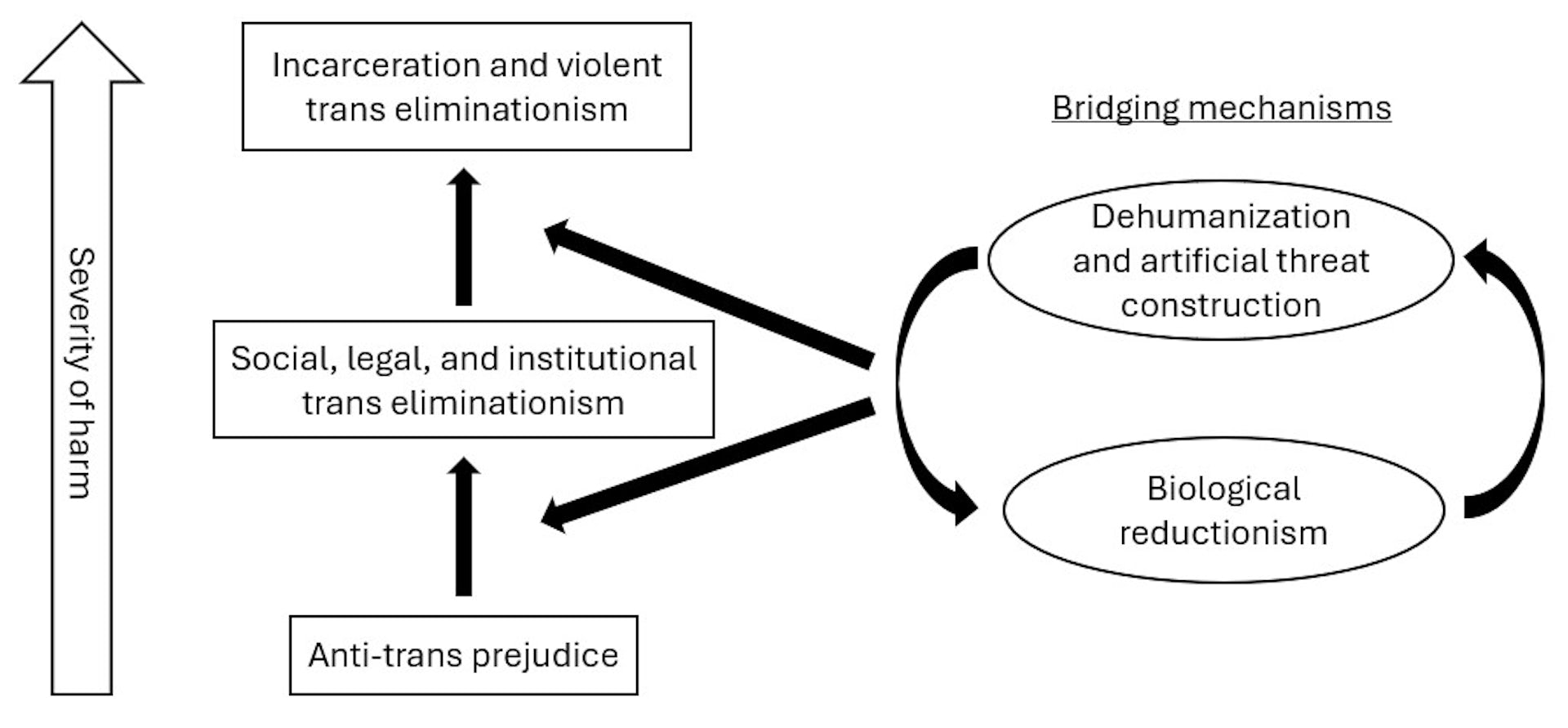
These mechanisms frequently operate together.
تعمل هذه الآليات معاً بشكل متكرر.
Claims based on this biological reductionism are used to cast doubt on trans people’s credibility and self-understanding. This dehumanises trans people and enables artificial threat construction in which trans women are framed as men invading women’s spaces, or trans youth as vulnerable children being manipulated by adults.
تُستخدم الادعاءات القائمة على هذا الاختزالية البيولوجية لإثارة الشكوك حول مصداقية المتحولين جنسياً وفهمهم لذواتهم. وهذا يجردهم من إنسانيتهم ويُمكّن البناء الاصطناعي للتهديد حيث يتم تأطير النساء المتحولات جنسياً كرجال يقتحمون مساحات النساء، أو الشباب المتحول جنسياً كأطفال ضعفاء يتلاعب بهم الكبار.
Each mechanism strengthens the others, and together they create the conditions under which eliminationist policies appear to be reasonable responses to genuine concerns or danger.
كل آلية تقوي الآليات الأخرى، ومعاً تخلق الظروف التي تبدو فيها السياسات الإقصائية استجابات معقولة لمخاوف أو مخاطر حقيقية.
Why this matters
لماذا يهم هذا الأمر
Historical research shows prejudice can be mobilised by political actors seeking support, power or cultural influence. Trans people have become symbols of broader social change.
يُظهر البحث التاريخي أن التحيز يمكن تحريكه من قبل فاعلين سياسيين يسعون للحصول على الدعم أو السلطة أو النفوذ الثقافي. وأصبح الأشخاص المتحولون جنسياً رموزاً لتغيرات اجتماعية أوسع نطاقاً.
For some political movements, opposition to trans rights has become a way of expressing resistance to changing norms of gender, sexuality and individual people’s authority over their own bodies.
بالنسبة لبعض الحركات السياسية، أصبح المعارضة لحقوق المتحولين الجنسين وسيلة للتعبير عن المقاومة ضد الأعراف المتغيرة للجنسانية والجنس، وحق الأفراد في أجسادهم الخاصة.
We currently use the broad term “anti-trans” to describe very different beliefs, policies and political projects. These beliefs and actions do not all carry the same implications for harm.
نحن نستخدم حالياً المصطلح العام “المناهض للمتحولين جنسياً” لوصف معتقدات وسياسات ومشاريع سياسية مختلفة جداً. ولا تحمل كل هذه المعتقدات والأفعال نفس التداعيات الضارة بالضرورة.
The concept of trans eliminationism provides language for recognising when political ideas and policy proposals move beyond prejudice and into efforts to reduce or remove trans people’s social, legal or physical existence.
يوفّر مفهوم الإقصاء المتحول جنسياً (trans eliminationism) لغة للتعرف على متى تتجاوز الأفكار السياسية والمقترحات السياسات مجرد التحيز وتدخل في محاولات تقليل أو إزالة الوجود الاجتماعي أو القانوني أو الجسدي للأشخاص المتحولين جنسياً.
Understanding the mechanisms for escalation helps us recognise how harmful policies are often preceded by changes in the way people talk about a group – shifts in language, assumptions and public narratives that make exclusion or elimination appear reasonable, necessary or even compassionate.
إن فهم آليات التصعيد يساعدنا على التعرف على كيف أن السياسات الضارة غالباً ما يسبقها تغيير في طريقة حديث الناس عن مجموعة معينة – تحولات في اللغة، والافتراضات، والسرديات العامة التي تجعل الإقصاء أو الإزالة تبدو منطقية أو ضرورية أو حتى متعاطفة.
This is why current policies, justified as protective or evidence-based, must instead be understood as part of a documented pattern of eliminationist harm.
لهذا السبب، يجب فهم السياسات الحالية، والمبررة بأنها وقائية أو قائمة على الأدلة، كجزء من نمط موثق من الضرر التصفوي بدلاً من ذلك.
History shows eliminationist projects generally emerge gradually, becoming normalised one policy, one justification and one compromise at a time.
يُظهر التاريخ أن المشاريع التصفوية تظهر عموماً بشكل تدريجي، وتصبح طبيعية عبر سياسة واحدة، ومبرر واحد، وتسوية واحدة في كل مرة.
But history also shows that escalation is not inevitable. Similar trajectories have been interrupted and reversed, including the rollback of criminalisation laws and expansion of legal rights for lesbian and gay people in many jurisdictions.
لكن التاريخ يظهر أيضاً أن التصعيد ليس أمراً حتمياً. وقد تم مقاطعة وعكس مسارات مماثلة، بما في ذلك التراجع عن قوانين التجريم والتوسع في الحقوق القانونية للغالبين والمثليين في العديد من الولايات القضائية.
Those reversals were built on sustained resistance and community leadership. The same is possible now if harmful patterns are recognised and resisted before they escalate further.
لقد بُنيت تلك التراجعات على المقاومة المستمرة والقيادة المجتمعية. وهذا ممكن الآن إذا تم التعرف على الأنماط الضارة ومقاومتها قبل أن تتصاعد أكثر.
Jaimie Veale receives funding from the Royal Society of New Zealand Te Apārangi as a Rutherford Discovery Fellow. She is a member of the World Professional Association of Transgender Health and the Professional Association of Transgender Health Aotearoa.
جيمي فيل يتلقى تمويلاً من الجمعية الملكية لنيوزيلندا (Te Apārangi) كزميل اكتشاف رذرفورد. وهو عضو في الرابطة العالمية المهنية لصحة المتحولين جنسياً والرابطة المهنية لصحة المتحولين جنسياً أوتياروا.
Read more
-

لقد تشكّل تعاون دول الخليج لفترة طويلة بفعل تهديد إيران – لكن مظاهر الوحدة تخفي الانقسام.
Gulf state cooperation has long been shaped by the threat of Iran − but shows of unity belie division
-
من هو بيتر ماغيار المجري وكيف أطاح بالديمقراطية غير الليبرالية لفيكتور أوربان
Who is Hungary’s Péter Magyar and how he overturned Viktor Orbán’s illiberal democracy