Cómo un rey sueco fue en huelga en 1768
How a Swedish king went on strike in 1768
In the shift from absolutism towards representative government, the monarch symbolised impartiality and balance
En el cambio del absolutismo hacia el gobierno representativo, la monarquía simbolizó imparcialidad y equilibrio
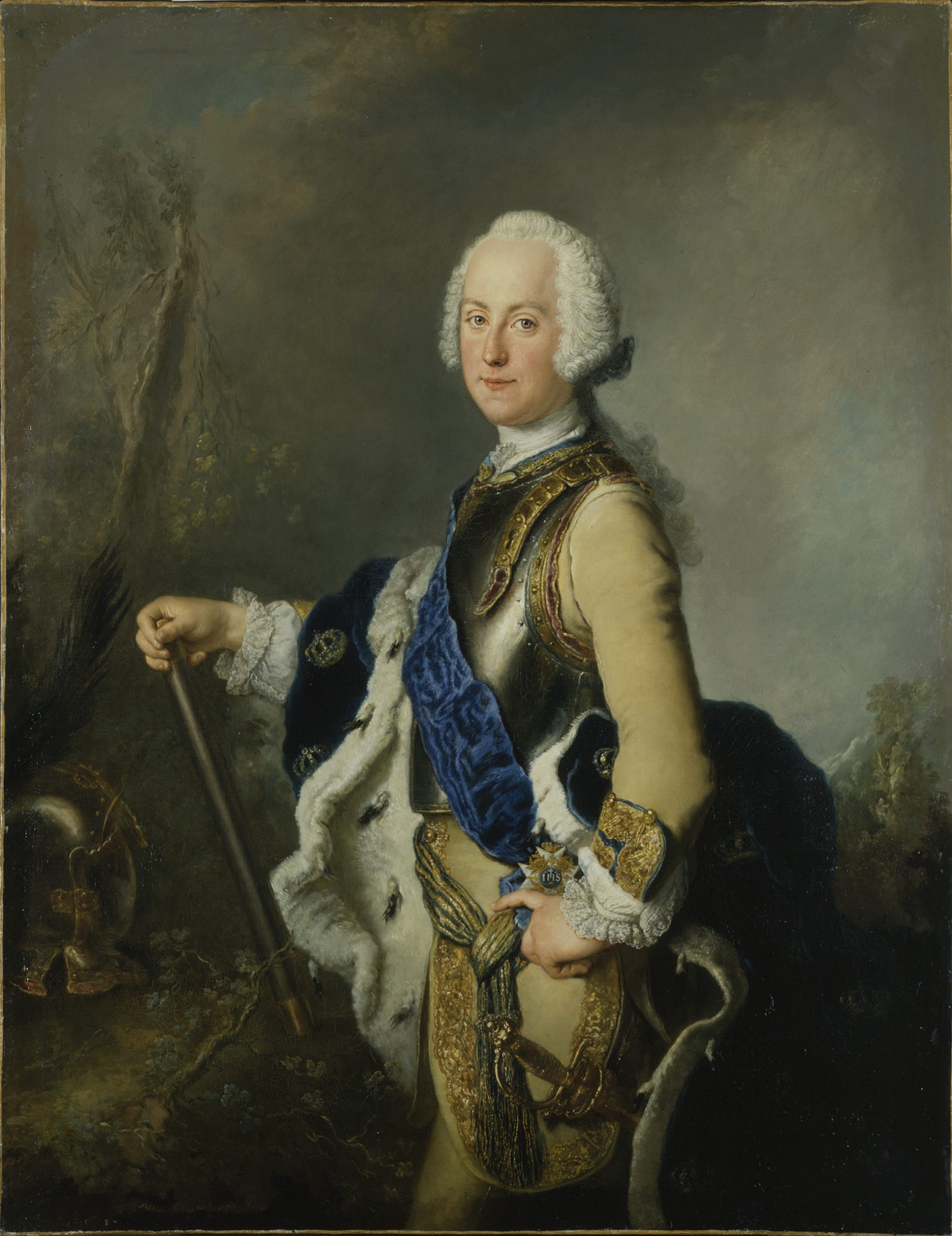
In 1768, towards the end of the period of Swedish history known as Frihetstiden, the Age of Liberty, King Adolf Frederick threatened to abdicate unless an extraordinary session of the Riksdag, the Swedish parliament, was immediately convened. The immediate issue concerned a new financial plan, but the king hoped that the parliamentary session would also lead to constitutional changes to strengthen his power.
En 1768, hacia el final del período de la historia sueca conocido como Frihetstiden, la Edad de la Libertad, el rey Adolfo Federico amenazó con abdicar a menos que se convocara inmediatamente una sesión extraordinaria del Riksdag, el parlamento sueco. El tema inmediato era un nuevo plan financiero, pero el rey esperaba que la sesión parlamentaria también condujera a cambios constitucionales para fortalecer su poder.
The 16-member strong Council of the Realm, over which the king presided, was given three days to summon the Riksdag. Meanwhile, the king would not partake in any decision-making. In other words, he went on strike.
Al Consejo Real de 16 miembros, sobre el cual presidía el rey, se le dieron tres días para convocar al Riksdag. Mientras tanto, el rey no participaría en ninguna toma de decisiones. En otras palabras, hizo huelga.
As I show in my new book, Monarchy in the Age of Liberty: Royal power and public life in eighteenth-century Sweden, this moment in Swedish political history poses an interesting question: does a monarchy need a monarch? The country at the time was a kingdom, yet it effectively had a republican form of government. In the events that followed the king’s ultimatum, his councillors even attempted to replace him with a signature stamp. It is one of the many paradoxes of this era that such a measure be taken not in opposition to the monarchy but in order to preserve its very essence.
Como demuestro en mi nuevo libro, Monarchy in the Age of Liberty: Royal power and public life in eighteenth-century Sweden (Monarquía en la Edad de la Libertad: Poder real y vida pública en el siglo XVIII sueco) , este momento en la historia política sueca plantea una pregunta interesante: ¿necesita una monarquía un monarca? El país en ese momento era un reino, pero efectivamente tenía una forma de gobierno republicana. En los eventos que siguieron al ultimátum del rey, sus consejeros incluso intentaron reemplazarlo con un sello de firma. Es una de las muchas paradojas de esta era que se tomara tal medida no en oposición a la monarquía, sino para preservar su esencia misma.
A political revolution
Una revolución política
Sweden’s Age of Liberty was ushered in by the death of King Charles XII during the siege of Fredrikshald, in Norway, in 1718. From 1680, Sweden had been ruled as an absolute monarchy. Now, fatigued by 18 years of continuous warfare, the four estates of the Swedish Riksdag decided to curtail the king’s executive powers. As formulated in the Instruments of Government, the Accession Charters and the Royal Elections Acts of 1719 and 1720, the Council of the Realm was now to oversee the monarch’s decision-making, and, in turn, answer to the Riksdag.
La Edad de la Libertad de Suecia fue marcada por la muerte del rey Carlos XII durante el sitio de Fredrikshald, en Noruega, en 1718. Desde 1680, Suecia había sido gobernada como una monarquía absoluta. Ahora, exhaustos tras 18 años de guerra continua, los cuatro estamentos del Riksdag sueco decidieron limitar los poderes ejecutivos del rey. Según lo formulado en los Instrumentos de Gobierno, las Cartas de Acceso y las Leyes de Elecciones Reales de 1719 y 1720, el Consejo del Reino debía supervisar ahora la toma de decisiones del monarca y, a su vez, rendir cuentas al Riksdag.
In Protestant Sweden, social theory was grounded in equal measure in ancient political thinking and Lutheran ideas. Central to this was Martin Luther’s so-called doctrine of the three estates, which held that society was composed of the teaching estate (the clergy) , the defending estate (the nobility) and the nourishing estate (the commoners) and that all three were needed for societal balance and harmony to be achieved.
En la Suecia protestante, la teoría social se basó en una mezcla de pensamiento político antiguo e ideas luteranas. Central a esto fue la llamada doctrina de los tres estamentos de Martín Lutero, que sostenía que la sociedad estaba compuesta por el estamento docente (el clero) , el estamento defensivo (la nobleza) y el estamento nutritivo (los plebeyos) , y que los tres eran necesarios para lograr el equilibrio y la armonía social.
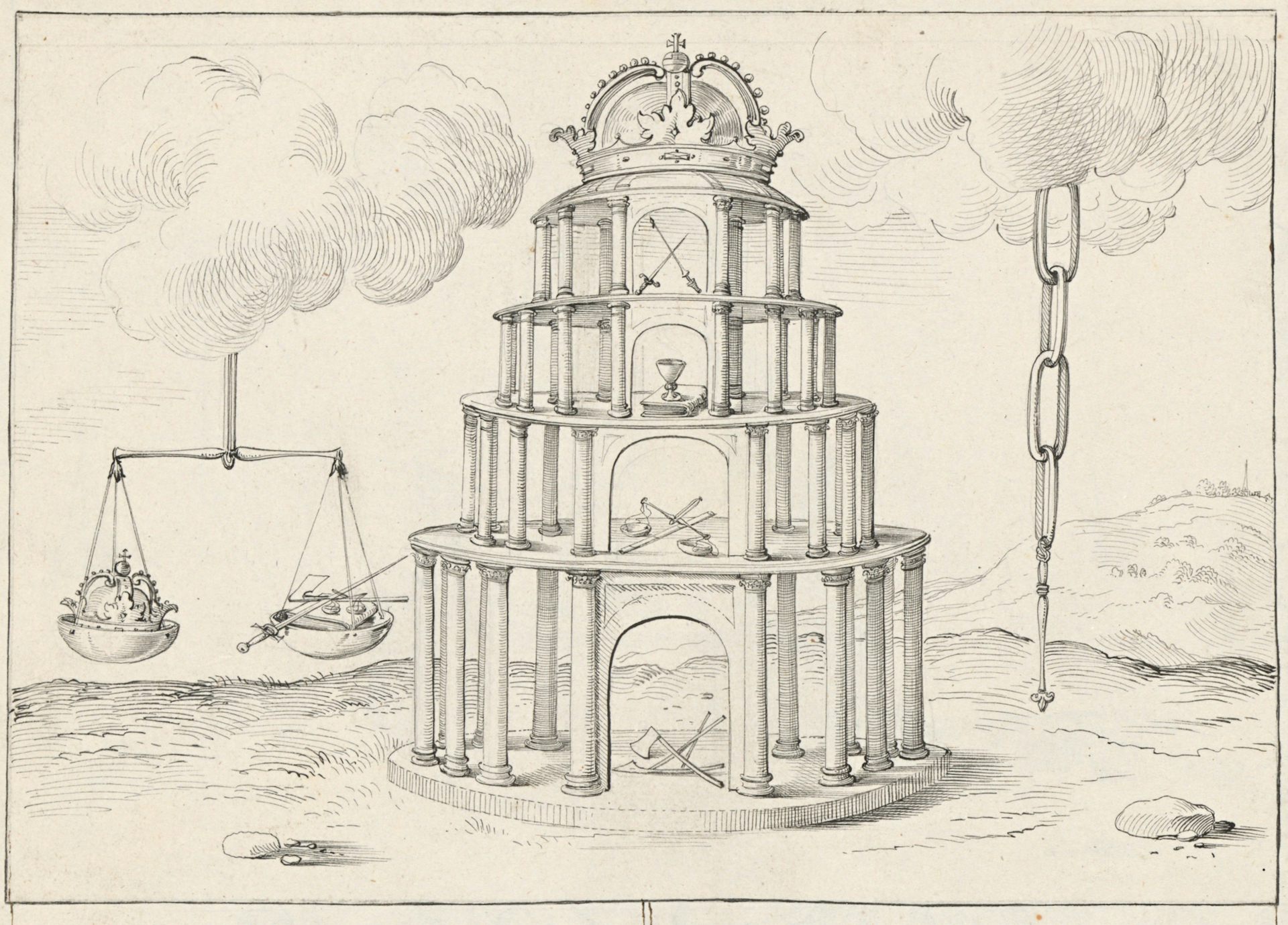
The monarch stood above all laws — it was the essence of his majesty. As such, he was the only figure considered to be free from self-interest and therefore able to maintain this social balance. Thus, despite his practical duties having been made redundant, his symbolic importance was incontrovertible.
El monarca estaba por encima de todas las leyes: era la esencia de su majestad. Como tal, era la única figura considerada libre de intereses personales y, por lo tanto, capaz de mantener este equilibrio social. Así, a pesar de que sus deberes prácticos habían quedado obsoletos, su importancia simbólica era incontrovertible.
Upon the death of Charles XII in 1718, his sister, Ulrika Eleonora, briefly succeeded to the throne before abdicating after just over a year in favour of her husband, Frederick I, who ruled until 1751.
Tras la muerte de Carlos XII en 1718, su hermana, Ulrika Eleonora, sucedió brevemente en el trono antes de abdicar después de poco más de un año en favor de su marido, Federico I, quien gobernó hasta 1751.
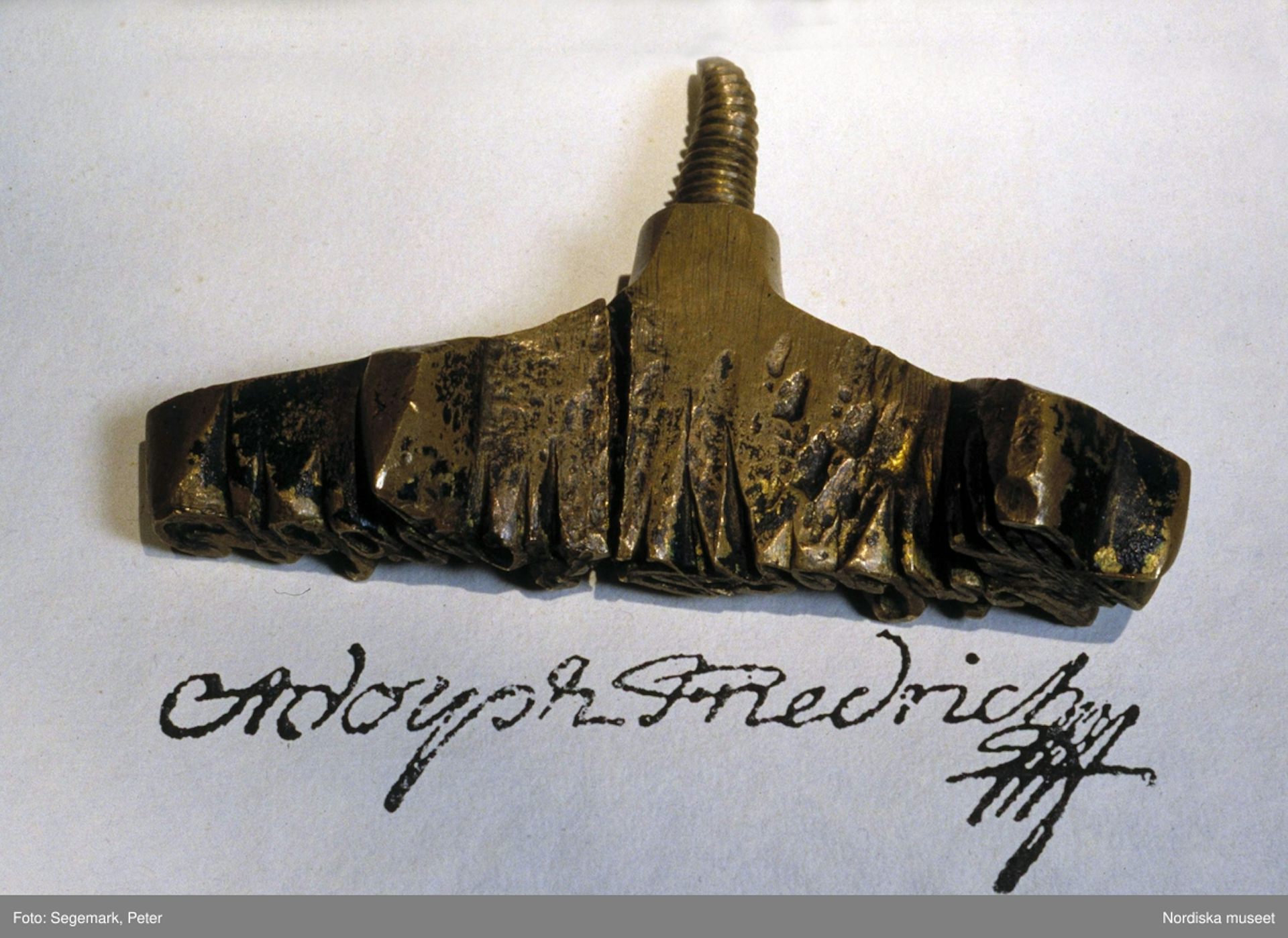
As king, Frederick I soon lost interest in his rather insignificant duties and, drawing inspiration from absolutist France, had a name stamp made. This was ostensibly to save himself the trouble of signing a large number of circulars. But the stamp also came to serve as a political instrument.
Como rey, Federico I pronto perdió interés en sus deberes bastante insignificantes y, inspirándose en la Francia absolutista, hizo hacer un sello con su nombre. Esto fue ostensiblemente para ahorrarse el problema de firmar una gran cantidad de circulares. Pero el sello también llegó a servir como instrumento político.
In certain circumstances, the council could even issue government decrees without the king’s signature. But the councillors considered this inappropriate as it revealed to the outside world when they were in disagreement with the king. On such occasions, the signature stamp became a practical alternative.
En ciertas circunstancias, el consejo podía incluso emitir decretos gubernamentales sin la firma del rey. Pero los consejeros consideraban esto inapropiado ya que revelaba al mundo exterior cuándo estaban en desacuerdo con el rey. En tales ocasiones, el sello de firma se convirtió en una alternativa práctica.
The signature stamp also meant the councillors could no longer delay decisions by citing the king’s refusal to sign a document. Unlike the king, the council had to answer to the Riksdag for its actions and be held to parliamentary accountability.
El sello de firma también significó que los consejeros ya no podían retrasar las decisiones alegando la negativa del rey a firmar un documento. A diferencia del rey, el consejo tenía que responder ante el Riksdag por sus acciones y rendir cuentas bajo responsabilidad parlamentaria.
In the Swedish public’s imagination, this replacement of the king’s personal signature with a stamp is the ultimate symbol of the monarch’s powerlessness. But how it was actually used demonstrates that the king’s signature was considered indispensable for lending dignity and authority to government decisions.
En la imaginación del público sueco, este reemplazo de la firma personal del rey por un sello es el símbolo máximo de la impotencia del monarca. Pero cómo se utilizó en realidad demuestra que la firma del rey era considerada indispensable para otorgar dignidad y autoridad a las decisiones gubernamentales.
Constitutional crisis
Crisis constitucional
The crown’s symbolic importance was most clearly demonstrated by Frederick I’s successor, Adolf Frederick, when he went on strike in 1768. This constitutional crisis was partly a conflict between the two opposing parties, the Caps and the Hats, concerning issues in which the king played only a peripheral role. The parties’ views differed on foreign alliances, economic policy and, increasingly, civil and political rights, but they agreed on the king’s constitutionally restricted position. However, none of them hesitated to use the king as a tool when it suited their own purposes.
La importancia simbólica de la corona fue demostrada más claramente por el sucesor de Federico I, Adolfo Federico, cuando se declaró en huelga en 1768. Esta crisis constitucional fue en parte un conflicto entre los dos partidos opuestos, los Sombreros y las Gorras, sobre asuntos en los que el rey desempeñó solo un papel periférico. Las opiniones de los partidos diferían en alianzas extranjeras, política económica y, cada vez más, derechos civiles y políticos, pero estaban de acuerdo con la posición constitucionalmente restringida del rey. Sin embargo, ninguno dudó en usar al rey como herramienta cuando se ajustaba a sus propios fines.
The council was controlled by the Caps. In response to the king’s threat, the councillors attempted to govern by means of the signature stamp.
El consejo era controlado por los Sombreros. En respuesta a la amenaza del rey, los consejeros intentaron gobernar mediante el sello de firma.
In return, the central government agencies, which were dominated by Hat sympathisers, refused to comply with any decisions bearing only the king’s duplicated signature. They insisted that the form of government rested on the majesty of the king, the authority of the council and the liberty of the people, that is, their civil and political rights. If any of these elements were missing, the balance was disrupted and the impartiality of government decisions could be called into question.
A cambio, los organismos del gobierno central, dominados por simpatizantes de Hat, se negaron a acatar cualquier decisión que llevara únicamente la doble firma del rey. Insistieron en que la forma de gobierno descansaba sobre la majestad del rey, la autoridad del consejo y la libertad del pueblo, es decir, sus derechos civiles y políticos. Si faltaba cualquiera de estos elementos, el equilibrio se veía alterado y la imparcialidad de las decisiones gubernamentales podía ponerse en duda.
The civil servants’ refusal to comply with decisions bearing a stamped signature brought the state apparatus to a standstill. The Riksdag was convened, just as the king had demanded.
La negativa de los funcionarios públicos a cumplir con decisiones que llevaban una firma sellada paralizó el aparato estatal. Se convocó al Riksdag, tal como lo había exigido el rey.
The outcome was decided by the strong position of the Hats in the government agencies. However, once the extraordinary session of the Riksdag was convened, the king gained no support whatsoever for his constitutional proposals. Even though the signature stamp was taken out of use and the king’s symbolic authority reaffirmed, his actual political influence diminished even further.
El desenlace estuvo determinado por la fuerte posición de los Sombreros en las agencias gubernamentales. Sin embargo, una vez que se convocó la sesión extraordinaria del Riksdag, el rey no obtuvo ningún apoyo para sus propuestas constitucionales. Aunque el sello de firma fue puesto fuera de uso y la autoridad simbólica del rey se reafirmó, su influencia política real disminuyó aún más.
In my research I show that this episode highlights a typical pattern of the Age of Liberty. The court was supported by the opposition party for only as long as it remained in opposition. As an ally against the government, the monarch was important in shaping opinion and providing influence. For the government, conversely, he was an unpredictable asset.
En mi investigación demuestro que este episodio resalta un patrón típico de la Edad de la Libertad. La corte fue apoyada por el partido de oposición solo mientras permaneciera en la oposición. Como aliado contra el gobierno, el monarca fue importante para moldear la opinión y proporcionar influencia. Para el gobierno, por el contrario, era un activo impredecible.
This observation can also be generalised. In early modern times, power was based on authority from above. By tradition, the monarchy represented a divine order that demanded unconditional submission.
Esta observación también puede generalizarse. En los tiempos modernos tempranos, el poder se basaba en la autoridad de arriba. Por tradición, la monarquía representaba un orden divino que exigía sumisión incondicional.
As countries such as Sweden and the United Kingdom began to shift away from absolutism and towards a more representative form of government, the monarch continued to symbolise governmental impartiality in spite of sharp partisan divisions. The notion that the people, with their passions and their self-interest, were too unpredictable to rule a state, endured. During this transitional phase, a monarch was needed who symbolically stood above all special interests and treated all his subjects with the same paternal care.
A medida que países como Suecia y el Reino Unido comenzaron a alejarse del absolutismo y avanzar hacia una forma de gobierno más representativa, el monarca continuó simbolizando la imparcialidad gubernamental a pesar de las marcadas divisiones partidistas. Persistió la noción de que el pueblo, con sus pasiones y su interés propio, era demasiado impredecible para gobernar un estado. Durante esta fase de transición, se necesitaba un monarca que estuviera simbólicamente por encima de todos los intereses especiales y tratara a todos sus súbditos con el mismo cuidado paternal.
Jonas Nordin has received funding for this reserach from Vetenskapsrådet/The Swedish Research Council.
Jonas Nordin ha recibido financiación para esta investigación de Vetenskapsrådet/The Swedish Research Council.
Read more
-

En una colonia de hormigas, la reina no está a cargo. ¿Entonces quién es?
In an ant colony, the queen isn’t in charge. So who is?
-
¿Qué hay en el acuerdo de paz entre EE. UU. e Irán? Muchas concesiones y promesas vacías de Trump, a cambio de poco.
What’s in the US-Iran peace deal? A lot of concessions and empty promises from Trump, in return for little