Arus Teluk tiba-tiba bergerak ke utara selama periode dingin kuno – dan ini adalah peringatan bagi masa depan kita
The Gulf Stream suddenly moved north during an ancient cold snap – and it’s a warning for our future
New evidence shows a major climate shift ‘within a lifetime’ 13,000 years ago.
Bukti baru menunjukkan pergeseran iklim besar ‘dalam satu masa hidup’ 13.000 tahun yang lalu.
Around 13,000 years ago, as the world was emerging from the grip of the last ice age, much of the North Atlantic region plunged back into near-glacial conditions.
Sekitar 13.000 tahun yang lalu, saat dunia baru keluar dari cengkeraman zaman es terakhir, sebagian besar wilayah Atlantik Utara kembali terjerumus ke kondisi mendekati glasial.
Sea ice expanded across the North Atlantic, reaching as far south as the Shetland Islands. Glaciers began to regrow in the Scottish Highlands, while winter temperatures across Europe and North America plummeted. Yet off the coast of Atlantic Canada, the ocean did the opposite.
Es laut meluas di seluruh Atlantik Utara, mencapai sejauh selatan Kepulauan Shetland. Gletser mulai tumbuh kembali di Dataran Tinggi Skotlandia, sementara suhu musim dingin di seluruh Eropa dan Amerika Utara anjlok. Namun, di lepas pantai Kanada Atlantik, lautan melakukan hal sebaliknya.
In our new study, published in the journal Nature Communications, we found evidence that waters off Nova Scotia, Canada, warmed as the Gulf Stream shifted hundreds of kilometres northward, while deep circulation also changed.
Dalam studi baru kami, yang diterbitkan dalam jurnal Nature Communications, kami menemukan bukti bahwa perairan lepas Nova Scotia, Kanada, menghangat saat Arus Teluk (Gulf Stream) bergeser ratusan kilometer ke utara, sementara sirkulasi dalam juga berubah.
It is the first direct evidence that this vital current responded in such a way during a period of abrupt climate change that rearranged Atlantic Ocean circulation.
Ini adalah bukti langsung pertama bahwa arus vital ini merespons dengan cara tersebut selama periode perubahan iklim mendadak yang menata ulang sirkulasi Samudra Atlantik.
The finding lends support to the climate models that predict a similar northward shift in the future if the Atlantic Meridional Overturning Circulation (Amoc) weakens – a trend that has probably already begun.
Temuan ini mendukung model iklim yang memprediksi pergeseran ke utara serupa di masa depan jika Sirkulasi Memutar Meridional Atlantik (Amoc) melemah – sebuah tren yang mungkin sudah dimulai.
Why the Gulf Stream matters
Mengapa Arus Teluk Penting
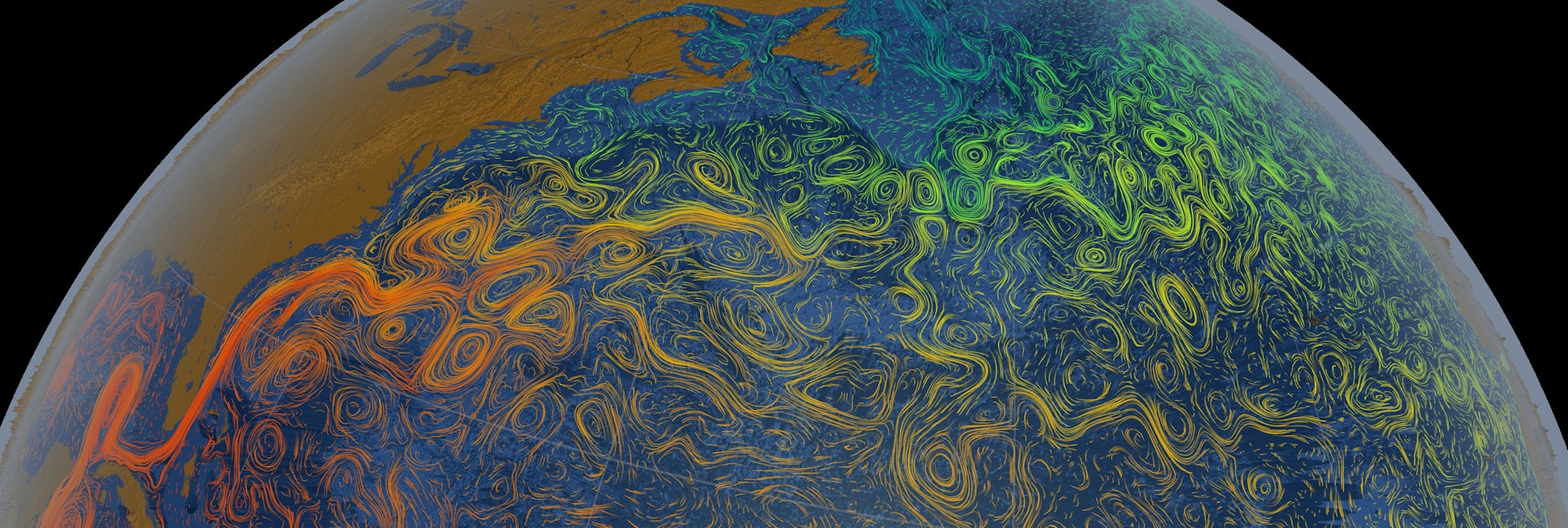
The Gulf Stream transports warm tropical waters northwards along the eastern coast of North America before turning north-east towards Europe. In doing so, it forms part of the Amoc, a vast system of ocean currents that redistributes heat, nutrients and carbon around the Atlantic Ocean. Consequently, the Amoc plays a major role in regulating the climate. In particular, the northern arm of the Gulf Stream helps keep western Europe much milder than other regions at similar latitudes.
Arus Teluk mengangkut air tropis hangat ke utara di sepanjang pantai timur Amerika Utara sebelum berbelok ke timur laut menuju Eropa. Dengan melakukan ini, ia membentuk bagian dari Amoc, sistem arus laut luas yang mendistribusikan ulang panas, nutrisi, dan karbon di sekitar Samudra Atlantik. Akibatnya, Amoc memainkan peran besar dalam mengatur iklim. Secara khusus, lengan utara Arus Teluk membantu menjaga Eropa barat jauh lebih sejuk daripada wilayah lain pada lintang serupa.
Scientists are increasingly concerned about the future of this circulation system. As the climate warms and extra freshwater (from melting ice) enters the North Atlantic, surface waters become less dense and therefore less able to sink. Most climate models project that these changes weaken the Amoc. Observations suggest that this weakening has already begun, but it is predicted to weaken much more as the 21st century progresses. However, direct evidence showing how the system responds to such major disruptions remains relatively limited.
Para ilmuwan semakin khawatir tentang masa depan sistem sirkulasi ini. Seiring pemanasan iklim dan masuknya air tawar tambahan (dari es yang mencair) ke Atlantik Utara, air permukaan menjadi kurang padat dan oleh karena itu kurang mampu tenggelam. Sebagian besar model iklim memproyeksikan bahwa perubahan-perubahan ini melemahkan Amoc. Pengamatan menunjukkan bahwa pelemahan ini sudah dimulai, tetapi diperkirakan akan semakin lemah seiring berjalannya abad ke-21. Namun, bukti langsung yang menunjukkan bagaimana sistem merespons gangguan besar seperti itu masih relatif terbatas.
To answer that question, paleoceanographers like us turn to the past.
Untuk menjawab pertanyaan itu, ahli oseanografi purba seperti kami beralih ke masa lalu.
A natural experiment from the end of the last ice age
Eksperimen alami dari akhir zaman es terakhir
The Younger Dryas was one of the most dramatic episodes of abrupt climate change in Earth’s recent history. As the planet emerged from the last ice age, warming trends across much of the North Atlantic region abruptly reversed. European summer temperatures declined by around 4°C–8°C in less than a century, while Greenland cooled by up to 10°C within just a few decades. The effects rippled far beyond the North Atlantic, weakening monsoon systems across Africa and Asia.
Younger Dryas adalah salah satu episode perubahan iklim mendadak paling dramatis dalam sejarah Bumi baru-baru ini. Saat planet ini keluar dari zaman es terakhir, tren pemanasan di sebagian besar wilayah Atlantik Utara tiba-tiba berbalik. Suhu musim panas Eropa menurun sekitar 4°C–8°C dalam waktu kurang dari satu abad, sementara Greenland mendingin hingga 10°C hanya dalam beberapa dekade. Dampaknya merambat jauh melampaui Atlantik Utara, melemahkan sistem monsun di seluruh Afrika dan Asia.
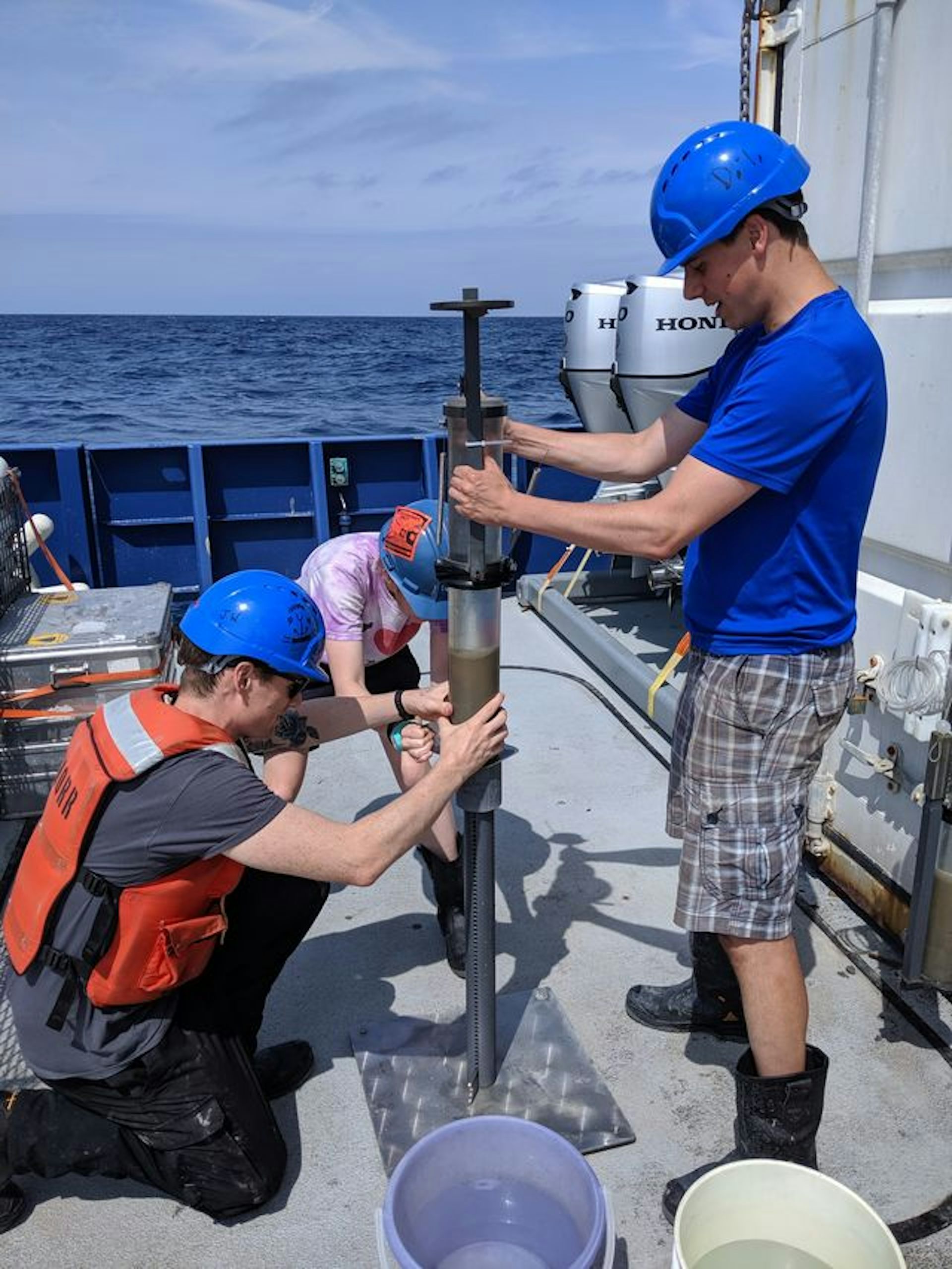
To understand how the ocean responded, we analysed sediment extracted from the seabed off Nova Scotia. Microscopic fossil shells and sediment grains preserved within this marine mud can reveal what the sea would have been like at the time it formed. We then reconstructed changes in both surface and deep Atlantic circulation before, during, and after the Younger Dryas.
Untuk memahami bagaimana lautan merespons, kami menganalisis sedimen yang diekstraksi dari dasar laut di lepas Nova Scotia. Cangkang fosil mikroskopis dan butir-butir sedimen yang diawetkan dalam lumpur laut ini dapat mengungkapkan seperti apa kondisi laut pada saat ia terbentuk. Kami kemudian merekonstruksi perubahan dalam sirkulasi Atlantik, baik permukaan maupun dalam, sebelum, selama, dan setelah Younger Dryas.
An unexpected warming signal
Sinyal pemanasan yang tak terduga
What we found surprised us. While Greenland and much of the subpolar North Atlantic cooled rapidly, waters off Atlantic Canada warmed instead, by as much as 4°C–5°C.
Apa yang kami temukan mengejutkan kami. Sementara Greenland dan sebagian besar Atlantik Utara subpolar mendingin dengan cepat, perairan di lepas pantai Kanada Atlantik justru menghangat, hingga sebesar 4°C–5°C.
The most likely explanation is that the Gulf Stream migrated northwards, bringing warm subtropical waters closer to the Canadian coastline.
Penjelasan yang paling mungkin adalah bahwa Arus Teluk (Gulf Stream) bermigrasi ke utara, membawa perairan subtropis hangat lebih dekat ke garis pantai Kanada.
Previous climate-model simulations had predicted that a weakening of one of the Amoc’s deep currents could trigger exactly this response. Until now, however, there had been little direct geological evidence that it had happened before.
Simulasi model iklim sebelumnya telah memprediksi bahwa melemahnya salah satu arus dalam Amoc dapat memicu respons persis seperti ini. Namun, hingga saat ini, belum ada bukti geologis langsung bahwa hal itu pernah terjadi sebelumnya.
Our study provides real-world evidence for a process that climate models have long proposed. That matters because it shows that large reorganisations of Atlantic circulation are not just theoretical possibilities – they have happened before.
Studi kami memberikan bukti dunia nyata untuk suatu proses yang telah lama diusulkan oleh model iklim. Hal itu penting karena menunjukkan bahwa reorganisasi besar sirkulasi Atlantik bukan hanya kemungkinan teoretis – mereka pernah terjadi sebelumnya.
What can the past tell us about the future?
Apa yang dapat diceritakan masa lalu kepada kita tentang masa depan?
No past climate event is a perfect analogue for modern climate change. The Younger Dryas occurred under very different conditions from today. Massive ice sheets still covered much of Canada and Scandinavia, and the sea level was tens of metres lower than at present.
Tidak ada peristiwa iklim masa lalu yang merupakan analog sempurna untuk perubahan iklim modern. Younger Dryas terjadi dalam kondisi yang sangat berbeda dari hari ini. Lapisan es masif masih menutupi sebagian besar Kanada dan Skandinavia, dan permukaan laut jauh lebih rendah puluhan meter daripada saat ini.
Nevertheless, the physical links connecting the different components of the North Atlantic circulation system are likely to be the same.
Meskipun demikian, tautan fisik yang menghubungkan berbagai komponen sistem sirkulasi Atlantik Utara kemungkinan akan tetap sama.
Our study does not suggest that the Amoc completely collapsed during the Younger Dryas, nor does it tell us whether such a collapse is likely in the future. Instead, it reveals a more nuanced picture in which various components of the North Atlantic circulation system changed in different ways. Rather than producing a uniform response, this reorganisation created a patchwork of warming and cooling across the North Atlantic.
Studi kami tidak menunjukkan bahwa Amoc benar-benar runtuh selama Younger Dryas, juga tidak memberi tahu kita apakah keruntuhan seperti itu mungkin terjadi di masa depan. Sebaliknya, studi ini mengungkapkan gambaran yang lebih bernuansa di mana berbagai komponen sistem sirkulasi Atlantik Utara berubah dengan cara yang berbeda. Alih-alih menghasilkan respons seragam, reorganisasi ini menciptakan tambalan pemanasan dan pendinginan di seluruh Atlantik Utara.
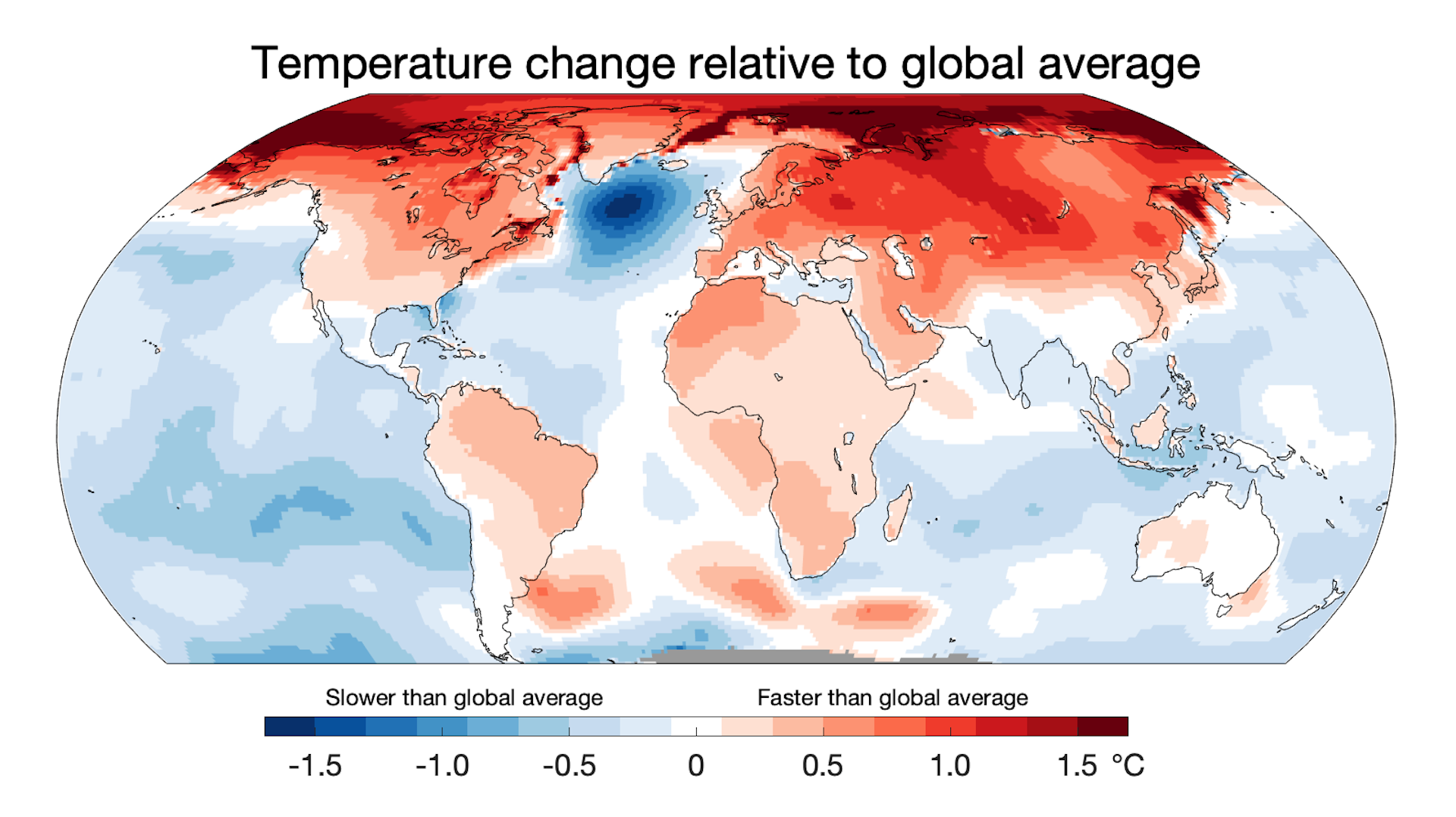
Similar patterns have also emerged over the last 150 years, with a relative “warming hole” developing in the ocean south of Greenland while regions closer to the Gulf Stream have warmed more rapidly. Our findings provide real-world evidence that these contrasting patterns are closely linked to changes in ocean circulation.
Pola serupa juga telah muncul selama 150 tahun terakhir, dengan “lubang pemanasan” relatif berkembang di lautan selatan Greenland sementara wilayah yang lebih dekat ke Arus Teluk menghangat lebih cepat. Temuan kami memberikan bukti dunia nyata bahwa pola-pola kontras ini terkait erat dengan perubahan sirkulasi laut.
Looking to the future, scientists are concerned that continued human-caused warming could trigger major changes in North Atlantic circulation, leading to shifts in ocean temperature patterns, which would disrupt weather and climate across the globe. Examining how the Atlantic behaved 13,000 years ago can help us recognise the warning signs of major changes before they happen again.
Melihat masa depan, para ilmuwan khawatir bahwa pemanasan berkelanjutan akibat aktivitas manusia dapat memicu perubahan besar dalam sirkulasi Atlantik Utara, menyebabkan pergeseran pola suhu laut, yang akan mengganggu cuaca dan iklim di seluruh dunia. Mengkaji bagaimana Atlantik berperilaku 13.000 tahun lalu dapat membantu kita mengenali tanda-tanda peringatan perubahan besar sebelum terjadi lagi.
Critically, our study suggests that such reorganisations can unfold over about a century, with individual components of the circulation changing within just a few decades – within a human lifetime.
Yang penting, studi kami menunjukkan bahwa reorganisasi semacam itu dapat berlangsung selama sekitar satu abad, dengan komponen individual sirkulasi berubah hanya dalam beberapa dekade – dalam rentang hidup manusia.
By showing how different parts of the Atlantic circulation interacted during a past episode of abrupt climate change, our findings provide an important benchmark for testing climate models. The deeper understanding we have gained into how the interconnected Atlantic system behaves will also help us with the very challenging task of developing early-warning systems for future circulation changes and potential climate tipping points.
Dengan menunjukkan bagaimana berbagai bagian sirkulasi Atlantik berinteraksi selama episode perubahan iklim mendadak di masa lalu, temuan kami memberikan tolok ukur penting untuk menguji model iklim. Pemahaman yang lebih dalam yang telah kita peroleh tentang cara sistem Atlantik yang saling terhubung berperilaku juga akan membantu kita dengan tugas yang sangat menantang dalam mengembangkan sistem peringatan dini untuk perubahan sirkulasi dan potensi titik kritis iklim di masa depan.
Alice Carter-Champion receives funding from the Natural Environment Research Council (NERC) , the Royal Society’s project “Rethinking Palaeoclimate for Society” and the Leverhulme Trust.
Alice Carter-Champion menerima pendanaan dari Natural Environment Research Council (NERC) , proyek Royal Society “Rethinking Palaeoclimate for Society” dan Leverhulme Trust.
Fangjingcheng Zhu receives funding from the INSPIRE NERC Doctoral Training Partnership and NERC project ReconAMOC.
Fangjingcheng Zhu menerima pendanaan dari INSPIRE NERC Doctoral Training Partnership dan proyek NERC ReconAMOC.
Jack Wharton receives funding from the Natural Environmental Research Council (NERC) , the European Union’s Horizon Europe project EPOC, and the Advanced Research + Invention Agency (ARIA) project VERIFY.
Jack Wharton menerima pendanaan dari Natural Environmental Research Council (NERC) , proyek Horizon Europe Uni Eropa EPOC, dan proyek Advanced Research + Invention Agency (ARIA) VERIFY.
Read more
-

Blokade AS di Selat Hormuz meningkatkan ketegangan dengan Tiongkok menjelang kunjungan Trump ke Beijing
US blockade of Strait of Hormuz ratchets up tensions with China ahead of Trump visit to Beijing
-

Apa itu trauma? Semakin kita membicarakannya, semakin maknanya
What is trauma? The more we talk about it, the more it means