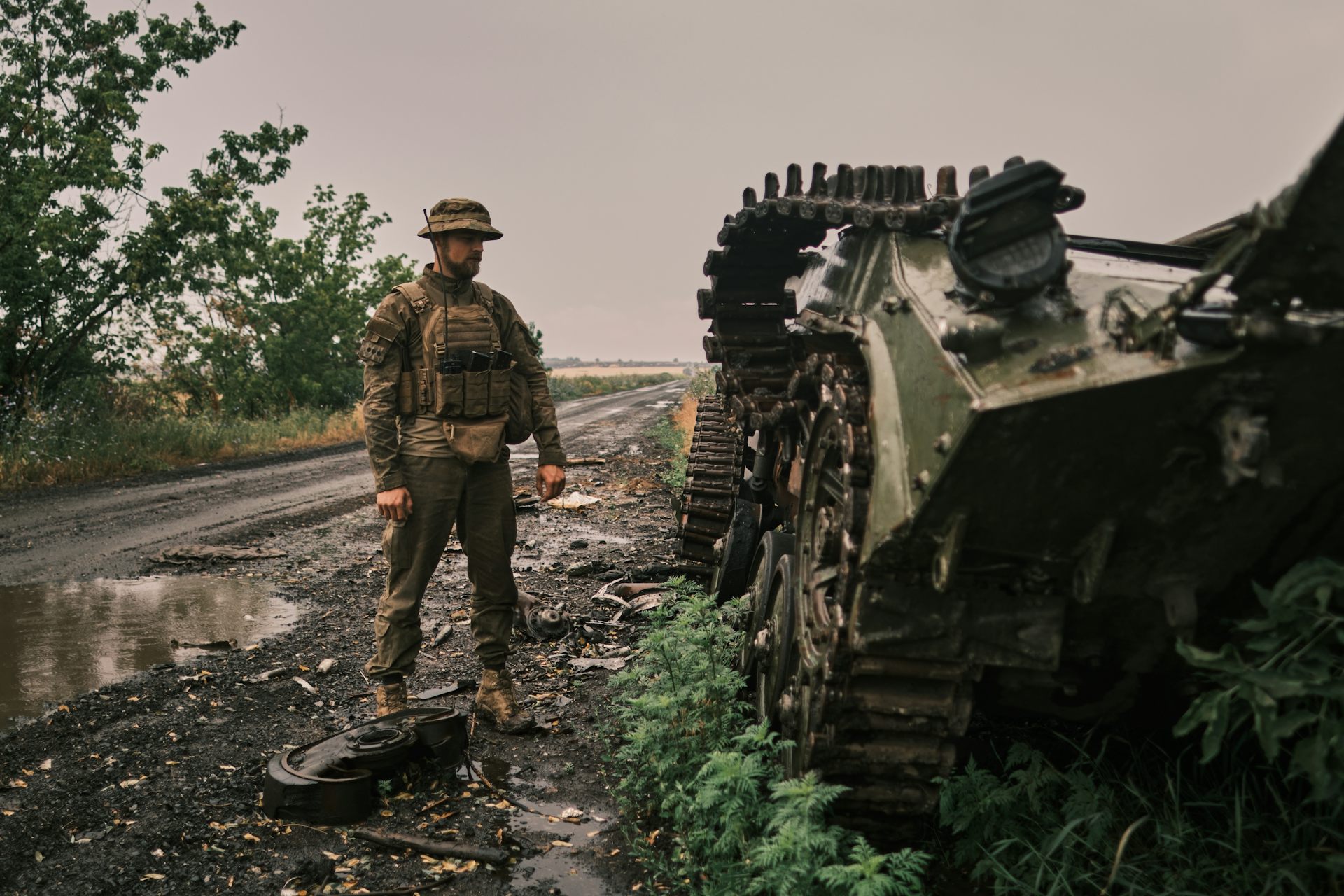
यूक्रेन युद्ध अब प्रथम विश्व युद्ध से भी अधिक लंबा हो गया है – लेकिन इसकी समानताएँ चिंताजनक हैं।
Ukraine war now longer than the first world war – but the similarities are unsettling
Russia’s war in Ukraine has passed another grim milestone.
यूक्रेन में रूस के युद्ध ने एक और भयावह पड़ाव पार कर लिया है।
The war in Ukraine has now exceeded the first world war in duration. And while the comparison between these two conflicts is imperfect, it is becoming difficult to ignore.
यूक्रेन में युद्ध अब पहले विश्व युद्ध से अवधि में अधिक हो गया है। और हालांकि इन दोनों संघर्षों के बीच तुलना अपूर्ण है, इसे अनदेखा करना मुश्किल होता जा रहा है।
Some of the similarities are obvious. At the tactical level, the conflict in Ukraine has witnessed the return of artillery as the dominant arm of battle.
कुछ समानताएं स्पष्ट हैं। सामरिक स्तर पर, यूक्रेन में संघर्ष ने युद्ध के प्रमुख हथियार के रूप में तोपखाने की वापसी देखी है।
During much of the first year of the war, artillery was responsible for the vast majority of casualties. Although drones have since transformed the battlefield, artillery remains indispensable to both sides.
युद्ध के पहले वर्ष के अधिकांश समय के दौरान, तोपखाने जिम्मेदार था सबसे अधिक हताहतों के लिए। हालांकि ड्रोनों ने तब से युद्धक्षेत्र को बदल दिया है, लेकिन तोपखाना दोनों पक्षों के लिए अपरिहार्य बना हुआ है।
Equally striking has been the return of extensive trench systems. Not since the Iran-Iraq war, which was fought between 1980 and 1988, has a major interstate conflict depended so heavily upon field fortifications and prepared positions such as trenches, concrete obstacles and belts of barbed wire.
उतना ही चौंकाने वाला व्यापक खाई प्रणालियों की वापसी रही है। 1980 और 1988 के बीच लड़े गए ईरान-इराक युद्ध के बाद से, किसी प्रमुख अंतरराज्यीय संघर्ष ने मैदान की किलेबंदी और खाइयों, कंक्रीट बाधाओं और कांटेदार तार की बेल्ट जैसी तैयार स्थितियों पर इतना अधिक निर्भर नहीं किया है।
Large-scale manoeuvre has given way to attritional combat measured in hundreds of metres rather than tens of kilometres.
बड़े पैमाने के युद्धाभ्यास का स्थान सैकड़ों मीटर में मापे जाने वाले क्षरणकारी युद्ध ने ले लिया, न कि दर्जनों किलोमीटर में।
Yet the deeper similarities lie not in trenches or artillery, but in the underlying logic of the war itself. Like the first world war, the conflict in Ukraine has become a contest of endurance: manpower, industrial capacity, economic resilience and political will.
फिर भी गहरी समानताएं खाइयों या तोपखाने में नहीं हैं, बल्कि युद्ध के अंतर्निहित तर्क में हैं। पहले विश्व युद्ध की तरह, यूक्रेन का संघर्ष सहनशक्ति की प्रतिस्पर्धा बन गया है: जनशक्ति, औद्योगिक क्षमता, आर्थिक लचीलापन और राजनीतिक इच्छाशक्ति।
These factors, rather than any individual weapons system, are likely to determine its eventual outcome. Of these, the most important is manpower.
ये कारक, किसी व्यक्तिगत हथियार प्रणाली के बजाय, इसके अंतिम परिणाम का निर्धारण करने की संभावना है। इनमें सबसे महत्वपूर्ण जनशक्ति है।
Broadly comparable losses
व्यापक रूप से तुलनीय नुकसान
During the first world war, British, French and German governments routinely published casualty lists. The public knew that victories often came at immense cost.
प्रथम विश्व युद्ध के दौरान, ब्रिटिश, फ्रांसीसी और जर्मन सरकारों ने नियमित रूप से हताहतों की सूची प्रकाशित की। जनता जानती थी कि जीत अक्सर भारी कीमत पर आती है।
Military leaders understood that the key question was not simply how many casualties the enemy had suffered, but whether their own societies could continue to bear comparable losses for longer than the opponent.
सैन्य नेताओं को समझ था कि मुख्य प्रश्न केवल यह नहीं था कि दुश्मन को कितने हताहत हुए हैं, बल्कि यह था कि क्या उनके अपने समाज विरोधी की तुलना में लंबे समय तक तुलनीय नुकसान उठाना जारी रख सकते हैं।
Battles such as Verdun and the Somme in 1916 and Passchendaele (also known as the Third Battle of Ypres) in 1917 generally produced losses that were severe for both sides. This was well understood on the home front.
1916 और 1917 में वर्दुन और सोम जैसे युद्धों और पासचेनडेल (जिसे यप्रेस का तीसरा युद्ध भी कहा जाता है) ने आम तौर पर दोनों पक्षों के लिए गंभीर नुकसान किए। यह बात घर के मोर्चे पर अच्छी तरह से समझी गई थी।
Yet in the Ukraine war, we are regularly invited to believe that Russia sustains several times the number of dead than is suffered by Ukraine. In a particularly unlikely example, Ukraine’s president, Volodymyr Zelensky, claimed that 47 Russians were dying for every Ukrainian earlier in 2026.
फिर भी, यूक्रेन युद्ध में, हमें नियमित रूप से विश्वास दिलाया जाता है कि रूस को यूक्रेन द्वारा हुए नुकसान की तुलना में कई गुना अधिक लोग मारे गए हैं। एक विशेष रूप से असंभव उदाहरण में, यूक्रेन के राष्ट्रपति वलोडिमिर ज़ेलेंस्की ने दावा किया कि 2026 की शुरुआत में हर यूक्रेनी के लिए 47 रूसी मर रहे थे।
About a year ago, I was having dinner at a London club with a well-connected former Ukrainian government official whom I have known for some time. Our conversation turned to casualties.
लगभग एक साल पहले, मैं लंदन के एक क्लब में एक ऐसे पूर्व यूक्रेनी सरकारी अधिकारी के साथ रात का खाना खा रहा था जिसे मैं कुछ समय से जानता हूँ। हमारी बातचीत हताहतों पर आ गई।
I asked them: “Tell me, no bullshit: what is the real casualty ratio?” My companion paused before replying quietly: “Same as the Russians.” Surprised, I asked for the source. “The General Staff,” they replied.
मैंने उनसे पूछा: “मुझे बताओ, कोई बकवास नहीं: वास्तविक हताहत अनुपात क्या है?” मेरे साथी ने चुपचाप जवाब देने से पहले एक विराम लिया: “रूस के जैसा ही।” हैरान होकर, मैंने स्रोत के बारे में पूछा। उन्होंने उत्तर दिया, “जनरल स्टाफ।”
The General Staff of the Armed Forces of Ukraine is the senior military command headquarters of Ukraine’s armed forces – the body responsible for planning, directing and coordinating military operations at the highest level.
यूक्रेन की सशस्त्र सेनाओं का जनरल स्टाफ यूक्रेन की सशस्त्र सेनाओं का वरिष्ठ सैन्य कमांड मुख्यालय है – यह सर्वोच्च स्तर पर सैन्य अभियानों की योजना बनाने, निर्देशित करने और समन्वयित करने वाली संस्था है।
This is an anecdote, but publicly available evidence tends to support this assertion. Sources such as the New York Times have also confirmed that casualties on both sides are similar, with Russia sustaining more, but not multiple times more. Russia, of course, has a far larger population than Ukraine.
यह एक उपाख्यान है, लेकिन सार्वजनिक रूप से उपलब्ध साक्ष्य इस दावे का समर्थन करते हैं। न्यूयॉर्क टाइम्स जैसे स्रोतों ने भी पुष्टि की है कि दोनों पक्षों के हताहत समान हैं, जिसमें रूस को अधिक नुकसान हुआ है, लेकिन कई गुना नहीं। बेशक, रूस की आबादी यूक्रेन की तुलना में बहुत बड़ी है।
The precise casualty figures remain contested and are likely to remain so until long after the war ends. What matters for present purposes, however, is that the available evidence points towards a war of broadly comparable losses rather than one in which either side enjoys an overwhelming advantage in manpower attrition.
सटीक हताहत आंकड़े विवादित बने हुए हैं और युद्ध समाप्त होने के काफी समय तक ऐसे ही रहने की संभावना है। हालांकि, वर्तमान उद्देश्यों के लिए जो मायने रखता है वह यह है कि उपलब्ध साक्ष्य एक व्यापक रूप से तुलनीय नुकसान वाले युद्ध की ओर इशारा करते हैं न कि एक ऐसे युद्ध की जिसमें किसी भी पक्ष को जनशक्ति क्षरण में भारी लाभ प्राप्त हो।
Even if these figures are broadly correct, Ukraine has held the line against a much larger adversary for over four years now and has shown extraordinary resilience in the face of invasion. Its capacity for innovation has repeatedly surprised observers.
भले ही ये आंकड़े मोटे तौर पर सही हों, यूक्रेन ने अब चार साल से अधिक समय तक एक बहुत बड़े विरोधी के खिलाफ मोर्चा संभाला है और आक्रमण के सामने असाधारण लचीलापन दिखाया है। नवाचार की इसकी क्षमता ने बार-बार पर्यवेक्षकों को आश्चर्यचकित किया है।
New drones, autonomous systems and precision-strike technologies are often presented as solutions to the country’s growing manpower difficulties. Some commentators even suggest that robotic systems may compensate for shortages of personnel.
नए ड्रोन, स्वायत्त सिस्टम और सटीक-स्ट्राइक प्रौद्योगिकियों को अक्सर देश की बढ़ती जनशक्ति कठिनाइयों के समाधान के रूप में प्रस्तुत किया जाता है। कुछ टिप्पणीकार तो यह भी सुझाव देते हैं कि रोबोटिक सिस्टम कर्मियों की कमी की भरपाई कर सकते हैं।
The difficulty with this argument is that war is an interactive contest. Almost every significant Ukrainian innovation has been met by a Russian adaptation and vice versa. The result has been a continuing cycle of measure and countermeasure rather than a decisive technological breakthrough by either side.
इस तर्क में कठिनाई यह है कि युद्ध एक इंटरैक्टिव प्रतियोगिता है। लगभग हर महत्वपूर्ण यूक्रेनी नवाचार का सामना रूसी अनुकूलन और इसके विपरीत हुआ है। इसका परिणाम किसी भी पक्ष द्वारा निर्णायक तकनीकी सफलता के बजाय उपाय और प्रतिउपाय के निरंतर चक्र के रूप में रहा है।
Technology matters enormously, but it rarely abolishes the need for manpower. Artillery, tanks, aircraft and machine guns transformed warfare between 1914 and 1918, yet none removed the requirement to occupy and defend ground with soldiers.
प्रौद्योगिकी बहुत मायने रखती है, लेकिन यह शायद ही कभी जनशक्ति की आवश्यकता को समाप्त करती है। तोपखाने, टैंक, विमान और मशीन गन ने 1914 और 1918 के बीच युद्ध को बदल दिया, फिर भी किसी ने सैनिकों के साथ जमीन पर कब्जा करने और बचाव करने की आवश्यकता को नहीं हटाया।
The same remains true today. As military doctrine has long recognised, drones, missiles and aircraft can destroy, disrupt and delay, but ground can only be taken and held by troops.
आज भी यही बात सच है। जैसा कि सैन्य सिद्धांत लंबे समय से पहचानता रहा है, ड्रोन, मिसाइल और विमान नष्ट कर सकते हैं, बाधित कर सकते हैं और देरी कर सकते हैं, लेकिन ज़मीन केवल सैनिकों द्वारा ही जीती और रखी जा सकती है।
There are other echoes of 1918. The small infiltration and assault groups employed by both sides in Ukraine’s drone-saturated battlefields bear a striking resemblance to the German stormtroopers who achieved remarkable successes during the Spring Offensive of 1918.
1918 की अन्य गूँज भी मौजूद हैं। यूक्रेन के ड्रोन-संतृप्त युद्धक्षेत्रों में दोनों पक्षों द्वारा उपयोग किए जाने वाले छोटे घुसपैठ और हमला समूह जर्मन स्टॉर्मट्रूपर्स से मिलते जुलते हैं, जिन्होंने 1918 के वसंत आक्रमण के दौरान उल्लेखनीय सफलता प्राप्त की थी।
As so often in warfare, however, innovation did not confer a lasting advantage. The British and French adapted, developed countermeasures and eventually improved upon many of the new tactics themselves.
हालांकि, जैसा कि अक्सर युद्ध में होता है, नवाचार ने कोई स्थायी लाभ नहीं दिया। ब्रिटिश और फ्रांसीसी अनुकूलित हुए, जवाबी उपाय विकसित किए और अंततः कई नई तकनीकों में सुधार किया।
What transformed the strategic balance in the first world war was not tactical innovation or a decisive technological breakthrough, but the arrival of the US Army and Marine Corps. More than 2 million American soldiers ultimately served in Europe, and their battlefield presence convinced Germany that time was no longer on its side.
प्रथम विश्व युद्ध में युद्ध तकनीकी नवाचार या किसी निर्णायक तकनीकी सफलता के कारण नहीं हुआ था, बल्कि अमेरिकी सेना और मरीन कॉर्प्स के आगमन के कारण हुआ था। दो मिलियन से अधिक अमेरिकी सैनिकों ने अंततः यूरोप में सेवा की, और उनकी युद्धक्षेत्र उपस्थिति ने जर्मनी को यह विश्वास दिलाया कि अब समय उनके पक्ष में नहीं है।
Ukraine faces no such prospect today. For all the discussion of technological revolution, the war in Ukraine remains a contest of human endurance – just like the first world war.
आज यूक्रेन के सामने ऐसा कोई परिदृश्य नहीं है। तकनीकी क्रांति पर सभी चर्चाओं के बावजूद, यूक्रेन में युद्ध मानव सहनशक्ति की एक प्रतिस्पर्धा बना हुआ है – ठीक पहले विश्व युद्ध की तरह।
Frank Ledwidge does not work for, consult, own shares in or receive funding from any company or organisation that would benefit from this article, and has disclosed no relevant affiliations beyond their academic appointment.
फ्रैंक लेडविज किसी भी कंपनी या संगठन के लिए काम नहीं करते हैं, न ही वे सलाह देते हैं, न ही उनमें शेयर रखते हैं या उनसे फंडिंग प्राप्त करते हैं जो इस लेख से लाभान्वित हो सकते हैं, और उन्होंने अपने अकादमिक पद से परे कोई प्रासंगिक जुड़ाव का खुलासा नहीं किया है।
Read more
-
न्यायपूर्ण युद्ध क्या है? ट्रम्प प्रशासन और कैथोलिक चर्च के बीच शब्दों के युद्ध के संदर्भ में
What is a just war? Inside the war of words between the Trump administration and the Catholic church
-
ट्रम्प-शी शिखर सम्मेलन कोई ‘चीन में निक्सन’ क्षण नहीं होगा – अभी के लिए बात करना ही काफी है
Trump-Xi summit will be no ‘Nixon in China’ moment – that they are talking is enough for now