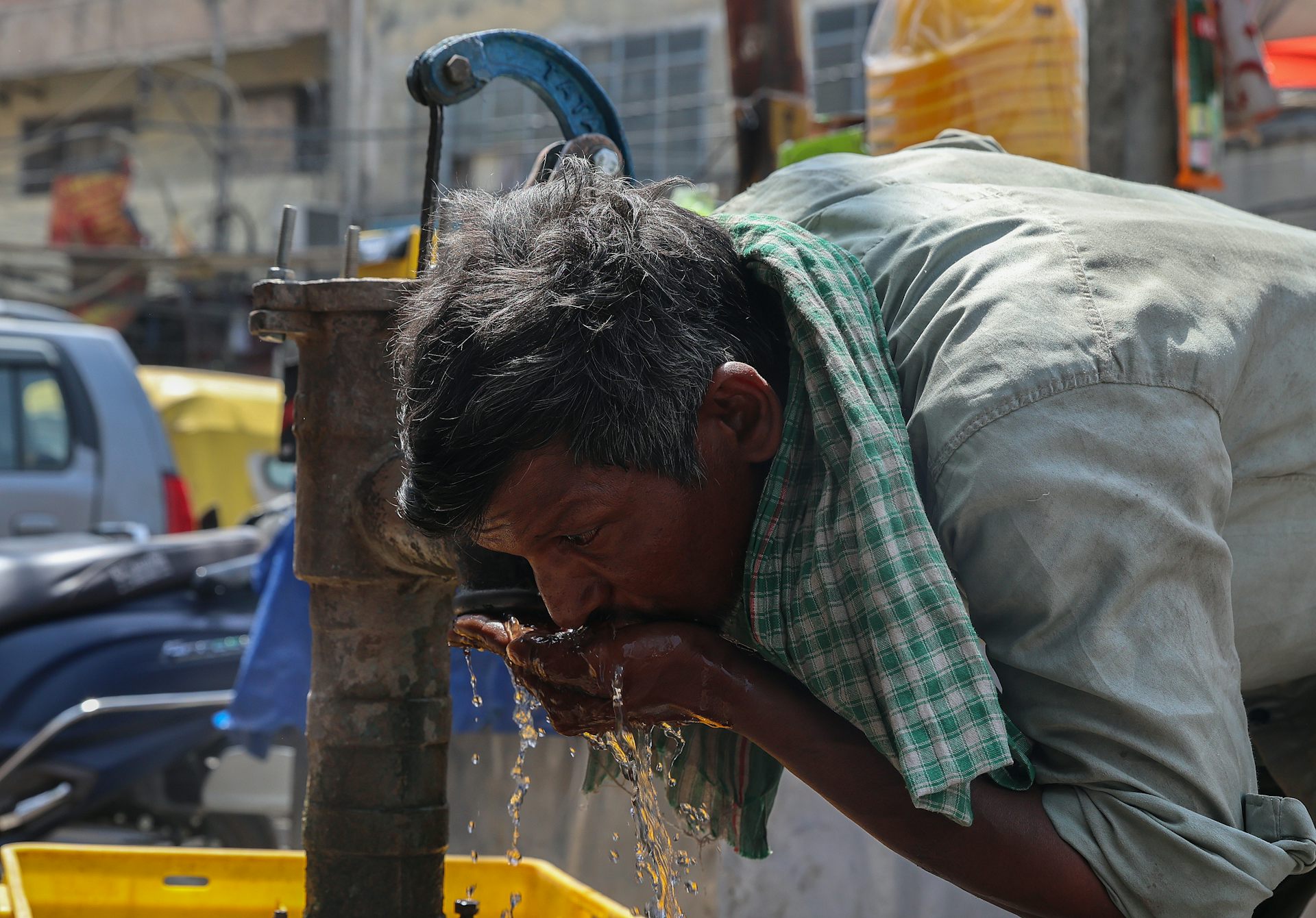
Demasiado calor, demasiada humedad: por qué la ola de calor sostenida en India y Pakistán es tan peligrosa
Too hot, too humid: why the sustained heatwave in India and Pakistan is so dangerous
Sustained, sweltering heat is hitting India and Pakistan hard – and humidity is making the situation even more dangerous.
El calor sofocante y sostenido está golpeando duramente a India y Pakistán, y la humedad está haciendo la situación aún más peligrosa.
India and Pakistan are no strangers to heat. This time of year is the worst, as heat peaks before the monsoon brings cooler conditions from June.
India y Pakistán no son ajenos al calor. Esta época del año es la peor, ya que el calor alcanza su punto máximo antes de que el monzón traiga condiciones más frescas a partir de junio.
But this year’s heat is something else. Intense, sustained heat began in mid-April. Daily maximum temperatures have topped 46°C in many locations, with some areas running around 5–8°C above seasonal norms.
Pero el calor de este año es algo diferente. Un calor intenso y sostenido comenzó a mediados de abril. Las temperaturas máximas diarias han superado los 46 °C en muchos lugares, y algunas zonas registran entre 5 y 8 °C por encima de las normas estacionales.
The unrelenting heat has driven record demand for electricity in India as people turn on air conditioners – and worsened drought conditions affecting more than a million square kilometres across both countries.
El calor implacable ha impulsado una demanda récord de electricidad en India a medida que la gente enciende aires acondicionados, y ha empeorado las condiciones de sequía que afectan a más de un millón de kilómetros cuadrados en ambos países.
When extreme heat combines with humidity, it can be lethal. Human bodies cannot cool themselves easily in these conditions. The heatwave has claimed at least 37 lives in India and 10 in Pakistan. These figures are likely to be a major underestimate, as heat-related deaths are systemically undercounted in India.
Cuando el calor extremo se combina con la humedad, puede ser letal. Los cuerpos humanos no pueden enfriarse fácilmente en estas condiciones. La ola de calor ha causado la muerte de al menos 37 personas en India y 10 en Pakistán. Es probable que estas cifras sean una gran subestimación, ya que las muertes relacionadas con el calor se subestiman sistemáticamente en India.
Why is it so hot?
¿Por qué hace tanto calor?
It’s usually a hot wait for the monsoon. But several factors can line up to make a bad season much worse.
Normalmente es una espera calurosa para el monzón. Pero varios factores pueden combinarse para empeorar mucho una mala temporada.
One reason it’s been so bad this year is due to persistent high-pressure weather systems. When these systems sit in place, they make heatwaves more likely by suppressing cloud formation and reducing the chance of cooling rain. This year, strong high-pressure systems have lingered over parts of India and Pakistan, trapping hot air near the surface and allowing temperatures to build over many days.
Una razón por la que ha sido tan malo este año se debe a persistentes sistemas meteorológicos de alta presión. Cuando estos sistemas se establecen, hacen que las olas de calor sean más probables al suprimir la formación de nubes y reducir la posibilidad de lluvia refrescante. Este año, fuertes sistemas de alta presión han persistido sobre partes de India y Pakistán, atrapando aire caliente cerca de la superficie y permitiendo que las temperaturas aumenten durante muchos días.
With less rain, there’s more heat at ground level and soils dry out. Drier soils make things worse, because less heat is used up evaporating moisture in the soil and more goes into heating the land. High pressure systems can often hang around for many days, allowing extreme heat to build up.
Con menos lluvia, hay más calor a nivel del suelo y los suelos se secan. Los suelos más secos empeoran las cosas, porque menos calor se utiliza para evaporar la humedad del suelo y más se destina a calentar la tierra. Los sistemas de alta presión a menudo pueden permanecer durante muchos días, permitiendo que se acumule calor extremo.
It’s often worst in cities, as concrete and asphalt absorb heat during the day and release it slowly overnight. This means cities stay hotter overnight, boosting health risks for people without access to cooling.
A menudo es peor en las ciudades, ya que el concreto y el asfalto absorben calor durante el día y lo liberan lentamente durante la noche. Esto significa que las ciudades se mantienen más calurosas durante la noche, aumentando los riesgos para la salud de las personas sin acceso a refrigeración.
Behind these immediate reasons is the big one: climate change. As the world gets steadily hotter, heatwaves get worse and worse. Estimates from World Weather Attribution suggest the first big heatwave from 15–29 April 2026 was made about three times more likely and about 1°C hotter due to climate change.
Detrás de estas razones inmediatas está la gran causa: el cambio climático. A medida que el mundo se calienta constantemente, las olas de calor empeoran cada vez más. Las estimaciones de World Weather Attribution sugieren que la primera gran ola de calor del 15 al 29 de abril de 2026 fue tres veces más probable y aproximadamente 1 °C más caliente debido al cambio climático.
At current global levels of global warming (~1.4°C) , this means the subcontinent faces similar events about once every five years. At present, we’re tracking towards 2.6°C of warming by 2100. At that level of heat, heatwaves like this would hit every 2-3 years and be 2.2°C hotter.
Con los niveles actuales de calentamiento global (~1.4 °C) , esto significa que el subcontinente se enfrenta a eventos similares aproximadamente una vez cada cinco años. Actualmente, estamos en camino de un calentamiento de 2.6 °C para 2100. A ese nivel de calor, olas de calor como esta golpearían cada 2-3 años y serían 2.2 °C más calientes.
Humidity makes heat much more lethal
La humedad hace que el calor sea mucho más letal
The number on a thermometer is only part of the danger.
El número en un termómetro es solo parte del peligro.
Many parts of India and Pakistan are intensely humid. When sustained extreme heat arrives, humidity acts to intensify the threat to health. Humidity levels are worsening in parts of the region.
Muchas partes de India y Pakistán son intensamente húmedas. Cuando llega un calor extremo sostenido, la humedad actúa intensificando la amenaza para la salud. Los niveles de humedad están empeorando en partes de la región.
That’s because it’s harder to cool down naturally in humid conditions. Human bodies use sweating as the main method of cooling. When these beads of warm water evaporate off the skin, heat is carried away.
Esto se debe a que es más difícil enfriarse naturalmente en condiciones húmedas. Los cuerpos humanos utilizan el sudor como principal método de enfriamiento. Cuando estas gotas de agua tibia se evaporan de la piel, se elimina el calor.
Humid air makes sweating a much less effective method of cooling. When the air already holds a lot of moisture, it takes longer for sweat to evaporate. The body can keep getting hotter even as it sweats.
El aire húmedo hace que el sudor sea un método de enfriamiento mucho menos efectivo. Cuando el aire ya contiene mucha humedad, tarda más en evaporarse el sudor. El cuerpo puede seguir calentándose incluso mientras suda.
This is why scientists are increasingly concerned about lethal humidity – when heat and humidity combine to rapidly sicken or kill.
Por esto los científicos están cada vez más preocupados por la humedad letal: cuando el calor y la humedad se combinan para enfermar o matar rápidamente.
Dying like this is deeply unpleasant. It begins with the core body temperature rising. People sweat more to try to shed the heat, but sweating doesn’t work well. If there’s no reprieve, the body temperature can keeps rising past 40°C and heatstroke can set in, damaging the brain and other vital organs. This can be fatal without rapid cooling and urgent care.
Morir de esta manera es profundamente desagradable. Comienza con el aumento de la temperatura corporal central. Las personas sudan más para intentar disipar el calor, pero el sudor no funciona bien. Si no hay alivio, la temperatura corporal puede seguir subiendo más allá de los 40 °C y puede aparecer un golpe de calor, dañando el cerebro y otros órganos vitales. Esto puede ser fatal sin enfriamiento rápido y atención urgente.
To gauge the combined danger of heat and humidity, scientists use measures such as the wet-bulb temperature. This reflects how much cooling is possible through sweating.
Para medir el peligro combinado del calor y la humedad, los científicos utilizan medidas como la temperatura de bulbo húmedo. Esto refleja cuánto enfriamiento es posible mediante el sudor.
It used to be thought the limit for human survival was a wet-bulb temperature of 35°C. But new research shows heat and humidity can be lethal across a range of temperature and humidity combinations. For example, for older people who are outdoors, 35°C and 90% humidity is as deadly as 45°C and 30% humidity. These levels have already been reached during heatwaves in Southern Asia in recent years. For instance, even healthy 18-35 year olds are at risk of dying with humidity of 40% and temperatures of 45°C.
Antes se pensaba que el límite para la supervivencia humana era una temperatura de bulbo húmedo de 35 °C. Pero nuevas investigaciones muestran que el calor y la humedad pueden ser letales en una variedad de combinaciones de temperatura y humedad. Por ejemplo, para las personas mayores al aire libre, 35 °C y 90 % de humedad es tan mortal como 45 °C y 30 % de humedad. Estos niveles ya se han alcanzado durante olas de calor en el sur de Asia en años recientes. Por ejemplo, incluso los adultos jóvenes sanos de 18 a 35 años corren el riesgo de morir con una humedad del 40 % y temperaturas de 45 °C.
It’s likely some areas of the subcontinent have hit those limits at times during this intense period of heat. But we can’t say for sure, as most weather bulletins give air temperatures rather than wet-bulb temperature.
Es probable que algunas áreas del subcontinente hayan alcanzado esos límites en momentos durante este intenso período de calor. Pero no podemos decirlo con seguridad, ya que la mayoría de los boletines meteorológicos dan temperaturas del aire en lugar de la temperatura de bulbo húmedo.
A threat faced unequally
Una amenaza enfrentada de manera desigual
The risks of heat and humidity are not faced equally. Wealthier people can turn on the air conditioner and avoid going outdoors.
Los riesgos del calor y la humedad no se enfrentan por igual. Las personas más ricas pueden encender el aire acondicionado y evitar salir al exterior.
But poorer people in informal settlements can’t escape the heat. Neither can construction workers, farmers, delivery riders and others doing physically demanding work outdoors.
Pero las personas más pobres en asentamientos informales no pueden escapar del calor. Tampoco pueden los trabajadores de la construcción, los agricultores, los repartidores y otras personas que realizan trabajos físicamente exigentes al aire libre.
There’s another risk too. The body needs cooler temperatures overnight to recover from intense heat. When the heat continues overnight, there’s no relief.
También hay otro riesgo. El cuerpo necesita temperaturas más frescas durante la noche para recuperarse del calor intenso. Cuando el calor continúa durante la noche, no hay alivio.
While cities are hotter than the surrounding areas, rural communities still face threats from heat and humidity. That’s because more work tends to be outdoors, healthcare is often far away and cooling is limited.
Aunque las ciudades son más calurosas que las áreas circundantes, las comunidades rurales aún enfrentan amenazas por el calor y la humedad. Esto se debe a que gran parte del trabajo tiende a realizarse al aire libre, la atención médica suele estar lejos y la refrigeración es limitada.
When could relief come?
¿Cuándo podría llegar el alivio?
When the monsoon arrives, it usually brings cooler conditions. Cloud cover and widespread rainfall help lower daytime temperatures, though humidity often stays high. The monsoon usually arrives in early June in southern India and covers the whole country by mid-July. In Pakistan, the monsoon typically arrives later, usually beginning in early July. The monsoon often lasts till September.
Cuando llega el monzón, generalmente trae condiciones más frescas. La cobertura de nubes y las lluvias generalizadas ayudan a reducir las temperaturas diurnas, aunque la humedad a menudo se mantiene alta. El monzón suele llegar a principios de junio en el sur de la India y cubre todo el país a mediados de julio. En Pakistán, el monzón generalmente llega más tarde, comenzando usualmente a principios de julio. El monzón a menudo dura hasta septiembre.
Relief can’t come too soon for the region.
El alivio no puede llegar demasiado pronto para la región.
Unfortunately, it won’t be the last threat. But as climate change ramps up, extreme heat and humidity will hit these nations more often – and more severely.
Desafortunadamente, no será la última amenaza. Pero a medida que el cambio climático se intensifica, el calor y la humedad extremos golpearán a estas naciones con más frecuencia y con mayor severidad.
Oluwafemi E. Adeyeri receives funding from the Australian Research Council.
Oluwafemi E. Adeyeri recibe financiación del Consejo Australiano de Investigación.
Sarah Perkins-Kirkpatrick receives funding from the Australian Research Council and is President of the Australian Meteorological and Oceanographic Society.
Sarah Perkins-Kirkpatrick recibe financiación del Consejo Australiano de Investigación y es Presidenta de la Sociedad Meteorológica y Oceanográfica Australiana.
Read more
-

La ‘Cola de caballo divina’, escándalos de drogas y la persecución de O.J. Simpson: un vistazo a la Copa Mundial de EE. UU. de 1994
The ‘Divine Ponytail’, drug scandals and the OJ Simpson chase: looking back at the 1994 US World Cup
-
¿Qué se necesitará para que los barcos vuelvan a pasar por el Estrecho de Ormuz?
What will it take to get ships going through the Strait of Hormuz again?