كأس العالم 2026: لماذا لا يكفي نقل المباريات إلى المساء لمعالجة مشكلة الحرارة الشديدة
World Cup 2026: why moving games to evenings isn’t enough to tackle extreme heat problem
Extreme weather, both heat and rain, are expected to hit World Cup venues this summer.
من المتوقع أن تضرب مواقع كأس العالم هذا الصيف، الطقس القاسي، سواء كان حرارة أو أمطار.
The 2026 Fifa World Cup is the biggest ever edition of the world’s most watched sporting tournament. The 48 teams taking part in Canada, the US and Mexico may find their toughest opponent is the extreme heat.
تُعد كأس العالم لكرة القدم 2026 النسخة الأضخم على الإطلاق من البطولة الرياضية الأكثر مشاهدة في العالم. وقد يجد الفريق الـ 48 المشارك في كندا والولايات المتحدة والمكسيك أن أقسى خصومهم هو الحر الشديد.
Very hot temperatures are expected across many of the states including Texas, California and Florida where World Cup games are being held this summer, with wildfire risks being highlighted in some states. The tournament kicks off on June 11.
من المتوقع ارتفاع درجات الحرارة بشكل كبير في العديد من الولايات بما في ذلك تكساس وكاليفورنيا وفلوريدا، حيث تُقام مباريات كأس العالم هذا الصيف، مع تسليط الضوء على مخاطر حرائق الغابات في بعض الولايات. وتنطلق البطولة في 11 يونيو.
The problems heat causes during matches were visible during the 2025 Fifa Club World Cup, played in the same summer months and across many of the same North American venues. Players and managers repeatedly referenced the stifling weather conditions.
كانت المشاكل التي يسببها الحر أثناء المباريات واضحة خلال كأس العالم للأندية 2025، التي أُقيمت في نفس أشهر الصيف وعبر العديد من أماكن شمال أمريكا نفسها. وأشار اللاعبون والمدربون مراراً إلى الظروف الجوية الخانقة.
Borussia Dortmund manager Niko Kovač said after a match in Cincinnati he was “sweating like I’ve just come out of a sauna”. Chelsea midfielder Enzo Fernández described conditions as “very dangerous”, adding that “everything becomes very slow”. Juventus manager Igor Tudor revealed that ten players asked to be substituted during a match against Real Madrid in Miami, where temperatures reached 30°C, with 70% humidity.
قال المدرب النمساوي لبروسيا دورتموند، نيكو كوفاتش، بعد مباراة في سينسيناتي إنه “يتعرق وكأنني خرجت للتو من الساونا.” ووصف لاعب تشيلسي، إنزو فرنانديز، الظروف بأنها “خطيرة للغاية”، مضيفاً أن “كل شيء يصبح بطيئاً جداً.” وكشف مدرب يوفنتوس، إيغور تودور، أن عشرة لاعبين طلبوا الاستبدال خلال مباراة ضد ريال مدريد في ميامي، حيث وصلت درجات الحرارة إلى 30 درجة مئوية، ورطوبة 70%.
North America’s last World Cup (USA 1994) also produced memorable scenes relating to heat. German striker Jürgen Klinsmann recalled: “I played in Dallas at 120 degrees [49°C ] I was dying” in a match against South Korea. Meanwhile, Republic of Ireland manager Jack Charlton was reprimanded by Fifa officials for throwing water bottles onto the pitch to help his dehydrated players during a game in Orlando.
كما أنتجت كأس العالم الأخيرة في أمريكا الشمالية (الولايات المتحدة 1994) مشاهد لا تُنسى تتعلق بالحرارة. وتذكر المهاجم الألماني يورغن كلينزمان: “لعبت في دالاس عند 120 درجة [49 درجة مئوية] كنت أموت” في مباراة ضد كوريا الجنوبية. وفي غضون ذلك، استُدعي مدرب أيرلندا الشمالية، جاك تشارلتون، من قبل مسؤولي الفيفا لتوجيه اللوم إليه لإلقاء زجاجات المياه على أرض الملعب لمساعدة لاعبيه الذين يعانون من الجفاف خلال مباراة في أورلاندو.
Extreme heat is not just uncomfortable – it threatens both health and performance. Football already has documented cases of heat-related fatigue, collapses and hospitalisations, including Guatemalan referee Humberto Panjoj collapsing during a 2024 Copa América match in Kansas City.
الحر الشديد ليس مجرد أمر غير مريح – بل يهدد كلًا من الصحة والأداء. وله كرة القدم بالفعل حالات موثقة من الإرهاق المرتبط بالحرارة، والانهيارات، والاستشفاء في المستشفيات، بما في ذلك انهيار الحكم الغواتيمالي همبرتو بانخوخ خلال مباراة كوبا أمريكا 2024 في كانساس سيتي.
Heat also changes the game itself. Studies show players cover less distance, perform fewer high-intensity sprints and get tired more quickly in extreme conditions. Tired players are more prone to mistakes and injuries, while hotter matches have been linked to more penalty shootouts, as exhausted teams struggle to break each other down in extra time.
يغير الحرارة اللعبة نفسها. وتُظهر الدراسات أن اللاعبين يقطعون مسافة أقل، ويقومون بجهد أقل من الاندفاعات عالية الكثافة، ويتعبون بشكل أسرع في الظروف القاسية. واللاعبون المتعبون أكثر عرضة للارتكاب الأخطاء والإصابات، بينما ارتبطت المباريات الأكثر حرارة بزيادة ركلات الترجيح، حيث تكافح الفرق المنهكة لكسر بعضها البعض في الوقت الإضافي.
Scientists commonly use Wet Bulb Globe Temperature (WGBT) to assess heat stress. Unlike air temperature alone, WBGT combines temperature, humidity, solar radiation and wind, making it a better indicator of how dangerous conditions feel to the human body.
يستخدم العلماء عادةً درجة حرارة الكرة الرطبة (WBGT) لتقييم الإجهاد الحراري. وعلى عكس درجة حرارة الهواء وحدها، تجمع درجة حرارة الكرة الرطبة بين درجة الحرارة والرطوبة والإشعاع الشمسي والرياح، مما يجعلها مؤشراً أفضل لمدى خطورة الظروف على جسم الإنسان.
Several football governing bodies – including the global players’ union Fifpro – consider a WBGT above 28°C to be a threshold where matches should potentially be delayed or postponed.
تعتبر العديد من الهيئات الحاكمة لكرة القدم – بما في ذلك الاتحاد العالمي للاعبين (Fifpro) – أن درجة حرارة الكرة الرطبة التي تتجاوز 28 درجة مئوية هي عتبة يجب فيها تأجيل أو تأجيل المباريات بشكل محتمل.
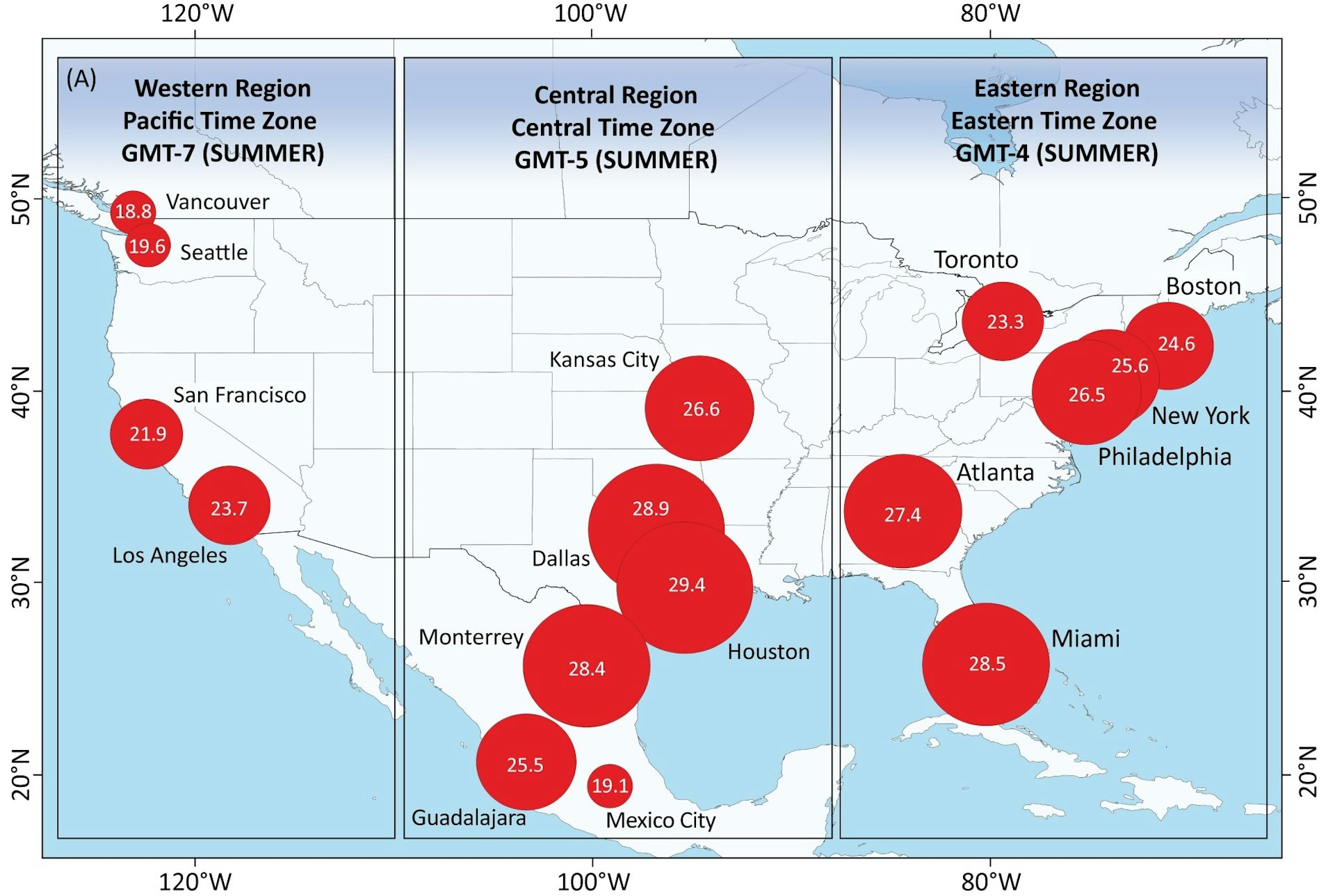
20-year average levels of extreme heat in 16 venue cities
متوسط مستويات الحرارة الشديدة على مدى 20 عاماً في 16 مدينة مضيفة
Possible solutions?
حلول محتملة؟
A study I led in 2025 found that 14 of the 16 upcoming World Cup host cities are likely to exceed the extreme 28°C WBGT threshold if conditions this summer are typical. Most of the danger falls during mid-afternoon, and Fifa has clearly tried to reduce some of the risk through scheduling. Compared with the Club World Cup, matches in the hottest cities and non-air-conditioned stadiums have largely been shifted away from the most dangerous hours of the day.
وجدت دراسة قمت بقيادتها في عام 2025 أن 14 من مدن استضافة كأس العالم الـ 16 القادمة من المحتمل أن تتجاوز عتبة مؤشر درجة الحرارة الرطبة (WBGT) القصوى البالغة 28 درجة مئوية إذا كانت الظروف هذا الصيف نموذجية. يقع معظم الخطر خلال منتصف فترة ما بعد الظهر، وقد حاولت الفيفا بوضوح تقليل بعض المخاطر من خلال الجدولة. مقارنة بكأس العالم للأندية، تم نقل المباريات في أكثر المدن حرارة والملاعب غير المكيفة إلى حد كبير بعيداً عن أخطر ساعات اليوم.
That will help – but it will not eliminate the problem.
سيساعد ذلك – لكنه لن يقضي على المشكلة.
Some high-risk fixtures remain. Late afternoon (5pm) and early evening (6pm) matches in Miami and Kansas City carry a greater than 30% risk of WBGTs exceeding 28°C if summer temperatures are typical, rising above 50% if conditions are hotter than average. The final at MetLife Stadium in New Jersey kicks off at 3pm, when the probability of extreme heat is about 30% in a typical summer and 55% in a hot one.
لا تزال هناك بعض المباريات عالية المخاطر. تحمل مباريات أواخر فترة ما بعد الظهر (الساعة 5 مساءً) وأوائل المساء (الساعة 6 مساءً) في ميامي ومدينة كانساس سيتي خطراً يتجاوز 30% لتجاوز مؤشر WBGT حاجز 28 درجة مئوية إذا كانت درجات حرارة الصيف نموذجية، ويرتفع هذا الخطر إلى ما يزيد عن 50% إذا كانت الظروف أكثر حرارة من المتوسط. تنطلق المباراة النهائية في ملعب ميتلايف بنيوجيرسي في الساعة 3 مساءً، حيث تبلغ احتمالية الحرارة الشديدة حوالي 30% في صيف نموذجي و 55% في صيف حار.
Those estimates may even turn out to be conservative. Heatwaves are becoming more frequent and intense globally. The 2021 western North America heatwave shattered records by more than 4°C in some locations. A similarly extreme event during the World Cup could push lower-risk cities such as Seattle, Toronto and Vancouver into dangerous territory, while prolonging extreme evening heat in more vulnerable venues such as Miami, Kansas City and Philadelphia.
قد تبين أن هذه التقديرات متحفظة حتى. أصبحت موجات الحر أكثر تكراراً وشدة على مستوى العالم. حطمت موجة الحر في غرب أمريكا الشمالية عام 2021 الأرقام القياسية بأكثر من 4 درجات مئوية في بعض المواقع. يمكن لحدث متطرف مماثل خلال كأس العالم أن يدفع المدن الأقل خطورة مثل سياتل وتورنتو وفانكوفر إلى منطقة الخطر، مع إطالة فترة الحرارة المسائية الشديدة في أماكن أكثر عرضة للخطر مثل ميامي وكانساس سيتي وفيلادلفيا.
And even air-conditioned stadiums do not remove the wider public-health risk.
وحتى الملاعب المكيفة لا تزيل خطر الصحة العامة الأوسع.
In the hottest cities such as Dallas and Houston, indoor venues may protect players and match officials during the game itself. But tens of thousands of spectators will still spend hours travelling, queueing and celebrating in dangerous outdoor heat. Many fans are older, less physically fit than elite athletes, dehydrated from alcohol consumption, or arriving from cooler climates with little acclimatisation.
في أكثر المدن حرارة مثل دالاس وهيوستن، قد تحمي الأماكن المغلقة اللاعبين ومسؤولي المباريات أثناء اللعب نفسه. لكن عشرات الآلاف من المتفرجين سيقضون الساعات في السفر والاصطفاف والاحتفال في حرارة خارجية خطيرة. العديد من المشجعين أكبر سناً، وأقل لياقة بدنية من الرياضيين النخبة، أو يعانون من الجفاف بسبب استهلاك الكحول، أو يصلون من مناخات أكثر برودة مع قلة التأقلم.
The risk therefore extends well beyond the pitch.
وبالتالي، يمتد الخطر إلى ما هو أبعد بكثير من أرض الملعب.
Yet Fifa’s current heat policy remains limited. All matches will have three-minute hydration breaks midway through each half, but the threshold for stronger action remains exceedingly high. Current Fifa guidance only mandates additional precautions at a WBGT of 32°C.
ومع ذلك، لا تزال سياسة الحرارة الحالية للفيفا محدودة. ستحصل جميع المباريات على فترات راحة للترطيب لمدة ثلاث دقائق في منتصف كل شوط، لكن العتبة لاتخاذ إجراء أقوى لا تزال مرتفعة للغاية. يقتصر توجيه الفيفا الحالي على فرض احتياطات إضافية عند وصول مؤشر WBGT إلى 32 درجة مئوية.
That figure has alarmed scientists and medical experts who have sent an open letter urging Fifa to strengthen its heat protections before the tournament begins. Their recommendations include doubling the time for cooling breaks to six minutes, lowering the WBGT threshold for intervention and introducing clearer rules for delaying or postponing matches in dangerous conditions.
لقد أثار هذا الرقم قلق العلماء والخبراء الطبيين الذين أرسلوا رسالة مفتوحة يحثون فيها الفيفا على تعزيز تدابير الحماية من الحرارة قبل بدء البطولة. تتضمن توصياتهم مضاعفة وقت فترات التبريد إلى ست دقائق، وخفض عتبة مؤشر WBGT للتدخل، وإدخال قواعد أوضح لتأجيل أو تأخير المباريات في الظروف الخطرة.
It is possible matches could be delayed or postponed if WBGTs exceed 32°C. This would be a decision for Fifa – and is something they have never done before. It is worth noting that the 32°C threshold is also considerably above levels many experts consider dangerous.
من المحتمل تأجيل أو تأخير المباريات إذا تجاوز مؤشر WBGT حاجز 32 درجة مئوية. سيكون هذا قراراً للفيفا – وهو أمر لم يسبق لهم القيام به من قبل. وتجدر الإشارة إلى أن عتبة 32 درجة مئوية تقع أيضاً فوق المستويات التي يعتبرها العديد من الخبراء خطراً بشكل كبير.
It’s likely that more World Cups will be played outside the traditional summer months in future. This was the case for the Qatar World Cup in 2022, moving from June/July to November/December and is almost certain to be the case for the 2034 tournament in Saudi Arabia.
من المرجح أن تُقام المزيد من بطولات كأس العالم خارج أشهر الصيف التقليدية في المستقبل. كان هذا هو الحال بالنسبة لكأس العالم في قطر عام 2022، حيث انتقلت من يونيو/يوليو إلى نوفمبر/ديسمبر، ومن شبه المؤكد أن يكون هذا هو الحال بالنسبة لبطولة عام 2034 في المملكة العربية السعودية.
The 2026 World Cup may ultimately become a defining test for how global sport adapts in a warming world. Scheduling matches outside the hottest hours is a sensible start. But as temperatures continue to rise, timing alone may no longer be enough.
قد يصبح كأس العالم 2026 في نهاية المطاف اختباراً حاسماً لكيفية تكيّف الرياضة العالمية في عالم يزداد دفئاً. إن جدولة المباريات خارج أكثر الساعات حرارة هو بداية منطقية. ولكن مع استمرار ارتفاع درجات الحرارة، قد لا يكون التوقيت وحده كافياً بعد الآن.
Donal Mullan does not work for, consult, own shares in or receive funding from any company or organisation that would benefit from this article, and has disclosed no relevant affiliations beyond their academic appointment.
لا يعمل دونال مولان لدى أو يستشير أو يمتلك أسهماً في أو يتلقى تمويلاً من أي شركة أو منظمة تستفيد من هذه المقالة، ولم يفصح عن أي انتماءات ذات صلة تتجاوز منصبه الأكاديمي.
Read more
-
يروي استعراض يوم النصر المُقلَّص لروسيا قصة: بعيداً عن البهرجة، فإن الحرب في أوكرانيا لا تسير وفق خطة بوتين.
Russia’s pared-down Victory Day parade tells a story: Away from the pomp, war in Ukraine is not going to Putin’s plan
-

يعني AuDHD أن يكون الشخص مصابًا بالتوحد ولديه اضطراب فرط الحركة ونقص الانتباه. وقد يختلف هذا عن تشخيص واحد بشكل كبير.
AuDHD means being autistic and having ADHD. And it can look very different to a single diagnosis