Por que um múmia egípcio foi enfiado com um fragmento da Ilíada de Homero?
Why was an Egyptian mummy stuffed with a fragment of Homer’s Iliad?
The fragment wasn’t placed besides the body, but stuffed inside it.
O fragmento não foi colocado ao lado do corpo, mas enfiado dentro dele.
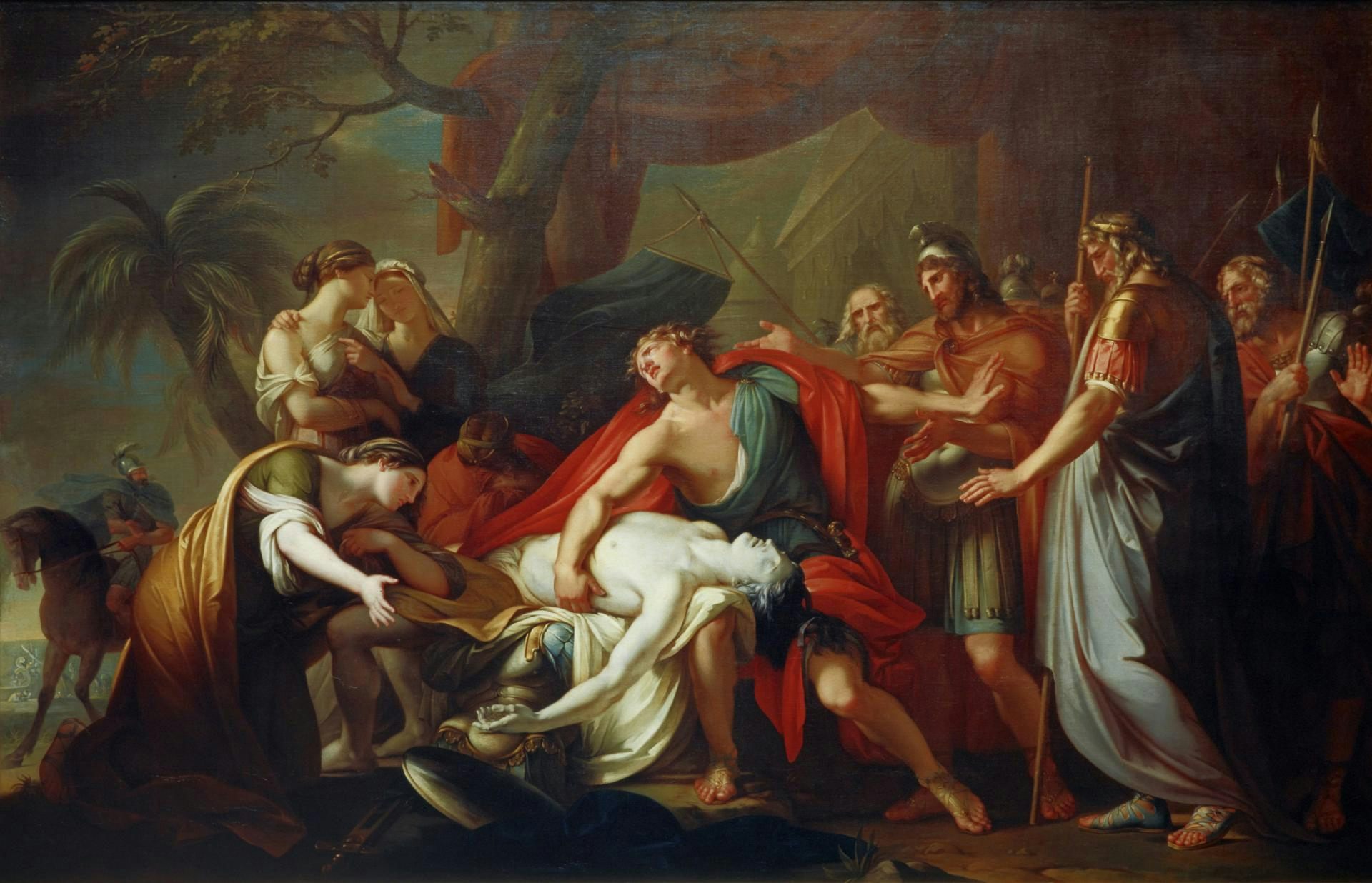
Archaeologists have found something unexpected inside a 1,600-year-old Roman-era Egyptian mummy: a fragment of Homer’s Iliad. It wasn’t placed beside the body, but inside the mummy’s abdomen. But the real surprise isn’t just where the fragment was found. It’s how it got there. To understand, we must go back – to the Iliad itself, and to what it became in the Roman world.
Arqueólogos encontraram algo inesperado dentro de um múmia egípcio da era romana de 1.600 anos: um fragmento da Ilíada de Homero. Ele não estava colocado ao lado do corpo, mas dentro do abdômen do múmia. Mas a verdadeira surpresa não é apenas onde o fragmento foi encontrado. É como ele chegou lá. Para entender, devemos voltar – para a própria Ilíada e para o que ela se tornou no mundo romano.
In The Iliad, a poem shaped in the 8th century BC and attributed to Homer, the Trojan war does not end in triumph or renewal. It ends in devastation. The poem closes at the edge of collapse, with Troy reduced to a landscape of heroic ruin. And yet, this is not where the story ends.
Na Ilíada, um poema moldado no século VIII a.C. e atribuído a Homero, a guerra de Troia não termina em triunfo ou renovação. Ela termina em devastação. O poema se fecha na beira do colapso, com Troia reduzida a uma paisagem de ruína heroica. E, no entanto, não é aqui que a história termina.
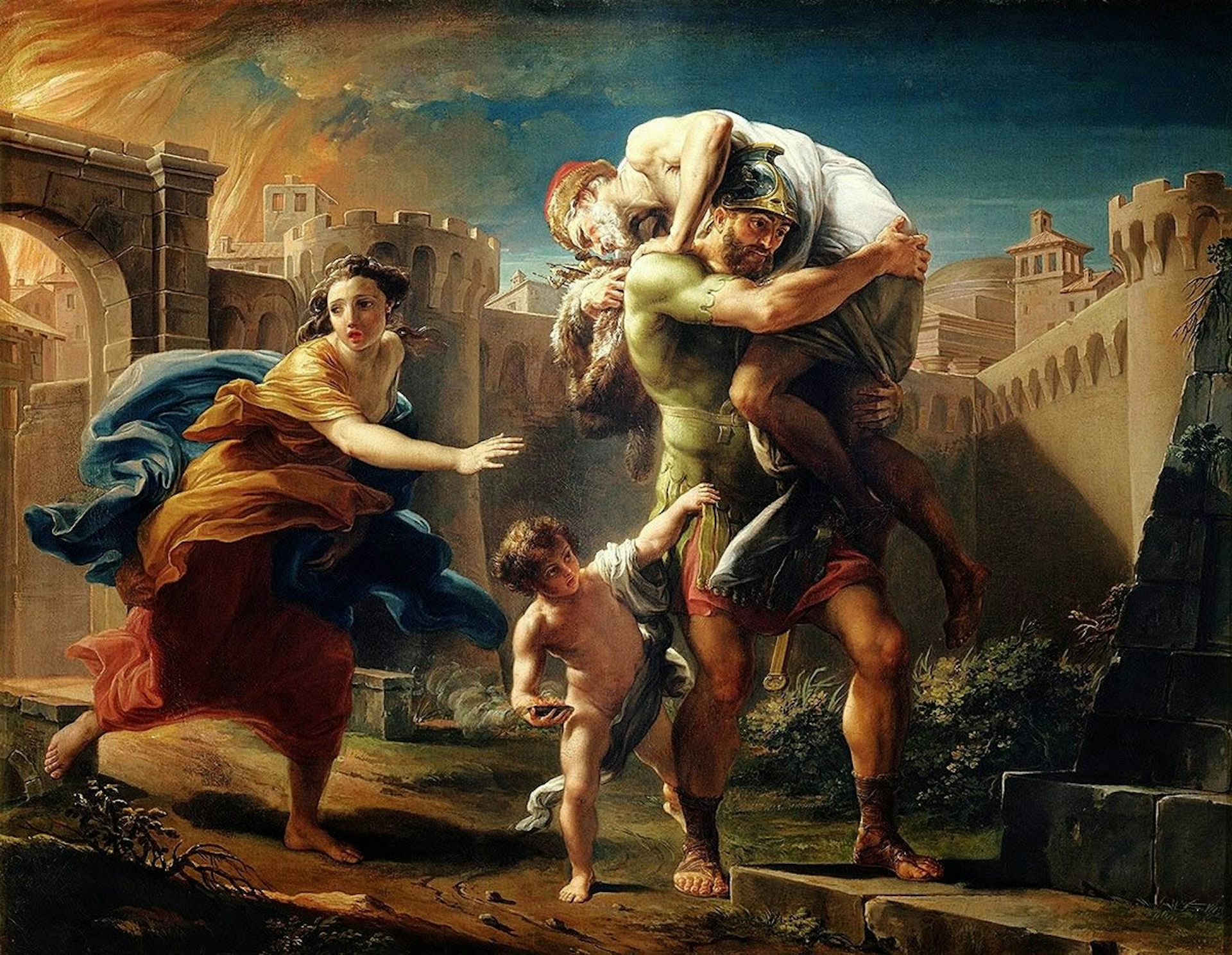
According to later Roman tradition, one Trojan escaped. Aeneas – son of Anchises and the goddess Aphrodite – fled the burning city carrying his father on his shoulders and the household gods in his hands. He moved west, across the Mediterranean, towards Italy, where he became the ancestor of Rome.
De acordo com a tradição romana posterior, um troiano escapou. Aeneas – filho de Anquises e da deusa Afrodite – fugiu da cidade em chamas carregando seu pai nos ombros e os deuses domésticos nas mãos. Ele se moveu para o oeste, através do Mediterrâneo, em direção à Itália, onde se tornou o ancestral de Roma.
This continuation did not come from the Iliad itself. It was shaped centuries later, most famously in Virgil’s Aeneid. But it changed the meaning of the Trojan war entirely. The past, in other words, was actively reorganised – through stories that could be reworked, extended and connected across time and space.
Esta continuação não veio da Ilíada em si. Ela foi moldada séculos depois, mais famosamente na Eneida de Virgílio. Mas ela mudou completamente o significado da guerra de Troia. O passado, em outras palavras, foi ativamente reorganizado – através de histórias que poderiam ser refeitas, estendidas e conectadas através do tempo e do espaço.
Turning defeat into origin
Transformando a derrota em origem
For Roman audiences, the Trojan war was more than a distant Greek legend. It became a way of thinking about origins, identity and power.
Para os públicos romanos, a guerra de Troia foi mais do que uma lenda grega distante. Tornou-se uma forma de pensar sobre origens, identidade e poder.
Claiming descent from Troy was more than a matter of tracing a lineage. It required constant cultural work – through storytelling, education and shared knowledge. The Iliad provided the raw material: characters, events and genealogies that could be reshaped and redeployed across generations.
Reivindicar a descendência de Troia foi mais do que uma questão de rastrear uma linhagem. Exigiu um trabalho cultural constante – através de contação de histórias, educação e conhecimento compartilhado. A Ilíada forneceu o material bruto: personagens, eventos e genealogias que poderiam ser remodelados e redistribuídos através das gerações.
Across the Roman Empire, educated elites learned Homer as part of their schooling. They quoted him in speeches, analysed him in classrooms and used him to signal cultural authority. To know the Iliad was to speak a language that others across the empire understood.
Ao longo do Império Romano, as elites educadas aprenderam Homero como parte de sua escolaridade. Eles o citaram em discursos, o analisaram nas salas de aula e o utilizaram para sinalizar autoridade cultural. Conhecer a Ilíada era falar uma língua que os outros em todo o império entendiam.
A senator in Rome, a teacher in Asia Minor or a student in Egypt could all draw on the same stories. The poem created a shared frame of reference – one that allowed very different people to situate themselves within a common past.
Um senador em Roma, um professor na Ásia Menor ou um estudante no Egito podiam todos se basear nas mesmas histórias. O poema criou um quadro de referência compartilhado – um que permitiu que pessoas muito diferentes se situassem dentro de um passado comum.
In the Roman imperial period, the site of ancient Troy – located in modern-day Turkey – became a destination. Emperors invested in its development, tying it directly to Rome’s claimed Trojan origins. Under Emperor Augustus, Troy was folded into the political language of empire. And under Emperor Hadrian, it became part of a wider culture of travel, memory and heritage.
No período imperial romano, o local de antiga Troia – localizado na atual Turquia – tornou-se um destino. Os imperadores investiram em seu desenvolvimento, ligando-o diretamente às origens troianas reivindicadas de Roma. Sob o imperador Augusto, Troia foi incorporada à linguagem política do império. E sob o imperador Adriano, tornou-se parte de uma cultura mais ampla de viagem, memória e herança.
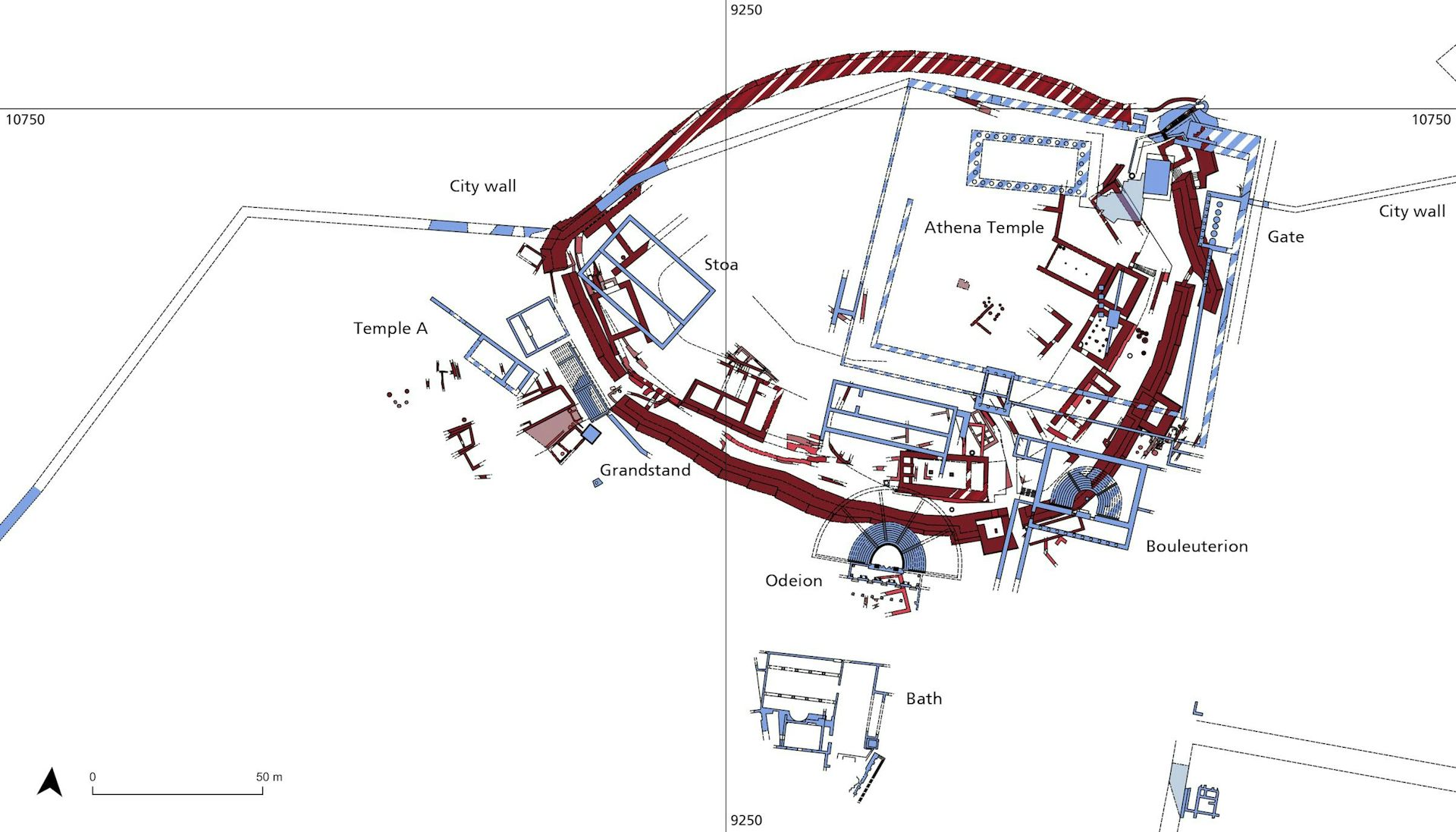
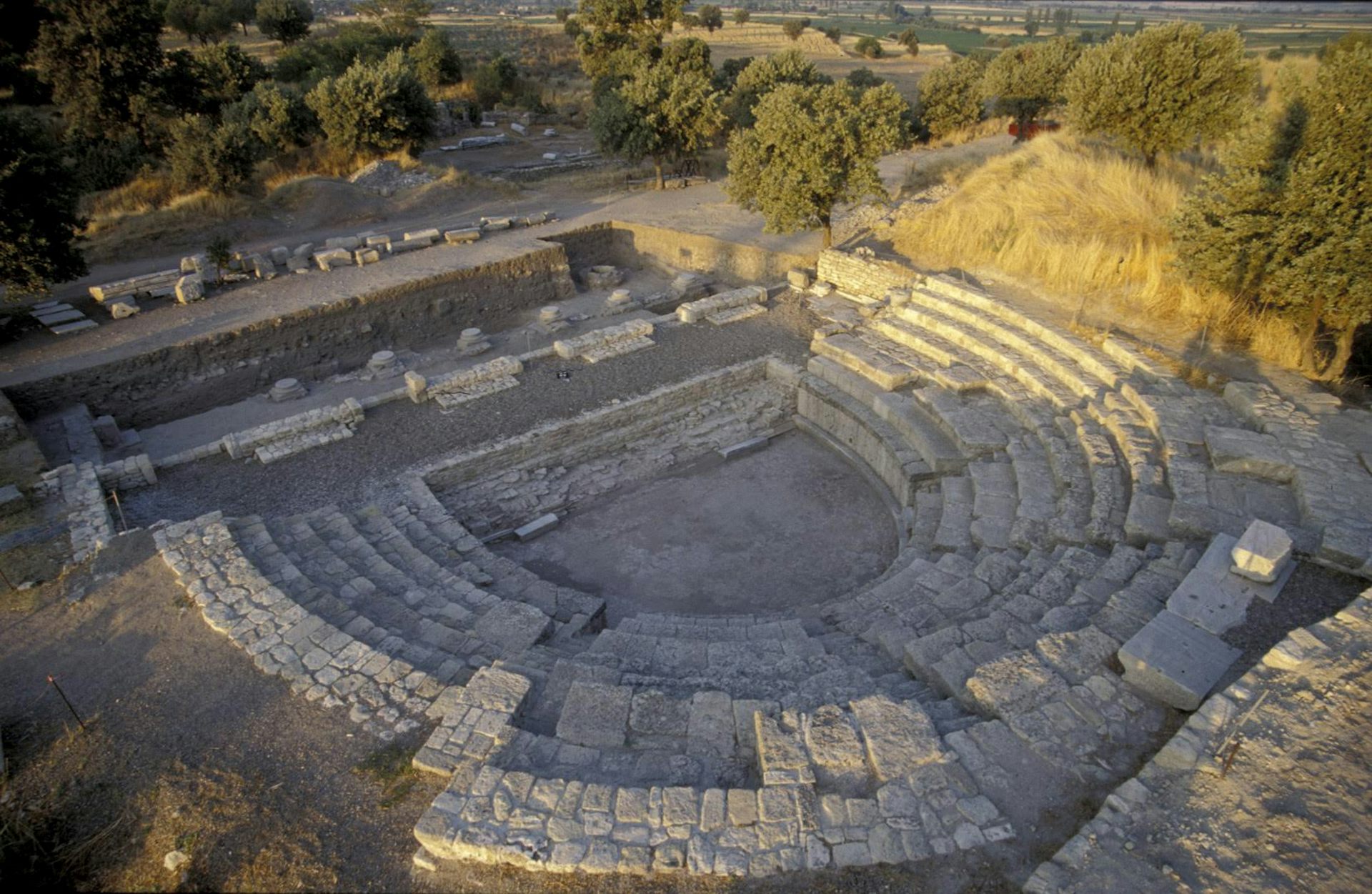
A visitor to Troy in the 2nd century AD would have arrived at a curated landscape. There were baths, places to stay and spaces for performance. A small theatre – the Odeion – was built directly into the ancient citadel, so that the remains of the bronze age city, understood as the setting of the legendary battles around Troy, formed a dramatic backdrop.
Um visitante de Troia no século II d.C. teria chegado a uma paisagem curada. Havia banhos, lugares para ficar e espaços para apresentações. Um pequeno teatro – o Odeion – foi construído diretamente na cidadela antiga, para que os restos da cidade da Idade do Bronze, entendidos como o cenário das batalhas lendárias ao redor de Troia, formassem um pano de fundo dramático.
Visitors could walk through what was presented as the setting of Homeric epic, experiencing the Trojan war as something anchored in the ground beneath their feet.
Os visitantes podiam caminhar pelo que foi apresentado como o cenário da epopeia homérica, vivenciando a guerra de Troia como algo ancorado no solo sob seus pés.
From Troy to Egypt
De Troia ao Egito
Across the Roman Empire, the Iliad circulated as a living text: copied, taught and read. Egypt, one of Rome’s most important provinces, was no exception. Yet here, Homer circulated within a cultural landscape that differed in important ways from the Greek literary world in which the poem had first taken shape.
Ao longo do Império Romano, a Ilíada circulava como um texto vivo: copiada, ensinada e lida. O Egito, uma das províncias mais importantes de Roma, não foi exceção. No entanto, aqui, Homero circulava dentro de um panorama cultural que diferia de maneiras importantes do mundo literário grego no qual o poema havia se originado.
For Roman observers, Egypt often appeared as a place where antiquity was materially preserved as well as remembered – through temples, monuments and practices that emphasised continuity with the past. At the same time, it was a deeply hybrid society, where Egyptian, Greek and Roman traditions interacted in complex ways.
Para os observadores romanos, o Egito frequentemente aparecia como um lugar onde a antiguidade era materialmente preservada e lembrada – através de templos, monumentos e práticas que enfatizavam a continuidade com o passado. Ao mesmo tempo, era uma sociedade profundamente híbrida, onde as tradições egípcia, grega e romana interagiam de maneiras complexas.
Homer was among the most widely copied authors in Roman Egypt – read and taught as a marker of education and cultural belonging and deeply embedded in everyday literary culture.
Homero foi um dos autores mais amplamente copiados no Egito romano – lido e ensinado como um marcador de educação e pertencimento cultural e profundamente enraizado na cultura literária cotidiana.
The Homeric version of the Trojan War was particularly prominent among the Greek-speaking elite, especially in urban centres such as Oxyrhynchus, where the mummy was found. Other versions of the story – which placed greater emphasis on Paris and Helen’s stay in Egypt, as reported by Herodotus based on accounts from Egyptian priests – were probably more widespread among the broader Egyptian population.
A versão homérica da Guerra de Troia era particularmente proeminente entre a elite de língua grega, especialmente em centros urbanos como Ostrinco, onde o mummificado foi encontrado. Outras versões da história – que davam maior ênfase à estadia de Paris e Helena no Egito, conforme relatado por Heródoto com base em relatos de sacerdotes egípcios – eram provavelmente mais difundidas entre a população egípcia em geral.
The initial media coverage of the discovery of the fragment inside the Egyptian mummy suggested the text was deliberately chosen to accompany the deceased. As a personally meaningful object, perhaps reflecting their education or cultural identity.
A cobertura midiática inicial da descoberta do fragmento dentro do múmia egípcio sugeria que o texto havia sido escolhido deliberadamente para acompanhar o falecido. Como um objeto pessoalmente significativo, talvez refletindo sua educação ou identidade cultural.
The most telling explanation, however, may be the most straightforward. Discarded or damaged papyri could be reused as inexpensive material. The fragment may therefore have functioned as stuffing – bundled together and inserted into the body cavity without particular regard for its literary content.
A explicação mais reveladora, no entanto, pode ser a mais simples. Papiros descartados ou danificados podiam ser reutilizados como material barato. O fragmento pode, portanto, ter funcionado como enchimento – agrupado e inserido na cavidade corporal sem particular consideração pelo seu conteúdo literário.
The very fact that a scrap of the Iliad could end up as disposable filling, however, speaks to how deeply Homer had penetrated everyday life in Roman Egypt.
O fato de um pedaço da Ilíada poder acabar como enchimento descartável, no entanto, fala sobre o quão profundamente Homero havia penetrado na vida cotidiana no Egito romano.
A text in motion
Um texto em movimento
To make sense of the past in the Roman world meant moving between story and monument, between genealogy and deep time. Each perspective made the others more intelligible.
Fazer sentido do passado no mundo romano significava mover-se entre história e monumento, entre genealogia e tempo profundo. Cada perspectiva tornava as outras mais inteligíveis.
The Iliad helped create a world in which different pasts could be connected, compared and reshaped. By linking stories, places and traditions across the Mediterranean, the Roman world turned the past into a flexible resource – one that could generate identity, authority and belonging in shifting contexts.
A Ilíada ajudou a criar um mundo no qual diferentes passados poderiam ser conectados, comparados e remodelados. Ao ligar histórias, lugares e tradições por todo o Mediterrâneo, o mundo romano transformou o passado em um recurso flexível – um que poderia gerar identidade, autoridade e pertencimento em contextos em mudança.
This is why the Iliad mattered: it circulated across many different settings. It shaped elite education, but it was also part of everyday reading culture. At Troy, it helped transform the city into a place of cultural memory. The text itself also had a long material afterlife, surviving not only as an authoritative story, but through manuscripts and writing materials that were copied, passed on – or even reused for entirely different purposes.
É por isso que a Ilíada importou: ela circulou por muitos cenários diferentes. Ela moldou a educação da elite, mas também fez parte da cultura de leitura cotidiana. Em Troia, ela ajudou a transformar a cidade em um lugar de memória cultural. O próprio texto também teve um longo pós-vida material, sobrevivendo não apenas como uma história autoritária, mas através de manuscritos e materiais de escrita que foram copiados, transmitidos – ou até mesmo reutilizados para propósitos totalmente diferentes.
Its most enduring insight is therefore this: the past is not something simply preserved, but something continuously made and remade – through the stories, practices and materials that carry it across time.
Sua percepção mais duradoura é, portanto, esta: o passado não é algo simplesmente preservado, mas algo continuamente feito e remade – através das histórias, práticas e materiais que o carregam através do tempo.
This article features references to books that have been included for editorial reasons, and may contain links to bookshop.org. If you click on one of the links and go on to buy something, The Conversation UK may earn a commission.
Este artigo apresenta referências a livros que foram incluídos por razões editoriais e podem conter links para bookshop.org. Se você clicar em um dos links e for comprar algo, The Conversation UK pode ganhar uma comissão.
The authors do not work for, consult, own shares in or receive funding from any company or organisation that would benefit from this article, and have disclosed no relevant affiliations beyond their academic appointment.
Os autores não trabalham para, consultam, possuem ações em ou recebem financiamento de qualquer empresa ou organização que se beneficiaria deste artigo, e não divulgaram afiliações relevantes além de seu cargo acadêmico.
Read more
-

Nosso estudo analisou o comportamento de mídia social de adolescentes em 43 países – aqueles de origens desfavorecidas enfrentam maiores danos.
Our study looked at teens’ social media behaviour in 43 countries – those from disadvantaged backgrounds face greater harms
-

Meta e Microsoft aderiram ao tsunami de demissões da tecnologia – mas a IA é realmente culpada?
Meta and Microsoft have joined the tech layoff tsunami – but is AI really to blame?