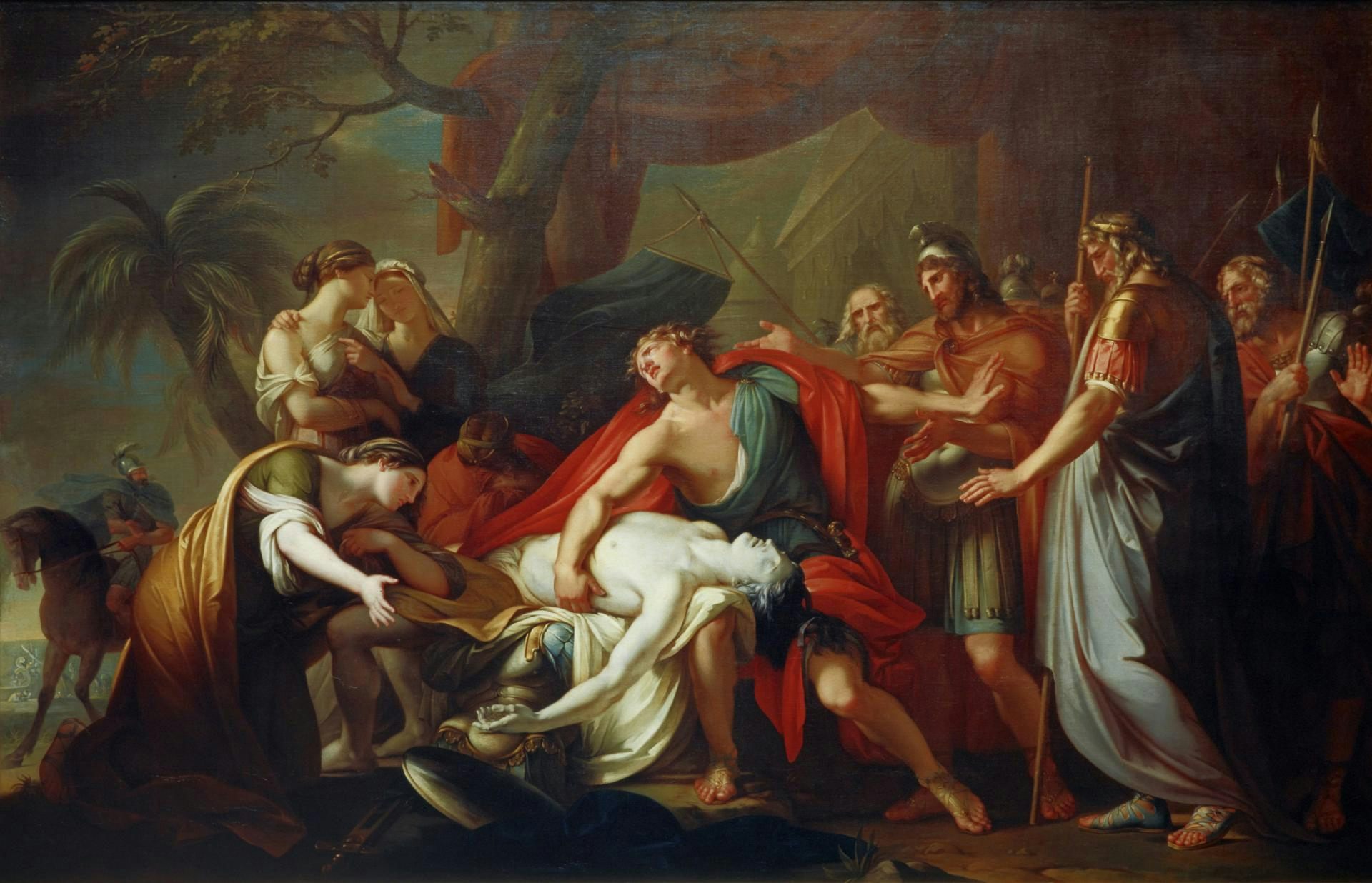
The fragment wasn’t placed besides the body, but stuffed inside it.
这块碎片不是放在身体旁边,而是塞在里面。
Archaeologists have found something unexpected inside a 1,600-year-old Roman-era Egyptian mummy: a fragment of Homer’s Iliad. It wasn’t placed beside the body, but inside the mummy’s abdomen. But the real surprise isn’t just where the fragment was found. It’s how it got there. To understand, we must go back – to the Iliad itself, and to what it became in the Roman world.
考古学家在了一具1600年前的罗马时代埃及木乃伊体内发现了一些意想不到的东西:一小段《荷马史诗》。它不是放在尸体旁边,而是放在木乃伊的腹部。但真正的惊喜不仅仅是碎片被发现的位置。而是它是如何到达那里的。要理解这一点,我们必须追溯——回到《史诗》本身,以及它在罗马世界中的演变。
In The Iliad, a poem shaped in the 8th century BC and attributed to Homer, the Trojan war does not end in triumph or renewal. It ends in devastation. The poem closes at the edge of collapse, with Troy reduced to a landscape of heroic ruin. And yet, this is not where the story ends.
在《史诗》中,这是一首塑造于公元前8世纪并归于荷马的诗歌,特洛伊战争并非以胜利或复兴告终。它以毁灭而结束。诗歌在崩溃的边缘收尾,特洛伊被简化成一片英雄的废墟景观。然而,故事并非在这一点结束。
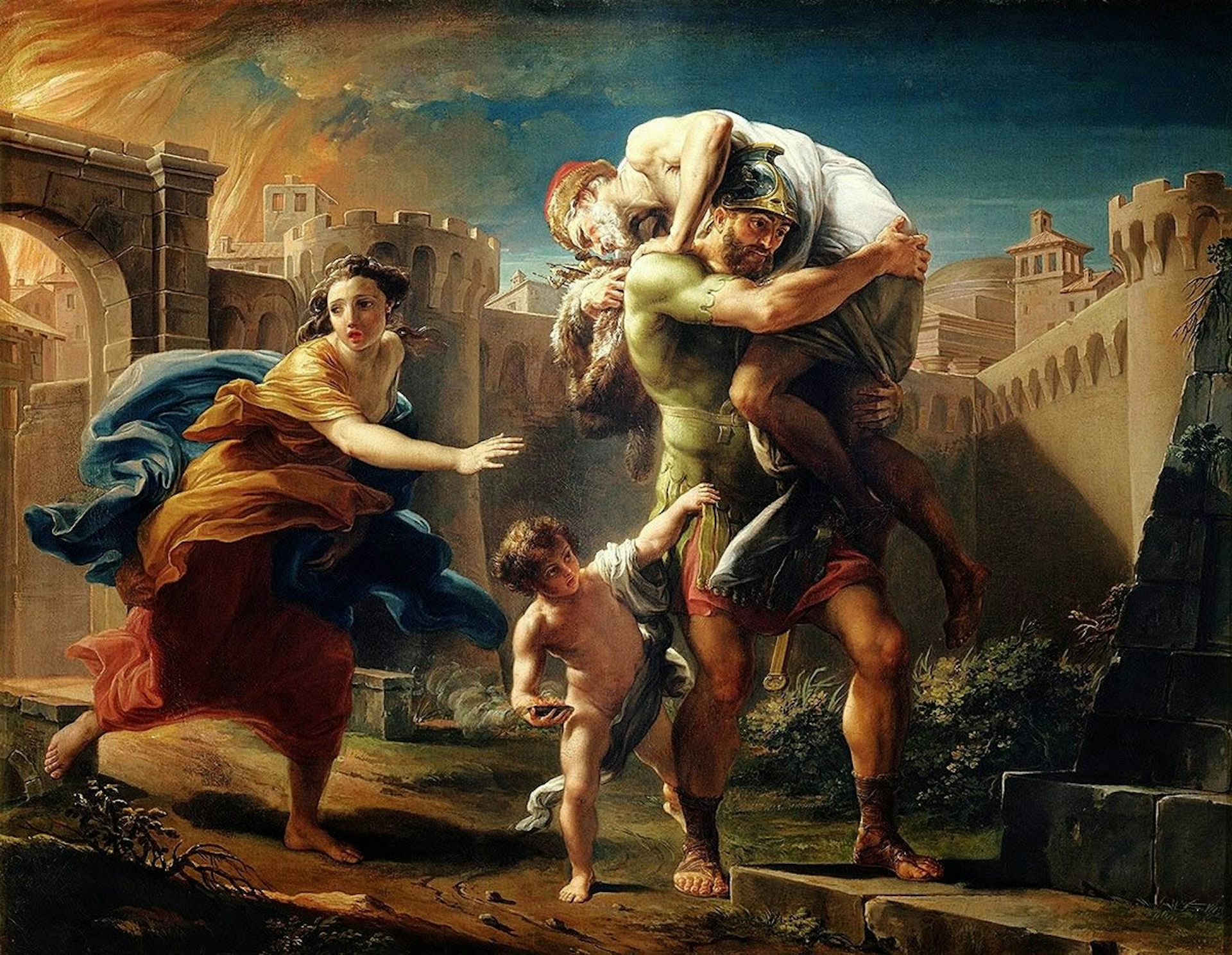
According to later Roman tradition, one Trojan escaped. Aeneas – son of Anchises and the goddess Aphrodite – fled the burning city carrying his father on his shoulders and the household gods in his hands. He moved west, across the Mediterranean, towards Italy, where he became the ancestor of Rome.
根据后来的罗马传统,一个特洛伊人逃脱了。阿尼阿斯——安克西斯和阿佛洛狄忒女神的儿子——逃离了燃烧的城市,将他的父亲背在肩上,手中握着家庭神祇。他向西移动,穿越地中海,走向意大利,在那里他成为了罗马的祖先。
This continuation did not come from the Iliad itself. It was shaped centuries later, most famously in Virgil’s Aeneid. But it changed the meaning of the Trojan war entirely. The past, in other words, was actively reorganised – through stories that could be reworked, extended and connected across time and space.
这一延续并非来自《史诗》本身。它是在几个世纪后塑造的,最著名的是在维吉尔的《埃涅阿斯纪》中。但它完全改变了特洛伊战争的意义。换句话说,过去被积极地重组了——通过那些可以被重新编排、延伸并跨越时间和空间连接的故事。
Turning defeat into origin
将失败转化为起源
For Roman audiences, the Trojan war was more than a distant Greek legend. It became a way of thinking about origins, identity and power.
对罗马观众而言,特洛伊战争不仅仅是一个遥远的希腊传说。它成为了一种思考起源、身份和权力的方式。
Claiming descent from Troy was more than a matter of tracing a lineage. It required constant cultural work – through storytelling, education and shared knowledge. The Iliad provided the raw material: characters, events and genealogies that could be reshaped and redeployed across generations.
声称源自特洛伊不仅仅是追溯血统。它需要持续的文化工作——通过故事叙述、教育和共享知识。史诗《伊利亚特》提供了原材料:可以跨越世代重塑和重新部署的角色、事件和谱系。
Across the Roman Empire, educated elites learned Homer as part of their schooling. They quoted him in speeches, analysed him in classrooms and used him to signal cultural authority. To know the Iliad was to speak a language that others across the empire understood.
在整个罗马帝国,受过教育的精英们将荷马视为他们教育的一部分。他们在演说中引用他,在课堂上分析他,并利用他来彰显文化权威。了解《伊利亚特》意味着说一种帝国各地的人们都理解的语言。
A senator in Rome, a teacher in Asia Minor or a student in Egypt could all draw on the same stories. The poem created a shared frame of reference – one that allowed very different people to situate themselves within a common past.
一个位于罗马的元老院议员、一个亚小亚细亚的教师或一个埃及的学生都可以从这些故事中汲取灵感。这首诗创造了一个共享的参考框架——它允许非常不同的人们将自己置于一个共同的过去之中。
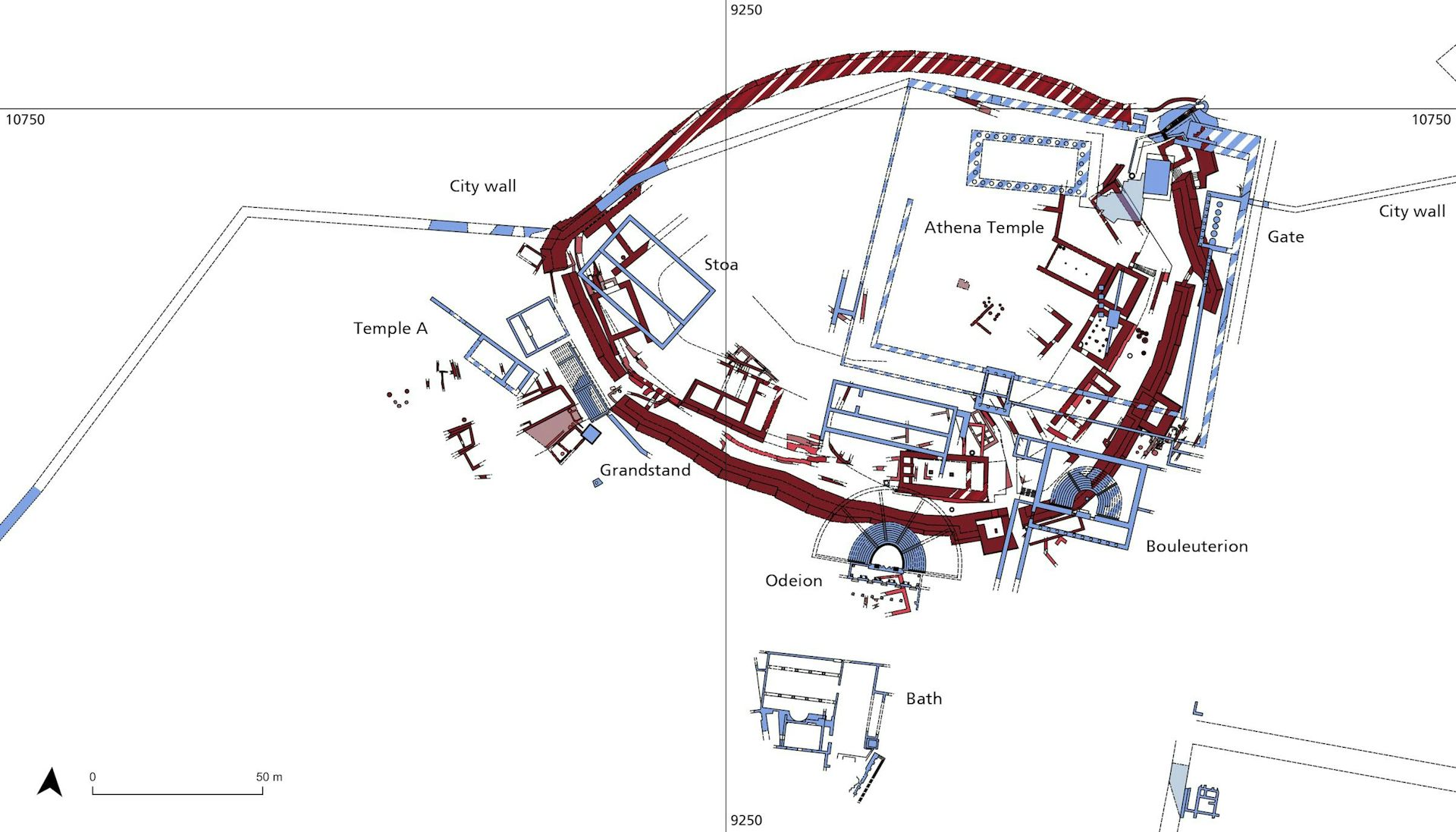
In the Roman imperial period, the site of ancient Troy – located in modern-day Turkey – became a destination. Emperors invested in its development, tying it directly to Rome’s claimed Trojan origins. Under Emperor Augustus, Troy was folded into the political language of empire. And under Emperor Hadrian, it became part of a wider culture of travel, memory and heritage.
在罗马帝国时期,古代特洛伊的所在地——位于今天的土耳其——成为一个目的地。皇帝们投资于它的发展,将其直接与罗马所声称的特洛伊起源联系起来。在奥古斯都皇帝统治下,特洛伊被纳入帝国的政治语言之中。在哈德良皇帝统治下,它成为旅行、记忆和遗产的更广泛文化的一部分。
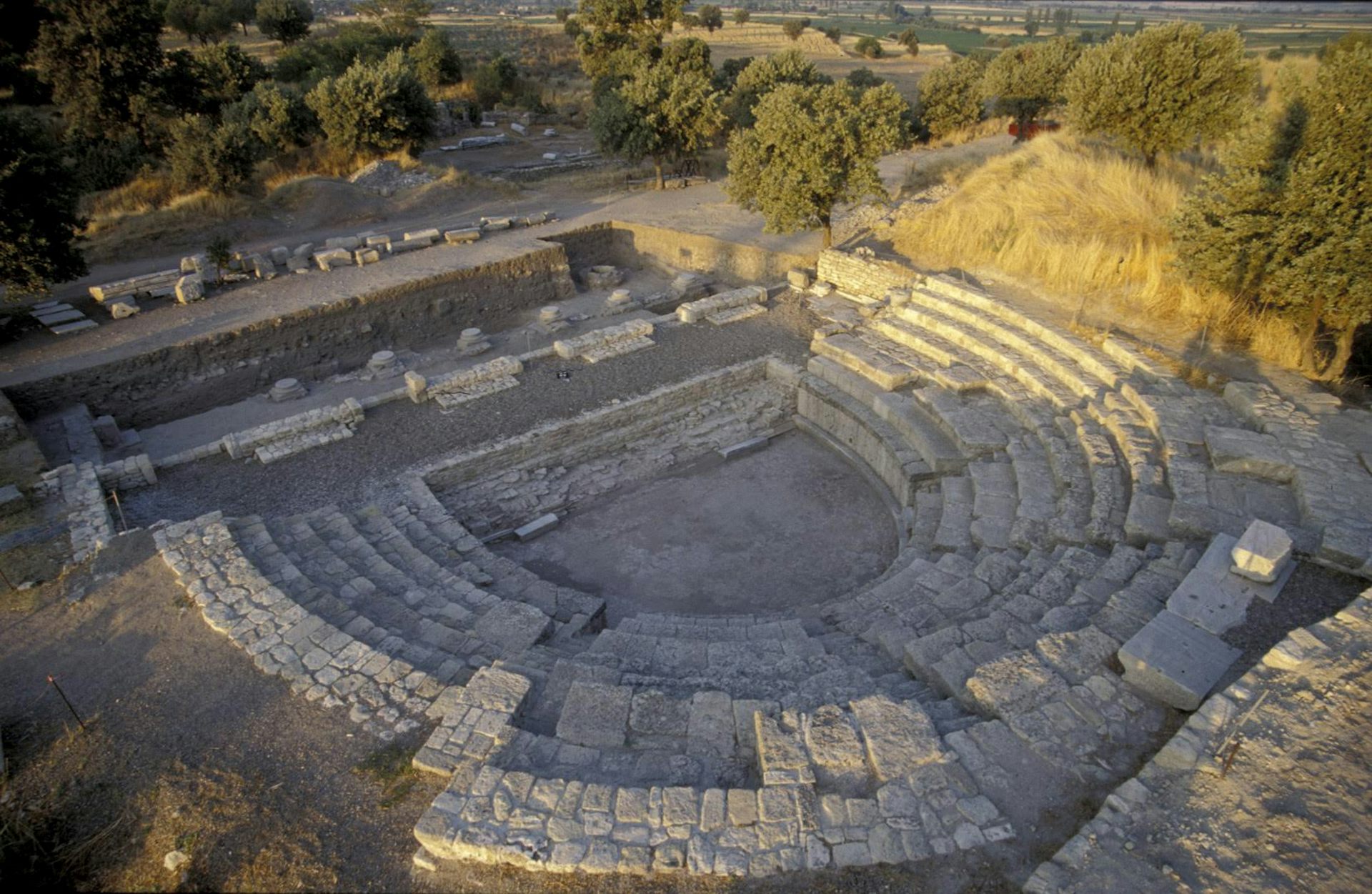
A visitor to Troy in the 2nd century AD would have arrived at a curated landscape. There were baths, places to stay and spaces for performance. A small theatre – the Odeion – was built directly into the ancient citadel, so that the remains of the bronze age city, understood as the setting of the legendary battles around Troy, formed a dramatic backdrop.
公元2世纪的特洛伊访客将到达一个精心策划的景观。那里有浴场、住宿地点和表演空间。一座小剧场——奥德赖翁(Odeion)——直接建在古代堡垒之中,使得被理解为特洛伊周围传奇战役背景的青铜时代城市的遗址,形成了戏剧性的背景。
Visitors could walk through what was presented as the setting of Homeric epic, experiencing the Trojan war as something anchored in the ground beneath their feet.
访客可以走过被呈现为荷马史诗背景的区域,将特洛伊战争体验为扎根于脚下土地上的事物。
From Troy to Egypt
从特洛伊到埃及
Across the Roman Empire, the Iliad circulated as a living text: copied, taught and read. Egypt, one of Rome’s most important provinces, was no exception. Yet here, Homer circulated within a cultural landscape that differed in important ways from the Greek literary world in which the poem had first taken shape.
在整个罗马帝国,史诗《伊利亚特》作为一部活的文本流传着:被复制、被教导和被阅读。埃及是罗马最重要的行省之一,也不例外。然而,在这里,荷马的著作在一种文化景观中流传,这种景观与诗歌最初形成的希腊文学世界在重要方面有所不同。
For Roman observers, Egypt often appeared as a place where antiquity was materially preserved as well as remembered – through temples, monuments and practices that emphasised continuity with the past. At the same time, it was a deeply hybrid society, where Egyptian, Greek and Roman traditions interacted in complex ways.
对于罗马观察者来说,埃及常常被视为一个古代历史不仅物质上得以保存,而且被铭记的地方——通过神庙、纪念碑和强调与过去的连续性的实践。同时,它是一个深度混合的社会,埃及、希腊和罗马的传统以复杂的方式相互作用。
Homer was among the most widely copied authors in Roman Egypt – read and taught as a marker of education and cultural belonging and deeply embedded in everyday literary culture.
荷马是罗马埃及最广泛复制的作者之一——被用作教育和文化归属的标志,并深深植根于日常文学文化之中。
The Homeric version of the Trojan War was particularly prominent among the Greek-speaking elite, especially in urban centres such as Oxyrhynchus, where the mummy was found. Other versions of the story – which placed greater emphasis on Paris and Helen’s stay in Egypt, as reported by Herodotus based on accounts from Egyptian priests – were probably more widespread among the broader Egyptian population.
荷马版本的《特洛伊战争》在希腊裔精英中尤为突出,特别是在奥西里恩库斯(Oxyrhynchus)等城市中心,那里发现了木乃伊。其他版本的故事——根据埃及祭司的记载,强调帕里斯和海伦在埃及的逗留——可能在更广泛的埃及人口中更为普及。
The initial media coverage of the discovery of the fragment inside the Egyptian mummy suggested the text was deliberately chosen to accompany the deceased. As a personally meaningful object, perhaps reflecting their education or cultural identity.
对发现的碎片在埃及木乃伊中的初步媒体报道表明,该文本是故意选择的,以陪伴死者。它可能是一个具有个人意义的物品,反映了他们的教育或文化身份。
The most telling explanation, however, may be the most straightforward. Discarded or damaged papyri could be reused as inexpensive material. The fragment may therefore have functioned as stuffing – bundled together and inserted into the body cavity without particular regard for its literary content.
然而,最令人信服的解释可能是最直接的。被丢弃或损坏的纸莎草可能被用作廉价材料。因此,该碎片可能充当填充物——被捆扎在一起并插入身体空腔中,而无需特别顾及其文学内容。
The very fact that a scrap of the Iliad could end up as disposable filling, however, speaks to how deeply Homer had penetrated everyday life in Roman Egypt.
然而,一个《伊利亚特》的碎片最终可能成为可丢弃的填充物,这恰恰说明了荷马是如何深入渗透到罗马埃及的日常生活中的。
A text in motion
文本的流动性
To make sense of the past in the Roman world meant moving between story and monument, between genealogy and deep time. Each perspective made the others more intelligible.
在罗马世界中理解过去意味着在故事与纪念碑之间,在谱系与深时之间移动。每个视角都使其他视角更易于理解。
The Iliad helped create a world in which different pasts could be connected, compared and reshaped. By linking stories, places and traditions across the Mediterranean, the Roman world turned the past into a flexible resource – one that could generate identity, authority and belonging in shifting contexts.
《伊利亚特》帮助创造了一个不同过去可以被连接、比较和重塑的世界。通过将地中海各地的故事、地点和传统联系起来,罗马世界将过去变成了一种灵活的资源——一种能够在不断变化的环境中产生身份、权威和归属感的东西。
This is why the Iliad mattered: it circulated across many different settings. It shaped elite education, but it was also part of everyday reading culture. At Troy, it helped transform the city into a place of cultural memory. The text itself also had a long material afterlife, surviving not only as an authoritative story, but through manuscripts and writing materials that were copied, passed on – or even reused for entirely different purposes.
这就是《伊利亚特》之所以重要的原因:它在许多不同的环境中流通。它塑造了精英教育,但它也是日常阅读文化的一部分。在特洛伊,它帮助将这座城市转变为一个文化记忆之地。文本本身也拥有漫长的物质生命,它不仅作为权威故事得以存留,还通过被复制、传承——甚至被重新用于完全不同目的的手稿和书写材料得以延续。
Its most enduring insight is therefore this: the past is not something simply preserved, but something continuously made and remade – through the stories, practices and materials that carry it across time.
因此,它最持久的洞见是:过去并非仅仅是被保存的东西,而是通过承载着它穿越时间的那些故事、实践和材料,被持续地创造和重塑。
This article features references to books that have been included for editorial reasons, and may contain links to bookshop.org. If you click on one of the links and go on to buy something, The Conversation UK may earn a commission.
本文包含对被纳入编辑原因的图书的引用,并可能包含指向bookshop.org的链接。如果您点击其中一个链接并去购买一些东西,The Conversation UK可能会赚取佣金。
The authors do not work for, consult, own shares in or receive funding from any company or organisation that would benefit from this article, and have disclosed no relevant affiliations beyond their academic appointment.
作者不为、不咨询、不拥有任何可能从本文中受益的公司或组织的股份,并且除了他们的学术职位之外,未披露任何相关隶属关系。
Read more
-

在这次世界杯上,别让任何“足球”上的精英或总统说服你,‘Soccer’才是描述这项美妙运动的恰当词汇。
‘Soccer’ is a fine term for the beautiful game – don’t …