Os sul-africanos são muito menos tolerantes com migrantes do que antes – pontos críticos, causas e soluções
South Africans are far less tolerant of migrants than before – hotspots, drivers and solutions
Data show that South Africans have become more hostile towards immigrants.
Dados mostram que os sul-africanos se tornaram mais hostis em relação aos imigrantes.
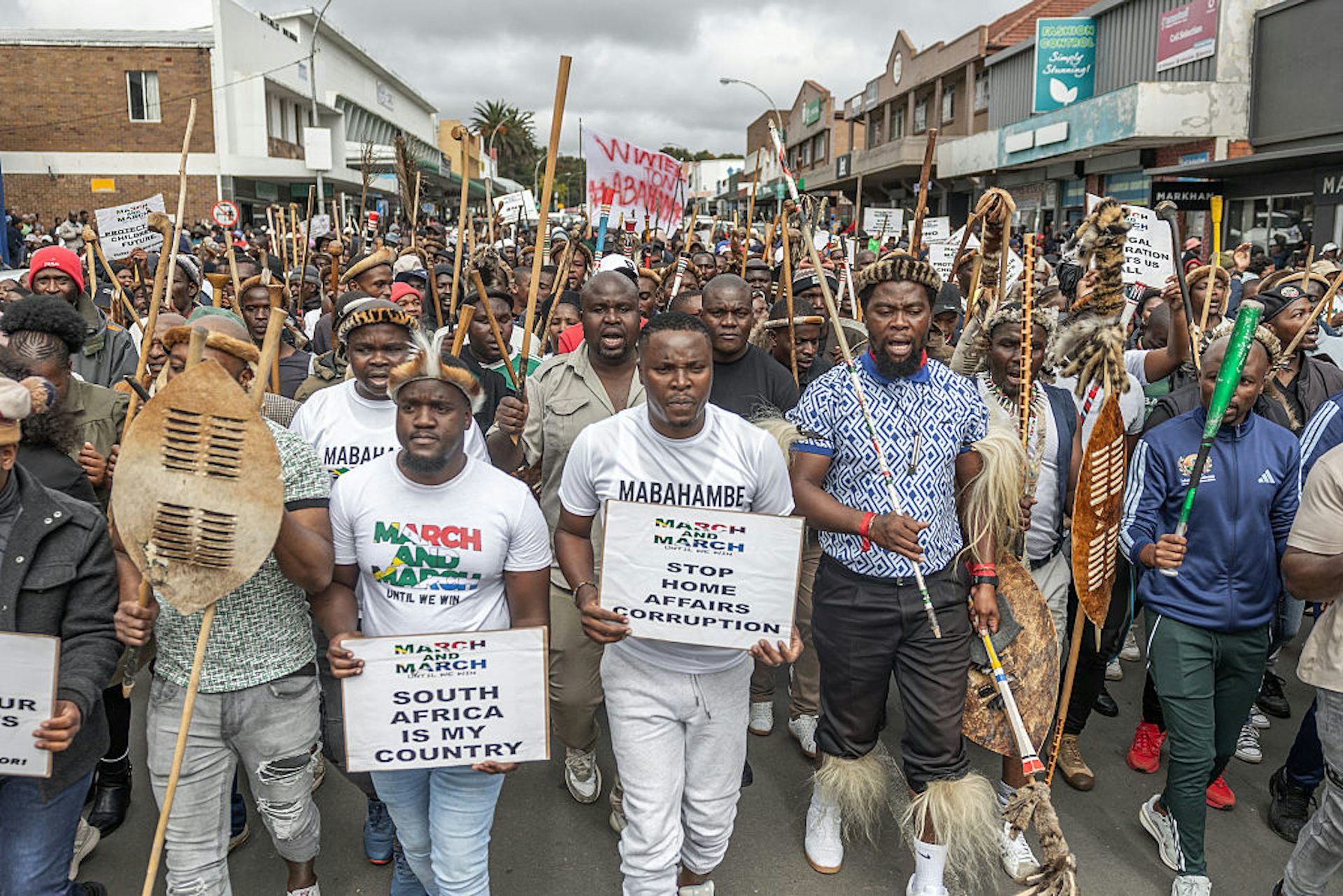
Anti-immigrant marches in several major South African cities (such as Tshwane and Johannesburg) in early May 2026 once again led to questions being asked about xenophobia in post-apartheid South Africa.
Marchas anti-imigrantes em várias grandes cidades sul-africanas (como Tshwane e Joanesburgo) no início de maio de 2026 levaram, mais uma vez, a questionamentos sobre xenofobia na África do Sul pós-apartheid.
In the wake of the protests President Cyril Ramaphosa called on South Africans to embrace solidarity with their African neighbours. For their part, foreign governments lodged their protests while police sought to curtail violence.
Após os protestos, o presidente Cyril Ramaphosa pediu aos sul-africanos que abraçassem a solidariedade com seus vizinhos africanos. Por sua vez, governos estrangeiros registraram seus protestos enquanto a polícia tentou conter a violência.
The tension in the country was palpable.
A tensão no país era palpável.
Are the recent outbreaks of anti-immigrant activism a harbinger of a wider uptick in anti-migrant sentiment amongst South Africans? Recent public opinion data from the Human Sciences Research Council (HSRC) suggests that this might be the case.
Os recentes surtos de ativismo anti-imigrante são um presságio de um aumento mais amplo do sentimento anti-migrante entre os sul-africanos? Dados recentes de opinião pública do Human Sciences Research Council (HSRC) sugerem que este pode ser o caso.
The HSRC’s South African Social Attitudes Survey is an important source of information on what ordinary South Africans think about international migration. The survey series consists of nationally representative, repeated cross-sectional surveys that have been conducted annually by the HSRC since 2003.
A Pesquisa de Atitudes Sociais Sul-Africanas do HSRC é uma fonte importante de informações sobre o que os sul-africanos comuns pensam sobre a migração internacional. A série de pesquisas consiste em levantamentos transversais repetidos e representativos em nível nacional, realizados anualmente pelo HSRC desde 2003.
The latest data, from the 2025 survey, show that South Africans are more hostile towards immigrants than at any other time before since the survey began in 2003. An important dimension of the change has been an attitudinal shift and hardening of attitudes towards migrants among poorer and working-class adults. In addition, the recent growth of anti-immigrant sentiment has been geographically concentrated in four provinces: Mpumalanga, Gauteng, Limpopo and KwaZulu-Natal.
Os dados mais recentes, da pesquisa de 2025, mostram que os sul-africanos são mais hostis em relação aos imigrantes do que em qualquer outro momento desde o início da pesquisa em 2003. Uma dimensão importante da mudança tem sido uma mudança e endurecimento atitudinal em relação aos migrantes entre adultos mais pobres e da classe trabalhadora. Além disso, o recente crescimento do sentimento anti-imigrante tem sido geograficamente concentrado em quatro províncias: Mpumalanga, Gauteng, Limpopo e KwaZulu-Natal.
The rise in anti-immigrant sentiment is particularly concerning given that the country is due to hold local government elections on 4 November 2026. Aspirant political parties, in an attempt to maintain or gain power, may seek to exploit anti-immigrant sentiment for their own ends. In this way elections can provide a potential accelerant for xenophobia.
O aumento do sentimento anti-imigrante é particularmente preocupante dado que o país realizará eleições governamentais locais em 4 de novembro de 2026. Partidos políticos aspirantes, em uma tentativa de manter ou obter poder, podem buscar explorar o sentimento anti-imigrante para seus próprios fins. Dessa forma, as eleições podem fornecer um potencial acelerante para a xenofobia.
Growing hostility may even provoke xenophobic violence in a country that has a long history of collective anti-immigrant hate crime. and is home to more than two million international migrants.
A crescente hostilidade pode até provocar violência xenófoba em um país que tem um longo histórico de crimes de ódio coletivos anti-imigrantes e que abriga mais de dois milhões de migrantes internacionais.
Declining Hospitality
Hospitalidade em Declínio
South African Social Attitudes Survey has included the following in its questionnaire since 2003:
A Pesquisa de Atitudes Sociais Sul-Africanas incluiu o seguinte em seu questionário desde 2003:
Please indicate which of the following statements applies to you? I generally welcome to South Africa… (i) All immigrants; (ii) Some immigrants; (iii) No immigrants; and (iv) Uncertain.
Por favor, indique qual das seguintes afirmações se aplica a você? Eu geralmente acolho em na África do Sul… (i) Todos os imigrantes; (ii) Alguns imigrantes; (iii) Nenhum imigrante; e (iv) Incerto.
In 2003 about a third (34%) of the South African adult population said that they would welcome all immigrants. The remainder indicated that they would accept either none (32%) or some (35%) .
Em 2003, cerca de um terço (34%) da população adulta sul-africana disse que acolheria todos os imigrantes. O restante indicou que aceitaria nenhum (32%) ou alguns (35%) .
The proportion of the public that would be prepared to welcome foreigners tended to fluctuate within a narrow band over the 2003-2017 period.
A proporção do público que estaria disposto a acolher estrangeiros tendia a flutuar dentro de uma faixa estreita no período de 2003 a 2017.
But around the time of the COVID-19 pandemic in early 2020, the research data began to show an upswing in anti-immigrant sentiment.
Mas por volta do período da pandemia de COVID-19, no início de 2020, os dados de pesquisa começaram a mostrar um aumento no sentimento anti-imigrante.
About a quarter (26%) of those surveyed said that they would welcome all immigrants during the 2021 survey round. This was similar to figures in the mid-2010s.
Cerca de um quarto (26%) dos entrevistados disseram que acolheriam todos os imigrantes durante a rodada de pesquisa de 2021. Isso foi semelhante aos números de meados da década de 2010.
But the share that held this hospitable attitude fell in subsequent survey rounds. In 2025 15% of adults said that they would welcome all foreigners.
Mas a parcela que mantinha essa atitude hospitaleira caiu nas rodadas de pesquisa subsequentes. Em 2025, 15% dos adultos disseram que acolheriam todos os estrangeiros.
Conversely, the proportion of the public adopting a hostile position (in other words ‘welcome no immigrants’) increased from 30% in 2021 to 42% in 2025.
Por outro lado, a proporção do público que adotou uma posição hostil (em outras palavras, ‘acolher nenhum imigrante’) aumentou de 30% em 2021 para 42% em 2025.
Geography and class
Geografia e classe
The provinces with the highest growth in anti-immigrant sentiment – Mpumalanga, Gauteng, Limpopo and KwaZulu-Natal – are ones through which most immigrants travel and often settle.
As províncias com o maior crescimento no sentimento anti-imigrante – Mpumalanga, Gauteng, Limpopo e KwaZulu-Natal – são aquelas por onde a maioria dos imigrantes viaja e frequentemente se estabelece.
The situation has become particularly delicate in KwaZulu-Natal. The share of adults in the province who said that they would welcome no immigrants grew from 23% in 2021 to 45% in 2023 and then again to 60% in 2025.
A situação tornou-se particularmente delicada em KwaZulu-Natal. A porcentagem de adultos na província que disseram que não acolheriam imigrantes cresceu de 23% em 2021 para 45% em 2023 e depois novamente para 60% em 2025.
The upsurge in hostility in KwaZulu-Natal could be linked to growing popular anger against the current economic and political status quo. A staggering 88% of provincial residents are unhappy with present economic conditions, and an equal proportion expect conditions to worsen over the next five years.
O aumento da hostilidade em KwaZulu-Natal pode estar ligado ao crescente descontentamento popular com o status quo econômico e político atual. Um impressionante 88% dos residentes provinciais estão insatisfeitos com as condições econômicas atuais, e uma proporção igual espera que as condições piorem nos próximos cinco anos.
The notable attitudinal shift among poor people is also concerning.
A notável mudança de atitude entre os pobres também é preocupante.
South Africa is a highly unequal nation characterised by stark economic divisions. Most citizens can be found on the wrong side of these divides and could be classified as economically disadvantaged.
A África do Sul é uma nação altamente desigual, caracterizada por profundas divisões econômicas. A maioria dos cidadãos pode ser encontrada no lado errado dessas divisões e pode ser classificada como economicamente desfavorecida.
Historically, as research has shown, anti-immigrant sentiment in the country tended to cut across class divisions. But in the years following the COVID-19 pandemic, something changed.
Historicamente, como a pesquisa mostrou, o sentimento anti-imigrante no país tendia a atravessar as divisões de classe. Mas nos anos seguintes à pandemia de COVID-19, algo mudou.
Before the pandemic, South African Social Attitudes Survey data showed a linear relationship between economic disadvantage and anti-immigrant sentiment. In the years following the pandemic, however, a clear pattern emerged. As the lockdowns ended and the post-pandemic recovery began, most socioeconomic groups in South Africa became more and more hostile towards immigrants. But antipathy grew at a much more aggressive rate for the low and lower middle socioeconomic groups.
Antes da pandemia, os dados da Pesquisa de Atitudes Sociais Sul-Africana mostravam uma relação linear entre desvantagem econômica e sentimento anti-imigrante. Nos anos seguintes à pandemia, no entanto, surgiu um padrão claro. À medida que os lockdowns terminaram e a recuperação pós-pandemia começou, a maioria dos grupos socioeconômicos na África do Sul tornou-se cada vez mais hostil em relação aos imigrantes. Mas a antipatia cresceu em uma taxa muito mais agressiva para os grupos socioeconômicos de baixa e média-baixa renda.
During the 2025 survey round, adults in these groups were much more hostile towards foreigners than those in the upper middle and high socio-economic groups.
Durante a rodada de pesquisa de 2025, os adultos desses grupos foram muito mais hostis em relação a estrangeiros do que aqueles nos grupos socioeconômicos de classe média alta e alta.
The drivers
Os motores
What could have caused the economically disadvantaged to become more antagonistic towards immigrants over the last five years or so?
O que pode ter causado os economicamente desfavorecidos a se tornarem mais antagônicos em relação aos imigrantes nos últimos cinco anos ou mais?
It could be argued that the poor have become more likely to scapegoat foreigners for the failures and inequalities of the post-pandemic economic recovery. Poor people have been badly affected by a cost of living crisis and persistent deindustrialisation. They need someone to blame and foreigners have long provided a handy scapegoat.
Pode-se argumentar que os pobres se tornaram mais propensos a usar estrangeiros como bodes expiatórios pelos fracassos e desigualdades da recuperação econômica pós-pandemia. As pessoas pobres foram muito afetadas por uma crise do custo de vida e pela desindustrialização persistente. Elas precisam de alguém para culpar, e os estrangeiros forneceram há muito tempo um bode expiatório conveniente.
The South African economy has struggled in the last few years, dealing with doggedly high unemployment. The country also has notoriously high crime rates. Such problems, as experts have argued again and again, cannot be directly laid at the feet of immigrants living in the country. But it would appear that they are getting blamed anyway.
A economia sul-africana tem lutado nos últimos anos, lidando com um desemprego persistentemente alto. O país também tem taxas de criminalidade notoriamente altas. Tais problemas, como os especialistas argumentaram repetidamente, não podem ser diretamente atribuídos aos imigrantes que vivem no país. Mas parece que eles estão sendo culpados de qualquer maneira.
What should be done?
O que deve ser feito?
The South African government has a National Action Plan to Combat Racism, Racial Discrimination, Xenophobia and Related Intolerance.
O governo sul-africano possui um Plano Nacional de Ação para Combater o Racismo, a Discriminação Racial, a Xenofobia e a Intolerância Relacionada.
Implemented in March 2019, one of its goals was to reduce public hostility towards migrants. Clearly, whether because of a lack of resources or government coordination, the plan has not succeeded.
Implementado em março de 2019, um de seus objetivos era reduzir a hostilidade pública contra migrantes. Claramente, seja por falta de recursos ou de coordenação governamental, o plano não teve sucesso.
The country needs to reinvigorate it and its associated processes. What’s needed is political, civic and community leaders to address legitimate socio-economic grievances without allowing immigrants to become scapegoats for deeper structural failures in society.
O país precisa revigorá-lo e seus processos associados. O que é necessário são líderes políticos, cívicos e comunitários para abordar legítimas queixas socioeconômicas sem permitir que os imigrantes se tornem bodes expiatórios por falhas estruturais mais profundas na sociedade.
Efforts to strengthen social cohesion, improve economic inclusion, enhance public trust in governance and promote responsible political leadership are also crucial.
Esforços para fortalecer a coesão social, melhorar a inclusão econômica, aumentar a confiança pública na governança e promover uma liderança política responsável também são cruciais.
Well-provisioned and effective anti-xenophobia strategies are urgently required to address the worsening situation. The alternative is to allow hatred to flourish.
Estratégias anti-xenofobia bem providas e eficazes são urgentemente necessárias para lidar com a situação que piora. A alternativa é permitir que o ódio floresça.
Steven Gordon has received funding from South Africa’s National Research Foundation. He is affiliated with the University of Johannesburg.
Steven Gordon recebeu financiamento da Fundação Nacional de Pesquisa da África do Sul. Ele é afiliado à Universidade de Joanesburgo.
Read more
-

O ‘shadow docket’ da Suprema Corte traz decisões apressadas com implicações duradouras, fora de sua habitual e cuidadosa deliberação
Supreme Court’s ‘shadow docket’ brings hasty decisions with long-lasting implications, outside of its usual careful deliberation
-

O CEO da Apple, Tim Cook, renuncia após 15 anos. O que esperar do gigante da tecnologia?
Apple chief executive Tim Cook resigns after 15 years. What’s next for the tech giant?