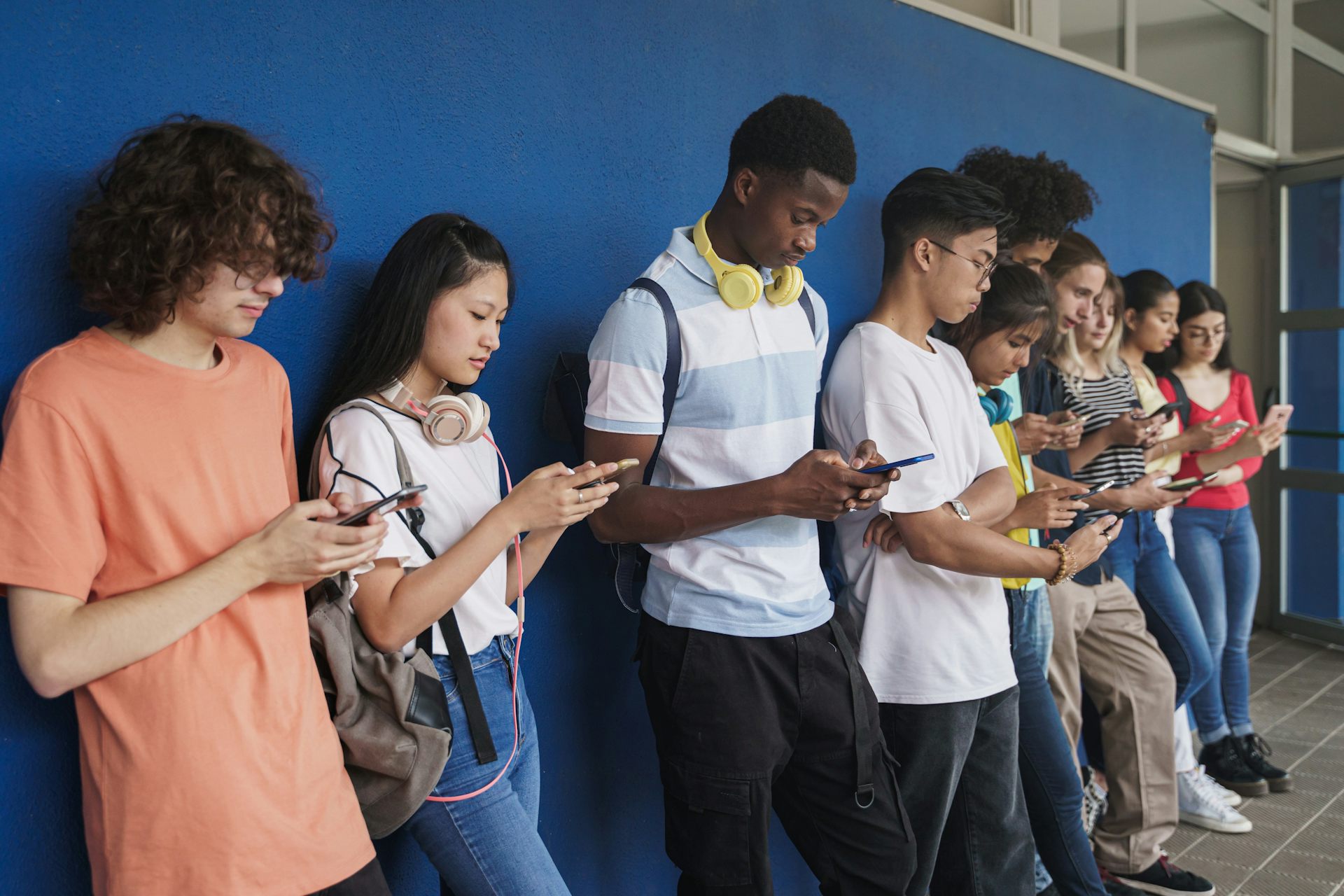
我们的研究考察了43个国家青少年的社交媒体行为——来自弱势背景的群体面临更大的危害。
Our study looked at teens’ social media behaviour in 43…
Adolescents’ digital risks are shaped by inequality.
青少年的数字风险受到不平等的影响。
As social media becomes a central part of young people’s lives, concerns are growing about its impact on their mental health. Yet public debates and measures tend to treat adolescents as one homogeneous group. We frequently ignore the fact that social media use does not affect all young people in the same way – nor does it have the same impacts on their wellbeing.
随着社交媒体成为年轻人生活的重要组成部分,人们对其对他们心理健康的影响的担忧日益增加。然而,公众的讨论和措施往往将青少年视为一个同质群体。我们经常忽略的事实是,社交媒体的使用并不会对所有年轻人产生相同的影响——它对他们的福祉也不会产生相同的影响。
In a recent chapter of the World Happiness Report 2026, published by the UN Sustainable Development Solutions Network in partnership with the University of Oxford, we have examined how problematic social media use relates to the wellbeing of adolescents from different socioeconomic backgrounds.
在我们最近发表的《2026年世界幸福报告》的一章中,该报告由联合国可持续发展解决方案网络与牛津大学合作出版,我们研究了有问题的社交媒体使用与来自不同社会经济背景的青少年的福祉之间的关系。
We looked at 43 countries spanning six broad regions – Anglo-Celtic, Caucasus-Black Sea, Central-Eastern Europe, Mediterranean, Nordic, and Western Europe – covering mainly European countries and their immediate neighbouring areas.
我们考察了涵盖六个大区域的43个国家——包括盎格鲁-凯尔特地区、高加索-黑海地区、中东欧、地中海地区、北欧和西欧——主要覆盖了欧洲国家及其邻近地区。
Using data from over 330,000 young people, we found a clear and consistent pattern: higher levels of problematic social media use – that is, compulsive or uncontrolled engagement with social media – are associated with poorer wellbeing.
利用来自超过33万名年轻人的数据,我们发现了一个清晰且一致的模式:有问题的社交媒体使用水平越高——即强迫性或失控地参与社交媒体使用——与较低的福祉水平相关。
Teenagers who report more problematic use tend to experience more psychological complaints, such as feeling low, nervous, irritable, or having difficulty sleeping. They also have lower life satisfaction, a measure of how positively they evaluate their lives as a whole.
报告有更多问题性使用习惯的青少年,往往会出现更多心理不适,例如感到情绪低落、紧张、易怒或睡眠困难。他们的生活满意度也较低,而生活满意度衡量的是他们对自身生活的整体评价。
This pattern appears across all countries in our study, but its strength varies from one country to another. It is particularly pronounced in Anglo-Celtic countries such as the UK and Ireland, while it is comparatively weaker in the Caucasus-Black Sea region.
这种模式出现在我们研究的所有国家,但其强度在各国之间有所不同。它在英国和爱尔兰等盎格鲁-凯尔特国家尤为显著,而在高加索-黑海地区则相对较弱。
Socioeconomic background matters
社会经济背景很重要
The story does not end with geography. Globally, teenagers from less advantaged backgrounds tend to be more vulnerable to the negative consequences of problematic social media use than their more advantaged peers.
故事并不仅限于地理因素。在全球范围内,来自社会经济背景较弱的青少年,比来自社会经济背景较强的同龄人,更容易受到使用社交媒体出现问题所带来的负面后果的影响。
This means socioeconomic status – the material and social resources available to a household, such as income and living conditions – actively shapes the risks and opportunities that young people experience as a result of online environments.
这意味着社会经济地位——即家庭可获得的物质和社会资源,例如收入和生活条件——会积极地塑造年轻人由于网络环境所经历的风险和机会。
Interestingly, these inequalities are especially visible when we look at life satisfaction. Differences between socioeconomic groups are smaller when it comes to psychological complaints, but much clearer and more consistent for how adolescents evaluate their lives overall.
有趣的是,当我们关注生活满意度时,这些不平等现象尤为明显。在心理健康方面的抱怨方面,社会经济群体之间的差异较小,但对于青少年整体评估自己生活的情况,差异则更清晰、更一致。
One likely reason is that life satisfaction is more sensitive to social comparisons. Social media exposes young people to constant benchmarks – what others have, do, and achieve – which can amplify differences in perceived opportunities and resources.
一个可能的原因是,生活满意度对社会比较更为敏感。社交媒体让年轻人不断接触到各种参照标准——别人拥有、做和取得的成就——这可能会放大感知到的机会和资源的差异。
At the same time, these patterns are not identical everywhere. For instance, socioeconomic differences in psychological complaints tend to be modest in most regions including continental European countries such as France, Austria or Belgium, but are more clearly observed in Anglo-Celtic countries such as Scotland and Wales.
同时,这些模式并非在所有地方都相同。例如,在包括法国、奥地利或比利时等欧洲大陆国家在内的大多数地区,社会经济地位在心理抱怨方面的差异往往是温和的,但在苏格兰和威尔士等盎格鲁-凯尔特国家则观察得更清楚。
In contrast, socioeconomic gaps in life satisfaction appear across most regions, although they tend to be weaker in Mediterranean countries such as Italy, Cyprus and Greece.
相比之下,生活满意度方面的社会经济差距出现在大多数地区,尽管在意大利、塞浦路斯和希腊等地中海国家,这种差距往往较小。
A growing problem
一个日益严重的问题
We also examined how these patterns have evolved over time. Between 2018 and 2022, the link between problematic social media use and poor adolescent wellbeing became stronger.
我们还考察了这些模式是如何随时间演变的。在2018年至2022年间,问题性社交媒体使用与青少年不良心理健康之间的关联变得更强。
This suggests that the risks linked to problematic use may have intensified in recent years, possibly reflecting the growing role of digital technologies in young people’s daily lives, particularly during and after the Covid-19 pandemic.
这表明,与问题性使用相关的风险在近年来可能加剧了,这可能反映了数字技术在年轻人日常生活中的日益增长的作用,尤其是在新冠疫情期间和之后。
Importantly, this intensification has affected teenagers across socioeconomic groups in broadly similar ways in most regions. In other words, while inequalities remain they have not widened over this period.
重要的是,在大多数地区,这种加剧影响以大致相似的方式影响了不同社会经济群体的青少年。换句话说,虽然不平等现象依然存在,但在此期间并未扩大。
Leer más: Social media addiction disrupts the sleep, moods and social activities of teens and young adults
阅读更多:社交媒体成瘾干扰了青少年和年轻人的睡眠、情绪和社交活动
No one-size-fits-all solution
没有一刀切的解决方案
While public debates about social media and mental health often treat adolescents as a single demographic group, our results show a more complex reality. Problematic social media use is linked to poorer wellbeing across countries, but its effects are shaped by social realities. They vary depending on where young people live and what resources are available to them.
尽管关于社交媒体和心理健康的公开辩论经常将青少年视为单一的人口群体,但我们的研究结果显示了一个更复杂的现实。有问题的社交媒体使用与各国较低的幸福感相关,但其影响是由社会现实塑造的。这些影响取决于年轻人居住的地方以及他们可获得的资源。
Not all teenagers experience the digital world in the same way, and not all are equally equipped to cope with its pressures. Recognising this is essential for designing policies that are not only effective, but also equitable, ensuring that interventions reach those adolescents who are most vulnerable to digital risks.
并非所有青少年都以相同的方式体验数字世界,也不是所有人都具备应对其压力的能力。认识到这一点对于设计不仅有效而且公平的政策至关重要,确保干预措施能够触及那些最容易受到数字风险影响的青少年。

A weekly e-mail in English featuring expertise from scholars and researchers. It provides an introduction to the diversity of research coming out of the continent and considers some of the key issues facing European countries. Get the newsletter!
一封每周英文电子邮件,收录学者和研究人员的专业知识。它介绍了来自该大陆研究的多样性,并探讨了欧洲国家面临的一些关键问题。获取电子报!
Roger Fernandez-Urbano receives funding from the Spanish Government’s Ministry of Science, Innovation and Universities and the State Research Agency through Ramón y Cajal (RYC) grant. Roger is a member of the International Society for Quality-of-Life Studies (ISQOLS) .
Roger Fernandez-Urbano 的资金来自西班牙政府科学、创新和大学部以及国家研究局的 Ramón y Cajal (RYC) 基金。Roger 是国际生活质量研究学会 (ISQOLS) 的成员。
Maria Rubio-Cabañez’s involvement in this research was supported by the DIGINEQ (Digital Time Use, Adolescent Well-Being and Social Inequalities) project (Grant agreement ID: 101089233) , funded by the European Research Council Consolidator Grant.
Maria Rubio-Cabañez 在本研究中的参与得到了 DIGINEQ(数字时间使用、青少年福祉与社会不平等)项目(资助协议 ID:101089233)的支持,该项目由欧洲研究理事会巩固者基金资助。
Pablo Gracia’s involvement in this research was supported by the DIGINEQ (Digital Time Use, Adolescent Well-Being and Social Inequalities) project (Grant agreement ID: 101089233) , funded by the European Research Council Consolidator Grant.
Pablo Gracia 在本研究中的参与得到了 DIGINEQ(数字时间使用、青少年福祉与社会不平等)项目(资助协议 ID:101089233)的支持,该项目由欧洲研究理事会巩固者基金资助。