La biología sintética prometió reescribir la vida: con la muerte de su pionero, J. Craig Venter, ¿qué tan cerca están los científicos?
Synthetic biology promised to rewrite life – with the death of its pioneer, J. Craig Venter, how close are scientists?
Advances in genetic engineering have enabled researchers to seek ways to program new life. But has synthetic biology actually changed medicine and the environment, nearly two decades on?
¿Han cambiado realmente la medicina y el medio ambiente la biología sintética, casi dos décadas después?
When scientist J. Craig Venter and his team announced in 2010 that they had created the first cell controlled by a fully synthetic genome, it marked a turning point in how scientists think about life.
Cuando el científico J. Craig Venter y su equipo anunciaron en 2010 que habían creado la primera célula controlada por un genoma totalmente sintético, marcó un punto de inflexión en la forma en que los científicos piensan sobre la vida.
For the first time, DNA – the molecule that carries the instructions for life – had been written on a computer, assembled in a laboratory and used to control a living cell. The achievement suggested something profound: Life might not only be understood but designed.
Por primera vez, el ADN – la molécula que lleva las instrucciones para la vida – había sido escrito en una computadora, ensamblado en un laboratorio y utilizado para controlar una célula viva. El logro sugería algo profundo: la vida podría no solo ser comprendida, sino diseñada.
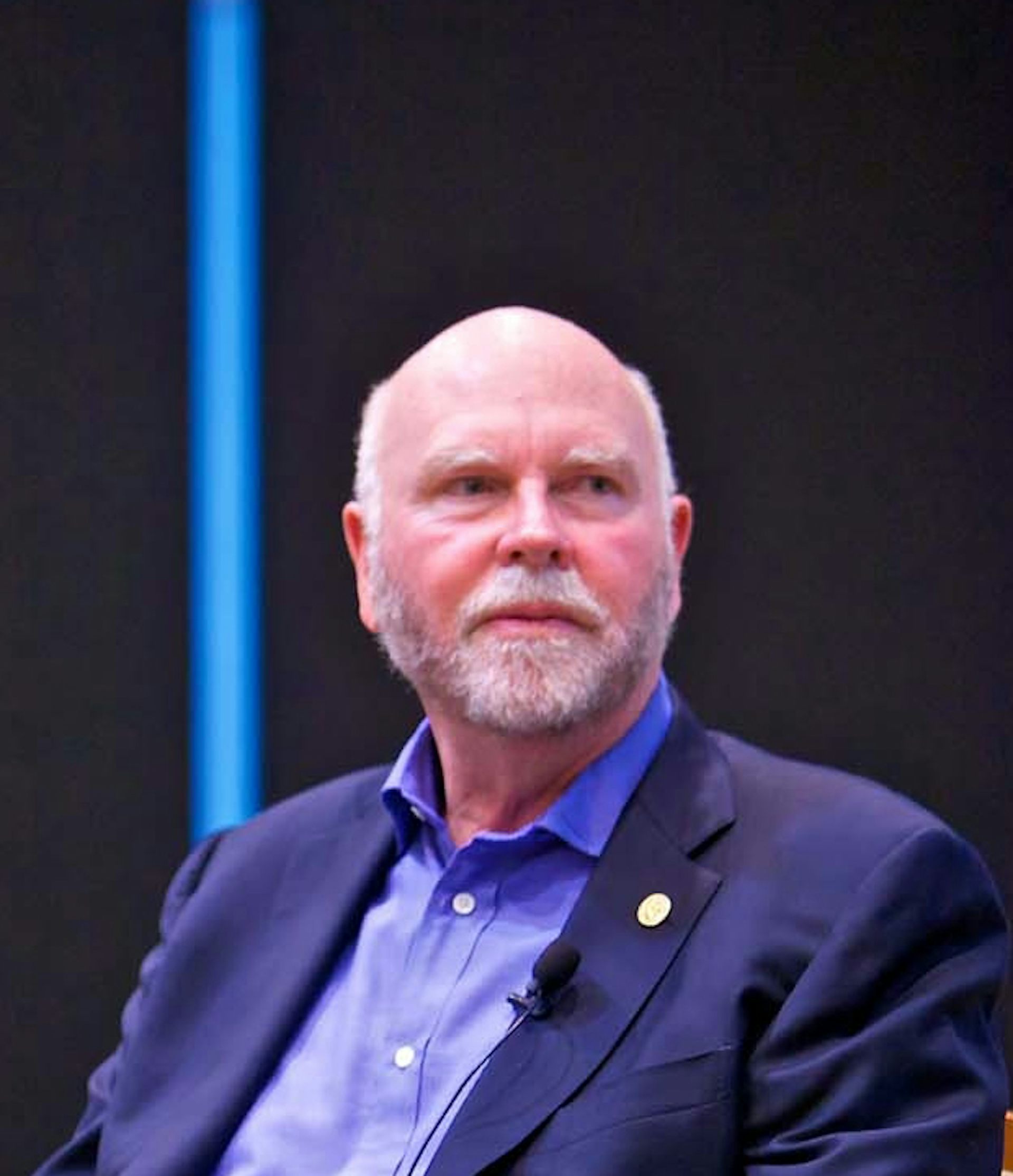
A biologist widely recognized for his groundbreaking contributions to genomics, including leading efforts to sequence the first draft of the human genome, Venter and his team’s successful creation of the first synthetic bacterial cell is considered pivotal to the field of synthetic biology.
Venter, un biólogo ampliamente reconocido por sus contribuciones pioneras a la genómica, incluido el liderazgo de esfuerzos para secuenciar el primer borrador del genoma humano, y la exitosa creación de la primera célula bacteriana sintética por parte de su equipo, es considerada fundamental para el campo de la biología sintética.
By combining biology and engineering, synthetic biology seeks to design and build new biological systems or redesign existing ones for useful purposes. Rather than only observing how life works, scientists use tools such as DNA synthesis and genetic engineering to “program” cells to perform specific tasks, such as producing vaccines, developing sustainable fuels or detecting environmental toxins.
Al combinar biología e ingeniería, la biología sintética busca diseñar y construir nuevos sistemas biológicos o rediseñar los existentes para propósitos útiles. En lugar de solo observar cómo funciona la vida, los científicos utilizan herramientas como la síntesis de ADN y la ingeniería genética para «programar» células para que realicen tareas específicas, como producir vacunas, desarrollar combustibles sostenibles o detectar toxinas ambientales.
But how far has the field gone since Venter’s original synthetic bacterial cell?
Pero, ¿qué tan lejos ha llegado el campo desde la célula bacteriana sintética original de Venter?
As a biochemist who uses genomics in my teaching and research, I am interested in understanding what this shift in biology means and how far it has actually taken scientific innovation. Following Venter’s death on April 29, 2026, it is worth revisiting that moment and asking whether synthetic biology has delivered on its promise.
Como bioquímico que utiliza la genómica en mi enseñanza e investigación, estoy interesado en comprender lo que significa este cambio en la biología y hasta dónde ha llevado realmente la innovación científica. Tras la muerte de Venter el 29 de abril de 2026, vale la pena revisitar ese momento y preguntarse si la biología sintética ha cumplido su promesa.
What is synthetic biology?
¿Qué es la biología sintética?
For much of the 20th century, biology focused on decoding life.
Durante gran parte del siglo XX, la biología se centró en decodificar la vida.
The discovery of DNA’s structure in 1953 revealed how genetic information is stored. Decades later, the Human Genome Project that Venter helped accelerate mapped the full set of human genes.
El descubrimiento de la estructura del ADN en 1953 reveló cómo se almacena la información genética. Décadas más tarde, el Proyecto Genoma Humano, que Venter ayudó a acelerar, mapeó el conjunto completo de genes humanos.
But Venter and others pushed the field further: If DNA could be read like code, could it also be written?
Pero Venter y otros llevaron el campo más allá: si el ADN podía leerse como un código, ¿también podría escribirse?
This idea underpins synthetic biology, which aims to design and construct biological systems rather than simply study them. Instead of modifying one gene at a time, researchers began exploring whether entire genomes could be built and inserted into cells.
Esta idea sustenta la biología sintética, que tiene como objetivo diseñar y construir sistemas biológicos en lugar de simplemente estudiarlos. En lugar de modificar un gen a la vez, los investigadores comenzaron a explorar si se podían construir e insertar genomas enteros en células.
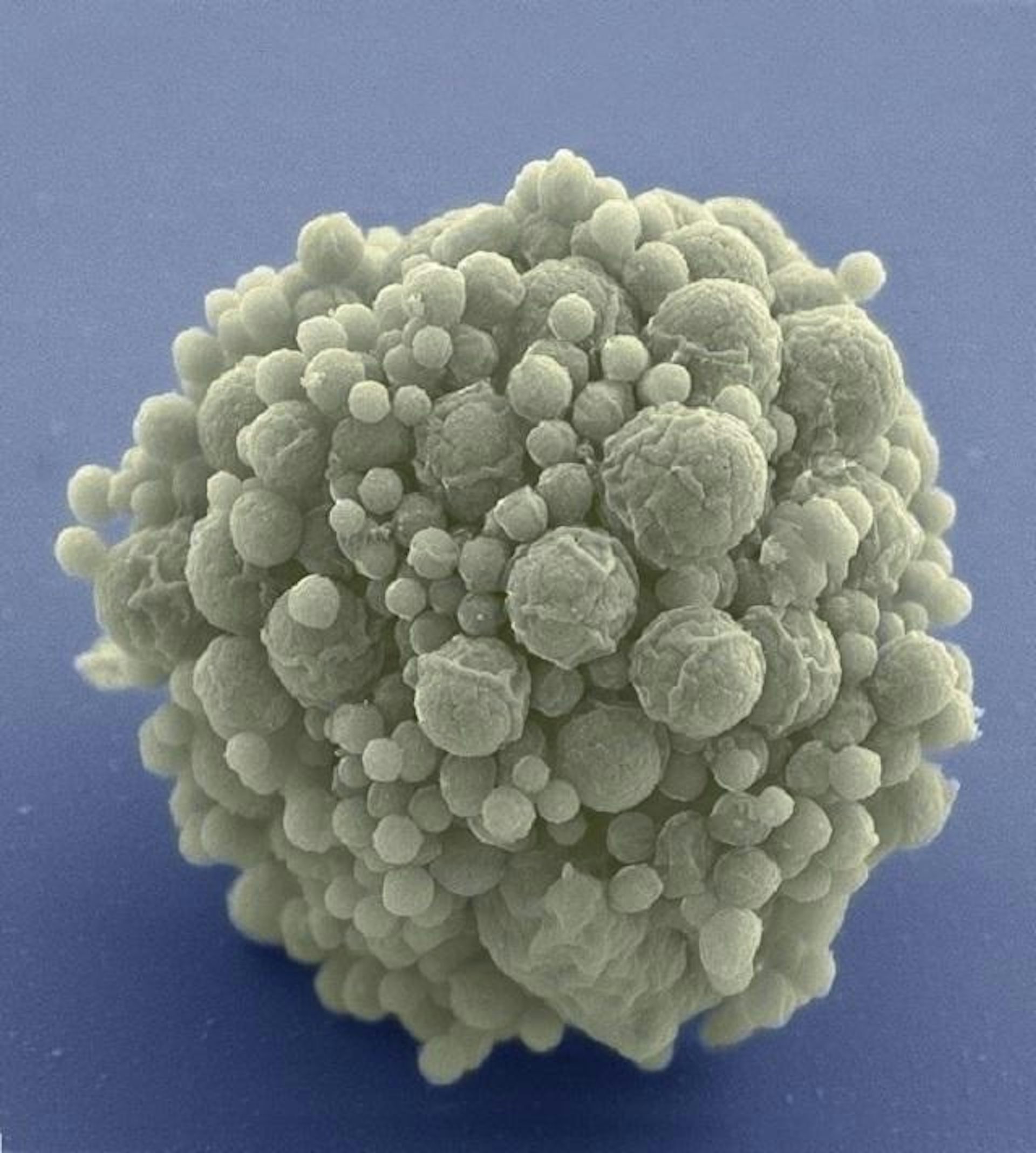
In 2010, Venter’s team demonstrated that this was possible. They constructed a bacterial genome and used it to take control of a living cell. While the cell itself was not built entirely from scratch, their work showed that the instructions for life could be engineered.
En 2010, el equipo de Venter demostró que esto era posible. Construyeron un genoma bacteriano y lo utilizaron para tomar el control de una célula viva. Aunque la célula en sí no fue construida completamente desde cero, su trabajo demostró que las instrucciones para la vida podían ser diseñadas.
In other words, synthetic biologists were moving from reading life to rewriting it entirely.
En otras palabras, los biólogos sintéticos estaban pasando de leer la vida a reescribirla por completo.
Big promises and bold expectations
Grandes promesas y expectativas audaces
Synthetic biology has already led to a range of promising outcomes across medicine, energy and environmental science.
La biología sintética ya ha dado lugar a una variedad de resultados prometedores en medicina, energía y ciencias ambientales.
Researchers have engineered microbes to produce lifesaving drugs such as artemisinin, an antimalarial compound, and to manufacture sustainable biofuels that could reduce reliance on fossil fuels. In addition, researchers are using synthetic biology to design organisms capable of detecting and breaking down environmental pollutants, offering new tools for bioremediation.
Los investigadores han modificado microbios para producir medicamentos que salvan vidas, como la artemisinina, un compuesto antimalárico, y para fabricar biocombustibles sostenibles que podrían reducir la dependencia de los combustibles fósiles. Además, los investigadores están utilizando la biología sintética para diseñar organismos capaces de detectar y descomponer contaminantes ambientales, ofreciendo nuevas herramientas para la biorremediación.
At the heart of these ideas was a powerful analogy: If biology could be treated like software, then designing organisms might one day resemble writing code.
En el centro de estas ideas había una poderosa analogía: si la biología pudiera tratarse como un software, entonces diseñar organismos podría algún día asemejarse a escribir código.
This vision attracted significant investment and policy attention. The U.S. Government Accountability Office has highlighted synthetic biology’s potential to address challenges in multiple industries while also raising important ethical and safety considerations. For example, synthetic biology techniques could be used to develop biological weapons and could unintentionally harm ecosystems and human health.
Esta visión atrajo una inversión y atención política significativas. La Oficina de Contabilidad del Gobierno de EE. UU. ha destacado el potencial de la biología sintética para abordar desafíos en múltiples industrias, al tiempo que plantea importantes consideraciones éticas y de seguridad. Por ejemplo, las técnicas de biología sintética podrían utilizarse para desarrollar armas biológicas y podrían dañar involuntariamente los ecosistemas y la salud humana.
Progress slower than expected
Progreso más lento de lo esperado
Despite this progress, synthetic biology has not fully realized its early ambitions. One major reason is the complexity of living systems.
A pesar de este progreso, la biología sintética no ha materializado completamente sus ambiciones iniciales. Una razón principal es la complejidad de los sistemas vivos.
Early approaches to synthetic biology treated cells as modular systems, where components could be predictably exchanged. In practice, biological systems are highly interconnected. Gene interactions are difficult to predict, and results observed in controlled laboratory conditions do not always scale to real-world environments.
Los primeros enfoques de la biología sintética trataron a las células como sistemas modulares, donde los componentes podían intercambiarse de manera predecible. En la práctica, los sistemas biológicos están altamente interconectados. Las interacciones génicas son difíciles de predecir, y los resultados observados en condiciones de laboratorio controladas no siempre se escalan a entornos del mundo real.
This challenge has been particularly evident in areas such as biofuels, where translating laboratory successes into industrial-scale production has proved difficult.
Este desafío ha sido particularmente evidente en áreas como los biocombustibles, donde traducir los éxitos de laboratorio a una producción a escala industrial ha resultado difícil.
There are also more fundamental limitations. Scientists still cannot construct a fully living organism from nonliving components alone. Even Venter’s synthetic cell depended on an existing biological system to function.
También existen limitaciones más fundamentales. Los científicos aún no pueden construir un organismo completamente vivo solo a partir de componentes no vivos. Incluso la célula sintética de Venter dependió de un sistema biológico existente para funcionar.
As a result, the goal of creating life entirely from scratch remains out of reach for now.
Como resultado, el objetivo de crear vida completamente desde cero sigue estando fuera de nuestro alcance por ahora.
New questions and emerging risks
Nuevas preguntas y riesgos emergentes
As technology has advanced, it has also raised new ethical and security concerns. The same tools used to design beneficial organisms could potentially be misused.
A medida que la tecnología ha avanzado, también ha generado nuevas preocupaciones éticas y de seguridad. Las mismas herramientas utilizadas para diseñar organismos beneficiosos podrían malutilizarse potencialmente.
Synthetic biology is widely recognized as a dual-use field, where advances in gene editing, DNA synthesis and bioengineering may enable not only medical and environmental innovations but also the creation or modification of harmful organisms.
La biología sintética es ampliamente reconocida como un campo de doble uso, donde los avances en edición genética, síntesis de ADN y bioingeniería pueden permitir no solo innovaciones médicas y ambientales, sino también la creación o modificación de organismos nocivos.
The increasing accessibility of these technologies further lowers barriers to misuse, making biosecurity threats more distributed and difficult to control. At the same time, governance frameworks often struggle to keep pace with rapid technological developments, leaving gaps in oversight and international coordination.
La creciente accesibilidad de estas tecnologías reduce aún más las barreras para su mal uso, haciendo que las amenazas de bioseguridad sean más distribuidas y difíciles de controlar. Al mismo tiempo, los marcos de gobernanza a menudo luchan por seguir el ritmo de los rápidos desarrollos tecnológicos, dejando lagunas en la supervisión y la coordinación internacional.
Beyond immediate risks, broader questions remain about how far humans should go in redesigning life and what unintended consequences such changes could have for ecosystems. Engineered organisms may introduce risks such as genetic contamination and ecosystem disruption, which would harm biodiversity and ecosystem services.
Más allá de los riesgos inmediatos, persisten preguntas más amplias sobre hasta dónde deberían llegar los humanos al rediseñar la vida y qué consecuencias imprevistas podrían tener tales cambios para los ecosistemas. Los organismos modificados pueden introducir riesgos como la contaminación genética y la alteración de los ecosistemas, lo que dañaría la biodiversidad y los servicios ecosistémicos.
These concerns are likely to become more pressing as the technology behind synthetic biology continues to develop, particularly as emerging tools such as artificial intelligence accelerate the design of new biological systems.
Es probable que estas preocupaciones se vuelvan más apremiantes a medida que la tecnología detrás de la biología sintética continúe desarrollándose, particularmente a medida que herramientas emergentes como la inteligencia artificial aceleran el diseño de nuevos sistemas biológicos.
Venter’s legacy
El legado de Venter
The implications of the idea that life could be engineered rather than just observed is still unfolding.
Las implicaciones de la idea de que la vida podría ser diseñada en lugar de solo observada aún se están desarrollando.
Synthetic biology has not yet delivered a world of fully programmable organisms solving global challenges. But it has changed expectations, both within science and beyond, about what might be possible in biological design.
La biología sintética aún no ha entregado un mundo de organismos totalmente programables que resuelvan desafíos globales. Pero ha cambiado las expectativas, tanto dentro como fuera de la ciencia, sobre lo que podría ser posible en el diseño biológico.
In that sense, the impact of synthetic biology is already clear: It has altered not just how scientists study life but how society imagines its future.
En ese sentido, el impacto de la biología sintética ya es claro: ha alterado no solo la forma en que los científicos estudian la vida, sino también la forma en que la sociedad imagina su futuro.
Venter’s legacy includes the questions he made unavoidable: how far scientists should go in designing life, who gets to decide, and what responsibilities come with that power. The answers remain unsettled. But the trajectory seems to be that science is learning, cautiously and imperfectly, to author life.
El legado de Venter incluye las preguntas que hizo inevitables: hasta dónde deben llegar los científicos al diseñar la vida, quién tiene derecho a decidir y qué responsabilidades conlleva ese poder. Las respuestas siguen sin resolverse. Pero la trayectoria parece ser que la ciencia está aprendiendo, con cautela e imperfectamente, a dar origen a la vida.
André O. Hudson receives funding from the National Institutes of Health and the National Science Foundation
André O. Hudson recibe financiación de los Institutos Nacionales de Salud y la Fundación Nacional de Ciencias
Read more
-

Por qué la llamada de Trump a retirar 5,000 tropas estadounidenses de Alemania perjudicará a Estados Unidos
Why Trump’s call to pull 5,000 US troops from Germany will hurt America