Venecia se está hundiendo: analizamos cada plan para salvarla, y ninguno preservaría la ciudad como la conocemos
Venice is sinking – we analysed every plan to save it, and none would preserve the city as we know it
As sea levels rise, Venice’s options are running out. New research shows that even the most ambitious engineering may only delay the inevitable.
A medida que suben los niveles del mar, las opciones de Venecia se agotan. Una nueva investigación muestra que incluso la ingeniería más ambiciosa solo puede retrasar lo inevitable.
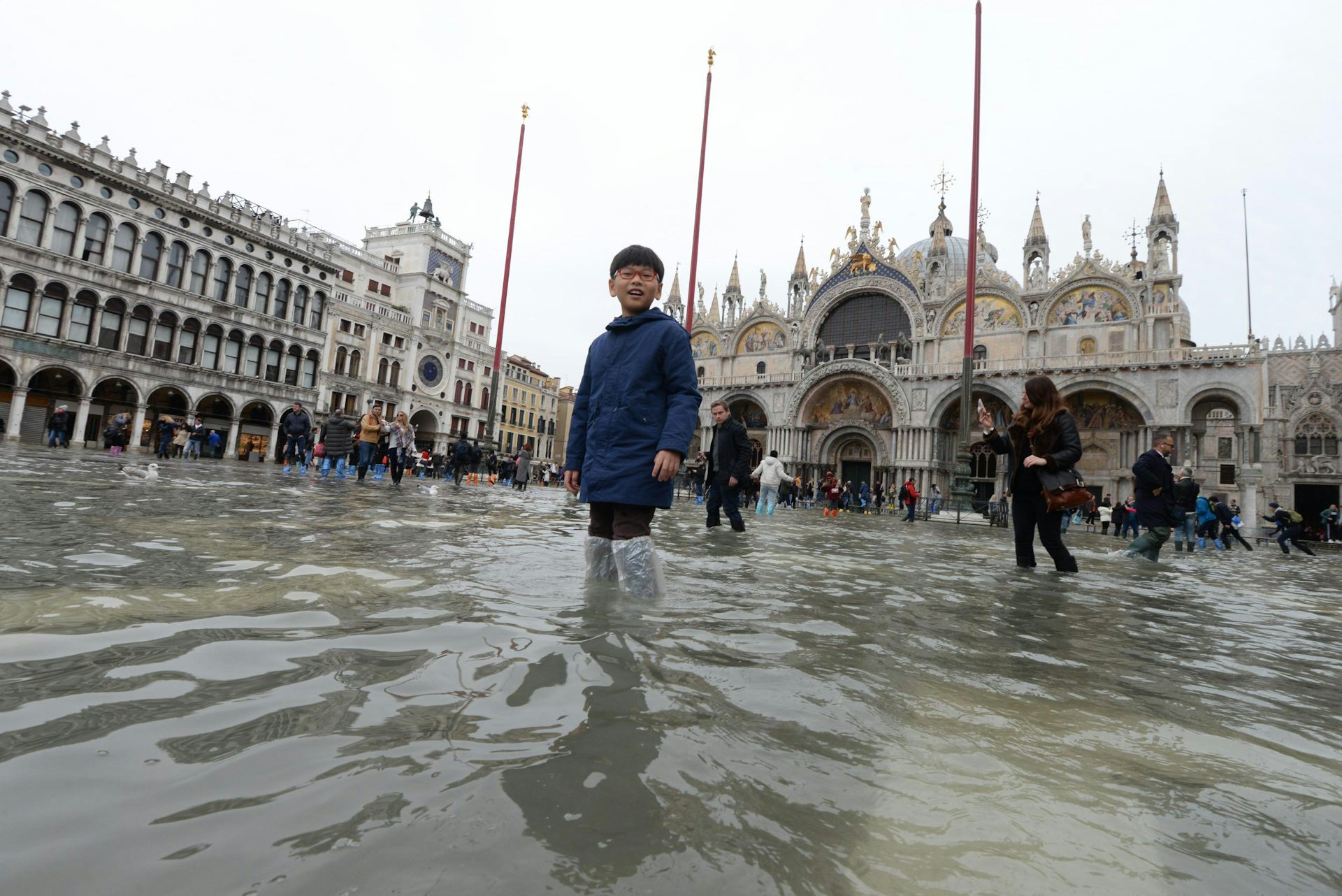
Venice has co-existed with the sea throughout its 1,500-year history, perhaps better than any other city on earth. Yet over the past century it has flooded increasingly often, as the sea rises and the city itself sinks under its own weight.
Venecia ha coexistido con el mar a lo largo de sus 1.500 años de historia, quizás mejor que cualquier otra ciudad de la Tierra. Sin embargo, durante el último siglo se ha inundado con creciente frecuencia, a medida que el mar sube y la propia ciudad se hunde bajo su propio peso.
We recently published an academic analysis of the various options Venice has to ensure its long-term survival.
Recientemente publicamos un análisis académico de las diversas opciones que tiene Venecia para garantizar su supervivencia a largo plazo.
Our study compares a range of possible strategies against different degrees of sea-level rise. These include maintaining the current system of mobile barriers, building ring dykes to separate the city from the lagoon in which it sits, enclosing the whole lagoon within a much larger defence system, or – in the most extreme case – relocating much of the city and its population inland.
Nuestro estudio compara una gama de posibles estrategias frente a diferentes grados de aumento del nivel del mar. Estas incluyen mantener el sistema actual de barreras móviles, construir diques perimetrales para separar la ciudad de la laguna donde se encuentra, cercar toda la laguna dentro de un sistema de defensa mucho más grande, o – en el caso más extremo – reubicar gran parte de la ciudad y su población tierra adentro.
Each option becomes relevant at different points as sea levels rise. The city’s flood defences have already been upgraded substantially, at a cost of €6 billion (£5.2 billion) . This involves a series of huge steel gates attached to the seafloor, known as the Mose barriers. When raised, these barriers effectively seal off the Venetian Lagoon from the wider Mediterranean Sea.
Cada opción se vuelve relevante en diferentes momentos a medida que suben los niveles del mar. Las defensas contra inundaciones de la ciudad ya han sido mejoradas sustancialmente, con un coste de 6.000 millones de euros (5.200 millones de libras) . Esto implica una serie de enormes compuertas de acero unidas al fondo marino, conocidas como las barreras Mose. Cuando se elevan, estas barreras sellan efectivamente la Laguna de Venecia del vasto Mar Mediterráneo.
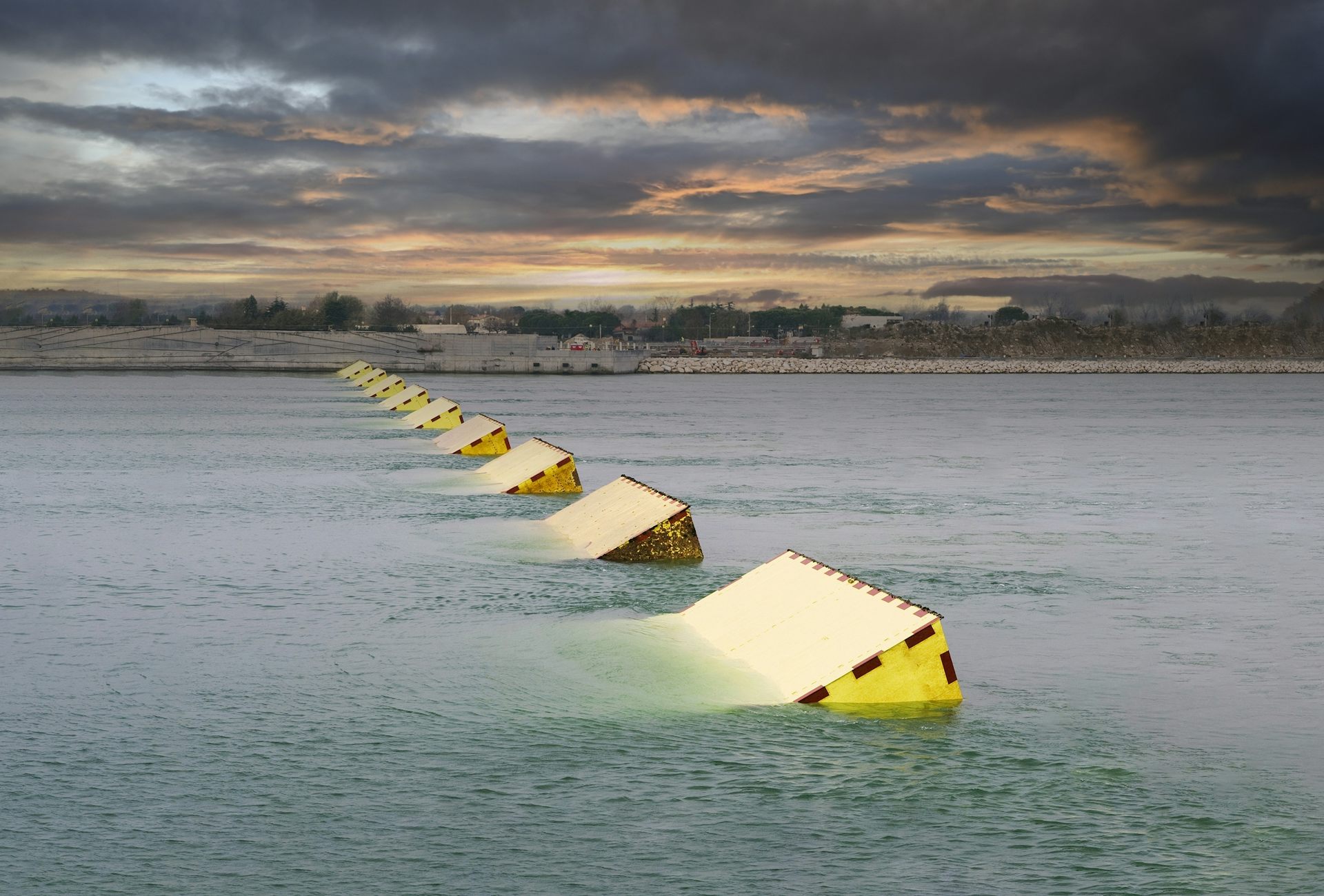
The Mose barriers mean the flood risks are currently manageable, but the frequency of their use is rising. In the first five years of use (between 2020 and 2025) the system was closed for 108 high waters, while in the first two months of 2026 it was activated 30 times. And as sea levels continue to climb, it would need to be closed more and more often – potentially for weeks at a time each year.
Las barreras Mose significan que los riesgos de inundación son actualmente manejables, pero la frecuencia de su uso está aumentando. En los primeros cinco años de uso (entre 2020 y 2025) , el sistema se cerró por 108 mareas altas, mientras que en los dos primeros meses de 2026 se activó 30 veces. Y a medida que los niveles del mar continúan subiendo, necesitaría cerrarse cada vez más a menudo, potencialmente durante semanas cada año.
This creates a series of problems. Frequent closures would disrupt shipping and tourism, alter the lagoon’s ecology, and would require major new systems for sewage treatment and huge pumps to maintain lagoon water levels. A system designed for occasional protection risks becoming a semi-permanent barrier – something it was never intended to be.
Esto crea una serie de problemas. Los cierres frecuentes interrumpirían el transporte marítimo y el turismo, alterarían la ecología de la laguna y requerirían nuevos sistemas importantes para el tratamiento de aguas residuales y enormes bombas para mantener los niveles de agua de la laguna. Un sistema diseñado para una protección ocasional corre el riesgo de convertirse en una barrera semipermanente, algo para lo que nunca fue concebido.
With additional measures, such as raising the city by injecting sea water into the rocks deep underground, reversing the subsidence to some degree, these barriers could remain effective for some time – perhaps even after a metre of sea-level rise.
Con medidas adicionales, como elevar la ciudad inyectando agua de mar en las rocas profundas subterráneas, revirtiendo el hundimiento en cierta medida, estas barreras podrían seguir siendo efectivas durante algún tiempo, quizás incluso después de un metro de aumento del nivel del mar.
But even under relatively low levels of warming, the sea is projected to keep rising for centuries, eventually pushing beyond what the barriers can handle.
Pero incluso con niveles de calentamiento relativamente bajos, se proyecta que el mar siga subiendo durante siglos, superando eventualmente lo que las barreras pueden soportar.
At that point, more radical measures may be necessary. Building a ring of dykes around the city would physically separate Venice from the lagoon, but may be necessary by the end of this century.
En ese momento, pueden ser necesarias medidas más radicales. Construir un anillo de diques alrededor de la ciudad separaría físicamente Venecia de la laguna, pero podría ser necesario para finales de este siglo.
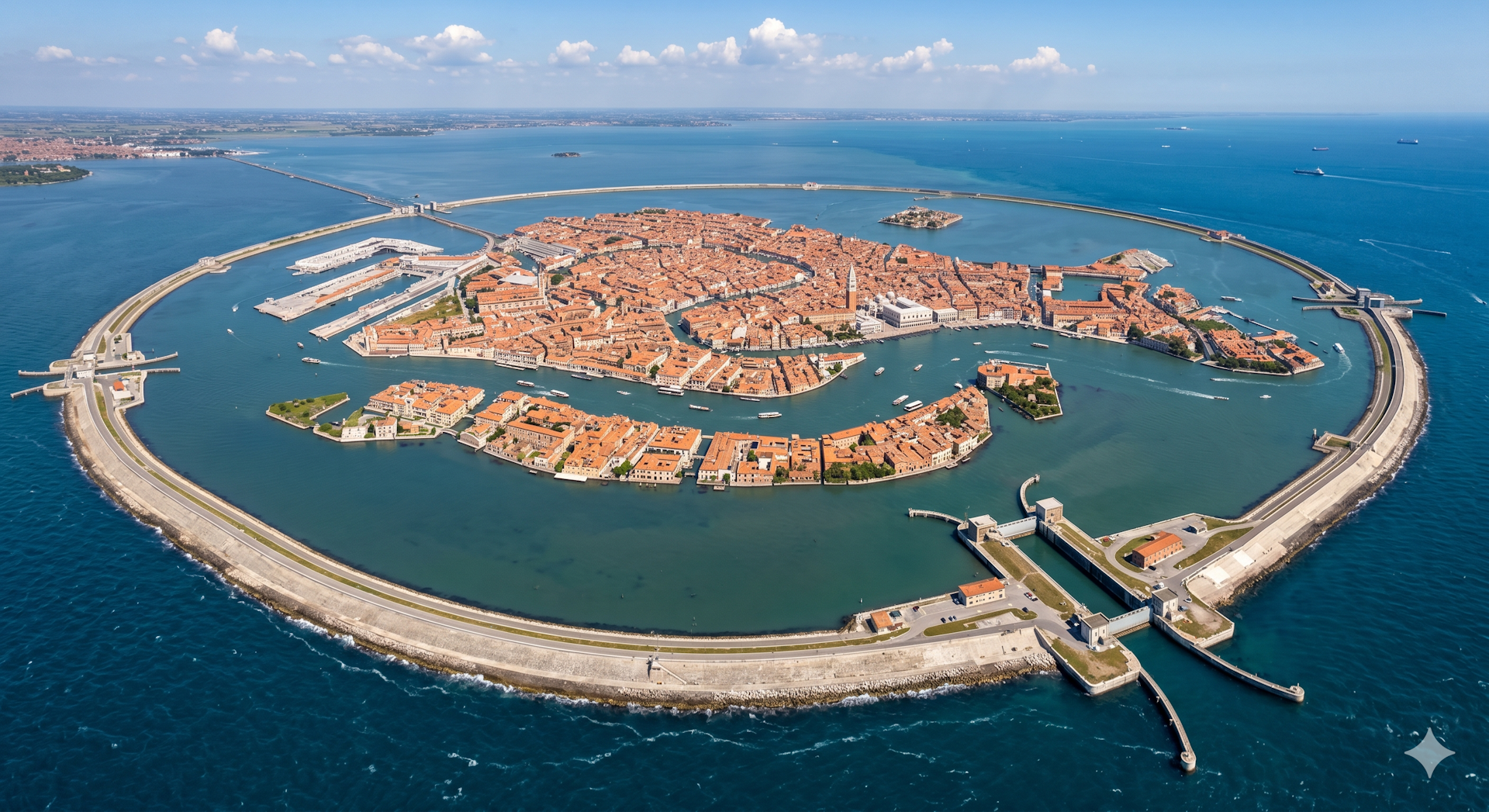
A fully enclosed lagoon – protected by a much larger “super levee” and supported by continuous pumping – could protect the city from up to 10m of sea level rise, but at severe cost to the living lagoon.
Una laguna completamente cerrada – protegida por un “super dique” mucho más grande y sostenida por el bombeo continuo – podría proteger la ciudad de hasta 10 metros de aumento del nivel del mar, pero a costa severa para la laguna viva.
The only other option is to relocate the city to safer ground. This may be necessary beyond about 5m of sea-level rise, which is projected to occur after 2300.
La única otra opción es reubicar la ciudad en un terreno más seguro. Esto podría ser necesario más allá de unos 5 metros de aumento del nivel del mar, lo que se proyecta que ocurrirá después del año 2300.
Difficult choices ahead
Decisiones difíciles por delante
The financial costs of these choices are substantial. We used the costs of Mose and other previous engineering projects (adjusted for inflation to 2024 prices) to estimate the cost of each adaptation strategy.
Los costos financieros de estas decisiones son sustanciales. Utilizamos los costos de Mose y otros proyectos de ingeniería anteriores (ajustados por inflación a precios de 2024) para estimar el costo de cada estrategia de adaptación.
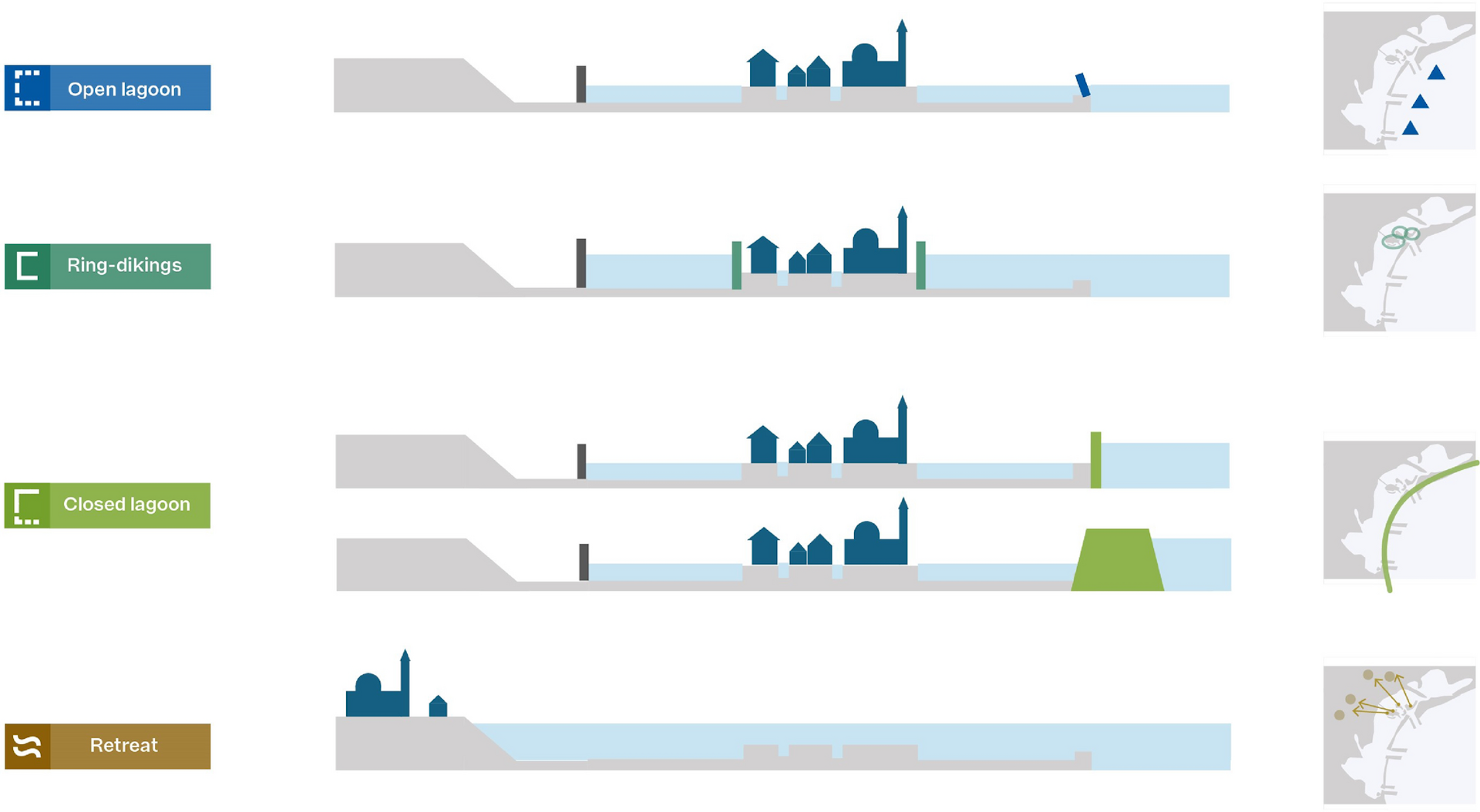
The dykes could cost between €500 million and €4.5 billion. Closing the lagoon with a super levee could initially cost more than €30 billion, and relocating the city could cost up to €100 billion.
Los diques podrían costar entre 500 millones y 4.500 millones de euros. Cerrar la laguna con un superdique podría costar inicialmente más de 30.000 millones de euros, y reubicar la ciudad podría costar hasta 100.000 millones de euros.
But costs aren’t the only issue. How do you even put a price on the cultural value of Venice? Especially as none of these measures will be able to sustain the Venice we see today in the long-term. Adaptation can manage change up to a certain point – beyond that, we are no longer preserving the present. Rather, we are designing a fundamentally different future.
Pero los costos no son el único problema. ¿Cómo se puede poner precio al valor cultural de Venecia? Especialmente porque ninguna de estas medidas podrá sostener la Venecia que vemos hoy a largo plazo. La adaptación puede gestionar el cambio hasta cierto punto; más allá de eso, ya no estamos preservando el presente. Más bien, estamos diseñando un futuro fundamentalmente diferente.
Our analysis shows there is no optimal adaptation strategy. Any approach involves trade-offs between the wellbeing and safety of Venice’s residents, economic prosperity, the future of the lagoon’s ecosystems, heritage preservation, and the region’s traditions and culture. In addition, many of these measures can take decades to fully implement, so early planning is essential.
Nuestro análisis muestra que no existe una estrategia de adaptación óptima. Cualquier enfoque implica compensaciones entre el bienestar y la seguridad de los residentes de Venecia, la prosperidad económica, el futuro de los ecosistemas de la laguna, la preservación del patrimonio y las tradiciones y la cultura de la región. Además, muchas de estas medidas pueden tardar décadas en implementarse por completo, por lo que una planificación temprana es esencial.
At least Venice is thinking about these things in a long-term way. Most vulnerable coastal areas are not. In fact, many continue to attract businesses and people, even as rising seas gradually narrow the range of viable long-term options.
Al menos Venecia está pensando en estas cosas a largo plazo. La mayoría de las zonas costeras vulnerables no lo están. De hecho, muchas continúan atrayendo negocios y personas, incluso a medida que el aumento del nivel del mar reduce gradualmente el rango de opciones viables a largo plazo.
With its long and unique history, Venice has particular challenges, but all low-lying coastal areas should recognise the danger of long-term sea-level rise and start preparing now.
Con su larga e histórica singularidad, Venecia tiene desafíos particulares, pero todas las zonas costeras de baja altitud deben reconocer el peligro del aumento a largo plazo del nivel del mar y comenzar a prepararse ahora.
Robert James Nicholls received funding from the Horizon 2020 program of the European Commission through the CoCliCo project (#101003598) .
Robert James Nicholls recibió financiación del programa Horizonte 2020 de la Comisión Europea a través del proyecto CoCliCo (#101003598) .
Piero Lionello has received funding from Italian Ministry for Education and Research (PNRR-HPC Center) . Piero LIonello is a member of the Scientific Committee of the International Centre for Climate Change Research and Studies Co-coordinator of the MedECC network (Mediterranean Experts on Environmental and Climate Change)
Piero Lionello ha recibido financiación del Ministerio Italiano de Educación e Investigación (PNRR-HPC Center) . Piero Lionello es miembro del Comité Científico del Centro Internacional de Investigación y Estudios sobre Cambio Climático y coordinador del grupo de trabajo de la red MedECC (Expertos Mediterráneos en Medio Ambiente y Cambio Climático) .
Marjolijn Haasnoot does not work for, consult, own shares in or receive funding from any company or organisation that would benefit from this article, and has disclosed no relevant affiliations beyond their academic appointment.
Marjolijn Haasnoot no trabaja para, asesora, posee acciones de, ni recibe financiación de ninguna empresa u organización que se beneficiaría de este artículo, y no ha revelado afiliaciones relevantes más allá de su nombramiento académico.
Read more
-
¿Qué es una guerra justa? Dentro de la guerra de palabras entre la administración Trump y la Iglesia Católica.
What is a just war? Inside the war of words between the Trump administration and the Catholic church
-

Cómo los líderes políticos usan espectáculos de combate para simbolizar el poder y propósito nacional
How political leaders use combat spectacles to symbolize national power and purpose