
De Wulfstan de York a Pete Hegseth, versículos bíblicos falsos foram frequentemente politizados
From Wulfstan of York to Pete Hegseth, fake Bible verses have often been politicized
How can the ostensibly evangelical Pete Hegseth place Quentin Tarantino on the same footing as the word of God? An example from the early 11th century provides clues.
Como Pete Hegseth, ostensivamente evangélico, pode colocar Quentin Tarantino no mesmo patamar que a palavra de Deus? Um exemplo do início do século XI fornece pistas.
How can Pete Hegseth, the United States defense secretary who claims to be a devout evangelical Christian, have placed Quentin Tarantino on the same footing as the word of God?
Como Pete Hegseth, o secretário de defesa dos Estados Unidos que afirma ser um cristão evangélico devoto, pôde colocar Quentin Tarantino no mesmo patamar que a palavra de Deus?
An example from the early 11th century explains how fake Bible passages can function smoothly in mergers of state and secular power.
Um exemplo do início do século XI explica como passagens bíblicas falsas podem funcionar perfeitamente em fusões de poder estatal e secular.
Hegseth led a recent Pentagon prayer service with a fictitious Bible verse from Pulp Fiction. From outside the #MAGA ecosystem, this bold fabrication of a Biblical verse is confusing.
Hegseth liderou um recente culto de oração no Pentágono com um versículo bíblico fictício de Pulp Fiction. De fora do ecossistema #MAGA, essa audaciosa fabricação de um versículo bíblico é confusa.
That’s because scripture is valued very highly by evangelical Protestants, and it may seem counter-intuitive or blasphemous for Hegseth, who has done so much to merge MAGA rule and militant Christianity, to proclaim Tarantino’s words as the word of God.
Isso ocorre porque as escrituras são muito valorizadas pelos protestantes evangélicos, e pode parecer contraintuitivo ou blasfemo que Hegseth, que fez tanto para fundir o governo MAGA e o cristianismo militante, proclame as palavras de Tarantino como a palavra de Deus.
But he’s not the first Christian bureaucrat to write his own Biblical verse. In fact, the practice has a long tradition.
Mas ele não é o primeiro burocrata cristão a escrever seu próprio versículo bíblico. Na verdade, a prática tem uma longa tradição.
Wulfstan of York
Wulfstan de York
An early example is Archbishop Wulfstan of York, who did something similar in a sermon called Be Godcundre Warnunge (God’s Threat to Sinning Israel) .
Um exemplo inicial é o Arcebispo Wulfstan de York, que fez algo semelhante em um sermão chamado Be Godcundre Warnunge (A Ameaça de Deus ao Israel Pecador) .
Wulfstan, who died in 1023, was both a public intellectual and one of the most powerful churchmen in England when the kingdom was under attack, initially, by non-Christian Danish forces.
Wulfstan, que morreu em 1023, foi tanto um intelectual público quanto um dos clérigos mais poderosos da Inglaterra quando o reino estava sob ataque, inicialmente, por forças dinamarquesas não cristãs.
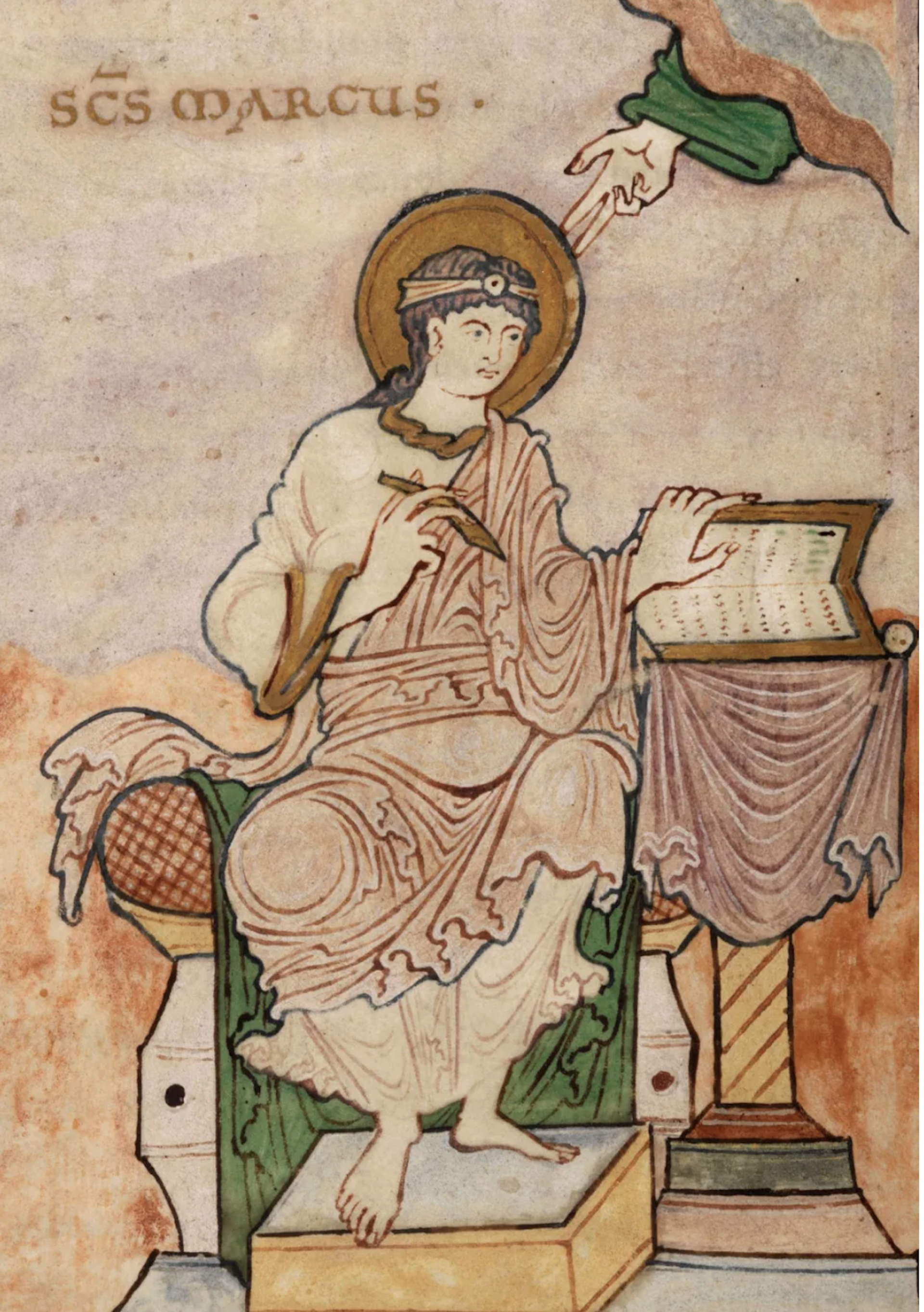
His generation of literate, high-ranking clerics had found an unusual symbiosis with their secular rulers, often serving them as bureaucrats. Wulfstan, for instance, not only supervised the church bureaucracy and lands; he also wrote laws in the names of successive secular kings.
Sua geração de clérigos letrados e de alto escalão havia encontrado uma simbiose incomum com seus governantes seculares, frequentemente servindo-lhes como burocratas. Wulfstan, por exemplo, não apenas supervisionou a burocracia e as terras da igreja; ele também escreveu leis em nome de sucessivos reis seculares.
These laws were vast and ambitious. Among many other things, they categorized clerical ranks and rights, regulated widow remarriage, expelled witches and gave a three-day respite to enslaved people (for fasting and praying) .
Essas leis eram vastas e ambiciosas. Entre muitas outras coisas, elas categorizaram os postos e direitos clericais, regulamentaram o novo casamento de viúvas, expulsaram bruxas e deram um descanso de três dias aos escravizados (para jejum e oração) .
The laws placed many previously local or unlegislated matters under kingly sovereignty and declared the co-equality of king and God (represented on Earth by archbishops) . As such, they both empowered the increasingly centralized state and merged it with, even subsumed it under, church authority.
As leis colocaram muitos assuntos anteriormente locais ou não legislados sob a soberania real e declararam a co-igualdade do rei e de Deus (representado na Terra pelos arcebispos) . Como tal, elas tanto empoderaram o estado cada vez mais centralizado quanto o fundiram, ou até o submeteram, à autoridade da igreja.
Chastised citizens
Cidadãos repreendidos
In some of Wulfstan’s sermons he used a prophetic voice, chastising and threatening in God’s name like the Biblical prophets Isaiah and Ezekiel.
Em alguns de seus sermões, Wulfstan usou uma voz profética, repreendendo e ameaçando em nome de Deus, como os profetas bíblicos Isaías e Ezequiel.
This was not usual in his milieu, although there are some medieval examples: the 14-century Swedish/Roman abbess St. Birgitta, for instance, openly rebuked the Pope in the voice of Jesus Christ.
Isso não era usual em seu meio, embora existam alguns exemplos medievais: a abadessa sueca/romana do século XIV, Santa Birgitta, por exemplo, repreendeu abertamente o Papa na voz de Jesus Cristo.
Wulfstan’s most famous speech, Sermo Lupi (The Wolf’s Sermon) in 1014, excoriates the English for their sins, saying they’d invited the Danish invasion, and stresses the importance of tithing, praying and respecting the Church.
O discurso mais famoso de Wulfstan, Sermo Lupi (O Sermão do Lobo) em 1014, excoria os ingleses por seus pecados, dizendo que eles haviam convidado a invasão dinamarquesa, e enfatiza a importância de pagar o dízimo, orar e respeitar a Igreja.
The 1,000-year-old speech uses surprisingly modern tropes: victimized nationalism, claims of mass sexual vulnerability and an authoritative voice that speaks clearly for both religious and secular power. (The Danes Wulfstan reviles in this sermon did successfully conquer England for a time, and Wulfstan then served the newly Christian King Cnut as a lawmaker) .
O discurso de mil anos utiliza tropos surpreendentemente modernos: nacionalismo vitimizado, alegações de vulnerabilidade sexual em massa e uma voz autoritária que fala claramente tanto para o poder religioso quanto para o secular. (Os dinamarqueses que Wulfstan renega neste sermão conseguiram conquistar a Inglaterra por um tempo, e Wulfstan então serviu ao recém-cristão Rei Cnut como legislador) .
Translation and forgery
Tradução e falsificação
There was at this time no ban on Bible translation; learned churchmen like Wulfstan often translated scripture into the vernacular for pedagogical or pastoral reasons. In Western Europe, the Latin Vulgate, largely translated by St. Jerome in the fourth century from Hebrew and Greek, was the standard scriptural text.
Naquela época não havia proibição de traduzir a Bíblia; clérigos eruditos como Wulfstan frequentemente traduziam as escrituras para a língua vernácula por razões pedagógicas ou pastorais. Na Europa Ocidental, a Vulgata Latina, amplamente traduzida por São Jerônimo no século IV do hebraico e do grego, era o texto escriturístico padrão.
Wulfstan’s later sermon, Be Godcundre Warnunge, quotes the book of Leviticus, Chapter 26, first in Latin and then old English, the language most listeners could actually understand. The passage describes God’s devastating potential vengeance if ancient Hebrews break the covenant; in Wulfstan’s loose and stylish translation, it is transparently about the present-day English at the time.
O sermão posterior de Wulfstan, Be Godcundre Warnunge, cita o livro de Levítico, Capítulo 26, primeiro em latim e depois em inglês antigo, a língua que a maioria dos ouvintes realmente podia entender. O trecho descreve a vingança potencial devastadora de Deus se os antigos hebreus quebrarem o pacto; na tradução solta e estilosa de Wulfstan, é transparentemente sobre o inglês da época.
There is nothing odd about translating the Bible, especially the part called the Hebrew Bible or Old Testament, into the vernacular in a way people can understand better.
Não há nada de estranho em traduzir a Bíblia, especialmente a parte chamada Bíblia Hebraica ou Antigo Testamento, para a língua vernácula de uma forma que as pessoas possam entender melhor.
What’s unusual is that while Wulfstan explicitly says that both passages are God’s words from the Bible, about half of the Latin is Wulfstan’s own composition: Leviticus 26:14-45 is summarized in his distinct barn-burning, hypnotically rhythmic style.
O que é incomum é que, embora Wulfstan afirme explicitamente que ambos os trechos são palavras de Deus da Bíblia, cerca de metade do latim é própria composição de Wulfstan: Levítico 26:14-45 é resumido em seu estilo distinto de queima de celeiro, hipnótico e rítmico.
An example: In place of a more mundane verse about being overpowered by and fleeing enemies, Wulstan writes: “… et persequentur uos inimici uestri, et fugietis nullo persequente” (and you will be pursued by your enemies, and you will flee pursued by no one) .
Um exemplo: Em vez de um verso mais mundano sobre ser dominado e fugir de inimigos, Wulstan escreve: “… et persequentur uos inimici uestri, et fugietis nullo persequente” (e vocês serão perseguidos por seus inimigos, e vocês fugirão de ninguém) .
Enduring popularity
Popularidade duradoura
It’s likely other churchmen at the time noticed Wulfstan wrote these supposed Vulgate verses himself. But there’s no evidence anyone was bothered by it.
É provável que outros clérigos da época tenham notado que Wulfstan escreveu esses supostos versos Vulgata ele mesmo. Mas não há evidências de que alguém tenha se incomodado com isso.
This vibrant Latin/English sermon was copied into other manuscripts and continued to be popular into the 12th century, even after the Norman Conquest had marginalized the English language in the church.
Este vibrante sermão em latim/inglês foi copiado em outros manuscritos e continuou popular até o século XII, mesmo depois que a Conquista Normanda havia marginalizado a língua inglesa na igreja.
This was also not Wulfstan’s first “forgery.” As scholar Nicholas P. Schwartz, an expert in Anglo-Saxon history, notes, Wulfstan had earlier in his career authored The Laws of Edgar and Guthrum, which was presented as a 150-year-old political document.
Este também não foi o primeiro “falso” de Wulfstan. Como o estudioso Nicholas P. Schwartz, especialista em história anglo-saxã, observa, Wulfstan havia escrito anteriormente em sua carreira The Laws of Edgar and Guthrum, que foi apresentado como um documento político de 150 anos.
On these occasions, as with Wulfstan’s ghost-written laws, he does not seem to have been trying particularly hard to cover his tracks. Wulfstan had in essence become the voice of God in England, authorized to interpret and convey God’s will. He had also been gifted with great creativity and inventiveness with which to do so. Attribution was clearly a minor detail.
Nessas ocasiões, assim como com as leis escritas por “fantasma” de Wulfstan, ele não parece ter tentado particularmente esconder seus rastros. Wulfstan havia, essencialmente, se tornado a voz de Deus na Inglaterra, autorizado a interpretar e transmitir a vontade de Deus. Ele também havia sido dotado de grande criatividade e inventividade para fazer isso. A autoria era claramente um detalhe menor.
The demands of Christian leadership
As exigências da liderança cristã
This merging of many forms of authority, both secular and religious (already so obvious in Donald Trump, who has imagined himself as Jesus) may well explain Hegseth’s creative borrowing, as well as for its general acceptance by his political allies.
Essa fusão de muitas formas de autoridade, tanto secular quanto religiosa (já tão óbvia em Donald Trump, que se imaginou como Jesus) , pode explicar bem o empréstimo criativo de Hegseth, bem como sua aceitação geral por seus aliados políticos.
As with Wulfstan, Hegseth sees himself as responsible for conveying and implementing what he sees as God’s revealed will — in this case, apocalyptic racial violence — through a militant, theocratic state apparatus.
Assim como Wulfstan, Hegseth se vê responsável por transmitir e implementar o que ele considera ser a vontade revelada de Deus — neste caso, violência racial apocalíptica — por meio de um aparato estatal militante e teocrático.
Borrowing and supplementing the divine voice is a traditional aspect of what Hegseth apparently regards as his job.
Emprestar e complementar a voz divina é um aspecto tradicional do que Hegseth aparentemente considera ser seu trabalho.
Mo Pareles is affiliated with the Jewish Faculty Network.
Mo Pareles é afiliado à Jewish Faculty Network.
Read more
-

Como a filmagem da Copa do Mundo evoluiu desde o último torneio dos EUA – de câmeras-aranha a IA e drones
How World Cup filming has evolved since the last US tournament – from spider cameras to AI and drones
-

Os EUA usam há muito tempo a coerção econômica para alcançar objetivos de política externa — a guerra no Irã mostra como esse poder diminuiu.
The US has long used economic coercion to achieve foreign policy goals — the war in Iran shows how that power has declined