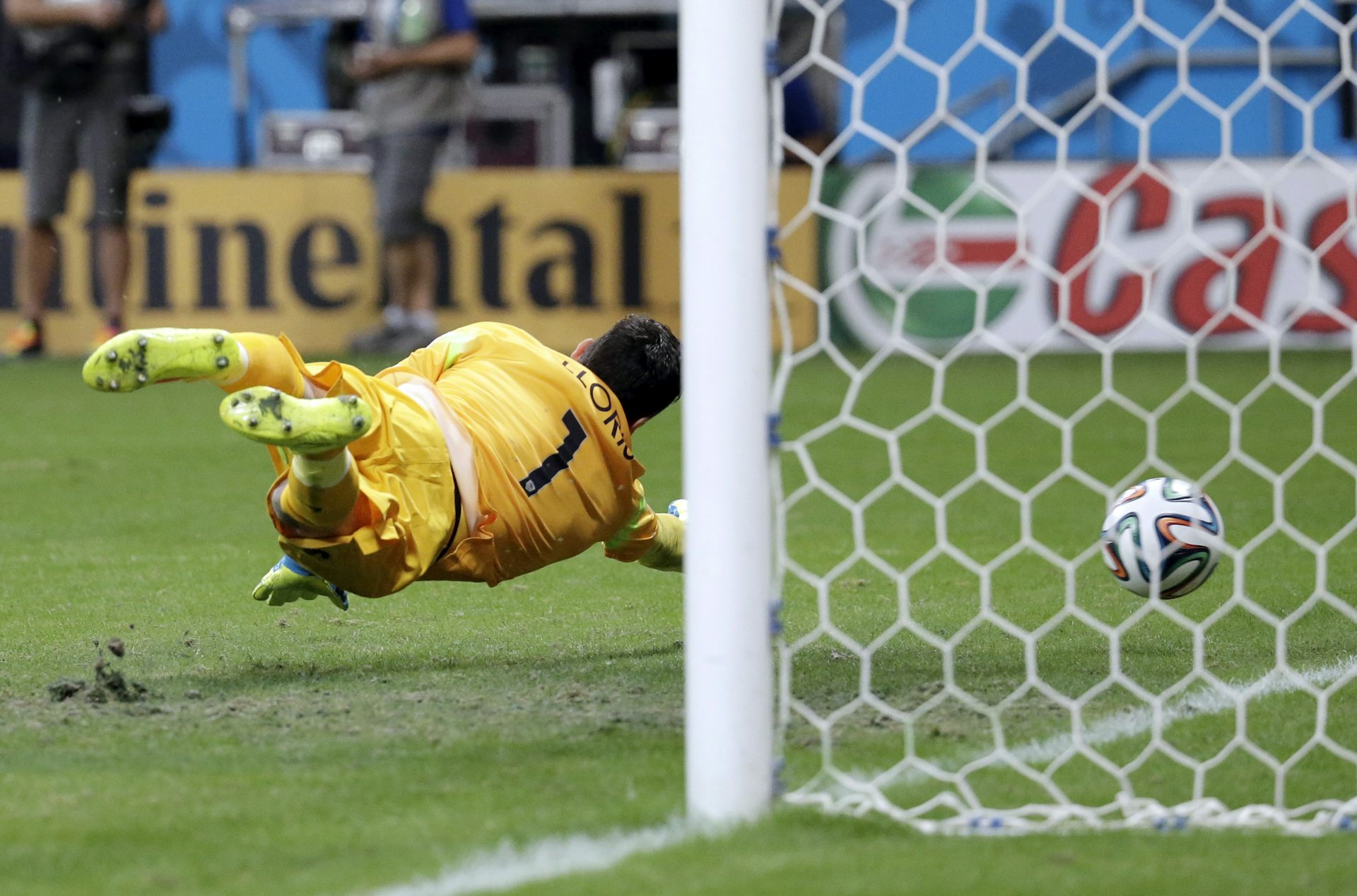
Kami merancang rumput lapangan untuk Piala Dunia sepak bola terbesar – inilah cara kami menciptakan pengalaman bermain yang sama di 3 negara
We designed the turf for soccer’s biggest World Cup ever – here’s how we created the same playing experience across 3 countries
The new playing fields are rolling out in stadiums from Mexico to Canada. Creating the perfect pitch in very different climates requires the right grasses and some creative tricks.
Lapangan bermain baru ini akan diluncurkan di stadion-stadion dari Meksiko hingga Kanada. Menciptakan lapangan yang sempurna di iklim yang sangat berbeda membutuhkan rumput yang tepat dan beberapa trik kreatif.
With 104 matches in 16 stadiums across Canada, the United States and Mexico, the 2026 FIFA World Cup will be soccer’s biggest event ever.
Dengan 104 pertandingan di 16 stadion di seluruh Kanada, Amerika Serikat, dan Meksiko, Piala Dunia FIFA 2026 akan menjadi acara sepak bola terbesar yang pernah ada.
It’s our job as turfgrass researchers hired by FIFA, the game’s governing body, to make sure those pitches feel the same for players and that the grass thrives.
Tugas kami sebagai peneliti rumput lapangan yang dipekerjakan oleh FIFA, badan pengatur permainan ini, adalah memastikan bahwa lapangan-lapangan tersebut terasa sama bagi para pemain dan bahwa rumputnya tumbuh subur.
That’s not so simple. In fact, it seemed like an impossible challenge at first.
Itu tidak sesederhana itu. Faktanya, pada awalnya itu tampak seperti tantangan yang mustahil.
Picking the right turf
Memilih rumput yang tepat
The scale of this job was unprecedented: three distinct climatic zones, over 3,100 miles between the farthest stadiums, and venues ranging from stadiums open to the heat of Mexico City and Miami to enclosed NFL stadiums in Dallas and Atlanta, to the cooler climates of Boston and Toronto.
Skala pekerjaan ini belum pernah terjadi sebelumnya: tiga zona iklim yang berbeda, jarak lebih dari 3.100 mil antara stadion terjauh, dan lokasi yang berkisar dari stadion terbuka menghadapi panasnya Mexico City dan Miami hingga stadion NFL tertutup di Dallas dan Atlanta, hingga iklim yang lebih sejuk di Boston dan Toronto.
Despite the unique situations of each stadium, FIFA has a long list of rules for how the fields must be built. The grass has to be real but reinforced so it can handle a lot of games and ceremonies. Each field needs an automatic irrigation system, good drainage, built-in vacuum and vents to keep the grass and soil aerated, and artificial grow lights to keep the grass healthy.
Meskipun situasi setiap stadion unik, FIFA memiliki daftar panjang aturan tentang bagaimana lapangan harus dibangun. Rumput harus asli tetapi diperkuat agar dapat menahan banyak pertandingan dan upacara. Setiap lapangan membutuhkan sistem irigasi otomatis, drainase yang baik, vakum dan ventilasi bawaan untuk menjaga rumput dan tanah tetap berudara, serta lampu tumbuh buatan untuk menjaga kesehatan rumput.
Each host city is responsible for figuring out how to meet these requirements.
Setiap kota tuan rumah bertanggung jawab untuk mencari tahu cara memenuhi persyaratan ini.
Right now, eight of the 2026 host stadiums normally use artificial turf – how will they temporarily switch to real grass for the World Cup?
Saat ini, delapan dari stadion tuan rumah 2026 biasanya menggunakan rumput sintetis – bagaimana mereka akan beralih sementara ke rumput asli untuk Piala Dunia?
Even trickier, five of the stadiums have domes, which means the grass gets less sunlight. How can they keep the grass alive for eight weeks?
Lebih rumit lagi, lima stadion memiliki kubah, yang berarti rumput mendapatkan lebih sedikit sinar matahari. Bagaimana mereka bisa menjaga rumput tetap hidup selama delapan minggu?
How can we make sure that a player competing in Philadelphia has the same on‑field experience as a player competing in Guadalajara or Seattle?
Bagaimana kita bisa memastikan bahwa pemain yang bertanding di Philadelphia memiliki pengalaman lapangan yang sama dengan pemain yang bertanding di Guadalajara atau Seattle?
Our team at the University of Tennessee and Michigan State University has spent the past five years researching these questions to provide guidance to the host cities. Here, we’ll explore some of the most important questions we faced: which grass to grow, how it’s grown, how we plan to make it even stronger, and how to move it safely to each stadium.
Tim kami di University of Tennessee dan Michigan State University telah menghabiskan lima tahun terakhir meneliti pertanyaan-pertanyaan ini untuk memberikan panduan kepada kota-kota tuan rumah. Di sini, kami akan menjelajahi beberapa pertanyaan terpenting yang kami hadapi: rumput apa yang harus ditanam, bagaimana cara menanamnya, bagaimana kami berencana membuatnya lebih kuat, dan bagaimana memindahkannya dengan aman ke setiap stadion.
Growing the grass
Menumbuhkan rumput
Typically, sod is grown on native soil. When harvested, the roots are cut, which shocks the plant and can delay root reestablishment for several weeks.
Biasanya, sod ditanam di tanah asli. Saat dipanen, akarnya dipotong, yang mengejutkan tanaman dan dapat menunda pembentukan kembali akar selama beberapa minggu.
That wouldn’t work for the World Cup because games may take place within just 10 days of installation. If the roots can’t become established fast enough, the grass will be weaker and more prone to damage.
Itu tidak akan berhasil untuk Piala Dunia karena pertandingan dapat berlangsung hanya dalam waktu 10 hari setelah pemasangan. Jika akarnya tidak dapat terbentuk dengan cukup cepat, rumput akan lebih lemah dan lebih rentan rusak.
To address this, we decided to use sod grown on plastic with sand as a base.
Untuk mengatasi hal ini, kami memutuskan untuk menggunakan sod yang ditanam di plastik dengan pasir sebagai alasnya.
Think of it like growing grass in a plastic tray, but on a much larger scale. When the roots reach the plastic, they spread sideways and intertwine, forming a dense rooting system. Because the roots stay intact during harvest, the sod experiences minimal stress and can be ready to play almost immediately after installation.
Bayangkan seperti menanam rumput di nampan plastik, tetapi dalam skala yang jauh lebih besar. Ketika akar mencapai plastik, mereka menyebar ke samping dan saling terkait, membentuk sistem perakaran yang padat. Karena akarnya tetap utuh selama panen, sod mengalami tekanan minimal dan dapat siap digunakan hampir seketika setelah pemasangan.
Sod for sports fields is typically grown in a base of sand to provide quick drainage and prevent the grass from getting compacted as the roots become established.
Sod untuk lapangan olahraga biasanya ditanam di alas pasir untuk memberikan drainase cepat dan mencegah rumput menjadi padat saat akar terbentuk.
The problem is that growing grass in 2 inches of sand on a plastic sheet comes with risks. Because of the plastic, a single heavy rainfall while the grass is becoming established can wash the exposed sand away.
Masalahnya adalah menanam rumput di pasir setebal 2 inci pada lembaran plastik memiliki risiko. Karena plastiknya, satu curah hujan lebat saat rumput sedang terbentuk dapat menghilangkan pasir yang terbuka.
For warm‑season sod farmers – those that grow grass that thrives in high temperatures – sand washing away is less of a concern because the Bermudagrass they grow establishes quickly. On the other hand, cool‑season sod farmers usually grow Kentucky bluegrass, which germinates slowly compared to other turfgrass species, increasing the risk of washouts.
Bagi petani sod musim hangat – yang menanam rumput yang tumbuh subur di suhu tinggi – hilangnya pasir kurang menjadi perhatian karena Bermudagrass yang mereka tanam cepat terbentuk. Di sisi lain, petani sod musim dingin biasanya menanam Kentucky bluegrass, yang berkecambah lambat dibandingkan spesies rumput lain, meningkatkan risiko hanyut.
We decided to mix a faster‑germinating species – perennial ryegrass – with Kentucky bluegrass grown on plastic and then tested various seeding ratios. We found that an 84% Kentucky bluegrass and 16% perennial ryegrass mixture produced a stronger sod than pure Kentucky bluegrass alone four months after seeding. Since 2025, these findings have been used on sod farms across North America, beyond those growing grass for the World Cup.
Kami memutuskan untuk mencampur spesies yang berkecambah lebih cepat – perennial ryegrass – dengan Kentucky bluegrass yang ditanam di plastik dan kemudian menguji berbagai rasio penyemaian. Kami menemukan bahwa campuran 84% Kentucky bluegrass dan 16% perennial ryegrass menghasilkan sod yang lebih kuat daripada Kentucky bluegrass murni saja empat bulan setelah penyemaian. Sejak tahun 2025, temuan ini telah digunakan di peternakan sod di seluruh Amerika Utara, di luar yang menanam rumput untuk Piala Dunia.
Stabilizing the surface
Menstabilkan permukaan
“One World Cup game is equal to a Super Bowl,” FIFA officials like to remind us. Since each field will host a lot of games and ceremonies, including up to nine games over six weeks, the fields need to be extremely strong.
“Satu pertandingan Piala Dunia setara dengan Super Bowl,” petugas FIFA suka mengingatkan kita. Karena setiap lapangan akan menjadi tuan rumah banyak pertandingan dan upacara, termasuk hingga sembilan pertandingan selama enam minggu, lapangan-lapangan tersebut harus sangat kuat.
To make them tougher, we mix plastic fibers into the natural grass, which creates a hybrid turfgrass system. As the grass grows, its roots wrap around these plastic fibers, which helps to keep the surface stable and firm. These fibers are also colored to match the natural grass, so even if the real grass wears down, they help the field stay green.
Untuk membuatnya lebih kuat, kami mencampur serat plastik ke dalam rumput alami, yang menciptakan sistem rumput hibrida. Saat rumput tumbuh, akarnya melilit serat plastik ini, yang membantu menjaga permukaan tetap stabil dan kokoh. Serat-serat ini juga diwarnai agar sesuai dengan rumput alami, sehingga bahkan jika rumput asli aus, mereka membantu lapangan tetap hijau.
Hybrid turfgrass systems can be created in two ways: by stitching plastic fibers into an existing grass field or by laying down a carpet of plastic fibers that is then filled with sand and seeded to grow new grass.
Sistem rumput hibrida dapat dibuat dengan dua cara: dengan menjahit serat plastik ke lapangan rumput yang sudah ada atau dengan menggelar karpet serat plastik yang kemudian diisi dengan pasir dan ditaburi benih untuk menumbuhkan rumput baru.
Stitched systems have been used in World Cup games for a long time, but carpet systems are still fairly new to the tournament – they have been used only in the 2023 Women’s World Cup.
Sistem jahit telah digunakan dalam pertandingan Piala Dunia sejak lama, tetapi sistem karpet masih relatif baru dalam turnamen ini – sistem ini hanya digunakan pada Piala Dunia Wanita 2023.
We tested eight carpet systems to see how they performed and found that all could be successfully grown on plastic. All the surface performance tests – ball bounce, rotational resistance and surface hardness – on these eight carpets also met FIFA standards.
Kami menguji delapan sistem karpet untuk melihat kinerjanya dan menemukan bahwa semuanya dapat ditumbuhkan dengan sukses di atas plastik. Semua uji kinerja permukaan – pantulan bola, resistensi rotasi, dan kekerasan permukaan – pada delapan karpet ini juga memenuhi standar FIFA.
One type of carpet was chosen by three host cities for their stadiums: Vancouver, Los Angeles, and Philadelphia.
Satu jenis karpet dipilih oleh tiga kota tuan rumah untuk stadion mereka: Vancouver, Los Angeles, dan Philadelphia.
Getting the sod from farm to stadium
Mendatangkan sod dari peternakan ke stadion
Most of the stadiums – 14 of them – will have sod that is grown on plastic, then rolled up and shipped to the venue during spring 2026. Some of the grasses won’t have to travel far, but some will be shipped in refrigerated trucks across the country. Since the sod remains fully intact after harvest, it can withstand long travel times.
Sebagian besar stadion – 14 di antaranya – akan memiliki sod yang ditanam di atas plastik, kemudian digulung dan dikirim ke lokasi pada musim semi 2026. Beberapa jenis rumput tidak perlu menempuh perjalanan jauh, tetapi beberapa akan dikirim menggunakan truk berpendingin ke seluruh negeri. Karena sod tetap utuh setelah panen, sod ini dapat menahan waktu perjalanan yang lama.
Five of those stadiums don’t get enough sunlight, so they will use cool-season grasses that require less light than warm-season grasses.
Lima dari stadion tersebut tidak mendapatkan cukup sinar matahari, jadi mereka akan menggunakan rumput musim dingin yang membutuhkan cahaya lebih sedikit daripada rumput musim panas.
While the open-air stadium in Miami will use Bermudagrass, the domed stadium in Houston, despite being at a similar latitude, will use the Kentucky bluegrass and perennial ryegrass mix. That means cross-country trips from cool-season sod farms in Denver and Washington to domed stadiums in the southern regions is essential.
Sementara stadion terbuka di Miami akan menggunakan Bermudagrass, stadion beratap di Houston, meskipun berada pada garis lintang yang serupa, akan menggunakan campuran Kentucky bluegrass dan perennial ryegrass. Itu berarti perjalanan lintas negara dari peternakan sod musim dingin di Denver dan Washington ke stadion beratap di wilayah selatan sangat penting.
It’s wild to think that this is all necessary, but the length of the tournament and unique stadium environments call for innovation.
Sangat luar biasa membayangkan bahwa semua ini diperlukan, tetapi durasi turnamen dan lingkungan stadion yang unik menuntut inovasi.
The University of Tennessee was the prime awardee of the FIFA grant. Michigan State University is a subawardee. John N. Trey Rogers is the principal investigator for the Michigan State work.
University of Tennessee adalah penerima utama hibah FIFA. Michigan State University adalah penerima subhibah. John N. Trey Rogers adalah peneliti utama untuk pekerjaan Michigan State.
Jackie Lyn A. Guevara is affiliated with Michigan State University. She received compensation through a FIFA grant awarded to Michigan State University.
Jackie Lyn A. Guevara berafiliasi dengan Michigan State University. Dia menerima kompensasi melalui hibah FIFA yang diberikan kepada Michigan State University.
John Sorochan is the principal investigator for the FIFA grant at the University of Tennessee.
John Sorochan adalah peneliti utama untuk hibah FIFA di University of Tennessee.
Ryan Bearss works for Michigan State University
Ryan Bearss bekerja untuk Michigan State University
Read more
-
Hampir semua yang kita gunakan secara daring dimiliki oleh perusahaan teknologi besar. Ada cara yang lebih baik untuk maju
Nearly everything we use online is owned by big tech. There’s a better way forward
-
Appolonia: kisah sebuah kerajaan Afrika yang menentang perdagangan budak Atlantik
Appolonia: the story of an African kingdom that resisted the Atlantic slave trade