卫生当局正在竞相遏制刚果(金)和乌干达的埃博拉病毒。以下是让局势如此复杂的因素。
Health authorities are racing to contain Ebola in the D…
Case numbers have steadily increased since the outbreak was confirmed on May 15.
自疫情于5月15日确认爆发以来,病例数持续增加。
The Democratic Republic of Congo (DRC) is grappling with a rising Ebola epidemic, with almost 600 cases detected so far and more than 130 deaths.
刚果民主共和国(DRC)正面临日益严重的埃博拉疫情,迄今已检测到近600例病例,死亡人数超过130人。
Ebola is a rare virus that initially causes a fever, fatigue, muscle pain, then vomiting and diarrhoea. It can then progress to the hemorrhagic stage, with internal bleeding – which presents as blood in vomit and faeces – as well as bleeding as from parts of the body including the nose, gums, vagina and needle punctures.
埃博拉是一种罕见的病毒,最初症状包括发烧、疲劳、肌肉疼痛,随后出现呕吐和腹泻。它可能会发展到出血阶段,表现为内部出血——这表现为呕吐物和粪便中的血液——以及来自鼻腔、牙龈、阴道和针刺等身体部位的出血。
Ebola primarily spreads through contact with bodily fluids such as blood, faeces and vomit. It can be contracted from contaminated surfaces or contact with bodies of those who have died, but can also spread by other routes including without contact.
埃博拉主要通过接触血液、粪便和呕吐物等体液传播。它可能从受污染的表面或接触死者的尸体感染,但也可能通过其他途径传播,包括无接触传播。
This current outbreak, caused by the rare Bundibugyo strain, was first confirmed as Ebola on May 15. It was already estimated to have 246 cases at the time of this confirmation.
此次疫情由罕见的邦迪布吉约毒株引起,于5月15日首次被确诊为埃博拉。在确认时,估计病例数已达到246例。
As surveillance efforts stepped up, it became clear the outbreak was more than double that size, with spread to Uganda.
随着监测工作的加强,人们发现疫情规模超过了两倍,并已蔓延至乌干达。
So what are health authorities doing to get the virus under control and why is it such a challenge?
那么,卫生当局正在采取哪些措施来控制病毒,为什么这会是一个巨大的挑战呢?
And what can health authorities in Africa, as well as the rest of the world, learn from previous outbreaks?
非洲乃至全世界的卫生当局可以从以往的疫情中学到什么经验教训呢?
How did so many people get sick so quickly?
这么多人怎么这么快就病了?
Ebola has a long incubation period of two to three weeks or longer. This means the number of infected people has likely been growing since at least March or April.
埃博拉的潜伏期很长,有两到三周甚至更久。这意味着感染人数可能从至少三月或四月就开始增长了。
Our epidemic early warning system, Epiwatch, saw signals of unknown illness in the DRC on April 13, with reports of hemorrhagic fever noted even earlier on March 13.
我们的流行病早期预警系统 Epiwatch 在 4 月 13 日监测到刚果民主共和国(DRC)不明疾病的信号,而出血热的报告甚至早在 3 月 13 日就已出现。
The delay in diagnosing Ebola may have been due to initial testing targeting the more common Zaire strain of Ebola. Tests must be specific to Bundibugyo.
诊断埃博拉的延迟可能是因为最初的检测目标是更常见的扎伊尔埃博拉毒株。检测必须针对邦迪布吉约(Bundibugyo)的毒株。
The DRC is also experiencing other serious outbreaks including mpox and measles, as well as malnutrition and chronic malaria.
刚果民主共和国还正在经历其他严重的疫情爆发,包括猴痘和麻疹,以及营养不良和慢性疟疾。
These underlying factors can make epidemics more severe and harder to detect.
这些潜在因素可能使疫情更加严重,也更难被检测到。
How big did previous outbreaks get?
以前的疫情规模有多大?
The worst Ebola epidemic in history was over 28,000 cases in the 2014 West African epidemic. More than 11,000 people died from this Zaire strain, as vaccines were not yet available at the peak of the epidemic.
历史上最严重的埃博拉疫情发生在2014年的西非疫情,病例超过28,000例。由于在疫情高峰期疫苗尚未可用,超过11,000人死于这种扎伊尔毒株。
In the DRC, the last epidemic of 64 cases was in late 2025. The largest epidemic in the DRC was in 2018-2019 with more than 3,000 cases. These were both the Zaire strain.
在刚果民主共和国(DRC),最近一次爆发的疫情发生在2025年末,病例为64例。刚果民主共和国最大的疫情发生在2018-2019年,病例超过3,000例。这两次疫情都是扎伊尔毒株。
There have only been two other Bundibugyo outbreaks. The first, in 2007 with 149 cases, was in the Bundibugyo District of western Uganda, near the DRC border. The second, in 2012, was in the DRC, with 57 cases. The current Bundibugyo epidemic is already the largest in history.
之前只有两次邦迪布吉约(Bundibugyo)疫情。第一次发生在2007年,病例为149例,位于乌干达西部邦迪布吉约地区,靠近刚果民主共和国边境。第二次发生在2012年,在刚果民主共和国,病例为57例。目前的邦迪布吉约疫情已经是历史上最大的了。
While Bundibugyo is not as lethal as the Zaire strain, it can kill 30–50% of infected people. The fatality rate in this epidemic appears close to 30%, with 139 deaths reported from almost 600 cases.
虽然邦迪布吉约毒株的致命性不如扎伊尔毒株,但它仍可导致30%至50%的感染者死亡。本次疫情的死亡率接近30%,据报告,近600例病例导致了139人死亡。
Unlike the Zaire strain, for which there are treatments and vaccines, there are no approved drugs or vaccines for the Bundibugyo strain.
与存在治疗方法和疫苗的扎伊尔毒株不同,目前还没有批准用于邦迪布吉约毒株的药物或疫苗。
However, the World Health Organization has sponsored clinical trials of a monoclonal antibody and the antiviral remdesivir, a drug which is also used for COVID.
然而,世界卫生组织(WHO)已赞助了单克隆抗体和抗病毒药物remdesivir的临床试验,remdesivir也是用于治疗COVID-19的药物。
We may see higher fatality rates unless non-pharmaceutical measures ramp up.
除非采取非药物干预措施,否则我们可能会看到更高的死亡率。
How can it be stopped?
如何阻止它?
The epidemic can be stopped by coordinated surveillance and containment. This is by identifying cases, isolating them so they cannot infect others, tracing their contacts and quarantining them.
通过协调的监测和遏制可以阻止疫情。这包括识别病例、隔离他们以防止他们感染他人、追踪他们的接触者并对他们进行检疫。
In 2014, these measures alone controlled the Ebola epidemic at a time when no treatments or vaccines were available. This means health system capacity is the key to epidemic control.
2014年,仅凭这些措施就控制了埃博拉疫情,当时没有任何治疗方法或疫苗。这意味着卫生系统能力是控制疫情的关键。
There were not enough beds for Ebola patients in the 2014 epidemic, so health authorities built tent hospitals to help bring the epidemic under control. This could be considered if hospitals are overwhelmed.
2014年疫情期间,缺乏足够的埃博拉患者病床,因此卫生当局修建了帐篷医院,以帮助控制疫情。如果医院不堪重负,可以考虑采取此措施。
The DRC has limited capacity to diagnose Ebola, so it’s important to scale up surveillance and testing. A clinical case definition (such as “fever and bleeding means a probable case”) can be used if testing is not available.
刚果民主共和国诊断埃博拉的能力有限,因此扩大监测和检测非常重要。如果无法进行检测,可以使用临床病例定义(例如,“发烧和出血意味着疑似病例”)。
Simple surveillance systems – such as open-source intelligence, where community chatter and local news reports can provide signals of epidemics – can help. So can providing incentives for communities to report suspected cases.
简单的监测系统——例如开源情报,社区聊天和当地新闻报道可以提供疫情信号——可以提供帮助。激励社区报告疑似病例也可以做到这一点。
It’s also essential to communicate and work with communities and community leaders from the ground up. In the 2014 epidemic, locals murdered eight Ebola workers who provided health education, showing how important trust and community relationships are.
与社区和社区领导者从基层进行沟通和合作也至关重要。在2014年疫情期间,当地人杀害了八名提供健康教育的埃博拉工作者,这表明了信任和社区关系的重要性。
Health workers, close contacts and funeral attendants need extra precautions
医护人员、密切接触者和殡葬人员需要采取额外预防措施
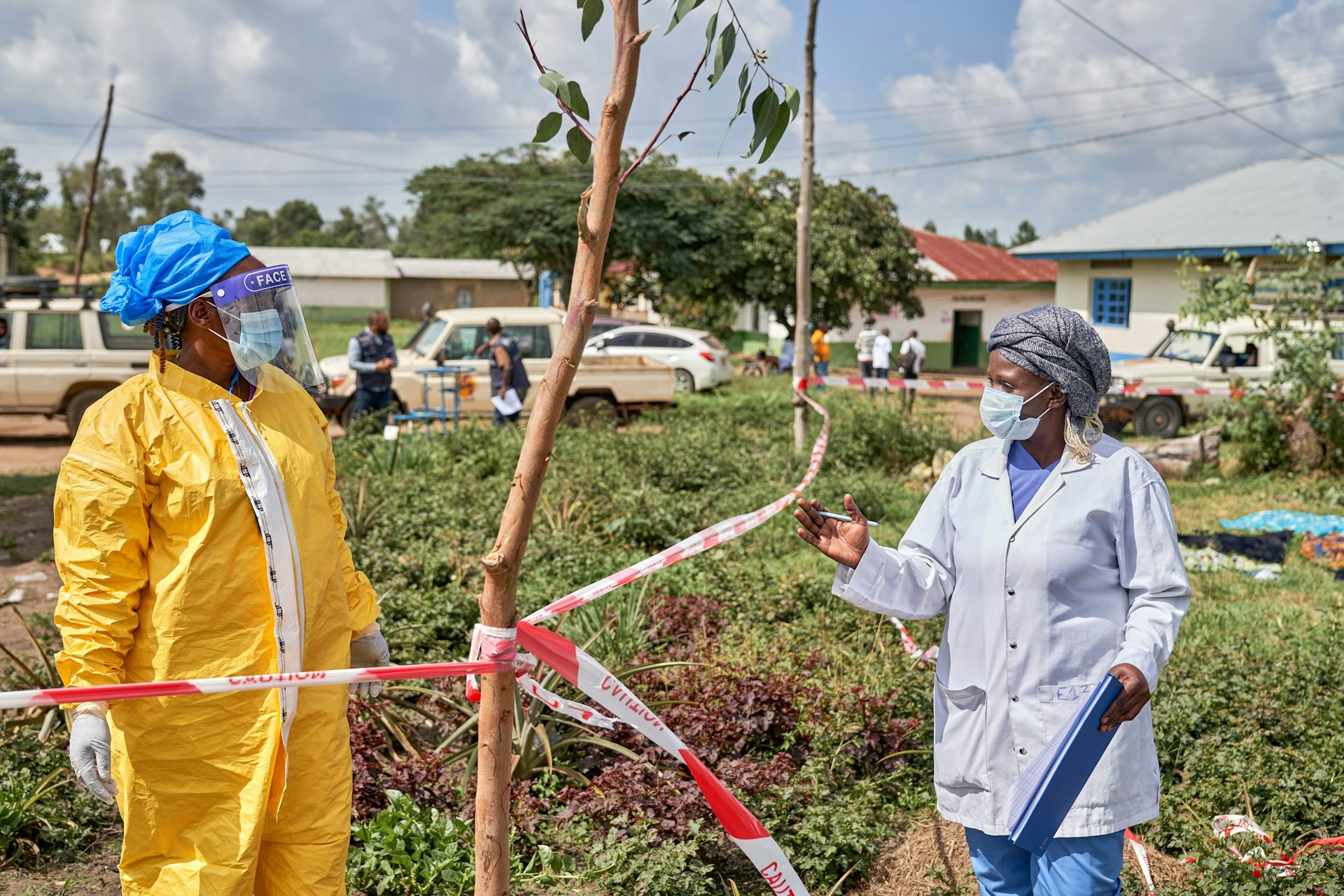
Ebola is predominantly spread by contact with blood and bodily fluids. Those most at risk are close contacts of patients with Ebola, health workers and people attending funerals, which often involves touching the body.
埃博拉主要通过接触血液和体液传播。最容易受到风险的是埃博拉患者的密切接触者、医护人员以及参加葬礼的人,这些活动通常涉及身体接触。
At least four health workers have been infected, including one American missionary doctor.
至少有四名医护人员被感染,其中包括一名美国传教医生。
Given the high fatality rate, health workers should be provided the highest level of personal protection.
鉴于其高致死率,医护人员应提供最高级别的个人防护。
What can other countries do?
其他国家能做些什么?
Ebola is a concern for all of us, because travel can result in infections occurring in any country. During the 2014 West African epidemic, cases also occurred outside the main affected countries, the largest number in Nigeria.
埃博拉对我们所有人都是一个担忧,因为旅行可能导致任何国家发生感染。在2014年西非疫情期间,病例也发生在主要受影响国家之外,其中数量最多的是尼日利亚。
Failure to initially diagnose a case in Texas resulted in four other people becoming infected, including health workers.
在德克萨斯州未能及时诊断出病例,导致包括医护人员在内的其他四人感染。
Whether facing hantavirus or Ebola, emergency departments need tools to improve their awareness of and ability to prevent hospital outbreaks.
无论是面对汉坦病毒还是埃博拉,急诊科都需要工具来提高他们对并预防医院爆发的认识和能力。
Busy staff in emergency triage may send someone with a fever back to the waiting room for hours, not realising they have travelled recently and may have a serious infectious disease. In South Korea, a person with the deadly Middle Eastern Respiratory Syndrome (MERS) virus was in the emergency department for many hours, and a huge outbreak resulted.
繁忙的急诊分诊人员可能会让一名发烧的人在候诊室待上数小时,而没有意识到此人近期有旅行史,并且可能患有严重的传染病。在韩国,一名携带致命的中东呼吸综合征(MERS)病毒的人在急诊科待了数小时,并导致了大规模疫情爆发。
One useful tool for hospitals is a decision-support system used during triage that prompts staff to ask for a patient’s travel history and provides data on disease outbreaks in the country of travel. This means patients with deadly infections may be isolated before they can infect others.
对医院来说,一个有用的工具是在分诊过程中使用的决策支持系统,它会提示工作人员询问患者的旅行史,并提供有关旅行国家疾病爆发的数据。这意味着携带致命感染的患者可以在他们感染他人之前被隔离。
Another concern is that if the outbreak becomes much larger, there may be survivors who still harbour the virus for many months or longer after recovery. They could continue to infect others after this epidemic is over if they come into contact with bodily fluids such as semen, amniotic fluid or breast milk, as well as fluids from the placenta or eye.
另一个担忧是,如果疫情变得更大,可能会有幸存者在康复后仍携带病毒数月甚至更长时间。如果他们与精液、羊水或母乳等体液,以及胎盘或眼部的液体接触,他们可能会在疫情结束后继续感染他人。
The WHO declaring a public health emergency of international concern helps, as it activates a range of additional measures and resources for outbreak control.
世界卫生组织宣布构成国际关注的突发公共卫生事件有助于控制疫情,因为它会启动一系列额外的措施和资源。
C Raina MacIntyre is the founder of EPIWATCH Global Pty Ltd which tracks global epidemics. She receives funding from NHMRC Investigator Grant 2016907 and NHMRC Centre for Research Excellence GNT2006595.
C Raina MacIntyre 是 EPIWATCH Global Pty Ltd 的创始人,该公司追踪全球疫情。她获得了 NHMRC 研究员基金 2016907 和 NHMRC 研究卓越中心 GNT2006595 的资助。
Ashley Quigley, Mohana Priya Kunasekaran, and Noor Jahan Begum Bari do not work for, consult, own shares in or receive funding from any company or organisation that would benefit from this article, and have disclosed no relevant affiliations beyond their academic appointment.
Ashley Quigley、Mohana Priya Kunasekaran 和 Noor Jahan Begum Bari 不受任何从本文中受益的公司或组织的雇佣、咨询、拥有股份或获得资金,并且除了其学术任命外,未披露任何相关隶属关系。