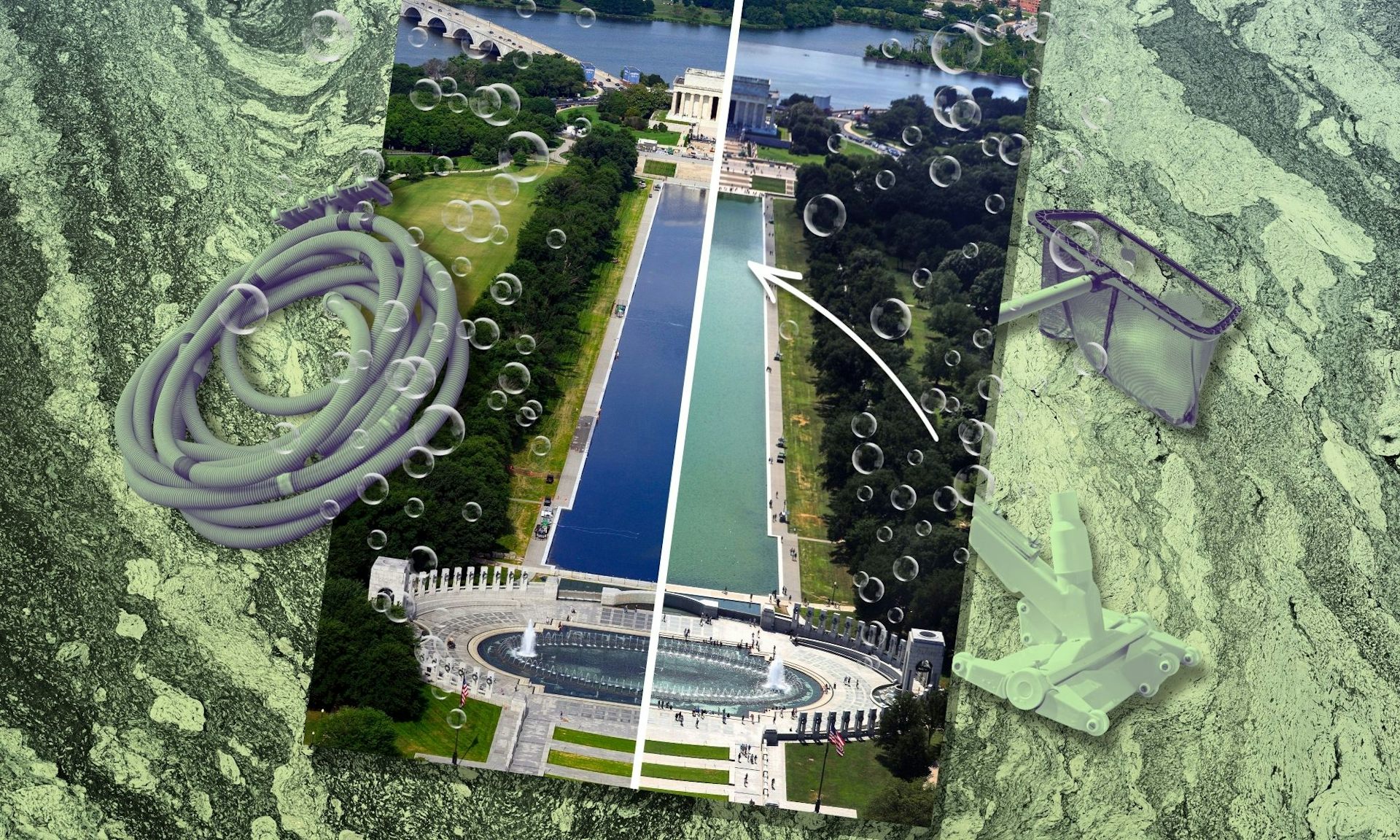
林肯纪念堂倒影池使用了“纳米气泡”进行处理。它们是什么,又是如何工作的?
The Lincoln Memorial Reflecting Pool is treated with ‘n…
Nanobubbles are invisible, mysteriously stable, a thousand times thinner than a human hair, and surprisingly versatile.
纳米气泡是肉眼不可见的、神秘稳定、比人类头发细一千倍,并且出奇地多功能。
As the United States approaches 250th birthday celebrations on July 4, Washington DC’s monuments, statues and fountains are being prepared to put on a show.
随着美国临近7月4日的250周年庆典,华盛顿特区(DC)的纪念碑、雕像和喷泉正在为这场盛会做准备。
However, renovations of the Lincoln Memorial Reflecting Pool haven’t gone to plan.
然而,林肯纪念堂倒影池的翻修工程并未如期顺利。
Soon after the renovations were complete, an algal bloom turned the pool’s water a slimy green. Officials are in a hurry to address the issue and, among other treatments, deployed ozone nanobubble technology to clean the water.
翻修工程完成后不久,一场藻类爆发使池水变成了黏腻的绿色。当局急于解决这个问题,并在多种处理方法中,部署了臭氧纳米气泡技术来净化水质。
But what are nanobubbles and why would they be used to address an algal bloom?
但是,什么是纳米气泡?它们为什么要用来应对藻类爆发呢?
What are nanobubbles?
什么是纳米气泡?
Nanobubbles, also known as ultrafine bubbles, are gas-filled bubbles with diameters typically around 100 nanometres. That makes each nanobubble about one thousandth of the thickness of a human hair.
纳米气泡,又称超细气泡,是直径通常约为100纳米的气体填充气泡。这意味着每个纳米气泡的尺寸大约只有人类头发厚度的千分之一。
When deployed with specialised equipment that injects gases like air, ozone or oxygen into water, nanobubbles occur in enormous numbers – typically around 10 billion nanobubbles for each teaspoon of water. Despite their huge numbers, solutions of nanobubbles look and feel just like water.
当使用向水中注入空气、臭氧或氧气等气体等专业设备时,纳米气泡会以惊人的数量出现——通常每茶匙水含有约100亿个纳米气泡。尽管数量巨大,但纳米气泡溶液看起来和感觉上与水完全一样。
Looking at a glass of water with nanobubbles, you would not know they’re there. Yet they have remarkable properties that are used in a number of technologies, including water treatment.
看着一杯含有纳米气泡的水,你不会知道它们在那里。然而,它们具有卓越的特性,被应用于包括水处理在内的许多技术领域。
Nanobubbles are surprisingly stable
纳米气泡出奇地稳定
A fundamental rule is that the pressure inside a bubble – any bubble – is always greater than its surroundings. And the smaller the bubble, the greater the pressure within the bubble.
一个基本规则是,气泡内部的压力——任何气泡——总是大于其周围环境的压力。而且气泡越小,内部压力就越大。
A typical nanobubble can have an internal pressure as high as 15 atmospheres. That’s the same pressure a diver experiences during a deep dive to a depth of 150 metres.
一个典型的纳米气泡内部压力可高达15个大气压。这与潜水员在深潜到150米深度时经历的压力相同。
How much a gas can dissolve into a given liquid increases with pressure. Because of this, you’d expect that nanobubbles, once produced, should rapidly dissolve in much less than a second. However, research has shown that nanobubbles can last for hours, days and even weeks.
气体溶解到给定液体中的量会随着压力的增加而增加。因此,人们预期纳米气泡一旦产生就会在不到一秒内迅速溶解。然而,研究表明,纳米气泡可以持续数小时、数天甚至数周。
Why nanobubbles are so surprisingly stable remains a mystery and the subject of much research. But their strange longevity is also what makes them very useful, because nanobubbles can be produced, stored and used before they disappear.
纳米气泡为何如此稳定,仍然是一个谜团,也是大量研究的主题。但它们这种奇特的持久性也使它们非常有用,因为在消失之前可以制造、储存和使用纳米气泡。
Nanobubbles last a long time
纳米气泡持续时间长
The small size of nanobubbles provides other advantages too. Small bubbles have very little buoyancy, allowing them to remain in solution for a long time. In comparison, larger bubbles rise quickly to the surface and burst. You can see this at the beach when a wave breaks – the bubbles that form the whitewater typically disappear in less than ten seconds.
纳米气泡的小尺寸还提供了其他优势。小气泡浮力极小,使其能够在溶液中长时间保持存在。相比之下,较大的气泡会迅速上升到表面并破裂。您可以在海滩上看到这一点——构成白浪的气泡通常在不到十秒内就会消失。
If you need to dissolve a lot of gas into solution, this long residence time is very important – it prevents the gas from being lost to the atmosphere, and as we already noted, the high internal pressure of the nanobubbles increases gas solubility.
如果需要将大量气体溶解到溶液中,这种长的停留时间非常重要——它能防止气体逸散到大气中,而且正如我们之前指出的,纳米气泡的高内部压力增加了气体的溶解度。
Another advantage – because nanobubbles are so tiny, they have a very large surface area. In many industries, such as mineral processing or waste-water treatment, the surface area of larger bubbles is used to collect materials dispersed in a liquid. A process known as froth flotation is used to purify millions of tons of minerals in Australia each year.
另一个优势是——由于纳米气泡非常微小,它们具有极大的表面积。在许多行业中,例如矿物加工或废水处理,较大的气泡的表面积被用于收集分散在液体中的材料。一种称为浮选的过程每年都在澳大利亚用于提纯数百万吨矿物。
Similarly, the surfaces of nanobubbles can be used as highly effective, environmentally friendly cleaning agents, replacing the use of detergents such as soap.
类似地,纳米气泡的表面可作为高效、环保的清洁剂使用,取代使用肥皂等洗涤剂。
As you can see, nanobubbles have a diverse range of applications. Oxygen nanobubbles even increase yields when nanobubble water is used on crops and in fish farms, possibly by concentrating nutrients.
如您所见,纳米气泡具有广泛的应用范围。氧气纳米气泡甚至在用于作物和鱼场时能提高产量,这可能是通过富集营养物质实现的。
How do nanobubbles keep algae at bay?
纳米气泡如何阻止藻类滋生?
Green algae, such as the type found in the Lincoln Memorial Reflecting Pool, thrive in still or slow-flowing water with abundant sunlight.
绿藻,例如林肯纪念堂倒影池中的类型,在阳光充足、水流静止或缓慢的水域中生长旺盛。
In water treatment, nanobubbles are used primarily to oxygenate water. This promotes the growth of aerobic bacteria which consume organic nutrients, outcompeting the algae and promoting a healthy aquatic environment.
在水处理中,纳米气泡主要用于给水加氧。这促进了需氧细菌的生长,这些细菌会消耗有机营养物质,从而与藻类竞争,并促进健康的水生环境。
Nanobubbles can also be used to deliver ozone gas, which is a highly reactive, toxic gas composed of three oxygen atoms. Ozone plays an essential role in the stratosphere in shielding Earth from ultraviolet rays, but it plays a very different role in water treatment.
纳米气泡还可以用于输送臭氧气体,这是一种由三个氧原子组成的、高反应性的有毒气体。臭氧在平流层发挥着保护地球免受紫外线辐射的重要作用,但在水处理中的作用则截然不同。
Ozone reacts with organic materials in water and will therefore break down and kill the algae and nutrients. However, ozone nanobubbles also attack and kill the favourable aerobic bacteria.
臭氧与水中的有机物质发生反应,因此会分解并杀死藻类和营养物。然而,臭氧纳米气泡也会攻击并杀死有益的需氧细菌。
The strong action of ozone nanobubble treatment is highly suitable for the treatment of heavily contaminated water – for example, if it contains animal waste.
臭氧纳米气泡处理的强效作用非常适用于重度污染水的处理——例如,如果水中含有动物排泄物。
In the case of the Lincoln Memorial, ozone nanobubbles can quickly resolve an algal bloom, but that comes at the cost of removing aerobic bacteria which could naturally keep the algae in check.
在林肯纪念堂的情况下,臭氧纳米气泡可以迅速解决藻类爆发问题,但这是以去除可能自然抑制藻类的需氧细菌为代价的。
This would then make the pool susceptible to later algal blooms if measures are not taken to prevent a reoccurrence, such as preventing the build-up of nutrients the algae depend on.
如果不采取措施防止再次发生,这会使池塘容易发生后续的藻类爆发,例如阻止藻类依赖的营养物质积累。
The Reflecting Pool at the heart of Washington, DC is now set to be drained again to remedy the rapidly peeling new coating and the algae bloom. It remains to be seen what colour the water will end up being in time for July 4, and whether authorities will switch to oxygen nanobubbles to promote a healthier ecosystem in the water.
位于华盛顿特区中心的倒影池现在计划再次排干,以修复快速剥落的新涂层和藻类爆发。目前尚不清楚到7月4日之前水会变成什么颜色,以及当局是否会改用氧气纳米气泡来促进水中更健康的生态系统。
Vince Craig has previously received funding from the Australian Research Council.
Vince Craig曾获得澳大利亚研究理事会的资助。
Noura Alzaidan receives funding from The Public Authority for Applied Education and Training (PAAET) in Kuwait.
Noura Alzaidan获得科威特公共应用教育和培训局(PAAET)的资助。
Read more
-

埃罗尔·弗林的一位传记作家称他为那个时代最伟大的心头好——但他也曾是种族主义者和强奸犯。
Errol Flynn’s biographer calls him the greatest heartth…