教宗利奥警告人工智能对人类的风险,发表首份《教宗圆书》
Pope Leo warns of AI’s risks to humanity in his first e…
The pope has warned that AI is never truly neutral: it reflects the society that made it. He has called for ethical oversight – and protecting workers.
教宗警告说,人工智能从未真正中立:它反映了创造它的社会。他呼吁进行道德监督,并保护工人。
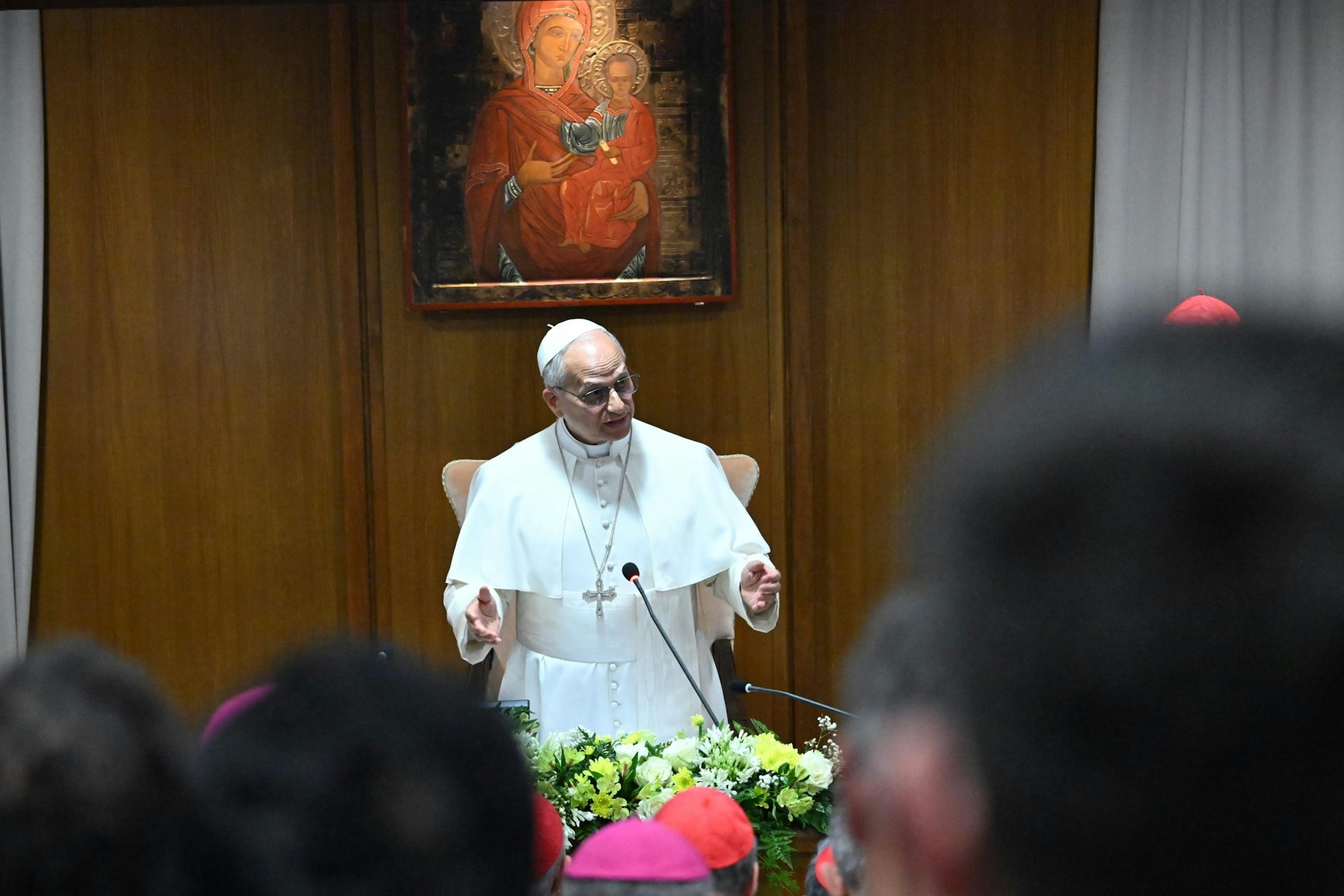
Pope Leo XIV has just declared artificial intelligence one of the defining moral challenges of our time, in his first encyclical: a formal letter intended to guide moral, social and theological thought. Titled Magnifica Humanitas (Magnificent Humanity) , it argues technology must serve humanity, rather than concentrate power or weaken human dignity.
教宗利奥十四世在其首份《教宗文告》中宣布,人工智能是我们这个时代定义性的道德挑战之一。《教宗文告》是一封旨在指导道德、社会和神学思想的正式信函。该文告题为《宏伟的人性》(Magnifica Humanitas),论证了技术必须服务于人类,而不是集中权力或削弱人类尊严。
He presented it at the Vatican alongside AI developer Christopher Olah, cofounder of Anthropic, who acknowledged that companies like his need moral guidance to guard against “incentives and constraints that can sometimes conflict with doing the right thing”, the New York Times reported.
他在梵蒂冈向人工智能开发者、Anthropic联合创始人克里斯托弗·奥拉(Christopher Olah)展示了这份文告。据《纽约时报》报道,奥拉承认,像他这样的公司需要道德指导,以防范那些“有时可能与做正确事情相冲突的激励和限制”。
“Technology is not simply a tool,” read the roughly 42,300-word open letter. “When it becomes the standard by which everything is judged, it begins to dictate what matters and what can be discarded, reducing creation to an object of exploitation and human beings to mere cogs in a system driven toward ever greater efficiency.”
这封长达约四万二千字的公开信写道:“技术不仅仅是一个工具。当它成为衡量一切的标准时,它开始决定什么重要、什么可以被抛弃,将创造物降格为可被剥削的对象,将人类降格为朝着越来越高的效率运转的系统中的普通齿轮。”
It warns that AI is never truly neutral, but “takes on the characteristics of those who devise, finance, regulate and use it”. And it calls for ethical oversight, social justice, protection of workers, responsible governance and peace.
它警告说,人工智能从未真正是中立的,而是“会带有那些设计、资助、监管和使用它的人的特征”。同时,它呼吁进行道德监督、社会正义、保护工人、负责任的治理和和平。
Automated warfare
自动化战争
The encyclical criticises the use of AI in warfare, calling for imposing the “most rigorous ethical constraints” on weapons developed using AI.
这部《教宗全书》批评了战争中使用人工智能,呼吁对使用人工智能开发的武器施加“最严格的伦理约束”。
As governments invest heavily in autonomous military technologies and AI-assisted defence systems, the “growing ease” of deploying them makes war more likely and “less subject to human control”, it warns. This “violates the principle that armed force should be used only as a last resort in cases of legitimate self-defense”.
它警告说,随着各国政府大量投资于自主军事技术和人工智能辅助防御系统,部署这些技术的“日益便利”使得战争更有可能发生,并且“受人类控制的程度降低”。这“违反了武装力量仅应作为合法自卫的最后手段这一原则”。
The letter also criticises the growing concentration of technological power, and systems that reduce people to data or economic functions. It promotes what it calls a “civilisation of love”, centred on human dignity, solidarity, truth, compassion and the common good.
该信件还批评了技术权力日益集中,以及将人简化为数据或经济功能的系统。它提倡一种被称为“爱之文明”,其核心是人类尊严、团结、真理、同情心和共同福祉。
Pope Leo’s response to the the AI revolution deliberately references his predecessor Pope Leo XIII’s response to the problems of the Industrial Revolution, Rerum Novarum (“Of New Things”) , in 1891. Though Magnifica Humanitas was released on May 25 2026, it is symbolically dated May 15, the date of Rerum Novarum.
教宗利奥对人工智能革命的回应,刻意引用了其前任教宗利奥十三世在1891年对工业革命问题的回应《新事物》(Rerum Novarum)。尽管《Magnifica Humanitas》于2026年5月25日发布,但其象征性日期定为《新事物》的日期——5月15日。
Industrial Revolution to AI Revolution
工业革命到人工智能革命
An encyclical is not an ordinary papal statement. Traditionally addressed to bishops and the wider Catholic world, it is one of the Catholic church’s most authoritative teaching documents.
《神学全书》并非普通的教宗声明。它传统上是写给主教和更广阔的天主教世界的,是天主教会最具权威性的教导文件之一。
The pope no longer has the direct political power the papacy held in the 19th century. But papal teaching still carries moral weight across a global Catholic network of schools, universities, charities, hospitals and community organisations.
教宗不再拥有教宗国在19世纪拥有的直接政治权力。但教宗的教导仍然在全球天主教的学校、大学、慈善机构、医院和社区组织网络中具有道德分量。
The Vatican cannot regulate AI. It cannot write safety standards, police data centres, or force companies to disclose how their systems work. But it can help shape the moral terms of the debate. For more than a century, Catholic social teaching has influenced public arguments about work, inequality, poverty, human dignity and the ethical limits of economic power.
梵蒂冈无法监管人工智能。它无法制定安全标准,无法监管数据中心,也无法强迫公司披露其系统的工作原理。但它可以帮助塑造辩论的道德层面。一个多世纪以来,天主教社会教导一直影响着关于工作、不平等、贫困、人类尊严和经济权力伦理界限的公共讨论。
Although popes issued encyclicals long before the modern era, Rerum Novarum made social encyclicals globally influential.
尽管教宗在现代之前很久就发布了《神学全书》,但《关于劳动和资本》使社会《神学全书》具有了全球影响力。
It confronted exploitative labour conditions, widening inequality, and conflict between workers and employers. Pope Leo XIII defended workers’ rights and argued that wealth carried social responsibilities. He criticised both unrestricted capitalism and revolutionary socialism.
它直面了剥削性的劳动条件、日益扩大的不平等以及工人与雇主之间的冲突。利奥十三世教宗捍卫了工人的权利,并提出财富肩负着社会责任。他批评了不受限制的资本主义和革命社会主义。
The document influenced debates about labour rights and economic justice well beyond the church. In Australia in 1907, Justice H.B. Higgins drew on Rerum Novarum when establishing principles for a fair living wage.
这份文件影响了教会之外关于劳动权利和经济正义的辩论。1907年,在澳大利亚,H.B.希金斯法官在制定公平生活工资原则时借鉴了《关于劳动和资本》。
Pope Leo XIV’s encyclical attempts to do for the AI age what Rerum Novarum did for the industrial age: provide a moral framework for a technological transformation reshaping work, power and human relationships.
利奥十四世教宗的《神学全书》试图为人工智能时代做的是《关于劳动和资本》为工业时代所做的事情:为重塑工作、权力和人际关系的科技转型提供一个道德框架。
Human dignity in the age of algorithms
算法时代的“人类尊严”
Pope Leo XIV argues human rights are not granted by governments or corporations: they arise from the intrinsic dignity of every person. Technologies should serve humanity rather than reduce people to data, economic units or optimisation problems.
教宗利奥十四世认为,人权并非由政府或公司授予:它们源于每个人的内在尊严。技术应该服务于人类,而不是将人简化为数据、经济单位或优化问题。
He builds on Pope Francis’ critique of “the tendency to let the logic of efficiency, control and profit alone shape personal, social and economic decisions”, in his 2015 encyclical. It, too, warned of the risks of technology.
他建立在教宗方济各在其2015年《教宗全书》中对“仅让效率、控制和利润的逻辑塑造个人、社会和经济决策的倾向”的批判之上。该文也警告了技术带来的风险。
Pope Leo XIV argues moral responsibility can’t be transferred to automated systems, regardless of how sophisticated they become. He also rejects transhumanist ideas that human limitations should be technologically overcome, arguing vulnerability, dependence and imperfection are essential to being human. Relationships, care, solidarity and compassion are not weaknesses. “Humanity flourishes not despite limitations, but often through them.”
教宗利奥十四世认为,无论自动化系统变得多么先进,道德责任都不能转移给它们。他还反对超人类主义的观点,即人类的局限性应该通过技术克服,他认为脆弱性、依赖性和不完美性是成为人类的本质。人际关系、关怀、团结和同情心并非弱点。“人类的繁荣并非尽管有局限性,而是往往正因为这些局限性。”
Running throughout the encyclical is a contrast between a “culture of power” and a “civilization of love”. One treats technology primarily as a tool for domination and control. The other places human dignity, justice and care at the centre of social life.
这部《教宗全书》贯穿始终的对比是“权力文化”与“爱之文明”之间的对比。前者主要将技术视为支配和控制的工具。而后者则将人类尊严、正义和关怀置于社会生活的中心。
Why this matters
为何这很重要
The significance of Magnifica Humanitas lies in its ability to shape public conversation and moral imagination. Moral frameworks matter. They influence what societies fear, what they tolerate, what they defend – and what they refuse to sacrifice.
“Magnifica Humanitas”的意义在于它能够塑造公共对话和道德想象力。道德框架至关重要。它们影响着社会恐惧什么、容忍什么、捍卫什么——以及不愿牺牲什么。
Governments are investing in AI capability while still developing frameworks for transparency, accountability and safe deployment. Businesses are adopting AI tools at speed. Schools and universities are rethinking assessment, authorship and learning. Workers are being asked to adapt to systems they did not design and often cannot challenge. And citizens are increasingly governed, assessed and targeted by automated systems they may never see.
各国政府正在投资人工智能能力,同时也在制定透明度、问责制和安全部署的框架。企业正快速采用人工智能工具。学校和大学正在重新思考评估、作者身份和学习方式。工人被要求适应他们没有设计、且往往无法挑战的系统。而公民则越来越多地受到自动化系统(这些系统他们可能从未见过)的治理、评估和针对。
Pope Leo XIV’s intervention reminds us the central question is not whether AI will be powerful: it already is. The question is whether that power will be made answerable to human dignity.
教宗利奥十四世的干预提醒我们,核心问题不在于人工智能是否会强大:它已经强大了。问题在于这种力量是否能对人类尊严负责。
The future of AI will not just be decided in laboratories, boardrooms or parliaments. It will also be decided by the moral limits societies are willing to set. Pope Leo XIV’s encyclical is an attempt to draw those limits.
人工智能的未来不会仅仅在实验室、董事会或议会中决定。它也将由社会愿意设定的道德界限来决定。教宗利奥十四世的《神学圆周书》就是试图划定这些界限。
The authors do not work for, consult, own shares in or receive funding from any company or organisation that would benefit from this article, and have disclosed no relevant affiliations beyond their academic appointment.
本文作者不为任何可能从本文中受益的公司或组织工作、提供咨询、拥有股份或接受资金,并且除了其学术任命外,未披露任何相关隶属关系。