“急需的清新空气”:世界首次结束化石燃料峰会取得的5项成果
‘Much-needed fresh air’: 5 outcomes from the world’s fi…
The Santa Marta climate talks showed many countries want to move ahead with plans to end the use of fossil fuels, once and for all.
圣玛尔塔气候会议表明,许多国家希望彻底推进结束化石燃料使用的计划。
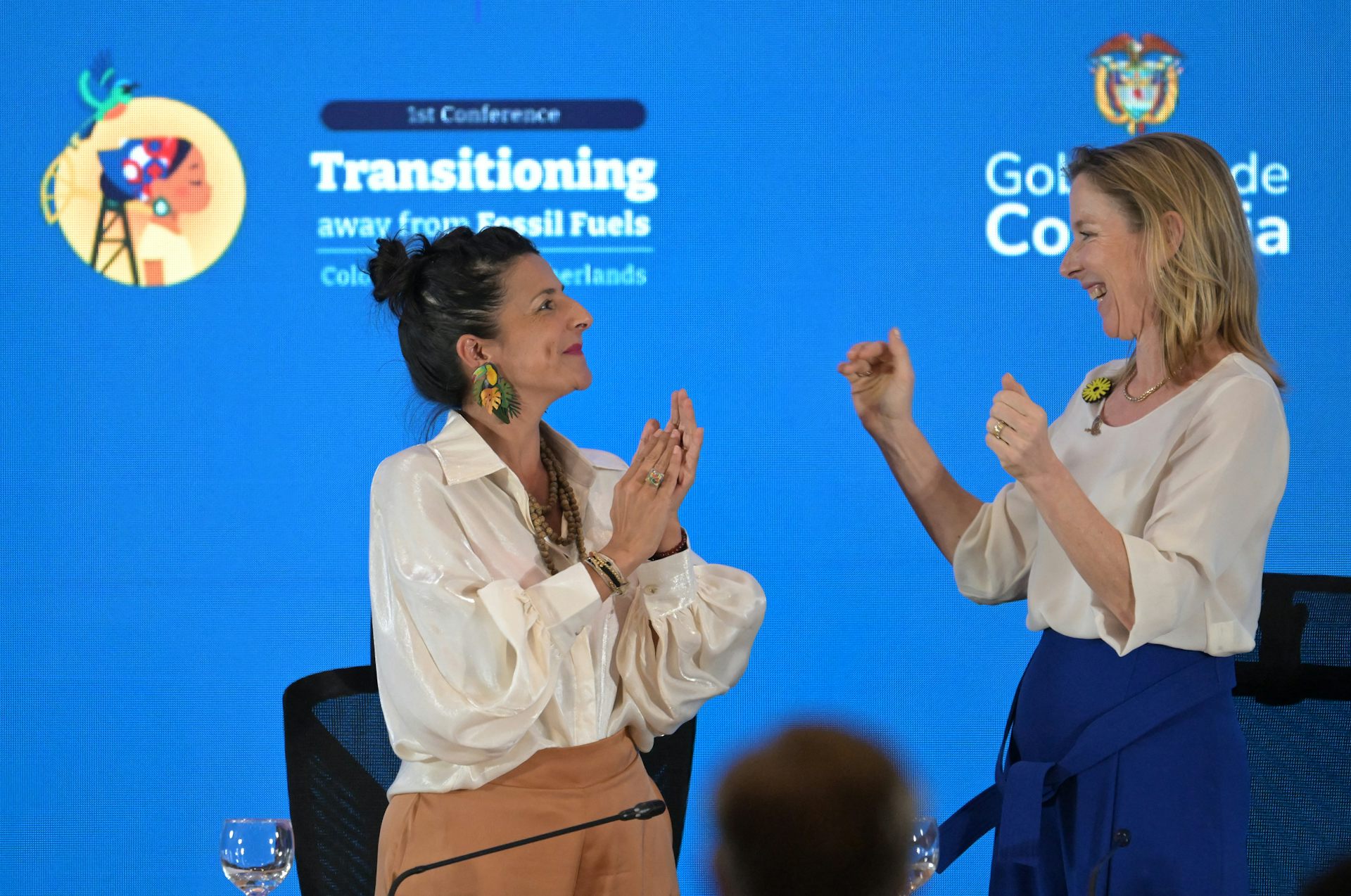
Almost 60 countries, representing about a third of the global economy, met in the Colombian port city of Santa Marta last week for the first international summit on the transition away from fossil fuels.
上周,近60个国家——这些国家代表了全球经济约三分之一——在哥伦比亚的港口城市圣玛尔塔举行了首次关于摆脱化石燃料的国际峰会。
It was hailed as a bold step to shift global dependence on hydrocarbons into an era of clean energy. The group of 57 countries, including Australia, Canada, Norway and Brazil, launched a new international process to coordinate the global phase out of coal, oil and gas. This historic shift brings us closer to the end of fossil fuels.
这被誉为将全球对碳氢化合物的依赖转移到清洁能源时代的大胆举措。包括澳大利亚、加拿大、挪威和巴西在内的57个国家组建了一个团体,启动了新的国际进程,以协调全球淘汰煤炭、石油和天然气。这一历史性转变使我们离化石燃料的终结更近了一步。
Irene Vélez Torres, Colombia’s environment minister and chair of the talks, said: “We decided that the transition away from fossil fuels could no longer remain a slogan but must become a concrete, political and collective endeavour.”
哥伦比亚环境部长兼会议主席伊琳内·韦莱斯·托雷斯说:“我们决定,摆脱化石燃料的转型不能再仅仅停留在口号上,而必须成为一项具体、政治和集体的努力。”
Here are five key developments from Santa Marta.
以下是来自圣玛尔塔的五个关键进展。
1. Moving beyond negotiating deadlocks
1. 突破谈判僵局
This meeting was a successful complement to the UN’s annual climate summits, not a replacement for them.
本次会议成功地补充了联合国年度气候峰会,而非取代它们。
Decisions at UN climate meetings are made by consensus. Outcomes such as the 2015 Paris Agreement have huge legitimacy because they are agreed by nearly 200 countries. But the consensus rules also allow a handful of fossil fuel producers such as Saudi Arabia and Russia to block progress.
联合国气候会议上的决定是基于共识做出的。像2015年《巴黎协定》这样的成果具有巨大的合法性,因为它们得到了近200个国家的同意。但共识规则也允许沙特阿拉伯和俄罗斯等少数化石燃料生产国阻碍进展。
Holding a summit outside these formal UN talks brought much-needed fresh air to global climate diplomacy. Without petrostates blocking the way, willing countries were able to have pragmatic discussions about the legal, fiscal and economic measures needed for a coordinated wind down of fossil fuels.
在这些正式的联合国对话之外举行峰会,为全球气候外交带来了急需的新动力。如果没有石油大国阻碍,愿意合作的国家得以就协调减少化石燃料使用所需的法律、财政和经济措施进行务实的讨论。
These discussions will now feed back into the next UN climate talks, to be held in Turkey in November. They will, for example, raise expectations that countries include timelines to end fossil fuel use in national climate plans.
这些讨论现在将反馈到十一月在土耳其举行的下一届联合国气候谈判中。例如,它们将提高各国在国家气候计划中纳入逐步淘汰化石燃料使用时间表的期望。
2. Paths away from coal, oil and gas
2. 摆脱煤炭、石油和天然气
Working groups were established in Santa Marta to help countries develop national and regional plans to move away from fossil fuels, with targets and timelines to end the use of coal, oil and gas.
在圣玛尔塔成立了工作组,帮助各国制定国家和区域计划,以逐步摆脱化石燃料,并设定了淘汰煤炭、石油和天然气的目标和时间表。
France launched its national roadmap at the summit, pledging to end the use of coal by 2030, oil by 2045 and gas by 2050. Europe’s second-largest economy plans to close its last coal-fired power plant next year, while replacing oil with electricity for transport and switching from gas to heat pumps for home heating. France wants two out of three new cars to be electric by 2030 and will ban the installation of gas boilers in new homes this year.
法国在峰会上推出了国家路线图,承诺到2030年淘汰煤炭,到2045年淘汰石油,到2050年淘汰天然气。欧洲第二大经济体计划在明年关闭其最后一家燃煤电厂,同时用电力取代运输中的石油,并用热泵取代天然气进行家庭供暖。法国希望到2030年,三分之二的新车是电动车,并将在今年禁止在新房安装燃气锅炉。
The ongoing US-Iran war has only added momentum for a shift to clean energy, as nations grapple with their dependence on imported fossil fuels amid the worst energy crisis in history.
持续的美国-伊朗战争只会为向清洁能源转型增加动力,因为各国正在经历历史上最严重的能源危机,并努力应对对进口化石燃料的依赖。
Other nations are now expected to create plans to move away from fossil fuels and bring them to future summits.
现在预计其他国家也将制定摆脱化石燃料的计划,并在未来的峰会上提出。
3. A science panel to guide the transition
3. 一个科学小组指导转型
A new scientific panel launched in Santa Marta brings together experts in climate, economics, technology and law to advise policymakers as they draft plans to shift away from fossil fuels.
圣玛尔塔启动了一个新的科学小组,汇集了气候、经济、技术和法律领域的专家,为政策制定者提供建议,帮助他们起草摆脱化石燃料的计划。
The panel will map out the most promising policies, regulations and financial arrangements to support the shift to clean energy. It is spearheaded by Professor Johan Rockstrom from the Potsdam Institute for Climate Impact Research.
该小组将制定出最有前景的政策、法规和金融安排,以支持向清洁能源的转型。该小组由波茨坦气候影响研究所的约翰·罗克斯特罗姆教授牵头。
Ahead of Santa Marta, a global group of researchers released a report listing 12 high-level actions nations can take to support a fossil-fuel phaseout.
在圣玛尔塔之前,一个全球研究小组发布了一份报告,列出了各国为支持淘汰化石燃料可以采取的12项高层次行动。
4. Tuvalu to host next summit, with Irish support
4. 图瓦卢将主办下一届峰会,并获得爱尔兰支持
Tuvalu will host the next meeting on ending fossil fuels in 2027. As a low-lying island nation, Tuvalu’s future is threatened by sea-level rise. The Pacific nation has led global climate diplomacy for decades.
图瓦卢将于2027年主办关于淘汰化石燃料的下一次会议。作为一个低洼岛国,图瓦卢的未来受到海平面上升的威胁。这个太平洋国家几十年来一直引领着全球气候外交。
“If we are to address the climate change issue, we have to address the root cause, and the root cause is the fossil fuel industry,” said Maina Talia, Tuvalu’s climate change minister.
图瓦卢气候变化部长迈娜·塔莉亚说:“如果我们要解决气候变化问题,就必须解决根本原因,而根本原因就是化石燃料产业。”
That there are plans for a second summit is meaningful in itself. A single conference could be a flash in the pan. But a series marks the birth of a new international process with buy in from both wealthy nations and developing countries. This year’s summit was co-hosted with the Netherlands and next year will be co-hosted with Ireland.
计划举办第二次峰会本身就意义重大。一次会议可能只是昙花一现。但一个系列活动标志着一个全新的国际进程的诞生,并获得了富裕国家和发展中国家的支持。今年的峰会是与荷兰联合主办的,而明年将与爱尔兰联合主办。
5. Toward a fossil fuel treaty
5. 迈向化石燃料条约
Today, fossil fuel producers plan to dig up more than double the amount of coal, oil and gas in 2030 than would be consistent with meeting shared climate goals.
如今,化石燃料生产商计划到2030年开采的煤炭、石油和天然气量将超过实现共同气候目标所需的两倍。
Tuvalu is part of a growing bloc of countries, including 11 Pacific nations, that wants a new treaty to phase out fossil fuel production. Such a treaty would have three elements: ending fossil fuel expansion; phasing down existing production; and supporting a just transition to clean energy.
图瓦卢是包括11个太平洋国家在内的日益壮大的国家集团的一部分,该集团希望达成一项新的条约,逐步淘汰化石燃料生产。该条约应包含三个要素:结束化石燃料扩张;逐步减少现有产量;并支持向清洁能源的公正转型。
It would be similar to global agreements to phase out weapons, harmful substances or hazardous waste.
这类似于全球淘汰武器、有害物质或危险废物的协议。
Climate diplomacy now runs at two speeds
气候外交现在运行着两种速度
We will only appreciate the full significance of the Santa Marta summit in history’s rear-view mirror.
我们只有在历史的回顾镜中才能充分体会桑塔玛尔塔峰会的全部意义。
But what is clear is that climate diplomacy now has two operating speeds. André Corrêa do Lago, who headed last year’s UN COP30 climate talks in Brazil, calls this “two-tier multilateralism”.
但明显的是,气候外交现在有两种运行速度。去年主持巴西联合国COP30气候谈判的安德烈·科雷亚·杜拉戈称之为“双层多边主义”。
The first speed is that of the UN climate talks, which are slower and anchored in consensus. They ensure legitimacy, universality and collective direction.
第一种速度是联合国气候谈判的速度,这种速度较慢,并以共识为基础。它们确保了合法性、普遍性和集体方向。
But what the Santa Marta conference shows is the existence of a second, much faster speed available to any country wanting to rapidly move to end the use of fossil fuels, once and for all.
但桑塔玛尔塔会议显示了第二种、快得多的速度的存在,任何希望彻底、迅速结束化石燃料使用的国家都可以利用这种速度。
Wesley Morgan is a Fellow with the Climate Council of Australia.
韦斯利·摩根是澳大利亚气候理事会的会士。