劣质宣传战:美国和伊朗如何(以及为何)用病毒式AI生成内容泛滥充斥信息空间
Slopaganda wars: how (and why) the US and Iran are floo…
Even obviously fake propaganda videos can influence viewers – and erode their trust in all kinds of information.
即使明显是假的宣传视频也能影响观众,并侵蚀他们对所有类型信息的信任。
In early March, a week after the first US-Israeli strikes on Iran, the White House posted a video of real American attacks mixed with clips from popular movies, television series, video games and anime.
三月初,在美国以色列首次袭击伊朗一周后,白宫发布了一个视频,其中混合了真实的美国攻击画面和来自流行电影、电视剧、电子游戏和动漫的片段。
Iran and its sympathisers responded to the strikes by flooding social media with outdated war footage allegedly from the current conflict alongside AI-generated content depicting attacks on Tel Aviv and US bases in the Persian Gulf.
伊朗及其支持者通过在社交媒体上发布大量声称来自当前冲突的过时战争录像,以及描绘对以色列特拉维夫和波斯湾美军基地的AI生成内容,回应了这些袭击。
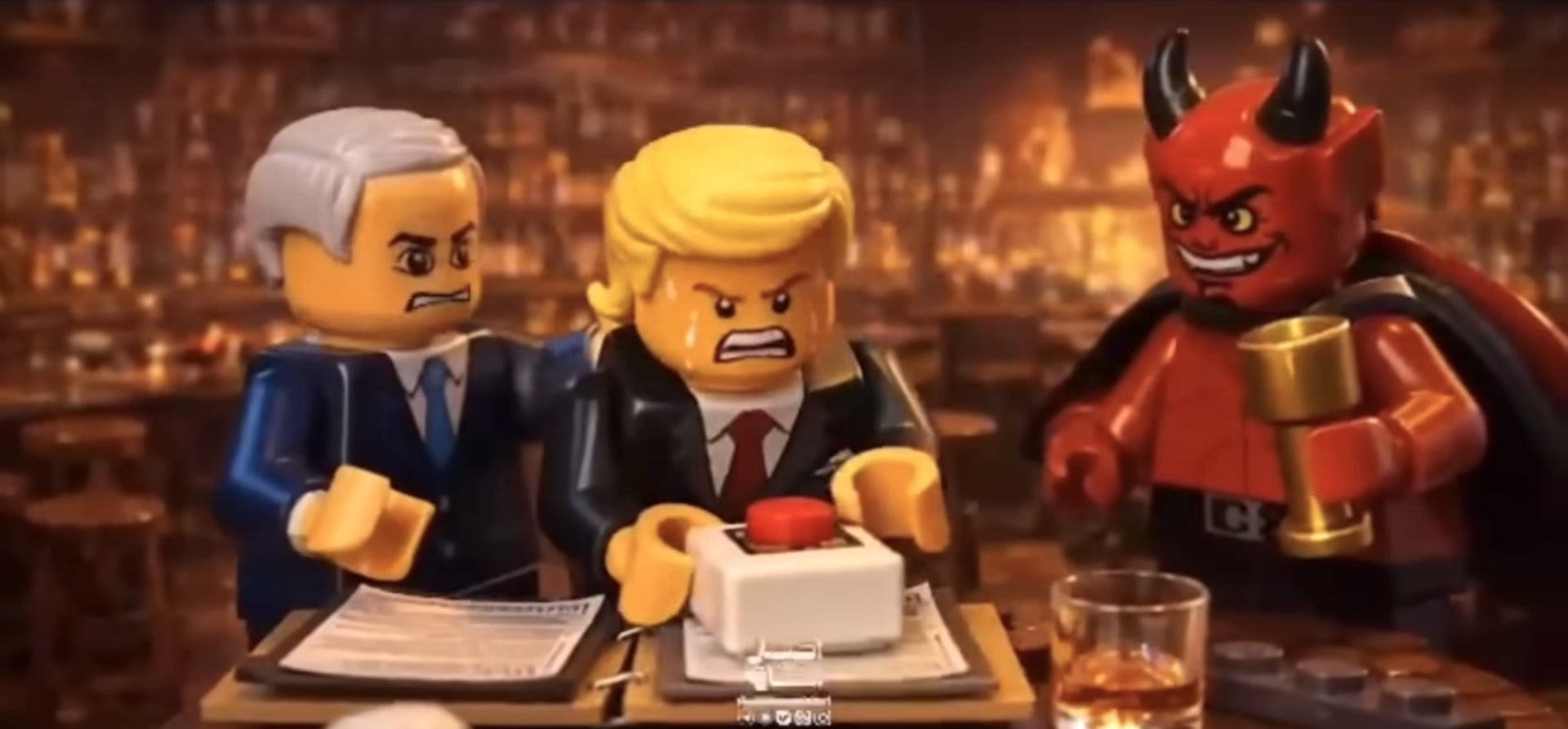
More recently, viral video clips reportedly created by a team of Iranians depict Donald Trump, Jeffrey Epstein, Satan, Benjamin Netanyahu, Pete Hegseth, Ayatollah Khamenei, and others as Lego figurines.
最近,据报道由一个伊朗团队制作的病毒式视频片段描绘了唐纳德·特朗普、杰弗里·爱泼斯坦、撒旦、本雅明·内塔尼亚胡、皮特·赫格塞斯、卡梅尼阿亚图拉以及其他人作为乐高人偶。
Welcome to the brave new world of slopaganda.
欢迎来到这个“垃圾宣传”的勇敢新世界。
The rise of slopaganda
垃圾宣传的兴起
Late last year, in a paper published in Filisofiska Notiser, we coined the portmanteau “slopaganda” to refer to AI-generated slop that serves propagandistic purposes.
去年晚些时候,我们在发表于《Filisofiska Notiser》的一篇论文中,创造了复合词“slopaganda”,用来指代服务于宣传目的的AI生成垃圾内容。
By propaganda we mean communication intended to manipulate beliefs, emotions, attention, memory and other cognitive and affective processes to achieve political ends. Add generative artificial intelligence and the result is slopaganda.
我们所说的宣传是指旨在操纵信念、情绪、注意力、记忆以及其他认知和情感过程以达到政治目的的交流。再加上生成式人工智能,结果就是垃圾宣传。
The slopaganda situation has since become far worse than we expected.
从那时起,垃圾宣传的状况比我们预期的要糟糕得多。
In October 2025, US President Donald Trump posted an AI-generated video depicting himself piloting a fighter jet while wearing a crown and dumping faeces on American protesters. More recently, he posted an AI-generated video envisaging his presidential library as an enormous gaudy skyscraper, complete with a golden elevator.
2025年10月,美国总统唐纳德·特朗普发布了一段AI生成的视频,视频中他戴着皇冠驾驶战斗机,并在美国抗议者身上排泄粪便。最近,他又发布了一段AI生成的视频,描绘了他的总统图书馆是一个拥有金色电梯的巨大华丽摩天大楼。
Lego-themed Iran-created slopaganda is just the latest example. The material isn’t just videos. It can also be images, text, or whatever else AI can generate.
以乐高为主题的伊朗制造的垃圾宣传只是最新的例子。这些材料不只是视频。它也可以是图像、文本,或者任何AI能够生成的其他内容。
How slopaganda slips through our defences
垃圾宣传如何绕过我们的防线
What is the point of all this slopaganda? We have several answers so far.
这一切垃圾宣传的目的是什么?到目前为止,我们有几个答案。
First, through repeated exposure in both legacy and social media, slopaganda can penetrate our usual mental defences. It works when it is attention-grabbing, emotionally arresting – typically in a negative way – and delivered to a distracted audience, such as people scrolling social media or switching between browser tabs.
首先,通过传统媒体和社交媒体的反复曝光,垃圾宣传可以渗透我们通常的心理防线。当它具有吸引眼球、具有情感冲击力(通常是负面冲击力),并传递给注意力分散的受众时,例如那些在滚动社交媒体或切换浏览器标签页的人,它就会奏效。
Second, it is a very effective way of diluting the epistemic environment – the world of what we think we know – with falsehoods and half-truths. As philosophers have argued, ChatGPT and other generative AI tools can be machines for bullshit, in the sense of content that is indifferent to truth.
其次,它是一种用虚假信息和半真半假来稀释认知环境——即我们认为了解的世界——的非常有效的方法。正如哲学家们所争论的,ChatGPT和其他生成式人工智能工具可以成为制造谬论的机器,指那些对真理漠不关心的内容。
Slopaganda can be understood as a special kind of AI bullshit, but its unique features become clearer when we look at its use in campaigns such as the Iranian Lego videos.
垃圾宣传可以被理解为一种特殊的AI谬论,但当我们研究其在伊朗乐高视频等宣传活动中的使用时,其独特特征就会更加清晰。
This is not just bullshit. No one is misled into thinking Trump can pilot an F-16 and drop faeces out of it. No one (we hope) believes plastic Trump Lego figurines are in cahoots with a plastic Satan figurine.
这不仅仅是谬论。没有人被误导去认为特朗普可以驾驶F-16战机并从上面排出粪便。没有人(我们希望)相信塑料特朗普乐高人偶与塑料撒旦人偶串通一气。
Rather than aiming for accuracy, the slopaganda is expressive and emblematic of feelings and emotions, and meant to create an association. The intended linkages are something like Satan is associated with Trump while the United States is associated with evil, and so on.
垃圾宣传的目的不是追求准确性,而是表达和象征情感和情绪,旨在建立关联。其预期的关联性是,例如撒旦与特朗普相关联,而美国与邪恶相关联,以此类推。
What slopaganda means for shared truth
劣质宣传对共享真相的意义
A third point is that some slopaganda is indeed misleading. This may be by design, or because a joke or trolling escapes its intended context and is misunderstood as serious – a phenomenon scholars call “context collapse”. Misleading slopaganda, including deepfakes, can be generated quickly during conflicts, crises and emergencies, when people want information but authoritative sources are scarce.
第三个观点是,一些劣质宣传确实具有误导性。这可能是故意的,也可能是因为一个笑话或网络挑衅脱离了其本意境,被误解为严肃内容——学者们称之为“语境崩溃”。误导性的劣质宣传,包括深度伪造,可以在冲突、危机和紧急情况下快速生成,此时人们渴望信息,但权威来源却稀缺。
Once misleading information or a particular association enters someone’s mind, it can be hard to shake. Because slopaganda can reach huge audiences, even a small misleading effect in the general population may have significant consequences. State actors, corporations, and private individuals can potentially influence group beliefs and decisions, including election results, protest movements, or general sentiment about an unpopular war.
一旦误导信息或特定的联想进入人们的脑海,就很难消除。由于劣质宣传可以触及庞大的受众,即使在普通人群中产生微小的误导效应,也可能带来重大的后果。国家行为体、企业和私人个人有可能影响群体的信念和决策,包括选举结果、抗议运动,或对一场不受欢迎的战争的普遍情绪。
Fourth, the prevalence of slopaganda may make us doubt everything else. People will no doubt become better at spotting this kind of material, but they will also become more likely to misidentify authentic content as slop. As a result, public trust in genuinely trustworthy individuals and institutions may also fall.
第四,劣质宣传的普遍存在可能会让我们对其他一切都产生怀疑。人们无疑会变得更擅长识别这类材料,但他们也更有可能将真实的优质内容误判为劣质内容。结果,公众对真正值得信赖的个人和机构的信任度也可能会下降。
When this occurs, the overall effect is likely to be a general lowering of public trust in genuinely trustworthy individuals and institutions, leading to a kind of nihilistic doubt in really knowing anything.
当这种情况发生时,总体影响很可能是公众对真正值得信赖的个人和机构的信任度普遍下降,从而导致对“真正了解任何事情”的虚无主义怀疑。
When it’s hard or impossible to identify trustworthy sources, you can choose to believe whatever you find comforting, invigorating or infuriating. In increasingly polarised societies struggling with interlocking economic, political, military and environmental crises, the breakdown of shared sources of truth will only make things worse.
当难以或不可能识别可信来源时,人们可以选择相信任何令其感到安慰、振奋或愤怒的内容。在日益两极分化、并努力应对相互交织的经济、政治、军事和环境危机的社会中,共享真相来源的瓦解只会让局势更糟。
3 ways to stave off slopagandapocalypse
如何抵御劣质宣传末日的三种方法
What can be done about the slopaganda shitstorm? In our paper, we discuss interventions at three different levels.
对于劣质宣传的混乱局面,我们能做些什么?在我们的论文中,我们讨论了三个不同层面的干预措施。
First, individuals can become more digitally literate, for instance by looking for telltale signs of AI in text, images and video. They can also learn to check sources rather than merely glancing at headlines and other content, as well as to block sources that routinely spread slopaganda, rather than attempting to evaluate each piece of content in a vacuum. This will help them avoid falling for slopaganda while still trusting authentic sources of news and other information.
首先,个人可以提高数字素养,例如通过寻找文本、图像和视频中AI的明显迹象。他们还可以学会核实信息来源,而不是仅仅浏览标题和其他内容,并且可以屏蔽那些经常传播劣质宣传的来源,而不是试图孤立地评估每一块内容。这将帮助他们避免上当受骗,同时仍然信任可靠的新闻和其他信息来源。
Second, industry and regulators can implement technological fixes to watermark AI-generated content. Some content may even need to be removed from platforms where people see news and other important information.
其次,行业和监管机构可以实施技术修复,对AI生成的内容进行水印标记。一些内容甚至可能需要从人们获取新闻和其他重要信息的平台上移除。
Third, large tech companies such as OpenAI, Google and X can be held accountable for what they have made. This could be done through taxation and other interventions to fund both regulatory efforts and education in digital literacy.
第三,像OpenAI、谷歌和X这样的大型科技公司需要对其所创造的内容负责。这可以通过征税和其他干预措施来完成,为监管工作和数字素养教育提供资金。
Slopaganda is probably here to stay. But with sufficient foresight and courage, we may still be able to adapt to it – and even control it.
劣质宣传可能已经根深蒂固了。但凭借足够的远见和勇气,我们仍然能够适应它——甚至控制它。
Mark Alfano receives funding from the Australian Research Council.
Mark Alfano接受澳大利亚研究理事会的资助。
Michał Klincewicz does not work for, consult, own shares in or receive funding from any company or organisation that would benefit from this article, and has disclosed no relevant affiliations beyond their academic appointment.
Michał Klincewicz不为任何受益于本文的公司或组织工作、咨询、拥有股份或接受资金,并且除了其学术任命外,未披露任何相关隶属关系。