ईरान युद्धकालीन प्रचार के रूप में बिलबोर्ड का उपयोग कैसे करता है – हमने 5 चुने ताकि यह समझाया जा सके कि उनका क्या मतलब है
How Iran uses billboards as wartime propaganda – we selected 5 to explain what they mean
The provocative images in the most visible parts of Tehran are intended to be photographed, posted and shared widely on social media.
तेहरान के सबसे दिखाई देने वाले हिस्सों में ये उत्तेजक तस्वीरें सोशल मीडिया पर फोटो खींची जाने, पोस्ट की जाने और व्यापक रूप से साझा किए जाने के लिए होती हैं।
Since the US–Israel war against Iran began in late February, images of giant billboards in Tehran have been ubiquitous across traditional and social media. These billboards have been placed in some of the busiest and most visible parts of the city, and are constantly being updated to reflect current events.
फ़रवरी के अंत में ईरान के खिलाफ अमेरिका-इज़राइल युद्ध शुरू होने के बाद से, तेहरान में विशाल बिलबोर्डों की तस्वीरें पारंपरिक और सोशल मीडिया दोनों पर सर्वव्यापी हो गई हैं। इन बिलबोर्डों को शहर के कुछ सबसे व्यस्त और सबसे दिखाई देने वाले हिस्सों में रखा गया है, और इन्हें लगातार वर्तमान घटनाओं को दर्शाने के लिए अपडेट किया जा रहा है।
Iran has long used public spaces as a tool of political communication. Since the 1979 Islamic Revolution – and especially during the Iran–Iraq War – the regime has erected murals and billboards to display revolutionary imagery, war memorials and ideological messages.
ईरान ने लंबे समय से सार्वजनिक स्थानों का उपयोग राजनीतिक संचार के एक उपकरण के रूप में किया है। 1979 की इस्लामी क्रांति के बाद से – और विशेष रूप से ईरान-इराक युद्ध के दौरान – शासन ने क्रांतिकारी छवियों, युद्ध स्मारकों और वैचारिक संदेशों को प्रदर्शित करने के लिए भित्तिचित्र और बिलबोर्ड लगाए हैं।
Today, these billboards are designed not only for local audiences, but also for global digital circulation. Depicting powerful imagery, slogans and symbolic representations, they serve a dual function:
आज, ये बिलबोर्ड न केवल स्थानीय दर्शकों के लिए, बल्कि वैश्विक डिजिटल परिसंचरण के लिए भी डिज़ाइन किए गए हैं। शक्तिशाली छवियों, नारों और प्रतीकात्मक प्रतिनिधित्वों को दर्शाते हुए, ये दोहरे कार्य को पूरा करते हैं:
to reinforce a sense of collective identity, national unity and shared emotion during a time of crisis
संकट के समय सामूहिक पहचान, राष्ट्रीय एकता और साझा भावना को मजबूत करना
to serve as a tool of propaganda for the state, at times featuring Hebrew and English alongside Farsi (Persian) .
राज्य के लिए प्रचार के उपकरण के रूप में कार्य करना, जिसमें कभी-कभी फ़ारसी (फ़ारसी) के साथ हिब्रू और अंग्रेजी भी शामिल होते हैं।
Researchers argue these billboards are part of a broader visual communication strategy on the part of the state. They are intended to be photographed, posted and shared widely on social media as a way of projecting power and resistance to a global audience (even with a months-long internet blackout in place) .
शोधकर्ताओं का तर्क है कि ये बिलबोर्ड राज्य की व्यापक दृश्य संचार रणनीति का हिस्सा हैं। इनका उद्देश्य एक वैश्विक दर्शकों के सामने शक्ति और प्रतिरोध को प्रोजेक्ट करने के तरीके के रूप में सोशल मीडिया पर फोटो खिंचवाना, पोस्ट करना और साझा करना है (भले ही महीनों तक इंटरनेट ब्लैकआउट लगा रहा हो) ।
So, what do the billboards say, and what’s the deeper symbolism behind the imagery? We’ve chosen five samples from Tehran to analyse.
तो, बिलबोर्ड क्या कहते हैं, और छवियों के पीछे गहरा प्रतीकवाद क्या है? हमने विश्लेषण के लिए तेहरान से पाँच नमूने चुने हैं।
1. The Epstein missile
1. एपस्टीन मिसाइल
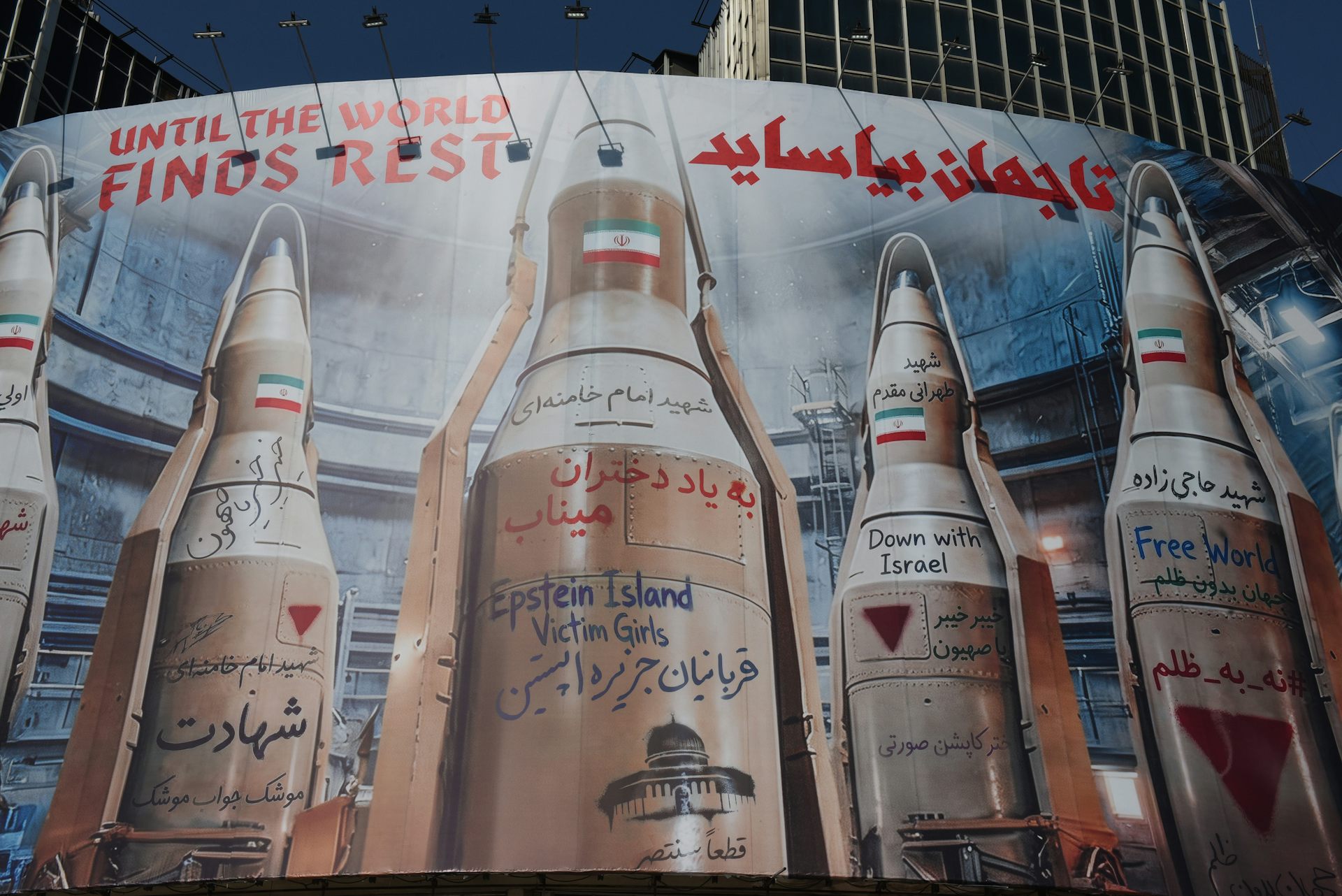
One of the billboards that circulated widely in recent months depicted Iranian missiles covered with handwritten messages and symbolic phrases.
हाल के महीनों में प्रसारित होने वाले बिलबोर्डों में से एक पर हाथ से लिखे संदेशों और प्रतीकात्मक वाक्यांशों से ढके ईरानी मिसाइल दिखाए गए थे।
Among the most striking inscriptions is the phrase “To the girls of Minab”, written in bold, red Farsi script. This is a reference to a strike on a girls’ school in the opening days of the war that Iranian officials say killed 175 girls and teachers. Reports indicate US forces were likely responsible.
सबसे प्रभावशाली शिलालेखों में से एक है “मिनब की लड़कियों के लिए” वाक्यांश, जो बोल्ड, लाल फ़ारसी लिपि में लिखा गया है। यह युद्ध के शुरुआती दिनों में लड़कियों के एक स्कूल पर हुए हमले का संदर्भ है, जिसमें ईरानी अधिकारियों का कहना है कि 175 लड़कियों और शिक्षकों की मौत हो गई थी। रिपोर्टों से पता चलता है कि अमेरिकी सेनाएँ इसके लिए जिम्मेदार थीं।
Directly below that, written in English, are the words “Epstein Island victim girls”, a reference to the island owned by convicted sex offender Jeffrey Epstein where young women were allegedly sexually assaulted.
ठीक इसके नीचे, अंग्रेजी में, शब्द हैं “एपस्टीन द्वीप की शिकार लड़कियाँ”, जो उस द्वीप का संदर्भ है जिसका मालिक दोषी यौन अपराधी जेफरी एपस्टीन है, जहाँ कथित तौर पर युवा महिलाओं के साथ यौन उत्पीड़न किया गया था।
On another missile is the phrase “the girl with the pink jacket”. This is a deeply emotional reference to a young Iranian girl killed in a terror attack in 2024, who was identified by her pink jacket and heart-shaped earrings.
एक अन्य मिसाइल पर वाक्यांश है “गुलाबी जैकेट वाली लड़की”। यह 2024 में एक आतंकी हमले में मारी गई एक युवा ईरानी लड़की का गहरा भावनात्मक संदर्भ है, जिसे उसकी गुलाबी जैकेट और दिल के आकार के झुमके से पहचाना गया था।
The intention is to connect these disparate events through a narrative of vulnerable young women affected by violence, exploitation and political power. Rather than presenting missiles only as weapons of destruction, the image reframes them as symbols of grief, revenge, memory and defence.
इरादा इन अलग-अलग घटनाओं को हिंसा, शोषण और राजनीतिक शक्ति से प्रभावित कमजोर युवा महिलाओं की एक कहानी के माध्यम से जोड़ना है। मिसाइलों को केवल विनाश के हथियार के रूप में प्रस्तुत करने के बजाय, यह छवि उन्हें दुःख, प्रतिशोध, स्मृति और रक्षा के प्रतीकों के रूप में फिर से प्रस्तुत करती है।
In this narrative, Iran is portrayed not as seeking war. It is responding to injustice and protecting its people.
इस कथा में, ईरान को युद्ध की तलाश करने के रूप में नहीं, बल्कि अन्याय का जवाब देने और अपने लोगों की रक्षा करने के रूप में चित्रित किया गया है।
2. ‘Masters of war’
2. ‘युद्ध के स्वामी’
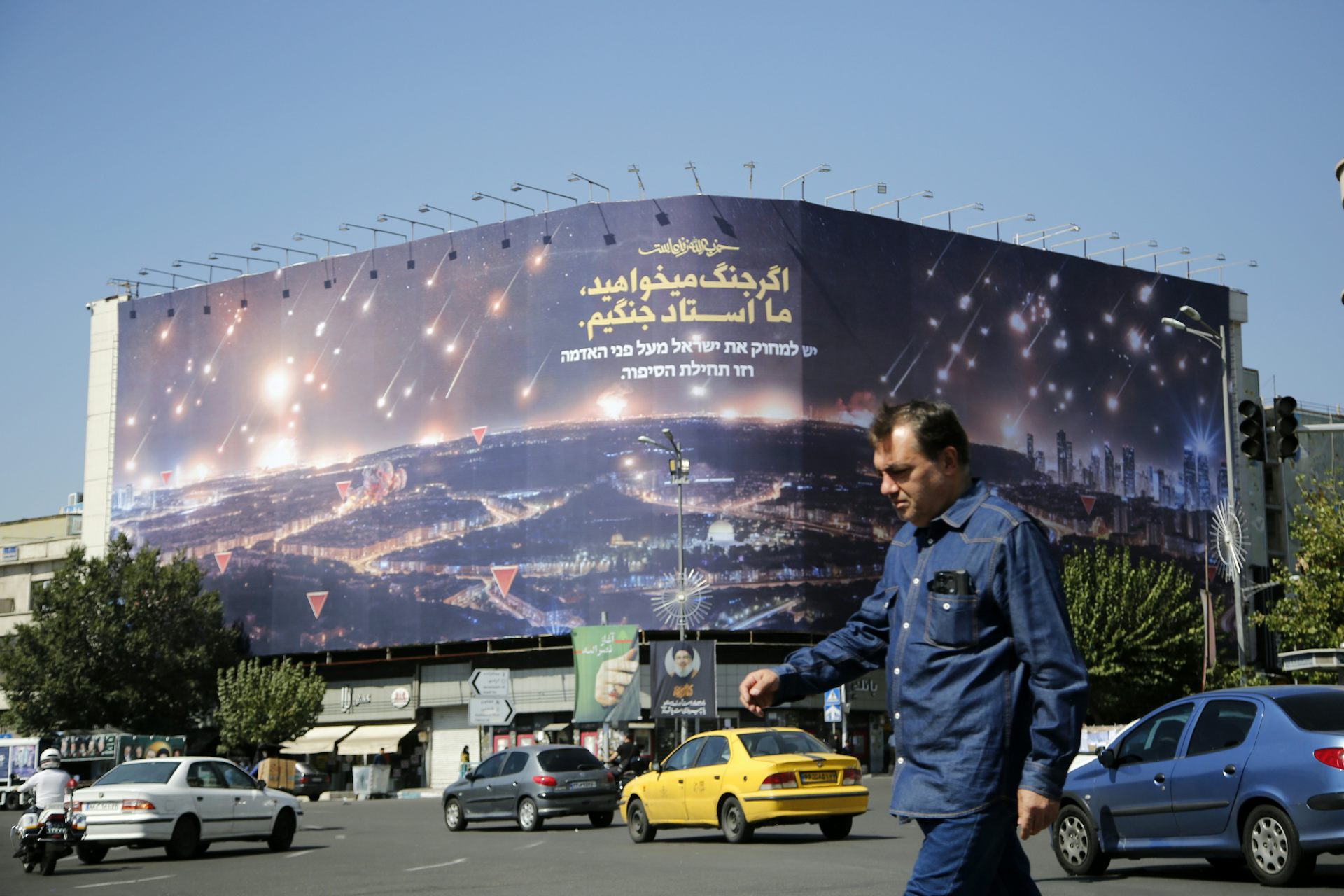
Another billboard that gained significant attention in 2024 depicted the Farsi phrase “If you want war, we are masters of war” above a Hebrew message saying “Israel must be wiped from the face of the earth”.
2024 में एक अन्य बिलबोर्ड पर फ़ारसी वाक्यांश “अगर तुम्हें युद्ध चाहिए, तो हम युद्ध के स्वामी हैं” लिखा था, जिसके ऊपर यहूदी संदेश था कि “इज़राइल को धरती से मिटा दिया जाना चाहिए”।
The billboard portrays the sky over Israel illuminated by waves of incoming missiles, almost resembling a meteor shower or rain of fire. The imagery is highly stylised and cinematic, with the missiles transforming the night sky into a scene of overwhelming force.
बिलबोर्ड इज़राइल के ऊपर आसमान को आ रहे मिसाइलों की लहरों से रोशन दिखाता है, जो लगभग उल्का वर्षा या आग की बारिश जैसा लगता है। यह कल्पना अत्यधिक शैलीबद्ध और सिनेमाई है, जिसमें मिसाइल रात के आसमान को जबरदस्त बल के दृश्य में बदल रही हैं।
By directly addressing Hebrew-speaking viewers, the billboard functions as both a direct warning to Israelis and a symbolic projection of power, designed to have psychological impact. Language becomes a tool of warfare itself.
यहूदी बोलने वाले दर्शकों को सीधे संबोधित करके, बिलबोर्ड इज़राइलियों के लिए एक सीधी चेतावनी और शक्ति का एक प्रतीकात्मक प्रक्षेपण दोनों के रूप में कार्य करता है, जिसे मनोवैज्ञानिक प्रभाव डालने के लिए डिज़ाइन किया गया है। भाषा स्वयं युद्ध का एक उपकरण बन जाती है।
This multilingual strategy reveals an important shift in Tehran’s urban propaganda. These billboards, which have become more prominent in recent years, are no longer designed solely for Iranian pedestrians and motorists. The regime is aware photographs will circulate instantly across the internet, reaching intended audiences in Israel.
यह बहुभाषी रणनीति तेहरान के शहरी प्रचार में एक महत्वपूर्ण बदलाव को दर्शाती है। ये बिलबोर्ड, जो हाल के वर्षों में अधिक प्रमुख हो गए हैं, अब केवल ईरानी पैदल यात्रियों और मोटर चालकों के लिए डिज़ाइन नहीं किए गए हैं। शासन को पता है कि तस्वीरें तुरंत इंटरनेट पर प्रसारित होंगी, जो इज़राइल में लक्षित दर्शकों तक पहुँचेंगी।
3. Trump’s sutured mouth
3. ट्रम्प का टाँके लगा मुँह
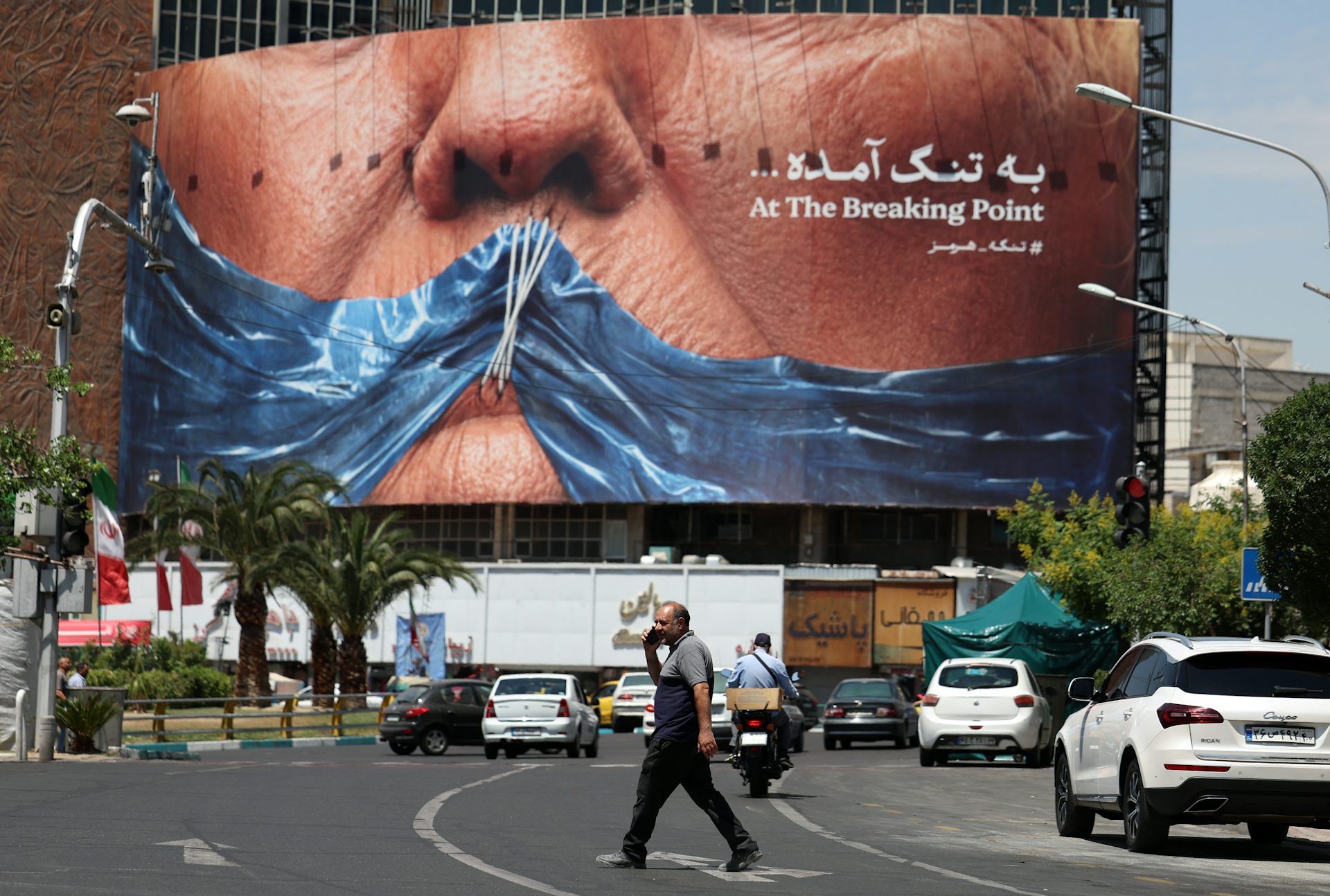
Another bilingual billboard is targeted to Western – and specifically American – audiences. It features US President Donald Trump’s mouth with a rendering of the Strait of Hormuz sutured on top, alongside the English phrase “The Breaking Point.”
एक अन्य द्विभाषी बिलबोर्ड पश्चिमी – और विशेष रूप से अमेरिकी – दर्शकों को लक्षित करता है। इसमें अमेरिकी राष्ट्रपति डोनाल्ड ट्रम्प के मुँह को दिखाया गया है, जिसके ऊपर होर्मुज जलडमरूमध्य (Strait of Hormuz) का चित्रण टाँके लगाकर किया गया है, साथ ही अंग्रेजी वाक्यांश “The Breaking Point” भी है।
The Farsi text roughly translates to “its patience has run out”. It also contains a literary pun: the word tang in Farsi can refer both to “narrowness” or “constraint” and to the Strait (tangeh) of Hormuz itself. This creates a double meaning linking the geopolitical tensions in the Strait of Hormuz with the idea of reaching a psychological or political breaking point.
फ़ारसी पाठ का मोटे तौर पर अनुवाद “इसका धैर्य समाप्त हो गया है” होता है। इसमें एक साहित्यिक शब्द-खेल (pun) भी है: फ़ारसी में ‘टंग’ शब्द का प्रयोग “संकीर्णता” या “बाधा” दोनों के लिए किया जा सकता है और स्वयं होर्मुज जलडमरूमध्य (tangeh) के लिए भी किया जा सकता है। यह एक दोहरा अर्थ बनाता है जो होर्मुज जलडमरूमध्य में भू-राजनीतिक तनाव को मनोवैज्ञानिक या राजनीतिक टूटने के बिंदु तक पहुँचने के विचार से जोड़ता है।
The image also critiques Trump’s constant political rhetoric and media presence. The sutures placed across his mouth symbolise silencing, constraint and the loss of Trump’s authority or influence in relation to Iran and the Strait of Hormuz.
यह छवि ट्रम्प की लगातार राजनीतिक बयानबाजी और मीडिया उपस्थिति की भी आलोचना करती है। उनके मुँह पर लगाए गए टाँके खामोश करना, बाधा और ईरान तथा होर्मुज जलडमरूमध्य के संबंध में ट्रम्प के अधिकार या प्रभाव के नुकसान का प्रतीक हैं।
4. Arash the Archer
४. आराश धनुर्धर
Another billboard draws on the famous Persian myth of Arash the Archer. In the image, Arash places an arrow into his bow in the heat of battle, surrounded by missiles. The reference comes from the ancient story in which Arash sacrifices his life after shooting an arrow during a mythological war between Iran and neighbouring Turan.
एक अन्य बिलबोर्ड आराश धनुर्धर के प्रसिद्ध फ़ारसी मिथक पर आधारित है। छवि में, आराश युद्ध की भीषणता में, मिसाइलों से घिरा हुआ, अपने धनुष में एक तीर लगा रहा है। यह संदर्भ एक प्राचीन कहानी से आता है जिसमें आराश ईरान और पड़ोसी तुरान के बीच एक पौराणिक युद्ध के दौरान तीर चलाकर अपना जीवन बलिदान कर देता है।
The billboard suggests modern Iranian soldiers, like Arash, are willing to sacrifice their lives to defend their homeland.
यह बिलबोर्ड सुझाव देता है कि आराश की तरह, आधुनिक ईरानी सैनिक अपने देश की रक्षा के लिए अपना जीवन बलिदान करने को तैयार हैं।
More broadly, the image also reflects how poetry, mythology and heroic storytelling are deeply embedded in Iranian history and culture. It connects the contemporary conflict to centuries of struggle.
व्यापक रूप से, यह छवि यह भी दर्शाती है कि कविता, पौराणिक कथाएँ और वीर गाथाएँ ईरानी इतिहास और संस्कृति में कितनी गहराई से समाई हुई हैं। यह समकालीन संघर्ष को सदियों के संघर्ष से जोड़ती है।
5. The fishermen
5. मछुआरे
Another billboard demonstrates Iranian military power through the image of a massive fishing net spread across the Persian Gulf. Inside the net are captured American aircraft, drones and naval vessels.
एक अन्य बिलबोर्ड फारस की खाड़ी में फैले एक विशाल मछली पकड़ने के जाल की छवि के माध्यम से ईरानी सैन्य शक्ति का प्रदर्शन करता है। जाल के अंदर अमेरिकी विमान, ड्रोन और नौसैनिक जहाज पकड़े हुए हैं।
The imagery is accompanied by the phrase, “The entire Persian Gulf is our hunting ground” in Farsi, connoting it is under direct Iranian control and surveillance. The image also emphasises the strategic importance of the Strait of Hormuz, indicating the power to open or close this vital waterway ultimately lies with Iran.
इस छवि के साथ फारसी में वाक्यांश है, “पूरा फारस की खाड़ी हमारा शिकारगाह है,” जो संकेत देता है कि यह सीधे ईरानी नियंत्रण और निगरानी में है। यह छवि हॉर्मुज जलडमरूमध्य के रणनीतिक महत्व पर भी जोर देती है, जो दर्शाता है कि इस महत्वपूर्ण जलमार्ग को खोलने या बंद करने की शक्ति अंततः ईरान के पास है।
At the same time, the fishing net operates as a cultural metaphor. Like fishing itself, Iran’s warfare strategy is based on patience, resilience, careful strategy and long-term determination, rather than sheer force alone.
उसी समय, मछली पकड़ने का जाल एक सांस्कृतिक रूपक के रूप में कार्य करता है। जिस प्रकार मछली पकड़ना स्वयं है, उसी प्रकार ईरान की युद्ध रणनीति केवल बल मात्र पर नहीं, बल्कि धैर्य, लचीलेपन, सोची-समझी रणनीति और दीर्घकालिक दृढ़ संकल्प पर आधारित है।
The authors do not work for, consult, own shares in or receive funding from any company or organisation that would benefit from this article, and have disclosed no relevant affiliations beyond their academic appointment.
लेखक किसी भी कंपनी या संगठन के लिए काम नहीं करते हैं, उनसे परामर्श नहीं लेते हैं, उनमें हिस्सेदारी नहीं रखते हैं या उनसे धन प्राप्त नहीं करते हैं, जिससे इस लेख को लाभ होगा, और उन्होंने अपनी शैक्षणिक नियुक्ति के अलावा कोई प्रासंगिक जुड़ाव नहीं बताया है।
Read more
-
शहरी पेड़ दुनिया के शहरों को जितना हमने सोचा था उससे अधिक ठंडा करते हैं – लेकिन हम केवल उन पर निर्भर नहीं रह सकते
Urban trees cool the world’s cities more than we thought – but we can’t rely on them alone
-
अमेरिका द्वारा होर्मुज जलडमरूमध्य पर नाकेबंदी से ट्रम्प के बीजिंग दौरे से पहले चीन के साथ तनाव बढ़ गया है
US blockade of Strait of Hormuz ratchets up tensions with China ahead of Trump visit to Beijing