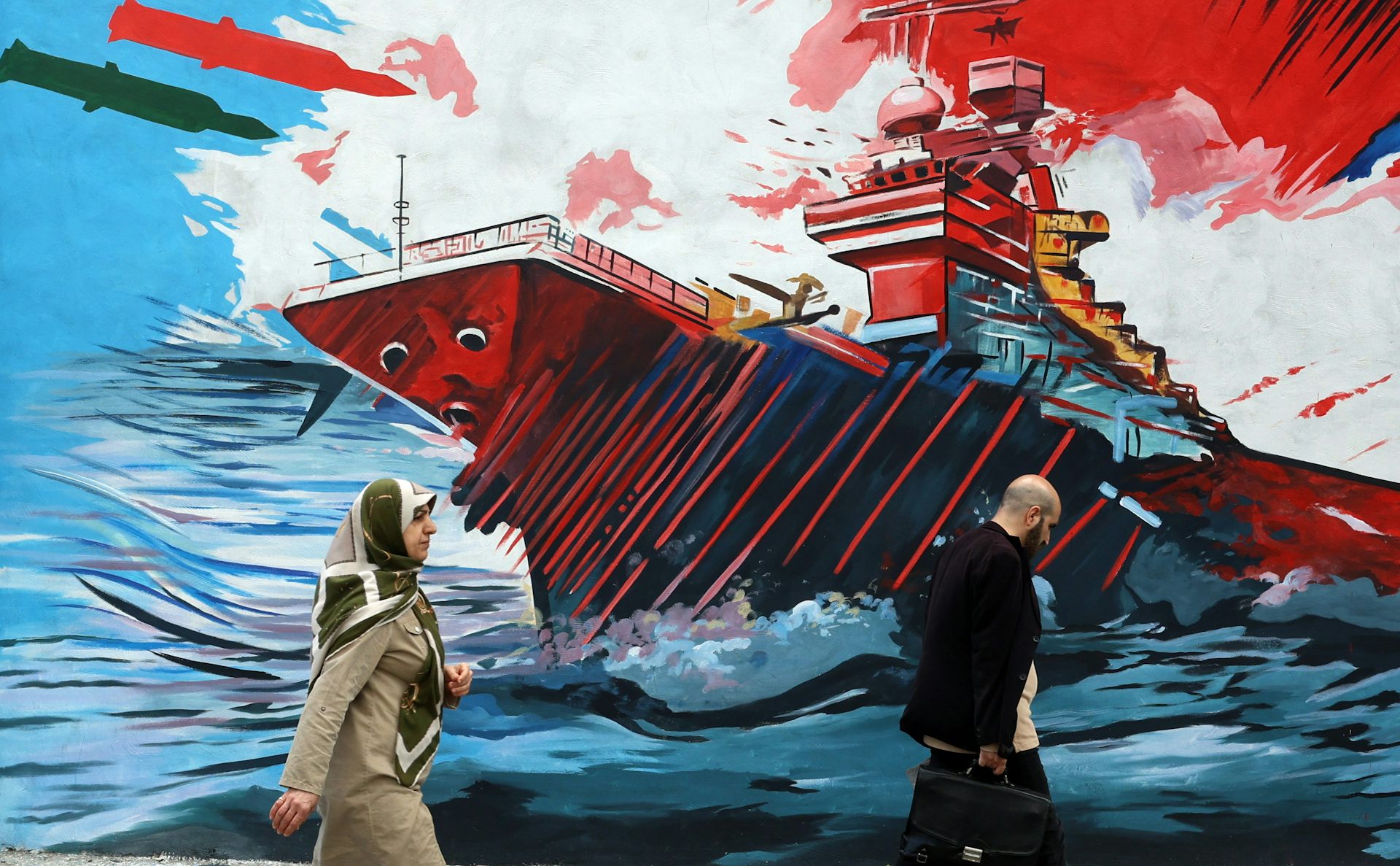
3 razones por las que la guerra entre EE. UU., Israel e Irán se dirige a un conflicto congelado
3 reasons the war between the US, Israel and Iran is headed for a frozen conflict
Much like the frozen conflicts between India and Pakistan or North and South Korea, this will keep the entire world on edge.
Al igual que los conflictos congelados entre India y Pakistán o Corea del Norte y Corea del Sur, esto mantendrá al mundo entero en vilo.
With a shaky ceasefire in place between the US, Israel and Iran – and little progress on talks to resolve the complex issues at the heart of the war – where is this conflict going?
Con un cese el fuego inestable entre EE. UU., Israel e Irán – y poco progreso en las conversaciones para resolver los complejos problemas en el centro de la guerra – ¿hacia dónde se dirige este conflicto?
The most likely scenario is a frozen conflict.
El escenario más probable es un conflicto congelado.
A frozen conflict is not static, but is an unresolved war that continues at a low-level below the threshold of full-scale combat.
Un conflicto congelado no es estático, sino una guerra no resuelta que continúa a bajo nivel por debajo del umbral de combate a gran escala.
This typically occurs when a comprehensive political agreement cannot be reached, such as the fighting in eastern Ukraine from 2014 until Russia’s full-scale invasion in 2022. This conflict was considered frozen despite the deaths of some 14,000 military personnel and civilians and persistent cyber and information warfare.
Esto ocurre típicamente cuando no se puede alcanzar un acuerdo político integral, como los combates en el este de Ucrania desde 2014 hasta la invasión a gran escala de Rusia en 2022. Este conflicto fue considerado congelado a pesar de las muertes de unos 14.000 militares y civiles y la persistente guerra cibernética y de información.
Even if negotiations resume this week in Pakistan and an eventual agreement is reached, there are still three reasons we believe this is headed towards a frozen conflict, not a comprehensive peace agreement.
Incluso si las negociaciones se reanudan esta semana en Pakistán y se llega a un acuerdo eventual, todavía hay tres razones por las que creemos que se dirige hacia un conflicto congelado, y no hacia un acuerdo de paz integral.
1) Trump equates ceasefires with an end to war
Trump equipara los altos el fuego con el fin de la guerra
US President Donald Trump’s approach to foreign policy has shown he does not treat ceasefires as pauses for negotiations to agree on substantive political issues. Rather, he declares a ceasefire as a US success, then moves on to the next global issue.
El enfoque del presidente estadounidense Donald Trump en la política exterior ha demostrado que no considera los altos el fuego como pausas para negociar y acordar cuestiones políticas sustantivas. Más bien, declara un alto el fuego como un éxito de EE. UU. y luego pasa al siguiente problema global.
Trump claims to have ended ten wars, including the current conflict with Iran and Israel’s war in Lebanon. A closer look reveals that in most of these conflicts, a shaky ceasefire has held while substantive issues remain unresolved.
Trump afirma haber puesto fin a diez guerras, incluido el conflicto actual con Irán y la guerra de Israel en Líbano. Un examen más detenido revela que en la mayoría de estos conflictos, un frágil alto el fuego se ha mantenido mientras que los problemas sustantivos siguen sin resolverse.
This has left frozen conflicts in place with ongoing tensions. In India and Pakistan, which engaged in a brief armed conflict last year, for example, there is a continued risk of renewed hostilities. And a lasting peace between Thailand and Cambodia after last year’s border spats remains elusive.
Esto ha dejado conflictos congelados con tensiones persistentes. En India y Pakistán, que participaron en un breve conflicto armado el año pasado, por ejemplo, existe un riesgo continuo de nuevas hostilidades. Y una paz duradera entre Tailandia y Camboya después de las disputas fronterizas del año pasado sigue siendo esquiva.
Yet, Trump has walked away from these conflicts and claimed an end to war as soon as a cessation of major hostilities was in place.
Sin embargo, Trump se ha retirado de estos conflictos y ha afirmado el fin de la guerra tan pronto como se estableció el cese de hostilidades mayores.
2) Asymmetric wars are difficult to resolve
2) Las guerras asimétricas son difíciles de resolver
The current war is asymmetric because of the huge difference in military strength between the US and Israel on one side, and Iran on the other.
La guerra actual es asimétrica debido a la enorme diferencia de fuerza militar entre EE. UU. e Israel por un lado, e Irán por el otro.
Iran has intentionally used asymmetric tactics to counter the US’ overwhelming military power, including targeting infrastructure in Persian Gulf countries not involved in the war and closing the Strait of Hormuz to commercial shipping traffic to disrupt the global economy.
Irán ha utilizado intencionalmente tácticas asimétricas para contrarrestar el abrumador poder militar de EE. UU., incluyendo el ataque a infraestructuras en países del Golfo Pérsico no involucrados en la guerra y el cierre del Estrecho de Ormuz al tráfico comercial marítimo para alterar la economía global.
Research shows asymmetric wars are inherently protracted and often open-ended. As a result, they are more likely to end in a frozen conflict than an enduring political settlement.
La investigación muestra que las guerras asimétricas son inherentemente prolongadas y a menudo abiertas. Como resultado, es más probable que terminen en un conflicto congelado que en un acuerdo político duradero.
The reason for this is simple. The weaker actor cannot win a conventional military battle against the stronger actor. So, it tries to exhaust the more powerful nation with political, economic and psychological pressure, forcing a withdrawal and cessation of hostilities.
La razón es simple. El actor más débil no puede ganar una batalla militar convencional contra el actor más fuerte. Por lo tanto, intenta agotar a la nación más poderosa con presión política, económica y psicológica, forzando una retirada y el cese de hostilidades.
This is what we are seeing now between the US and Iran. Trump is feeling these rising pressures and is pursuing a ceasefire, while trying to claim a US victory.
Esto es lo que estamos viendo ahora entre EE. UU. e Irán. Trump está sintiendo estas crecientes presiones y está buscando un alto el fuego, mientras intenta reclamar una victoria estadounidense.
Iran, meanwhile, has agreed to a ceasefire in a bid for survival as the weaker actor, rather than a commitment to an enduring end to the conflict.
Por su parte, Irán ha aceptado un alto el fuego en un intento de supervivencia como actor más débil, en lugar de un compromiso con un fin duradero del conflicto.
This is reminiscent of the Taliban in Afghanistan, who survived 20 years in a frozen conflict with the US before taking back control of the country when the US withdrew.
Esto recuerda al Talibán en Afganistán, que sobrevivió 20 años en un conflicto congelado con EE. UU. antes de recuperar el control del país cuando EE. UU. se retiró.
3) There’s been no focus on the more complex issues
3) No se ha centrado en los problemas más complejos
Neither the US nor Iran appears committed to any long-term resolution of the underlying tensions at the root of the conflict. Key among these is the question of Iran’s nuclear program.
Ni EE. UU. ni Irán parecen comprometidos con ninguna solución a largo plazo de las tensiones subyacentes en la raíz del conflicto. Fundamental en este tema es la cuestión del programa nuclear de Irán.
For Washington, the first round of peace talks in Pakistan on April 11–12 were aborted because Iran refused to compromise on its nuclear program. And Iran has long argued it has an inalienable right to enrich uranium for civilian purposes.
Para Washington, la primera ronda de conversaciones de paz en Pakistán los días 11-12 de abril fue abortada porque Irán se negó a hacer concesiones sobre su programa nuclear. Y Irán ha argumentado durante mucho tiempo que tiene un derecho inalienable a enriquecer uranio para fines civiles.
The negotiations that led to the multilateral 2015 deal on Iran’s nuclear program – the Joint Comprehensive Plan of Action – took 20 months to conclude. Trump withdrew from the agreement three years later, calling it a “horrible one-sided deal”.
Las negociaciones que llevaron al acuerdo multilateral de 2015 sobre el programa nuclear de Irán – el Plan de Acción Integral Conjunto – tardaron 20 meses en concluir. Trump se retiró del acuerdo tres años después, calificándolo de «acuerdo horrible y unilateral.»
Given this history, a quick and clear resolution to this complex dispute is unlikely.
Dada esta historia, es poco probable una resolución rápida y clara a esta compleja disputa.
Some analysts believe the US and Iran could announce a partial agreement that would leave many of the technical aspects to be ironed out later.
Algunos analistas creen que EE. UU. e Irán podrían anunciar un acuerdo parcial que dejaría muchos de los aspectos técnicos por resolver más tarde.
But Trump is now facing an opponent that is unlikely to become more accommodating with respect to its long-term “nuclear rights”. In fact, Iran has already shown its resolve by asserting a new geostrategic normal, closing the Strait of Hormuz and disrupting the global economy.
Pero Trump ahora se enfrenta a un oponente que es poco probable que se vuelva más complaciente con respecto a sus «derechos nucleares» a largo plazo. De hecho, Irán ya ha demostrado su determinación al afirmar una nueva normalidad geoestratégica, cerrando el Estrecho de Ormuz y perturbando la economía global.
What a frozen conflict means for the region
Lo que significa un conflicto congelado para la región
The Iran-US war may conclude with a series of ceasefires, but will likely remain a frozen conflict due to these underlying tensions. This means more threats from both sides over Iran’s nuclear program and periodic flare-ups of violence between Israel and Iran, the US and Iran, or both.
La guerra Irán-EE. UU. puede concluir con una serie de altos el fuego, pero es probable que permanezca como un conflicto congelado debido a estas tensiones subyacentes. Esto significa más amenazas de ambas partes sobre el programa nuclear de Irán y brotes periódicos de violencia entre Israel y Irán, EE. UU. e Irán, o ambos.
This is much like the frozen situation in Gaza. Last October, Israel and Hamas agreed to a ceasefire under Trump’s 20-point peace plan. The first phase of the plan was then largely implemented, leading to a hostage-prisoner exchange, a decrease in Israel’s heavy bombardments of Gaza and a resumption of aid into the strip.
Esto es muy parecido a la situación congelada en Gaza. El pasado octubre, Israel y Hamás acordaron un alto el fuego bajo el plan de paz de 20 puntos de Trump. La primera fase del plan se implementó en gran medida, lo que llevó a un intercambio de rehenes por prisioneros, una disminución de los bombardeos intensos de Israel sobre Gaza y la reanudación de la ayuda en la franja.
However, there has since been no progress on the more complex questions of the post-war governance of Gaza, redevelopment of the strip and – crucially – the disarmament of Hamas fighters. As a result, Israel has refused to completely withdraw its troops and violence has continued.
Sin embargo, desde entonces no ha habido progreso en las cuestiones más complejas de la gobernanza de Gaza después de la guerra, el desarrollo de la franja y, crucialmente, el desarme de los combatientes de Hamás. Como resultado, Israel se ha negado a retirar completamente sus tropas y la violencia ha continuado.
From a historical perspective, the frozen conflict in the Koreas is also instructive. The war ended with an armistice in 1953 and no peace treaty, effectively leaving North and South Korea at war to this day. This led to the North developing an underground nuclear weapons program that continues to pose a threat to the world.
Desde una perspectiva histórica, el conflicto congelado en Corea también es instructivo. La guerra terminó con un armisticio en 1953 y sin un tratado de paz, dejando efectivamente a Corea del Norte y Corea del Sur en guerra hasta el día de hoy. Esto llevó al Norte a desarrollar un programa clandestino de armas nucleares que sigue representando una amenaza para el mundo.
Similarly, the decades-long frozen India-Pakistan conflict has led to an arms race (including the development of nuclear weapons on both sides) , instability in South Asia and periodic flare-ups of violence.
De manera similar, el conflicto congelado entre India y Pakistán, que dura décadas, ha provocado una carrera armamentista (incluido el desarrollo de armas nucleares en ambos lados) , inestabilidad en el sur de Asia y brotes periódicos de violencia.
A frozen conflict between the US, Israel and Iran will no doubt create similar long-term instability in the Middle East, including a possible arms race in the Middle East and more flare-ups of violence, particularly around control of the Strait of Hormuz.
Un conflicto congelado entre EE. UU., Israel e Irán sin duda creará una inestabilidad a largo plazo similar en Oriente Medio, incluida una posible carrera armamentista en la región y más brotes de violencia, particularmente en torno al control del Estrecho de Ormuz.
The authors do not work for, consult, own shares in or receive funding from any company or organisation that would benefit from this article, and have disclosed no relevant affiliations beyond their academic appointment.
Los autores no trabajan para, consultan, poseen acciones de, ni reciben financiación de ninguna empresa u organización que se beneficiaría de este artículo, y no han revelado afiliaciones relevantes más allá de su nombramiento académico.
Read more
-
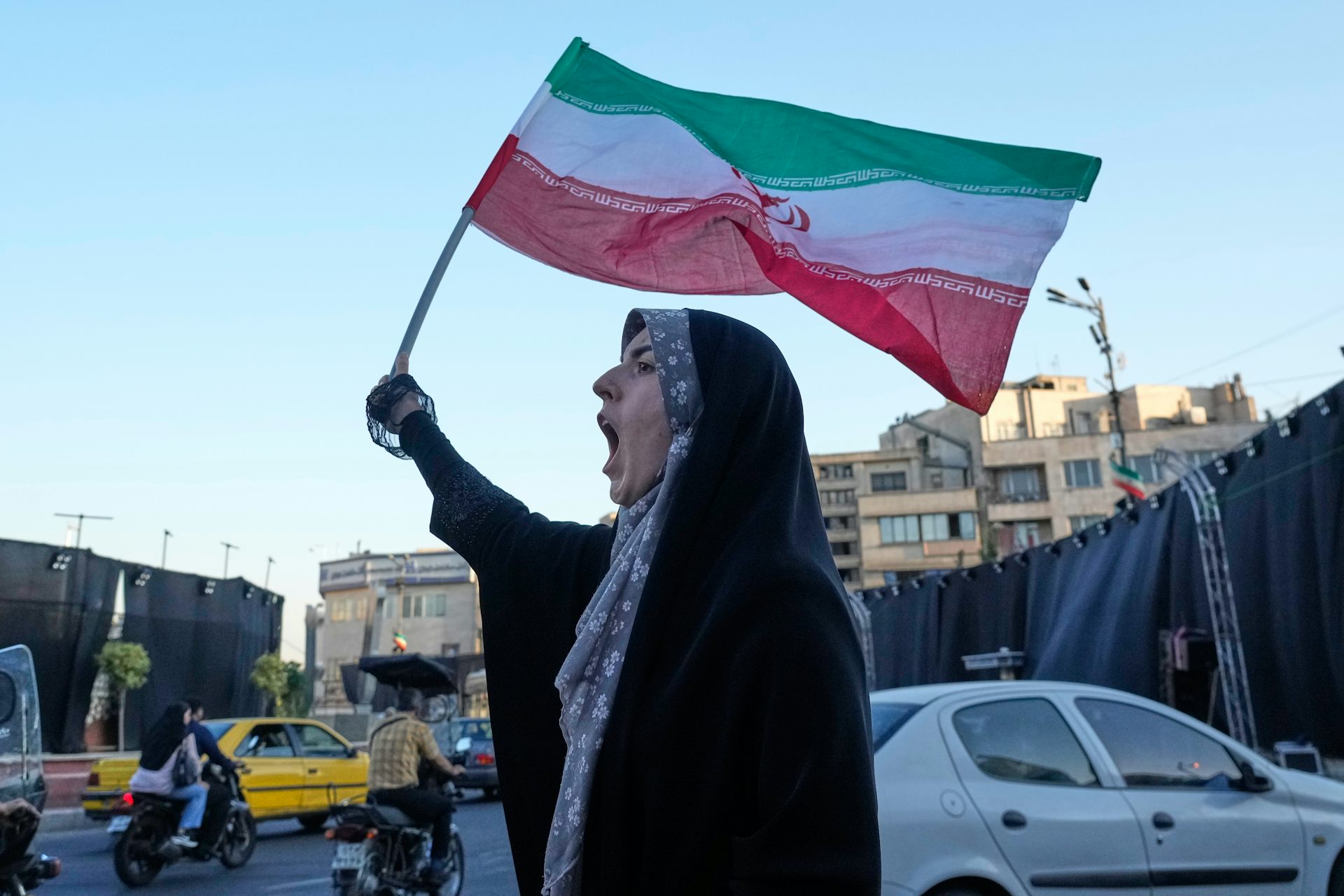
Un acuerdo de paz podría poner fin a la guerra de Irán, pero ¿qué lograron realmente EE. UU. e Israel?
A peace deal may bring an end to the Iran war, but what did the US and Israel truly achieve?
-
Si Europa quiere ‘actuar por su cuenta’ en materia de seguridad, los países deben aprender a cantar con la misma partitura
If Europe wants to ‘go it alone’ on security, countries need to learn to sing from the same songsheet