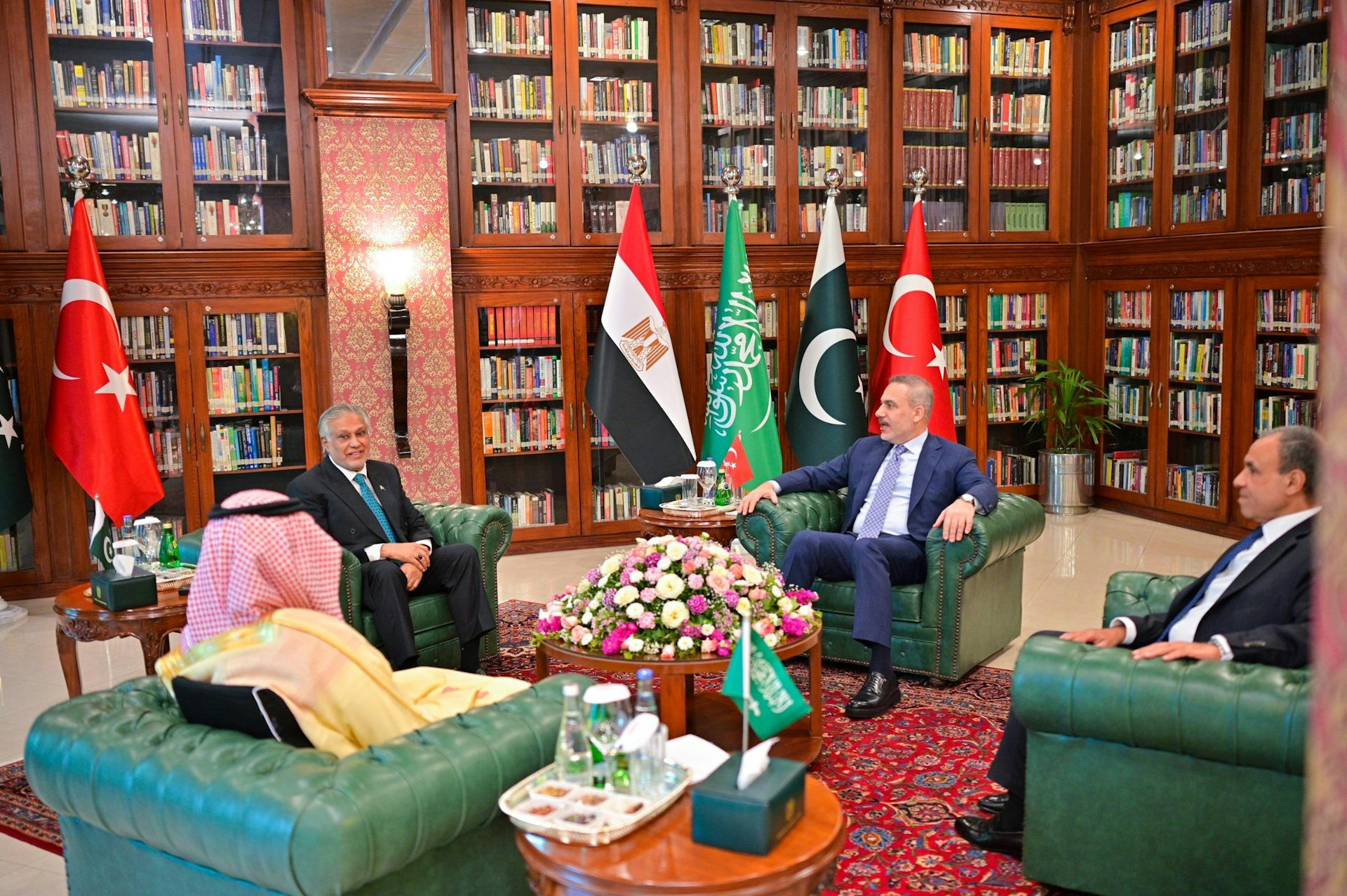
تبرز باكستان وتركيا ومصر والمملكة العربية السعودية ككتلة قوة إقليمية جديدة وسط الحرب الإيرانية
Pakistan, Turkey, Egypt and Saudi Arabia emerge as a new regional power bloc amid Iran war
Pakistan played a leading role in negotiating the ceasefire in Iran.
لعبت باكستان دوراً رائداً في التفاوض على وقف إطلاق النار في إيران.
Pakistan’s prime minister, Shehbaz Sharif, announced that a two-week ceasefire had been agreed between the US and Iran in the early hours of April 8. Delegates from both sides are expected to attend further talks in the Pakistani capital of Islamabad on Friday.
أعلن رئيس وزراء باكستان، شهباز شريف، أنه تم التوصل إلى اتفاق لوقف إطلاق النار لمدة أسبوعين بين الولايات المتحدة وإيران في الساعات الأولى من يوم 8 أبريل. ومن المتوقع أن يحضر مندوبون من الجانبين محادثات أخرى في العاصمة الباكستانية إسلام أباد يوم الجمعة.
This comes less than two weeks after Pakistan hosted talks with Saudi Arabia, Egypt and Turkey in which the four countries called for an end to hostilities in the Gulf. The meeting established the quartet as the primary negotiating channel between Tehran and Washington, and may signal the beginning of a new regional order designed to curb Israeli and Iranian dominance after the war.
يأتي هذا بعد أقل من أسبوعين من استضافة باكستان محادثات مع المملكة العربية السعودية ومصر وتركيا، حيث دعت الدول الأربع إلى إنهاء الأعمال العدائية في الخليج. وأرسى الاجتماع الرباعي كقناة تفاوض رئيسية بين طهران وواشنطن، وقد يشير إلى بداية نظام إقليمي جديد مصمم لكبح الهيمنة الإسرائيلية والإيرانية بعد الحرب.
Even before the war began in late February, Israel and Iran were both isolated in the region. There is no chance of any rapprochement between Israel and Saudi Arabia, which was the original goal of the 2020 Abraham accords. These accords sought to normalise relations between Israel and other countries in the Middle East.
حتى قبل أن تبدأ الحرب في أواخر فبراير، كانت كل من إسرائيل وإيران معزولتين في المنطقة. ولا توجد فرصة لأي تقارب بين إسرائيل والمملكة العربية السعودية، وهو الهدف الأصلي لاتفاقيات إبراهيم لعام 2020. وسعت هذه الاتفاقيات إلى تطبيع العلاقات بين إسرائيل ودول أخرى في الشرق الأوسط.
The United Arab Emirates and Bahrain signed agreements with Israel as part of the accords. But the Saudis have long said they will not normalise ties with Israel before the establishment of a Palestinian state, which was ruled out by the Israeli parliament in a 2024 vote. Reports suggest that Saudi Arabia now wants to replace Israel with Syria as the transit country for a fiber-optic cable connecting the kingdom to Greece.
وقّعت الإمارات العربية المتحدة والبحرين اتفاقيات مع إسرائيل كجزء من الاتفاقيات. لكن السعوديين قالوا منذ فترة طويلة إنهم لن يطبعوا العلاقات مع إسرائيل قبل إقامة دولة فلسطينية، وهو ما استبعده البرلمان الإسرائيلي في تصويت عام 2024. وتشير تقارير إلى أن المملكة العربية السعودية تريد الآن استبدال إسرائيل بسوريا كبلد عبور لكابل من الألياف الضوئية يربط المملكة باليونان.
Turkey also halted its relationship with Israel in 2024 over the conflict in Gaza. And relations between Israel and Qatar soured in September 2025 after an Israeli strike on Hamas leaders in Doha, which drew unanimous condemnation from the UN security council.
كما أوقفت تركيا علاقاتها مع إسرائيل في عام 2024 بسبب الصراع في غزة. وتدهورت العلاقات بين إسرائيل وقطر في سبتمبر 2025 بعد ضربة إسرائيلية لقادة حماس في الدوحة، ما أثار إدانة بالإجماع من مجلس الأمن التابع للأمم المتحدة.
Iran’s only main allies are Russia and, to a much lesser extent, China and the Houthi rebel group in Yemen. Since the conflict with the US and Israel began, China has distanced itself from Iran. The Houthis recently became involved in the war in support of Iran, but they have been weakened by Israeli attacks in recent years.
حلفاء إيران الرئيسيون الوحيدون هم روسيا، وبدرجة أقل بكثير، الصين ومجموعة الحوثيين المتمردة في اليمن. ومنذ بدء الصراع مع الولايات المتحدة وإسرائيل، ابتعدت الصين عن إيران. وقد انخرط الحوثيون مؤخرًا في الحرب لدعم إيران، لكنهم ضعفوا بسبب الهجمات الإسرائيلية في السنوات الأخيرة.
The solid relationship between Qatar and Iran has been severed after Iranian missiles struck the country’s main gas facility, Ras Laffan, on March 18. And Iran’s partial detente with Saudi Arabia, which was brokered by China in 2023 after years of hostility, has now been destroyed following Iranian attacks on Saudi energy facilities.
وقد تم قطع العلاقة المتينة بين قطر وإيران بعد أن ضربت صواريخ إيرانية منشأة الغاز الرئيسية في البلاد، رأس لفان، في 18 مارس. كما دُمر الهدوء الجزئي لإيران مع المملكة العربية السعودية، الذي توسطت فيه الصين في عام 2023 بعد سنوات من العداء، إثر الهجمات الإيرانية على المنشآت السعودية للطاقة.
It is against this backdrop, in which both Iran and Israel are considered regional pariahs, that Pakistan, Saudi Arabia, Turkey and Egypt have ramped up their efforts to secure stability in the Middle East.
في هذا السياق، حيث يُعتبر كل من إيران وإسرائيل من المنبوذين الإقليميين، كثفت باكستان والمملكة العربية السعودية وتركيا ومصر جهودها لتأمين الاستقرار في الشرق الأوسط.
A new order?
هل هناك نظام جديد؟
These four countries share some common areas of interest that help explain their desire to reshape the region. They all have political and economic ties with the US and are members of Donald Trump’s Board of Peace. Established in 2026, the board aims to tackle global conflicts and achieve lasting peace and reconstruction in Gaza.
تتشارك هذه الدول الأربع في بعض مجالات الاهتمام المشتركة التي تساعد في تفسير رغبتها في إعادة تشكيل المنطقة. فجميعها لديها روابط سياسية واقتصادية بالولايات المتحدة وأعضاء في “مجلس السلام” التابع لدونالد ترامب. يهدف المجلس، الذي تأسس في عام 2026، إلى معالجة النزاعات العالمية وتحقيق سلام دائم وإعادة إعمار في غزة.
Each country also brings important contributions to their burgeoning alliance. Pakistan possesses nuclear weapons, Saudi Arabia has the world’s second-largest oil reserves, Egypt controls access to the vital Suez canal waterway and Turkey is a member of the Nato alliance. All have fairly advanced defence industries and a combined population of 500 million people. Taken together, they represent the most politically and militarily influential Muslim-majority countries in the world.
كما تقدم كل دولة مساهمات مهمة لتحالفها المزدهر. تمتلك باكستان أسلحة نووية، وتملك المملكة العربية السعودية ثاني أكبر احتياطيات النفط في العالم، وتسيطر مصر على ممر قناة السويس الحيوي، وتعد تركيا عضواً في حلف الناتو. جميعها لديها صناعات دفاعية متقدمة إلى حد ما، وعدد سكاني مجمع يبلغ 500 مليون نسمة. وبمجملها، تمثل الدول ذات الأغلبية المسلمة الأكثر تأثيراً سياسياً وعسكرياً في العالم.
But these four nations are not necessarily natural allies, and their relationships have experienced turbulence over the years. Egypt’s relationship with Saudi Arabia, for example, has often been described as a “difficult marriage”. Egypt was once the driver of pan-Arab nationalism, a movement that promotes a secular and unified Arab political identity.
لكن هذه الدول الأربع ليست بالضرورة حلفاء طبيعيين، وقد شهدت علاقاتها اضطرابات على مر السنين. فالعلاقة بين مصر والمملكة العربية السعودية، على سبيل المثال، وُصفت في كثير من الأحيان بأنها “زواج صعب.” كانت مصر يوماً ما محركاً للقومية العربية، وهي حركة تعزز الهوية العربية السياسية العلمانية والموحدة.
The Saudi kingdom has historically viewed this movement as a threat. But since Abdel Fattah el-Sisi came to power as Egypt’s president in 2014, their differences have been overcome. Sisi offered political and military support to the Saudi operation against the Houthis in 2015, with Egypt and Saudi Arabia subsequently deepening their defence ties.
من الناحية التاريخية، نظرت المملكة العربية السعودية إلى هذه الحركة على أنها تهديد. ولكن منذ وصول عبد الفتاح السيسي إلى السلطة كرئيس لمصر في عام 2014، تم التغلب على خلافاتهما. وقدم السيسي الدعم السياسي والعسكري للعملية السعودية ضد الحوثيين في عام 2015، ومنذ ذلك الحين عمقت مصر والمملكة العربية السعودية علاقاتهما الدفاعية.
Particularly under the leadership of Recep Tayyip Erdoğan, Turkey has positioned itself as a regional leader and problem solver. But Turkey, too, has endured periods of frosty relations with other regional powers. Ankara’s relations with Cairo deteriorated sharply after the Egyptian president, Mohammed Morsi, a close ally of Turkey, was ousted in a 2013 coup.
وخاصة تحت قيادة رجب طيب أردوغان، وضعت تركيا نفسها كقائد إقليمي وحلال للمشاكل. لكن تركيا أيضاً مرت بفترات من العلاقات المتجمدة مع قوى إقليمية أخرى. وتدهورت العلاقات بين أنقرة والقاهرة بشكل حاد بعد عزل الرئيس المصري محمد مرسي، الحليف المقرب لتركيا، في انقلاب عام 2013.
Similarly, tensions between Turkey and Saudi Arabia became particularly acute following the 2018 murder of journalist Jamal Khashoggi in the Saudi consulate in Istanbul. A 2021 US intelligence report found that Saudi crown prince Mohammed bin Salman approved the murder, though he denies this allegation.
وبالمثل، أصبحت التوترات بين تركيا والمملكة العربية السعودية حادة بشكل خاص في أعقاب مقتل الصحفي جمال خاشقجي في القنصلية السعودية في إسطنبول عام 2018. ووجد تقرير استخباراتي أمريكي لعام 2021 أن ولي العهد السعودي محمد بن سلمان وافق على القتل، على الرغم من نفيه لهذا الادعاء.
A process of rapprochement took place between Turkey and Saudi Arabia in 2022, and then between Turkey and Egypt in 2025. Erdoğan visited Cairo and Riyadh in February 2026 and has proposed several different geoeconomic frameworks to connect Asia with Europe. These include the so-called Middle East Corridor, a planned economic corridor aimed at fostering economic integration between Asia, the Persian Gulf and Europe.
وقد حدثت عملية تقارب بين تركيا والمملكة العربية السعودية في عام 2022، ثم بين تركيا ومصر في عام 2025. وزار أردوغان القاهرة والرياض في فبراير 2026 واقترح عدة أطر اقتصادية جغرافية مختلفة لربط آسيا بأوروبا. وتشمل هذه الأطر ما يسمى “ممر الشرق الأوسط”، وهو ممر اقتصادي مخطط يهدف إلى تعزيز التكامل الاقتصادي بين آسيا والخليج العربي وأوروبا.
Pakistan, meanwhile, has so far not come to Saudi Arabia’s aid when it has come under attack from Iran in the current conflict. This is despite the signing of a strategic mutual defence agreement between the two countries in 2025.
أما باكستان، فلم تقدم حتى الآن المساعدة للمملكة العربية السعودية عندما تعرضت لهجوم من إيران في النزاع الحالي. وذلك على الرغم من توقيع اتفاقية دفاع متبادل استراتيجية بين البلدين في عام 2025.
Saudi Arabia, Egypt, Pakistan and Turkey have not always seen eye to eye. But their relationships of convenience are now becoming increasingly significant as Israel and Iran’s regional isolation grows.
لم تتفق المملكة العربية السعودية ومصر وباكستان وتركيا دائماً. لكن علاقات الملاءمة بينها أصبحت الآن ذات أهمية متزايدة مع تزايد العزلة الإقليمية لإسرائيل وإيران.
Natasha Lindstaedt does not work for, consult, own shares in or receive funding from any company or organisation that would benefit from this article, and has disclosed no relevant affiliations beyond their academic appointment.
ناتاشا ليندستيد لا تعمل أو تستشير أو تمتلك حصصاً أو تتلقى تمويلاً من أي شركة أو منظمة يمكن أن تستفيد من هذه المقالة، ولم تكشف عن أي انتماءات ذات صلة تتجاوز منصبها الأكاديمي.
Read more
-
إن “جدول الأعمال الظل” للمحكمة العليا يطرح قرارات متسرعة ذات تداعيات طويلة الأمد، خارج نطاق مداولاتها المعتادة والحذرة.
Supreme Court’s ‘shadow docket’ brings hasty decisions with long-lasting implications, outside of its usual careful deliberation
-
إزاحة كير ستامر أصعب مما يبدو – قواعد الحزب تعني أنه يمكنه أن يختار الاستمرار في القتال
Ousting Keir Starmer is harder than it looks – party rules mean he can choose to keep fighting