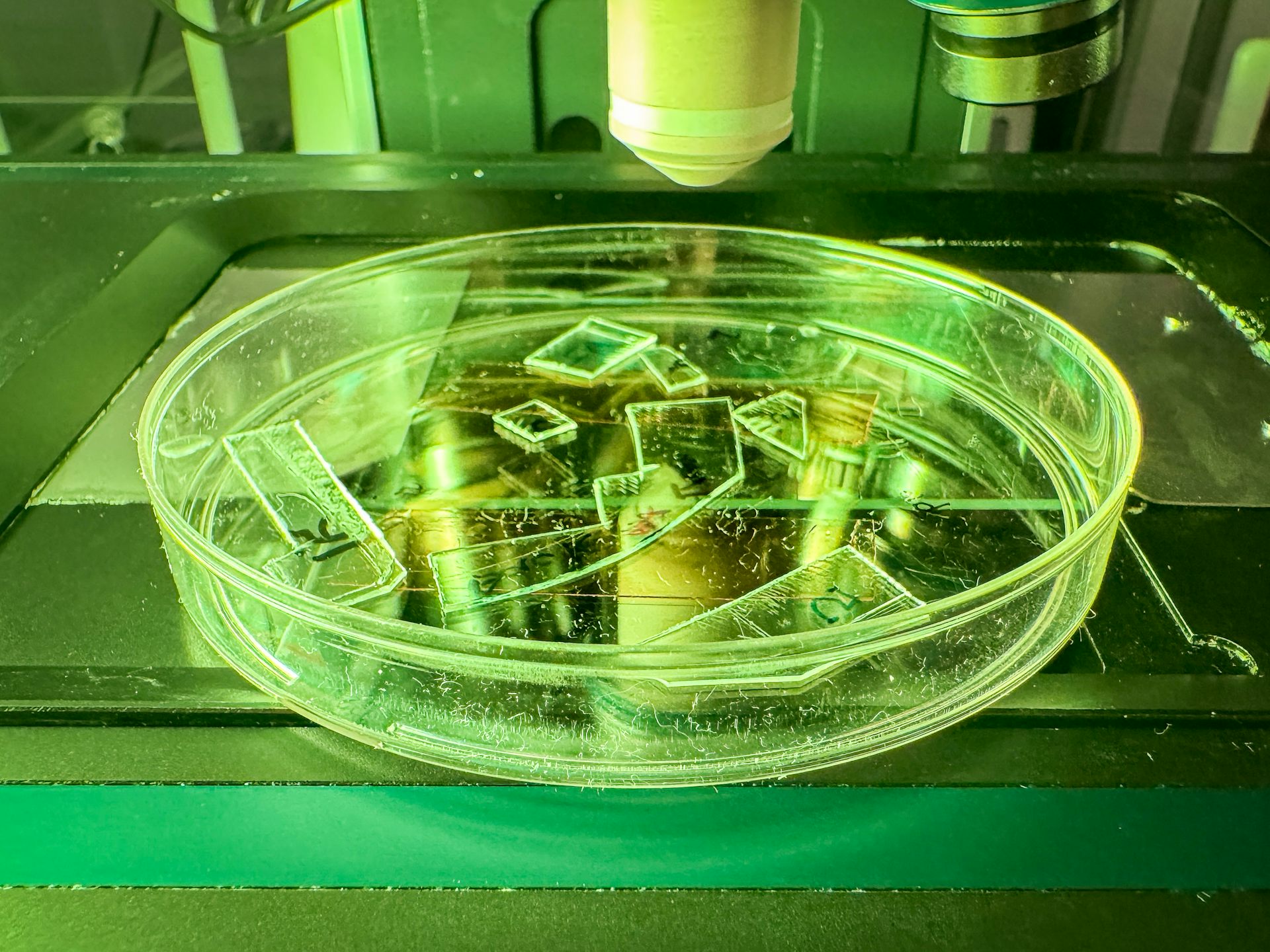
غشاء بلاستيكي جديد مغطى بآلاف الأعمدة الصغيرة يمكنه تمزيق الفيروسات عند التلامس
New plastic film covered in thousands of tiny pillars can tear apart viruses on contact
The textured acrylic plastic surface, inspired by insect wings, could help prevent the spread of major viruses.
يمكن للسطح البلاستيكي الأكريليكي المُعَرَّش، المستوحى من أجنحة الحشرات، أن يساعد في منع انتشار الفيروسات الخطيرة.
Think of how many surfaces you touch every day, from your kitchen bench to the hand rail on the bus or train, your work desk and your phone screen.
فكر في عدد الأسطح التي تلمسها كل يوم، بدءاً من طاولة مطبخك وصولاً إلى مسند اليد في الحافلة أو القطار، ومكتب عملك وشاشة هاتفك.
A range of nasty viruses and other germs can easily spread via these surfaces. The typical route of infection involves touching a contaminated surface – and then touching your eyes, nose or mouth.
يمكن لمجموعة من الفيروسات الضارة والجراثيم الأخرى أن تنتشر بسهولة عبر هذه الأسطح. يتضمن المسار النموذجي للعدوى لمس سطح ملوث – ثم لمس عينيك أو أنفك أو فمك.
Of course, it’s possible to clean surfaces with chemical products. But these can wear off, harm the environment or contribute to antimicrobial resistance, where germs no longer respond to medicines because of repeated exposure.
بالطبع، من الممكن تنظيف الأسطح بالمنتجات الكيميائية. لكن هذه المنتجات قد تتآكل، أو تضر بالبيئة، أو تساهم في مقاومة مضادات الميكروبات، حيث لم تعد الجراثيم تستجيب للأدوية بسبب التعرض المتكرر.
In our new study, published in Advanced Science, colleagues and I created a thin plastic surface with tiny nanoscale features, billionths of a metre in size, that mimic the nanotextured surface of insect wings and can physically rupture viruses – specifically human parainfluenza virus type 3 (hPIV-3) .
في دراستنا الجديدة، التي نُشرت في مجلة “Advanced Science”، قام زملاؤ لي وأنا بإنشاء سطح بلاستيكي رقيق يحتوي على ميزات نانوية صغيرة، بحجم جزء من المليار متر، تحاكي السطح ذي النسيج النانوي لأجنحة الحشرات ويمكنها أن تفتت الفيروسات جسدياً – وتحديداً فيروس الإنفلونزا البشري المشابه (hPIV-3) .
This new material offers a cheap, scalable way to make surfaces such as phones and hospital equipment far less likely to spread disease.
تقدم هذه المادة الجديدة طريقة رخيصة وقابلة للتطوير لجعل الأسطح مثل الهواتف ومعدات المستشفيات أقل عرضة بكثير لنشر الأمراض.
The downsides of disinfectants
العيوب السلبية للمطهرات
Current methods for combating the spread of viruses via surfaces usually involves cleaning to remove dirt and disinfection to remove hidden contaminants.
عادةً ما تتضمن الطرق الحالية لمكافحة انتشار الفيروسات عبر الأسطح التنظيف لإزالة الأوساخ والتطهير لإزالة الملوثات الخفية.
Disinfectant must remain wet for some time to kill germs. This can be challenging in some real-world settings.
يجب أن يبقى المطهر رطباً لبعض الوقت لقتل الجراثيم. قد يكون هذا أمراً صعباً في بعض البيئات الواقعية.
Surfaces can also be recontaminated quickly when other people touch them. And disinfection often involves the use of harsh chemicals which can damage equipment and the environment.
يمكن أيضاً إعادة تلويث الأسطح بسرعة عندما يلمسها أشخاص آخرون. وغالباً ما يتضمن التطهير استخدام مواد كيميائية قاسية يمكن أن تتلف المعدات والبيئة.
Scientists have previously developed antiviral surface modifications. These strategies often involve incorporating materials such as graphene or tannic acid and other natural agents into personal protective equipment such as masks, gloves, goggles, hard hats, and respirators.
طور العلماء سابقاً تعديلات سطحية مضادة للفيروسات. غالباً ما تتضمن هذه الاستراتيجيات دمج مواد مثل الجرافين أو حمض التانيك وعوامل طبيعية أخرى في معدات الحماية الشخصية مثل الأقنعة والقفازات والنظارات الواقية والخوذات وأجهزة التنفس.
These coatings are efficient. But they can pose a risk to human health. They can also be environmental hazards due to chemical leaching and have declining effectiveness over time as the potency of the active ingredients weakens.
هذه الطلاءات فعالة. لكنها قد تشكل خطراً على صحة الإنسان. ويمكن أن تكون أيضاً مخاطر بيئية بسبب التسرب الكيميائي ولها فعالية متناقصة بمرور الوقت مع ضعف قوة المكونات النشطة.
A decade-long journey
رحلة استمرت عقدًا من الزمان
Our journey toward a virus-bursting surface started more than a decade ago.
بدأت رحلتنا نحو سطح يمزق الفيروسات منذ أكثر من عقد.
We initially aimed to engineer a surface so smooth that germs would simply slide off. Surprisingly, we discovered the opposite. Bacteria adhere quite readily to nanoscopically smooth surfaces.
في البداية، كنا نهدف إلى هندسة سطح أملس لدرجة أن الجراثيم ستنزلق ببساطة عنه. والمفاجأة أننا اكتشفنا العكس. فالعدوى البكتيرية تلتصق بسهولة بالأسطح الناعمة على المستوى النانوي.
Nature offers examples of bacteria-free surfaces. Take the water-repelling wings of cicadas and dragonflies. While these wings are self-cleaning, they act less by repelling bacteria and more as natural bactericides. That is, they kill bacteria. Natural bactericides are nature-derived “agents” that can kill germs, rather than inhibit their growth.
تقدم الطبيعة أمثلة للأسطح الخالية من البكتيريا. خذ أجنحة الزيز وزيزفون الماء. فبينما أن هذه الأجنحة ذاتية التنظيف، فإنها تعمل ليس عن طريق صد البكتيريا بل كعوامل طبيعية مبيدة للبكتيريا. أي أنها تقتل البكتيريا. العوامل الطبيعية المبيدة للبكتيريا هي “عوامل” مشتقة من الطبيعة يمكنها قتل الجراثيم، بدلاً من تثبيط نموها.
Experiments my colleagues and I did with gold-coated wings confirmed this bacteria-killing effect is not driven by surface chemistry, but rather by topography.
أكدت التجارب التي أجريتها أنا وزملائي على الأجنحة المطلية بالذهب أن تأثير قتل البكتيريا هذا لا يعتمد على كيمياء السطح، بل على التضاريس (التوبوغرافيا) .
The physical nanostructures on the surface essentially force bacterial cell membranes to stretch and rupture.
تجبر التراكيب النانوية المادية على السطح أغشية الخلايا البكتيرية على التمدد والتمزق.
Our earlier work showed that nanospike-covered silicon effectively destroys viruses on contact. But its rigid nature restricts its use on complex objects.
أظهر عملنا السابق أن السيليكون المغطى بالنتوءات النانوية يدمر الفيروسات بفعالية عند التلامس. لكن طبيعته الصلبة تقيد استخدامه على الأجسام المعقدة.
A lightweight, flexible and virus-bursting material
مادة خفيفة الوزن ومرنة ومُفجِّرة للفيروسات
In this new study, we addressed this problem by creating a virus-bursting material that was lightweight, cost-effective and flexible.
في هذه الدراسة الجديدة، عالجنا هذه المشكلة من خلال إنشاء مادة مُفجِّرة للفيروسات كانت خفيفة الوزن وفعالة من حيث التكلفة ومرنة.
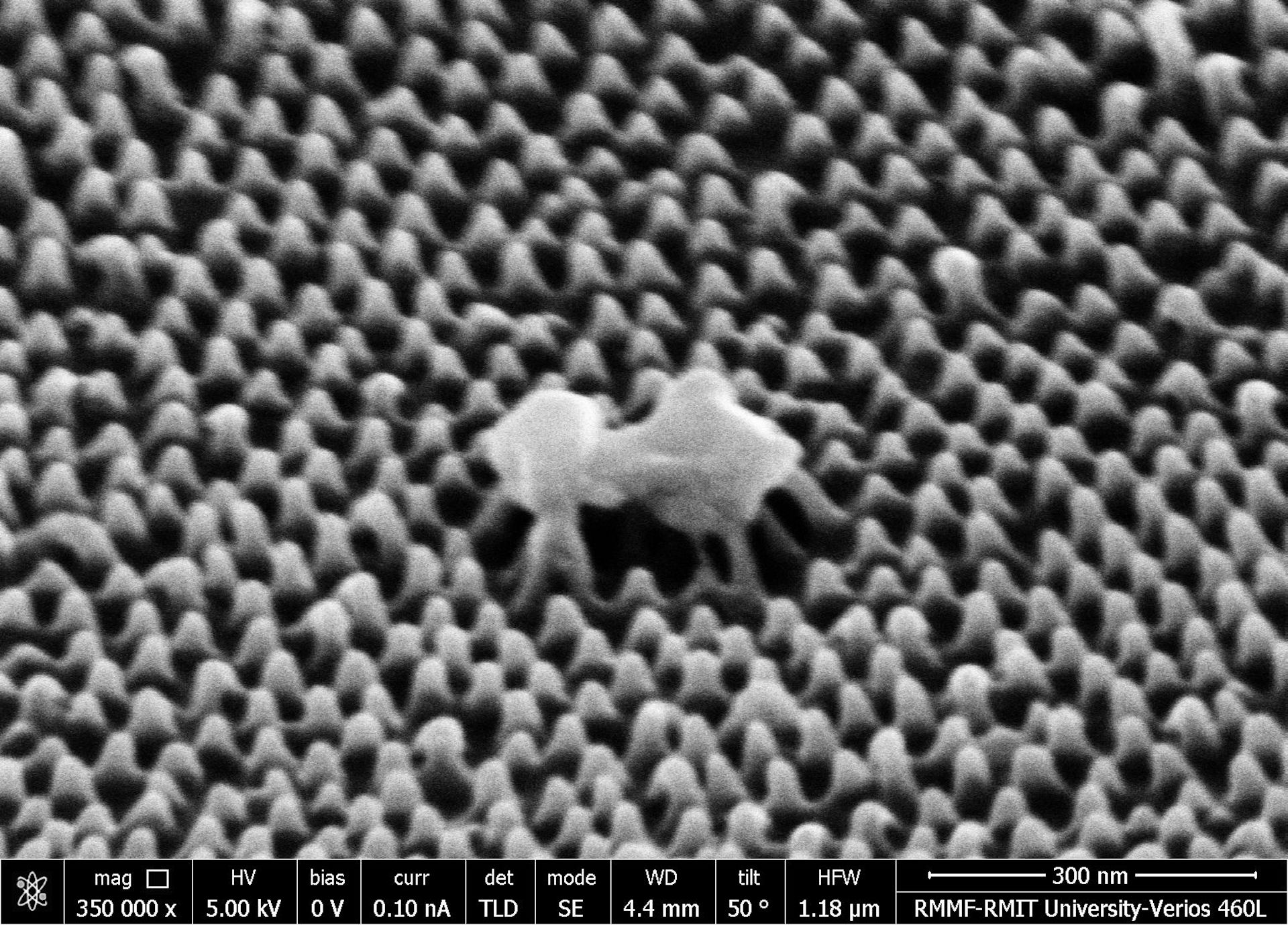
This material is a thin acrylic film covered in thousands and thousands of ultra fine pillars. The nanotextured materials are smooth to touch. However, these nanopillars grab and stretch a virus’s outer shell until it ruptures. This kills viruses through mechanical force.
هذه المادة عبارة عن غشاء أكريليك رقيق مغطى بآلاف وآلاف الأعمدة فائقة النعومة. المواد ذات النسيج النانوي ملساء عند اللمس. ومع ذلك، فإن هذه الأعمدة النانوية تمسك بغلاف الفيروس الخارجي وتشده حتى يتمزق. وهذا يقتل الفيروسات بالقوة الميكانيكية.
Lab tests with hPIV 3, which causes bronchiolitis and pneumonia, found up to 94% of virus particles were ripped apart or fatally damaged within an hour of contact with this material.
أظهرت الاختبارات المعملية باستخدام فيروس hPIV 3، المسبب لالتهاب القصيبات والرئة، أن ما يصل إلى 94% من جزيئات الفيروس قد تمزقت أو تضررت بشكل مميت في غضون ساعة من ملامسة هذه المادة.
We discovered the distance between nanopillars matters far more than their height, with tightly packed pillars about 60 nanometres apart working best.
اكتشفنا أن المسافة بين الأعمدة النانوية أهم بكثير من ارتفاعها، حيث تعمل الأعمدة المتقاربة بمسافة تبلغ حوالي 60 نانومترًا بشكل أفضل.
The mould we used to create this material can be easily scaled to provide wide-ranging industrial opportunities, from food packaging to public transport systems to hospital equipment and office desks.
يمكن توسيع القالب الذي استخدمناه لإنشاء هذه المادة بسهولة لتوفير فرص صناعية واسعة النطاق، بدءًا من تغليف الأغذية وصولاً إلى أنظمة النقل العام ومعدات المستشفيات ومكاتب العمل.
Nanostructured surfaces are built for durability. But they are susceptible to the same physical, chemical, and environmental stressors as any other material, and will degrade over time.
تُصمم الأسطح ذات البنية النانوية لتحمل المتانة. لكنها عرضة لنفس الضغوط الفيزيائية والكيميائية والبيئية التي تتعرض لها أي مادة أخرى، وستتدهور بمرور الوقت.
Much remains to be discovered in the search for germ-free surfaces. But these nanotextured surfaces have enormous potential in the fight against viruses and provide an alternative to traditional, chemical-based methods.
لا يزال هناك الكثير لاكتشافه في البحث عن الأسطح الخالية من الجراثيم. لكن هذه الأسطح ذات النسيج النانوي لديها إمكانات هائلة في مكافحة الفيروسات وتوفر بديلاً للطرق التقليدية القائمة على المواد الكيميائية.
Elena Ivanova does not work for, consult, own shares in or receive funding from any company or organisation that would benefit from this article, and has disclosed no relevant affiliations beyond their academic appointment.
لا تعمل إيلينا إيفانوفا لدى، أو تستشير، أو تمتلك حصصًا في، أو تتلقى تمويلاً من أي شركة أو منظمة قد تستفيد من هذه المقالة، ولم تكشف عن أي انتماءات ذات صلة تتجاوز منصبها الأكاديمي.
Read more
-
ثلاثة أسباب لعدم سحب دونالد ترامب الولايات المتحدة من الناتو
Three reasons Donald Trump won’t pull the US out of Nato
-

عندما تُطرح عمالقة الذكاء الاصطناعي للاكتتاب العام، هل سيعرف المستثمرون العاديون ما إذا كانوا يواكبون هذه الموجة؟
When AI giants go public, will ordinary investors know if they are along for the ride?