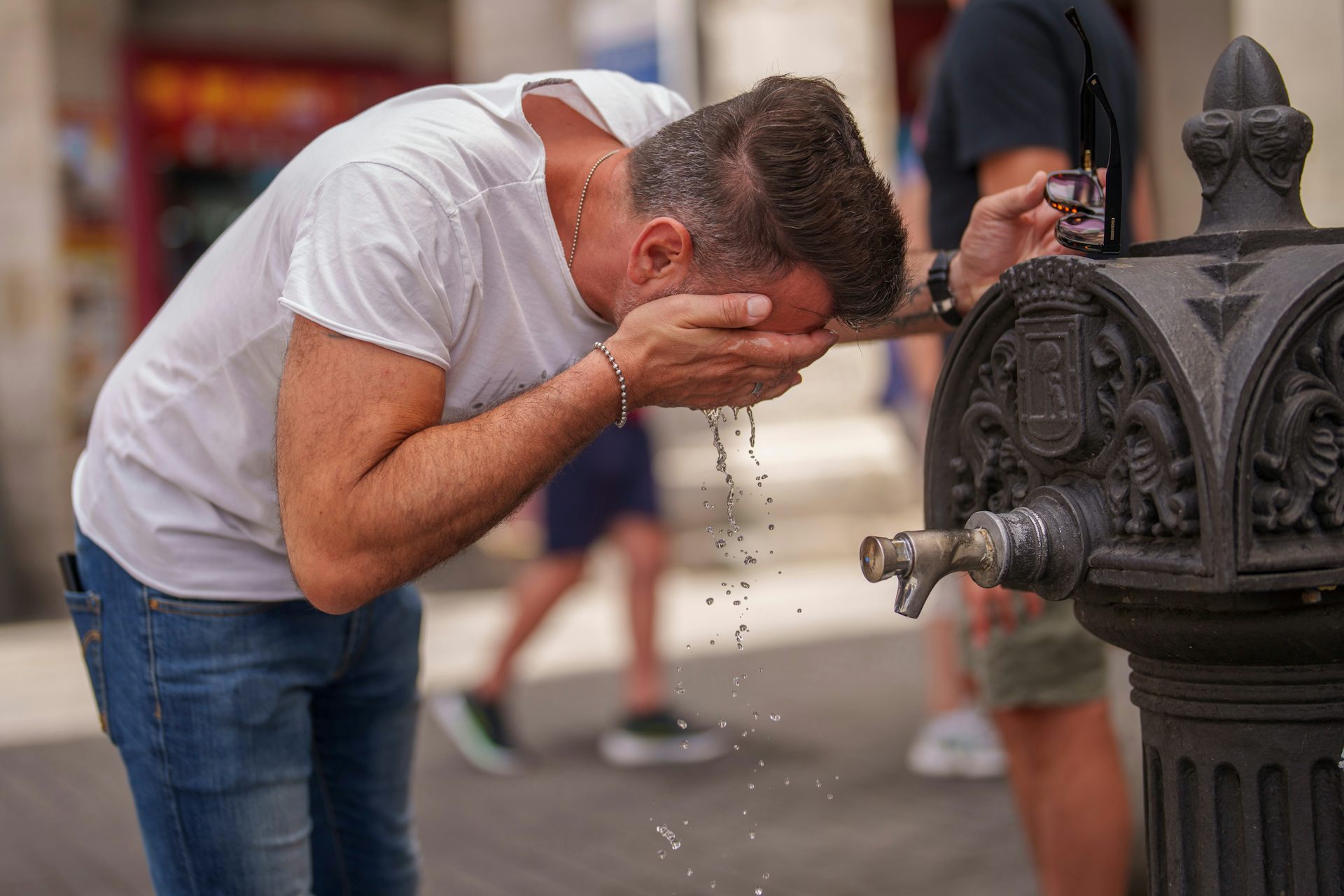
Europa está luchando contra una ola de calor récord. ¿Qué la hace tan severa?
Europe is battling a record-breaking heatwave. What’s making it so severe?
A climate expert unpacks the potential causes and risks of extreme heat.
Un experto en clima desglosa las posibles causas y riesgos del calor extremo.
Sweltering temperatures are shattering records across Europe, as the continent battles a deadly heatwave.
Las temperaturas escaldantes están rompiendo récords en toda Europa, mientras el continente lucha contra una ola de calor mortífera.
On Tuesday and Wednesday, France endured its hottest days in history, with western regions reaching highs of between 39°C and 43°C. Wednesday was the United Kingdom’s warmest June day on record, with the mercury climbing to 36.1°C. And according to early data, Spain, Germany, Austria, the Netherlands and Switzerland have all broken June temperature records at several sites. And the event is not over yet.
El martes y el miércoles, Francia experimentó sus días más calurosos en la historia, con regiones occidentales alcanzando máximas de entre 39°C y 43°C. El miércoles fue el día de junio más cálido registrado del Reino Unido, con el mercurio subiendo hasta los 36.1°C. Y según datos preliminares, España, Alemania, Austria, Países Bajos y Suiza han roto récords de temperatura de junio en varios sitios. Y el evento aún no ha terminado.
Tragically, lives have already been lost, including dozens of people who have drowned in France in the past week, while trying to cool down in the punishing heat.
Trágicamente, ya se han perdido vidas, incluidos docenas de personas que se ahogaron en Francia la semana pasada mientras intentaban refrescarse del calor implacable.
But this historic heatwave is not happening in isolation. It comes days after the global sea surface temperature again reached record levels. Meanwhile, Australia’s weather bureau has declared El Niño active, making a hotter, drier year in Australia, Asia and the South Pacific much more likely. And since April, India and Pakistan have been battling a sustained and ultimately deadly heatwave.
Pero esta ola de calor histórica no está ocurriendo de forma aislada. Llega días después de que la temperatura superficial global del mar alcanzara nuevamente niveles récord. Mientras tanto, la oficina meteorológica de Australia ha declarado activo El Niño, lo que hace mucho más probable un año más cálido y seco en Australia, Asia y el Pacífico Sur. Y desde abril, India y Pakistán han estado luchando contra una ola de calor sostenida y finalmente mortal.
So what’s driving this latest heatwave? And why is it so severe?
Entonces, ¿qué está causando esta última ola de calor? ¿Y por qué es tan severa?
An unusual heatwave
Una ola de calor inusual
A heatwave occurs when the average temperature is unusually hot for three or more days in a row. That’s compared to past weather data taken from the same location.
Una ola de calor ocurre cuando la temperatura promedio es inusualmente alta durante tres o más días consecutivos. Esto se compara con datos meteorológicos pasados tomados del mismo lugar.
But scientists are losing sleep over the current European heatwave, for two main reasons.
Pero los científicos no duermen tranquilos por la actual ola de calor europea, debido a dos razones principales.
1. Timing
1. Momento
In Europe, the hottest time of year comes in mid- to late July, about a month after the summer solstice. However, recent research suggests days of intense heat stress are now starting to arrive in June. Since 1950, only one other major heatwave has arrived earlier than the current heatwave, which is unfolding weeks before the peak of the European summer.
En Europa, el momento más caluroso del año llega a mediados o finales de julio, aproximadamente un mes después del solsticio de verano. Sin embargo, investigaciones recientes sugieren que los días de intenso estrés por calor ahora están comenzando a llegar en junio. Desde 1950, solo otra ola de calor importante ha llegado antes que la actual, que se está desarrollando semanas antes del pico del verano europeo.
Current evidence shows climate change is making heatwaves more frequent and intense. One study examined the heatwave that hit southeast England in June 2025. It found that without the effect of human-made greenhouse gas emissions, such a heatwave would only happen once every 50 years. But when the researchers accounted for the temperature increase of 1.3°C caused by human-induced climate change, this became at least once every five years.
La evidencia actual muestra que el cambio climático está haciendo que las olas de calor sean más frecuentes e intensas. Un estudio examinó la ola de calor que azotó sureste de Inglaterra en junio de 2025. Descubrió que sin el efecto de las emisiones de gases de efecto invernadero creados por el hombre, una ola de calor así solo ocurriría una vez cada 50 años. Pero cuando los investigadores tuvieron en cuenta el aumento de temperatura de 1.3°C causado por el cambio climático inducido por humanos, esto se convirtió en al menos una vez cada cinco años.
2. Severity
2. Severidad
In a world without climate change, this extreme heatwave would rarely if ever happen so early in the year. And it also would not be toppling temperature records, and by such staggering amounts.
En un mundo sin cambio climático, esta ola de calor extrema rara vez ocurriría tan temprano en el año. Y tampoco estaría batiendo récords de temperatura, y por cantidades tan asombrosas.
Tuesday and Wednesday were France’s hottest days since records began in 1947, with an average temperature of 29.9°C across the country. On Tuesday, 147 French towns hit all-time highs for June, with 41 local weather stations recording figures above 43°C.
El martes y el miércoles fueron los días más calurosos de Francia desde que comenzaron los registros en 1947, con una temperatura promedio de 29.9°C en todo el país. El martes, 147 ciudades francesas alcanzaron máximas históricas para junio, con 41 estaciones meteorológicas locales registrando cifras superiores a 43°C.
France also slept through its warmest night ever from Tuesday into Wednesday, with a national average temperature of 21.6°C. The overnight heat was enough to make some rivers so warm they could not be safely used to cool nuclear power plants.
Francia también pasó la noche más cálida de su historia del martes al miércoles, con una temperatura promedio nacional de 21.6°C. El calor nocturno fue suficiente para hacer que algunos ríos estuvieran tan calientes que no podían utilizarse de forma segura para enfriar centrales nucleares.
In the same week, Spain also set multiple daytime and nighttime records, with one location enduring three consecutive nights of 30°C or above. Parts of Spain have seen temperatures surpass 45°C.
En la misma semana, España también estableció múltiples récords diurnos y nocturnos, con un lugar que soportó tres noches consecutivas de 30°C o más. Partes de España han visto temperaturas superar los 45°C.
In western Europe, the heatwave is expected to peak in the middle of this week before shifting east, with forecasts suggesting Poland and Germany will bear the brunt over the weekend.
En el oeste de Europa, se espera que la ola de calor alcance su punto máximo a mitad de esta semana antes de desplazarse hacia el este, con pronósticos que sugieren que Polonia y Alemania soportarán la mayor parte del golpe durante el fin de semana.
What caused it?
¿Qué lo causó?
At the local scale, heatwaves occur when a high-pressure system settles over a region. These systems act as “lids” that trap heat and push it closer to the surface. They also disperse clouds to allow more sunlight to stream in.
A escala local, las olas de calor ocurren cuando un sistema de alta presión se asienta sobre una región. Estos sistemas actúan como “tapas” que atrapan el calor y lo empujan más cerca de la superficie. También dispersan nubes para permitir que entre más luz solar.
On a broader scale, climate change from the burning of oil, coal and gas is reshaping how and when heatwaves form. This is because the additional heat trapped in the atmosphere also changes large-scale weather patterns, which typically move east to west, allowing more slow-moving high-pressure systems to form. This in turn increases the risk of heatwaves.
A una escala más amplia, el cambio climático provocado por la quema de petróleo, carbón y gas está remodelando cómo y cuándo se forman las olas de calor. Esto se debe a que el calor adicional atrapado en la atmósfera también cambia los patrones climáticos a gran escala, que normalmente se mueven de este a oeste, permitiendo que se formen más sistemas de alta presión de movimiento lento. Esto, a su vez, aumenta el riesgo de olas de calor.
Research shows in the five decades between 1950 and 1999, Europe endured five intense heatwaves. Between 2000 and 2021, there were 18 such heatwaves. Add to that the extreme heatwaves of 2022, 2023 and 2025, and this figure rises to more than 20 severe heatwaves in just 25 years. So the evidence is clear – European heatwaves are happening far more often.
La investigación muestra que en las cinco décadas entre 1950 y 1999, Europa sufrió cinco olas de calor intensas. Entre 2000 y 2021, hubo 18 olas de calor similares. Si a esto se suman las olas de calor extremas de 2022, 2023 y 2025, esta cifra asciende a más de 20 olas de calor severas en solo 25 años. Por lo tanto, la evidencia es clara: las olas de calor europeas están ocurriendo con mucha más frecuencia.
How are people coping?
¿Cómo se están adaptando las personas?
This heatwave has already tragically claimed dozens of lives in France, where people have drowned.
Esta ola de calor ya ha cobrado trágicamente decenas de vidas en Francia, donde la gente se ha ahogado.
According to the European Climate Risk Assessment, heatwaves already pose a critical health risk to people across southern Europe. And in coming years, communities in southern and western-central Europe will be most at risk of heat-related illness and death.
Según la Evaluación de Riesgo Climático Europeo, las olas de calor ya representan un riesgo crítico para la salud de las personas en todo el sur de Europa. Y en los próximos años, las comunidades del sur y centro-oeste de Europa estarán más expuestas a enfermedades y muertes relacionadas con el calor.
What makes this heatwave so severe is the combination of extreme temperatures and high humidity, which is completely unlike the typical dry summers experienced in southern Australia.
Lo que hace que esta ola de calor sea tan severa es la combinación de temperaturas extremas y alta humedad, lo cual es completamente diferente a los típicos veranos secos experimentados en el sur de Australia.
Children and the elderly are most at risk of heat-related illness. Their bodies are less able to evaporate sweat and regulate their internal temperature. For these populations, extreme heat coupled with humidity can be life-threatening.
Los niños y los ancianos son los más propensos a enfermedades relacionadas con el calor. Sus cuerpos tienen menos capacidad para evaporar el sudor y regular su temperatura interna. Para estas poblaciones, el calor extremo combinado con la humedad puede ser potencialmente mortal.
What about the next southern hemisphere summer?
¿Qué pasa con el próximo verano del hemisferio sur?
Historically, heatwaves in Europe aren’t related to heatwaves in the following southern hemisphere summer.
Históricamente, las olas de calor en Europa no están relacionadas con las olas de calor del verano siguiente en el hemisferio sur.
However, climate change is increasing the risk of extreme heat in any given year. Combine this with the effects of El Niño, and global average temperatures will be at near-record levels for both 2026 and 2027.
Sin embargo, el cambio climático está aumentando el riesgo de calor extremo en cualquier año dado. Combinado con los efectos de El Niño, las temperaturas promedio globales estarán en niveles cercanos a récords tanto para 2026 como para 2027.
In our changing climate, the risk of extreme heat – Australia’s deadliest natural hazard – is now a global reality.
En nuestro clima cambiante, el riesgo de calor extremo —el peligro natural más mortífero de Australia— es ahora una realidad global.
Andrew B. Watkins is a Climate Councillor with the Climate Council.
Andrew B. Watkins es un Consejero Climático del Consejo Climático.
Read more
-
Chernóbil a los 40: Archivos secretos de la Stasi revelan el alcance de la campaña de desinformación soviética sobre el desastre nuclear
Chernobyl at 40: Secret Stasi files reveal extent of Soviet misinformation campaign over nuclear disaster
-
Por qué la llamada de Trump a retirar 5,000 tropas estadounidenses de Alemania perjudicará a Estados Unidos
Why Trump’s call to pull 5,000 US troops from Germany will hurt America