Como um rei sueco foi em greve em 1768
How a Swedish king went on strike in 1768
In the shift from absolutism towards representative government, the monarch symbolised impartiality and balance
Na transição do absolutismo para o governo representativo, o monarca simbolizava imparcialidade e equilíbrio
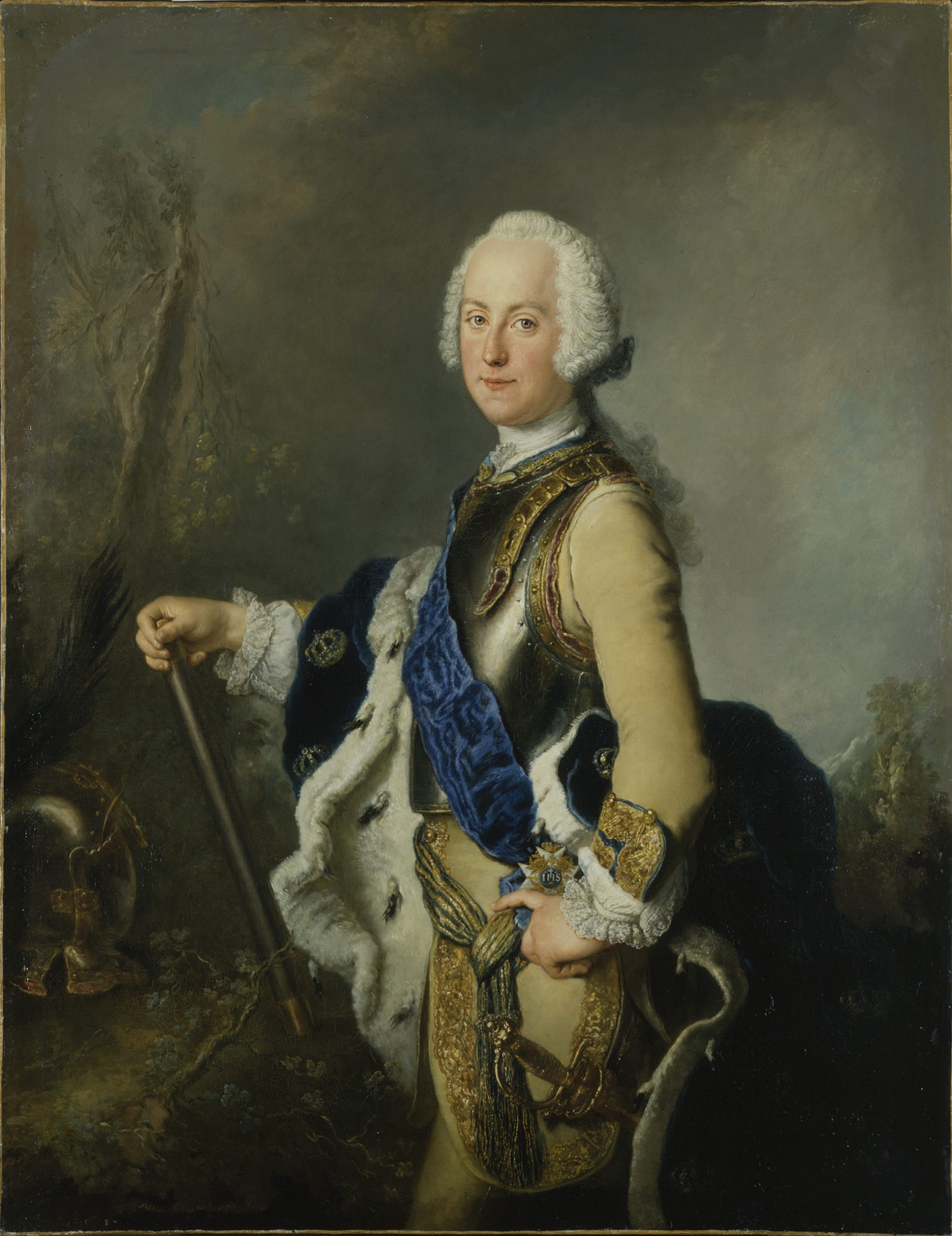
In 1768, towards the end of the period of Swedish history known as Frihetstiden, the Age of Liberty, King Adolf Frederick threatened to abdicate unless an extraordinary session of the Riksdag, the Swedish parliament, was immediately convened. The immediate issue concerned a new financial plan, but the king hoped that the parliamentary session would also lead to constitutional changes to strengthen his power.
Em 1768, perto do fim do período da história sueca conhecido como Frihetstiden, a Era da Liberdade, o Rei Adolf Frederico ameaçou abdicar a menos que uma sessão extraordinária do Riksdag, o parlamento sueco, fosse convocada imediatamente. A questão imediata dizia respeito a um novo plano financeiro, mas o rei esperava que a sessão parlamentar também levasse a mudanças constitucionais para fortalecer seu poder.
The 16-member strong Council of the Realm, over which the king presided, was given three days to summon the Riksdag. Meanwhile, the king would not partake in any decision-making. In other words, he went on strike.
O Conselho do Reino de 16 membros, sobre o qual o rei presidia, teve três dias para convocar o Riksdag. Enquanto isso, o rei não participaria de nenhuma tomada de decisão. Em outras palavras, ele fez greve.
As I show in my new book, Monarchy in the Age of Liberty: Royal power and public life in eighteenth-century Sweden, this moment in Swedish political history poses an interesting question: does a monarchy need a monarch? The country at the time was a kingdom, yet it effectively had a republican form of government. In the events that followed the king’s ultimatum, his councillors even attempted to replace him with a signature stamp. It is one of the many paradoxes of this era that such a measure be taken not in opposition to the monarchy but in order to preserve its very essence.
Como mostro em meu novo livro, Monarquia na Era da Liberdade: Poder Real e Vida Pública na Suécia do século XVIII, este momento da história política sueca levanta uma questão interessante: uma monarquia precisa de um monarca? O país na época era um reino, mas efetivamente tinha uma forma de governo republicana. Nos eventos que se seguiram ao ultimato do rei, seus conselheiros até tentaram substituí-lo por um carimbo de assinatura. É um dos muitos paradoxos desta era que tal medida fosse tomada não em oposição à monarquia, mas para preservar sua própria essência.
A political revolution
Uma revolução política
Sweden’s Age of Liberty was ushered in by the death of King Charles XII during the siege of Fredrikshald, in Norway, in 1718. From 1680, Sweden had been ruled as an absolute monarchy. Now, fatigued by 18 years of continuous warfare, the four estates of the Swedish Riksdag decided to curtail the king’s executive powers. As formulated in the Instruments of Government, the Accession Charters and the Royal Elections Acts of 1719 and 1720, the Council of the Realm was now to oversee the monarch’s decision-making, and, in turn, answer to the Riksdag.
A Era da Liberdade sueca foi inaugurada com a morte do Rei Carlos XII durante o cerco de Fredrikshald, na Noruega, em 1718. Desde 1680, a Suécia era governada como uma monarquia absoluta. Agora, exaustos após 18 anos de guerra contínua, os quatro estados do Riksdag sueco decidiram restringir os poderes executivos do rei. Conforme formulado nos Instrumentos de Governo, nas Cartas de Acesso e nas Leis Eleitorais Reais de 1719 e 1720, o Conselho do Reino deveria supervisionar as decisões do monarca e, por sua vez, responder ao Riksdag.
In Protestant Sweden, social theory was grounded in equal measure in ancient political thinking and Lutheran ideas. Central to this was Martin Luther’s so-called doctrine of the three estates, which held that society was composed of the teaching estate (the clergy) , the defending estate (the nobility) and the nourishing estate (the commoners) and that all three were needed for societal balance and harmony to be achieved.
No protestante sueco, a teoria social estava fundamentada em igual medida no pensamento político antigo e nas ideias luteranas. Central para isso era a chamada doutrina dos três estados de Martinho Lutero, que sustentava que a sociedade era composta pelo estado do ensino (o clero) , o estado da defesa (a nobreza) e o estado da nutrição (os plebeus) , e que os três eram necessários para que fosse alcançado o equilíbrio e a harmonia social.
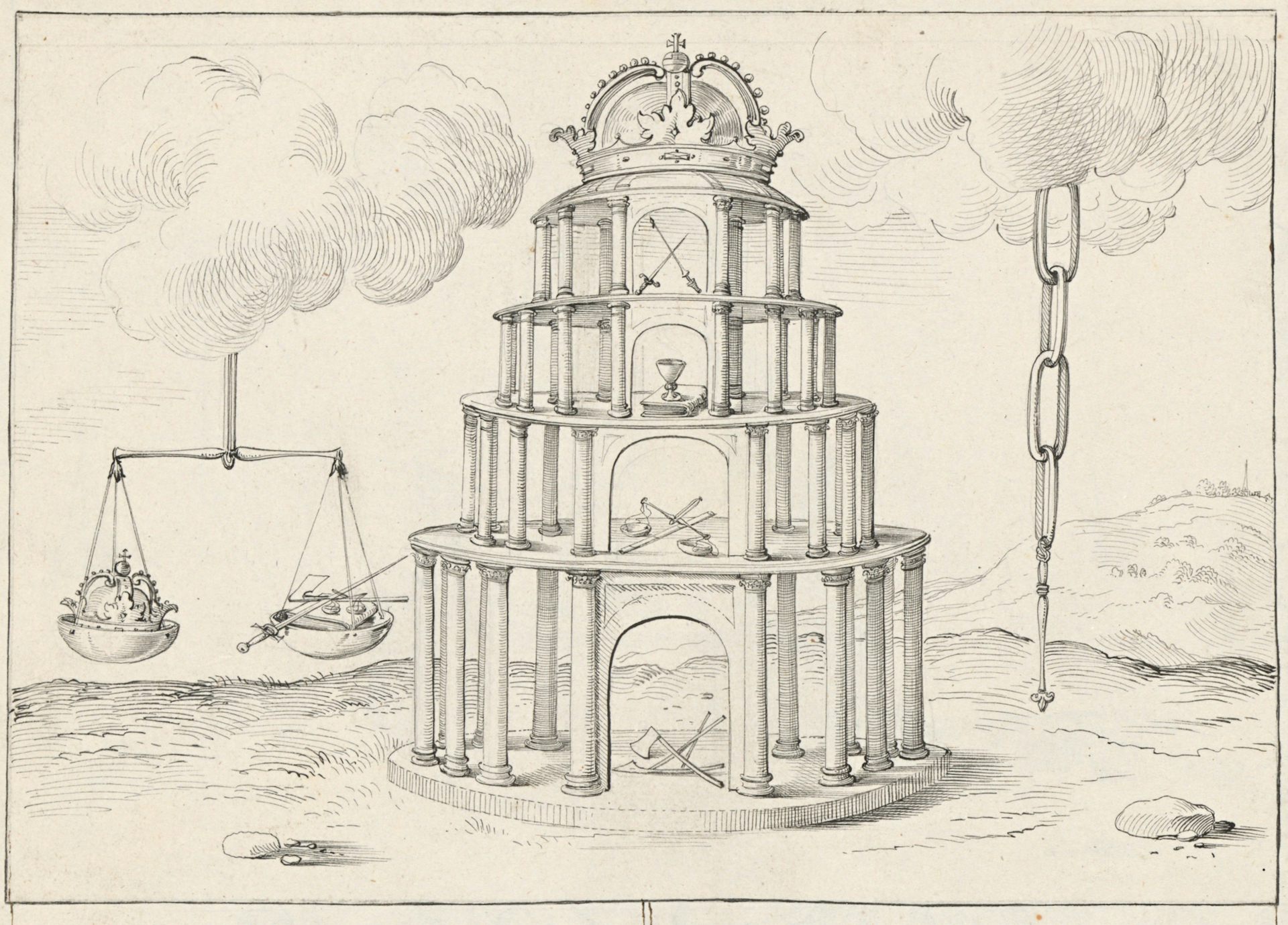
The monarch stood above all laws — it was the essence of his majesty. As such, he was the only figure considered to be free from self-interest and therefore able to maintain this social balance. Thus, despite his practical duties having been made redundant, his symbolic importance was incontrovertible.
O monarca estava acima de todas as leis — era a essência de sua majestade. Como tal, ele era a única figura considerada livre de interesses próprios e, portanto, capaz de manter esse equilíbrio social. Assim, apesar de seus deveres práticos terem sido tornados redundantes, sua importância simbólica era incontestável.
Upon the death of Charles XII in 1718, his sister, Ulrika Eleonora, briefly succeeded to the throne before abdicating after just over a year in favour of her husband, Frederick I, who ruled until 1751.
Após a morte de Carlos XII em 1718, sua irmã, Ulrika Eleonora, sucedeu brevemente ao trono antes de abdicar após pouco mais de um ano em favor de seu marido, Frederico I, que governou até 1751.
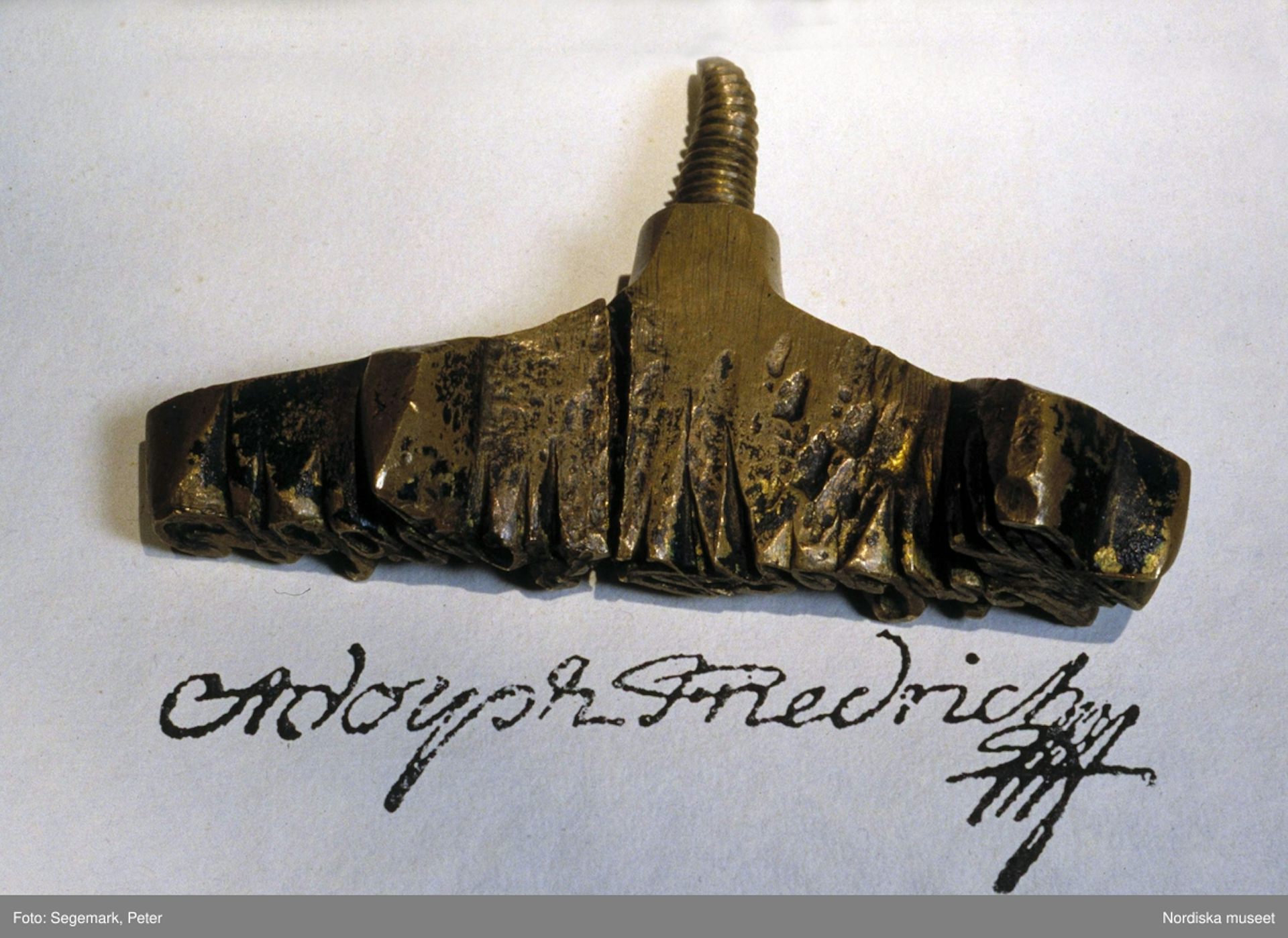
As king, Frederick I soon lost interest in his rather insignificant duties and, drawing inspiration from absolutist France, had a name stamp made. This was ostensibly to save himself the trouble of signing a large number of circulars. But the stamp also came to serve as a political instrument.
Como rei, Frederico I logo perdeu o interesse em seus deveres bastante insignificantes e, inspirando-se na França absolutista, fez carimbar um selo com seu nome. Isso era ostensivamente para poupar-lhe o trabalho de assinar uma grande quantidade de circulares. Mas o selo também passou a servir como instrumento político.
In certain circumstances, the council could even issue government decrees without the king’s signature. But the councillors considered this inappropriate as it revealed to the outside world when they were in disagreement with the king. On such occasions, the signature stamp became a practical alternative.
Em certas circunstâncias, o conselho podia até emitir decretos governamentais sem a assinatura do rei. Mas os conselheiros consideravam isso inapropriado, pois revelava ao mundo exterior quando estavam em desacordo com o rei. Em tais ocasiões, o carimbo de assinatura tornou-se uma alternativa prática.
The signature stamp also meant the councillors could no longer delay decisions by citing the king’s refusal to sign a document. Unlike the king, the council had to answer to the Riksdag for its actions and be held to parliamentary accountability.
O carimbo de assinatura também significou que os conselheiros não podiam mais atrasar decisões citando a recusa do rei em assinar um documento. Ao contrário do rei, o conselho tinha que responder ao Riksdag por suas ações e ser responsabilizado pelo parlamento.
In the Swedish public’s imagination, this replacement of the king’s personal signature with a stamp is the ultimate symbol of the monarch’s powerlessness. But how it was actually used demonstrates that the king’s signature was considered indispensable for lending dignity and authority to government decisions.
Na imaginação pública sueca, essa substituição da assinatura pessoal do rei por um carimbo é o símbolo máximo da impotência do monarca. Mas a forma como foi realmente usado demonstra que a assinatura do rei era considerada indispensável para conferir dignidade e autoridade às decisões governamentais.
Constitutional crisis
Crise constitucional
The crown’s symbolic importance was most clearly demonstrated by Frederick I’s successor, Adolf Frederick, when he went on strike in 1768. This constitutional crisis was partly a conflict between the two opposing parties, the Caps and the Hats, concerning issues in which the king played only a peripheral role. The parties’ views differed on foreign alliances, economic policy and, increasingly, civil and political rights, but they agreed on the king’s constitutionally restricted position. However, none of them hesitated to use the king as a tool when it suited their own purposes.
A importância simbólica da coroa foi mais claramente demonstrada pelo sucessor de Frederico I, Adolfo Frederico, quando ele fez greve em 1768. Esta crise constitucional foi parcialmente um conflito entre os dois partidos opostos, os Chapéus e os Carecas, sobre questões nas quais o rei desempenhou apenas um papel periférico. As visões dos partidos diferiam quanto a alianças estrangeiras, política econômica e, cada vez mais, direitos civis e políticos, mas eles concordaram com a posição constitucionalmente restrita do rei. No entanto, nenhum deles hesitou em usar o rei como uma ferramenta quando isso servia aos seus próprios propósitos.
The council was controlled by the Caps. In response to the king’s threat, the councillors attempted to govern by means of the signature stamp.
O conselho era controlado pelos Caps. Em resposta à ameaça do rei, os conselheiros tentaram governar por meio do carimbo de assinatura.
In return, the central government agencies, which were dominated by Hat sympathisers, refused to comply with any decisions bearing only the king’s duplicated signature. They insisted that the form of government rested on the majesty of the king, the authority of the council and the liberty of the people, that is, their civil and political rights. If any of these elements were missing, the balance was disrupted and the impartiality of government decisions could be called into question.
Em contrapartida, os órgãos governamentais centrais, que eram dominados por simpatizantes do Hat, recusaram-se a cumprir qualquer decisão que carregasse apenas a assinatura duplicada do rei. Eles insistiram que a forma de governo repousava na majestade do rei, na autoridade do conselho e na liberdade do povo, ou seja, em seus direitos civis e políticos. Se qualquer um desses elementos estivesse ausente, o equilíbrio seria perturbado e a imparcialidade das decisões governamentais poderia ser posta em questão.
The civil servants’ refusal to comply with decisions bearing a stamped signature brought the state apparatus to a standstill. The Riksdag was convened, just as the king had demanded.
A recusa dos funcionários civis em cumprir decisões com uma assinatura carimbada paralisou o aparato estatal. O Riksdag foi convocado, exatamente como o rei havia exigido.
The outcome was decided by the strong position of the Hats in the government agencies. However, once the extraordinary session of the Riksdag was convened, the king gained no support whatsoever for his constitutional proposals. Even though the signature stamp was taken out of use and the king’s symbolic authority reaffirmed, his actual political influence diminished even further.
O resultado foi decidido pela forte posição dos Chapéus nos órgãos governamentais. No entanto, uma vez que a sessão extraordinária do Riksdag foi convocada, o rei não obteve qualquer apoio para suas propostas constitucionais. Mesmo com o selo de assinatura retirado de uso e a autoridade simbólica do rei reafirmada, sua influência política real diminuiu ainda mais.
In my research I show that this episode highlights a typical pattern of the Age of Liberty. The court was supported by the opposition party for only as long as it remained in opposition. As an ally against the government, the monarch was important in shaping opinion and providing influence. For the government, conversely, he was an unpredictable asset.
Em minha pesquisa, mostro que este episódio destaca um padrão típico da Era da Liberdade. A corte foi apoiada pelo partido de oposição apenas enquanto permanecesse na oposição. Como um aliado contra o governo, o monarca era importante na formação da opinião e no fornecimento de influência. Para o governo, por outro lado, ele era um ativo imprevisível.
This observation can also be generalised. In early modern times, power was based on authority from above. By tradition, the monarchy represented a divine order that demanded unconditional submission.
Esta observação também pode ser generalizada. Nos tempos modernos iniciais, o poder se baseava em uma autoridade superior. Por tradição, a monarquia representava uma ordem divina que exigia submissão incondicional.
As countries such as Sweden and the United Kingdom began to shift away from absolutism and towards a more representative form of government, the monarch continued to symbolise governmental impartiality in spite of sharp partisan divisions. The notion that the people, with their passions and their self-interest, were too unpredictable to rule a state, endured. During this transitional phase, a monarch was needed who symbolically stood above all special interests and treated all his subjects with the same paternal care.
Países como Suécia e Reino Unido começaram a se afastar do absolutismo e em direção a uma forma de governo mais representativa; o monarca continuou a simbolizar a imparcialidade governamental apesar das fortes divisões partidárias. A noção de que o povo, com suas paixões e seus interesses próprios, era muito imprevisível para governar um estado, persistiu. Durante esta fase de transição, era necessário um monarca que simbolicamente estivesse acima de todos os interesses especiais e tratasse todos os seus súditos com o mesmo cuidado paternal.
Jonas Nordin has received funding for this reserach from Vetenskapsrådet/The Swedish Research Council.
Jonas Nordin recebeu financiamento para esta pesquisa do Vetenskapsrådet/The Swedish Research Council.
Read more
-

Por que o governo dos EUA suspendeu o modelo de IA Claude mais recente da Anthropic
Why the US government shut down Anthropic’s latest Claude AI model
-

O banimento da camisa do Haiti pela FIFA ecoa a longa campanha para desacreditar e minimizar a Revolução Haitiana
FIFA’s Haiti jersey ban echoes the long campaign to discredit and downplay the Haitian Revolution