Teorías de la conspiración que surgieron de un incidente de derechos civiles hace 60 años resuenan hoy
Conspiracy theories that emerged from a civil rights shooting 60 years ago resonate today
The modern rhetorical and political resistance to racial equality finds its roots in the conspiratorial segregationists of the civil rights era.
La resistencia retórica y política moderna a la igualdad racial encuentra sus raíces en los segregacionistas conspirativos de la época de los derechos civiles.
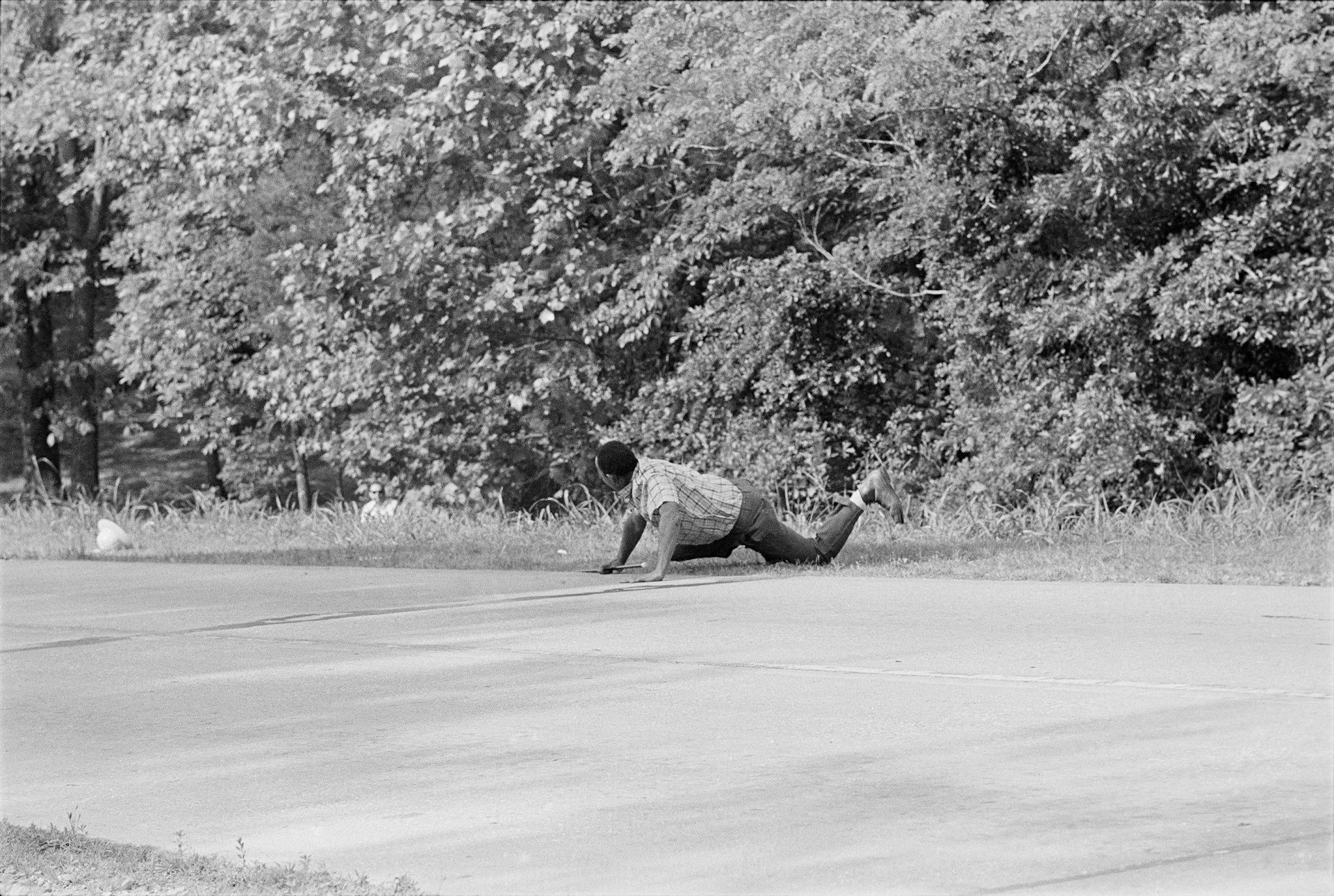
On June 6, 1966, on a stretch of Highway 51 just south of Hernando, Mississippi, a portly, middle-aged white man named Aubrey Norvell stepped out of a gully, lifted his shotgun and fired three shots at James Meredith, a Black civil rights activist and Air Force veteran.
El 6 de junio de 1966, en un tramo de la Carretera 51, justo al sur de Hernando, Mississippi, un hombre blanco corpulento y de mediana edad llamado Aubrey Norvell salió de una zanja, levantó su escopeta y disparó tres tiros a James Meredith, un activista por los derechos civiles negro y veterano de la Fuerza Aérea.
Famous for integrating the University of Mississippi four years earlier, Meredith was on the second day of a walk from Memphis, Tennessee, to Jackson, Mississippi, with the aims of registering voters and defying white intimidation.
Famoso por haber integrado la Universidad de Mississippi cuatro años antes, Meredith se encontraba en el segundo día de una caminata desde Memphis, Tennessee, hasta Jackson, Mississippi, con el objetivo de registrar votantes y desafiar la intimidación blanca.
Bloodied by bird shot, Meredith again returned to the national spotlight. The shooting transformed his walk into a civil rights spectacle.
Sangrado por disparos de ave, Meredith regresó al foco nacional. El tiroteo transformó su marcha en un espectáculo de derechos civiles.
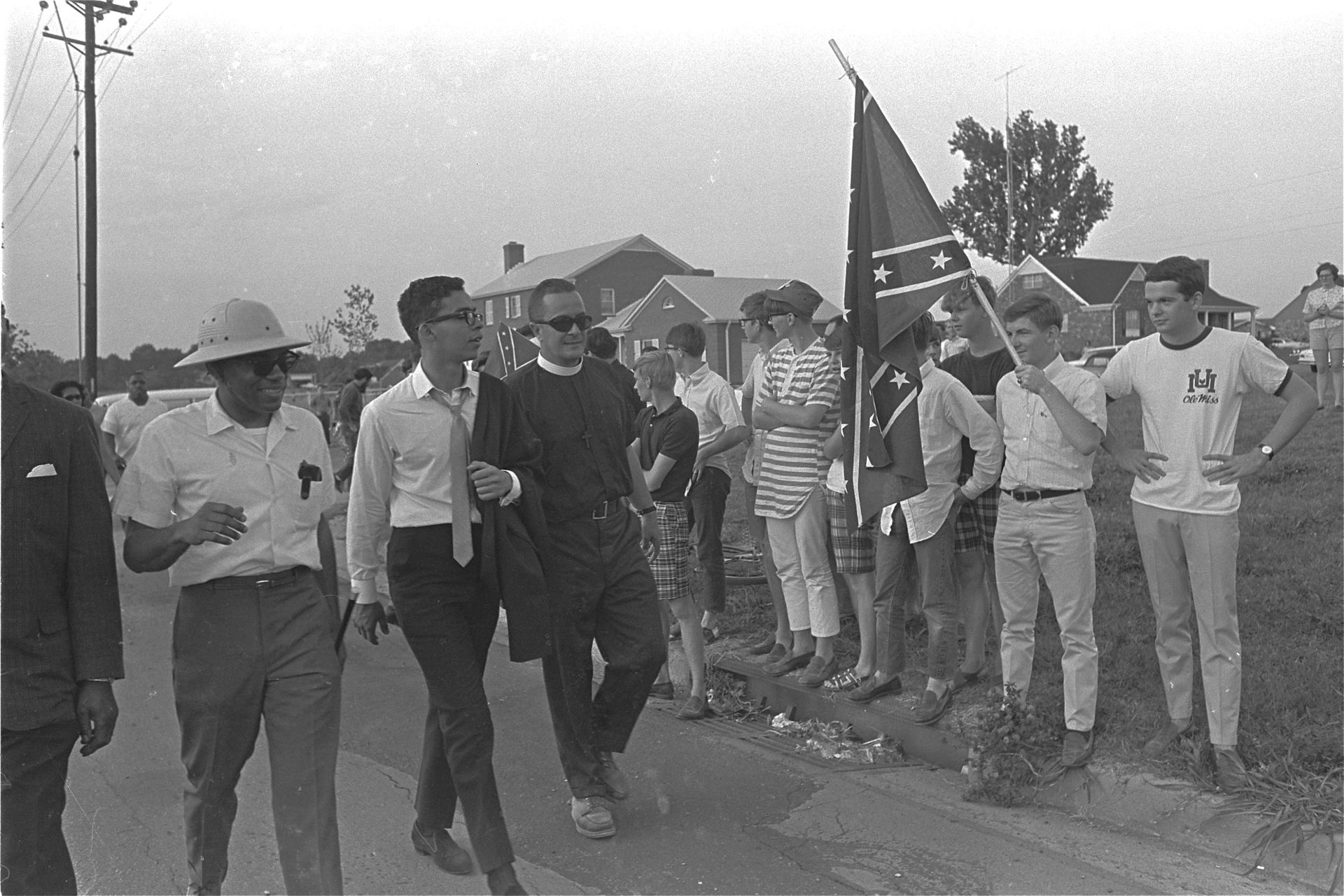
Activists descended upon Mississippi for a three-week mass march. It featured titans of the movement, including Martin Luther King Jr., while inspiring Mississippians to march down country roads, volunteer their homes and food, and register at their local courthouses. During these protests, the civil rights activist Stokely Carmichael introduced “Black Power,” a slogan of self-determination that marked the next stage in the Black freedom struggle.
Los activistas descendieron sobre Mississippi para una marcha masiva de tres semanas. Contó con figuras titánicas del movimiento, incluido Martin Luther King Jr., e inspiró a los mississippianos a marchar por caminos rurales, ofrecer sus hogares y alimentos, y registrarse en sus juzgados locales. Durante estas protestas, el activista por los derechos civiles Stokely Carmichael introdujo «Black Power» (Poder Negro) , un eslogan de autodeterminación que marcó la siguiente etapa en la lucha negra por la libertad.
It is a rich, intricate and evocative story – one that I tried to chronicle in my book, “Down to the Crossroads: Civil Rights, Black Power, and the Meredith March Against Fear.”
Es una historia rica, intrincada y evocadora; una que intenté cronificar en mi libro, “Down to the Crossroads: Civil Rights, Black Power, and the Meredith March Against Fear” (Hasta el cruce de caminos: Derechos civiles, Poder Negro y la marcha de Meredith contra el miedo) .
Sixty years later, however, a mystery lingers. Clouded in the haze of a political extravaganza, Norvell never revealed his motivations for shooting Meredith.
Sin embargo, sesenta años después, persiste un misterio. Nubrado por la neblina de un espectáculo político, Norvell nunca reveló sus motivaciones para disparar a Meredith.
His silence allowed for the flourishing of conspiracy theories – most notably, from those most resistant to racial equality. In a political and rhetorical strategy that echoes into the present day, many white conservative Southerners painted themselves as Norvell’s real victims.
Su silencio permitió el florecimiento de teorías de conspiración, sobre todo entre aquellos más resistentes a la igualdad racial. En una estrategia política y retórica que resuena hasta el día de hoy, muchos sureños conservadores blancos se pintaron como las verdaderas víctimas de Norvell.
‘A quiet, Christian man’
«Un hombre tranquilo y cristiano»
At first, it was civil rights activists who suspected a conspiracy. Meredith’s companions testified that law enforcement had reacted slowly to Norvell’s threat. They assumed that Norvell was a virulent white supremacist, in cahoots with a racist police force.
Al principio, fueron los activistas de derechos civiles quienes sospecharon una conspiración. Los compañeros de Meredith testificaron que las fuerzas del orden habían reaccionado lentamente a la amenaza de Norvell. Asumieron que Norvell era un supremacista blanco virulento, en connivencia con una fuerza policial racista.
But as reporters investigated Norvell, they found no evidence of a hate-spewing Klansman. He lived in a middle-class Memphis suburb. He had no criminal record. Neighbors described him as a “quiet, Christian man” who never mentioned civil rights, one way or another.
Pero cuando los periodistas investigaron a Norvell, no encontraron pruebas de un miembro del Ku Klux Klan que propagara odio. Vivía en un suburbio de clase media de Memphis. No tenía antecedentes penales. Los vecinos lo describieron como «un hombre tranquilo y cristiano» que nunca mencionó los derechos civiles, de ninguna manera.
Upon posting bond, Norvell disappeared from the public eye until his trial that November.
Tras depositar la fianza, Norvell desapareció del ojo público hasta su juicio ese noviembre.
The significance of bird shot
La importancia de la metralla para aves
By presenting a blank slate, Norvell allowed white Southern conservatives to launch a counternarrative. The previous decade of Black activism, from the Montgomery bus boycott through the Selma-to-Montgomery march, had taught them that open violence ignited public outrage and prompted civil rights legislation. So they distanced themselves from Norvell.
Al presentar una pizarra en blanco, Norvell permitió que los conservadores blancos del Sur lanzaran una contranarrativa. La década anterior de activismo negro, desde el boicot de autobuses de Montgomery hasta la marcha de Selma a Montgomery, les había enseñado que la violencia abierta encendía la indignación pública e impulsaba legislación de derechos civiles. Así que se distanciaron de Norvell.
Mississippi Gov. Paul Johnson noted that Meredith was attacked “by birdshot by an out-of-state resident.” It foreshadowed the language employed by a host of Southern politicians and newspaper editorialists.
El gobernador de Mississippi, Paul Johnson, señaló que Meredith fue atacado «con metralla por un residente de fuera del estado». Esto presagió el lenguaje empleado por una gran cantidad de políticos y editoriales de periódicos sureños.
Again and again, in speeches and articles and letters, they mentioned that Norvell used bird shot. If he was aiming to kill, why pepper Meredith with pellets? They claimed a conspiracy against the white South.
Una y otra vez, en discursos, artículos y cartas, mencionaron que Norvell usó metralla para aves. Si su objetivo era matar, ¿por qué apuñalar a Meredith con perdigones? Alegaron una conspiración contra el Sur blanco.
“The whole affair smells badly of a plot instigated by the Communist-controlled rights groups and capitalized on by the press, the government, and all the other liberal screamers,” wrote one woman to Sen. James Eastland, as I discovered during my research. Like many others, she imagined that civil rights organizations paid Norvell to wound Meredith, which would stoke a media hubbub and invite the federal government to persecute white Southerners.
«Todo el asunto huele mal a un complot instigado por grupos de derechos controlados por comunistas y capitalizado por la prensa, el gobierno y todos los demás griteros liberales», escribió una mujer al senador James Eastland, como descubrí durante mi investigación. Como muchos otros, imaginó que las organizaciones de derechos civiles pagaron a Norvell para herir a Meredith, lo que avivaría un revuelo mediático e invitaría al gobierno federal a perseguir a los sureños blancos.
Searching for a conspiracy
Buscando una conspiración
The Mississippi State Sovereignty Commission opened in 1956 to protect white supremacy. In an incredible twist to this tale, a commission investigator authorized a US$5,000 bribe to Norvell’s attorney if Norvell would admit that liberals paid him to shoot Meredith.
La Comisión de Soberanía del Estado de Mississippi se fundó en 1956 para proteger la supremacía blanca. En un giro increíble de esta historia, un investigador de la comisión autorizó un soborno de US$5,000 al abogado de Norvell si este admitía que los liberales le pagaron para dispararle a Meredith.
According to commission files, an FBI agent from Mississippi, high-ranking officials of the Memphis Police Department and a Mississippi district attorney all agreed that Norvell’s shooting was “a hired job for the advancement of various civil rights groups.”
Según archivos de la comisión, un agente del FBI de Mississippi, altos funcionarios del Departamento de Policía de Memphis y un fiscal de distrito de Mississippi coincidieron en que el tiroteo de Norvell fue “un trabajo contratado para el avance de varios grupos de derechos civiles”.
Segregationists kept grasping at this far-fetched scenario, exaggerating and manipulating it to serve the purpose of discrediting the Meredith March Against Fear. A Mississippi sheriff named Jack Cauthen went even further, suggesting Meredith hadn’t even been shot in the first place. He claimed to have put his arm around Meredith, who had rejoined the march for its final days.
Los segregacionistas siguieron aferrándose a este escenario inverosímil, exagerándolo y manipulándolo para servir al propósito de desacreditar la Marcha de Meredith Contra el Miedo. Un sheriff de Mississippi llamado Jack Cauthen fue aún más lejos, sugiriendo que Meredith ni siquiera había sido herido en primer lugar. Afirmó haber puesto su brazo alrededor de Meredith, quien se había reincorporado a la marcha para sus últimos días.
“His back was just smooth as silk. There hadn’t been no pellets or shots in James’s back,” asserted Cauthen, as I found while conducting research for my book. “I don’t think he was shot, no sir.”
“Su espalda estaba suave como la seda. No hubo perdigones ni disparos en la espalda de James”, afirmó Cauthen, según lo que encontré mientras investigaba para mi libro. “No creo que le hayan disparado, señor”.
Echoes from the past
Ecos del pasado
Norvell pleaded guilty and spent 18 months in Parchman Prison in Sunflower County, Mississippi. Despite being approached by many journalists and historians – including me – he never revealed his motive. He died in 2016.
Norvell se declaró culpable y pasó 18 meses en la prisión Parchman de Sunflower County, Mississippi. A pesar de que muchos periodistas e historiadores —incluyéndome a mí— se le acercaron, nunca reveló su motivo. Murió en 2016.
In the 1960s, white southerners perceived that their way of life was under assault by big institutions, including the federal government and the media. They blamed the Civil Rights Movement on nefarious “outside agitators” determined to smash their status. Their political motivations led them down bizarre and fantastical paths, with some even fashioning themselves as the true victims of Norvell’s attack.
En la década de 1960, los sureños blancos percibieron que su forma de vida estaba bajo asalto por grandes instituciones, incluido el gobierno federal y los medios de comunicación. Culparon al Movimiento por los Derechos Civiles a «agitadores externos» nefastos determinados a destruir su estatus. Sus motivaciones políticas los llevaron por caminos extraños y fantásticos, hasta el punto de que algunos se hicieron pasar por las verdaderas víctimas del ataque de Norvell.
Racist conspiracy theories still plague American politics, from baseless accusations that Barack Obama was born in Kenya to false assertions that global elites are engineering a “great replacement” of white Americans.
Las teorías conspirativas racistas aún plagan la política estadounidense, desde acusaciones infundadas de que Barack Obama nació en Kenia hasta falsas afirmaciones de que las élites globales están orquestando un «gran reemplazo» de los estadounidenses blancos.
Even if these notions emerge from a modern sense of dislocation and anxiety, I think they have roots in the same crass bigotry that defined the conspiratorial segregationists of the civil rights era.
Incluso si estas nociones surgen de una sensación moderna de desorientación y ansiedad, creo que tienen raíces en el mismo prejuicio grosero que definió a los segregacionistas conspirativos de la era de los derechos civiles.
Aram Goudsouzian does not work for, consult, own shares in or receive funding from any company or organization that would benefit from this article, and has disclosed no relevant affiliations beyond their academic appointment.
Aram Goudsouzian no trabaja para, asesora, posee acciones ni recibe financiación de ninguna empresa u organización que se beneficie de este artículo, y ha revelado ninguna afiliación relevante más allá de su cargo académico.
Read more
-

¿Cómo funciona realmente la imaginación en el cerebro? Nueva teoría trastoca lo que creíamos saber
How does imagination really work in the brain? New theory upends what we knew
-

El acuerdo de alto el fuego con Irán confirma lo que llevamos diciendo por años: la fuerza militar no funciona.
Iran ceasefire deal confirms what we’ve been saying for years: military might doesn’t work