La Corriente del Golfo se movió repentinamente hacia el norte durante un antiguo episodio de frío – y es una advertencia para nuestro futuro
The Gulf Stream suddenly moved north during an ancient cold snap – and it’s a warning for our future
New evidence shows a major climate shift ‘within a lifetime’ 13,000 years ago.
Nuevas evidencias muestran un cambio climático importante ‘en el lapso de una vida’ hace 13,000 años.
Around 13,000 years ago, as the world was emerging from the grip of the last ice age, much of the North Atlantic region plunged back into near-glacial conditions.
Hace unos 13.000 años, mientras el mundo emergía del agarre del último período glacial, gran parte de la región del Atlántico Norte volvió a caer en condiciones casi glaciares.
Sea ice expanded across the North Atlantic, reaching as far south as the Shetland Islands. Glaciers began to regrow in the Scottish Highlands, while winter temperatures across Europe and North America plummeted. Yet off the coast of Atlantic Canada, the ocean did the opposite.
El hielo marino se expandió por todo el Atlántico Norte, llegando tan al sur como las Islas Shetland. Los glaciares comenzaron a volver a crecer en las Tierras Altas escocesas, mientras que las temperaturas invernales en Europa y América del Norte se desplomaron. Sin embargo, frente a la costa de Canadá Atlántico, el océano hizo lo contrario.
In our new study, published in the journal Nature Communications, we found evidence that waters off Nova Scotia, Canada, warmed as the Gulf Stream shifted hundreds of kilometres northward, while deep circulation also changed.
En nuestro nuevo estudio, publicado en la revista Nature Communications, encontramos evidencia de que las aguas frente a Nueva Escocia, Canadá, se calentaron a medida que la Corriente del Golfo se desplazó cientos de kilómetros hacia el norte, y también cambió la circulación profunda.
It is the first direct evidence that this vital current responded in such a way during a period of abrupt climate change that rearranged Atlantic Ocean circulation.
Es la primera evidencia directa de que esta corriente vital respondió de esa manera durante un período de cambio climático abrupto que reorganizó la circulación del Océano Atlántico.
The finding lends support to the climate models that predict a similar northward shift in the future if the Atlantic Meridional Overturning Circulation (Amoc) weakens – a trend that has probably already begun.
Este hallazgo apoya los modelos climáticos que predicen un desplazamiento similar hacia el norte en el futuro si la Circulación Meridional de Vuelco del Atlántico (AMOC) se debilita, una tendencia que probablemente ya ha comenzado.
Why the Gulf Stream matters
La importancia de la Corriente del Golfo
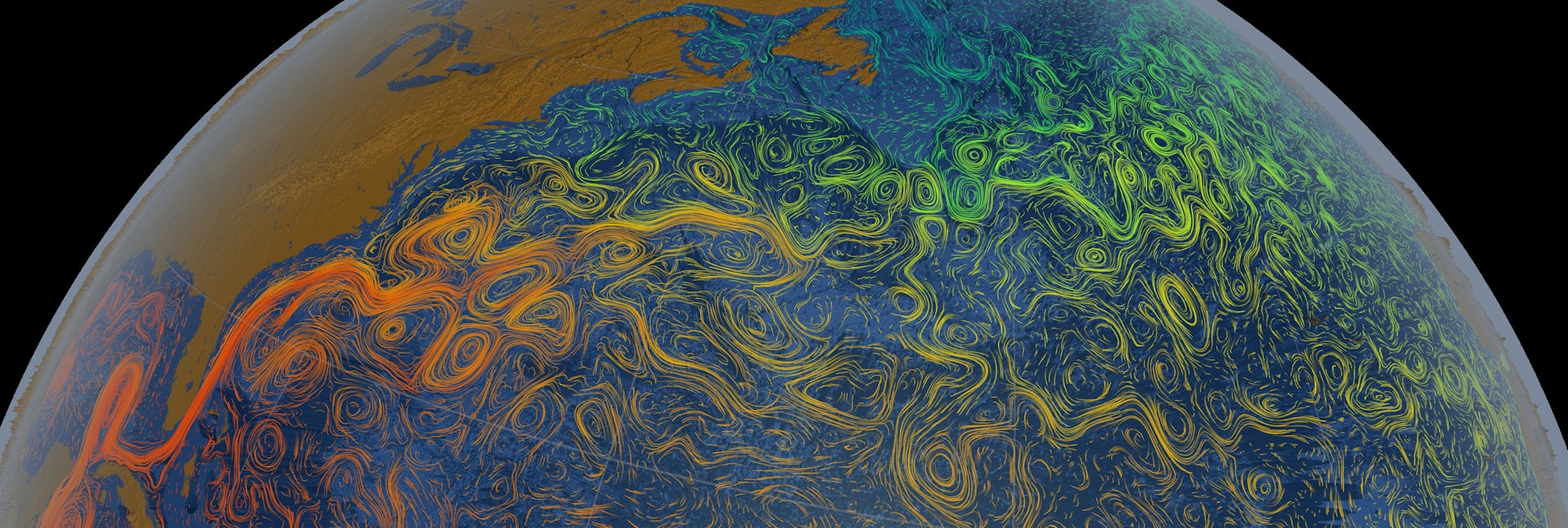
The Gulf Stream transports warm tropical waters northwards along the eastern coast of North America before turning north-east towards Europe. In doing so, it forms part of the Amoc, a vast system of ocean currents that redistributes heat, nutrients and carbon around the Atlantic Ocean. Consequently, the Amoc plays a major role in regulating the climate. In particular, the northern arm of the Gulf Stream helps keep western Europe much milder than other regions at similar latitudes.
La Corriente del Golfo transporta aguas tropicales cálidas hacia el norte a lo largo de la costa este de Norteamérica antes de girar hacia el noreste en dirección a Europa. Al hacerlo, forma parte de la AMOC, un vasto sistema de corrientes oceánicas que redistribuye calor, nutrientes y carbono alrededor del Océano Atlántico. En consecuencia, la AMOC desempeña un papel importante en la regulación del clima. En particular, el brazo septentrional de la Corriente del Golfo ayuda a mantener el oeste de Europa mucho más templado que otras regiones con latitudes similares.
Scientists are increasingly concerned about the future of this circulation system. As the climate warms and extra freshwater (from melting ice) enters the North Atlantic, surface waters become less dense and therefore less able to sink. Most climate models project that these changes weaken the Amoc. Observations suggest that this weakening has already begun, but it is predicted to weaken much more as the 21st century progresses. However, direct evidence showing how the system responds to such major disruptions remains relatively limited.
Los científicos están cada vez más preocupados por el futuro de este sistema de circulación. A medida que el clima se calienta y entra agua dulce adicional (del deshielo) en el Atlántico Norte, las aguas superficiales se vuelven menos densas y, por lo tanto, menos capaces de hundirse. La mayoría de los modelos climáticos proyectan que estos cambios debilitarán la AMOC. Las observaciones sugieren que este debilitamiento ya ha comenzado, pero se predice que se debilitará mucho más a medida que avance el siglo XXI. Sin embargo, la evidencia directa sobre cómo responde el sistema a tales interrupciones importantes sigue siendo relativamente limitada.
To answer that question, paleoceanographers like us turn to the past.
Para responder a esa pregunta, los paleoocenógrafos como nosotros nos volvemos al pasado.
A natural experiment from the end of the last ice age
Un experimento natural del final de la última era glacial
The Younger Dryas was one of the most dramatic episodes of abrupt climate change in Earth’s recent history. As the planet emerged from the last ice age, warming trends across much of the North Atlantic region abruptly reversed. European summer temperatures declined by around 4°C–8°C in less than a century, while Greenland cooled by up to 10°C within just a few decades. The effects rippled far beyond the North Atlantic, weakening monsoon systems across Africa and Asia.
El Younger Dryas fue uno de los episodios más dramáticos de cambio climático abrupto en la historia reciente de la Tierra. A medida que el planeta emergía del último periodo glacial, las tendencias de calentamiento en gran parte de la región del Atlántico Norte se revirtieron bruscamente. Las temperaturas veraniegas europeas disminuyeron alrededor de 4 °C a 8 °C en menos de un siglo, mientras que Groenlandia se enfrió hasta en 10 °C en solo unas pocas décadas. Los efectos repercutieron mucho más allá del Atlántico Norte, debilitando los sistemas monzónicos de África y Asia.
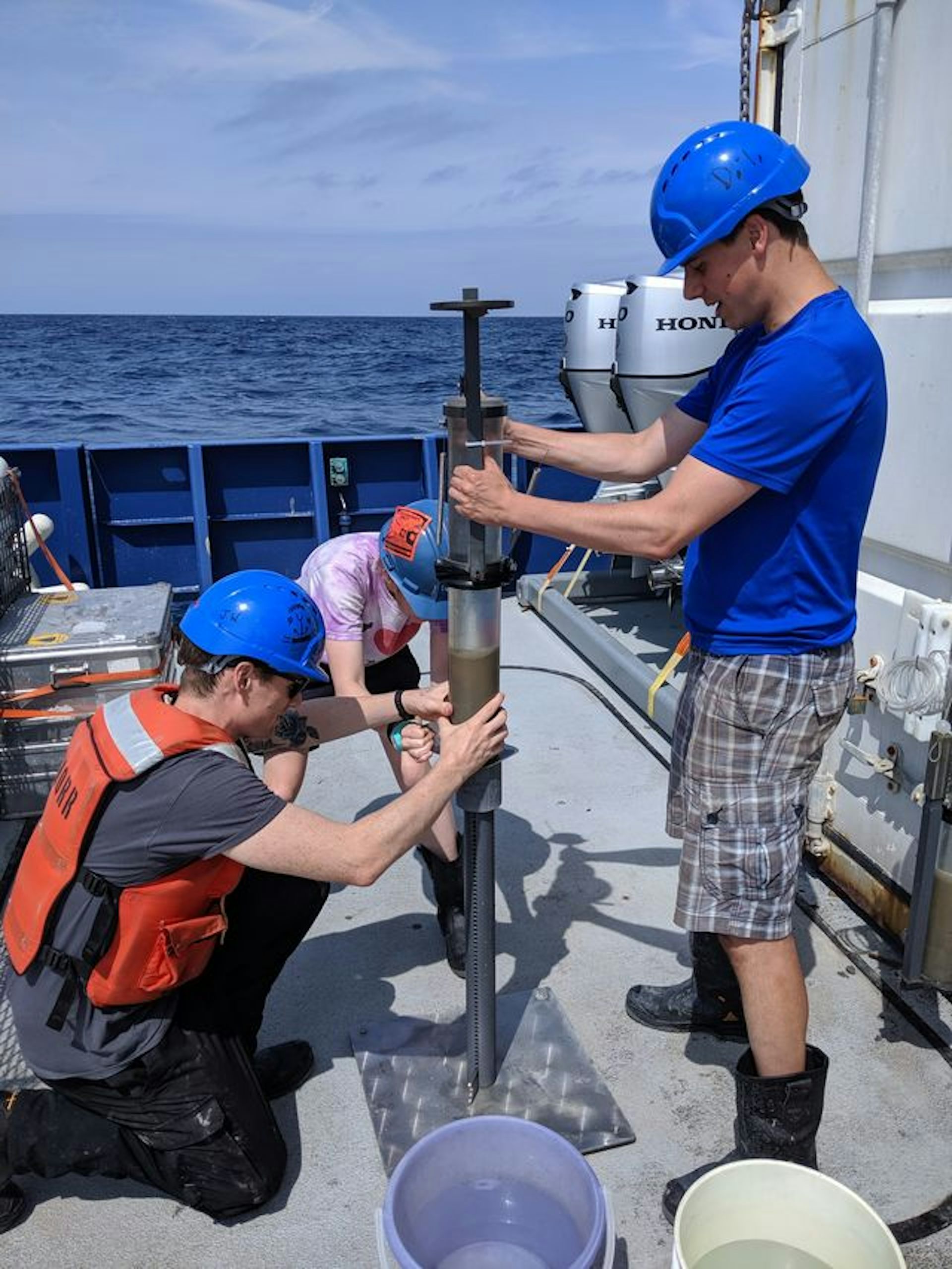
To understand how the ocean responded, we analysed sediment extracted from the seabed off Nova Scotia. Microscopic fossil shells and sediment grains preserved within this marine mud can reveal what the sea would have been like at the time it formed. We then reconstructed changes in both surface and deep Atlantic circulation before, during, and after the Younger Dryas.
Para entender cómo respondió el océano, analizamos sedimentos extraídos del fondo marino frente a Nueva Escocia. Las conchas fósiles microscópicas y los granos de sedimento preservados en este lodo marino pueden revelar cómo era el mar cuando se formó. Luego reconstruimos los cambios tanto en la circulación superficial como profunda del Atlántico antes, durante y después del Younger Dryas.
An unexpected warming signal
Una señal de calentamiento inesperada
What we found surprised us. While Greenland and much of the subpolar North Atlantic cooled rapidly, waters off Atlantic Canada warmed instead, by as much as 4°C–5°C.
Lo que encontramos nos sorprendió. Mientras que Groenlandia y gran parte del Atlántico Norte subpolar se enfriaron rápidamente, las aguas frente a Canadá Atlántico se calentaron en su lugar, hasta en 4 °C–5 °C.
The most likely explanation is that the Gulf Stream migrated northwards, bringing warm subtropical waters closer to the Canadian coastline.
La explicación más probable es que la Corriente del Golfo migró hacia el norte, acercando aguas subtropicales cálidas a la costa canadiense.
Previous climate-model simulations had predicted that a weakening of one of the Amoc’s deep currents could trigger exactly this response. Until now, however, there had been little direct geological evidence that it had happened before.
Simulaciones anteriores de modelos climáticos habían predicho que un debilitamiento de una de las corrientes profundas de la AMOC podría desencadenar exactamente esta respuesta. Hasta ahora, sin embargo, había poca evidencia geológica directa de que esto hubiera ocurrido antes.
Our study provides real-world evidence for a process that climate models have long proposed. That matters because it shows that large reorganisations of Atlantic circulation are not just theoretical possibilities – they have happened before.
Nuestro estudio proporciona evidencia del mundo real para un proceso que los modelos climáticos han propuesto durante mucho tiempo. Esto es importante porque demuestra que grandes reorganizaciones de la circulación atlántica no son solo posibilidades teóricas: ya han sucedido.
What can the past tell us about the future?
¿Qué puede decirnos el pasado sobre el futuro?
No past climate event is a perfect analogue for modern climate change. The Younger Dryas occurred under very different conditions from today. Massive ice sheets still covered much of Canada and Scandinavia, and the sea level was tens of metres lower than at present.
Ningún evento climático pasado es un análogo perfecto del cambio climático moderno. El Dryas más joven ocurrió bajo condiciones muy diferentes a las de hoy. En la actualidad, enormes capas de hielo cubrían gran parte de Canadá y Escandinavia, y el nivel del mar era decenas de metros más bajo que en la actualidad.
Nevertheless, the physical links connecting the different components of the North Atlantic circulation system are likely to be the same.
No obstante, es probable que los vínculos físicos que conectan los diferentes componentes del sistema de circulación del Atlántico Norte sean los mismos.
Our study does not suggest that the Amoc completely collapsed during the Younger Dryas, nor does it tell us whether such a collapse is likely in the future. Instead, it reveals a more nuanced picture in which various components of the North Atlantic circulation system changed in different ways. Rather than producing a uniform response, this reorganisation created a patchwork of warming and cooling across the North Atlantic.
Nuestro estudio no sugiere que la AMOC colapsara por completo durante el Dryas más joven, ni nos dice si un colapso así es probable en el futuro. Por el contrario, revela una imagen más matizada en la que varios componentes del sistema de circulación del Atlántico Norte cambiaron de diferentes maneras. En lugar de producir una respuesta uniforme, esta reorganización creó un mosaico de calentamiento y enfriamiento en todo el Atlántico Norte.
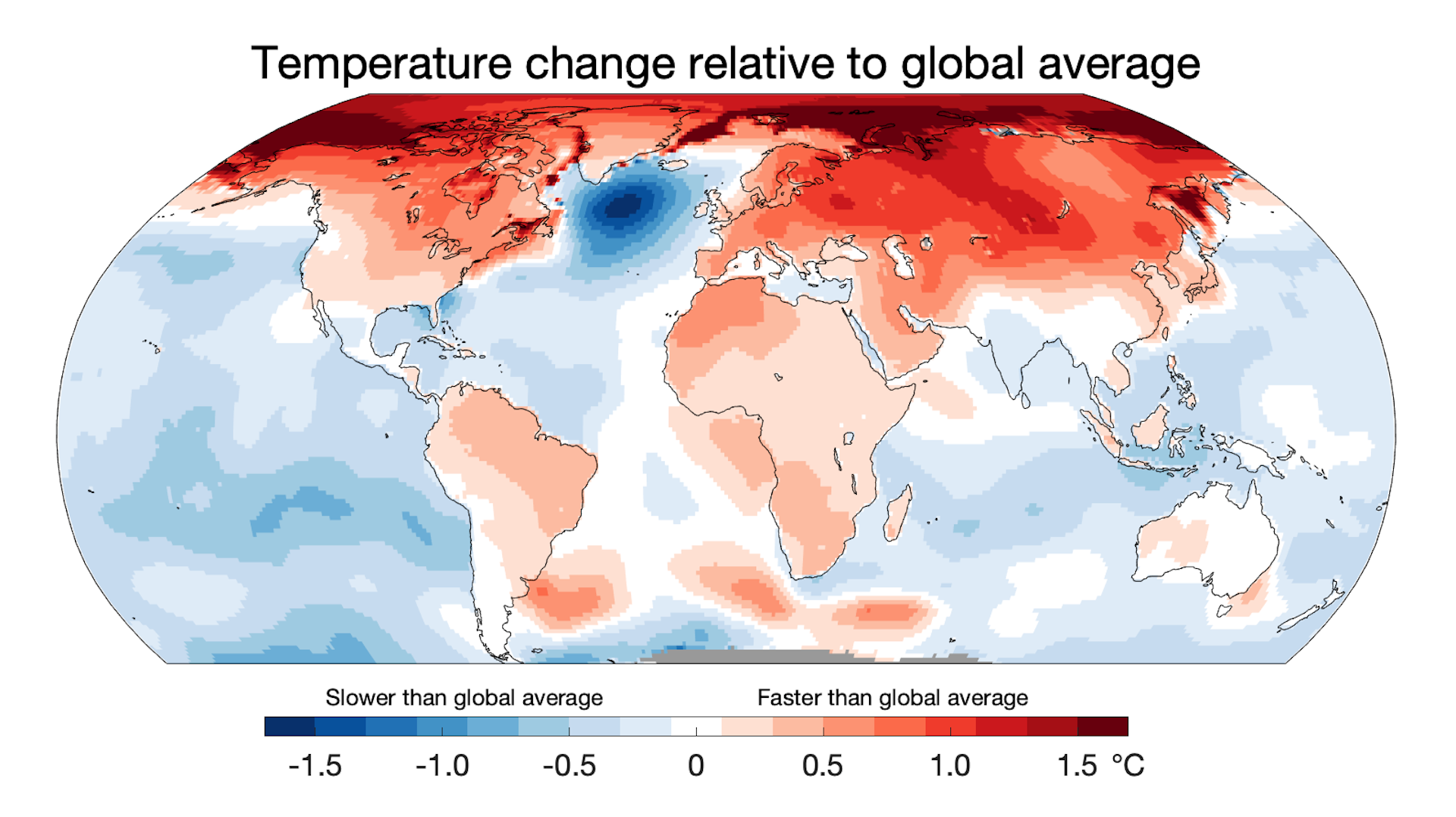
Similar patterns have also emerged over the last 150 years, with a relative “warming hole” developing in the ocean south of Greenland while regions closer to the Gulf Stream have warmed more rapidly. Our findings provide real-world evidence that these contrasting patterns are closely linked to changes in ocean circulation.
Patrones similares también han surgido durante los últimos 150 años, con un relativo «agujero de calentamiento» desarrollándose en el océano al sur de Groenlandia, mientras que las regiones más cercanas a la Corriente del Golfo se han calentado más rápidamente. Nuestros hallazgos proporcionan evidencia del mundo real de que estos patrones contrastantes están estrechamente ligados a los cambios en la circulación oceánica.
Looking to the future, scientists are concerned that continued human-caused warming could trigger major changes in North Atlantic circulation, leading to shifts in ocean temperature patterns, which would disrupt weather and climate across the globe. Examining how the Atlantic behaved 13,000 years ago can help us recognise the warning signs of major changes before they happen again.
De cara al futuro, los científicos están preocupados porque el calentamiento continuo causado por el ser humano podría desencadenar cambios importantes en la circulación del Atlántico Norte, lo que llevaría a alteraciones en los patrones de temperatura oceánica y perturbaría el clima y el tiempo en todo el mundo. Examinar cómo se comportó el Atlántico hace 13.000 años puede ayudarnos a reconocer las señales de advertencia de grandes cambios antes de que vuelvan a ocurrir.
Critically, our study suggests that such reorganisations can unfold over about a century, with individual components of the circulation changing within just a few decades – within a human lifetime.
Fundamentalmente, nuestro estudio sugiere que tales reorganizaciones pueden desarrollarse durante aproximadamente un siglo, con componentes individuales de la circulación cambiando en solo unas pocas décadas: dentro de una vida humana.
By showing how different parts of the Atlantic circulation interacted during a past episode of abrupt climate change, our findings provide an important benchmark for testing climate models. The deeper understanding we have gained into how the interconnected Atlantic system behaves will also help us with the very challenging task of developing early-warning systems for future circulation changes and potential climate tipping points.
Al mostrar cómo interactuaron diferentes partes de la circulación atlántica durante un episodio pasado de cambio climático abrupto, nuestros hallazgos proporcionan un punto de referencia importante para probar modelos climáticos. La comprensión más profunda que hemos adquirido sobre el comportamiento del interconectado sistema atlántico también nos ayudará con la muy desafiante tarea de desarrollar sistemas de alerta temprana para futuros cambios en la circulación y posibles puntos de inflexión climático.
Alice Carter-Champion receives funding from the Natural Environment Research Council (NERC) , the Royal Society’s project “Rethinking Palaeoclimate for Society” and the Leverhulme Trust.
Alice Carter-Champion recibe financiación del Natural Environment Research Council (NERC) , el proyecto “Rethinking Palaeoclimate for Society” de la Royal Society y el Leverhulme Trust.
Fangjingcheng Zhu receives funding from the INSPIRE NERC Doctoral Training Partnership and NERC project ReconAMOC.
Fangjingcheng Zhu recibe financiación del INSPIRE NERC Doctoral Training Partnership y el proyecto NERC ReconAMOC.
Jack Wharton receives funding from the Natural Environmental Research Council (NERC) , the European Union’s Horizon Europe project EPOC, and the Advanced Research + Invention Agency (ARIA) project VERIFY.
Jack Wharton recibe financiación del Natural Environmental Research Council (NERC) , el proyecto Horizon Europe de la Unión Europea EPOC, y el proyecto VERIFY de la Advanced Research + Invention Agency (ARIA) .
Read more
-
Netanyahu se ha comprometido a ‘terminar el trabajo’ contra Hezbolá. Es una promesa que no puede cumplir.
Netanyahu has pledged to ‘finish the job’ against Hezbollah. It’s a promise he can’t deliver on
-
Las lesiones por enredo causan un sufrimiento prolongado en ballenas y delfines: la intervención temprana es crucial
Entanglement injuries cause prolonged suffering for whales and dolphins – early intervention is crucial