来自太空的神秘信号不断传来。我们找到了它们的“罗塞塔石碑”
Mysterious signals keep coming from space. We have foun…
Seeing a signal in different kinds of light is like having a text written in several forms of writing – it makes it easier to decipher.
用不同类型的光观测信号,就像看到用多种书写形式写成的文本——这使得解读变得更容易。
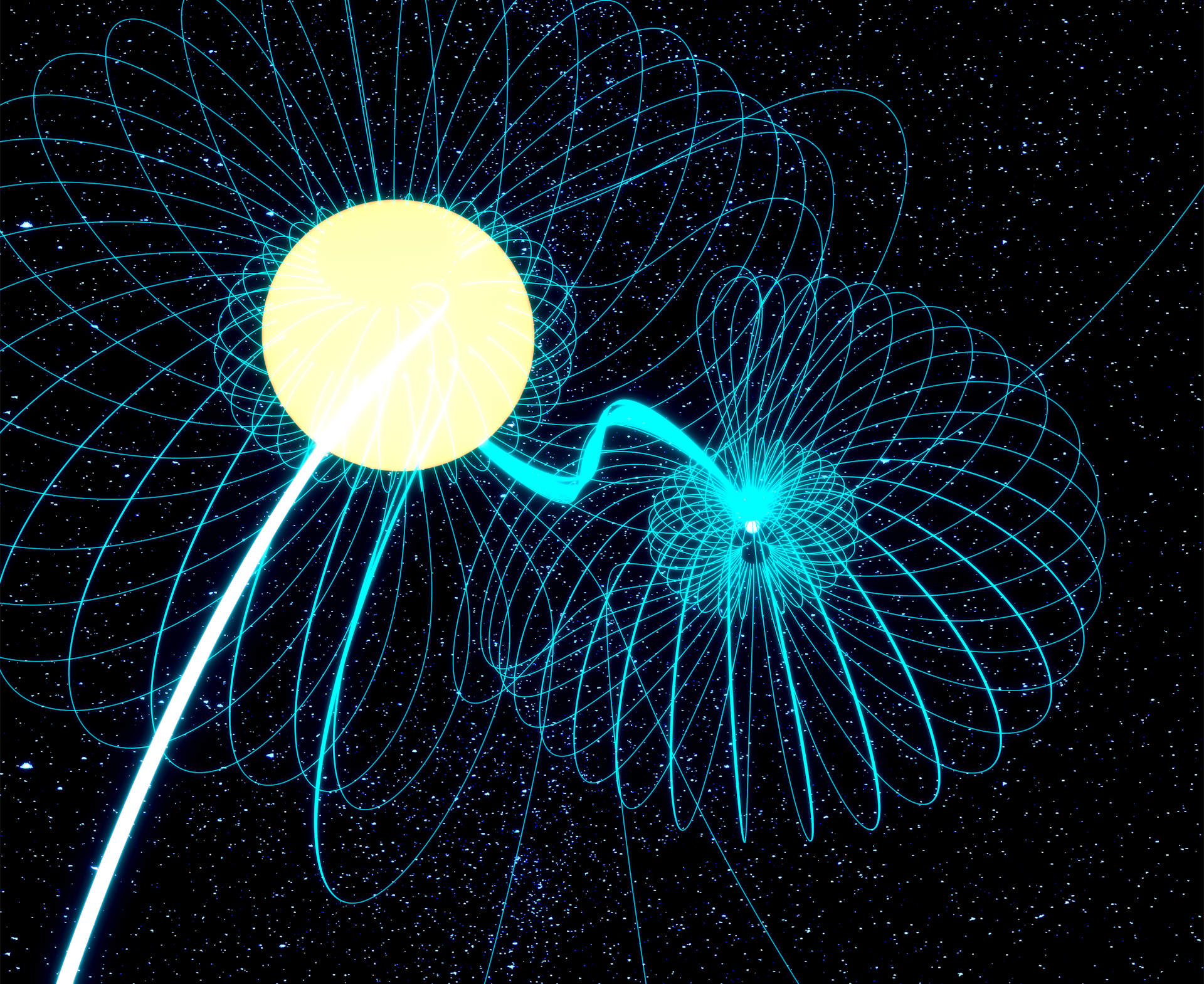
A pair of stars spiralling around each other. That’s the origin of a new source of repeating radio bursts we’ve detected, called ASKAP J1745.
一对相互螺旋运动的恒星。这就是我们检测到的一个新的重复射电爆发源的起源,它被称为ASKAP J1745。
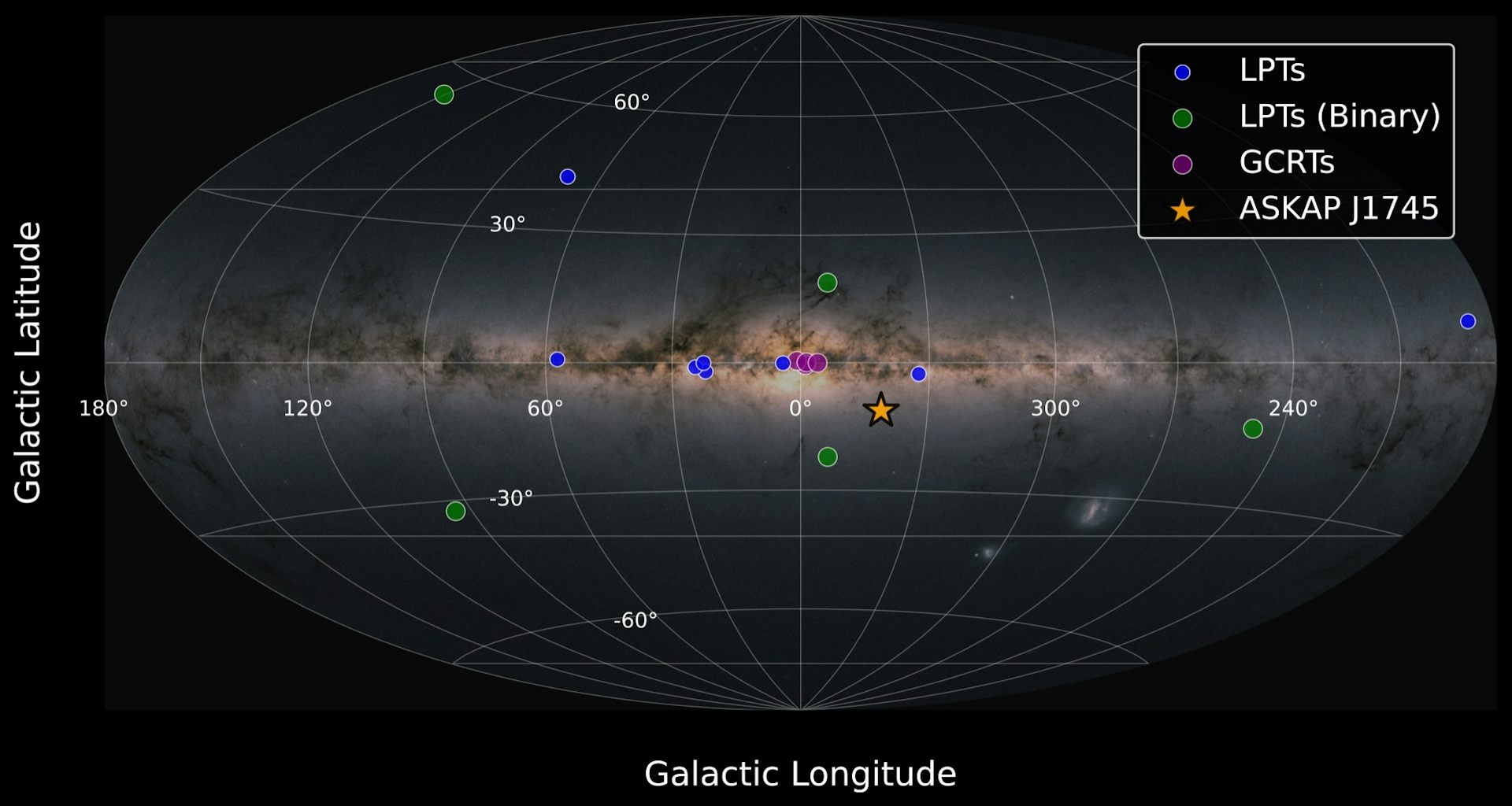
In recent years, astronomers have been puzzling over mysterious bursts of radio signals, known as long-period transients because of how slowly they repeat. They were first discovered by chance with telescopes scanning large chunks of the sky.
近年来,天文学家一直在研究神秘的射电信号爆发,由于其重复周期极长,这些信号被称为长周期瞬变源。它们最初是在望远镜扫描大片夜空时偶然发现的。
To date, astronomers have only found a dozen of these weird sources, and we’re still trying to understand exactly what they are.
迄今为止,天文学家只发现了十几处这类奇特的源,我们仍在努力弄清楚它们究竟是什么。
In a new study published today in Nature Astronomy, we describe a first-of-its-kind detection – both radio and X-ray bursts repeating with each orbit.
在今天发表于《天文学自然》的一项新研究中,我们描述了一项空前的探测——即射电和X射线爆发都随着每一次轨道重复。
ASKAP J1745 is exciting because we’ve figured out what it is, unlike 10 of the 12 known long-period transients. Even better, we were able to detect it with a bunch of different telescopes that observe all different kinds of light.
ASKAP J1745令人兴奋,因为它让我们弄清楚了它的本质,而这与已知的12个长周期瞬变源中的10个不同。更棒的是,我们能够使用一系列观测不同类型光线的望远镜来探测它。
Bearing the same message in three forms of writing, the famous Rosetta stone once helped scholars decipher ancient Egyptian hieroglyphs. Similarly, this extra information we found about ASKAP J1745 will help astronomers better understand the mystery of all long-period transients.
著名的罗塞塔石碑以三种书写形式承载了相同的信息,曾帮助学者们破译了古埃及象形文字。类似地,我们发现的关于ASKAP J1745的这些额外信息,将帮助天文学家更好地理解所有长周期瞬变源的奥秘。
What do long-period radio transients look like?
长周期射电瞬变体是什么样的?
Long-period transients are things in space that produce bright, repeating bursts of light at radio wavelengths. Little is known about the origins of most long-period transients. In addition, many have been discovered close to the dusty region in the middle of our galaxy, so it can be hard to see them with visible-light telescopes.
长周期瞬变体是宇宙中产生射电波长亮而重复爆发光芒的天体。关于大多数长周期瞬变体的起源知之甚少。此外,许多天体被发现位于我们银河系中央尘埃区域附近,因此很难用可见光望远镜观测到它们。
Even with just a dozen of these strange sources discovered so far, they seem to come in a few different shapes and sizes. Their radio bursts repeat on timescales of minutes to hours.
即使到目前为止只发现了十几处这类奇特源,它们似乎也具有几种不同的形状和大小。它们的射电爆发周期在分钟到小时的尺度上重复。
Some have been making regular pulses for more than 30 years, while others turn off for days at a time or go permanently radio-silent.
有些持续了三十多年发出规律脉冲,而有些则会间歇性地关闭数天,或永久地保持射电静默。
Where do they come from?
它们从哪里来?
Astronomers initially thought long-period transients were just very slowly spinning neutron stars, called pulsars. These are the fast-rotating dense cores left after the supernova explosions of massive stars.
天文学家最初认为长周期瞬变源只是旋转速度非常慢的中子星,这些中子星被称为脉冲星。它们是大质量恒星超新星爆发后留下的快速旋转的致密核心。
The first few of these radio transients discovered were repeating roughly every 20 minutes. That’s much slower than the average pulsar, which repeats every few seconds.
最早发现的这些射电瞬变源大约每20分钟重复一次。这比平均脉冲星(每隔几秒重复一次)慢得多。
Furthermore, when pulsars slow down their spin, they should stop producing radio light. This means we shouldn’t see radio bursts from neutron stars rotating so slowly.
此外,当脉冲星减慢其自转时,它们应该停止产生射电光。这意味着我们不应该看到来自旋转如此缓慢的中子星的射电爆发。
So astronomers investigated other theories involving white dwarfs – the slowly cooling dead centres of less massive stars. And recently we discovered some long-period transients in binary systems (two stars in a close orbit) with evidence of both a white dwarf and a lower-mass red dwarf star.
因此,天文学家研究了其他涉及白矮星的理论——白矮星是质量较小的恒星冷却后的死亡核心。最近,我们在双星系统(两个在近轨道运行的恒星)中发现了一些长周期瞬变源,这些系统同时具有白矮星和低质量红矮星的证据。
The discovery of ASKAP J1745
ASKAP J1745 的发现
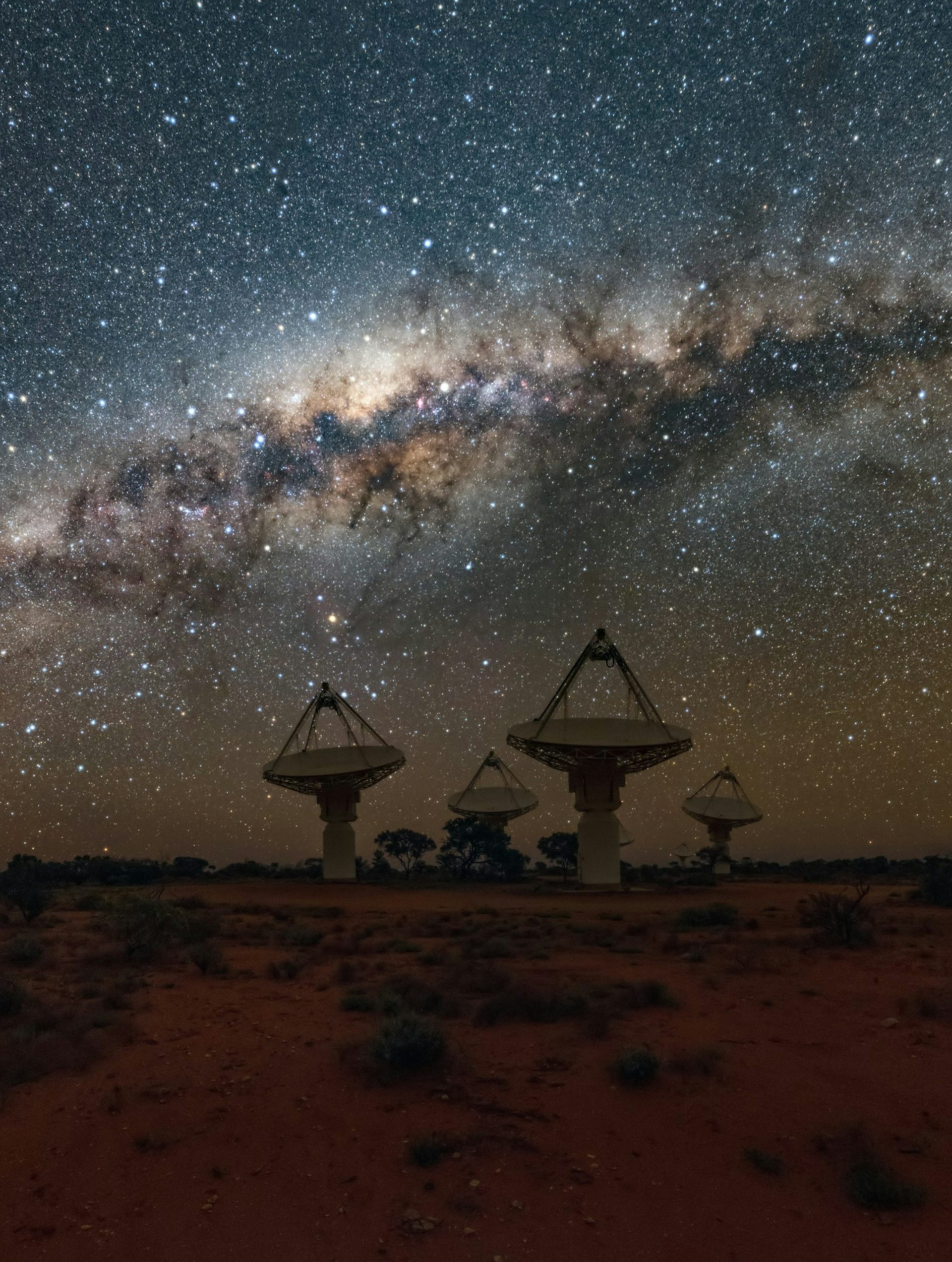
ASKAP J1745 is a new long-period radio transient we found with the ASKAP radio telescope, owned and operated by CSIRO, Australia’s national science agency. It’s the first one of these strange sources that we’ve identified as a “cataclysmic variable”.
ASKAP J1745 是我们使用 ASKAP 电波望远镜发现的一个新的长周期射电瞬变源,该望远镜由澳大利亚国家科学机构 CSIRO 所有和运营。它是我们首次将这类奇特源识别为“爆发星”。
Cataclysmic variables are systems with two stars – one of them a white dwarf – that orbit each other closely enough to interact. If the stars are close enough, the white dwarf’s gravity can pull (or “accrete”) material from the other star. That’s why these systems are also known as accreting white dwarf binaries.
爆发星系统是包含两颗恒星的系统——其中一颗是白矮星——它们彼此运行的距离足够近,从而发生相互作用。如果恒星足够接近,白矮星的引力可以从另一颗恒星上拉取(或“吸积”)物质。这就是为什么这些系统也被称为吸积白矮星双星。
Another long-period radio transient was recently discovered with X-ray bursts, repeating with the same regularity as the radio. However, the origin of the bursts and their shared timing remained unclear.
最近还发现了一个具有X射线爆发的另一个长周期射电瞬变源,其重复规律与射电信号相同。然而,这些爆发的起源及其共同的时间规律仍然不清楚。
Now, for the first time, we have combined observations from radio, X-ray and optical telescopes to find that ASKAP J1745 produces both X-ray and radio bursts with each orbit of its two stars.
现在,我们首次结合了射电、X射线和光学望远镜的观测结果,发现 ASKAP J1745 在其两颗恒星的每一次轨道运行中都会产生X射线和射电爆发。

In these rapidly orbiting systems, the X-ray light is thought to come from the material heating up as it streams onto the white dwarf.
在这些快速运行的系统中,X射线光被认为来自于物质流向白矮星时加热产生的。
The bright radio bursts were a bit more of a mystery. But knowing that this is an accreting binary system helped us figure things out.
明亮的射电爆发则更像是一个谜团。但知道这是一个吸积双星系统帮助我们理清了思路。
The type of pulsed radio light we detected is typically caused by energetic particles interacting with strong magnetic fields. Here, we have the perfect combination: two stars with strong magnetic fields (typically thousands of times stronger than an MRI machine) , with charged particles flowing towards the white dwarf from the other star.
我们检测到的脉冲射电光类型通常是由高能粒子与强磁场相互作用引起的。在这里,我们拥有了完美的组合:两颗具有强磁场的恒星(通常比核磁共振仪强数千倍),以及从另一颗恒星流向白矮星的带电粒子。
What this means for the future of astronomy
这对天文学的未来意味着什么
This discovery is unique because we have more information and at more different wavelengths than any other previous long-period transient.
这一发现是独特的,因为我们获得了比任何其他先前长周期瞬变体更多的信息和更多不同波长的观测数据。
Just like the Rosetta stone was key to decoding ancient Egyptian symbols, ASKAP J1745 will be key to deciphering the origins of other long-period radio transients that lack information at other wavelengths.
就像罗塞塔石碑是解读古埃及符号的关键一样,ASKAP J1745也将是破译其他缺乏其他波长信息的长周期射电瞬变体起源的关键。
ASKAP J1745 is the first long-period transient showing signs of accretion across the spectrum of light – from radio waves to visible to X-rays. And this stream of charged material is a crucial ingredient for making the radio light we detect from these systems.
ASKAP J1745是第一个在整个光谱——从无线电波到可见光再到X射线——范围内显示出吸积迹象的长周期瞬变体。而这种带电物质流是构成我们从这些系统中探测到的射电光的关键成分。
Exploring the mechanism that produces long-period radio bursts gives us a new laboratory to learn about extreme physics such as plasma flows and magnetic fields in conditions we can’t recreate on Earth.
探索产生长周期射电爆发的机制,为我们提供了一个学习极端物理学的新实验室,例如在地球上无法重现的等离子体流动和磁场条件。
We acknowledge the Wajarri Yamaji as the Traditional Owners and Native Title Holders of Inyarrimanha Ilgari Bundara, the CSIRO Murchison Radio-astronomy Observatory where ASKAP is located.
我们谨向Wajarri Yamaji致敬,他们是Inyarrimanha Ilgari Bundara的传统所有者和原住民土地权利持有者,ASKAP位于该天文台。
Kovi Rose does not work for, consult, own shares in or receive funding from any company or organisation that would benefit from this article, and has disclosed no relevant affiliations beyond their academic appointment.
Kovi Rose不为任何受益于本文的公司或组织工作、提供咨询、持有股份或接受资金,并且除了其学术任命之外,未披露任何相关隶属关系。