كيف تستخدم إيران اللوحات الإعلانية كدعاية زمن الحرب – اخترنا 5 لتوضيح معناها
How Iran uses billboards as wartime propaganda – we selected 5 to explain what they mean
The provocative images in the most visible parts of Tehran are intended to be photographed, posted and shared widely on social media.
الصور الاستفزازية في أكثر أجزاء طهران وضوحاً مُعدة ليتم تصويرها ونشرها ومشاركتها على نطاق واسع عبر وسائل التواصل الاجتماعي.
Since the US–Israel war against Iran began in late February, images of giant billboards in Tehran have been ubiquitous across traditional and social media. These billboards have been placed in some of the busiest and most visible parts of the city, and are constantly being updated to reflect current events.
منذ أن بدأت الحرب الأمريكية الإسرائيلية ضد إيران في أواخر فبراير، أصبحت صور اللوحات الإعلانية العملاقة في طهران منتشرة في جميع أنحاء وسائل الإعلام التقليدية والاجتماعية. وقد وُضعت هذه اللوحات في بعض أكثر وأكثر الأجزاء حيوية ووضوحاً في المدينة، ويتم تحديثها باستمرار لتعكس الأحداث الجارية.
Iran has long used public spaces as a tool of political communication. Since the 1979 Islamic Revolution – and especially during the Iran–Iraq War – the regime has erected murals and billboards to display revolutionary imagery, war memorials and ideological messages.
لطالما استخدمت إيران الأماكن العامة كأداة للتواصل السياسي. فمنذ الثورة الإسلامية عام 1979 – وخاصة خلال الحرب العراقية الإيرانية – أقام النظام جداريات ولوحات إعلانية لعرض الصور الثورية، والنصب التذكارية للحرب، والرسائل الأيديولوجية.
Today, these billboards are designed not only for local audiences, but also for global digital circulation. Depicting powerful imagery, slogans and symbolic representations, they serve a dual function:
اليوم، لم تُصمم هذه اللوحات الإعلانية للجمهور المحلي فحسب، بل أيضاً للتداول الرقمي العالمي. وبما أنها تصور صوراً قوية وشعارات وتمثيلات رمزية، فإنها تخدم وظيفة مزدوجة:
to reinforce a sense of collective identity, national unity and shared emotion during a time of crisis
* تعزيز الشعور بالهوية الجماعية والوحدة الوطنية والمشاعر المشتركة خلال وقت الأزمات.
to serve as a tool of propaganda for the state, at times featuring Hebrew and English alongside Farsi (Persian) .
* العمل كأداة للدعاية للدولة، وفي بعض الأحيان تعرض اللغة العبرية والإنجليزية إلى جانب الفارسية (الفارسي) .
Researchers argue these billboards are part of a broader visual communication strategy on the part of the state. They are intended to be photographed, posted and shared widely on social media as a way of projecting power and resistance to a global audience (even with a months-long internet blackout in place) .
يجادل الباحثون بأن هذه اللوحات الإعلانية هي جزء من استراتيجية اتصال بصري أوسع من جانب الدولة. وهي مُعدة ليتم تصويرها ونشرها ومشاركتها على نطاق واسع عبر وسائل التواصل الاجتماعي كوسيلة لإظهار القوة والمقاومة لجمهور عالمي (حتى مع وجود انقطاع للإنترنت يمتد لأشهر) .
So, what do the billboards say, and what’s the deeper symbolism behind the imagery? We’ve chosen five samples from Tehran to analyse.
إذًا، ماذا تقول هذه اللوحات الإعلانية، وما هي الرمزية الأعمق وراء هذه الصور؟ لقد اخترنا خمس عينات من طهران لتحليلها.
1. The Epstein missile
1. صاروخ إبستين
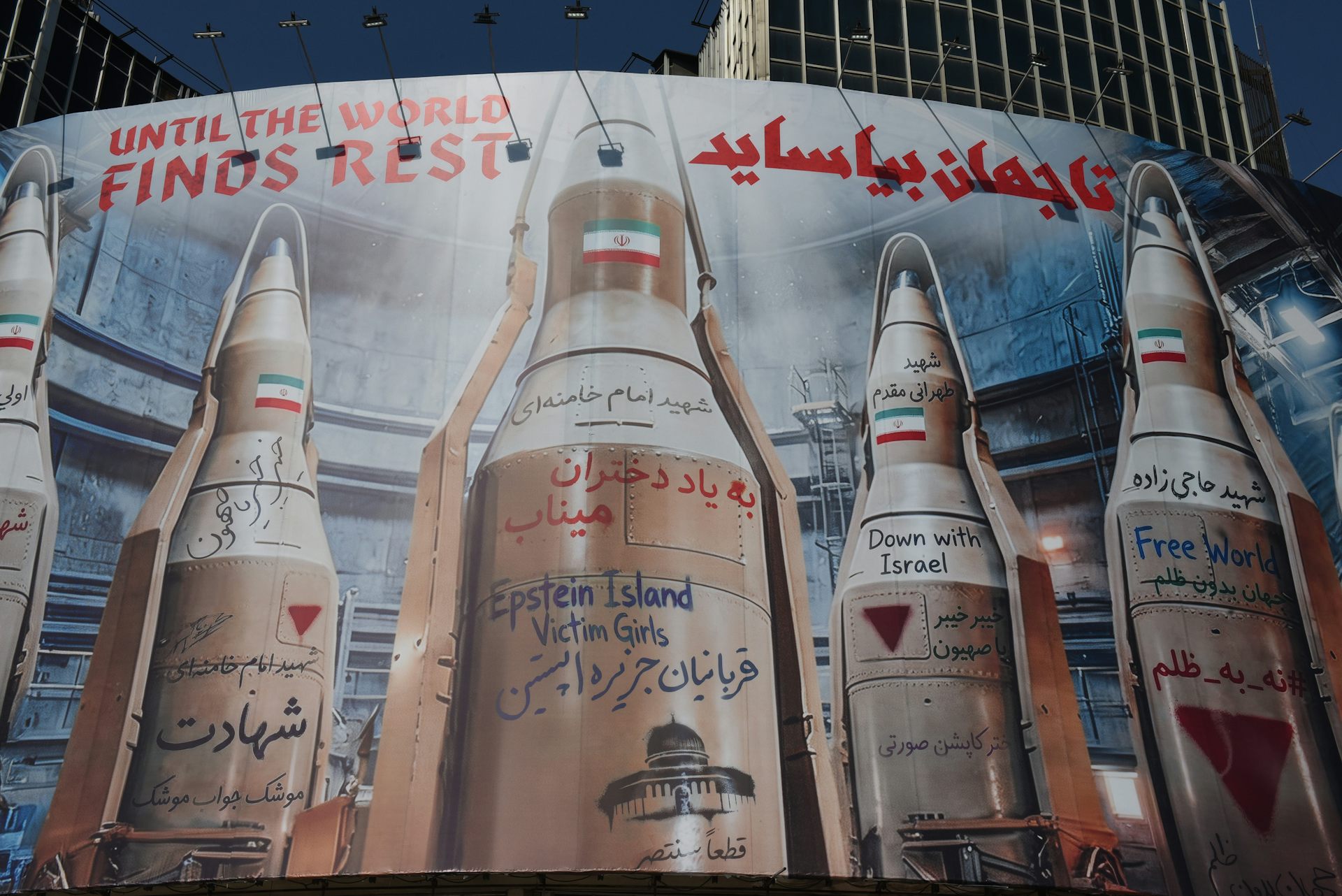
One of the billboards that circulated widely in recent months depicted Iranian missiles covered with handwritten messages and symbolic phrases.
صورت إحدى اللوحات الإعلانية التي انتشرت على نطاق واسع في الأشهر الأخيرة صواريخ إيرانية مغطاة برسائل مكتوبة بخط اليد وعبارات رمزية.
Among the most striking inscriptions is the phrase “To the girls of Minab”, written in bold, red Farsi script. This is a reference to a strike on a girls’ school in the opening days of the war that Iranian officials say killed 175 girls and teachers. Reports indicate US forces were likely responsible.
من بين النقوش الأكثر لفتاً للانتباه عبارة “لفتيات ميناب”، مكتوبة بالخط الفارسي الأحمر والبارز. ويشير هذا إلى ضربة استهدفت مدرسة للبنات في الأيام الأولى للحرب، حسبما يقول مسؤولون إيرانيون، والتي قُتل فيها 175 فتاة ومعلمة. وتشير التقارير إلى أن القوات الأمريكية هي المسؤولة على الأرجح.
Directly below that, written in English, are the words “Epstein Island victim girls”, a reference to the island owned by convicted sex offender Jeffrey Epstein where young women were allegedly sexually assaulted.
مباشرة تحتها، كُتبت باللغة الإنجليزية عبارة “فتيات ضحايا جزيرة إبستين”، وهي إشارة إلى الجزيرة المملوكة للمدان بالاعتداء الجنسي، جيفري إبستين، حيث يُزعم تعرض الشابات للاعتداء الجنسي.
On another missile is the phrase “the girl with the pink jacket”. This is a deeply emotional reference to a young Iranian girl killed in a terror attack in 2024, who was identified by her pink jacket and heart-shaped earrings.
وعلى صاروخ آخر عبارة “الفتاة ذات السترة الوردية.” وهي إشارة عاطفية عميقة إلى فتاة إيرانية شابة قُتلت في هجوم إرهابي عام 2024، والتي تم التعرف عليها من خلال سترتها الوردية وأقراطها على شكل قلب.
The intention is to connect these disparate events through a narrative of vulnerable young women affected by violence, exploitation and political power. Rather than presenting missiles only as weapons of destruction, the image reframes them as symbols of grief, revenge, memory and defence.
يهدف هذا إلى ربط هذه الأحداث المتباينة من خلال سرد قصصي لفتيات شابات معرضات للخطر، تأثرن بالعنف والاستغلال والقوة السياسية. وبدلاً من تقديم الصواريخ كسلاحات دمار فحسب، تعيد الصورة تأطيرها كرموز للحزن والانتقام والذاكرة والدفاع.
In this narrative, Iran is portrayed not as seeking war. It is responding to injustice and protecting its people.
في هذا السرد، لا يتم تصوير إيران على أنها تسعى للحرب. بل هي تستجيب للظلم وتحمي شعبها.
2. ‘Masters of war’
٢. “سادة الحرب”
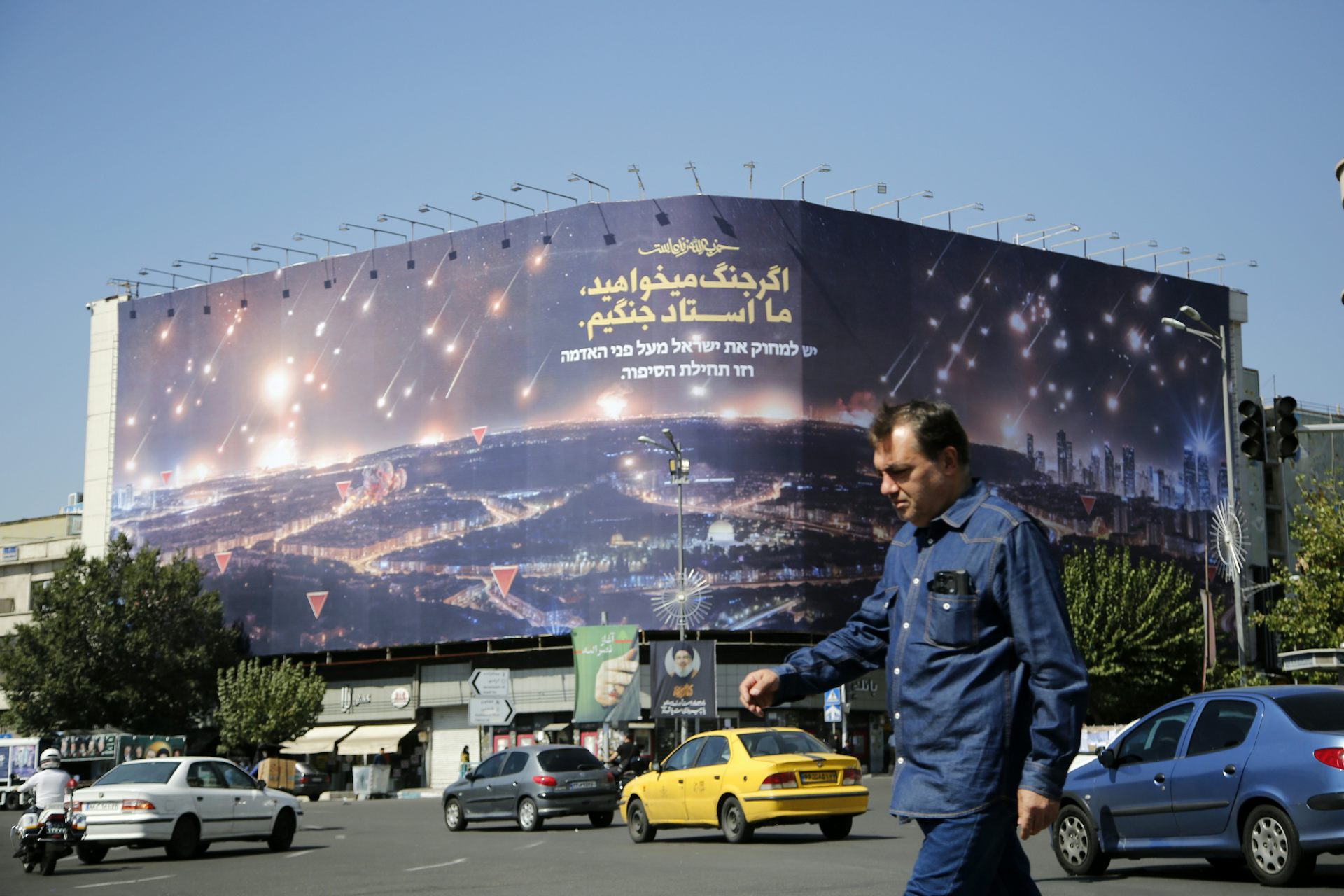
Another billboard that gained significant attention in 2024 depicted the Farsi phrase “If you want war, we are masters of war” above a Hebrew message saying “Israel must be wiped from the face of the earth”.
صورت لوحة إعلانية أخرى حظيت باهتمام كبير في عام 2024 العبارة الفارسية “إذا أردتم حرباً، فنحن سادة الحرب” فوق رسالة عبرية تقول “يجب محو إسرائيل من وجه الأرض.”
The billboard portrays the sky over Israel illuminated by waves of incoming missiles, almost resembling a meteor shower or rain of fire. The imagery is highly stylised and cinematic, with the missiles transforming the night sky into a scene of overwhelming force.
تُصوّر اللوحة الإعلانية سماء إسرائيل مضاءة بموجات من الصواريخ القادمة، تشبه تقريباً زخات الشهب أو مطر النار. التصوير فني ومصقول للغاية، حيث تحوّل الصواريخ سماء الليل إلى مشهد من القوة الساحقة.
By directly addressing Hebrew-speaking viewers, the billboard functions as both a direct warning to Israelis and a symbolic projection of power, designed to have psychological impact. Language becomes a tool of warfare itself.
من خلال مخاطبة المشاهدين الناطقين باللغة العبرية بشكل مباشر، تعمل اللوحة الإعلانية كتحذير مباشر للإسرائيليين وإسقاط رمزي للقوة، مصمم لإحداث تأثير نفسي. تصبح اللغة أداة للحرب بحد ذاتها.
This multilingual strategy reveals an important shift in Tehran’s urban propaganda. These billboards, which have become more prominent in recent years, are no longer designed solely for Iranian pedestrians and motorists. The regime is aware photographs will circulate instantly across the internet, reaching intended audiences in Israel.
تكشف هذه الاستراتيجية متعددة اللغات عن تحول مهم في الدعاية الحضرية في طهران. لم تعد هذه اللوحات الإعلانية، التي أصبحت أكثر وضوحاً في السنوات الأخيرة، مصممة فقط للمشاة وسائقي السيارات الإيرانيين. إن النظام يدرك أن الصور ستنتشر على الإنترنت على الفور، لتصل إلى الجماهير المستهدفة في إسرائيل.
3. Trump’s sutured mouth
3. فم ترامب المُخَاطَّر
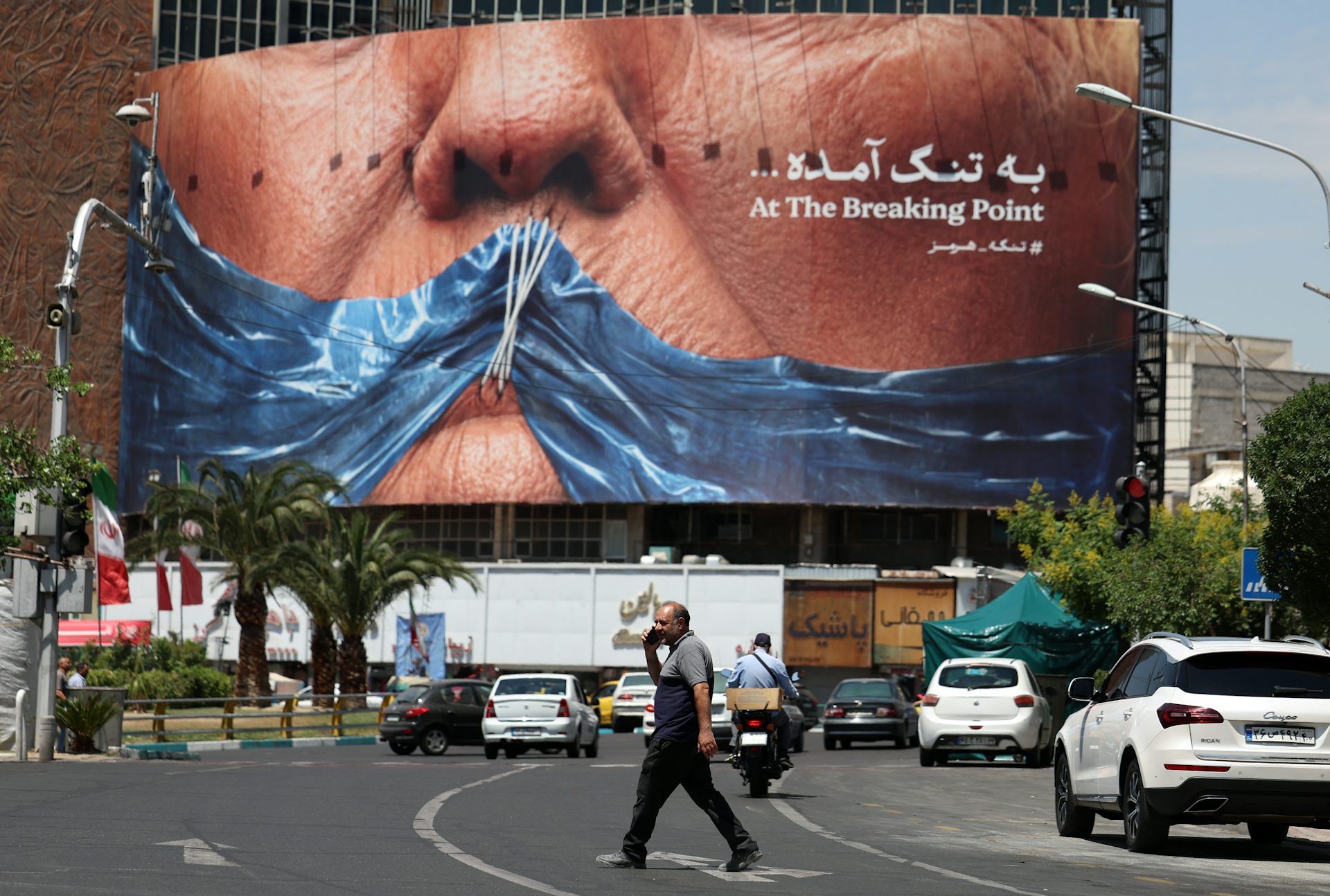
Another bilingual billboard is targeted to Western – and specifically American – audiences. It features US President Donald Trump’s mouth with a rendering of the Strait of Hormuz sutured on top, alongside the English phrase “The Breaking Point.”
يستهدف لوحة إعلانية ثنائية اللغة جمهوراً غربياً – وأمريكياً على وجه الخصوص. وتظهر اللوحة فم الرئيس الأمريكي دونالد ترامب مع رسم يمثل مضيق هرمز مُخاطَّر فوقه، إلى جانب العبارة الإنجليزية “نقطة الانهيار” (The Breaking Point) .
The Farsi text roughly translates to “its patience has run out”. It also contains a literary pun: the word tang in Farsi can refer both to “narrowness” or “constraint” and to the Strait (tangeh) of Hormuz itself. This creates a double meaning linking the geopolitical tensions in the Strait of Hormuz with the idea of reaching a psychological or political breaking point.
يُترجم النص الفارسي تقريباً إلى “لقد نفد صبره.” كما أنه يحتوي على تورية أدبية: فكلمة “تَنج” في الفارسية يمكن أن تشير إلى “ضيق” أو “قيد”، وإلى مضيق هرمز نفسه (tangeh) . وهذا يخلق معنى مزدوجاً يربط التوترات الجيوسياسية في مضيق هرمز بفكرة الوصول إلى نقطة انهيار نفسية أو سياسية.
The image also critiques Trump’s constant political rhetoric and media presence. The sutures placed across his mouth symbolise silencing, constraint and the loss of Trump’s authority or influence in relation to Iran and the Strait of Hormuz.
تنتقد الصورة أيضاً الخطاب السياسي المستمر لترامب وحضوره الإعلامي. وتُرمز الغرز الموضوعة عبر فمه إلى إسكات الصوت، والتقييد، وفقدان سلطة ترامب أو نفوذه فيما يتعلق بإيران ومضيق هرمز.
4. Arash the Archer
٤. أراش الرامي
Another billboard draws on the famous Persian myth of Arash the Archer. In the image, Arash places an arrow into his bow in the heat of battle, surrounded by missiles. The reference comes from the ancient story in which Arash sacrifices his life after shooting an arrow during a mythological war between Iran and neighbouring Turan.
تستوحي لوحة إعلانية أخرى من الأسطورة الفارسية الشهيرة لأراش الرامي. وفي الصورة، يضع أراش سهماً في قوسه في خضم المعركة، محاطاً بالصواريخ. ويأتي هذا المرجع من القصة القديمة التي يضحي فيها أراش بحياته بعد إطلاق سهم خلال حرب أسطورية بين إيران وتوران المجاور.
The billboard suggests modern Iranian soldiers, like Arash, are willing to sacrifice their lives to defend their homeland.
تشير اللوحة الإعلانية إلى أن الجنود الإيرانيين المعاصرين، مثل أرش، مستعدون للتضحية بحياتهم دفاعاً عن وطنهم.
More broadly, the image also reflects how poetry, mythology and heroic storytelling are deeply embedded in Iranian history and culture. It connects the contemporary conflict to centuries of struggle.
وبشكل أوسع، تعكس الصورة أيضاً كيف أن الشعر والأساطير والسرد القصصي البطولي متجذرة بعمق في التاريخ والثقافة الإيرانية. وهي تربط الصراع المعاصر بقرون من النضال.
5. The fishermen
٥. الصيادون
Another billboard demonstrates Iranian military power through the image of a massive fishing net spread across the Persian Gulf. Inside the net are captured American aircraft, drones and naval vessels.
تُظهر لوحة إعلانية أخرى القوة العسكرية الإيرانية من خلال صورة لشبكة صيد ضخمة ممتدة عبر الخليج العربي. وفي داخل الشبكة، توجد طائرات أمريكية ومسيرات وسفن حربية محاصرة.
The imagery is accompanied by the phrase, “The entire Persian Gulf is our hunting ground” in Farsi, connoting it is under direct Iranian control and surveillance. The image also emphasises the strategic importance of the Strait of Hormuz, indicating the power to open or close this vital waterway ultimately lies with Iran.
وتصاحب هذه الصورة عبارة باللغة الفارسية: “الخليج العربي بأكمله هو أرض صيدنا”، مما يوحي بأنه تحت السيطرة والمراقبة الإيرانية المباشرة. كما تؤكد الصورة على الأهمية الاستراتيجية لمضيق هرمز، مشيرة إلى أن سلطة فتح أو إغلاق هذا الممر المائي الحيوي تقع في نهاية المطاف بيد إيران.
At the same time, the fishing net operates as a cultural metaphor. Like fishing itself, Iran’s warfare strategy is based on patience, resilience, careful strategy and long-term determination, rather than sheer force alone.
وفي الوقت نفسه، تعمل شبكة الصيد كاستعارة ثقافية. وعلى غرار الصيد نفسه، تعتمد استراتيجية الحرب الإيرانية على الصبر، والمرونة، والاستراتيجية الحذرة، والعزيمة طويلة الأمد، بدلاً من مجرد القوة الغاشمة.
The authors do not work for, consult, own shares in or receive funding from any company or organisation that would benefit from this article, and have disclosed no relevant affiliations beyond their academic appointment.
لا يعمل المؤلفون لدى، أو يستشارون من قبل، أو يمتلكون حصصاً في، أو يتلقون تمويلاً من أي شركة أو منظمة تستفيد من هذا المقال، ولم يكشفوا عن أي انتماءات ذات صلة تتجاوز تعيينهم الأكاديمي.
Read more
-
أنياب العنكبوت هي إحدى أكثر سماته رعباً – تكشف أحافير جديدة عن أصولها
Spider fangs are one of their scariest features – new fossils reveal their origins
-
هل يقوم روبوت الدردشة (Chatbot) بالذكاء الاصطناعي بالتلاعب بك؟ يعيد تشكيل آرائك بخفية؟
Is your AI chatbot manipulating you? Subtly reshaping your opinions?