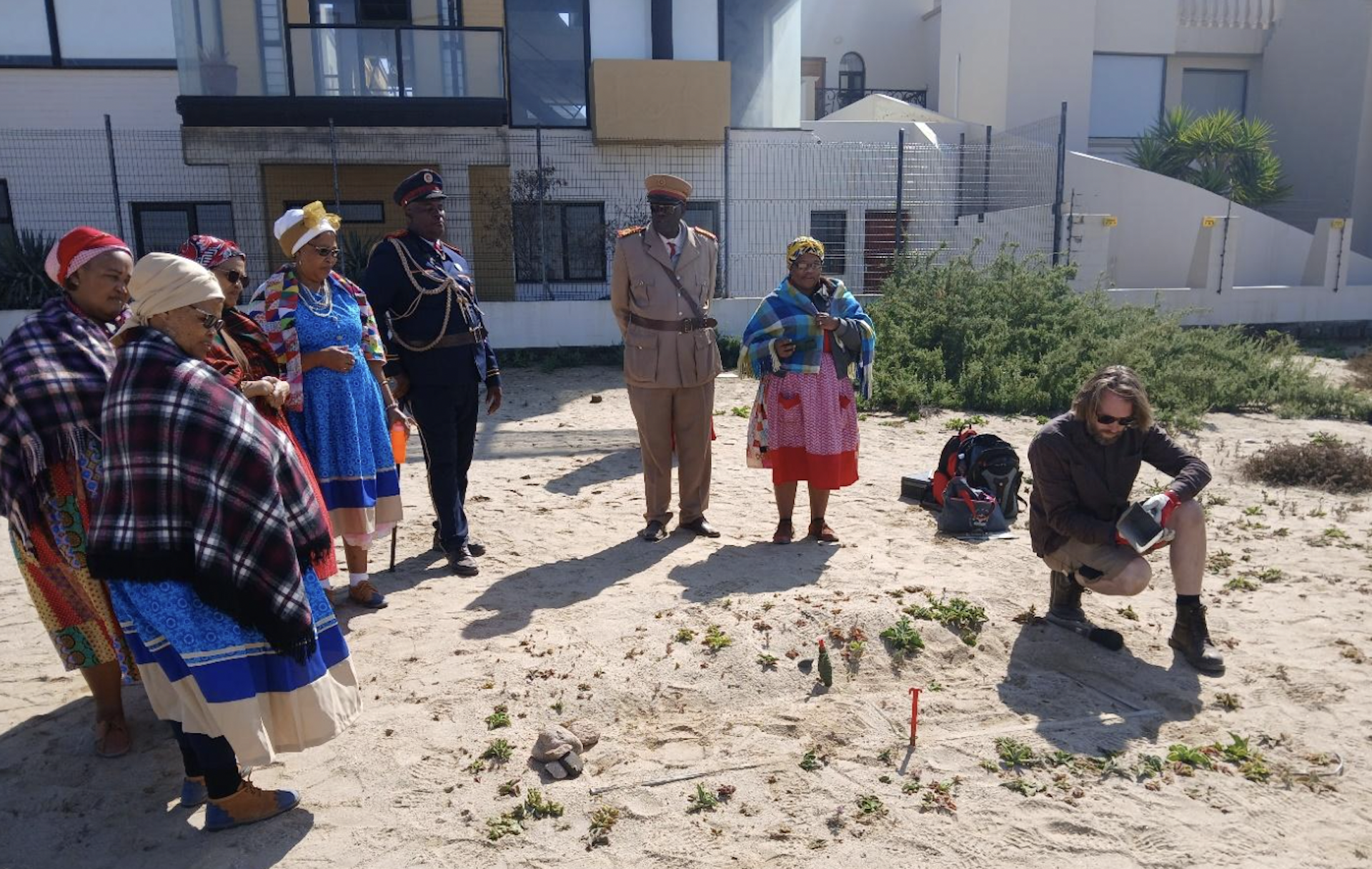
Menggali genosida Namibia yang terlupakan melalui arkeologi forensik
Unearthing Namibia’s forgotten genocide through forensic archaeology
Without intervention, the important surviving physical evidence and the opportunity for commemoration will be lost.
Tanpa intervensi, bukti fisik penting yang tersisa dan kesempatan untuk peringatan akan hilang.
The Namibian genocide was one of the first genocides of the 20th century. Between 1904 and 1908, tens of thousands of Ovaherero and Nama people were killed under German colonial rule.
Genosida Namibia adalah salah satu genosida pertama abad ke-20. Antara tahun 1904 dan 1908, puluhan ribu orang Ovaherero dan Nama dibunuh di bawah kekuasaan kolonial Jerman.
Despite the scale of these events, the material and human legacy of this genocide remains less understood than later atrocities. Historical accounts exist, but are often incomplete or shaped by the perspectives and priorities of the colonial period in which they were produced.
Meskipun skala peristiwa-peristiwa ini, warisan material dan manusia dari genosida ini masih kurang dipahami dibandingkan kekejaman di kemudian hari. Catatan sejarah memang ada, tetapi seringkali tidak lengkap atau dibentuk oleh perspektif dan prioritas periode kolonial saat catatan tersebut dibuat.
The landscapes of Namibia that testify to this violence still survive, but are under increasing pressure from urban expansion, infrastructure development and environmental change. Archaeological research is playing a key role in documenting and protecting this heritage.
Lanskap Namibia yang menjadi saksi kekerasan ini masih bertahan, tetapi berada di bawah tekanan yang meningkat dari ekspansi perkotaan, pembangunan infrastruktur, dan perubahan lingkungan. Penelitian arkeologi memainkan peran kunci dalam mendokumentasikan dan melindungi warisan ini.
The Centre of Archaeology at the University of Huddersfield has, in conjunction with community representatives, the research groups Forensic Architecture and Forensis and the Swakopmund Genocide Museum, conducted fieldwork in Namibia across two seasons (2023 and 2025) . Our work has focused on sites linked to German colonial concentration camps in Swakopmund and Lüderitz.
Centre of Archaeology di University of Huddersfield, bersama dengan perwakilan komunitas, kelompok penelitian Forensic Architecture dan Forensis, serta Swakopmund Genocide Museum, telah melakukan kerja lapangan di Namibia selama dua musim (2023 dan 2025) . Pekerjaan kami berfokus pada situs-situs yang terkait dengan kamp konsentrasi kolonial Jerman di Swakopmund dan Lüderitz.
Using forensic methods, our project seeks to locate, document and protect burial sites associated with the genocide. We aim to demonstrate how archaeology can confirm historical events, provide physical evidence, support commemoration and strengthen claims for reparations.
Menggunakan metode forensik, proyek kami berupaya menemukan, mendokumentasikan, dan melindungi situs pemakaman yang terkait dengan genosida tersebut. Kami bertujuan untuk menunjukkan bagaimana arkeologi dapat mengkonfirmasi peristiwa sejarah, memberikan bukti fisik, mendukung peringatan, dan memperkuat klaim reparasi.
The research combines archival study with field methods including: GIS mapping (computer-based spatial mapping and analysis of archaeological data) , walkover survey (systematic on-the-ground inspection of visible archaeological features) , Ground Penetrating Radar (a geophysical technique that uses radar waves to detect buried structures without excavation) , GPS survey, drone imagery and targeted excavation.
Penelitian ini menggabungkan studi arsip dengan metode lapangan termasuk: pemetaan GIS (pemetaan spasial dan analisis data arkeologi berbasis komputer) , survei jalan kaki (inspeksi sistematis di lapangan terhadap fitur arkeologi yang terlihat) , Ground Penetrating Radar (teknik geofisika yang menggunakan gelombang radar untuk mendeteksi struktur terkubur tanpa penggalian) , survei GPS, citra drone, dan penggalian terarah.
Crucially, it involves close collaboration with Ovaherero and Nama communities. Their priorities have shaped the research and discussions around site protection.
Yang terpenting, ini melibatkan kolaborasi erat dengan komunitas Ovaherero dan Nama. Prioritas mereka telah membentuk penelitian dan diskusi seputar perlindungan situs.
The sites under threat
Situs-situs yang terancam
Between 1905 and 1907, German colonial authorities established several concentration camps in Lüderitz, including the notorious Shark Island camp. Ovaherero and Nama prisoners were forced into slave labour to build railway lines and an extension to the harbour under the harshest of conditions.
Antara tahun 1905 dan 1907, otoritas kolonial Jerman mendirikan beberapa kamp konsentrasi di Lüderitz, termasuk kamp Shark Island yang terkenal. Tawanan Ovaherero dan Nama dipaksa menjadi pekerja budak untuk membangun jalur kereta api dan perluasan pelabuhan dalam kondisi paling keras.
For many, this was effectively a death sentence. Historical sources suggest that as many as 4,000 prisoners died at Shark Island, yet the final resting places of most victims remain uncertain. Written records and oral histories indicate that many bodies were never formally buried. Instead, they were disposed of in the Atlantic Ocean.
Bagi banyak orang, ini secara efektif adalah hukuman mati. Sumber sejarah menunjukkan bahwa sebanyak 4.000 tawanan tewas di Shark Island, namun tempat peristirahatan terakhir sebagian besar korban tetap tidak pasti. Catatan tertulis dan sejarah lisan menunjukkan bahwa banyak jenazah tidak pernah dikuburkan secara resmi. Sebaliknya, mereka dibuang ke Samudra Atlantik.
At Radford Bay, near a memorial to the victims, several sand mounds are believed to mark graves linked to the camps, some of which are thought to conceal mass burials. In collaboration with Forensic Architecture, using photo mapping techniques in conjunction and forensic methods, we have identified subsurface anomalies consistent with graves beneath a number of these features. At least one anomaly strongly suggests the presence of a mass grave.
Di Radford Bay, dekat sebuah monumen bagi para korban, beberapa gundukan pasir diyakini menandai makam yang terkait dengan kamp-kamp tersebut, beberapa di antaranya diduga menyembunyikan pemakaman massal. Dalam kolaborasi dengan Forensic Architecture, menggunakan teknik pemetaan foto bersama dengan metode forensik, kami telah mengidentifikasi anomali bawah permukaan yang konsisten dengan makam di bawah sejumlah fitur ini. Setidaknya satu anomali sangat menunjukkan adanya makam massal.
The results provide the first scientific evidence supporting oral accounts of burial practices at Lüderitz. However, the site is highly vulnerable due to wind and sand erosion. It is also threatened by a planned coastal infrastructure project. Without intervention, the important surviving physical evidence and the opportunity for commemoration will be lost.
Hasil ini memberikan bukti ilmiah pertama yang mendukung laporan lisan tentang praktik pemakaman di Lüderitz. Namun, situs ini sangat rentan karena erosi angin dan pasir. Situs ini juga terancam oleh proyek infrastruktur pesisir yang direncanakan. Tanpa intervensi, bukti fisik penting yang tersisa dan kesempatan untuk peringatan akan hilang.
Recent investigations at Swakopmund meanwhile, once a centre of German colonial activity, have revealed the scale and fragility of another burial landscape. At the former slave worker burial ground at Kramersdorf, thousands of Ovaherero and Nama victims were buried in shallow, unmarked graves. These burials are now under pressure from housing development, as well as damage caused by vehicles and pedestrians.
Investigasi terbaru di Swakopmund, sementara itu, yang dulunya merupakan pusat kegiatan kolonial Jerman, telah mengungkap skala dan kerapuhan lanskap pemakaman lainnya. Di bekas pemakaman pekerja budak di Kramersdorf, ribuan korban Ovaherero dan Nama dikuburkan dalam makam dangkal yang tidak ditandai. Pemakaman ini kini berada di bawah tekanan dari pengembangan perumahan, serta kerusakan yang disebabkan oleh kendaraan dan pejalan kaki.
One of the most significant discoveries is the extent of unmarked burials at this site. Subtle environmental indicators, particularly clusters of vegetation forming distinct patterns, have proved crucial in identifying grave locations. These patterns reflect changes in soil composition associated with burial, allowing graves to be mapped even where no visible markers exist.
Salah satu penemuan paling signifikan adalah luasnya pemakaman tanpa tanda di lokasi ini. Indikator lingkungan yang halus, terutama gugusan vegetasi yang membentuk pola yang berbeda, terbukti sangat penting dalam mengidentifikasi lokasi makam. Pola-pola ini mencerminkan perubahan komposisi tanah yang terkait dengan pemakaman, memungkinkan pemetaan makam bahkan di tempat tidak ada penanda yang terlihat.
Geophysical data confirmed numerous buried anomalies consistent with graves, including some directly beneath modern vehicle tracks. This makes the conservation challenge immediate – these hidden remains are being damaged.
Data geofisika mengonfirmasi banyak anomali terkubur yang konsisten dengan makam, termasuk beberapa yang berada tepat di bawah jalur kendaraan modern. Hal ini membuat tantangan konservasi menjadi mendesak – sisa-sisa tersembunyi ini sedang rusak.
At one location where erosion had exposed a coffin, targeted excavation was considered necessary to verify the initial observations.
Di satu lokasi di mana erosi telah menampakkan peti mati, penggalian terarah dianggap perlu untuk memverifikasi pengamatan awal.
Excavation was conducted by hand, with soil sieved and human remains left undisturbed. Once identified, recording ceased and the grave was respectfully refilled, with a protective sand mound rebuilt above it.
Penggalian dilakukan dengan tangan, dengan tanah diayak dan sisa-sisa manusia dibiarkan tidak tersentuh. Setelah diidentifikasi, pencatatan dihentikan dan makam tersebut diisi kembali dengan hormat, dengan gundukan pasir pelindung dibangun di atasnya.
Community leaders were present throughout the process. They conducted ceremonies, monitored the work and guided decisions about how the burial should be treated. This was an important aspect of the project, because these are not simply archaeological sites, but ancestral graves. For many participants, this work marked the first direct engagement with the physical remains of those who died in the camps.
Pemimpin komunitas hadir sepanjang proses. Mereka mengadakan upacara, memantau pekerjaan, dan memandu keputusan tentang bagaimana pemakaman tersebut harus diperlakukan. Ini adalah aspek penting dari proyek ini, karena ini bukan sekadar situs arkeologi, tetapi makam leluhur. Bagi banyak peserta, pekerjaan ini menandai keterlibatan langsung pertama dengan sisa-sisa fisik mereka yang meninggal di kamp.
The future of memorialisation
Masa Depan Peringatan
Beyond our fieldwork, the project feeds into wider efforts to ensure that the Namibian genocide is more widely recognised. Public engagement is a key part of this process.
Di luar kerja lapangan kami, proyek ini berkontribusi pada upaya yang lebih luas untuk memastikan bahwa genosida Namibia diakui secara lebih luas. Keterlibatan publik adalah bagian penting dari proses ini.
The Swakopmund Genocide Museum, founded in 2015 by Laidlaw Peringanda whose great-grandmother survived the Swakopmund camp, plays an important role in telling this history. Officially recognised by the Namibian government in 2019, the museum has recently secured funding to expand its exhibition space in response to growing visitor numbers.
Museum Genosida Swakopmund, yang didirikan pada tahun 2015 oleh Laidlaw Peringanda yang nenek buyutnya selamat dari kamp Swakopmund, memainkan peran penting dalam menceritakan sejarah ini. Secara resmi diakui oleh pemerintah Namibia pada tahun 2019, museum ini baru-baru ini mendapatkan dana untuk memperluas ruang pamerannya sebagai respons terhadap peningkatan jumlah pengunjung.
With support from the Huddersfield Centre of Archaeology, the displays have been redesigned. They are due to be unveiled on Namibia’s officially recognised Genocide Remembrance Day on May 28, 2026.
Dengan dukungan dari Huddersfield Centre of Archaeology, pameran-pameran tersebut telah didesain ulang. Pameran ini dijadwalkan akan diluncurkan pada Hari Peringatan Genosida Namibia yang diakui secara resmi pada 28 Mei 2026.
Archaeological evidence provides a different kind of testimony from written or oral sources. It confirms the presence of burials, reveals their condition and demonstrates their extent. It can also expose gaps between official records and the reality on the ground.
Bukti arkeologi memberikan jenis kesaksian yang berbeda dari sumber tertulis atau lisan. Bukti ini mengonfirmasi keberadaan pemakaman, mengungkapkan kondisinya, dan menunjukkan luasnya. Bukti ini juga dapat mengungkap kesenjangan antara catatan resmi dan kenyataan di lapangan.
In Namibia, this evidence has implications beyond historical understanding. It contributes to ongoing debates about colonial legacies, reparations and historical accountability – issues that remain unresolved
Di Namibia, bukti ini memiliki implikasi di luar pemahaman sejarah. Ini berkontribusi pada perdebatan berkelanjutan tentang warisan kolonial, reparasi, dan akuntabilitas sejarah – isu-isu yang masih belum terselesaikan.
By ensuring the material traces of the genocide become visible, this forensic archaeological approach can strengthen the basis for these discussions. It ensures that the past is not only documented, but acknowledged, protected and recognised.
Dengan memastikan jejak material genosida menjadi terlihat, pendekatan arkeologi forensik ini dapat memperkuat dasar bagi diskusi-diskusi ini. Ini memastikan bahwa masa lalu tidak hanya didokumentasikan, tetapi juga diakui, dilindungi, dan diakui.
The authors do not work for, consult, own shares in or receive funding from any company or organisation that would benefit from this article, and have disclosed no relevant affiliations beyond their academic appointment.
Para penulis tidak bekerja untuk, berkonsultasi, memiliki saham di, atau menerima dana dari perusahaan atau organisasi mana pun yang akan mendapat manfaat dari artikel ini, dan tidak mengungkapkan afiliasi relevan di luar jabatan akademik mereka.
Read more
-

Apa yang diungkapkan oleh daftar para penyintas Wabah Hitam tentang cara orang pulih dari wabah
What a list of Black Death survivors reveals about the way people recovered from plague
-
Iran memiliki alat baru yang kuat di Selat Hormuz yang dapat dimanfaatkan jauh setelah perang
Iran has a powerful new tool in the Strait of Hormuz that it can leverage long after the war