通过法庭考古学发掘纳米比亚被遗忘的种族灭绝案
Unearthing Namibia’s forgotten genocide through forensi…
Without intervention, the important surviving physical evidence and the opportunity for commemoration will be lost.
如果没有干预,重要的幸存实物证据和纪念机会都将失去。
The Namibian genocide was one of the first genocides of the 20th century. Between 1904 and 1908, tens of thousands of Ovaherero and Nama people were killed under German colonial rule.
纳米比亚种族灭绝是20世纪最早的种族灭绝事件之一。在1904年至1908年间,在德国殖民统治下,数万名奥瓦赫罗人(Ovaherero)和纳马人(Nama)被杀害。
Despite the scale of these events, the material and human legacy of this genocide remains less understood than later atrocities. Historical accounts exist, but are often incomplete or shaped by the perspectives and priorities of the colonial period in which they were produced.
尽管这些事件规模巨大,但这场种族灭绝的物质和人类遗产的了解程度,仍不及后来的暴行。历史记录虽然存在,但往往是不完整的,或者受到其产生时期的殖民视角和优先事项的影响。
The landscapes of Namibia that testify to this violence still survive, but are under increasing pressure from urban expansion, infrastructure development and environmental change. Archaeological research is playing a key role in documenting and protecting this heritage.
见证了这场暴行的纳米比亚景观依然存在,但正面临着城市扩张、基础设施开发和环境变化日益增加的压力。考古研究在记录和保护这一遗产方面发挥着关键作用。
The Centre of Archaeology at the University of Huddersfield has, in conjunction with community representatives, the research groups Forensic Architecture and Forensis and the Swakopmund Genocide Museum, conducted fieldwork in Namibia across two seasons (2023 and 2025) . Our work has focused on sites linked to German colonial concentration camps in Swakopmund and Lüderitz.
哈德斯菲尔德大学考古中心与社区代表、法证建筑学研究小组(Forensic Architecture)、法证研究小组(Forensis)和斯瓦科普蒙德种族灭绝博物馆合作,在纳米比亚进行了为期两个季节(2023年和2025年)的实地考察。我们的工作重点是与德国殖民地在斯瓦科普蒙德和吕德里茨的集中营相关的遗址。
Using forensic methods, our project seeks to locate, document and protect burial sites associated with the genocide. We aim to demonstrate how archaeology can confirm historical events, provide physical evidence, support commemoration and strengthen claims for reparations.
本项目利用法证方法,旨在定位、记录和保护与种族灭绝相关的墓地。我们的目标是展示考古学如何能够证实历史事件、提供实物证据、支持纪念活动并加强赔偿要求。
The research combines archival study with field methods including: GIS mapping (computer-based spatial mapping and analysis of archaeological data) , walkover survey (systematic on-the-ground inspection of visible archaeological features) , Ground Penetrating Radar (a geophysical technique that uses radar waves to detect buried structures without excavation) , GPS survey, drone imagery and targeted excavation.
该研究结合了档案研究和实地方法,包括:地理信息系统(GIS)测绘(基于计算机的空间测绘和考古数据分析)、步行调查(对可见考古特征的系统地面检查)、探地雷达(一种利用雷达波检测地下结构而无需挖掘的地球物理技术)、GPS测量、无人机影像和定向发掘。
Crucially, it involves close collaboration with Ovaherero and Nama communities. Their priorities have shaped the research and discussions around site protection.
至关重要的是,它涉及与奥瓦赫罗人和纳马社区的密切合作。他们的优先事项塑造了研究和关于遗址保护的讨论。
The sites under threat
受威胁的遗址
Between 1905 and 1907, German colonial authorities established several concentration camps in Lüderitz, including the notorious Shark Island camp. Ovaherero and Nama prisoners were forced into slave labour to build railway lines and an extension to the harbour under the harshest of conditions.
1905年至1907年间,德国殖民当局在吕德里茨建立了多个集中营,其中包括臭名昭著的鲨鱼岛营地。奥瓦赫雷罗人和纳马人囚犯被迫在最恶劣的条件下从事奴役劳动,修建铁路和港口延伸线。
For many, this was effectively a death sentence. Historical sources suggest that as many as 4,000 prisoners died at Shark Island, yet the final resting places of most victims remain uncertain. Written records and oral histories indicate that many bodies were never formally buried. Instead, they were disposed of in the Atlantic Ocean.
对许多人来说,这实际上是死刑。历史资料显示,鲨鱼岛至少有4000名囚犯死亡,但大多数受害者的最终安息之地仍然不明。书面记录和口述历史表明,许多遗体从未得到正式埋葬。相反,它们被倾倒入大西洋。
At Radford Bay, near a memorial to the victims, several sand mounds are believed to mark graves linked to the camps, some of which are thought to conceal mass burials. In collaboration with Forensic Architecture, using photo mapping techniques in conjunction and forensic methods, we have identified subsurface anomalies consistent with graves beneath a number of these features. At least one anomaly strongly suggests the presence of a mass grave.
在拉德福德湾,靠近受害者纪念碑的地方,有几个沙堆被认为标记着与这些营地相关的坟墓,其中一些被认为掩埋着集体墓葬。我们与法证建筑(Forensic Architecture)合作,结合使用照片测绘技术和法证方法,识别出在这些特征下方与坟墓一致的地下异常点。至少有一个异常点强烈暗示存在集体墓地。
The results provide the first scientific evidence supporting oral accounts of burial practices at Lüderitz. However, the site is highly vulnerable due to wind and sand erosion. It is also threatened by a planned coastal infrastructure project. Without intervention, the important surviving physical evidence and the opportunity for commemoration will be lost.
这些结果提供了支持吕德里茨埋葬习俗的口述记录的首次科学证据。然而,该遗址由于风和沙侵蚀而极度脆弱。它还受到计划中的海岸基础设施项目威胁。如果没有干预,重要的幸存的实物证据和纪念机会都将失去。
Recent investigations at Swakopmund meanwhile, once a centre of German colonial activity, have revealed the scale and fragility of another burial landscape. At the former slave worker burial ground at Kramersdorf, thousands of Ovaherero and Nama victims were buried in shallow, unmarked graves. These burials are now under pressure from housing development, as well as damage caused by vehicles and pedestrians.
与此同时,对斯瓦科普蒙德(Swakopmund)的近期调查——这里曾是德国殖民活动中心——揭示了另一个墓地景观的规模和脆弱性。在克拉默斯多夫(Kramersdorf)的前奴隶工人墓地,数千名奥瓦赫雷罗人和纳马人受害者被埋在浅而未标记的坟墓中。这些墓地现在面临着住房开发以及车辆和行人造成的损害压力。
One of the most significant discoveries is the extent of unmarked burials at this site. Subtle environmental indicators, particularly clusters of vegetation forming distinct patterns, have proved crucial in identifying grave locations. These patterns reflect changes in soil composition associated with burial, allowing graves to be mapped even where no visible markers exist.
最重要的发现之一是该遗址未标记墓葬的范围。微妙的环境指标,特别是形成独特图案的植被群落,在确定墓地位置方面发挥了关键作用。这些图案反映了与埋葬相关的土壤成分变化,即使在没有可见标记的地方也能绘制出墓地。
Geophysical data confirmed numerous buried anomalies consistent with graves, including some directly beneath modern vehicle tracks. This makes the conservation challenge immediate – these hidden remains are being damaged.
地球物理数据证实了许多与坟墓一致的地下异常点,包括一些位于现代车辆车辙下。这使得保护挑战变得迫在眉睫——这些隐藏的遗骸正在遭受破坏。
At one location where erosion had exposed a coffin, targeted excavation was considered necessary to verify the initial observations.
在一个被侵蚀暴露了棺材的地点,有必要进行有针对性的挖掘来核实初步观察结果。
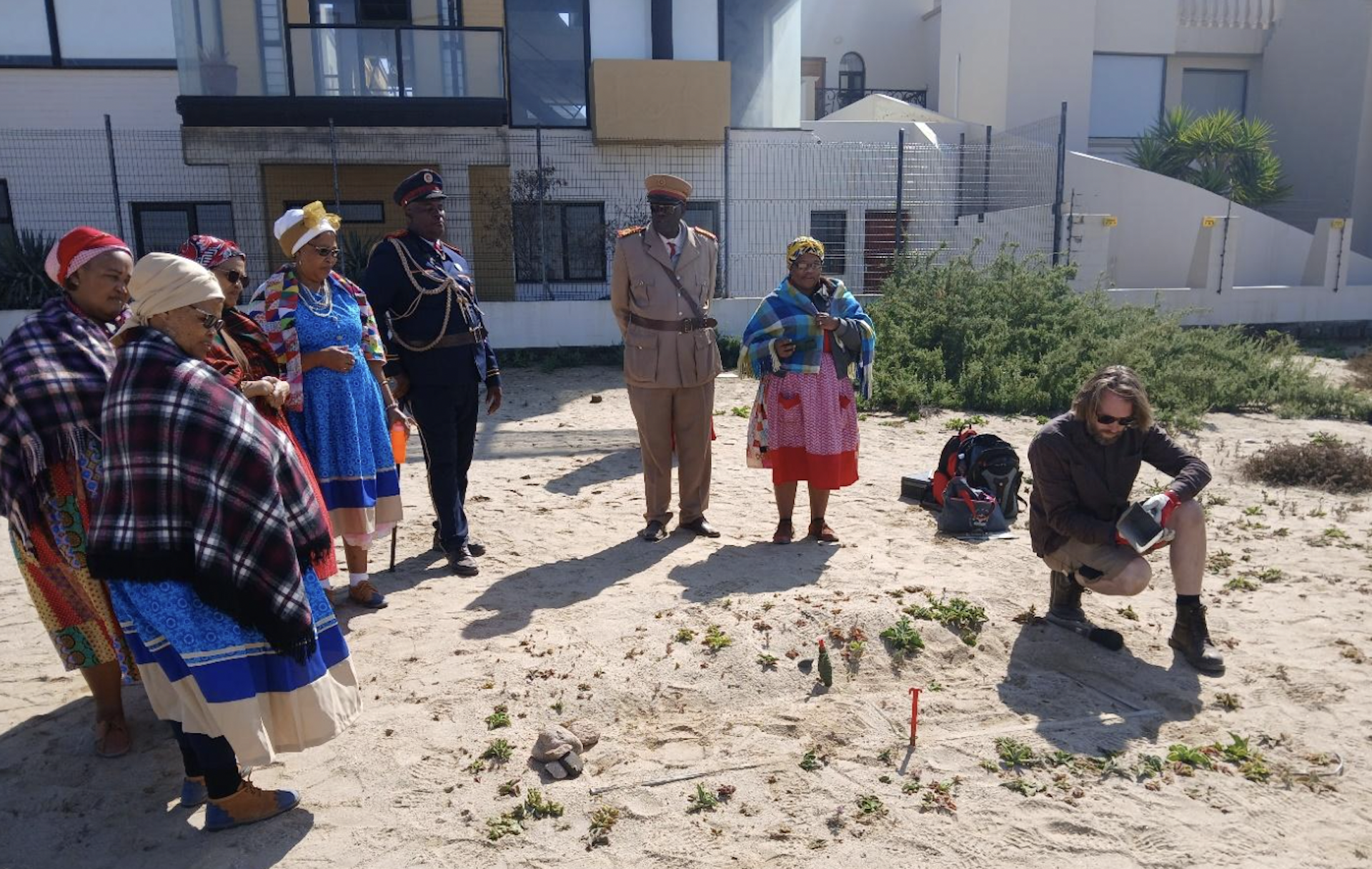
Excavation was conducted by hand, with soil sieved and human remains left undisturbed. Once identified, recording ceased and the grave was respectfully refilled, with a protective sand mound rebuilt above it.
挖掘工作是手工进行的,土壤被筛除,人类遗骸保持完好。一旦识别完成,记录工作停止,坟墓被恭敬地重新填埋,并在其上方重建了保护性的沙堆。
Community leaders were present throughout the process. They conducted ceremonies, monitored the work and guided decisions about how the burial should be treated. This was an important aspect of the project, because these are not simply archaeological sites, but ancestral graves. For many participants, this work marked the first direct engagement with the physical remains of those who died in the camps.
社区领袖在整个过程中都到场。他们举行了仪式,监督了工作,并指导了关于如何对待这些墓地的决策。这是项目的一个重要方面,因为这些不仅仅是考古遗址,而是祖先的坟墓。对于许多参与者来说,这项工作标志着他们首次直接接触到那些在集中营中逝去者的实体遗骸。
The future of memorialisation
纪念的未来
Beyond our fieldwork, the project feeds into wider efforts to ensure that the Namibian genocide is more widely recognised. Public engagement is a key part of this process.
除了我们的实地考察之外,该项目还为确保纳米比亚种族灭绝事件得到更广泛的认识做出了贡献。公众参与是这一过程的关键部分。
The Swakopmund Genocide Museum, founded in 2015 by Laidlaw Peringanda whose great-grandmother survived the Swakopmund camp, plays an important role in telling this history. Officially recognised by the Namibian government in 2019, the museum has recently secured funding to expand its exhibition space in response to growing visitor numbers.
斯瓦科普蒙德种族灭绝博物馆于2015年由莱德劳·佩林甘达(Laidlaw Peringanda)创立,其曾祖母幸存了斯瓦科普蒙德集中营,在讲述这段历史中发挥着重要作用。该博物馆于2019年获得纳米比亚政府的官方认可,最近已获得资金,以应对游客数量的增长,扩大其展览空间。
With support from the Huddersfield Centre of Archaeology, the displays have been redesigned. They are due to be unveiled on Namibia’s officially recognised Genocide Remembrance Day on May 28, 2026.
在哈德斯菲尔德考古中心(Huddersfield Centre of Archaeology)的支持下,展品已经重新设计。它们计划于纳米比亚官方认可的种族灭绝纪念日(2026年5月28日)揭幕。
Archaeological evidence provides a different kind of testimony from written or oral sources. It confirms the presence of burials, reveals their condition and demonstrates their extent. It can also expose gaps between official records and the reality on the ground.
考古证据提供了与书面或口头来源不同的证词。它证实了埋葬的存在,揭示了其状况并展示了其范围。它还可以揭示官方记录与实际情况之间的差距。
In Namibia, this evidence has implications beyond historical understanding. It contributes to ongoing debates about colonial legacies, reparations and historical accountability – issues that remain unresolved
在纳米比亚,这些证据的意义超越了历史理解。它为关于殖民遗产、赔偿和历史问责制等持续辩论提供了贡献——这些问题仍未得到解决。
By ensuring the material traces of the genocide become visible, this forensic archaeological approach can strengthen the basis for these discussions. It ensures that the past is not only documented, but acknowledged, protected and recognised.
通过确保种族灭绝的物质痕迹可见,这种法证考古学方法可以加强这些讨论的基础。它确保了过去不仅被记录,而且被承认、保护和认可。
The authors do not work for, consult, own shares in or receive funding from any company or organisation that would benefit from this article, and have disclosed no relevant affiliations beyond their academic appointment.
作者不为任何受益于本文的公司或组织工作、提供咨询、拥有股份或接受资金,并且除了其学术任命之外,没有披露任何相关的隶属关系。
Read more
-

“对人类生命风险的彻底漠视”:佛罗里达起诉OpenAI和Sam Altman,涉及人工智能安全
‘Utter disregard for the risk to human life’: Florida s…