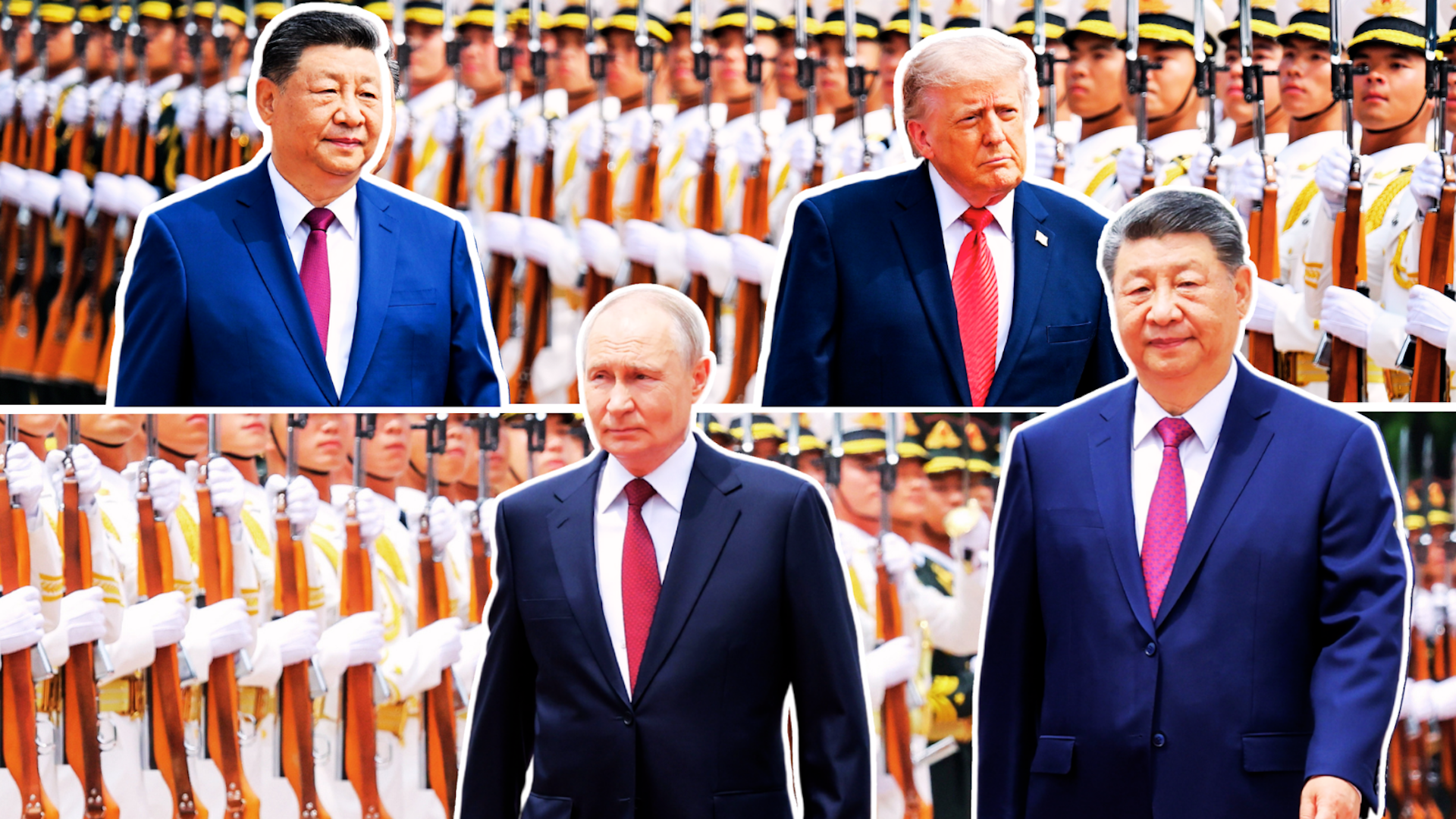
पुतिन और ट्रम्प की मेजबानी करते हुए, चीन एक संदेश भेजता है – अब यह गाड़ी के स्टीयरिंग व्हील पर है
Playing host to Putin and Trump, China sends a message – it’s now in the driver’s seat
Xi Jinping had his moment on the global stage – and he didn’t waste it.
शी जिनपिंग को वैश्विक मंच पर अपना पल मिला – और उन्होंने इसे बर्बाद नहीं किया।
It’s been quite a week for Beijing, with back-to-back visits by the leaders of the United States and Russia. Chinese President Xi Jinping has had his hands full with hosting duties, gun salutes, photo opportunities and high-level talks.
बीजिंग के लिए यह एक व्यस्त सप्ताह रहा, जिसमें संयुक्त राज्य अमेरिका और रूस के नेताओं के लगातार दौरे हुए। चीनी राष्ट्रपति शी जिनपिंग मेज़बानी के कर्तव्यों, तोप सलामी, फोटो अवसरों और उच्च-स्तरीय वार्ताओं में व्यस्त रहे।
Each visit was important in its own way. US President Donald Trump’s state visit was his first to Beijing since 2017. It came at a moment of strained China-US relations, with the US at war in the Middle East and its foreign policy undergoing a massive transformation under Trump.
हर दौरा अपने आप में महत्वपूर्ण था। अमेरिकी राष्ट्रपति डोनाल्ड ट्रम्प का राज्य दौरा 2017 के बाद बीजिंग का उनका पहला दौरा था। यह समय चीन-अमेरिका संबंधों में तनाव का था, जब अमेरिका मध्य पूर्व में युद्ध में था और ट्रम्प के नेतृत्व में उसकी विदेश नीति बड़े बदलाव से गुज़र रही थी।
For Putin, it was his 25th official visit to China. The trip was intended to further consolidate the China–Russia strategic alignment amid global uncertainty. Putin was also keen to secure China’s continued economic lifeline and diplomatic cover as its war with Ukraine grinds on.
पुतिन के लिए, यह चीन का उनका 25वां आधिकारिक दौरा था। यह यात्रा वैश्विक अनिश्चितता के बीच चीन-रूस रणनीतिक तालमेल को और मजबूत करने के उद्देश्य से की गई थी। पुतिन यूक्रेन के साथ अपने युद्ध के जारी रहने के साथ-साथ चीन की निरंतर आर्थिक जीवनरेखा और राजनयिक सुरक्षा को सुरक्षित करने के लिए भी उत्सुक थे।
And while the timing of the back-to-back visits should not be over-interpreted – Moscow says there was “no connection” between the two – they do reveal a deeper structural shift in global politics.
और हालांकि लगातार दौरों के समय की अति-व्याख्या नहीं की जानी चाहिए – मॉस्को का कहना है कि दोनों के बीच “कोई संबंध” नहीं था – लेकिन वे वैश्विक राजनीति में एक गहरे संरचनात्मक बदलाव को दर्शाते हैं।
Beijing’s rising confidence
बीजिंग का बढ़ता आत्मविश्वास
First, the United States is clearly no longer the most important country in China’s strategic worldview – and Beijing is increasingly willing to show it.
सबसे पहले, संयुक्त राज्य अमेरिका स्पष्ट रूप से चीन के रणनीतिक विश्वदृष्टिकोण में अब सबसे महत्वपूर्ण देश नहीं रहा है – और बीजिंग इसे दिखाना अधिक इच्छुक है।
This was visible in Xi’s posturing and negotiating style with Trump. From his rather distant handshake to his dominant body language throughout their meeting, Xi sent a message: Washington has a limited ability to influence Beijing anymore.
यह शी के ट्रम्प के साथ व्यवहार और बातचीत करने के तरीके में दिखाई दिया। उनकी काफी दूरी वाली हैंडशेक से लेकर उनकी पूरी बैठक के दौरान उनकी प्रभावशाली शारीरिक भाषा तक, शी ने एक संदेश भेजा: वाशिंगटन के पास अब बीजिंग को प्रभावित करने की सीमित क्षमता है।
The modest outcomes of their summit reinforced this dynamic. Trump left China without a formal deal, a press conference or a joint communiqué. Nor was there a breakthrough on either Iran or Taiwan.
उनके शिखर सम्मेलन के मामूली परिणाम ने इस गतिशीलता को मजबूत किया। ट्रम्प बिना किसी औपचारिक समझौते, प्रेस कॉन्फ्रेंस या संयुक्त विज्ञप्ति के चीन से रवाना हुए। न ही ईरान या ताइवान पर कोई बड़ी सफलता मिली।
Putin, meanwhile, met his “good and old friend” Xi and took home some 20 agreements ranging from trade to technology.
इस बीच, पुतिन ने अपने “अच्छे और पुराने दोस्त” शी से मुलाकात की और व्यापार से लेकर प्रौद्योगिकी तक के लगभग 20 समझौते हासिल किए।
The most striking, if not unsettling, moment was Xi’s invocation of the “Thucydides Trap” during his meeting with Trump. This is the idea that a rising power inevitably threatens an established one, risking war.
सबसे चौंकाने वाला, अगर परेशान करने वाला नहीं, क्षण ट्रम्प के साथ अपनी बैठक के दौरान शी द्वारा “थ्यूसिडाइड्स ट्रैप” का उल्लेख करना था। यह विचार है कि एक उभरती हुई शक्ति अनिवार्य रूप से एक स्थापित शक्ति को खतरा पहुँचाती है, जिससे युद्ध का जोखिम होता है।
Xi asked a pointed question:
शी ने एक तीखा सवाल पूछा:
Can China and the United States transcend the so-called ‘Thucydides Trap’ and forge a new paradigm for major-power relations?
क्या चीन और संयुक्त राज्य अमेरिका तथाकथित ‘थ्यूसिडाइड्स ट्रैप’ से ऊपर उठकर प्रमुख शक्तियों के संबंधों के लिए एक नया प्रतिमान (पैराडाइम) बना सकते हैं?
Xi has used this concept before, but his directness this time sent a warning: the US risks creating a major crisis if it continues to rely on a containment strategy to counter China’s rise.
शी पहले भी इस अवधारणा का उपयोग कर चुके हैं, लेकिन इस बार उनकी स्पष्टवादिता ने एक चेतावनी दी: यदि अमेरिका चीन के उदय का मुकाबला करने के लिए रोकथाम की रणनीति पर निर्भर रहना जारी रखता है, तो वह एक बड़ा संकट पैदा करने का जोखिम उठाता है।
In short, Beijing used the Trump visit to signal confidence, autonomy and the fact that Washington is not the only capital that matters to China.
संक्षेप में, बीजिंग ने ट्रम्प के दौरे का उपयोग आत्मविश्वास, स्वायत्तता और इस तथ्य का संकेत देने के लिए किया कि वाशिंगटन चीन के लिए एकमात्र महत्वपूर्ण राजधानी नहीं है।
Russia has new usefulness to Beijing
बीजिंग के लिए रूस की नई उपयोगिता
Second, the China–Russia alignment has become less equal, but it has gained greater strategic depth. And Beijing is now using it to put pressure on the US leadership.
दूसरा, चीन-रूस गठबंधन कम समान हुआ है, लेकिन इसने अधिक रणनीतिक गहराई हासिल की है। और बीजिंग अब इसका उपयोग अमेरिकी नेतृत्व पर दबाव डालने के लिए कर रहा है।
During a private garden stroll through the highly secretive Zhongnanhai leadership compound last week, Trump asked whether Xi often brings other world leaders there. Xi replied that such visits are “extremely rare,” but added that “Putin has been here”.
पिछले सप्ताह अत्यधिक गोपनीय झोंगनानहाई नेतृत्व परिसर में एक निजी बगीचे में टहलते समय, ट्रम्प ने पूछा कि क्या शी अक्सर अन्य विश्व नेताओं को वहाँ लाते हैं। शी ने जवाब दिया कि ऐसे दौरे “अत्यंत दुर्लभ” हैं, लेकिन यह भी जोड़ा कि “पुतिन यहाँ आ चुके हैं”।
The innocent reading of this exchange is that Xi was simply noting the depth of his personal rapport with Putin. But in the current geopolitical context, it also served as a subtle reminder to Trump that China’s “no limits” partnership with Russia is not rhetorical. Beijing was signalling Moscow remains a privileged strategic partner – and that China has options.
इस आदान-प्रदान की भोली रीडिंग यह है कि शी केवल पुतिन के साथ अपने व्यक्तिगत संबंध की गहराई बता रहे थे। लेकिन वर्तमान भू-राजनीतिक संदर्भ में, यह ट्रम्प के लिए एक सूक्ष्म अनुस्मारक के रूप में भी काम किया कि रूस के साथ चीन की “कोई सीमा नहीं” वाली साझेदारी केवल बयानबाजी नहीं है। बीजिंग संकेत दे रहा था कि मॉस्को एक विशेषाधिकार प्राप्त रणनीतिक साझेदार बना हुआ है – और कि चीन के पास विकल्प हैं।
The deeper message is this: if Washington seeks to isolate China, Beijing can lean even more heavily on its relationship with Moscow.
गहरा संदेश यह है: यदि वाशिंगटन चीन को अलग-थलग करना चाहता है, तो बीजिंग मॉस्को के साथ अपने रिश्ते पर और भी अधिक निर्भर हो सकता है।
China does not need to help Russia “win” in Ukraine to make this point. What matters is that Beijing has the ability – if it chooses – to bolster Russia’s war effort through economic, diplomatic and long-term technological and energy cooperation. Beijing’s influence now extends well beyond the Indo-Pacific and reaches into Europe in ways Washington cannot ignore.
इस बात को साबित करने के लिए चीन को यूक्रेन में रूस को “जीतने” में मदद करने की ज़रूरत नहीं है। जो मायने रखता है वह यह है कि बीजिंग के पास क्षमता है – यदि यह चुनता है – तो आर्थिक, राजनयिक और दीर्घकालिक तकनीकी और ऊर्जा सहयोग के माध्यम से रूस के युद्ध प्रयासों को मजबूत करने की। बीजिंग का प्रभाव अब इंडो-पैसिफिक से कहीं आगे तक फैला हुआ है और यूरोप तक पहुँच रहा है, जिस तरह से वाशिंगटन इसे अनदेखा नहीं कर सकता।
Xi didn’t give Putin everything he sought during his meeting, though.
हालांकि, शी ने अपनी बैठक के दौरान पुतिन को वह सब कुछ नहीं दिया जो वह चाहते थे।
With the turmoil in the Middle East cutting off China’s access to Middle Eastern oil and gas, Moscow sensed an opportunity to push ahead on a new pipeline, called the Power of Siberia-2, to bring Russian gas to China.
मध्य पूर्व में उथल-पुथल के कारण चीन की मध्य पूर्वी तेल और गैस तक पहुँच कट जाने के साथ, मॉस्को ने रूसी गैस को चीन तक लाने के लिए पावर ऑफ साइबेरिया-2 नामक एक नई पाइपलाइन पर आगे बढ़ने का अवसर महसूस किया।
While Putin and Xi came to a “general understanding on the parameters” of the project, however, no final deal was signed.
हालांकि पुतिन और शी परियोजना के “पैरामीटर्स पर सामान्य समझ” पर पहुँचे, फिर भी कोई अंतिम सौदा हस्ताक्षरित नहीं किया गया।
China is now in the driver’s seat
चीन अब मुख्य भूमिका में है
Third, China now sees itself as the central node of great-power politics.
तीसरा, चीन अब खुद को महाशक्ति राजनीति का केंद्रीय केंद्र मानता है।
For many decades, the United States sat at the apex of the “great triangle”, balancing between China and the Soviet Union and then Russia.
कई दशकों तक, संयुक्त राज्य अमेरिका “महान त्रिकोण” के शीर्ष पर बैठा रहा, जो चीन और सोवियत संघ और फिर रूस के बीच संतुलन बनाए रखता था।
Today, the geometry has flipped. Both Trump and Putin felt compelled to come to Beijing – for stabilisation, reassurance and strategic signalling – even as they confront each other elsewhere.
आज, यह ज्यामिति उलट गई है। ट्रम्प और पुतिन दोनों को बीजिंग आने के लिए मजबूर महसूस हुआ – स्थिरीकरण, आश्वासन और रणनीतिक संकेत देने के लिए – भले ही वे कहीं और एक-दूसरे का सामना कर रहे हों।
China is not playing triangular diplomacy in the classic sense. It is not trying to pit Washington and Moscow against each other. Instead, it is positioning itself as the system’s centre: the place where major-power diplomacy must pass, even if the outcomes are uncertain.
चीन क्लासिक अर्थों में त्रिकोणीय कूटनीति नहीं खेल रहा है। यह वाशिंगटन और मॉस्को को एक-दूसरे के खिलाफ खड़ा करने की कोशिश नहीं कर रहा है। इसके बजाय, यह खुद को प्रणाली के केंद्र के रूप में स्थापित कर रहा है: वह जगह जहाँ प्रमुख शक्तियों की कूटनीति से गुजरना आवश्यक है, भले ही परिणाम अनिश्चित हों।
China is not at the apex of this arrangement because it is the strongest militarily or economically, but because it has the confidence to engage the US and Russia on its own terms.
चीन इस व्यवस्था के शीर्ष पर इसलिए नहीं है क्योंकि यह सैन्य या आर्थिक रूप से सबसे मजबूत है, बल्कि इसलिए है क्योंकि इसमें अमेरिका और रूस के साथ अपनी शर्तों पर जुड़ने का आत्मविश्वास है।
In this new geometry, great-power politics does not revolve around Washington. Increasingly, it runs through Beijing.
इस नई ज्यामिति में, महाशक्ति राजनीति वाशिंगटन के इर्द-गिर्द नहीं घूमती है। तेजी से, यह बीजिंग से होकर गुजरती है।
Alexander Korolev does not work for, consult, own shares in or receive funding from any company or organisation that would benefit from this article, and has disclosed no relevant affiliations beyond their academic appointment.
अलेक्जेंडर कोरोलेव किसी भी कंपनी या संगठन के लिए काम नहीं करते हैं, न ही वे सलाह देते हैं, न ही उनमें हिस्सेदारी रखते हैं या उनसे फंडिंग प्राप्त करते हैं जो इस लेख से लाभान्वित होंगे, और उन्होंने अपने अकादमिक पद से परे कोई प्रासंगिक जुड़ाव नहीं बताया है।
Read more
-

एरोल फ्लिन के जीवनीकार उन्हें अपने समय के सबसे बड़े मनमोहक बताते हैं – लेकिन वे नस्लवादी और बलात्कार करने वाले भी थे।
Errol Flynn’s biographer calls him the greatest heartthrob of his time – but racist and a rapist too
-

शिक्षा किसलिए है? क्यों नया कोरियन ड्रामा टीच यू अ लेसन चार्ट्स पर टॉप कर रहा है
What is education for? Why new Korean drama Teach You a Lesson is topping the charts