Debu bintang yang terperangkap dalam es Antartika mengungkap puluhan ribu tahun masa lalu Tata Surya
Stardust trapped in Antarctic ice reveals tens of thousands of years of Solar System’s past
We can study the cosmos by tracing debris from exploding stars right here on Earth.
Kita dapat mempelajari kosmos dengan menelusuri puing-puing dari bintang yang meledak tepat di Bumi.
When you think of outer space, you’re likely picturing stars, planets and moons. But much of space is filled with clouds of gas, plasma and stardust – known as interstellar clouds.
Ketika Anda memikirkan luar angkasa, Anda mungkin membayangkan bintang, planet, dan bulan. Tetapi sebagian besar ruang dipenuhi dengan awan gas, plasma, dan debu bintang – yang dikenal sebagai awan antarbintang.
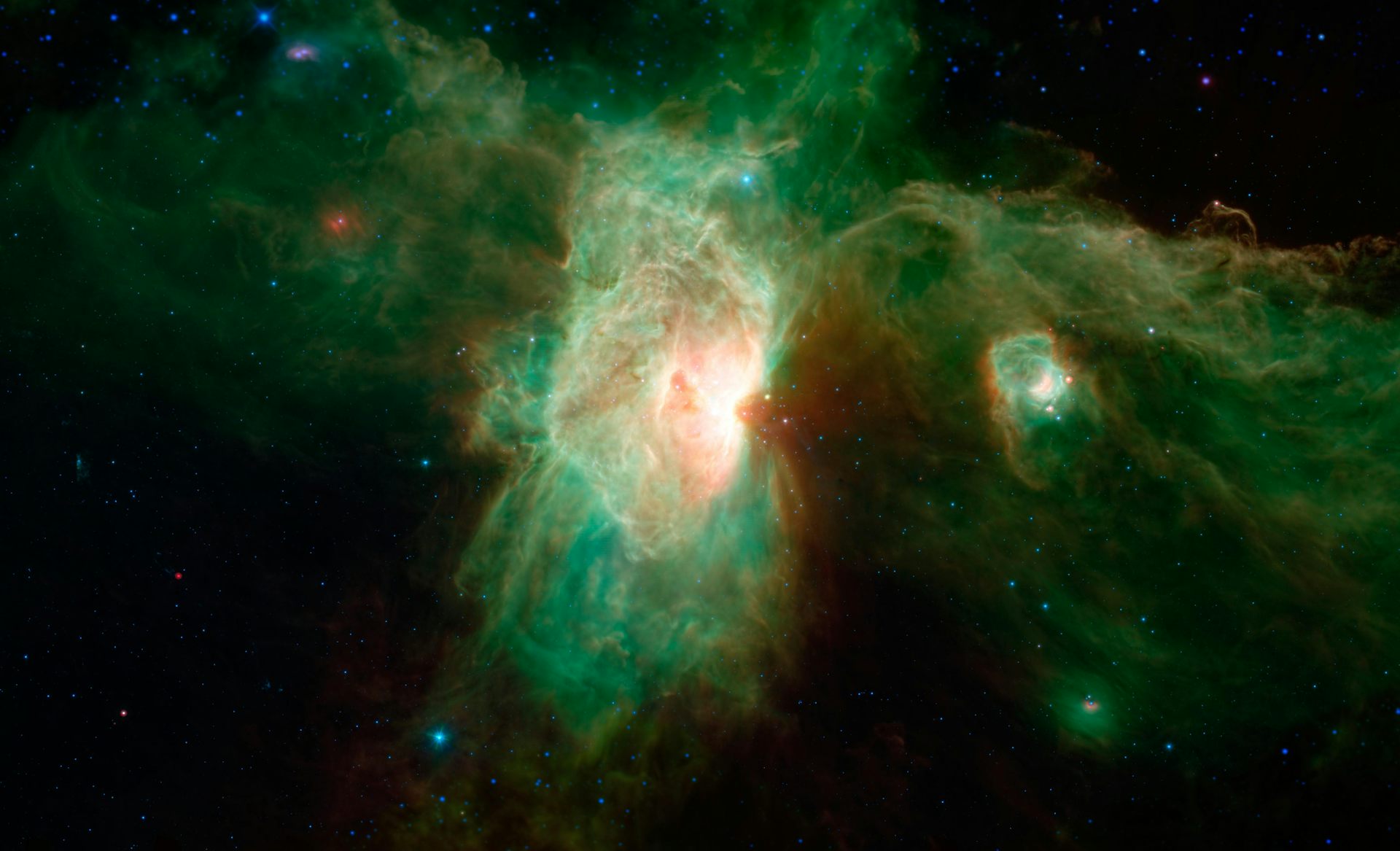
In the local parts of our galaxy alone there’s a complex of roughly 15 individual interstellar clouds. The Solar System is currently traversing one of them, aptly named the Local Interstellar Cloud. The origin and history of these clouds are believed to be tightly connected to the birth and death of stars. But we can see their imprints right here on Earth, in a place you might not expect – Antarctic ice.
Hanya di bagian lokal galaksi kita terdapat kompleks sekitar 15 awan antarbintang individu. Tata Surya saat ini sedang melintasi salah satunya, yang dengan tepat dinamakan Awan Antarbintang Lokal (Local Interstellar Cloud) . Asal-usul dan sejarah awan-awan ini diyakini sangat terkait dengan kelahiran dan kematian bintang. Tetapi kita dapat melihat jejak mereka di sini di Bumi, di tempat yang mungkin tidak Anda duga – es Antartika.
My colleagues and I have been studying stardust trapped in old Antarctic snow and ice to trace the history of our solar neighbourhood, including the Solar System itself.
Rekan-rekan saya dan saya telah mempelajari debu bintang yang terperangkap dalam salju dan es Antartika kuno untuk menelusuri sejarah lingkungan tata surya kita, termasuk Tata Surya itu sendiri.
In a new study published in Physical Review Letters, we found a subtle clue that reveals our Solar System’s movement through the local interstellar environment over the past 80,000 years.
Dalam sebuah studi baru yang diterbitkan dalam Physical Review Letters, kami menemukan petunjuk halus yang mengungkapkan pergerakan Tata Surya kita melalui lingkungan antarbintang lokal selama 80.000 tahun terakhir.
Looking down to see the sky
Melihat ke bawah untuk melihat langit
Astronomy usually looks outward. Telescopes collect light from distant stars and galaxies, allowing us to observe events across vast stretches of space and time. From these observations, we infer how stars live and die, how elements are formed, and how the universe evolves.
Astronomi biasanya melihat ke luar. Teleskop mengumpulkan cahaya dari bintang dan galaksi yang jauh, memungkinkan kita mengamati peristiwa di hamparan ruang dan waktu yang luas. Dari pengamatan ini, kita menyimpulkan bagaimana bintang hidup dan mati, bagaimana unsur terbentuk, dan bagaimana alam semesta berevolusi.
Our approach turns that idea on its head.
Pendekatan kita membalikkan ide tersebut.
Instead of observing the light coming to us, we study the debris of exploding stars right here on Earth. As cosmic furnaces, stars forge many elements in their cores, from carbon and oxygen to calcium and iron. This includes rare isotopes (variants of chemical elements) such as iron-60.
Alih-alih mengamati cahaya yang datang kepada kita, kita mempelajari puing-puing bintang yang meledak tepat di Bumi. Sebagai tungku kosmik, bintang-bintang menempa banyak unsur di inti mereka, mulai dari karbon dan oksigen hingga kalsium dan besi. Ini termasuk isotop langka (variasi unsur kimia) seperti besi-60.
When massive stars explode into supernovae at the end of their life, these elements are ejected into space and become interstellar dust.
Ketika bintang masif meledak menjadi supernova di akhir hidup mereka, unsur-unsur ini terpental ke luar angkasa dan menjadi debu antarbintang.
Tiny grains of this dust then drift through the galaxy and occasionally find their way to Earth’s surface. Radioactive iron-60, a fingerprint of stellar explosions, is embedded within these grains. By searching for these atoms in geological archives on Earth, we can probe astrophysical events like supernovae long after their light has faded.
Butiran debu kecil ini kemudian mengembara melintasi galaksi dan sesekali menemukan jalan menuju permukaan Bumi. Besi-60 radioaktif, jejak ledakan bintang, tertanam di dalam butiran ini. Dengan mencari atom-atom ini dalam arsip geologis di Bumi, kita dapat menyelidiki peristiwa astrofisika seperti supernova jauh setelah cahaya mereka memudar.
This is why Antarctica is so valuable. Its snow accumulates slowly and remains largely undisturbed, forming a layered record that stretches back tens of thousands of years. Each layer captures a snapshot of the material that was present in our cosmic neighbourhood at the time.
Inilah mengapa Antartika begitu berharga. Saljunya menumpuk perlahan dan tetap sebagian besar tidak terganggu, membentuk catatan berlapis yang membentang kembali puluhan ribu tahun. Setiap lapisan menangkap gambaran sekilas materi yang ada di lingkungan kosmik kita pada saat itu.
Finding stardust in Antarctic ice
Menemukan debu bintang di es Antartika
When we studied 500kg of recent snow in Antarctica, we unexpectedly found this rare radioactive isotope. Where did it come from? There was no recent near-Earth supernova.
Ketika kami mempelajari 500kg salju baru di Antartika, kami secara tak terduga menemukan isotop radioaktif langka ini. Dari mana asalnya? Tidak ada supernova dekat Bumi baru-baru ini.
But our solar neighbourhood is filled with 15 clouds, with the Solar System currently traversing at least one of them. Is the stardust waiting in the clouds to be picked up by Earth? If yes, then the amount of stardust Earth collects should be related to their structure: the denser the clouds, the more iron-60 they contain. This was our educated guess in 2019.
Namun, lingkungan tata surya kita dipenuhi dengan 15 awan, dengan Tata Surya saat ini melintasi setidaknya salah satunya. Apakah debu bintang itu menunggu di awan untuk diambil oleh Bumi? Jika ya, maka jumlah debu bintang yang dikumpulkan Bumi seharusnya berhubungan dengan strukturnya: semakin padat awan, semakin banyak besi-60 yang mereka miliki. Ini adalah tebakan terdidik kami pada tahun 2019.
Soon, other explanations were brought forward. Millions of years ago Earth received large showers of iron-60 from massive supernovae. Is the iron-60 in Antarctic snow the last remnant or an echo of this signal? A rain that became a drizzle?
Segera, penjelasan lain diajukan. Jutaan tahun yang lalu Bumi menerima hujan besar besi-60 dari supernova besar. Apakah besi-60 di salju Antartika adalah sisa terakhir atau gema dari sinyal ini? Hujan yang menjadi gerimis?
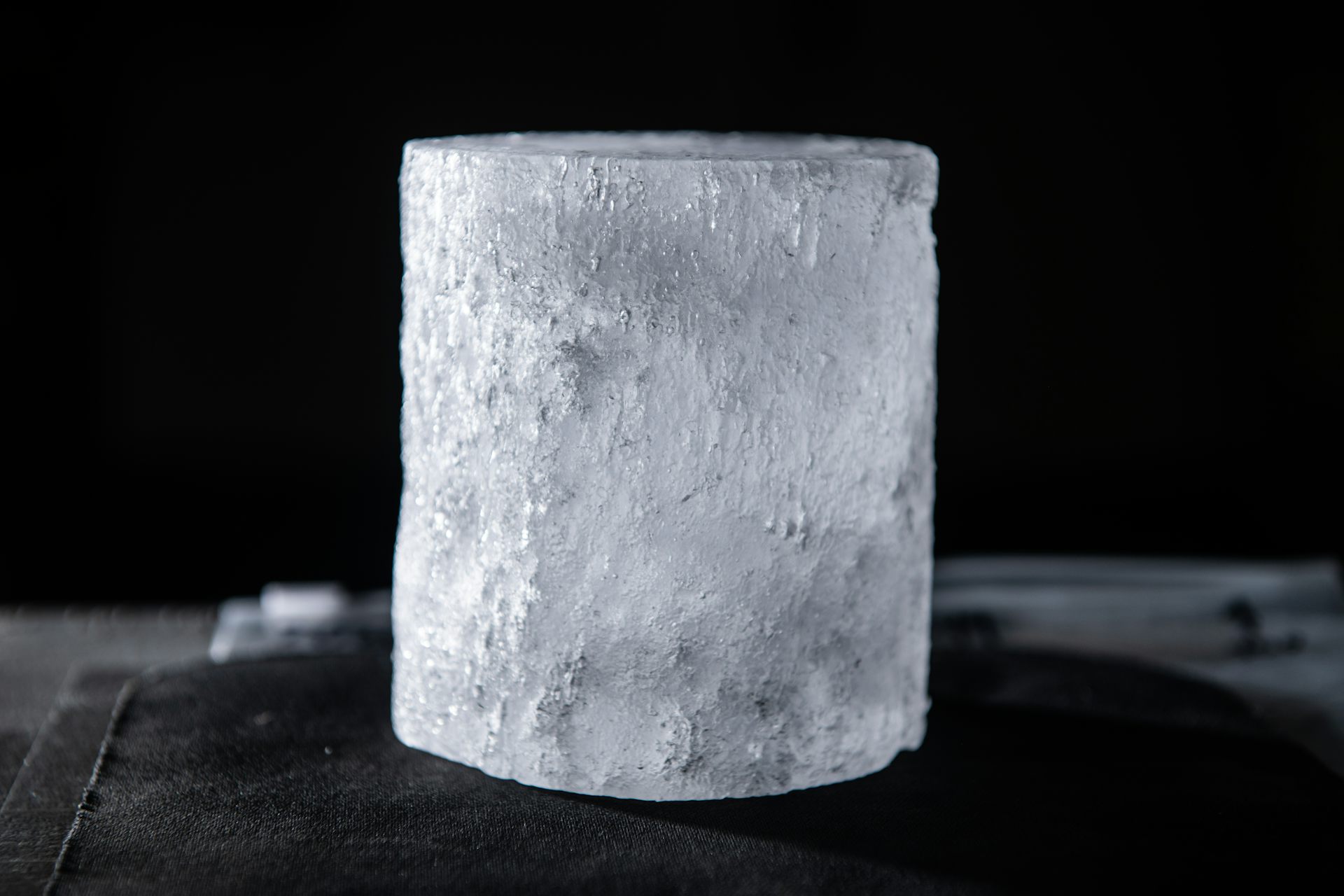
To find out, we analysed a 300kg section of Antarctic ice, dating from 40,000 to 80,000 years ago. The process is painstaking. The ice needs to be melted and chemically treated to isolate tiny amounts of iron, including the iron-60 from the stardust.
Untuk mengetahuinya, kami menganalisis sepotong es Antartika seberat 300kg, yang berasal dari 40.000 hingga 80.000 tahun yang lalu. Prosesnya sangat teliti. Es perlu dileleh dan diolah secara kimia untuk mengisolasi sejumlah kecil besi, termasuk besi-60 dari debu bintang.
Then, using the sensitive atom counting technique of accelerator mass spectrometry at the Heavy-Ion Accelerator Facility at Australian National University, we counted individual atoms of iron-60.
Kemudian, menggunakan teknik penghitungan atom yang sensitif dari spektrometri massa akselerator di Fasilitas Akselerator Ion Berat di Australian National University, kami menghitung atom-atom individu besi-60.
The expectation was straightforward: based on previous measurements from surface snow of Antarctica and several thousand-year-old ocean sediments, we anticipated a certain steady level of iron-60 deposition.
Ekspektasinya sederhana: berdasarkan pengukuran sebelumnya dari salju permukaan Antartika dan sedimen lautan berusia beberapa ribu tahun, kami mengantisipasi tingkat deposisi besi-60 yang stabil.
Instead, we found less. Not zero, but noticeably lower than expected.
Sebaliknya, kami menemukan lebih sedikit. Tidak nol, tetapi secara nyata lebih rendah dari yang diharapkan.
This result suggests that less interstellar dust was reaching Earth during that period. This is a remarkable change on a comparatively short astrophysical timescale and does not fit the long timescales of the iron-60 deposits that landed here millions of years ago. Instead, we needed to look for a smaller, more local source for the isotope.
Hasil ini menunjukkan bahwa lebih sedikit debu antarbintang yang mencapai Bumi selama periode itu. Ini adalah perubahan luar biasa dalam skala waktu astrofisika yang relatif singkat dan tidak sesuai dengan skala waktu panjang endapan besi-60 yang mendarat di sini jutaan tahun yang lalu. Sebaliknya, kami perlu mencari sumber yang lebih kecil dan lebih lokal untuk isotop tersebut.
A fitting story
Sebuah kisah yang sesuai
Naturally, astronomers are also quite interested in the clouds around the Solar System. Last year, a study reconstructing the history of the clouds arrived at the conclusion that they most likely originated in a stellar explosion. Furthermore, they found the Solar System has been traversing the Local Interstellar Cloud from sometime between 40,000 and 124,000 years ago.
Tentu saja, para astronom juga sangat tertarik pada awan di sekitar Tata Surya. Tahun lalu, sebuah studi yang merekonstruksi sejarah awan sampai pada kesimpulan bahwa awan-awan tersebut kemungkinan besar berasal dari ledakan bintang. Selain itu, mereka menemukan bahwa Tata Surya telah melintasi Awan Antar Bintang Lokal sejak waktu antara 40.000 hingga 124.000 tahun yang lalu.
If that’s correct, we would expect that the amount of iron-60 collected on Earth should have changed sometime in the same time period – between 40,000 and 124,000 years ago.
Jika itu benar, kita akan mengharapkan bahwa jumlah besi-60 yang terkumpul di Bumi seharusnya telah berubah pada waktu yang sama – antara 40.000 hingga 124.000 tahun yang lalu.
This is exactly what our results showed in Antarctica.
Inilah yang ditunjukkan oleh hasil kami di Antartika.
The story doesn’t fit perfectly, though. If these clouds did originate directly from an exploding star, we would expect way more iron-60 than we actually see in Antarctic ice.
Namun, kisahnya tidak cocok dengan sempurna. Jika awan-awan ini berasal langsung dari bintang yang meledak, kita akan mengharapkan lebih banyak besi-60 daripada yang kita lihat di es Antartika.
Nevertheless, these clouds are imprinted in Earth’s geological record. If we look deeper and analyse even older ice, we might soon unravel the mystery of these local interstellar clouds, revealing their full history and uncertain origins.
Meskipun demikian, awan-awan ini terukir dalam catatan geologis Bumi. Jika kita melihat lebih dalam dan menganalisis es yang lebih tua, kita mungkin segera mengungkap misteri awan antar bintang lokal ini, mengungkapkan sejarah penuh dan asal-usul yang tidak pasti mereka.
Dominik Koll receives funding from the Australian Institute of Nuclear Science and Engineering (AINSE) .
Dominik Koll menerima dana dari Australian Institute of Nuclear Science and Engineering (AINSE) .
Read more
-
Kontak pertama alien: bagaimana aturan baru berbeda dari fiksi ilmiah
Alien first contact: how the new rules differ from science fiction
-

‘Kulit vegan’ tidak seberkelanjutan atau ramah lingkungan seperti yang mungkin diklaim merek-merek
‘Vegan leather’ isn’t as sustainable or eco‑friendly as brands might claim