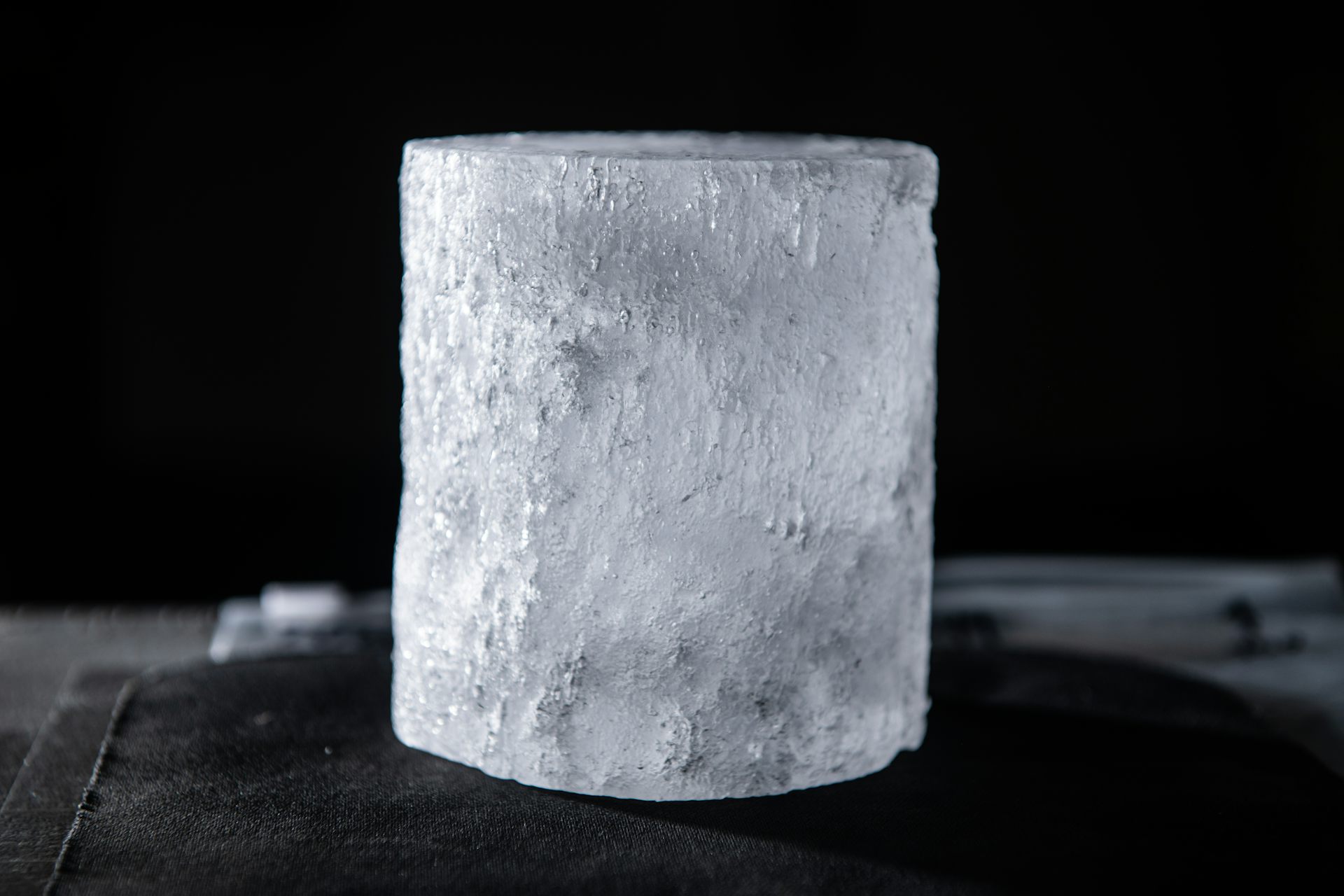
El polvo estelar atrapado en el hielo antártico revela decenas de miles de años del pasado del Sistema Solar
Stardust trapped in Antarctic ice reveals tens of thousands of years of Solar System’s past
We can study the cosmos by tracing debris from exploding stars right here on Earth.
Podemos estudiar el cosmos rastreando escombros de estrellas que explotan justo aquí en la Tierra.
When you think of outer space, you’re likely picturing stars, planets and moons. But much of space is filled with clouds of gas, plasma and stardust – known as interstellar clouds.
Cuando piensas en el espacio exterior, lo más probable es que imagines estrellas, planetas y lunas. Pero gran parte del espacio está lleno de nubes de gas, plasma y polvo estelar, conocidos como nubes interestelares.
In the local parts of our galaxy alone there’s a complex of roughly 15 individual interstellar clouds. The Solar System is currently traversing one of them, aptly named the Local Interstellar Cloud. The origin and history of these clouds are believed to be tightly connected to the birth and death of stars. But we can see their imprints right here on Earth, in a place you might not expect – Antarctic ice.
Solo en las partes locales de nuestra galaxia existe un complejo de aproximadamente 15 nubes interestelares individuales. El Sistema Solar está atravesando actualmente una de ellas, denominada acertadamente la Nube Interestelar Local. El origen y la historia de estas nubes se cree que están estrechamente conectadas con el nacimiento y la muerte de las estrellas. Pero podemos ver sus huellas aquí en la Tierra, en un lugar que quizás no esperas: el hielo antártico.
My colleagues and I have been studying stardust trapped in old Antarctic snow and ice to trace the history of our solar neighbourhood, including the Solar System itself.
Mis colegas y yo hemos estado estudiando polvo estelar atrapado en la nieve y el hielo antárticos antiguos para rastrear la historia de nuestro vecindario solar, incluido el Sistema Solar en sí.
In a new study published in Physical Review Letters, we found a subtle clue that reveals our Solar System’s movement through the local interstellar environment over the past 80,000 years.
En un nuevo estudio publicado en Physical Review Letters, encontramos una pista sutil que revela el movimiento de nuestro Sistema Solar a través del entorno interestelar local durante los últimos 80,000 años.
Looking down to see the sky
Mirar hacia abajo para ver el cielo
Astronomy usually looks outward. Telescopes collect light from distant stars and galaxies, allowing us to observe events across vast stretches of space and time. From these observations, we infer how stars live and die, how elements are formed, and how the universe evolves.
La astronomía generalmente mira hacia afuera. Los telescopios recolectan luz de estrellas y galaxias distantes, lo que nos permite observar eventos a través de vastas extensiones de espacio y tiempo. A partir de estas observaciones, inferimos cómo viven y mueren las estrellas, cómo se forman los elementos y cómo evoluciona el universo.
Our approach turns that idea on its head.
Nuestro enfoque invierte esa idea.
Instead of observing the light coming to us, we study the debris of exploding stars right here on Earth. As cosmic furnaces, stars forge many elements in their cores, from carbon and oxygen to calcium and iron. This includes rare isotopes (variants of chemical elements) such as iron-60.
En lugar de observar la luz que nos llega, estudiamos los restos de las estrellas que explotan justo aquí en la Tierra. Como hornos cósmicos, las estrellas forjan muchos elementos en sus núcleos, desde carbono y oxígeno hasta calcio y hierro. Esto incluye isótopos raros (variantes de elementos químicos) como el hierro-60.
When massive stars explode into supernovae at the end of their life, these elements are ejected into space and become interstellar dust.
Cuando las estrellas masivas explotan en supernovas al final de sus vidas, estos elementos son expulsados al espacio y se convierten en polvo interestelar.
Tiny grains of this dust then drift through the galaxy and occasionally find their way to Earth’s surface. Radioactive iron-60, a fingerprint of stellar explosions, is embedded within these grains. By searching for these atoms in geological archives on Earth, we can probe astrophysical events like supernovae long after their light has faded.
Cenizas diminutas de este polvo luego flotan a través de la galaxia y ocasionalmente encuentran el camino a la superficie de la Tierra. El hierro-60 radiactivo, una huella dactilar de las explosiones estelares, está incrustado en estas partículas. Al buscar estos átomos en archivos geológicos en la Tierra, podemos sondear eventos astrofísicos como las supernovas mucho después de que su luz se haya desvanecido.
This is why Antarctica is so valuable. Its snow accumulates slowly and remains largely undisturbed, forming a layered record that stretches back tens of thousands of years. Each layer captures a snapshot of the material that was present in our cosmic neighbourhood at the time.
Esta es la razón por la que la Antártida es tan valiosa. Su nieve se acumula lentamente y permanece en gran parte intacta, formando un registro estratificado que se remonta a decenas de miles de años. Cada capa captura una instantánea del material que estaba presente en nuestro vecindario cósmico en ese momento.
Finding stardust in Antarctic ice
Encontrando polvo estelar en el hielo antártico
When we studied 500kg of recent snow in Antarctica, we unexpectedly found this rare radioactive isotope. Where did it come from? There was no recent near-Earth supernova.
Cuando estudiamos 500 kg de nieve reciente en la Antártida, encontramos inesperadamente este raro isótopo radiactivo. ¿De dónde vino? No hubo una supernova cercana a la Tierra reciente.
But our solar neighbourhood is filled with 15 clouds, with the Solar System currently traversing at least one of them. Is the stardust waiting in the clouds to be picked up by Earth? If yes, then the amount of stardust Earth collects should be related to their structure: the denser the clouds, the more iron-60 they contain. This was our educated guess in 2019.
Pero nuestro vecindario solar está lleno de 15 nubes, con el Sistema Solar atravesando actualmente al menos una de ellas. ¿Está el polvo estelar esperando en las nubes para ser recogido por la Tierra? Si es así, entonces la cantidad de polvo estelar que la Tierra recoge debería estar relacionada con su estructura: cuanto más densas son las nubes, más hierro-60 contienen. Esta fue nuestra suposición educada en 2019.
Soon, other explanations were brought forward. Millions of years ago Earth received large showers of iron-60 from massive supernovae. Is the iron-60 in Antarctic snow the last remnant or an echo of this signal? A rain that became a drizzle?
Pronto, se presentaron otras explicaciones. Hace millones de años la Tierra recibió grandes lluvias de hierro-60 de supernovas masivas. ¿Es el hierro-60 en la nieve antártica el último vestigio o un eco de esta señal? ¿Una lluvia que se convirtió en llovizna?
To find out, we analysed a 300kg section of Antarctic ice, dating from 40,000 to 80,000 years ago. The process is painstaking. The ice needs to be melted and chemically treated to isolate tiny amounts of iron, including the iron-60 from the stardust.
Para averiguarlo, analizamos una sección de 300 kg de hielo antártico, datada de hace 40.000 a 80.000 años. El proceso es minucioso. El hielo necesita ser derretido y tratado químicamente para aislar pequeñas cantidades de hierro, incluido el hierro-60 del polvo estelar.
Then, using the sensitive atom counting technique of accelerator mass spectrometry at the Heavy-Ion Accelerator Facility at Australian National University, we counted individual atoms of iron-60.
Luego, utilizando la sensible técnica de conteo de átomos de espectrometría de masas de acelerador en la instalación del acelerador de iones pesados de la Universidad Nacional Australiana, contamos átomos individuales de hierro-60.
The expectation was straightforward: based on previous measurements from surface snow of Antarctica and several thousand-year-old ocean sediments, we anticipated a certain steady level of iron-60 deposition.
La expectativa era sencilla: basándonos en mediciones anteriores de la nieve superficial de la Antártida y sedimentos oceánicos de varios miles de años, anticipamos un cierto nivel constante de deposición de hierro-60.
Instead, we found less. Not zero, but noticeably lower than expected.
En cambio, encontramos menos. No cero, sino notablemente menos de lo esperado.
This result suggests that less interstellar dust was reaching Earth during that period. This is a remarkable change on a comparatively short astrophysical timescale and does not fit the long timescales of the iron-60 deposits that landed here millions of years ago. Instead, we needed to look for a smaller, more local source for the isotope.
Este resultado sugiere que menos polvo interestelar estaba llegando a la Tierra durante ese período. Este es un cambio notable en una escala astrofísica comparativamente corta y no se ajusta a las largas escalas de tiempo de los depósitos de hierro-60 que aterrizaron aquí hace millones de años. En cambio, necesitábamos buscar una fuente más pequeña y local para el isótopo.
A fitting story
Una historia adecuada
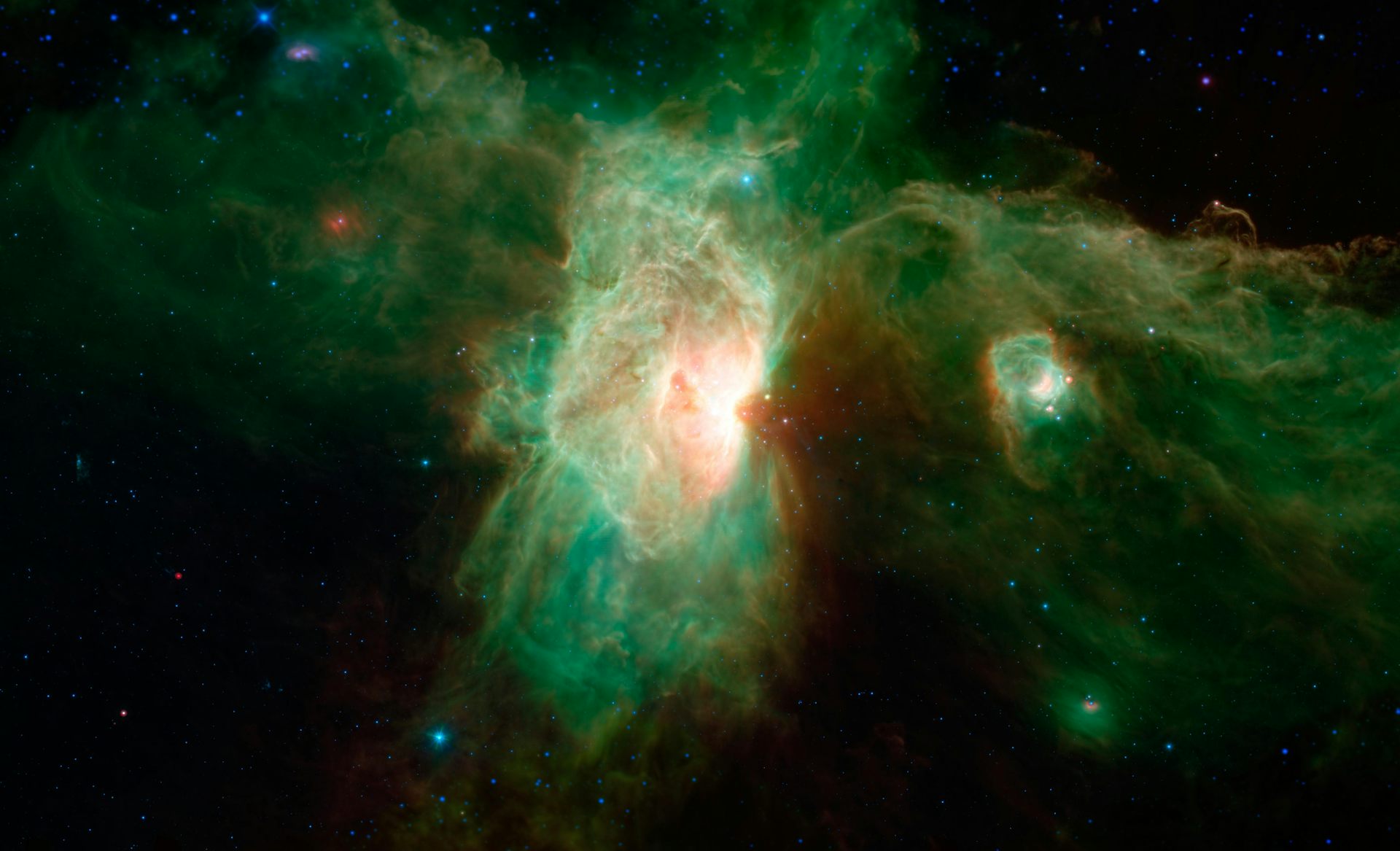
Naturally, astronomers are also quite interested in the clouds around the Solar System. Last year, a study reconstructing the history of the clouds arrived at the conclusion that they most likely originated in a stellar explosion. Furthermore, they found the Solar System has been traversing the Local Interstellar Cloud from sometime between 40,000 and 124,000 years ago.
Naturalmente, los astrónomos también están bastante interesados en las nubes alrededor del Sistema Solar. El año pasado, un estudio que reconstruyó la historia de las nubes llegó a la conclusión de que lo más probable es que se originaron en una explosión estelar. Además, encontraron que el Sistema Solar ha estado atravesando la Nube Interestelar Local desde hace algún momento entre 40,000 y 124,000 años.
If that’s correct, we would expect that the amount of iron-60 collected on Earth should have changed sometime in the same time period – between 40,000 and 124,000 years ago.
Si eso es correcto, esperaríamos que la cantidad de hierro-60 recolectada en la Tierra debería haber cambiado en el mismo período de tiempo: entre 40,000 y 124,000 años hace.
This is exactly what our results showed in Antarctica.
Esto es exactamente lo que nuestros resultados mostraron en la Antártida.
The story doesn’t fit perfectly, though. If these clouds did originate directly from an exploding star, we would expect way more iron-60 than we actually see in Antarctic ice.
Sin embargo, la historia no encaja perfectamente. Si estas nubes se originaron directamente de una estrella que explotó, esperaríamos mucho más hierro-60 de lo que realmente vemos en el hielo antártico.
Nevertheless, these clouds are imprinted in Earth’s geological record. If we look deeper and analyse even older ice, we might soon unravel the mystery of these local interstellar clouds, revealing their full history and uncertain origins.
No obstante, estas nubes están impresas en el registro geológico de la Tierra. Si miramos más profundamente y analizamos incluso hielo más antiguo, pronto podríamos desentrañar el misterio de estas nubes interestelares locales, revelando su historia completa y sus orígenes inciertos.
Dominik Koll receives funding from the Australian Institute of Nuclear Science and Engineering (AINSE) .
Dominik Koll recibe financiación del Instituto Australiano de Ciencia e Ingeniería Nuclear (AINSE) .
Read more
-
América a los 250: los británicos que apoyaron la Guerra de Independencia
America at 250: the Britons who supported the War of Independence
-

Los temas de la paz y la dignidad humana han sido centrales para el Papa Leo mientras marca su primer año en el cargo
Themes of peace and human dignity have been central to Pope Leo as he marks his first year in office