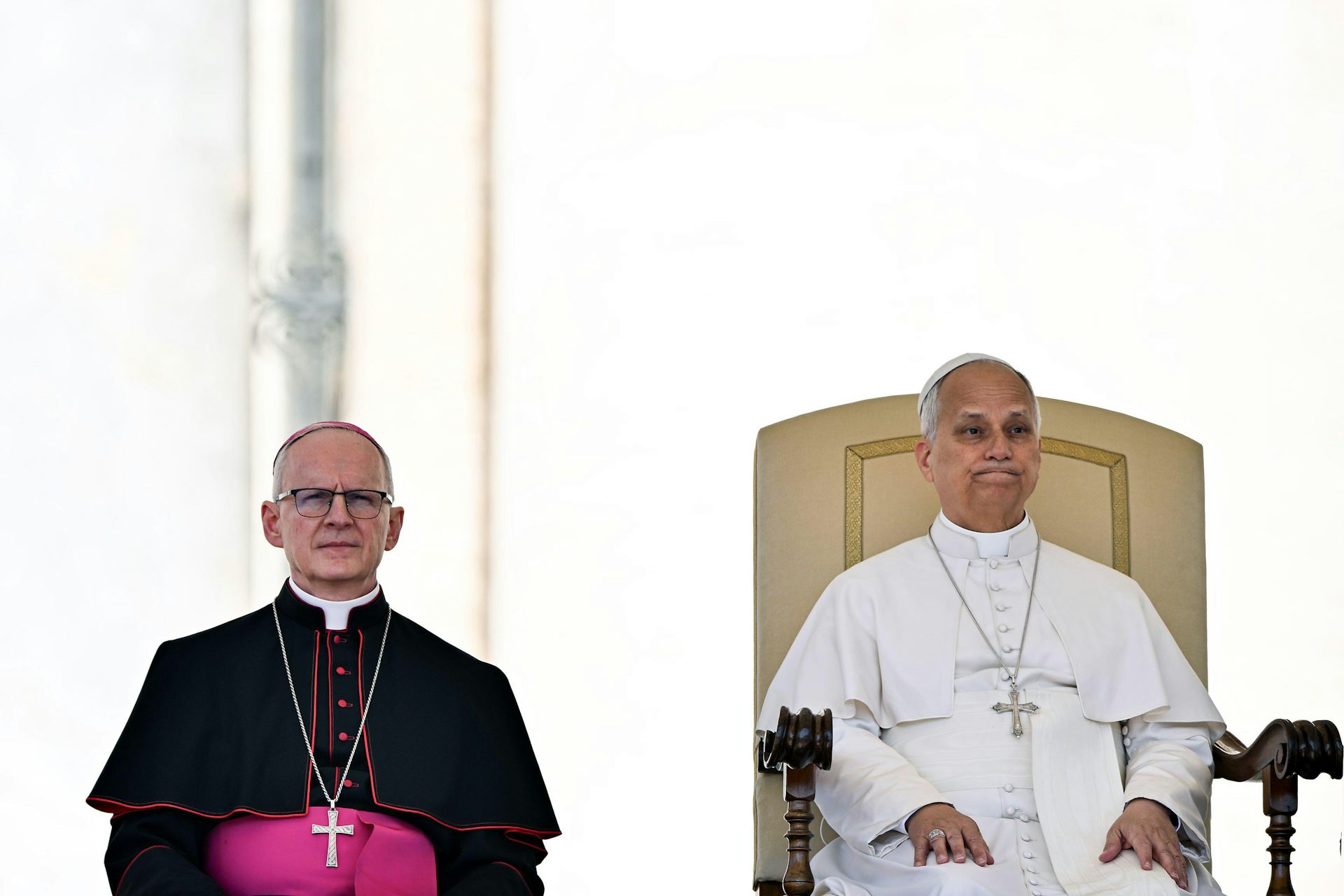
O que é uma guerra justa? Dentro da guerra de palavras entre a administração Trump e a igreja católica.
What is a just war? Inside the war of words between the Trump administration and the Catholic church
Catholic peacebuilding expert Gerard F. Powers talks to The Conversation about the just war tradition.
O especialista católico em construção da paz, Gerard F. Powers, fala para The Conversation sobre a tradição da guerra justa.
Pope Leo’s words on Palm Sunday were pointed. “Jesus does not listen to the prayers of those who wage war”, he said during an address at the Vatican.
As palavras do Papa Leo sobre o Domingo de Ramos foram incisivas. “Jesus não escuta as orações daqueles que fazem guerra”, disse ele durante um discurso no Vaticano.
A few days later in early April, when Timothy Broglio, the archbishop for US military services, was asked on CBS’s Face the Nation if the Iran war is a “just war” in the tradition of the Catholic church, he said: “It is not. While there was a threat with nuclear arms, it’s compensating for a threat before the threat is actually realised.”
Alguns dias depois, no início de abril, quando Timothy Broglio, o arcebispo dos serviços militares dos EUA, foi questionado no programa Face the Nation da CBS se a guerra do Irã é uma “guerra justa” na tradição da igreja católica, ele disse: “Não é. Embora houvesse uma ameaça com armas nucleares, está compensando uma ameaça antes que a ameaça seja realmente realizada.”
US Vice President JD Vance – a recent convert to Catholicism – and Mike Johnson, speaker of the House, pushed back, arguing that the conflict does fit within the church’s just war tradition.
O vice-presidente dos EUA, JD Vance – um recente convertido ao catolicismo – e Mike Johnson, presidente da Câmara, contestaram, argumentando que o conflito se encaixa na tradição de guerra justa da igreja.
Just war theory, first articulated by St Augustine in the fifth century, outlines the church’s moral guidelines for political and military leaders to consider before choosing to go to war. But it’s not static, and the church’s own position has become more restrictive in recent years.
A teoria da guerra justa, articulada pela primeira vez por Santo Agostinho no século V, descreve as diretrizes morais da igreja para líderes políticos e militares considerarem antes de decidir ir à guerra. Mas ela não é estática, e a própria posição da igreja tornou-se mais restritiva nos últimos anos.
In this episode of The Conversation Weekly podcast, Jerry Powers, the director of Catholic Peace Building Studies at the University of Notre Dame in Indiana, explains how the Catholic church’s just war tradition evolved and the influence it’s had on US military thinking. Powers was a senior advisor on international policy for the U.S. Conference of Catholic Bishops during the Iraq war, and was involved in efforts to persuade the Bush administration not to invade.
Neste episódio do podcast The Conversation Weekly, Jerry Powers, diretor de Estudos de Construção da Paz Católica na Universidade Notre Dame, em Indiana, explica como a tradição de guerra justa da igreja católica evoluiu e a influência que teve no pensamento militar dos EUA. Powers foi um consultor sênior de política internacional para a Conferência dos Bispos Católicos dos EUA durante a guerra do Iraque e esteve envolvido em esforços para persuadir a administração Bush a não invadir.
He sets out the difficulty now facing Catholics serving in the US military, whose archbishop has now spoken out against the war they’re being asked to fight. “It puts military officers and especially soldiers in a real conundrum,” says Powers. “A soldier has no choice but to obey orders, and if you disobey orders you could very serious repercussions. The officer question is a different one because officers are more senior, and I think officers have to just resign their commission if at some point, they think this is an immoral war.”
Ele descreve a dificuldade que os católicos que servem nas forças armadas dos EUA enfrentam agora, cujo arcebispo falou abertamente contra a guerra que lhes é pedida. “Isso coloca os oficiais militares e, especialmente os soldados, em um verdadeiro dilema”, diz Powers. “Um soldado não tem escolha a não ser obedecer ordens, e se você desobedecer ordens, pode haver repercussões muito sérias. A questão do oficial é diferente porque os oficiais são mais seniores, e eu acho que os oficiais têm que simplesmente renunciar ao seu posto se, em algum momento, acharem que esta é uma guerra imoral.”
Listen to the interview with Jerry Powers on The Conversation Weekly podcast. This episode of The Conversation Weekly was written and produced by Katie Flood and Mend Mariwany and the executive producer was Gemma Ware. Mixing by Eleanor Brezzi and theme music by Neeta Sarl.
Ouça a entrevista com Jerry Powers no podcast The Conversation Weekly. Este episódio do The Conversation Weekly foi escrito e produzido por Katie Flood e Mend Mariwany, e a produtora executiva foi Gemma Ware. Mixagem por Eleanor Brezzi e música tema por Neeta Sarl.
Newsclips in this episode from CB S News, AP Archive, BB C, CBS Sunday Morning, ABC News, Rome Reports, KREM 2 News, MS NOW and WUSA 9.
Trechos de notícias neste episódio de CB S News, AP Archive, BB C, CBS Sunday Morning, ABC News, Rome Reports, KREM 2 News, MS NOW e WUSA 9.
Listen to The Conversation Weekly via any of the apps listed above, download it directly via our RSS feed or find out how else to listen here. A transcript of this episode is available via the Apple Podcasts or Spotify apps.
Ouça The Conversation Weekly por qualquer um dos aplicativos listados acima, baixe diretamente via nosso feed RSS ou descubra outras formas de ouvir aqui. Uma transcrição deste episódio está disponível via aplicativos Apple Podcasts ou Spotify.
Gerard F. Powers received a grant from the Nuclear Threat Initiative that helped support the Catholic Peacebuilding Network’s Project on Revitalizing Catholic Engagement on Nuclear Disarmament. He is an expert consultant (unpaid) to the Holy See Mission to the UN. From 1987-2004, Powers was a senior advisor on international policy for the U.S. Conference of Catholic Bishops.
Gerard F. Powers recebeu uma bolsa da Nuclear Threat Initiative que ajudou a apoiar o Projeto da Catholic Peacebuilding Network sobre Revitalizando o Engajamento Católico no Desarmamento Nuclear. Ele é um consultor especialista (não remunerado) para a Missão da Santa Sé na ONU. De 1987 a 2004, Powers foi um consultor sênior de política internacional para a Conferência dos Bispos Católicos dos EUA.
Read more
-
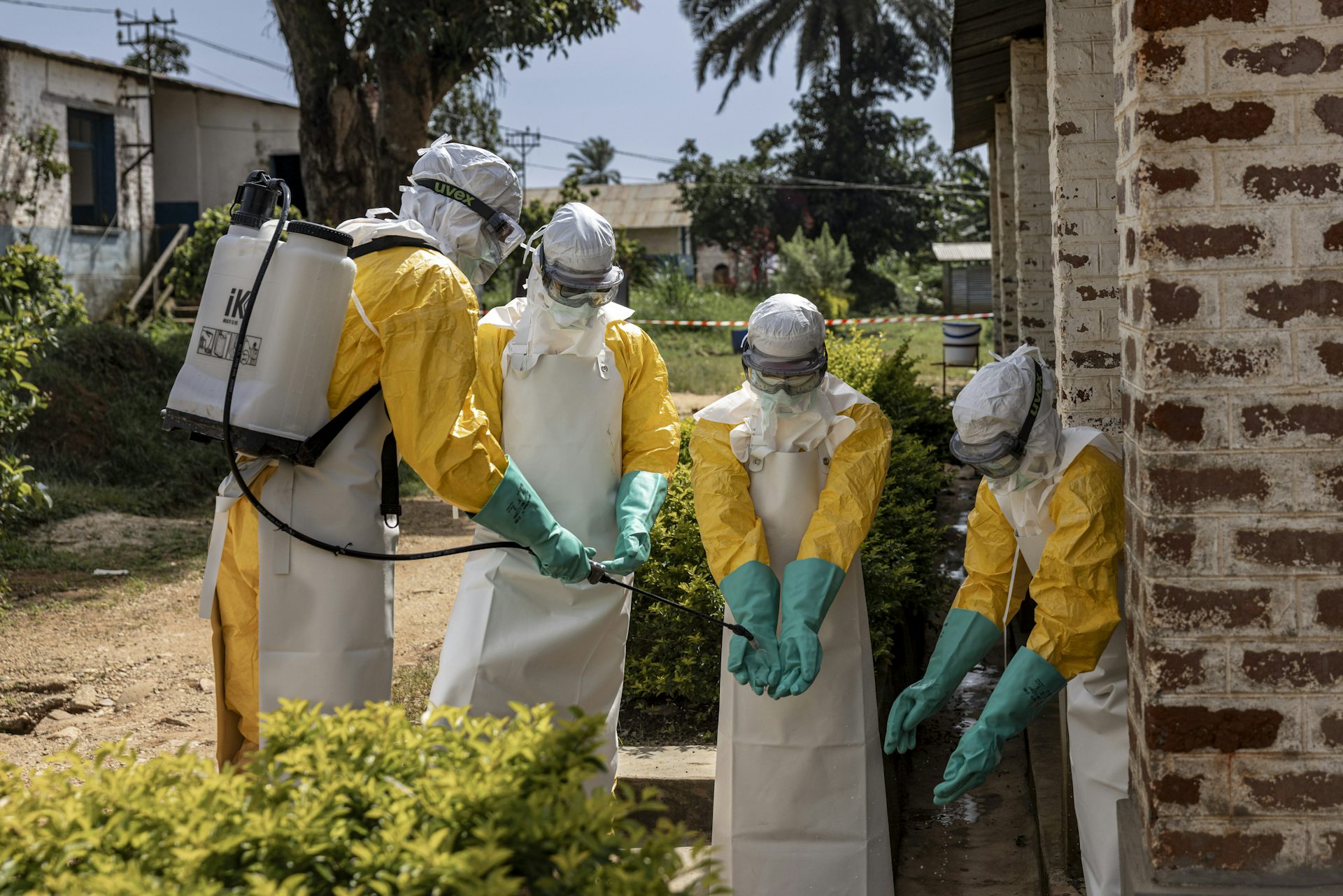
O que há de errado com a forma como os EUA e o Uganda planejam parar a propagação do Ebola
What’s wrong with how US and Uganda plan to stop Ebola spreading
-
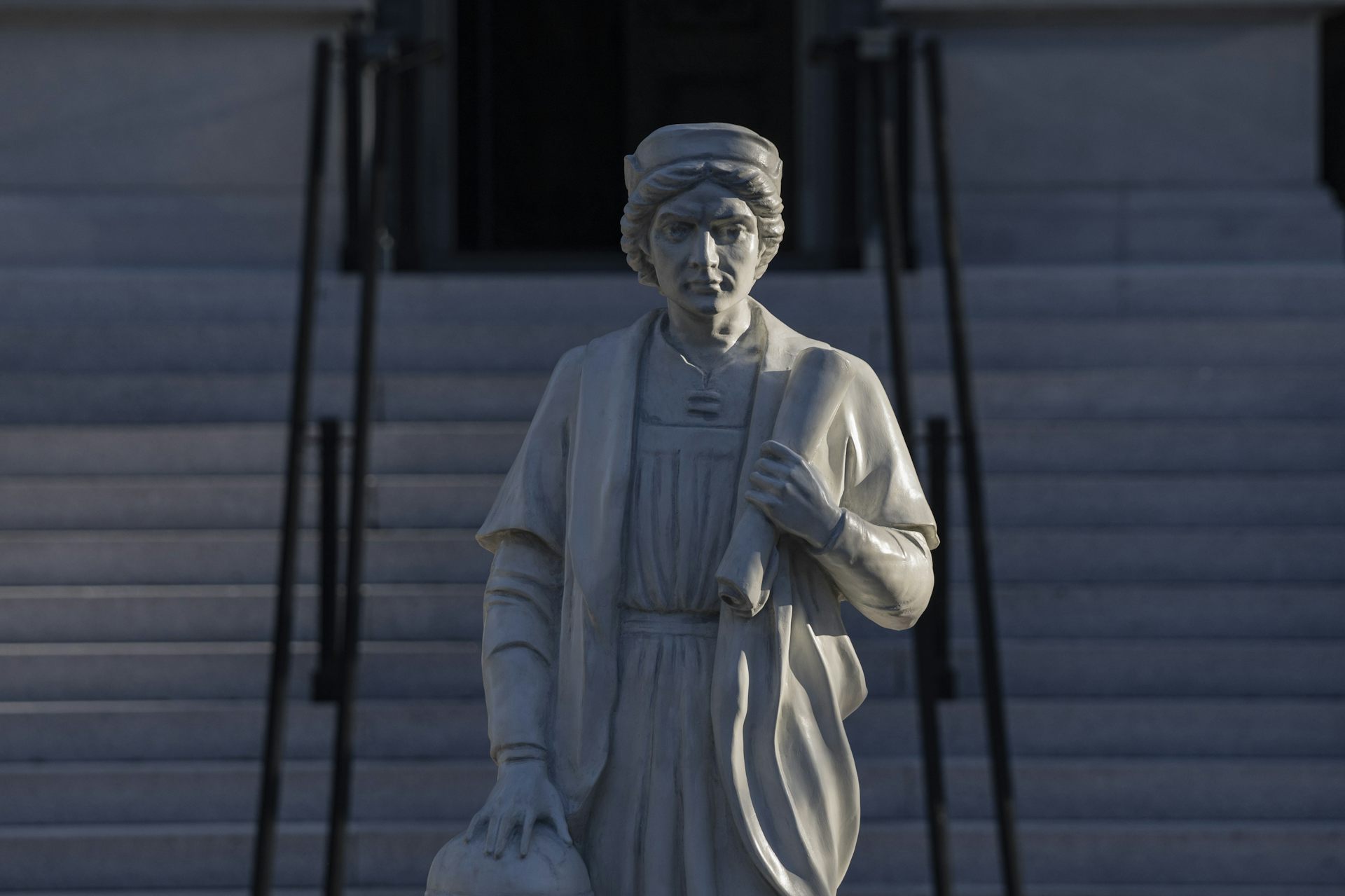
Trump dá as boas-vindas a Colombo à Casa Branca – e reacende as guerras históricas da América
Trump welcomes Columbus to the White House – and reignites America’s history wars