‘Primeiro contato’ que pode ter levado à vida complexa na Terra finalmente testemunhado por cientistas
‘First contact’ that may have led to complex life on Earth finally witnessed by scientists
Stromatolites might look like rocks. But they are living relics of ancient systems that thrived on Earth billions of years ago.
Estromatólitos podem parecer rochas. Mas são relíquias vivas de sistemas antigos que prosperaram na Terra bilhões de anos atrás.
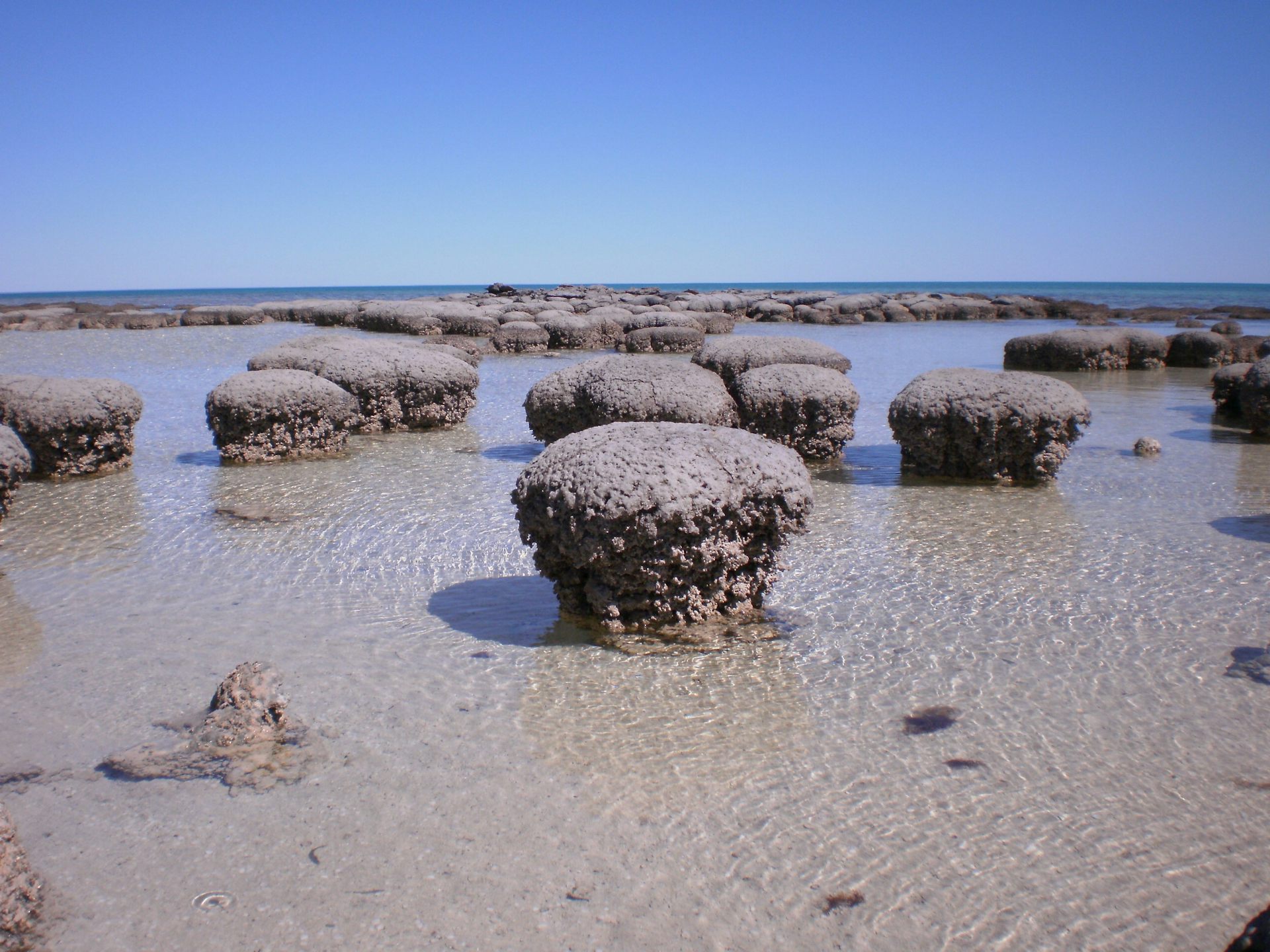
On the shores of the west coast of Australia lies a window to our past: the stromatolites and microbial mats of Gathaagudu (Shark Bay) .
Nas margens da costa oeste da Austrália jaz uma janela para o nosso passado: as estromatólitos e os tapetes microbianos de Gathaagudu (Shark Bay) .
To the untrained eye they look like a collection of rocks and slime – but they are in fact teeming with microbial life. And these stromatolites are living “relics” of ancient ecosystems that thrived on Earth billions of years ago.
Para o olhar não treinado, parecem uma coleção de rochas e limo – mas na verdade estão repletos de vida microbiana. E estas estromatólitos são “reliquias” vivas de ecossistemas antigos que prosperaram na Terra há bilhões de anos.
If you wade past, it feels like you’re walking back through time. In fact, the first bubbles of oxygen that filled the atmosphere on early Earth likely came from ancient stromatolites. You could say we owe our very existence to these piles of rocks.
Se você caminhar por ali, parece que está voltando no tempo. Na verdade, as primeiras bolhas de oxigênio que preencheram a atmosfera na Terra primitiva provavelmente vieram de estromatólitos antigos. Poder-se-ia dizer que devemos nossa própria existência a esses montes de rochas.
So, what other secrets of our past could these ecosystems tell us? Through decades of research, we know how early life has woven its path through these “living rocks”. But most recently our team embarked on the greatest genealogy search of them all: searching for our great microbial ancestors, the Asgard archaea.
Então, que outros segredos do nosso passado esses ecossistemas poderiam nos contar? Ao longo de décadas de pesquisa, sabemos como a vida primitiva traçou seu caminho por essas “rochas vivas”. Mas mais recentemente, nossa equipe embarcou na maior busca genealógica de todas: a busca por nossos grandes ancestrais microbianos, os arqueias Asgard.
And in a new paper, published today in the journal Current Biology, we report how this search led to the discovery of a key clue that could help explain how complex life evolved on Earth.
E em um novo artigo, publicado hoje no periódico Current Biology, relatamos como essa busca levou à descoberta de uma pista fundamental que pode ajudar a explicar como a vida complexa evoluiu na Terra.
The cells that comprise complex life
As células que compõem a vida complexa
Asgard archaea were originally named after Norse gods. This fascinating group of microbes sits on the cusp of one of the most significant events in the evolution of life: the origin of the complex cells that make up plants and animals, known as eukaryotes.
Asgard archaea foram originalmente nomeadas em homenagem aos deuses nórdicos. Este fascinante grupo de micróbios está no limiar de um dos eventos mais significativos na evolução da vida: a origem das células complexas que compõem plantas e animais, conhecidas como eucariotos.
Evidence suggests Asgard archaea are the closest relatives of eukaryotes. And that on an early Earth it was the “marriage” of an ancient Asgard archaeon and a bacterium that led to the first eukaryotes.
Evidências sugerem que as arqueias Asgard são os parentes mais próximos dos eucariotos. E que em uma Terra primitiva foi o “casamento” de um arqueano Asgard antigo e uma bactéria que levou aos primeiros eucariotos.
They formed an ancient partnership. They shared resources and physically interacted, leading to the first complex cells. Like a Romeo and Juliet tale of two distant families coming together, Asgard archaea and bacteria decided it was time to break from traditional family values.
Eles formaram uma parceria antiga. Eles compartilharam recursos e interagiram fisicamente, levando às primeiras células complexas. Como um conto de Romeu e Julieta de duas famílias distantes que se unem, as arqueias e bactérias de Asgard decidiram que era hora de romper com os valores familiares tradicionais.
But we have never seen a model of how this may have occurred. Until now.
Mas nunca vimos um modelo de como isso pode ter ocorrido. Até agora.
Holding up a mirror to the ancient past
Refletindo sobre o passado antigo
Our team used the mats of Shark Bay as a “seed” to establish cultures of these ancient microbes. We are one of only four groups worldwide to achieve this, through years of research with a dedicated team of graduate students nurturing the Asgards like offspring.
Nossa equipe usou os tapetes de Shark Bay como uma “semente” para estabelecer culturas desses micróbios antigos. Somos um dos únicos quatro grupos no mundo a conseguir isso, através de anos de pesquisa com uma equipe dedicada de estudantes de pós-graduação que nutriram os Asgard como descendência.
But the Asgards were not alone. We found them together with a sulphate-loving bacterium. Could this be a model of how complex life may have started on a primitive Earth?
Mas os Asgards não estavam sozinhos. Encontramos-os junto com uma bactéria amante de sulfato. Poderia este ser um modelo de como a vida complexa pode ter começado em uma Terra primitiva?
We began by sequencing the Asgards’ DNA to decipher exactly how these microbes tick at the genetic level. We also used artificial intelligence to model how proteins could have behaved in a world before eukaryotes. Evidence suggested these two microbes were sharing nutrients. In other words, they were cooperating.
Começamos sequenciando o DNA dos Asgards para decifrar exatamente como esses micróbios funcionam no nível genético. Também usamos inteligência artificial para modelar como as proteínas poderiam ter se comportado em um mundo antes dos eucariotos. As evidências sugeriram que esses dois micróbios estavam compartilhando nutrientes. Em outras palavras, eles estavam cooperando.
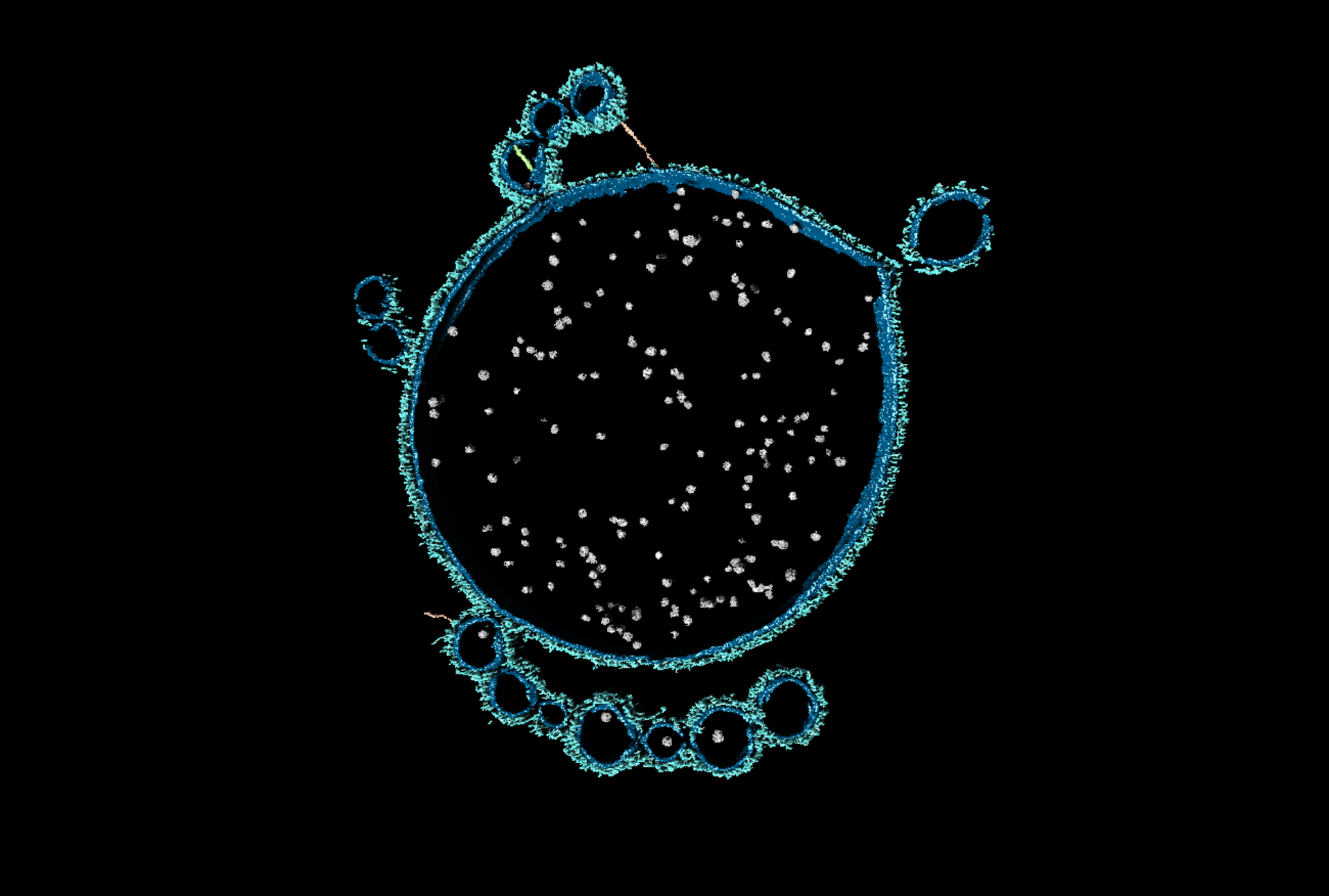
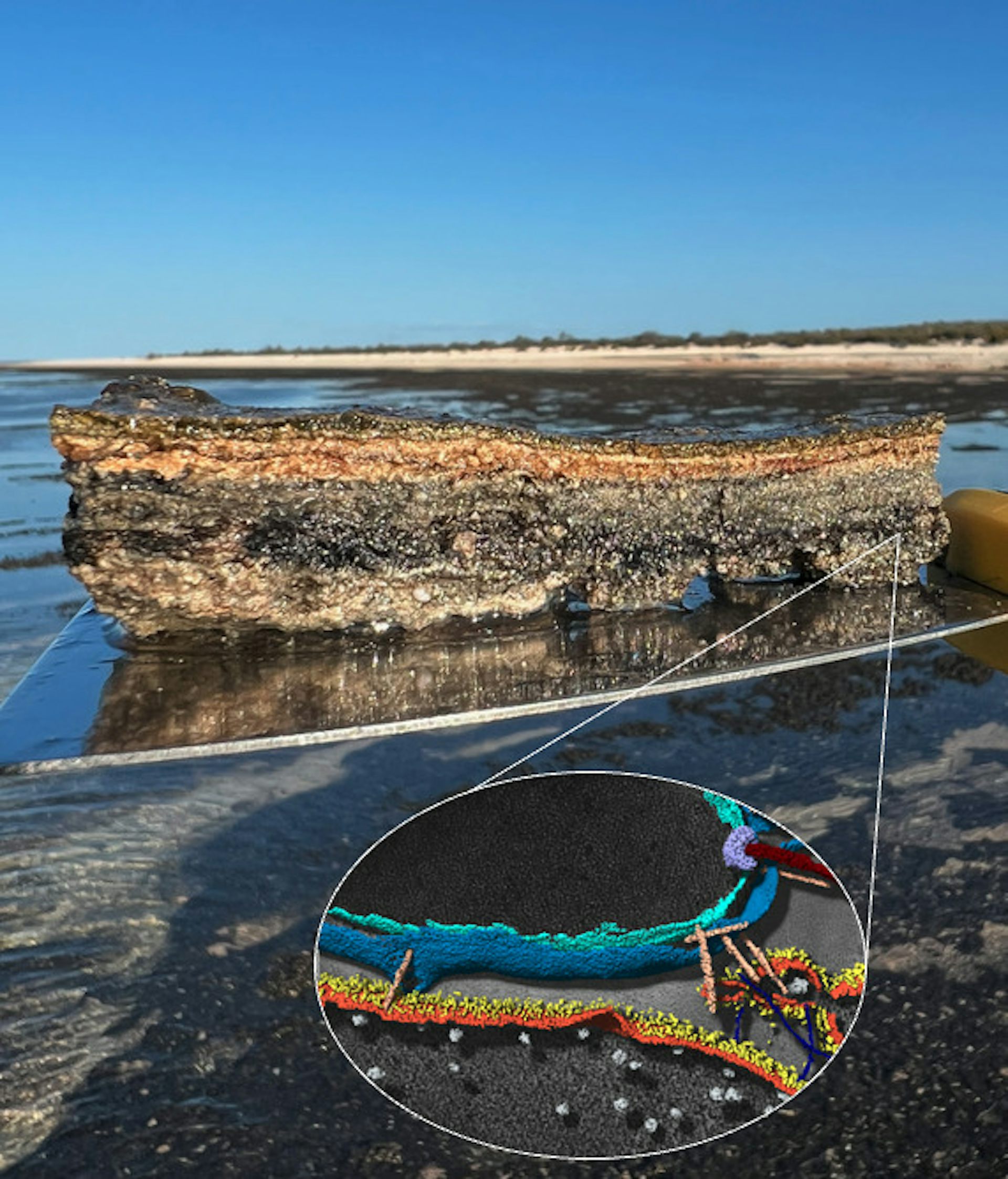
But we wanted to delve deeper. What do our great microbial ancestors look like? Here we turned to electron cryotomography, a high-resolution imaging approach that allowed us to observe cells and structures at a nanometre scale.
Mas queríamos nos aprofundar. Como são nossos grandes ancestrais microbianos? Aqui recorremos à criotomografia eletrônica, uma abordagem de imagem de alta resolução que nos permitiu observar células e estruturas em escala nanométrica.
And here we showed – for the first time – an Asgard archaeon and a bacterium directly interacting. Tiny nanotubes were connecting the two organisms – perhaps reflecting what their great-ancestors did on an early Earth that ultimately led to the explosion of complex life as we know it.
E aqui mostramos – pela primeira vez – um arqueano Asgard e uma bactéria interagindo diretamente. Nanotubos minúsculos estavam conectando os dois organismos – talvez refletindo o que seus grandes ancestrais fizeram em uma Terra primitiva que, em última análise, levou à explosão da vida complexa como a conhecemos.
Weaving western science with Indigenous knowledge
Tecendo a ciência ocidental com o conhecimento indígena
This was a major discovery – one that originated in Gathaagudu, a World Heritage Site with significant environmental and cultural values.
Esta foi uma grande descoberta – uma que se originou em Gathaagudu, um Patrimônio Mundial com valores ambientais e culturais significativos.
Aboriginal people first inhabited Gathaagudu over 30,000 years ago. We wanted to recognise and celebrate the language of the Malgana people, one of the traditional language groups of Gathaagudu. We also wanted to connect western science with Indigenous Knowledge in a meaningful way.
Os povos aborígenes habitaram Gathaagudu há mais de 30.000 anos. Queríamos reconhecer e celebrar a língua do povo Malgana, um dos grupos linguísticos tradicionais de Gathaagudu. Também queríamos conectar a ciência ocidental com o Conhecimento Indígena de uma forma significativa.
To this end and working closely with the world’s foremost Malgana language expert, Kymberley Oakley, and Aboriginal elders, a name was granted for our novel Asgard archaeon from the language of the Malgana people: Nerearchaeum marumarumayae. The species name – marumarumayae – is derived from the Aboriginal language of the Malgana people, meaning “ancient home”, a reference to stromatolites being of ancient origin in Earth’s history.
Para este fim e trabalhando em estreita colaboração com o principal especialista em língua Malgana do mundo, Kymberley Oakley, e anciãos aborígenes, foi dado um nome para o nosso novo arqueano Asgard a partir da língua do povo Malgana: Nerearchaeum marumarumayae. O nome da espécie – marumarumayae – é derivado da língua aborígene do povo Malgana, significando “casa antiga”, uma referência aos estromatólitos terem origem antiga na história da Terra.
Weaving Aboriginal language into the naming of our new microbe represents a fitting connection between unique Aboriginal culture in Australia and the ancient microbe discovered that calls the mats of Gathaagudu “home”.
Tecer a língua aborígene no nome do nosso novo micróbio representa uma conexão adequada entre a cultura aborígene única da Austrália e o micróbio antigo descoberto que chama os tapetes de Gathaagudu de “lar”.
Gathaagudu is under threat from global change, from increased heatwaves, cyclonic events and human activity. And among the values to preserve and conserve are the significant Aboriginal connections as well as the trails of life going back through evolutionary time.
Gathaagudu está ameaçado pela mudança global, pelo aumento das ondas de calor, eventos ciclônicos e atividade humana. E entre os valores a preservar e conservar estão as importantes conexões aborígenes, bem como os rastros da vida voltando através do tempo evolutivo.
With our study we have peered into our past. And maybe like the Montagues and Capulets of Shakespeare, we see distant families of microbes coming together to bridge the divide and ultimately form the early eukaryotes that eventually led to us: a fragile branch on the evolutionary tree of life.
Com o nosso estudo, olhamos para o nosso passado. E talvez, como os Montagues e Capulets de Shakespeare, vemos famílias distantes de micróbios reunindo-se para preencher a lacuna e, finalmente, formar os primeiros eucariotos que eventualmente nos levaram: um ramo frágil na árvore evolutiva da vida.
Brendan Paul Burns receives funding from the Australian Research Council.
Brendan Paul Burns recebe financiamento do Australian Research Council.
Kymberley Oakley does not work for, consult, own shares in or receive funding from any company or organisation that would benefit from this article, and has disclosed no relevant affiliations beyond their academic appointment.
Kymberley Oakley não trabalha, não é consultor, não possui ações nem recebe financiamento de nenhuma empresa ou organização que se beneficiaria deste artigo, e não divulgou afiliações relevantes além do seu cargo acadêmico.
Read more
-
O ‘couro vegano’ não é tão sustentável ou ecológico quanto as marcas podem alegar
‘Vegan leather’ isn’t as sustainable or eco‑friendly as brands might claim
-
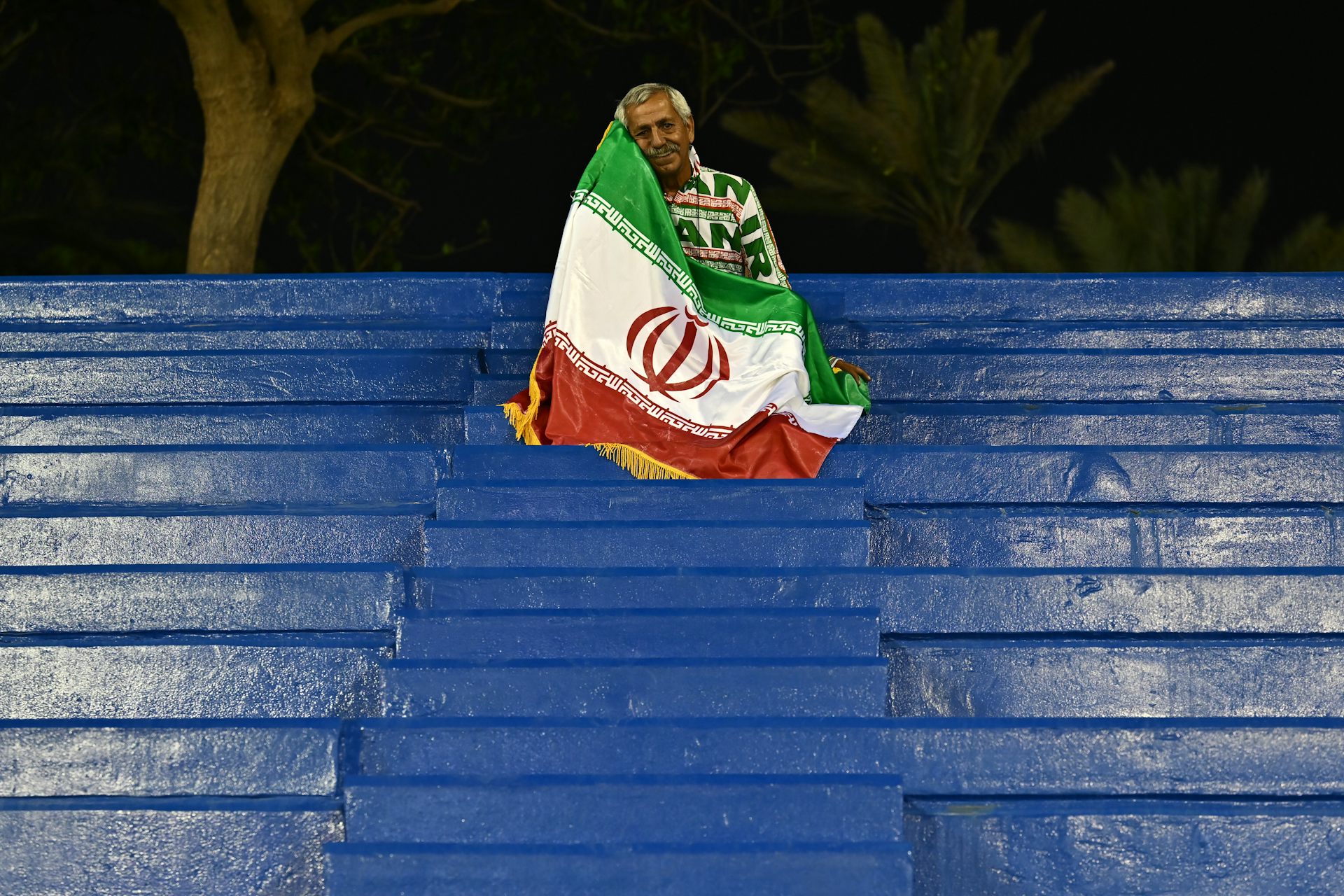
Para a diáspora iraniana, um dilema na Copa do Mundo: apoiar a seleção nacional ou protestar – ou os dois?
For Iran’s diaspora, a tough World Cup call: To support the national team or protest – or both?