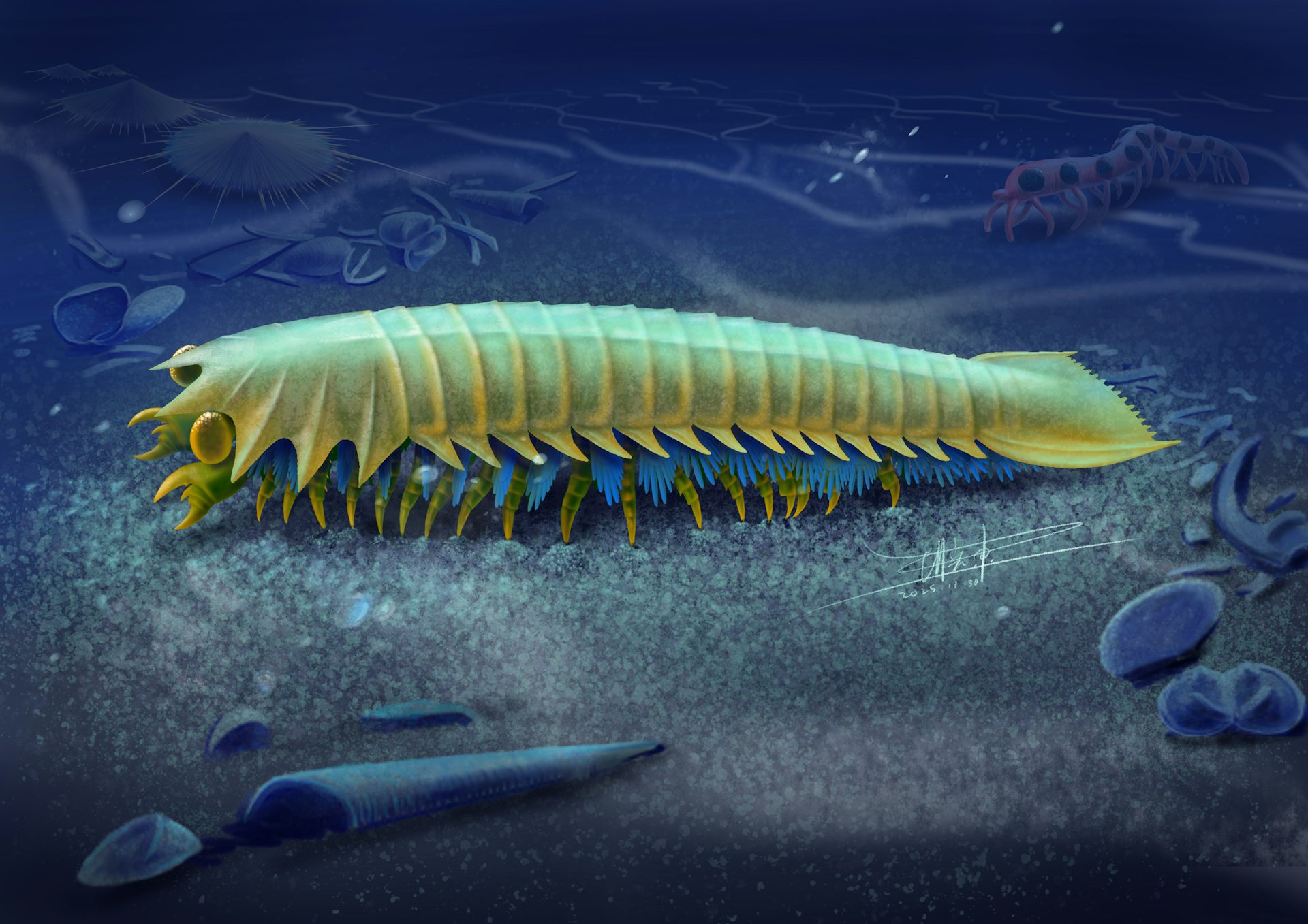
मकड़ी के फँग्स उनकी सबसे डरावनी विशेषताओं में से एक हैं – नए जीवाश्म उनके मूल की जानकारी देते हैं।
Spider fangs are one of their scariest features – new fossils reveal their origins
The 500 million year old shrimp-like Urokodia had pincer-like limbs emerging next to its eyes.
50 करोड़ साल पुराना झींगा जैसा यूरोकोडिया, उसकी आँखों के बगल में चिमटी जैसे अंग थे।
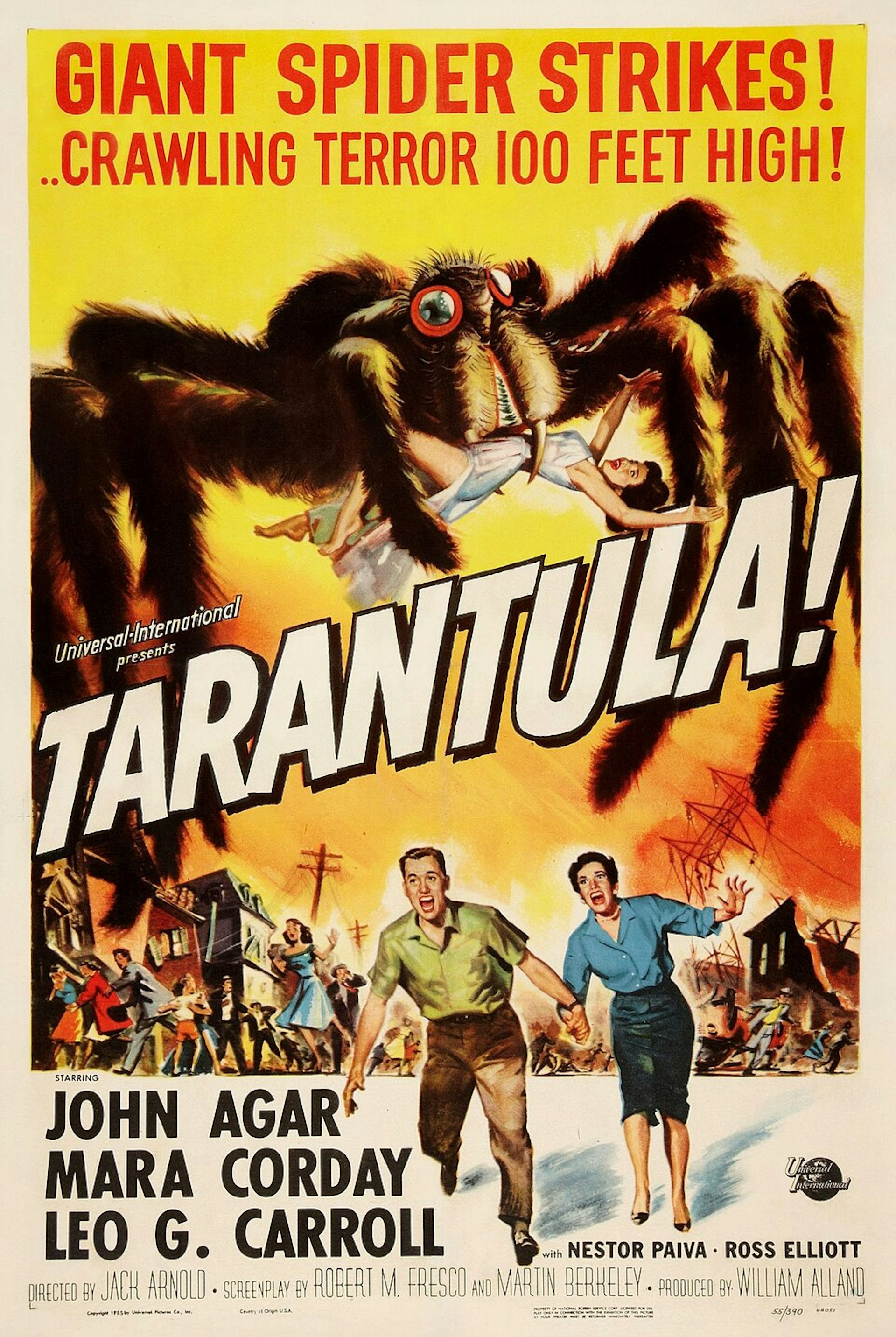
The publicity posters for the 1955 cult monster movie Tarantula! displayed a giant spider rampaging across the Arizona desert and clutching a poor human victim in its viciously long fangs. The film captured our fear of spiders, their creepy crawly motion and the hideous way they stab their prey to death, injecting a lethal venom.
1955 की कल्ट मॉन्स्टर फिल्म ‘टारेंटुला!’ के प्रचार पोस्टर में एक विशाल मकड़ी को एरिजोना रेगिस्तान में तबाही मचाते हुए और अपने क्रूर रूप से लंबे दाँतों से एक गरीब मानव शिकार को जकड़े दिखाया गया था। इस फिल्म ने मकड़ियों के प्रति हमारे डर, उनकी रेंगने वाली गति और जिस भयानक तरीके से वे अपने शिकार को मारने के लिए वार करती हैं और घातक जहर इंजेक्ट करती हैं, उसे कैद किया है।
Spiders, like their cousins the scorpions, are some of nature’s most accomplished hunters. Our new research looks at remarkable fossils excavated from Yunnan, southern China. We have found evidence that helps reveal the earliest origins of fangs.
मकड़ियाँ, अपने चचेरे भाई बिच्छू की तरह, प्रकृति के सबसे कुशल शिकारी में से कुछ हैं। हमारा नया शोध युन्नान, दक्षिणी चीन से उत्खनित उल्लेखनीय जीवाश्मों पर नज़र डालता है। हमें ऐसा प्रमाण मिला है जो दाँतों (fangs) के सबसे शुरुआती उद्गम को प्रकट करने में मदद करता है।
Spiders and scorpions are chelicerates, part of a large group of animals called arthropods. Arthropods are characterised by their jointed limbs and skeletons that grow on the outside of their bodies. It’s that skeleton you hear scrunching if you accidentally step on one.
मकड़ियाँ और बिच्छू चीलीरेटेस हैं, जो आर्थ्रोपोड्स नामक जानवरों के एक बड़े समूह का हिस्सा हैं। आर्थ्रोपॉड अपनी जुड़ी हुई भुजाओं और ऐसे कंकाल से पहचाने जाते हैं जो उनके शरीर के बाहर विकसित होते हैं। यह वही कंकाल है जिसे आप तब सुन सकते हैं जब गलती से आप उस पर पैर रख दें।
Chelicerates also include mites, ticks, horseshoe crabs and sea spiders, all with specialised limbs at the front of the animal called chelicerae. It’s the chelicerae that are used as pincers or fangs for eating or stabbing prey. If you’ve ever been bitten by a tick, it’s the saw-like chelicerae that drew blood and got stuck in your skin.
चीलीरेटेस में माइट्स, टिक्स, हॉर्सशू क्रैब्स और सी स्पाइडर्स भी शामिल हैं, सभी में जानवर के सामने विशेषीकृत भुजाएँ होती हैं जिन्हें चेलीसेरा (chelicerae) कहा जाता है। यह चेलीसेरा ही वह चीज़ है जिसका उपयोग शिकार को खाने या वार करने के लिए पंजे या दाँत के रूप में किया जाता है। यदि कभी आपको टिक्स ने काटा है, तो यह आरी जैसे चेलीसेरा थे जिन्होंने खून निकाला और आपकी त्वचा में अटक गए।
Chelicerates are among the most successful animals to live on land and in the sea, numbering well over 100,000 species. Fossils show that their ancestors have been hunting on land for more than 400 million years.
चीलीरेटेस भूमि और समुद्र दोनों पर रहने वाले सबसे सफल जानवरों में से हैं, जिनकी संख्या 100,000 प्रजातियों से अधिक है। जीवाश्म दिखाते हैं कि उनके पूर्वज 400 मिलियन वर्षों से अधिक समय तक भूमि पर शिकार कर रहे थे।
However, the earliest fossil evidence of chelicerates is not found on the land, but in the sea, in creatures that lived more than 500 million years ago during the Cambrian period. The Cambrian was a time of rapid evolution for animals that would one day lead to the amazing diversity of life in the oceans and on land. One of these Cambrian sea-creatures is called Urokodia, its name derived from the ancient Greek words for its shielded tail. It lived in the tropical seas that covered southern China about 518 million years ago.
हालांकि, चीलीरेटेस का सबसे शुरुआती जीवाश्म प्रमाण भूमि पर नहीं, बल्कि समुद्र में पाया जाता है, उन जीवों में जो 500 मिलियन वर्ष से भी पहले कैम्ब्रियन काल के दौरान रहते थे। कैम्ब्रियन वह समय था जब जानवरों का तेजी से विकास हुआ, जिससे एक दिन महासागरों और भूमि पर जीवन की अद्भुत विविधता उत्पन्न हुई। इन कैम्ब्रियन समुद्री जीवों में से एक को यूरोकोडिया कहा जाता है, जिसका नाम इसके ढाल वाले पूंछ के लिए प्राचीन यूनानी शब्दों से लिया गया है। यह लगभग 518 मिलियन वर्ष पहले दक्षिणी चीन को कवर करने वाले उष्णकटिबंधीय समुद्रों में रहता था।
The beginnings of spider fangs
मकड़ी के दंतों की शुरुआत
At first sight Urokodia – pictured at the top of this article – doesn’t seem like a contender for a distant relative of spiders or scorpions. It was a small animal 2-3 cm long with large eyes protruding on stalks from the front, and an elongate shrimp-like body, with jointed limbs strung from its underside. So, while Urokodia displays the tell-tale signs of arthropods, with its skeleton on the outside and jointed limbs, it doesn’t look much like a spider or a scorpion.
पहली नज़र में यूरोकोडिया – जो इस लेख के शीर्ष पर चित्रित है – मकड़ियों या बिच्छुओं के दूर के रिश्तेदार होने का दावेदार नहीं लगता। यह 2-3 सेंटीमीटर लंबा एक छोटा जानवर था जिसके बड़े आँखें सामने से डंडों पर निकली हुई थीं, और इसका शरीर लम्बा झींगा जैसा था, जिसमें इसके निचले हिस्से से जोड़ों वाले अंग जुड़े हुए थे। इसलिए, जबकि यूरोकोडिया अपने बाहरी कंकाल और जोड़ों वाले अंगों के साथ आर्थ्रोपोड्स के स्पष्ट संकेत दिखाता है, यह मकड़ी या बिच्छू जैसा नहीं दिखता।
But when we used X-rays to peer a little closer at the front end of Urokodia, we saw two pincer-like limbs emerging next to its eyes that are an ancient type of chelicerae. Some of the other legs of Urokodia bear finely layered structures that were probably used as gills for breathing in the sea. Modern aquatic chelicerates, like the horseshoe crab, have similar structures called “book gills” that literally look like the pages of a book.
लेकिन जब हमने यूरोकोडिया के अग्र सिरे को करीब से देखने के लिए एक्स-रे का उपयोग किया, तो हमने अपनी आँखों के बगल में दो चिमटी जैसे अंग देखे जो चेलीसेरा का एक प्राचीन प्रकार हैं। यूरोकोडिया के अन्य पैरों पर बारीक परतदार संरचनाएं थीं जिनका उपयोग शायद समुद्र में साँस लेने के लिए गलफड़ों के रूप में किया जाता था। आधुनिक जलीय चेलीसेरेट्स, जैसे कि Horseshoe crab (घोड़े की नाल केकड़ा) , में “किताब के गलफड़े” नामक समान संरचनाएं होती हैं जो शाब्दिक रूप से एक किताब के पन्नों जैसी दिखती हैं।
Urokodia is an important link in the evolutionary chain, connecting forward to the incredible diversity of modern chelicerates like spiders, and also to other important Cambrian fossils, like Megachelicerax. That animal lived just a few million years after Urokodia in the tropical seas of ancient North America and its name means “big claw” honouring the awesome pair of chelicerae on its head.
यूरोकोडिया विकास श्रृंखला में एक महत्वपूर्ण कड़ी है, जो आगे चलकर मकड़ियों जैसे आधुनिक चेलीसेरेट्स की अविश्वसनीय विविधता और मेगाचेलीरेक्स (Megachelicerax) जैसे अन्य महत्वपूर्ण कैम्ब्रियन जीवाश्मों से जोड़ती है। वह जानवर यूरोकोडिया के कुछ मिलियन वर्ष बाद प्राचीन उत्तरी अमेरिका के उष्णकटिबंधीय समुद्रों में रहता था और इसका नाम इसके सिर पर मौजूद अद्भुत चेलीसेरा जोड़े को सम्मान देता है, जिसका अर्थ है “बड़ा पंजा”।
Urokodia, like Megachelicerax, was almost certainly a specialised predator. These fossils also hint at links to another group of ferocious Cambrian hunters, including the half-metre-long shrimp-like Anomalocaris, one of the planet’s first apex predators. Those animals bore formidable frontal limbs for grasping and catching prey and a circular mouth with plates that could tear apart a victim’s body.
यूरोकोडिया, मेगाचेलीरेक्स की तरह, लगभग निश्चित रूप से एक विशेषज्ञ शिकारी था। ये जीवाश्म अन्य खतरनाक कैम्ब्रियन शिकारियों के समूह से भी संबंध का संकेत देते हैं, जिसमें आधा मीटर लंबा झींगा जैसा एनामोलोकारिस (Anomalocaris) शामिल है, जो ग्रह के पहले शीर्ष शिकारियों में से एक था। उन जानवरों में शिकार को पकड़ने और जकड़ने के लिए भयंकर अग्र अंग और प्लेटों वाला एक गोलाकार मुँह होता था जो किसी पीड़ित के शरीर को फाड़ सकता था।
In Urokodia we see the beginnings of the specialised limbs that would one-day evolve into the deadly fangs of spiders. We also see the beginnings of the lineage that would eventually produce some of the most formidable predators that have ever lived – though mercifully none as large as the spider in Tarantula.
यूरोकोडिया में हमें विशेष अंगों की शुरुआत दिखाई देती है जो एक दिन मकड़ियों के घातक दंतों में विकसित होंगे। हम उस वंश की शुरुआत भी देखते हैं जो अंततः सबसे शक्तिशाली शिकारियों में से कुछ का उत्पादन करेगा – हालांकि सौभाग्य से, तरानातुला (Tarantula) जैसी विशालता के कोई नहीं।
Yu Liu receives funding from the Department of Science and Technology of Yunnan Province (202401BC070012) , and is further funded by the Yunnan Revitalization Talent Support Program and the Chinese Scholarship Council to support his 1-year academic sabbatical at the University of Leicester. He works at the Yunnan Key Laboratory for Palaeobiology, Yunnan University, Kunming, China.
यू लियू को युन्नान प्रांत के विज्ञान और प्रौद्योगिकी विभाग (202401BC070012) से फंडिंग मिलती है, और उन्हें यूनिवर्सिटी ऑफ लेस्टर में अपने 1 साल के अकादमिक सवैतनिक अवकाश का समर्थन करने के लिए युन्नान रिवाइटलाइज़ेशन टैलेंट सपोर्ट प्रोग्राम और चाइनीज स्कॉलरशिप काउंसिल द्वारा भी फंड किया जाता है। वह चीन के कुनमिंग स्थित युन्नान विश्वविद्यालय की पैलियोबायोलॉजी की प्रमुख प्रयोगशाला में काम करते हैं।
Lorenzo Lustri, Mark Williams, and Tom Harvey do not work for, consult, own shares in or receive funding from any company or organisation that would benefit from this article, and have disclosed no relevant affiliations beyond their academic appointment.
लोरेंजो लुस्त्री, मार्क विलियम्स और टॉम हार्वे किसी भी कंपनी या संगठन के लिए काम नहीं करते हैं, न ही वे इसमें परामर्श देते हैं, न ही उनके पास शेयर हैं, और न ही उन्हें कोई फंडिंग मिलती है जो इस लेख से लाभान्वित हो सकती है, और उन्होंने अपने अकादमिक पद से परे कोई प्रासंगिक संबद्धता प्रकट नहीं की है।
Read more
-

‘कार्यकारी शक्ति नियंत्रण और संतुलन के अधीन है’: अमेरिकी कांग्रेस में राजा चार्ल्स ने मैग्ना कार्टा का हवाला क्यों दिया
‘Executive power is subject to checks and balances’: why King Charles cited Magna Carta in the US Congress
-

अमेरिका-ईरान शांति वार्ता में मध्यस्थता करते हुए, पाकिस्तान अपनी भू-राजनीतिक ताकत का प्रदर्शन कर रहा है
In mediating the US-Iran peace talks, Pakistan is flexing its geopolitical muscles