我们的大型强子对撞机结果暗示着未发现的物理学
Our Large Hadron Collider results hint at undiscovered …
The behaviour of sub-atomic particles in the LHC seems to disagree with the Standard Model.
LHC中亚原子粒子的行为似乎与标准模型不符。
Recent findings from research we have been carrying out at the Large Hadron Collider (LHC) at Cern in Geneva suggest that we might be closing in on signs of undiscovered physics.
我们在日内瓦欧洲核子研究组织(CERN)的大型强子对撞机(LHC)进行的研究发现表明,我们可能正在接近未发现的物理学迹象。
If confirmed, these hints would overturn the theory, called the Standard Model, that has dominated particle physics for 50 years. The findings suggest the way that specific sub-atomic particles behave in the LHC disagrees with the Standard Model.
如果得到证实,这些线索将推翻主导粒子物理学长达50年的理论——标准模型。这些发现表明,在LHC中特定亚原子粒子的行为方式与标准模型存在差异。
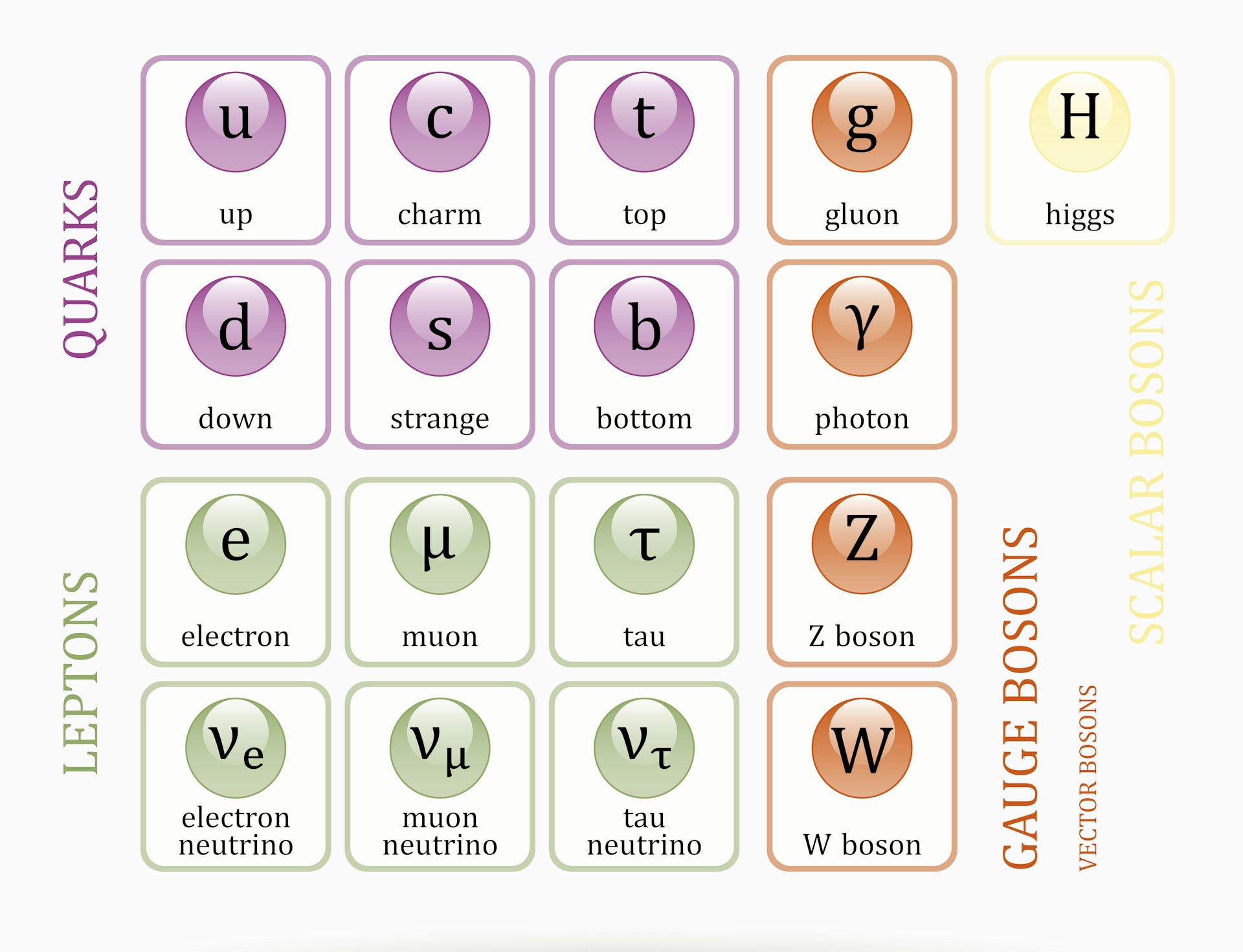
Fundamental particles are the most basic building blocks of matter – sub-atomic particles that cannot be divided into smaller units. The four fundamental forces – gravity, electromagnetism, the weak force and the strong force – govern how these particles interact.
基本粒子是物质最基本的组成部分——无法再分解成更小单元的亚原子粒子。四大基本力——引力、电磁力、弱核力和强核力——决定了这些粒子如何相互作用。
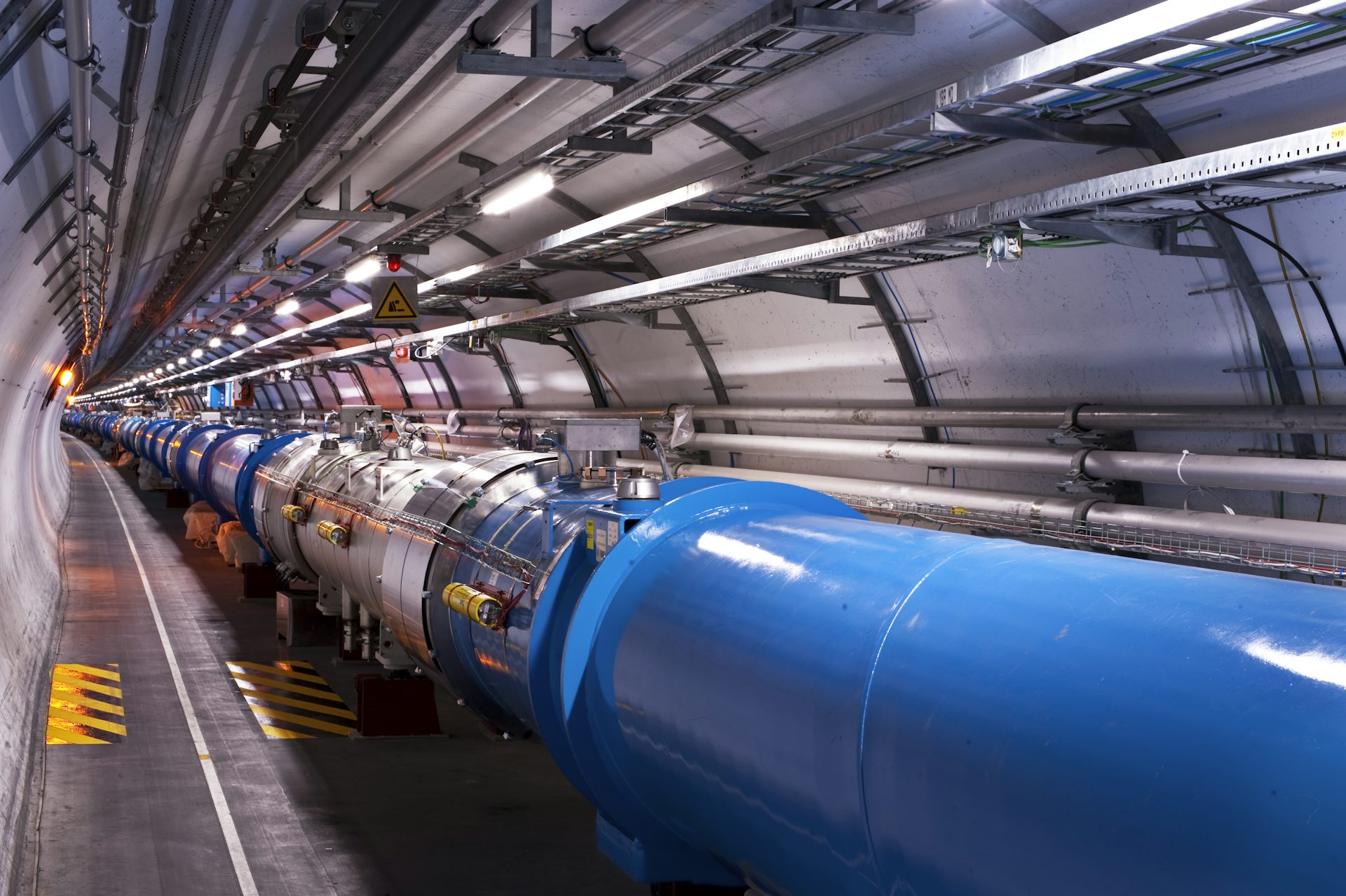
The LHC is a giant particle accelerator built in a 27km-long circular tunnel under the French-Swiss border. Its main purpose is to find cracks in the Standard Model.
LHC是一个巨大的粒子加速器,建于法国和瑞士边境下的一条27公里长的圆形隧道内。其主要目的是寻找标准模型中的缺陷。
This theory is our best understanding of fundamental particles and forces, but we know it cannot be the whole story. It does not explain gravity or dark matter – the invisible, so far unmeasured type of matter that makes up approximately 25% of the universe.
这是我们对基本粒子和力的最佳理解,但我们知道它并非全部。它无法解释引力或暗物质——这种目前尚未测量的、约占宇宙25%的不可见物质。
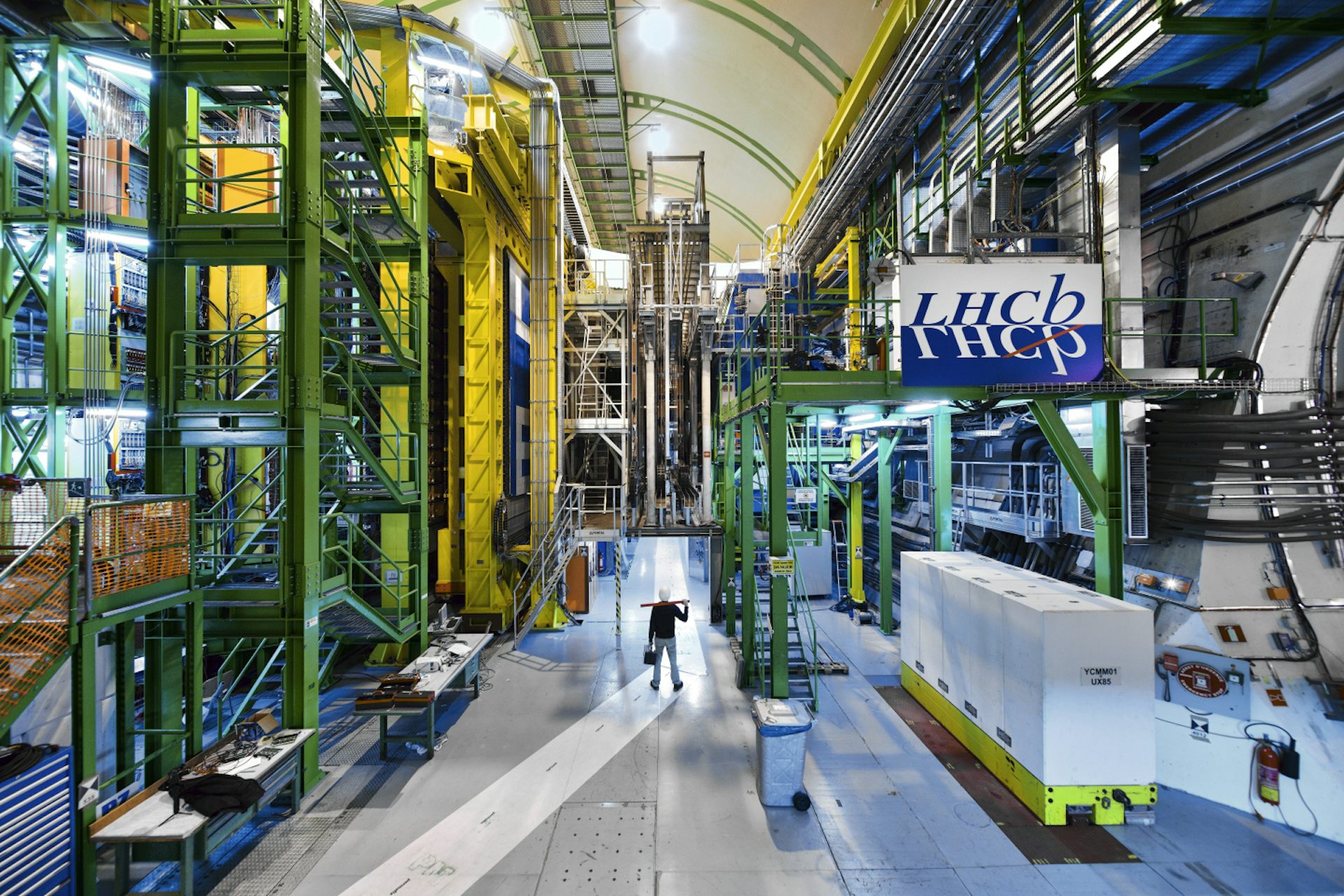
In the LHC, beams of proton particles travelling in opposite directions are made to collide, in a bid to uncover hints of undiscovered physics. The new results come from LHCb, an experiment at the Large Hadron Collider where these collisions are analysed.
在LHC中,来自相反方向的质子束被促成碰撞,以期揭示未发现的物理学线索。这些新结果来自LHCb,这是一个在大型强子对撞机上进行、用于分析这些碰撞的实验。
The result comes from studying the decay – a kind of transformation – of sub-atomic particles called B mesons. We investigated how these B mesons decay into other particles, finding that the particular way in which this happens disagrees with the predictions of the Standard Model.
该结果来自于研究一种被称为B介子的亚原子粒子的衰变——一种转化过程。我们研究了这些B介子如何衰变成其他粒子,发现其发生的特定方式与标准模型的预测不符。
An elegant theory
一个优雅的理论
The Standard Model is built on two of the 20th century’s most transformative advances in physics; quantum mechanics and Einstein’s special relativity.
标准模型建立在20世纪物理学最具变革性的两项进展之上:量子力学和爱因斯坦的相对论。
Physicists can compare measurements made at facilities such as the LHC with predictions based on the Standard Model to rigorously test the theory.
物理学家可以在大型强子对撞机(LHC)等设施进行测量,并将其与基于标准模型的预测进行比较,从而严格检验该理论。
Despite the fact that we know the Standard Model is incomplete, in over 50 years of increasingly rigorous testing, particle physicists are yet to find a crack in the theory. That is, potentially, until now.
尽管我们知道标准模型是不完整的,但在五十多年来日益严格的测试中,粒子物理学家尚未发现该理论的任何漏洞。至少,直到现在是这样。
Our measurement, accepted for publication in Physical Review Letters, shows a tension of four standard deviations from the expectations of the Standard Model.
我们在《物理评论快报》上发表的测量结果显示,与标准模型的预期存在四个标准差的偏差。
In real world terms, this means that, after considering the uncertainties from the experimental results and from the theory predictions, there is only a one in 16,000 chance that a random fluctuation in the data this extreme would occur if the Standard Model is correct.
从实际意义上讲,这意味着在考虑了实验结果和理论预测的不确定性之后,如果标准模型是正确的,数据中出现如此极端的随机波动,其概率只有一万六千分之一。
Although this falls short of science’s gold standard – what’s known as five sigma, or five standard deviations (about a one in 1.7 million chance) – the evidence is starting to mount. Adding to this compelling narrative are results from an independent LHC experiment, CMS, that were published earlier in 2025.
尽管这还未达到科学的黄金标准——即所谓的五西格玛(five sigma),或五个标准差(约百万分1.7的概率)——但证据正在积累。增加这一引人入胜的叙述的是来自独立LHC实验CMS的结果,这些结果于2025年早些时候发表。
Although the CMS results are not as precise as those from LHCb, they agree well, strengthening the case. Our new results have been found in a study of a particular kind of process, known as an electroweak penguin decay.
尽管CMS的结果不如LHCb精确,但它们高度一致,从而加强了这一论点。我们的新结果是在一项关于特定过程的研究中发现的,该过程被称为电弱金石衰变。
Rare events
稀有事件
The term “penguin” refers to a specific type of decay (transformation) of short-lived particles. In this case we study how the B meson decays into four other subatomic particles – a kaon, a pion and two muons.
“企鹅”一词指的是短寿命粒子的一种特定衰变(转变)。在本项目中,我们研究B介子如何衰变成四个其他亚原子粒子——一个K介子、一个π介子和两个缪子。
With some imagination, one can visualise the arrangement of the particles involved as looking like a penguin. Crucially, measurements of this decay let us study how one type of fundamental particle, a beauty quark, can transform into another, the strange quark.
凭空想象,人们可以把参与衰变的粒子排列想象成一只企鹅。至关重要的是,对这种衰变的测量使我们能够研究一种基本粒子——美夸克——如何转变为另一种基本粒子——奇夸克。
This penguin decay is incredibly rare in the Standard Model: for every million B mesons, only one will decay in this manner. We have carefully analysed the angles and energies at which these particles are produced in the decay, and precisely determined how often the process takes place. We found that our measurements of these quantities disagree with Standard Model predictions.
这种企鹅衰变在标准模型中极其罕见:每百万个B介子中,只有一个会以这种方式衰变。我们仔细分析了这些粒子在衰变过程中产生的角度和能量,并精确确定了该过程发生的频率。我们发现,我们对这些量的测量结果与标准模型的预测不一致。
Precise investigations of decays like this are one of the primary goals of the LHCb experiment, and have been since its inception in 1994. Penguin processes are uniquely sensitive to the effects of potentially very heavy new particles that cannot be created directly at the LHC.
对此类衰变的精确研究是LHCb实验的主要目标之一,自1994年开始以来一直如此。企鹅过程对那些无法在LHC直接产生的、潜在非常重的新粒子的效应具有独特的敏感性。
Such particles may still exert a measurable influence on these decays over the small Standard Model contribution. This kind of indirect observation is not new. For example, radioactivity was discovered 80 years before the fundamental particles that are responsible for it (the W bosons) were directly seen.
此类粒子仍可能通过对标准模型贡献的微小影响,对这些衰变施加可测量的影响。这种间接观测并非新鲜事。例如,放射性是在负责它的基本粒子(W玻色子)被直接观测到前80年发现的。
Future directions
未来方向
Our studies of rare processes let us explore parts of nature that may otherwise only become accessible using particle colliders planned for the 2070s. There are a wide range of potential new theories that can explain our findings. Many contain new particles called “leptoquarks” that unite the two different types of matter: “leptons” and “quarks”.
我们对稀有过程的研究使我们能够探索自然界中其他方式可能只能通过计划于2070年代的粒子对撞机才能获得的区域。存在一系列潜在的新理论可以解释我们的发现。其中许多包含一种称为“电弱夸克”的新粒子,它统一了两种不同的物质类型:“轻子”和“夸克”。
Other potential theories contain particles that are heavier analogues of those already found in the Standard Model. The new results constrain the form of these models and will direct future searches for them.
其他潜在的理论包含比标准模型中已发现的粒子更重的类似物。新的结果限制了这些模型的形式,并将指导未来对它们的搜索。
Despite our excitement, open theoretical questions remain that prevent us from definitively claiming that physics beyond the Standard Model has been observed. The most serious question arises from so-called “charming penguins”, a set of processes present in the Standard Model, whose contributions are extremely tricky to predict. Recent estimates of these charming penguins suggest their effects are not large enough to explain our data.
尽管我们感到兴奋,但仍存在一些悬而未决的理论问题,这使得我们无法确定地声称已经观测到了标准模型之外的物理学。最严重的问题来自所谓的“魅力性百灵鸟”,这是一组存在于标准模型中的过程,其贡献极难预测。最近对这些魅力性百灵鸟的估计表明,它们的影响不足以解释我们的数据。
Furthermore, a combination of a theory model and experimental data from LHCb suggests that the charming penguins (and therefore, the Standard Model) struggle to explain the anomalous results.
此外,理论模型与来自LHCb的实验数据的结合表明,魅力性百灵鸟(以及因此的标准模型)难以解释这些异常结果。
New data already collected will let us confirm the situation in the coming years: in our current work we studied approximately 650 billion B meson decays recorded between 2011 and 2018 to find these penguin decays. Since then, the LHCb experiment has recorded three times as many B mesons.
已经收集的新数据将在未来几年内使我们能够确认这一情况:在目前的工作中,我们研究了2011年至2018年间记录的大约6500亿个B介子衰变,以寻找这些百灵鸟衰变。从那时起,LHCb实验记录的B介子数量增加了三倍。
Further advances are planned for the 2030s to exploit future upgrades to the LHC and accrue a dataset 15 times larger again. This ultimate step will allow definitive claims to be made, potentially unlocking a new understanding of how the universe works at the most elementary level.
计划在2030年代进行进一步的进展,以利用LHC的未来升级,再次积累一个大15倍的数据集。这一最终步骤将允许做出明确的结论,可能解锁对宇宙在最基本层面如何运作的新理解。
William Barter works for the University of Edinburgh. He receives funding from UKRI. He is a member of the LHCb collaboration at Cern.
William Barter在爱丁堡大学工作。他获得英国研究与创新基金(UKRI)的资助。他是欧洲核子研究组织(Cern)LHCb合作组的成员。
Mark Smith does not work for, consult, own shares in or receive funding from any company or organisation that would benefit from this article, and has disclosed no relevant affiliations beyond their academic appointment.
Mark Smith不为任何受益于本文的公司或组织工作、提供咨询、拥有股份或接受资金,并且除了其学术任命外,未披露任何相关隶属关系。