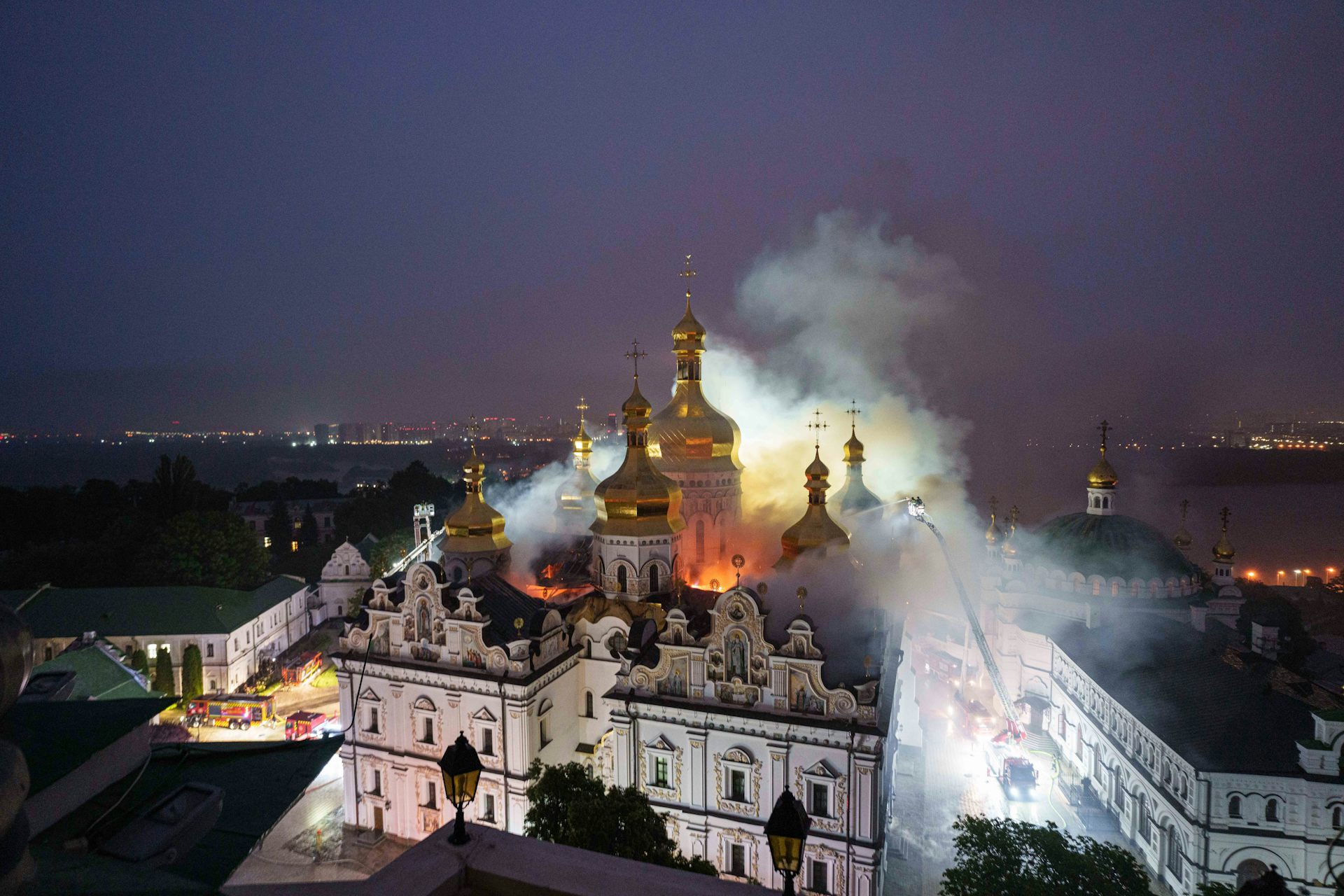
俄罗斯对古老的乌克兰修道院群的袭击,暴露了其日益增长的绝望。
Russia’s strike on centuries-old Ukrainian monastery co…
This attack has been widely understood as a Russian attempt to eradicate Ukrainian identity, and target a site that is extremely spiritually important to Ukrainians.
人们普遍认为,这次袭击是俄罗斯试图根除乌克兰民族身份的企图,并且目标是一个对乌克兰人具有极高精神意义的场所。
The historic Dormition Cathedral of the Kyiv-Pechersk Lavra was set ablaze this week, after it was struck by a Russian drone during a large-scale attack on the Ukrainian capital.
基辅佩切尔斯克修道院历史悠久的安息大教堂本周被点燃,此前它在一次针对乌克兰首都的大规模攻击中遭到俄罗斯无人机袭击。
Monks, clergy, and rescuers rushed to carry out ancient and sacred items from the burning cathedral, which has served for centuries as a symbol of Ukrainian cultural identity.
修道士、教职人员和救援人员急忙从这座正在燃烧的大教堂中抢出古老而神圣的物品,该大教堂几个世纪以来一直是乌克兰文化认同的象征。
This attack has been widely understood as a Russian attempt to eradicate Ukrainian identity, and target a site extremely spiritually important to Ukrainians. The cathedral was also damaged during a Russian attack earlier this year.
这次袭击被普遍理解为俄罗斯试图根除乌克兰身份认同,并针对一个对乌克兰人具有极高精神意义的场所。该大教堂今年早些时候也曾遭到过俄方攻击而受损。
Russia’s ongoing targeting of Ukrainian heritage sites underscores its failures to make meaningful gains on the battle front. Targeting sites of religious and cultural importance suggests Russia is growing increasingly desperate to demoralise Ukrainian civilians and people of faith.
俄罗斯持续攻击乌克兰遗产地,突显了其在战线上未能取得实质性进展的失败。瞄准具有宗教和文化意义的场所表明,俄罗斯正越来越绝望地试图瓦解乌克兰平民和信徒的士气。
A site of Ukrainian heritage
乌克兰的文化遗产地
The Kyiv-Pechersk Lavra site is a source of Ukrainian ancient heritage, Orthodox influence, and a refuge for the faithful.
基辅-佩切尔斯克修道院(Kyiv-Pechersk Lavra)是乌克兰古代遗产、东正教影响和信徒庇护所的源头。
It was founded in 1051 by a monk named Anthony and his disciple Theodosius (both of whom went on to become saints) during the reign of Ukrainian leader Yaroslav the Wise.
它于1051年由一位名叫安东尼(Anthony)的修士和他的弟子狄奥多西(Theodosius)(两人后来都成为圣人)在乌克兰领袖雅罗斯拉夫二世(Yaroslav the Wise)统治时期创立。
The Kyiv-Pechersk Lavra is the oldest monastic complex of Kyivan Rus, the first East Slavic state.
基辅-佩切尔斯克修道院是基辅罗斯——第一个东斯拉夫国家——最古老的修道群。
The complex’s gradual expansion over the centuries was funded by various leaders of Kyivan Rus and beyond.
这个修道群历经数个世纪的逐渐扩张,得到了基辅罗斯及其以外各方领袖的资助。
The construction of the Dormition Cathedral was completed in 1078, but the site was damaged several times during conquests in the region, such as the Golden Horde siege of Kyiv in the 13th century. This was when the city was attacked by a vast army of Mongol raiders.
升天大教堂(Dormition Cathedral)于1078年建成,但该遗址在区域内的多次征服中受损,例如13世纪金帐汗国围攻基辅时。当时这座城市曾遭到大量蒙古掠夺者的攻击。
A spectacular feature of the sacred Kyiv-Pechersk Lavra site is its vast underground network of caves (in fact, the word “pechersk” derives from the Ukrainian word pechery, which translates to “caves”) . The caves were a holy site of retreat for monks who lived and prayed at the monastery. The most worthy and devoted were buried there.
圣洁的基辅-佩切尔斯克修道院的一个壮观特色是其巨大的地下洞穴网络(事实上,“pechersk”一词源自乌克兰语“pechery”,意为“洞穴”)。这些洞穴曾是修士们生活和祈祷的圣地,也是他们的隐居之地。最值得尊敬和奉献的人被安葬于此。
The site also holds many ancient religious texts, publications, woodwork, and iconography. Over centuries, monks and other people used this site as a base to spread Orthodox faith in the region, and it served as a place of holy refuge for the Orthodox monks.
该遗址还收藏了许多古代宗教文本、出版物、木工制品和圣像画。几个世纪以来,修士和其他人利用这个地点作为传播东正教信仰的基地,并使其成为东正教修士们神圣庇护所的地方。
Today, parts of the sacred site continue to be used as a consecrated space for religious practice, especially the Dormition Cathedral. Most importantly, for many Ukrainians the Kyiv-Pechersk Lavra serves as a testament of Ukraine being descended from Kyivan Rus, not modern Russia.
如今,该圣地的一部分仍被用作进行宗教仪式的神圣空间,尤其是升天大教堂。最重要的是,对许多乌克兰人来说,基辅-佩切尔斯克修道院证明了乌克兰的血脉源自基辅罗斯,而非现代俄罗斯。
While Ukraine and Russia have shared a common history at some point on the timeline, the Russian empire, the Soviet Union, and today’s Russia have made attempts to claim Kyivan Rus history as their own. But many Ukrainians see this monastery site as symbolising a rejection of that monolithic version of history.
尽管乌克兰和俄罗斯在历史时间线上某些时刻曾共享过共同的历史,但沙俄帝国、苏联以及今天的俄罗斯都试图将基辅罗斯的历史归为己有。然而,许多乌克兰人认为这座修道院象征着对这种单一化历史版本的拒绝。
A church split
教会分裂
My expertise and experience is in researching Ukrainian religious history. For me, the complex’s survival and being should be understood as a symbol of Ukrainian historical and current resistance against Russian oppression.
我的专业知识和经验在于研究乌克兰的宗教历史。对我而言,这座建筑群的存续本身应被理解为乌克兰历史上和当前抵抗俄罗斯压迫的象征。
The rise of Russian Orthodox authority, Russian tsarist expansionism, and Russification policies all played a big role in Ukrainian oppression over centuries.
俄罗斯东正教权威的崛起、沙皇俄国的扩张主义以及“俄化”政策,在几个世纪里都对乌克兰的压迫起到了巨大的作用。
Constantinople, the centre of Orthodoxy, formally approved Russian authority over Ukrainian Orthodoxy in 1686. This was only overturned in 2019, after which a new Orthodox church in Ukraine gained formal independence from Moscow.
作为东正教中心的君士坦丁堡,于1686年正式批准了俄罗斯对乌克兰东正教的权威。直到2019年才推翻了这一决定,之后乌克兰的一个新东正教会获得了脱离莫斯科的正式独立。
In other words, Russian control of Ukrainian religious identity went on for more than three centuries.
换句话说,俄罗斯对乌克兰宗教身份的控制持续了三个多世纪。
So it should be no surprise Russia is now targeting sites such as this cathedral. It is part of a longstanding effort on Russia’s part to eradicate Ukrainian religious identity.
因此,俄罗斯现在瞄准像这座大教堂这样的地点,也就不足为奇了。这是俄罗斯长期以来旨在根除乌克兰宗教身份的一部分努力。
Holy battleground
圣地战场
The last time the ancient monastery complex experienced vast ruin was in 1941, during occupation by Nazi Germany. At this time, it was destroyed by mines believed to be left by Soviet forces who were retreating from the Nazis.
古代修道院群上次经历大规模废墟是在1941年,当时被纳粹德国占领。那时,它曾被炸弹摧毁,这些炸弹据信是苏联军队在撤退时留下的。
The Kyiv-Pechersk Lavra complex gained UNESCO World Heritage List status in 1990. Then, the Dormition Cathedral was rebuilt from 1998 to 2000 by the Ukrainian government.
基辅-佩切尔斯克拉夫拉(Kyiv-Pechersk Lavra)群于1990年获得了联合国教科文组织世界遗产名录地位。随后,乌克兰政府于1998年至2000年期间重建了安息大教堂。
From 1988, the Kyiv-Pechersk Lavra was used by the modern Ukrainian Orthodox Church of the Moscow Patriarchate on the basis of lease grants.
从1988年起,基辅-佩切尔斯克拉夫拉一直由莫斯科牧堂派现代乌克兰正教会根据租赁协议使用。
From 2009 onward (after a leadership change in the Russian Orthodox Church) , Russia began to explicitly tie religious politics to neo-imperialist state ideology. Russia’s occupation of parts of the Pechersk-Lavra site was about controlling Ukrainian self-determination and religious freedom.
从2009年开始(在俄罗斯东正教发生领导层变动后),俄罗斯开始明确地将宗教政治与新帝国主义国家意识形态挂钩。俄罗斯占领佩切尔斯克-拉夫拉部分地区是为了控制乌克兰的自决权和宗教自由。
But as of January 2023, all worship in the monastery has been conducted under the Orthodox Church of Ukraine (which split from Moscow in 2019) .
但截至2023年1月,修道院内的所有崇拜活动均在乌克兰正教会(该教会于2019年脱离莫斯科)之下进行。
Targeting the Kyiv-Pechersk Lavra this week was no coincidence. Russia’s Orthodox Church under the leadership of Patriarch Kirill has described the invasion of Ukraine as a “holy war”.
本周针对基辅-佩切尔斯克拉夫拉的袭击并非巧合。俄罗斯东正教在最高牧首基里尔的领导下,将入侵乌克兰描述为一场“圣战”。
Yury Dolgoruky, Prince of Kyivan Russia and founder of Moscow, is said to be buried at this site. But even that did not deter Russia from attacking it.
据说基辅俄国公爵、莫斯科的创始人尤里·多尔戈鲁基(Yury Dolgoruky)安葬于此地。但即使如此,也未能阻止俄罗斯对其发动攻击。
The bombing of this sacred site demonstrates growing urgency on Russia’s part to erase Ukrainian history and identity.
轰炸这一神圣场所表明了俄罗斯方面清除乌克兰历史和身份日益增长的紧迫性。
Anastasiya Byesyedina does not work for, consult, own shares in or receive funding from any company or organisation that would benefit from this article, and has disclosed no relevant affiliations beyond their academic appointment.
阿纳斯塔西娅·比耶西迪娜(Anastasiya Byesyedina)不为任何可能从本文中受益的公司或组织工作、咨询、拥有股份或获得资金,并且已披露其学术任命以外没有任何相关隶属关系。