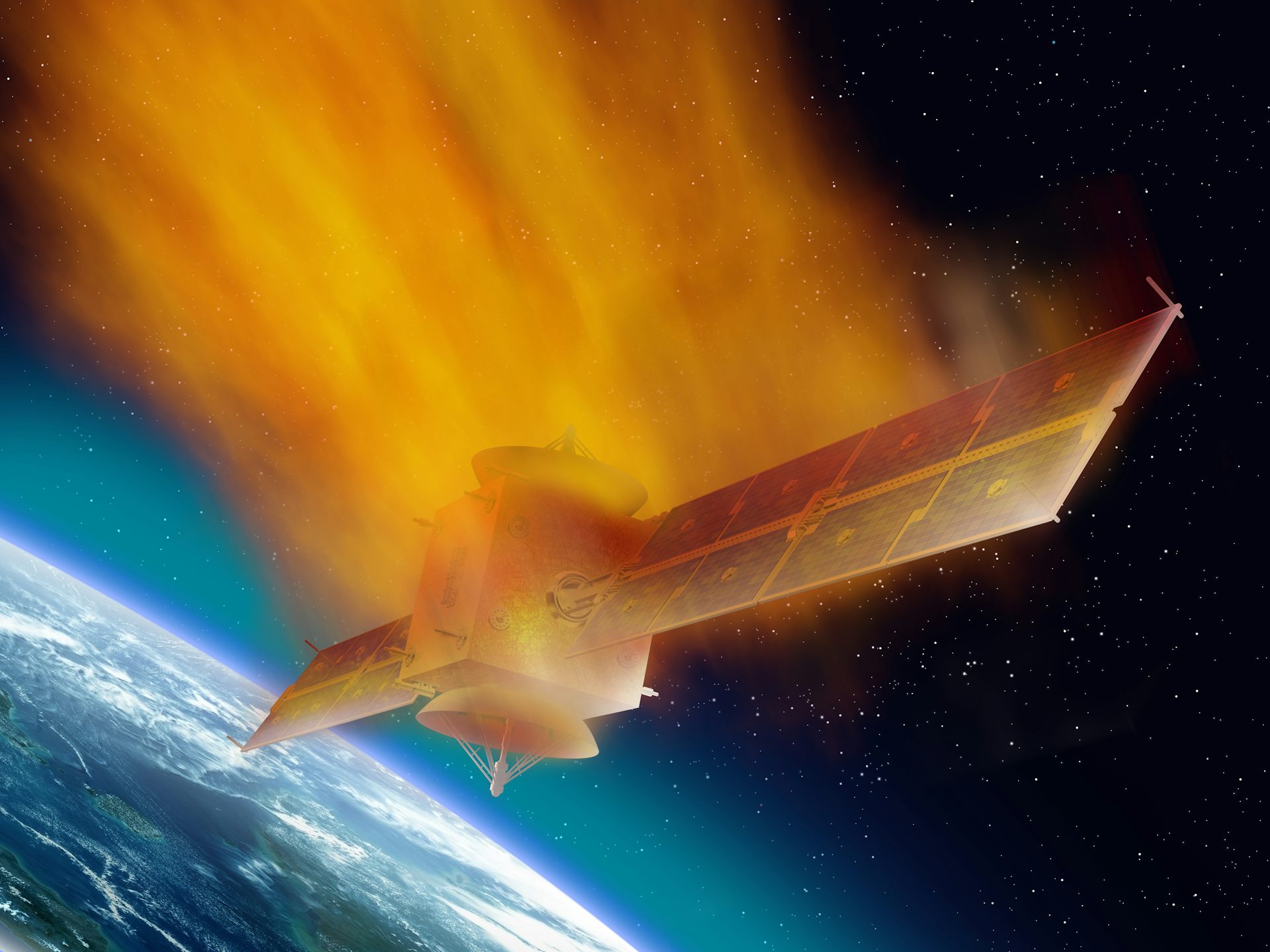
坠落的太空碎片随着航天器变得更强、更耐热,带来了不断升级的风险。
Falling space debris poses an escalating risk as spacec…
Some engineers are prioritizing ‘design for demise’ and planning satellites that are more likely to completely burn up in Earth’s atmosphere at the end of their lifespan.
一些工程师正在优先考虑“设计以消亡”,计划在卫星寿命结束时,让它们更有可能在地球大气层中完全燃烧。
When it comes to space debris, what goes up is coming down more often – and not safely.
在太空碎片方面,上升的物体更多地以不安全的方式坠落。
When spacecraft launch, some components, including nonreusable rocket boosters, are jettisoned to decrease weight, leaving them to intentionally burn up as they reenter the atmosphere. Satellites also enter the atmosphere at the end of their life, supposedly burning up. But in many cases, they are not doing so as predicted.
当航天器发射时,为了减轻重量,一些组件,包括不可重复使用的火箭助推器,会被抛弃,让它们在重新进入大气层时被故意烧毁。卫星在生命周期结束时也会进入大气层,理论上会燃烧殆尽。但在许多情况下,它们并未如预期那样发生这种情况。
Debris from partially burned-up spacecraft components and satellites reentering Earth’s atmosphere can pose a risk to people and structures on the ground. The surge in launches, driven largely by private players such as SpaceX, is turning a once-remote risk into a growing threat.
部分烧毁的航天器组件和卫星重新进入地球大气层产生的碎片可能对地面上的人员和结构构成风险。由SpaceX等私人参与者驱动的发射激增,正将一个曾经遥远的风险变成日益增长的威胁。
Our materials research group at the University of Wisconsin-Stout is studying the materials that allow reentry debris to survive. We look for ways to safely modify their exceptional heat-resistant qualities to make them safer for atmospheric reentry.
我们在威斯康星大学-斯图特分校的材料研究小组正在研究允许再入碎片生存的材料。我们正在寻找安全地修改它们卓越的耐热性能的方法,以使它们在进入大气层时更安全。
Debris landing on Earth
碎片坠落地球
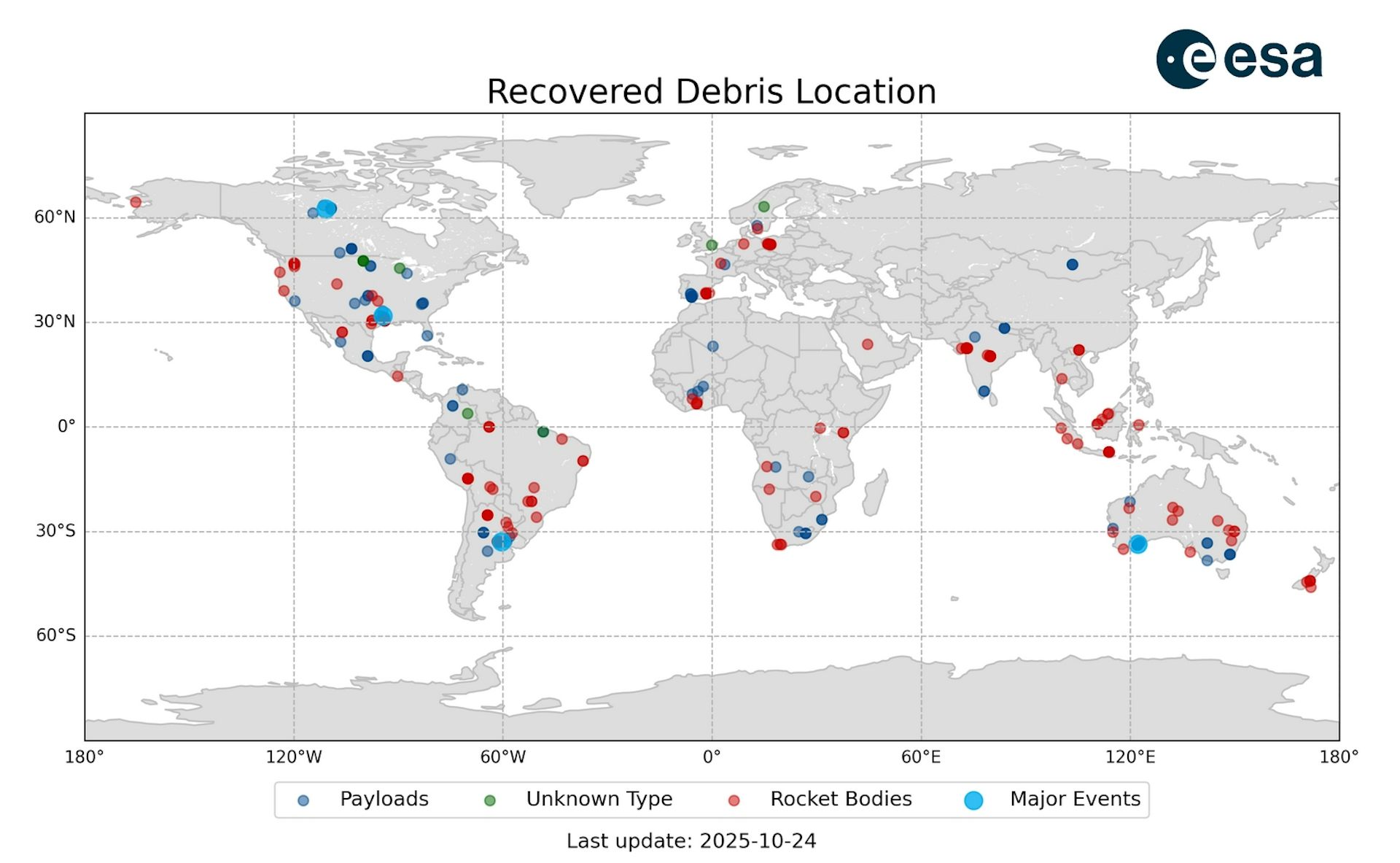
Reentry debris has fallen on both private and public property around the world multiple times since 2021. Some of the most notable events involve pieces from SpaceX Dragon’s carbon fiber trunk, which stays attached to the crewed capsule until just hours before its reentry. These trunks are larger than a 15-passenger van and used for storage.
再入碎片自2021年以来,已经多次落在了世界各地的私人和公共财产上。一些最引人注目的事件涉及SpaceX龙飞船的碳纤维舱体,这些舱体在再入前数小时内仍附着在载人胶囊上。这些舱体比15人乘用车还要大,用于存储。
Trunk debris from the Crew 7 mission to the International Space Station has landed in North Carolina, and fragments from the Crew 1 mission landed in New South Wales, Australia. Similarly, debris from the Axiom 3 mission landed in Saskatchewan, Canada.
载人7号任务的舱体碎片落在了北卡罗来纳州,载人1号任务的碎片落在了澳大利亚新南威尔士州。同样,Axiom 3号任务的碎片落在了加拿大萨斯喀彻温省。
In addition to trunk debris, carbon fiber components that hold pressurized gases to adjust a spacecraft’s orientation also make up a lot of recovered reentry debris. Some of these most recent recoveries have been in Australia, Argentina and Poland.
除了舱体碎片,用于保持充气气体以调整航天器方向的碳纤维部件也构成了许多回收的再入碎片。最近的一些回收地点在澳大利亚、阿根廷和波兰。
Most of the debris that reenters the atmosphere burns up, so why are these pieces making it down to Earth’s surface?
大多数再入大气层中的碎片会燃烧殆尽,那么这些碎片为什么会降到地球表面呢?
Atmospheric reentry
大气再入
Satellites such as SpaceX’s Starlink reside in low Earth orbit, typically between 190 and 1,240 miles (300 and 2000 kilometers) above the Earth’s surface. To stay there, they need to move really fast, at about 17,000 miles (27,000 km) per hour. To reach this speed, a rocket with a million pounds of fuel had to accelerate it, and part of this energy is still contained within the satellite’s momentum.
像SpaceX的星链(Starlink)这样的卫星存在于低地球轨道,通常在地球表面上方190到1240英里(300到2000公里)之间。为了保持在那里,它们需要以非常快的速度移动,大约每小时17,000英里(27,000公里)。要达到这个速度,一艘装有百万磅燃料的火箭必须加速它,这部分能量仍然包含在卫星的动量中。
As an object in orbit drifts down, closer to Earth’s upper atmosphere, it starts to collide with air molecules, slowing the object down. The amount of heat generated from this interaction rapidly consumes the satellite, melting metal at over 3,000 degrees Fahrenheit (1,600 degrees Celsius) .
当轨道上的物体漂移下来,靠近地球的上层大气时,它开始与空气分子发生碰撞,从而减速。这种相互作用产生的热量迅速消耗了卫星,使金属在超过3000华氏度(1600摄氏度)下熔化。
More launches
更多发射
Countries around the world have been launching items into space since the 1950s, so why is reentry a concern now?
世界各地的国家自20世纪50年代以来一直在向太空发射物品,那么为什么再入(reentry)现在成为一个担忧呢?
Starting in the 1960s, about 100 objects were launched into space every year – or at least that was the case until 2016. Since then, the number has been increasing exponentially. In 2016, 200 objects launched. But in 2025, that number was 4,500, meaning 20% of all objects launched into space since the 1950s were launched last year.
从20世纪60年代开始,每年大约有100个物体被发射到太空——或者至少直到2016年都是如此。从那时起,这个数字呈指数级增长。2016年,有200个物体被发射。但在2025年,这个数字是4,500个,这意味着自20世纪50年代以来所有被发射到太空的物体中,有20%是在去年发射的。
Most of these launches came from companies in the United States, such as SpaceX and Rocket Labs. Companies like these, along with those outside of the U.S., have plans for large satellite constellations composed of hundreds of thousands to a million satellites.
这些发射大多来自美国的公司,例如SpaceX和Rocket Labs。像这些公司以及美国以外的公司,都有着组成数以十万到一百万颗卫星的大型卫星星座的计划。
The more objects and payloads launched, the more reentry events occur. Satellite operators are required to remove their decommissioned satellites from orbit after 25 years to comply with regulations set in place by international committees. Groups across the world, including the Federal Communications Commission in the U.S., have pushed to shorten the deorbit window to five years. Because of these guidelines, the full influx of reentry debris events from these recent launches will not be felt for another 10 or more years.
发射的物体和有效载荷越多,再入事件就越频繁。卫星运营商必须在25年后将退役的卫星从轨道上移除,以遵守国际委员会制定的法规。包括美国的联邦通信委员会在内的世界各地的组织都推动将退轨窗口缩短至五年。由于这些准则,这些近期发射带来的再入碎片事件的全部涌入效应将再过10年或更长时间才会显现。
The objects launched and policy decisions made today will have a lasting effect on future safety.
今天发射的物体和做出的政策决定将对未来的安全产生持久的影响。
Carbon fiber
碳纤维
As the world has progressed technologically, efficiency for launching items into space has too.
随着世界技术的发展,将物品发射到太空的效率也随之提高。
Satellites and spacecraft are becoming lighter, stronger and more heat resistant because of materials such as carbon fiber-reinforced plastics and new metals. These strong materials are sought after because they’re lightweight, but they can also cause deorbiting debris to withstand reentry temperatures.
由于碳纤维增强塑料和新型金属等材料,卫星和航天器变得更轻、更强、抗热性更强。这些坚固的材料备受追捧,因为它们轻便,但它们也能使脱离轨道的碎片能够承受再入温度。
Carbon fiber, once used exclusively in space technology, is now found in common items such as bicycle frames and racing car bodies. It is still the gold standard for fabricating high-strength, low-weight materials for spacecraft components such as rocket fuselages, interstaging – the protective housing found between the rocket stages – and pressure vessels that experience extreme temperatures and high mechanical stress and strain.
碳纤维曾专用于太空技术,现在也存在于自行车架和赛车车身等常见物品中。它仍然是制造火箭机身、星间级(火箭级之间保护的壳体)和承受极端温度及高机械应力和应变的压力容器等航天器部件的高强度、低重量材料的黄金标准。
Simple metals such as aluminum and steel melt and burn away, while complex materials such as carbon fiber, which is manufactured at up to 5,000 F (3,000 C) , burn away unpredictably, changing the way jettisoned components break up upon reentry.
铝和钢等简单金属会熔化并燃烧殆尽,而像碳纤维这样复杂的材料,它在高达5000°F(3000°C)的温度下制造,会不可预测地燃烧殆尽,从而改变了脱离的部件在再入时的破碎方式。
Since the early 2000s, a majority of recovered space debris contains either carbon fiber-reinforced plastic sections or metal components wrapped with carbon fiber. The carbon fiber can act as an unintentional heat shield for heavier, more harmful debris.
自21世纪初以来,大多数回收的太空碎片包含碳纤维增强塑料部分或用碳纤维包裹的金属部件。碳纤维可以作为较重、更有害碎片的无意隔热罩。
Design For demise
设计为消亡
Design for demise is a major area of research focused on mitigating the risk of reentry debris. Instead of relying on controlled and meticulously timed deorbits that send components that survive reentry into the ocean at the end of their lives, spacecraft components are engineered to ensure they completely disintegrate while deorbiting through the atmosphere.
设计为消亡是一项专注于减轻再入碎片风险的主要研究领域。与其依赖于对轨道进行控制和精确计时,将幸存的组件在生命结束时送入海洋的脱轨方式,相反,航天器组件被设计成在穿过大气层脱轨的过程中完全解体。
Design for demise can take many forms. These range from changing to more heat-susceptible materials to relocating harder-to-burn components to areas of the spacecraft that will be hotter during reentry, or using linkages that break apart at high temperatures to separate structures into smaller components to help them burn up.
设计为消亡可以采取多种形式。这些形式包括将材料更改为更易受热影响的材料,将更难燃烧的组件重新定位到再入过程中航天器会更热的区域,或使用在高温度下会断裂的连接件,将结构分离成更小的组件以帮助它们燃烧殆尽。
With so much focus historically on spacecraft being made from the lightest, strongest and most heat-resistant materials available, it may seem counterintuitive to intentionally make some materials weaker. The key is making materials smarter, so they maintain their strength during their mission but weaken under the heat of reentry.
历史上对航天器由现有材料中尽可能轻、最强和最耐热的材料制造的关注度非常高,因此故意使某些材料变弱似乎是反直觉的。关键在于让材料更智能,使其在任务期间保持强度,但在再入的热量下变弱。
Matthew Ray’s lab is developing and working toward patenting a system to decrease risk from future carbon fiber based reentry debris.
Matthew Ray的实验室正在开发并致力于获得专利,以减少未来基于碳纤维的再入碎片带来的风险。
Reese Hufnagel conducts research on space debris and is developing ways to make future carbon composites safer for use in orbit.
Reese Hufnagel研究太空碎片,并正在开发使未来的碳复合材料在轨道上更安全使用的方法。