تصل إشارات غامضة باستمرار من الفضاء. لقد وجدنا “حجر رشيد” الخاص بها.
Mysterious signals keep coming from space. We have found their ‘Rosetta stone’
Seeing a signal in different kinds of light is like having a text written in several forms of writing – it makes it easier to decipher.
إن رؤية إشارة في أنواع مختلفة من الضوء تشبه وجود نص مكتوب بأشكال كتابة متعددة – وهذا يسهل فك شفرته.
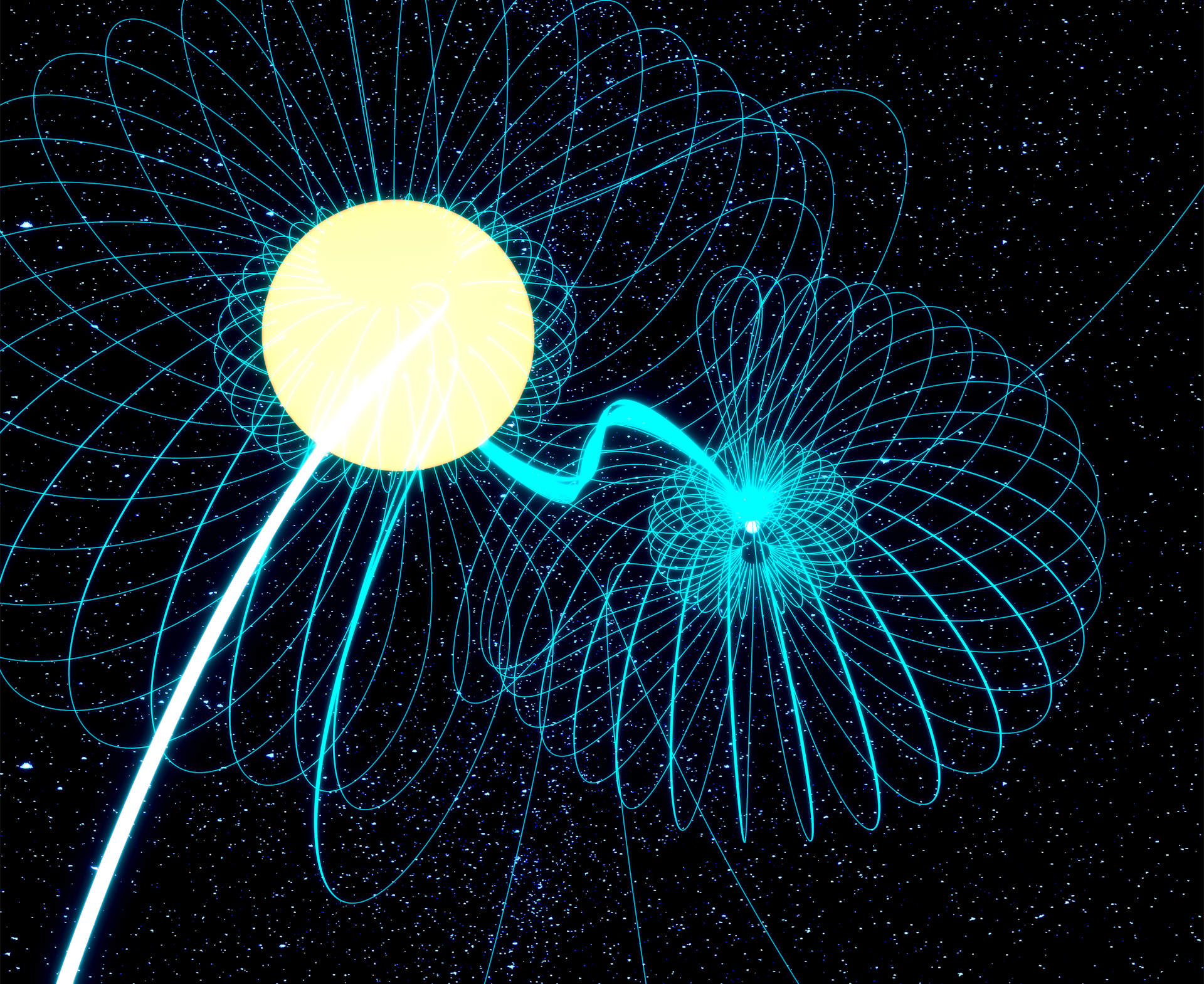
A pair of stars spiralling around each other. That’s the origin of a new source of repeating radio bursts we’ve detected, called ASKAP J1745.
زوج من النجوم يلتف حول بعضه البعض. هذا هو أصل مصدر جديد من الانفجارات الراديوية المتكررة التي اكتشفناها، ويُطلق عليه اسم ASKAP J1745.
In recent years, astronomers have been puzzling over mysterious bursts of radio signals, known as long-period transients because of how slowly they repeat. They were first discovered by chance with telescopes scanning large chunks of the sky.
في السنوات الأخيرة، حير علماء الفلك بوابات إشارات راديو غامضة، تُعرف باسم العابرات طويلة الفترة بسبب مدى بطء تكرارها. وقد اكتُشفت لأول مرة بالصدفة بواسطة تلسكوبات مسح أجزاء كبيرة من السماء.
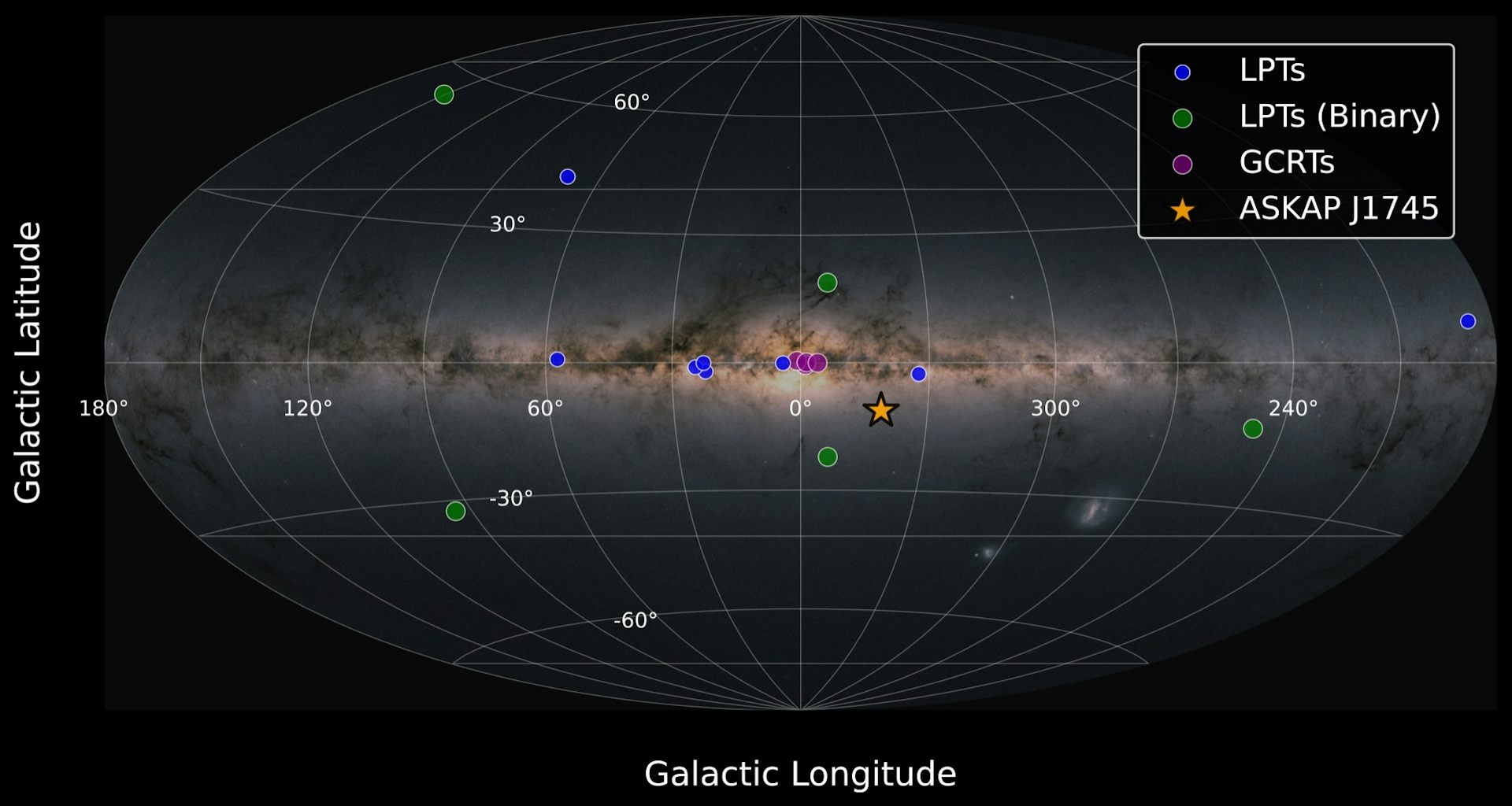
To date, astronomers have only found a dozen of these weird sources, and we’re still trying to understand exactly what they are.
حتى الآن، لم يجد علماء الفلك سوى اثني عشر مصدرًا من هذه المصادر الغريبة، وما زلنا نحاول فهم ماهيتها بالضبط.
In a new study published today in Nature Astronomy, we describe a first-of-its-kind detection – both radio and X-ray bursts repeating with each orbit.
في دراسة جديدة نُشرت اليوم في مجلة “Nature Astronomy”، نصف فيها اكتشافًا من نوعه – انفجارات راديو وأشعة إكس تتكرر مع كل مدار.
ASKAP J1745 is exciting because we’ve figured out what it is, unlike 10 of the 12 known long-period transients. Even better, we were able to detect it with a bunch of different telescopes that observe all different kinds of light.
يُعد ASKAP J1745 مثيرًا لأننا اكتشفنا ماهيته، على عكس 10 من العابرات طويلة الفترة الاثني عشر المعروفة. والأفضل من ذلك، أننا تمكنا من اكتشافه باستخدام مجموعة من التلسكوبات المختلفة التي تراقب جميع أنواع الضوء.
Bearing the same message in three forms of writing, the famous Rosetta stone once helped scholars decipher ancient Egyptian hieroglyphs. Similarly, this extra information we found about ASKAP J1745 will help astronomers better understand the mystery of all long-period transients.
حاملًا الرسالة نفسها بثلاثة أشكال كتابة، ساعد حجر رشيد الشهير ذات مرة العلماء على فك رموز الهيروغليفية المصرية القديمة. وبالمثل، ستساعد المعلومات الإضافية التي وجدناها حول ASKAP J1745 علماء الفلك على فهم سر جميع العابرات طويلة الفترة بشكل أفضل.
What do long-period radio transients look like?
كيف تبدو العابرات الراديوية طويلة الفترة؟
Long-period transients are things in space that produce bright, repeating bursts of light at radio wavelengths. Little is known about the origins of most long-period transients. In addition, many have been discovered close to the dusty region in the middle of our galaxy, so it can be hard to see them with visible-light telescopes.
العابرات طويلة الفترة هي أجسام في الفضاء تُنتج انفجارات ساطعة ومتكررة للضوء عند الأطوال الموجية الراديوية. القليل ما يُعرف عن أصول معظم العابرات طويلة الفترة. بالإضافة إلى ذلك، تم اكتشاف العديد منها بالقرب من المنطقة الغبارية في وسط مجرتنا، مما يجعل رؤيتها صعبة باستخدام تلسكوبات الضوء المرئي.
Even with just a dozen of these strange sources discovered so far, they seem to come in a few different shapes and sizes. Their radio bursts repeat on timescales of minutes to hours.
حتى مع اكتشاف اثني عشر مصدرًا غريبًا فقط حتى الآن، يبدو أنها تأتي في عدة أشكال وأحجام مختلفة. تتكرر انفجاراتها الراديوية على مقاييس زمنية تتراوح بين الدقائق والساعات.
Some have been making regular pulses for more than 30 years, while others turn off for days at a time or go permanently radio-silent.
بعضها يُصدر نبضات منتظمة لأكثر من 30 عامًا، بينما تتوقف أخرى عن العمل لأيام متتالية أو تصبح صامتة راديويًا بشكل دائم.
Where do they come from?
من أين تأتي؟
Astronomers initially thought long-period transients were just very slowly spinning neutron stars, called pulsars. These are the fast-rotating dense cores left after the supernova explosions of massive stars.
اعتقد علماء الفلك في البداية أن الظواهر العابرة طويلة الفترة هي مجرد نجوم نيوترونية تدور ببطء شديد، وتُسمى بالنجوم النابضة. وهي النوى الكثيفة سريعة الدوران المتبقية بعد انفجارات المستعرات العظمى للنجوم الضخمة.
The first few of these radio transients discovered were repeating roughly every 20 minutes. That’s much slower than the average pulsar, which repeats every few seconds.
كانت أولى هذه الظواهر العابرة الراديوية المكتشفة تتكرر تقريباً كل 20 دقيقة. وهذا أبطأ بكثير من النجم النابض المتوسط، الذي يتكرر كل بضع ثوانٍ.
Furthermore, when pulsars slow down their spin, they should stop producing radio light. This means we shouldn’t see radio bursts from neutron stars rotating so slowly.
علاوة على ذلك، عندما تبطئ النجوم النابضة دورانها، فيجب أن تتوقف عن إنتاج الضوء الراديوي. وهذا يعني أنه لا ينبغي أن نرى اندفاعات راديوية من النجوم النيوترونية التي تدور ببطء شديد.
So astronomers investigated other theories involving white dwarfs – the slowly cooling dead centres of less massive stars. And recently we discovered some long-period transients in binary systems (two stars in a close orbit) with evidence of both a white dwarf and a lower-mass red dwarf star.
لذلك، حقق علماء الفلك نظريات أخرى تشمل الأقزام البيضاء – وهي المراكز الميتة التي تبرد ببطء للنجوم الأقل كتلة. ومؤخراً، اكتشفنا بعض الظواهر العابرة طويلة الفترة في الأنظمة الثنائية (نجمان في مدار قريب) مع دليل على وجود كل من قزم أبيض ونجم قزم أحمر أقل كتلة.
The discovery of ASKAP J1745
الاكتشاف الخاص بـ ASKAP J1745
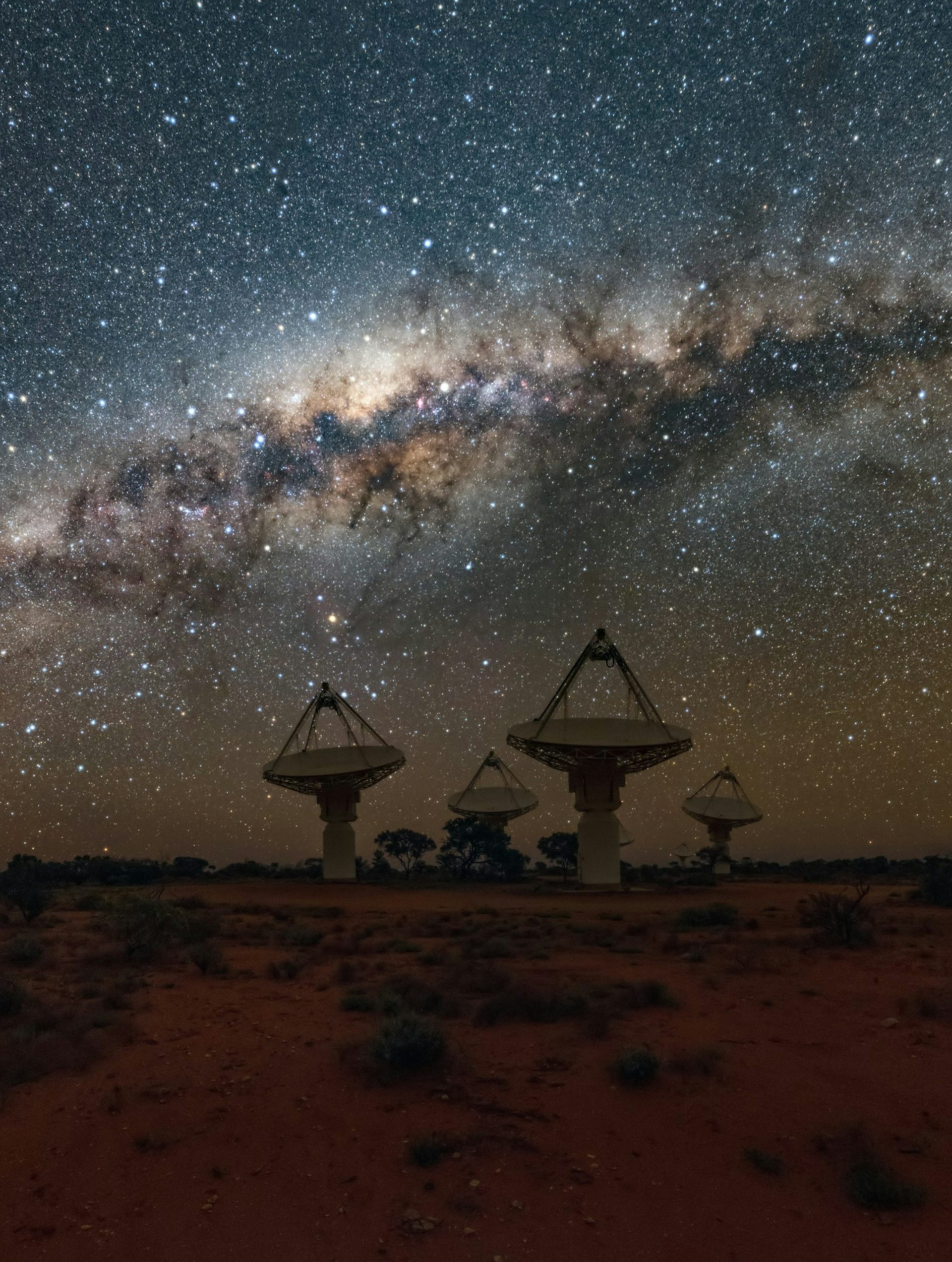
ASKAP J1745 is a new long-period radio transient we found with the ASKAP radio telescope, owned and operated by CSIRO, Australia’s national science agency. It’s the first one of these strange sources that we’ve identified as a “cataclysmic variable”.
يُعد ASKAP J1745 عابراً راديويًا جديدًا طويل الأمد اكتشفناه باستخدام تلسكوب ASKAP الراديوي، المملوك والمدار بواسطة CSIRO، الوكالة العلمية الوطنية الأسترالية. وهو أول مصدر من هذا النوع الغريب الذي حددناه على أنه “متغير كارثي.”
Cataclysmic variables are systems with two stars – one of them a white dwarf – that orbit each other closely enough to interact. If the stars are close enough, the white dwarf’s gravity can pull (or “accrete”) material from the other star. That’s why these systems are also known as accreting white dwarf binaries.
المتغيرات الكارثية هي أنظمة تتكون من نجمين – أحدهما قزم أبيض – يدوران حول بعضهما البعض بمسافة قريبة بما يكفي للتفاعل. إذا كانت النجوم قريبة بما فيه الكفاية، يمكن لجاذبية القزم الأبيض أن تسحب (أو “تتراكم”) المادة من النجم الآخر. ولهذا السبب، تُعرف هذه الأنظمة أيضًا باسم ثنائيات القزم الأبيض المتراكمة.
Another long-period radio transient was recently discovered with X-ray bursts, repeating with the same regularity as the radio. However, the origin of the bursts and their shared timing remained unclear.
تم اكتشاف عابر راديوي آخر طويل الأمد مؤخرًا مصحوبًا بانفجارات أشعة إكس، تتكرر بنفس انتظام الراديو. ومع ذلك، ظل أصل هذه الانفجارات وتوقيتها المشترك غير واضح.
Now, for the first time, we have combined observations from radio, X-ray and optical telescopes to find that ASKAP J1745 produces both X-ray and radio bursts with each orbit of its two stars.
الآن، ولأول مرة، قمنا بدمج الملاحظات من التلسكوبات الراديوية والأشعة السينية والبصرية لنكتشف أن ASKAP J1745 ينتج كلًا من انفجارات الأشعة السينية والراديو مع كل مدار لنجميه.

In these rapidly orbiting systems, the X-ray light is thought to come from the material heating up as it streams onto the white dwarf.
في هذه الأنظمة التي تدور بسرعة، يُعتقد أن ضوء الأشعة السينية يأتي من المادة التي تسخن أثناء تدفقها نحو القزم الأبيض.
The bright radio bursts were a bit more of a mystery. But knowing that this is an accreting binary system helped us figure things out.
كانت انفجارات الراديو الساطعة لغزًا أكبر بعض الشيء. لكن معرفة أن هذا نظام ثنائي متراكم ساعدنا في فهم الأمور.
The type of pulsed radio light we detected is typically caused by energetic particles interacting with strong magnetic fields. Here, we have the perfect combination: two stars with strong magnetic fields (typically thousands of times stronger than an MRI machine) , with charged particles flowing towards the white dwarf from the other star.
إن نوع الضوء الراديوي النابض الذي اكتشفناه يسببه عادةً تفاعل الجسيمات عالية الطاقة مع المجالات المغناطيسية القوية. وهنا، لدينا التوليفة المثالية: نجمان بمجالات مغناطيسية قوية (أقوى عادةً بآلاف المرات من جهاز التصوير بالرنين المغناطيسي) ، مع تدفق الجسيمات المشحونة نحو القزم الأبيض من النجم الآخر.
What this means for the future of astronomy
ما يعنيه هذا لمستقبل علم الفلك
This discovery is unique because we have more information and at more different wavelengths than any other previous long-period transient.
هذا الاكتشاف فريد لأنه يمنحنا معلومات أكثر وفي أطوال موجية مختلفة أكثر من أي ظاهرة عابرة سابقة ذات فترة طويلة.
Just like the Rosetta stone was key to decoding ancient Egyptian symbols, ASKAP J1745 will be key to deciphering the origins of other long-period radio transients that lack information at other wavelengths.
تماماً كما كان حجر رشيد مفتاحاً لفك شفرة الرموز المصرية القديمة، سيكون ASKAP J1745 مفتاحاً لفك شفرة أصول الظواهر الراديوية العابرة الأخرى ذات الفترات الطويلة التي تفتقر إلى المعلومات عند أطوال موجية أخرى.
ASKAP J1745 is the first long-period transient showing signs of accretion across the spectrum of light – from radio waves to visible to X-rays. And this stream of charged material is a crucial ingredient for making the radio light we detect from these systems.
يُعد ASKAP J1745 أول ظاهرة عابرة ذات فترة طويلة تُظهر علامات التراكم عبر طيف الضوء – من موجات الراديو إلى المرئي وصولاً إلى الأشعة السينية. وتُعد هذه الدفق من المادة المشحونة مكوناً حاسماً لتوليد الضوء الراديوي الذي نكتشفه من هذه الأنظمة.
Exploring the mechanism that produces long-period radio bursts gives us a new laboratory to learn about extreme physics such as plasma flows and magnetic fields in conditions we can’t recreate on Earth.
يمنحنا استكشاف الآلية التي تنتج النبضات الراديوية ذات الفترات الطويلة مختبراً جديداً للتعلم عن الفيزياء القصوى، مثل تدفقات البلازما والمجالات المغناطيسية في ظروف لا يمكننا إعادة إنشائها على الأرض.
We acknowledge the Wajarri Yamaji as the Traditional Owners and Native Title Holders of Inyarrimanha Ilgari Bundara, the CSIRO Murchison Radio-astronomy Observatory where ASKAP is located.
نقرّ بـ “واجارري ياماجي” (Wajarri Yamaji) بصفتهم المالكين التقليديين وحاملي الألقاب الأصلية لمنطقة “إينياريمانها إلغاري بوندارا” (Inyarrimanha Ilgari Bundara) ، وهي المرصد الراديوي الفلكي لمورشيسون التابع للمعهد الوطني للبحوث (CSIRO) حيث يقع ASKAP.
Kovi Rose does not work for, consult, own shares in or receive funding from any company or organisation that would benefit from this article, and has disclosed no relevant affiliations beyond their academic appointment.
لا تعمل كوفي روز لدى، أو تستشير، أو تمتلك أسهمًا في، أو تتلقى تمويلاً من أي شركة أو منظمة قد تستفيد من هذه المقالة، ولم تكشف عن أي انتماءات ذات صلة تتجاوز منصبها الأكاديمي.
Read more
-

صممنا العشب لأكبر كأس عالم لكرة القدم على الإطلاق – وإليك كيف خلقنا تجربة لعب متطابقة عبر 3 دول
We designed the turf for soccer’s biggest World Cup ever – here’s how we created the same playing experience across 3 countries
-

لقد اختبرنا كرة كأس العالم الجديدة – هذا ما تحتاج إلى معرفته حول كيفية طيرانها وانخفاضها وانحرافها
We tested the new World Cup ball – this is what you need to know about how it will fly, dip and swerve