اكتشاف تلسكوب جنوب أفريقي لإشارة قياسية من الكون المبكر
South African telescope detects record-breaking signal from the early universe
Scientists have discovered the most distant hydroxyl megamaser ever detected. This is a natural space laser.
اكتشف العلماء أكبر ميغاماسير هيدروكسيلي على الإطلاق. هذا ليزر فضائي طبيعي.
Astronomers using the MeerKAT radio telescope in South Africa have discovered the most distant hydroxyl megamaser ever detected, opening a new radio astronomy frontier. A hydroxyl megamaser is a natural space laser, and this one is located in a violently merging galaxy more than 8 billion light-years away.
اكتشف علماء الفلك، باستخدام تلسكوب ميركات الراديوي في جنوب أفريقيا، أبعد ميغاماسير هيدروكسيل تم رصده على الإطلاق، مما يفتح جبهة جديدة لعلم الفلك الراديوي. إن ميغاماسير الهيدروكسيل هو ليزر فضائي طبيعي، ويقع هذا النوع في مجرة تندمج بعنف وعلى بعد أكثر من ٨ مليارات سنة ضوئية.
We spoke to the astronomers, Thato Manamela, a postdoctoral researcher at the University of Pretoria, and Roger Deane, director of the Inter-University Institute for Data Intensive Astronomy and a professor at the universities of Cape Town and Pretoria, about their study.
تحدثنا إلى علماء الفلك، ثاتو ماناميلا، الباحث ما بعد الدكتوراه في جامعة بريتوريا، وروجر دين، مدير المعهد الجامعي المشترك لعلم الفلك المكثف بالبيانات وأستاذ في جامعتي كيب تاون وبريتوريا، حول دراستهم.
What you’ve found has been described as a ‘new frontier’ in space research. Why is it extraordinary?
لقد وُصف ما اكتشفتموه بأنه “جبهة جديدة” في أبحاث الفضاء. لماذا هو استثنائي؟
This discovery is extraordinary because of the record distance at which we’ve detected it, over eight billion light-years away. That places it deep into the early universe. This means that we aren’t seeing the galaxy as it exists today. We are seeing it as it was 8 billion years ago. Since the Big Bang happened about 13.8 billion years ago, we are looking at a “toddler” version of the universe. At that stage where the maser signal was transmitted by the host galaxy, galaxies were much more “chaotic”, they collided more often and were much more active than the stable, mature galaxies we see nearby today.
يعد هذا الاكتشاف استثنائياً بسبب المسافة القياسية التي رصدناه فيها، أي على بُعد أكثر من ثمانية مليارات سنة ضوئية. وهذا يضعه عميقاً في الكون المبكر. وهذا يعني أننا لا نرى المجرة كما هي اليوم. بل نراها كما كانت قبل 8 مليارات سنة. وبما أن الانفجار العظيم حدث قبل حوالي 13.8 مليار سنة، فإننا ننظر إلى نسخة “طفولية” من الكون. وفي تلك المرحلة التي تم فيها إرسال إشارة المايسر بواسطة المجرة المضيفة، كانت المجرات أكثر “فوضوية”، وكانت تتصادم بشكل متكرر وأكثر نشاطاً بكثير من المجرات المستقرة والناضجة التي نراها في محيطنا اليوم.
It gives us a rare glimpse of galaxy interactions and extreme star-forming environments when the cosmos was less than half its current age. Think of light like a letter in the mail. If a friend sends a letter from overseas, by the time you read it, the news is old. In space, light is the letter. The “news” from this galaxy took 8 billion years to reach us. We see the galaxy as a “toddler” even though, in its own time, it has already grown up or changed.
إنه يمنحنا لمحة نادرة عن تفاعلات المجرات وبيئات تشكل النجوم القصوى عندما كان الكون أقل من نصف عمره الحالي. فكروا بالضوء كرسالة بريدية. إذا أرسل صديق رسالة من الخارج، فعندما تقرأها، تكون الأخبار قديمة. وفي الفضاء، الضوء هو الرسالة. وقد استغرقت “الأخبار” القادمة من هذه المجرة 8 مليارات سنة للوصول إلينا. فنحن نرى المجرة كـ “طفل رضيع” على الرغم من أنها في وقتها الخاص كانت قد نمت أو تغيرت بالفعل.
We detected this megamaser, which operates on a scale of power millions of times greater than a typical galactic maser. Both megamasers and gigamasers are cosmic radio lasers. While a megamaser is a million times more luminous than a standard maser found in the local universe, a gigamaser is a billion times more luminous, making it 1,000 times more powerful than a megamaser.
لقد اكتشفنا هذا الميغا مايزر، الذي يعمل بمستوى طاقة يفوق بمليارات المرات المايسر المجري النموذجي. ويُعد كل من الميغا مايزرات والغيغا مايزرات ليزرات راديو كونية. فبينما يبلغ سطوع المايزر مليون ضعف السطوع مقارنة بالمايزر القياسي الموجود في الكون المحلي، فإن الغيغا مايزر أكثر سطوعاً بمليار مرة، مما يجعله أقوى بـ 1000 مرة من الميغا مايزر.
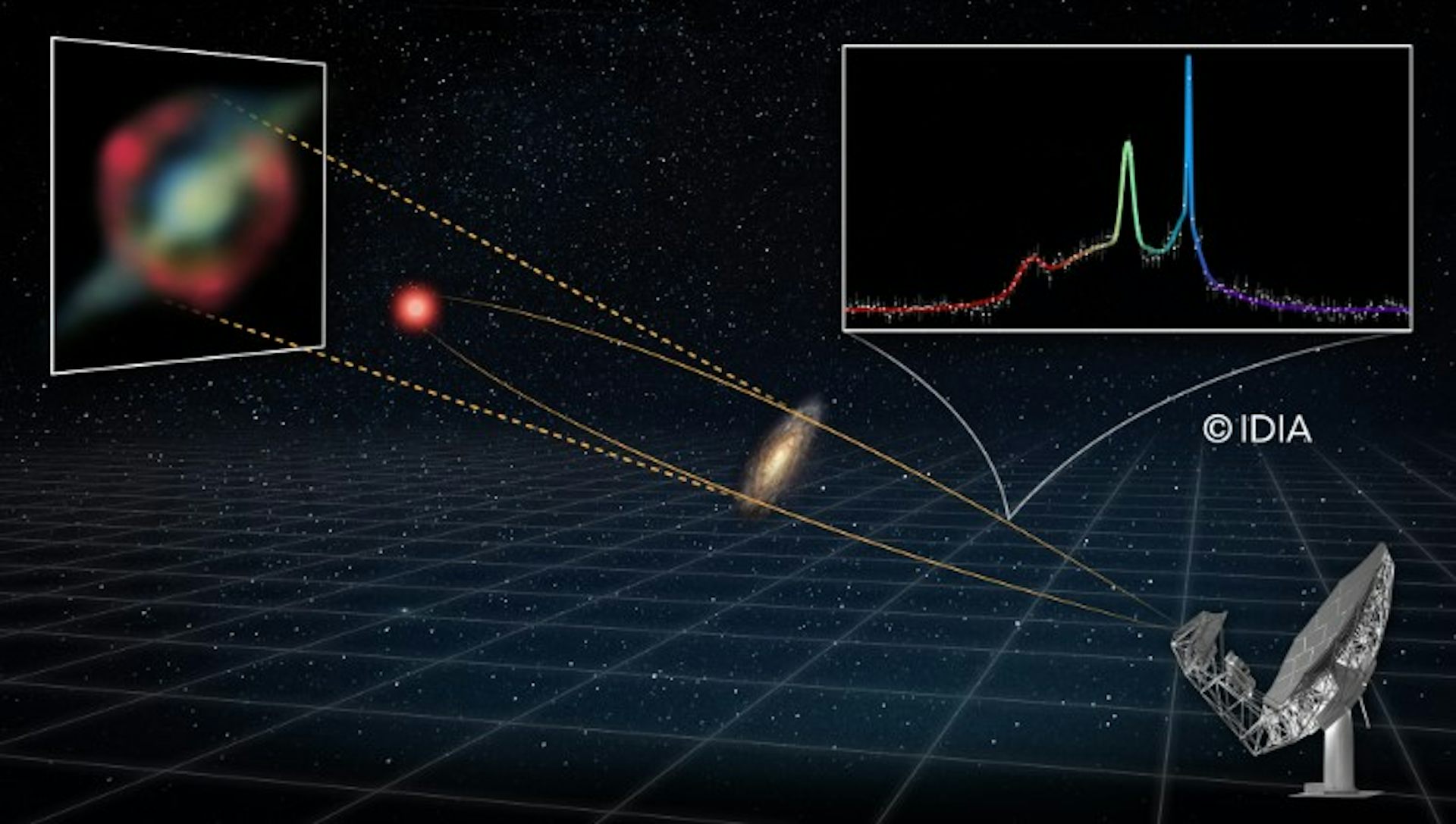
In just five hours of observing time we found a signal that typically requires hundreds of hours of observation, given its distance and rarity. But gravitational lensing boosted the signal enough to detect it. Additionally, while we were targeting neutral hydrogen, MeerKAT’s wide bandwidth enabled the surprise discovery of the megamaser signal in the same data.
في خمس ساعات فقط من وقت الرصد، وجدنا إشارة تتطلب عادةً مئات الساعات من المراقبة، نظراً لبعدها وندرتها. لكن العدسة الجاذبية عززت الإشارة بما يكفي لاكتشافها. بالإضافة إلى ذلك، وبينما كنا نستهدف الهيدروجين المتعادل، مكّن النطاق الترددي الواسع لجهاز “ميركات” (MeerKAT) من الاكتشاف المفاجئ لإشارة الميغا مايزر في نفس البيانات.
This rapid detection suggests that future surveys with MeerKAT and the upcoming SKA Observatory could uncover many more such distant, extreme objects. Its ability to find this so quickly proves that we finally have the technology to see faint signals from the very distant past. It’s a preview of what the upcoming Square Kilometre Array (SKA) , a unique, one-of-a-kind international mega-project, might achieve.
يشير هذا الكشف السريع إلى أن المسوحات المستقبلية باستخدام جهاز “ميركات” ومرصد “إس كيه إيه” (SKA) القادم يمكنها الكشف عن المزيد من الأجرام البعيدة والمتطرفة كهذه. إن قدرته على العثور على هذا بسرعة يثبت أننا أصبح لدينا أخيراً التكنولوجيا لرؤية الإشارات الخافتة من الماضي السحيق جداً. إنه معاينة لما قد يحققه مصفوفة الكيلومتر المربع (SKA) القادمة، وهو مشروع دولي فريد من نوعه.
But a highly complementary next-generation facility called the next-generation Very Large Array (ngVLA) is being planned and designed for construction in the US. The SKA Observatory (SKA-Low and SKA-Mid) focuses on low-to-mid radio frequencies. The ngVLA will operate at much higher frequencies. Together, they will form two of the major pillars of next-generation global radio astronomy. The finding gives astronomers a new way to study how galaxies evolved in the early universe.
لكن هناك مرفق تالٍ للجيل عالي التكميل يسمى المصفوفة الكبيرة جداً للجيل التالي (ngVLA) ، ويجري تخطيطه وتصميمه للبناء في الولايات المتحدة. ويركز مرصد “إس كيه إيه” (SKA-Low و SKA-Mid) على ترددات الراديو المنخفضة إلى المتوسطة. أما الـ ngVLA فسيعمل عند ترددات أعلى بكثير. معاً، سيشكلان ركيزتين رئيسيتين لعلم الفلك الراديوي العالمي للجيل القادم. ويمنح هذا الاكتشاف علماء الفلك طريقة جديدة لدراسة كيفية تطور المجرات في الكون المبكر.
What technologies or capabilities made this possible?
إن ما جعل هذا الاكتشاف ممكنًا هو حساسية وتغطية الترددات الواسعة لتلسكوب ميركات الراديوي. إن قدرته على اكتشاف الإشارات الخافتة عبر نطاق ترددي واسع تسمح لنا بالبحث عن خطوط طيفية عبر أحجام كونية كبيرة. الخط الطيفي هو بصمة كيميائية كونية.
The discovery was made possible by the sensitivity and wide frequency coverage of the MeerKAT radio telescope. Its ability to detect faint signals over a broad frequency range allows us to search for spectral lines across large cosmic volumes. A spectral line is a cosmic chemical fingerprint. Every atom or molecule emits electromagnetic waves at specific frequencies. Detecting those frequencies tells astronomers what the gas is made of.
يُصدر كل ذرة أو جزيء موجات كهرومغناطيسية بترددات محددة. إن اكتشاف هذه الترددات يخبر علماء الفلك بما يتكون منه الغاز.
In this case, MeerKAT’s wide bandwidth allowed us to detect both the hydroxyl line and neutral hydrogen absorption in a single observation. Previously, with older technology, this would have taken two separate observations.
في هذه الحالة، سمح لنا النطاق الترددي الواسع لميركات بالكشف عن كل من خط الهيدروكسيل وامتصاص الهيدروجين المتعادل في رصد واحد. سابقًا، باستخدام تقنية أقدم، كان هذا سيتطلب رصدين منفصلين.
Equally important are advances in data processing and computing. The data were processed using high-performance computing resources at the Inter-University Institute for Data Intensive Astronomy (IDIA) .
لا تقل أهمية عن ذلك التطورات في معالجة البيانات والحوسبة. تمت معالجة البيانات باستخدام موارد حوسبة عالية الأداء في المعهد الجامعي المشترك لعلم الفلك المكثف بالبيانات (IDIA) .
Processing such massive amounts of data is like trying to drink from a firehose. MeerKAT collects gigabytes of information every second, resulting in files far too large for a standard computer to handle. To find a signal from 8 billion years ago, which is millions of times fainter than a cell phone signal, we must use robust calibration pipelines. These act like an automated high-tech car wash to scrub away digital noise and sharpen the telescope’s focus. This “cleaning” process requires trillions of mathematical calculations, necessitating the use of supercomputers that work for days to transform raw radio interference into a clear scientific discovery.
تُعَدّ عملية معالجة مثل هذه الكميات الهائلة من البيانات أشبه بمحاولة الشرب من خرطوم مياه ضخم. يجمع ميركات جيجابايتات من المعلومات كل ثانية، مما ينتج عنه ملفات أكبر بكثير مما يمكن للحاسوب العادي التعامل معه. للعثور على إشارة تعود إلى 8 مليارات سنة مضت، وهي أضعف بملايين المرات من إشارة الهاتف الخلوي، يجب علينا استخدام خطوط أنابيب معايرة قوية. تعمل هذه الخطوط مثل غسالة سيارات عالية التقنية ومؤتمتة لإزالة الضوضاء الرقمية وتوضيح تركيز التلسكوب. تتطلب عملية “التنظيف” هذه تريليونات من العمليات الحسابية، مما يستلزم استخدام حواسيب عملاقة تعمل لأيام لتحويل التداخل الراديوي الخام إلى اكتشاف علمي واضح.
Gravitational lensing also played a key role. A massive foreground object, like a star or galaxy, for example, amplified the signal from the distant galaxy, effectively acting as a natural telescope and boosting our ability to detect it.
كما لعب عدسة الجاذبية دورًا رئيسيًا. فقد قام جسم أمامي ضخم، مثل نجم أو مجرة على سبيل المثال، بتضخيم الإشارة القادمة من المجرة البعيدة، وعمل بفعالية كتلسكوب طبيعي يعزز قدرتنا على اكتشافها.
How does what you’ve found change our understanding of the universe?
كيف يغير ما اكتشفتموه فهمنا للكون؟
It’s rare that a single astrophysical system, a collection of celestial objects, in this case, two galaxies forming a lens system, can change our understanding of the universe. We typically need large sample sizes to do that. But the combination of the recording-breaking distance and the speed of the discovery was impressive.
من النادر أن يغير نظام فيزيائي فلكي واحد، أو مجموعة من الأجرام السماوية- وفي هذه الحالة، مجرّتان تشكلان نظام عدسة- فهمنا للكون. عادةً ما نحتاج إلى أحجام عينات كبيرة لتحقيق ذلك. لكن الجمع بين المسافة القياسية والسرعة التي تم بها الاكتشاف كان مثيراً للإعجاب.
It suggests that systematic searches – such as those conducted by deep MeerKAT surveys – could convert these once-rare finds into powerful probes of extreme, yet highly obscured star formation in the distant universe. As a result of this observation, the SKA Observatory and other future telescopes won’t just be looking for more of the same; they will be looking for hidden history.
يشير ذلك إلى أن عمليات البحث المنهجية – مثل تلك التي أجرتها مسوحات ميركات العميقة (MeerKAT) – يمكن أن تحول هذه الاكتشافات النادرة سابقاً إلى مجسات قوية لتكوّن النجوم المتطرف، والمحجوب للغاية في الكون البعيد. ونتيجة لهذا الرصد، لن يقتصر مرصد SKA والتلسكوبات المستقبلية الأخرى على البحث عن المزيد من الشيء نفسه؛ بل سيبحثون عن تاريخ خفي.
Hydroxyl megamasers are usually associated with galaxy mergers. We expect some galaxy mergers to host pairs of supermassive black holes. Almost every large galaxy has a supermassive black hole at its centre. When galaxies merge, the supermassive black holes at their centres can eventually spiral towards each other, producing gravitational waves, ripples in space-time. Finding systems like this helps astronomers study an important stage in galaxy evolution and the environments where these extreme events occur.
ترتبط الميغاماسرات الهيدروكسيلية عادةً باندماجات المجرات. ونتوقع أن تستضيف بعض اندماجات المجرات أزواجاً من الثقوب السوداء فائقة الكتلة. فكل مجرة كبيرة تقريباً تحتوي على ثقب أسود فائق الكتلة في مركزها. وعندما تندمج المجرات، يمكن للثقوب السوداء فائقة الكتلة في مراكزها أن تدور في النهاية باتجاه بعضها البعض، مُنتِجةً موجات جاذبية، وهي تموجات في الزمكان. ويساعد العثور على أنظمة كهذه علماء الفلك على دراسة مرحلة مهمة في تطور المجرات والبيئات التي تحدث فيها هذه الأحداث المتطرفة.
By using megamasers to find these pairs, we can study the final stages of how the largest objects in the universe are built. This is a major milestone in a galaxy’s life. By finding these galaxies now, we are catching them at a key evolutionary stage, the final countdown before they collide and release a massive burst of energy that our next generation of detectors will be able to hear.
باستخدام الميغاماسرات للعثور على هذه الأزواج، يمكننا دراسة المراحل النهائية لكيفية بناء أكبر الأجرام في الكون. وهذا يمثل علامة فارقة رئيسية في حياة المجرة. ومن خلال العثور على هذه المجرات الآن، فإننا نلتقطها في مرحلة تطورية مفتاحية، وهي العد التنازلي الأخير قبل أن تتصادم وتطلق انفجاراً هائلاً من الطاقة يمكن لجيل الكواشف التالي لدينا سماعه.
The strength of the MeerKAT-detected hydroxyl signal after such a short observation time therefore implies that astronomers will be able to detect large numbers of these systems across most of cosmic time.
لذلك، فإن قوة إشارة الهيدروكسيل المكتشفة بواسطة ميركات بعد فترة رصد قصيرة كهذه تشير إلى أن علماء الفلك سيكونون قادرين على اكتشاف أعداد كبيرة من هذه الأنظمة عبر معظم الزمن الكوني.
What does the discovery say about South Africa’s place in data-intensive radio astronomy?
ماذا يقول هذا الاكتشاف عن مكانة جنوب أفريقيا في علم الفلك الراديوي كثيف البيانات؟
This discovery highlights South Africa’s leading role in radio astronomy. Facilities such as MeerKAT, combined with data-intensive platforms like IDIA, provide world-class capabilities for both observation and analysis. It also demonstrates strong local expertise in handling large, complex datasets.
يسلط هذا الاكتشاف الضوء على الدور الريادي لجنوب أفريقيا في علم الفلك الراديوي. توفر المرافق مثل “ميركات” (MeerKAT) ، بالاقتران مع المنصات كثيفة البيانات مثل “إيديا” (IDIA) ، قدرات عالمية المستوى لكل من الملاحظة والتحليل. كما أنه يبرهن على الخبرة المحلية القوية في التعامل مع مجموعات البيانات الكبيرة والمعقدة.
Discoveries like this rely on advanced data processing, signal extraction and scientific interpretation. These are all key strengths within the South African research community. As we move from using current scout telescopes like MeerKAT to building and operating the world’s largest radio observatory, the SKAO, South Africa is well positioned to remain a hub for data-intensive astronomy. Results like this reinforce the country’s role in shaping the future of the field.
تعتمد الاكتشافات كهذه على المعالجة المتقدمة للبيانات، واستخلاص الإشارات، والتفسير العلمي. وكل هذه هي نقاط قوة رئيسية ضمن المجتمع البحثي الجنوب أفريقي. وبينما ننتقل من استخدام التلسكوبات الاستطلاعية الحالية مثل “ميركات” إلى بناء وتشغيل أكبر مرصد راديوي في العالم، وهو “المرصد الكوني للكواكب الممتدة” (SKAO) ، فإن جنوب أفريقيا في وضع جيد للبقاء كمركز للفلك كثيف البيانات. وتعزز نتائج كهذه دور البلاد في تشكيل مستقبل هذا المجال.
Thato Manamela works for the University of Pretoria. He receives funding from the National Research Foundation (NRF SARAO) . He is affiliated with UP and IDIA.
يعمل ثاتو ماناميلا لدى جامعة بريتوريا. ويتلقى التمويل من المؤسسة الوطنية للأبحاث (NRF SARAO) . وهو منتسب إلى جامعة بريتوريا و”إيديا.”
Roger P. Deane previously held an SKA Research Chair in Radio Astronomy, funded by the South African Radio Astronomy Observatory, which is a facility of the National Research Foundation (NRF) , an agency of the Department of Science, Technology and Innovation (DSTI) .
احتفظ روجر ب. دين سابقاً بمنصب كرسي أبحاث المرصد الكوني للكواكب الممتدة في علم الفلك الراديوي، بتمويل من مرصد علم الفلك الراديوي بجنوب أفريقيا، وهو مرفق تابع للمؤسسة الوطنية للأبحاث (NRF) ، وهي وكالة تابعة لوزارة العلوم والتكنولوجيا والابتكار (DSTI) .
Read more
-

هل يقوم روبوت الدردشة (Chatbot) بالذكاء الاصطناعي بالتلاعب بك؟ يعيد تشكيل آرائك بخفية؟
Is your AI chatbot manipulating you? Subtly reshaping your opinions?
-

تُظهر أدوية GLP-1 مثل أوزيمبيك وعودًا لأكثر من مجرد فقدان الوزن. ولكن ما هو العلم مقابل الضجيج؟
GLP-1 drugs like Ozempic show promise for more than weight loss. But what’s science vs hype?